

By Hamzat Ibrahim ABAGA
IN 2024, when Aliyu Abu, a resident of Niger State, went to the Lapai local government secretariat to correct a date of birth error on his National Identification Number (NIN), he expected a routine fix. He handed over N10,000 to a staff member, thinking the problem would be resolved quickly. Instead, his NIN was suspended indefinitely after leaving their office—a harsh consequence that revealed cracks in the very system meant to protect Nigerians from identity fraud.
With a National Youth Service Corps (NYSC) registration deadline fast approaching, Aliyu was referred to a local accredited staff known as ‘Master Cafe’ in Muna’s Barkin Sale area.
The ICIR reports that NIMC had one of the frequently asked questions on its website, “Do I need to re-enrol if I forget my NIN?” The response was clear: no re-enrolment is required. Nigerians can retrieve a forgotten NIN by visiting the nearest Enrolment Registration Centre (ERC) and providing their phone number, date of birth, or fingerprints, or by using the USSD code *346#, which is available on all networks at a cost of N20.
However, this has proven to be wrong as people like Aliyu, and many Nigerians now possess more than one NIN.
‘I thumb printed twice without being flagged’
For another N3,000, Aliyu told The ICIR he was issued a completely new identity with a fresh NIN. “It worked within 24 hours and I was able to complete my NYSC registration immediately when the portal was open,” he said.
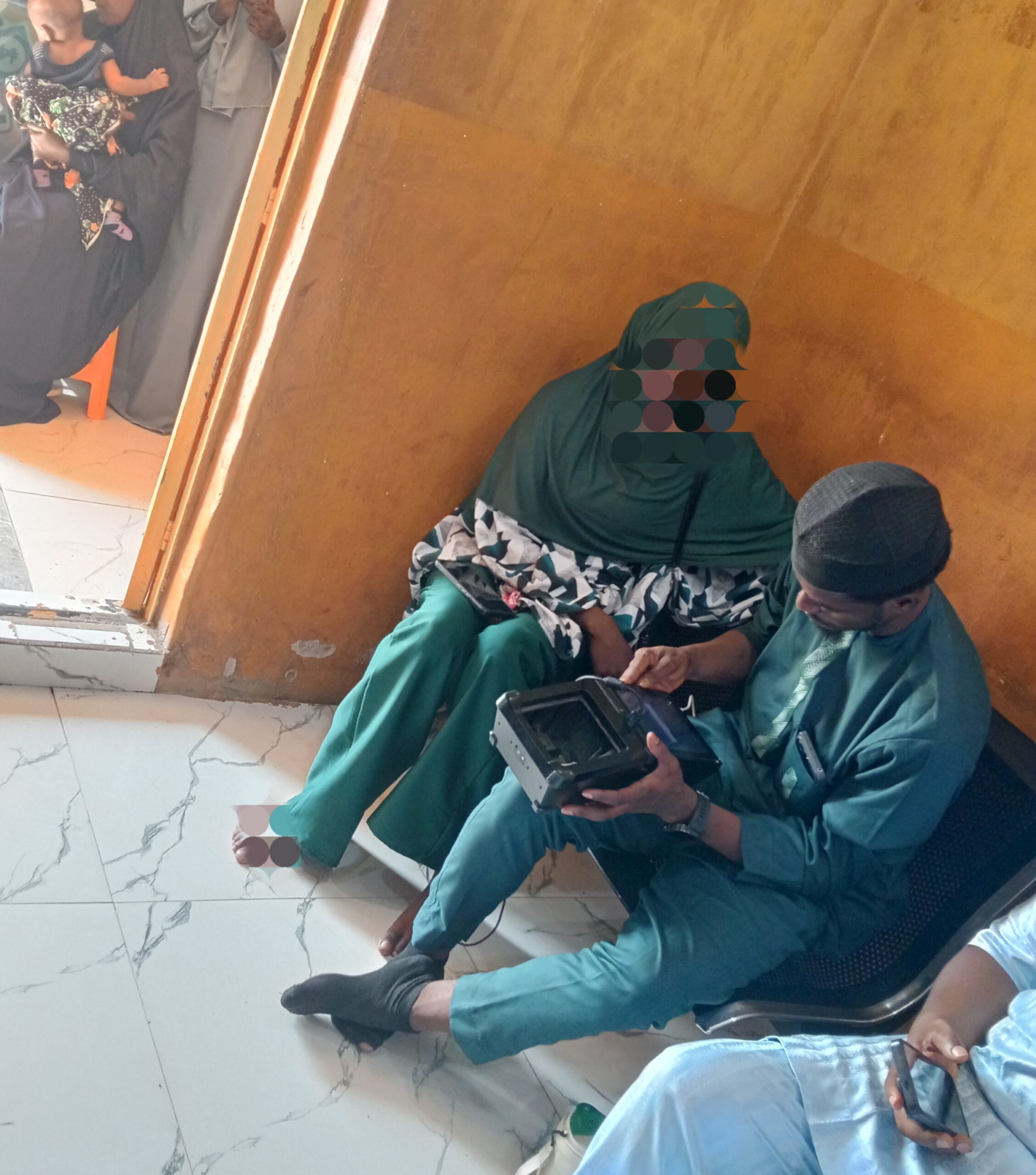
Even though Aliyu had already thumb printed during his first NIN registration in 2011, he was asked to thumbprint again for the new registration. “The NIMC did not flag the duplication. I handed over my personal details, was thumb printed a second time, and my new NIN became active almost immediately,” he explained.
The incident left him anxious about the integrity of his original identity record. “I remained concerned about the unresolved status of my first NIN and the fact that two records could now exist for the same person,” Aliyu said. He noted that the suspension of his first NIN likely stemmed from errors during his initial registration, particularly around his date of birth.
“Even though I had used the same thumbprint, the system did not prevent me from enrolling again. This shows how easy it is for repeated thumb printing to happen without verification,” he said.
Procedural gaps exposed
Aliyu’s experience exposes how simple procedural gaps combined with opportunities for under-the-table payments can create vulnerabilities in a system meant to be fraud-proof.
In Abuja and Niger State, where this investigation was focussed, some respondents admitted to holding more than one NIN with the help of some corrupt NIMC accredited centres.
Aliyu was able to successfully register his NYSC, and served his father’s land. But to perfect his new NIN he had to do newspaper publication, court affidavit and went through the process of replacing his new NIN with the old one in his Bank Verification Number (BVN) and across his banks. That was how he went through the whole process to get everything done.

While these issues persist, in 2023, the National Identity Management Commission budget stood at N24.1 billion of which N10.1 billion was earmarked for capital projects, according to the official budget documents. In 2024 N9.8 billion was budgeted for the NIMC capital expenditure while total expenditure stood at N22.7 billion.
In 2025, the capital expenditure increased to N25.6 billion while total expenditure stood at N40.8 billion. A review of budget documents shows that in 2025, NIMC budgeted a sum of N2 billion for the purchase of verification equipment, another N2.5 billion was budgeted for the provision and deployment of frontend and backend support system.
Another sum of N2 billion was budgeted for the provision of biometric/enrollment capture equipment for the headquarters and thirty-six states of the federation.
In June, 2024, the World Bank provided $45.5m to Nigeria’s NIMC as part of the Digital Identification for Development (ID4D) project.
This development was communicated in the World Bank’s implementation report. It was noted that the funds were disbursed in several tranches between December 2021 and April 2024, with disbursement still ongoing.
As of October 2025, the data published by the NIMC shows that the number of persons enrolled for NIN stood at 123.9 million.
NIN-SIM linkage crisis
Nigeria’s immediate past minister of communications and digital economy, Isa Ali Pantami, in 2020 led the push for every citizen to link their NIN with their SIM cards. The move was presented as a crucial step toward improving national security by ensuring that mobile phone users could be accurately identified.
However, with Nigerians able to register dual sims it would mean that criminals may be exploiting the system to use NIN with inaccurate details to register SIM cards which may invariably embolden them to commit more crimes.
An investigation by HumAngle had earlier raised flags in the SIM-NIN registration. The report found that some telecom agents had registered more than 20 mobile lines using a single NIN. Additionally, the verification process was so poorly designed and inadequately monitored that it could still accept photographs even those sourced from magazines-as legitimate profile images.
‘How I ended up with two NINs’
As part of the Joint Admissions and Matriculation Board (JAMB) regularisation process, candidates must verify their NIN. This involves sending the NIN via SMS to a designated short code provided by the NIMC. A confirmation message from NIMC then verifies that the NIN is valid and correctly linked to the candidate’s records. Without this verification, the regularisation process cannot be completed, and JAMB records will not match official identification—a critical step for one to get their records in the JAMB database to be able to participate in the mandatory NYSC.
For Iya Zaliya, this routine procedure marked the beginning of an ordeal she could never have anticipated.
In 2024, as Iya prepared to complete her National Diploma at a polytechnic, her school instructed her to register with JAMB since she didn’t get her admission through JAMB to qualify for the NYSC.

In the first week of October, she joined fellow students at JAMB Computer Based Test (CBT) centres in Morris area, Minna, for regularisation. That was when complications began.
Iya told The ICIR that despite sending her NIN multiple times, she never received the confirmation SMS from NIMC. She even tried using her husband’s and several relatives’ phone numbers, but the system continued to reject her. Many of her classmates who had similar cases, used different SIM cards, and were successfully verified. Some got verified later using their own phone number which was initially rejected.
“The response I keep getting is that my NIN had been used by another candidate to generate a confirmation code. I kept asking myself, how is that possible, and who could have access to my NIN?” she recalled.
Frustrated and exhausted, Iya watched her colleagues complete the process and eagerly awaited the next phase. “I was in a very sad state of mind—angry and regretful, even though I didn’t know what or who was responsible for my ordeal,” she said.
At the registration centre, an attendant offered only one solution: enroll for a new NIN. Shocked by the suggestion, Iya questioned the possibility of holding multiple NINs. The attendant explained that several students facing similar issues had ended up creating new NINs. “But I can’t help you,” he told her, “You should ask your colleagues for guidance.”
Her search for assistance eventually led her to a former classmate, Salisu, who connected her to an NIMC-accredited agent in the Federal University of Technology (FUT Minna) area, Bosso campus. The agent assured Iya he could enroll her for a new NIN, but later withdrew due to the high cost—N15,000 that was in 2024.
“My husband then contacted another person who claimed he could help, but it would also require some money. My husband told the story of the Bosso agent who he pulled out from because the fee was too high,” Iya said. This new agent’s shop was located on Shiroro Road in Chanchaga Local Government Area, Niger State.
NIMC legal provisions on violations
Section 14, 20, and 21 of the Independent Corrupt Practices and Other Related Offences (ICPC) Act and Sections 10 and 12 of the Code of Conduct Bureau and Tribunal Act have stated clearly that the unlawful possession of multiple NINs or forged identity cards is a punishable offence.
According to the NIMC, individuals found guilty face a minimum of six months’ imprisonment, a fine of at least N100,000 (One Hundred Thousand Naira), or both.
The laws also explicitly cover enrolment agents and Commission staff who collect money or favours to facilitate access to NIMC services, including enrolment, card collection, activation, or contract awards.
This applies to all staff, consultants, service providers, security personnel, and cleaners, with violators liable to seven (7) years’ imprisonment and dismissal from service.
Despite these clear legal provisions, cases of dual NINs still persist, highlighting a failure on the part of the NIMC to enforce its own regulations and safeguard the integrity of Nigeria’s identity database.
Thumbprint by proxy
Iya proceeded with the new NIN enrollment. All her details from the first NIN including her photograph, names, date of birth, and address were replicated except for the biometric fingerprint scan.
“After capturing all my details including my photograph, names, date of birth and address it got to a stage I had to thumbprint and he said that could be the major issue,” Iya told The ICIR, saying the agent assured her that the problem could be resolved.
Iya, who could not recall the agent’s name, said she paid him N7,000 for the enrolment process.
She was worried that if they could bypass the thumbprint stage and use her own biometric fingerprint could cause the registration to be flagged as duplicated. The agent reassured her not to panic and that he had a way of bypassing the process.

According to Iya, the agent told her that they would have to use vulnerable children under Islamic tutelage, commonly referred to as ‘Almajiri ’, that have not reached the age for enrolment or enrolled before, to provide the thumbprint. The first child attempted the process but after a few days the agent informed Iya that it could not work but did not explain the reason for the failure.
They tried again with another pupil slightly older than the first, around 12 years old. This attempt was successful and Iya was issued her new NIN within 24 hours after enrolment.
With the new NIN, Iya successfully completed her JAMB verification and regularisation without any glitches, finally ending the months-long struggle that could ruin her participation in the NYSC.
Concerns over data protection
According to the Nigeria Data Protection Commission (NDPC) 2024 annual report, the country is witnessing a sharp rise in cases involving unauthorised access to personal information, identity impersonation, behavioural tracking, and opaque practices by mobile applications.
Within a single year, Nigeria experienced a dramatic jump in data privacy violations—soaring from 209,000 documented incidents in 2023 to 4.3 million in 2024. This implied a rapid escalation in the exposure of confidential personal details such as names, phone numbers, identity records, and financial information.
This disturbing pattern has firmly placed Nigeria at the centre of digital insecurity across the continent, revealing the gaps in national cybersecurity systems and the vulnerability of citizens’ personal data. It also raises urgent concerns about whether the government can adequately protect digital identities in a rapidly expanding tech landscape.
During a 2024 inquiry into a breach involving the NIMC, the NDPC disclosed that an authorised third-party service provider—granted permission to offer NIN verification services—had reportedly enabled XpressVerify.com, a private platform branding itself as an identity verification service, to use its official credentials. This access allegedly allowed the site to perform verification checks without proper authorisation.
By 2025, several online services were uncovered selling Nigerians’ personal information obtained from NIN databases. Reports showed that with nothing more than a phone number and as little as N100, individuals could retrieve highly sensitive data, including full names, birth dates, home addresses, and NINs.
‘How am I sure you are not a DSS officer?’
At an enrolment centre behind Wema Bank, Federal Housing along Total Road, Lugbe, the agent was willing to comply but remained sceptical and, uncertain of the reporter’s intentions. After the reporter explained the reason for seeking a new NIN, the agent said: “We used to do it before, but since NINMC suspended registration and reopened it recently we can no longer do it. But let me ask a colleague who, maybe, can still do it.”
He called a colleague based in the Kuje area of the FCT, also an accredited agent, who said he could do it for N25,000. The reporter requested a reduction to N20,000, but the agent refused. After a phone conversation, the reporter was told to meet the agent near First Bank in Kuje, but his number soon became unreachable.
As the reporter left Lugbe for Kuje, the first contact agent called back, asking: “Abi you go pay the N25,000 make I just enroll you?” The reporter insisted on N20,000, but the agent refused, explaining that he could not risk his license.
“Since the enrolment reopened, only a few of us got our access back. How sure am I that you are not DSS doing an investigation?” he said. Despite assurances of identity, the agent remained wary of losing his license.
At another enrolment centre inside the High Court Lugbe, by the police signboard and close to Lugbe Market, an agent named Ibrahim outrightly refused, explaining that enrolling a second NIN was impossible and would jeopardise all existing documents and credentials.
“The only thing I will advise you to do is modify it, and it will cost you N60,000 or N70,000. With this, all your existing documents, bank accounts, and other credentials will remain useful. But enrolling for another NIN will affect everything,” he said.
In Zuba, near the Mail-Kiffi fuel station, several enrolment centres were willing in principle but hesitant, unsure of the reporter’s motives. Two women in a shop at a nearby junction explicitly refused, citing fear of the unknown.
‘Multiple NIN could undermine Nigeria’s security, economy, electoral system, global credibility’
Experts have warned that the proliferation of multiple or fake NINs is capable of undermining Nigeria’s global credibility, national security, economy, and electoral integrity.
The Executive Director of Civic Society Legislative Advocacy Centre (CISLAC) and Head of Transparency International, Nigeria, Awal Musa Rafsanjani, said that dual or fake NINs threaten the country’s international reputation.
“Many countries will not respect our identity either passport or NIN means of identification because it’s already compromised,” he said, adding that criminals exploit these gaps for terrorism, human trafficking, and financial fraud.
Rafsanjani also criticised the commercialisation of illegal identity services, saying, “The lack of accountability and transparent process…has created business for some people to illegally issue this identity…It is being manipulated for personal gain.”
He urged the government to strengthen access controls, improve network security, train staff, and audit officials handling identity data, noting, “Without these measures, we will continue to suffer the consequences of people illegally obtaining dual identity.”
On his part, Ali Sabo, Digital Rights Lead at the Centre for Information Technology and Development (CITAD), warned that multiple NINs are capable of compromising national security, the economy, and the integrity of elections.
“At this critical juncture of our nation’s security…the country is being attacked by several forces…also the issue of dual NIN registration is very serious,” Sabo said.
Breaches have allowed NINs to be sold online, raising concerns about the National Identity Management Commission’s (NIMC) capacity. “The system has lost integrity, especially in the eyes of civil society and ICT experts,” Sabo said.
NIMC acknowledges double registration by roadside centres, vows crackdown
The NIMC has warned that double registration for national identification is a criminal offence punishable by law, emphasising that offenders could face legal action.
When The ICIR contacted the commission via its call centre, officials said investigations would begin once supporting documents are provided.
“Forward the debit alert and other details to the email address so that we can send our team out for investigation. We’ll pick it up from there,” the NIMC representative said.
The agency acknowledged that cases of double registration are possible, but by roadside registration centres and stressed that a dedicated unit handles such offences to ensure compliance with the law.
“Double registration is a crime. They are not supposed to do double registration. That’s why our team is going to pick it up, they are mostly done by roadside centres,” the official explained.
The commission noted that the centres involved could include roadside enrolment centres, urging the public to report any suspicious or illegal registration activities to authorities.