

BY Remi ADEBAYO
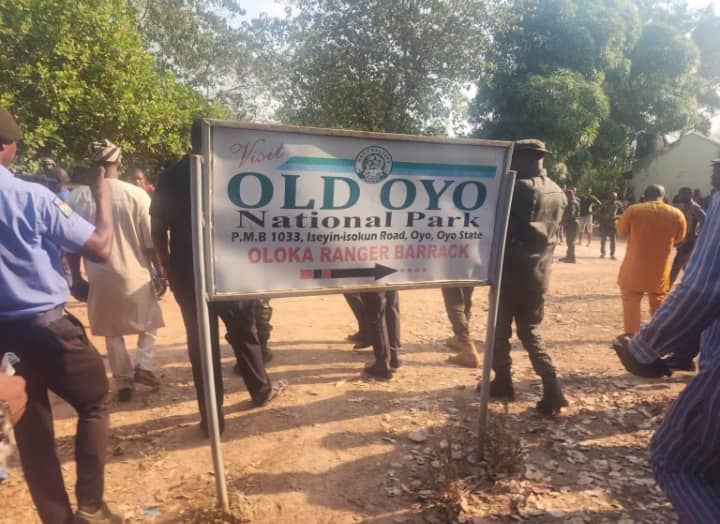
Beneath the Old Oyo National Park lies a rich deposit of solid minerals, including lithium, which is critical to the shift toward renewable energy. Security officials say these minerals have become a magnet, drawing armed groups southward.
Spanning 10 local government areas in Oyo State and one other in Kwara State, the Old Oyo National Park also conserves the archaeological and historical remains of the old Oyo Empire, drawing conservationists, historians and tourists.
But the infiltration of armed bandits into the reserve, already grappling with illegal miners and a haven for armed criminals, now threatens to undermine the very purpose for which the federal government established it.
“Wherever you have natural resources, certainly, you may need to be facing challenges of intruders who are unmindful of whatever happens but only interested in exploring mineral resources,” said Teslim Kareem, the Conservator of the Park in charge of the Old Oyo National Park.
The park’s forest cover was exploited by the terrorists, who attacked Oriire communities in May, abducting schoolchildren and their teachers.

The Conservator of the Park and a security expert, Fakayode Adebowale, agrees that the forest’s vulnerabilities result from the intense military offensive against terrorists in northern Nigeria that is pushing armed groups to seek new territory southward. He added that terrorism is also sustained by illicit financial flows from illegal mineral exploration in protected forests, giving armed groups both a way to conceal and an alternative cash flow.
Adebowale, a former zonal coordinator of Amotekun Corps in Oyo State, said, “Lithium is present in Banni Village,” identifying a national park settlement, which he described as a “known site” of illegal mining. Apart from Banni, he named the Daba and Abata-Abu axes in Oke-Ogun, and the Igbeti–Kisi corridor spanning Olorunsogo, Atisbo and Irepo local government areas, as other hotspots for illegal lithium and gold extraction within the park.

A community blindsided
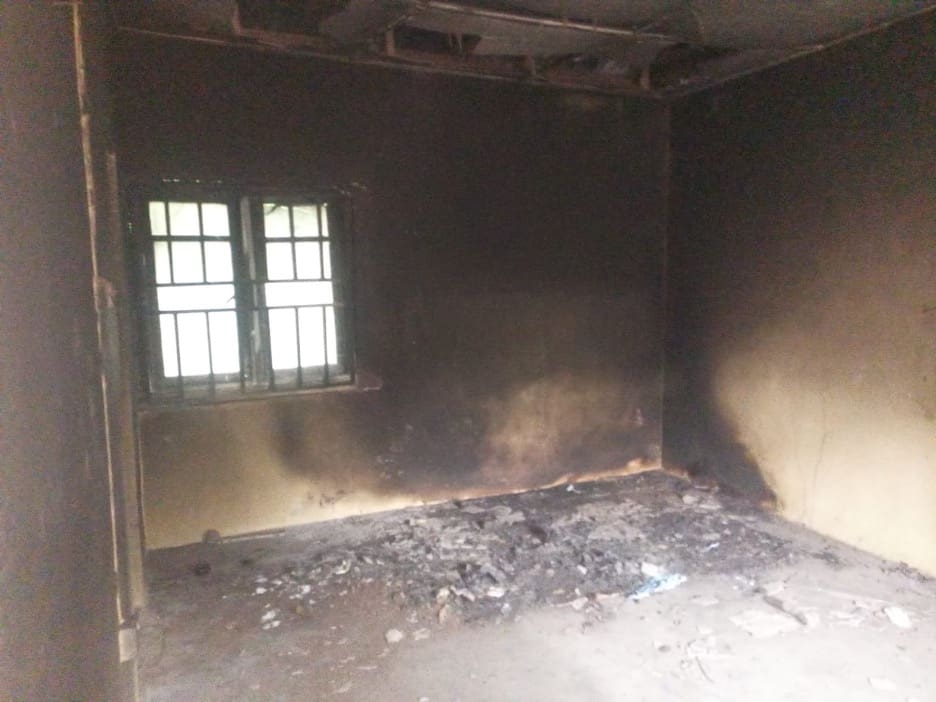
Like most people entering a new year, the people of Oloka Village in Oriire Local Government Area of Oyo State had no reason to expect that 6 January would upend their community. That morning, an attack left five rangers, Hameed Quadri, Muideen Olalere, Ololade Hassan, Moses Areo and Ezekiel Ajala, dead and altered village life.
As the shock of the Oloka killings was still settling, two of the estimated 115 communities bordering the park came under attack when terrorists stormed Ahoro-Esiele and Yawota communities, also in Oriire LGA, on 15 May 2026, abducting 35 pupils and seven teachers.
The pupils and five of the teachers, including Mrs Racheal Alagbe, the principal of Community Grammar School, Ahoro-Esiele, were rescued nearly two months later. But a mathematics teacher, Mr Michael Oyedokun, was beheaded, and Mr John Olaleye was also murdered in captivity, adding to the previous killing of the assistant headmaster of L.A. Primary School in Ahoro-Esinele, Mr Adesiyan Adegboye, alongside a motorcyclist.
Away from the national outrage that trailed both incidents, Kareem and Adebowale both link the attacks to attempts by terrorists to entrench themselves in the park to finance themselves through illicit mining and other criminal activities.
Contested motives
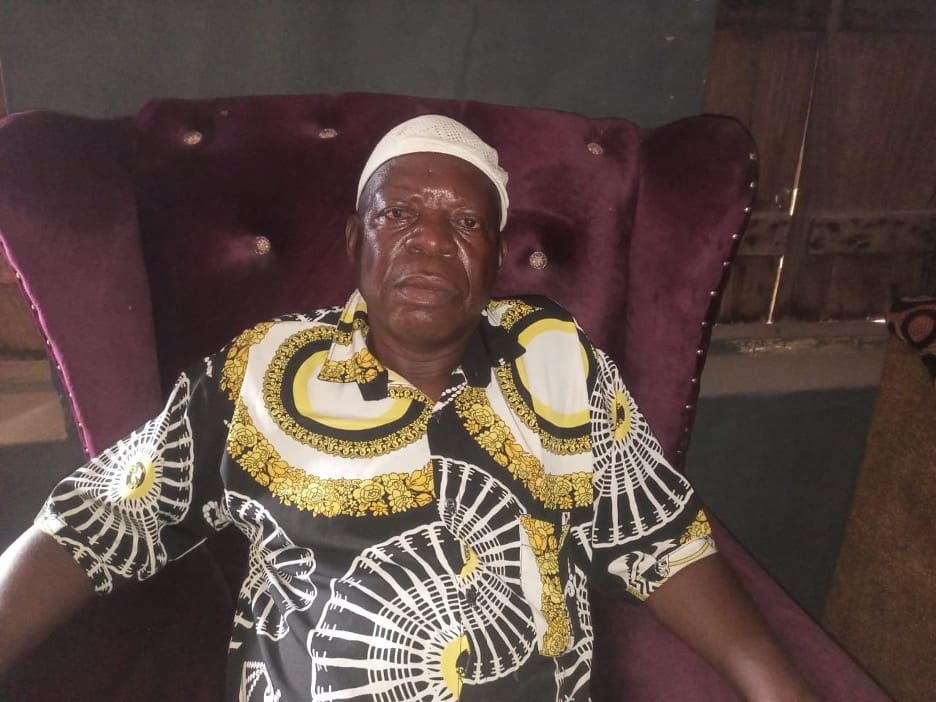
The traditional ruler of Oloka Village, Mr Joel Olatunde, said he suspected that the January attack was carried out by alleged bandits attempting to free herders detained by park rangers for illegal entry into the park. He said the rangers were killed while waiting to move the detainees to Oyo town, where the administrative headquarters of the park is located.
However, other sources, including locals, park officials, and relatives of the killed rangers, say the reported detainees were allegedly illegal miners, not herders. The sources, who asked not to be named for lack of authority to speak to the press, alleged that illegal miners had hired bandits to secure the release of their detained colleagues forcibly.
However, the Oloka, Ahoro-Esiele and Yawota attacks were not the first cases of violence around the park. In 2023, two senior park officers were killed by alleged miners in Banni Village after the arrest of ten illegal miners as part of an effort to sanitise the reserve.
Adebowale, the former Amotekun boss, said security agencies are aware of illegal mining activity in the area and argued that the more recent infiltration by armed groups could have been prevented had earlier intelligence and the bandits’ documented migration pattern been acted on swiftly.
A warning foretold
That view echoes concerns raised by the Oyo Global Forum (OGF), a network of professionals from Oyo Federal Constituency, with some of its communities in the park and on the boundary with Oriire LGA.
After the Oloka attack, OGF’s chairman, Taiwo Adebayo, said in a statement that the park’s location along largely ungoverned forest corridors connecting northern Kwara, Niger and Kebbi states made the attack predictable. “If no genuine actions are taken, we risk yielding ground to armed criminals, particularly at a time of increased kinetic pressure on them in the North,” he warned.
Following the May attack, Adebayo went further, cautioning that every hour of slow response could embolden armed groups and heighten the risk of further attacks across vulnerable communities and adjoining forest corridors.
However, Kareem pushed back on suggestions that the park authorities have been passive, saying several arrests have been made in collaboration with security agencies, many of them unreported.
“If the government has not been doing anything, as presumed, no sand will remain in that place,” he said. He said unexpected attacks are an inevitable risk given the global nature of the terrorism challenge and the increasing demand for lithium needed for batteries in electric vehicles, phones and power storage, while insisting the government is not leaving anything to chance.”
Asked directly whether lithium and other mineral deposits were part of the motive for bandits’ southward migration, Kareem was unequivocal. “Yes. One cannot rule it out,” he said, citing a documented pattern of armed groups moving from Zamfara through Katsina, Kaduna and Niger states before reaching Kwara and now Oyo.
Who is mining, and who is enabling it?
Kareem, the conservator, identified Chinese nationals as the principal enablers of the illicit mining economy in the park, working with Nigerian collaborators of various ethnic backgrounds as well as citizens of neighbouring West African countries. “We have arrested people from different tribes, not just the northerners. Foreigners are also part of the illicit mining,” he said.
The ex-Amotekun zonal coordinator, Adebowale, claimed some local youths and community leaders have equally been drawn into the illegal mining economy, working alongside the miners who employed them for on-site labour and transporting minerals from the mining sites to urban centres.
While acknowledging that some youths had been arrested and prosecuted in the past, Kareem said the park’s ongoing conservation sensitisation programme has significantly reduced local complicity, saying residents were now better informed about the importance of protecting the reserve.
He also defended community leaders, describing them as a source of useful intelligence. “Most of their leaders even call us sometimes if they notice any strange things, which we always deal with seriously. Notwithstanding, if any of their members is arrested, community leaders will always intervene. If we realise the gravity of such infraction, we take necessary action, including prosecution and amicable resolution,” he said.
Yet, Kareem conceded that protecting a reserve the size of Old Oyo, with its current personnel strength, amid festering insecurity, has proven a herculean task. “Protecting mineral resources is one of the most challenging tasks worldwide, because you’ll see a lot of people having interest in the area, and in the course of their illegal exploration, they pose a lot of problems to enforcement agencies like us.” He disclosed that the park now collaborates with the military, the Nigeria Police Force, the Department of State Services (DSS), and the Nigeria Security and Civil Defence Corps.
(NSCDC), Amotekun Corps and local vigilantes, also known as volunteer rangers, to secure the reserve and its surrounding communities.
Life after the attack
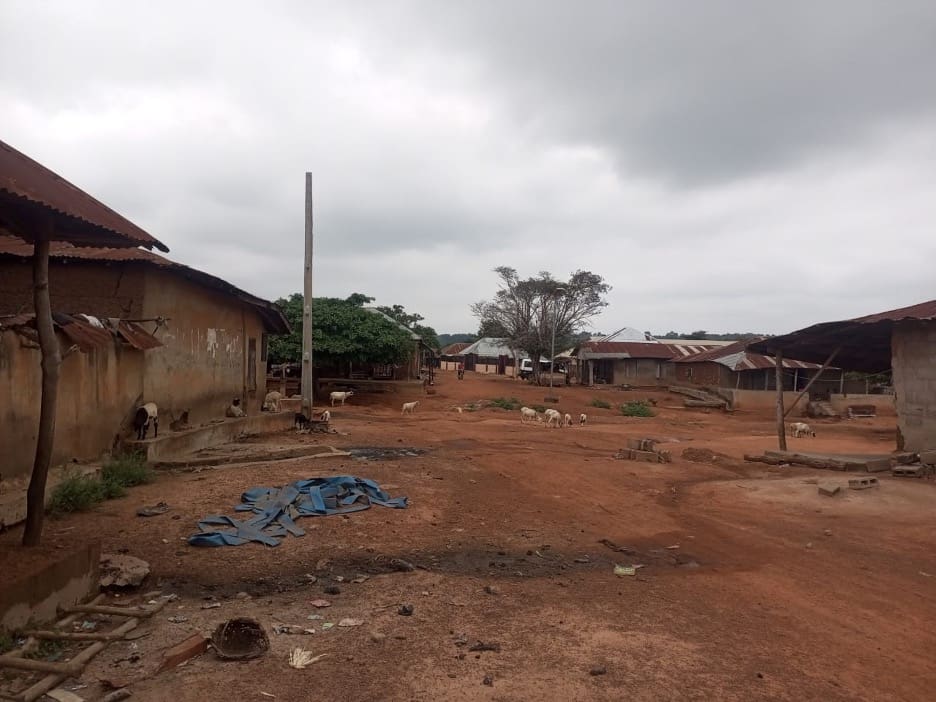
Seven months on, Oloka remains gripped by fear over safety and livelihood. “Our way of life has been badly affected since the attack, because life has been very tough for our people, even to go to the farm. Once it is 7 pm, people can hardly sleep again,” community chief Alagbe said.
The Baale said residents have continued to flee the community after the withdrawal of security agents. “Presently, there is no security, because the operatives were withdrawn after one month,” he said. In their absence, local hunters have imposed a 10:30 pm to 5:30 am curfew restricting movement to help maintain vigilance over the village.
Another resident, Elizabeth Adedokun, described a similar unease. “We’re frightened to go to the farms, and when we do, we go in pairs, so that while someone is working, the other person is keeping watch,” she said, adding that the presence of park rangers in the past offered a measure of security. “But with what happened, we feel vulnerable and insecure today. We are very sad.” She noted that armed NSCDC Agro Rangers are stationed at Ikoyi-Ile but have not been directly deployed to Oloka.
Kareem, the conservator, sought to allay such fears, explaining that rangers now operate alongside a joint security team of about 2,000 operatives, in addition to the regular ranger corps, with a command base organising patrols from Ikoyi-Ile. He said residents may struggle to recognise rangers because many now operate undercover, with previously known personnel redeployed elsewhere and replaced by unfamiliar officers with comparable knowledge of the terrain.
He noted that President Bola Tinubu has approved the permanent siting of a military base, alongside National Forest Rangers, within the park, adding that the park, once seen as a potential last resort for fleeing bandits, is proving “more dangerous than where they’re coming from.”
The conservator added that the National Park Service is developing a life insurance policy and other institutional welfare packages for rangers, including burial support, scholarships for dependants, and a pension scheme administered through licensed Pension Fund Administrators for families of personnel who die in the line of duty.
Nurudeen Hameed, brother of slain ranger Hameed Quadri, confirmed that the Oyo State Government has fulfilled its pledge of ₦5 million to his family, while processing of federal entitlements and claims is ongoing.
What communities are asking for
Alongside calls for stronger security deployment, stakeholders, including OGF, have pushed for community-led initiatives to counter the threat, organising residents to respond to and volunteer timely intelligence that could help prevent future attacks.
But unity has not come easily. Oloka resident Matthew Olamoyegun Oyelami lamented that the community remains polarised over chieftaincy disputes. “With unity, we will not entertain such fears. The main challenge is how to protect ourselves should something like this happen again,” he said, adding that the traditional ruler is working to reconcile aggrieved parties so the community can jointly confront future security challenges.
This report was commissioned with support from the Centre for Journalism Innovation and Development (CJID) under a journalism support initiative funded by the Open Society Foundations