
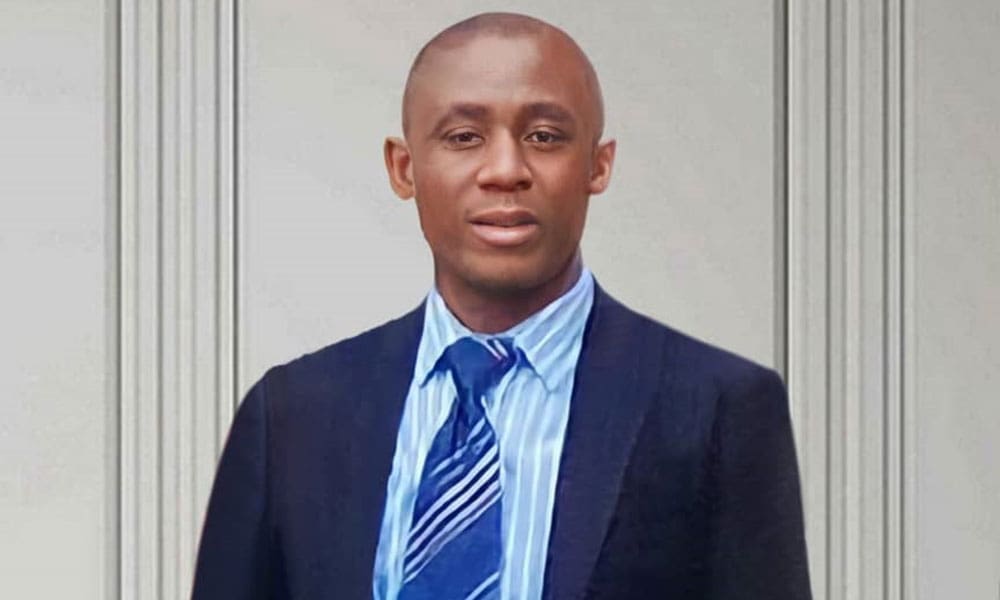
The Movement for the Survival of the Ogoni People (MOSOP) has described the Federal Government’s ongoing dialogue over the Ogoni crisis as a potential model for resolving conflicts across Nigeria, while urging communities to focus on development rather than leadership disputes.
The president of the movement, Fegalo Nsuke, made the position known on Wednesday while addressing journalists at the Port Harcourt International Airport, Rivers State.
“The NSA’s Ogoni model is one that should be replicated in all crisis regions of Nigeria to achieve national reconciliation and integration,” he said.
Nsuke said MOSOP would honour Ribadu with an Ogoni National Merit Award and a traditional chieftaincy title if the reconciliation process is successfully concluded.
Nsuke said Ogoni’s priorities should extend beyond disagreements over who controls or leads the dialogue.
He called for jobs for young people, a stronger local economy, improved healthcare and education, better security and welfare programmes for elderly people.
“We need to create jobs for every Ogoni youth, begin building an Ogoni economy and provide quality health care, education, security, welfare for the old and do more,” he said.
In July, Nsuke described the initiative as an opportunity for a permanent resolution of the Ogoni crisis and urged Ogonis to trust the process.
In September, MOSOP also said it was aligning with the broader national dialogue and argued that discussions had shifted towards addressing Ogoni’s demands rather than simply finding a way to restart oil production.
But despite MOSOP’s description of the process as successful, the dialogue has not yet concluded, with discussions over the future of Ogoniland and possible oil resumption still ongoing.
MOSOP has said the current process began after President Bola Tinubu directed Ribadu in January 2025 to engage Ogoni stakeholders.
According to the organisation, the Ogoni Dialogue Committee subsequently held consultations and submitted recommendations to the Presidency in September 2025.
The central test is whether the dialogue can translate into concrete agreements on the longstanding grievances that have kept oil production out of Ogoniland for more than three decades.
Oil exploration in Ogoniland stopped in 1993 following sustained protests over environmental degradation, oil industry practices and demands for greater control and benefits from the region’s resources.
In August, the apex Ogoni socio-political organisation, KAGOTE, urged Ribadu to investigate concerns surrounding the process for the proposed resumption of oil exploration.
KAGOTE said its position was not necessarily against oil production but that any return to extraction should be based on transparency and credible processes.
The organisation had also raised concerns about the use of the NSA’s name or authority in connection with aspects of the dialogue process and called for clarification and greater transparency.
While MOSOP’s latest statement presents the dialogue as evidence of a new era for Ogoni, the process still faces several substantive questions.
These include the future of oil exploration, environmental safeguards, the implementation of development commitments, representation of different Ogoni interests and the extent to which agreements reached through the dialogue will be publicly documented and enforced.
The concerns are significant because the history of Ogoniland is marked by decades of conflict over oil production, environmental degradation, underdevelopment and frail relationship between communities, government and oil companies.

Nanji is an investigative journalist with the ICIR. She has years of experience in reporting and broadcasting human angle stories, gender inequalities, minority stories, and human rights issues. She has documented sexual war crimes in armed conflict, sex for grades in Nigerian Universities, harmful traditional practices and human trafficking.