
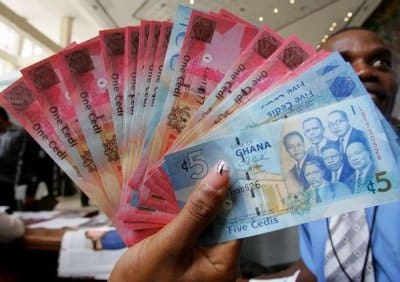
GHANA is expanding its financial infrastructure for trade with China, allowing eligible businesses to initiate yuan payments from their cedi accounts instead of first sourcing US dollars, a move that could reduce reliance on intermediary banks in one of Africa’s busiest trade corridors.
The development places renewed attention on how African countries are trying to reduce their dependence on the US dollar in trade with China, their major commercial partner.
The arrangement, being piloted by Stanbic Bank Ghana, gives businesses a direct route for settling eligible transactions with Chinese suppliers through China’s Cross-Border Interbank Payment System (CIPS).
Bank of Ghana Governor, Johnson Asiama, reportedly disclosed the development at the Central Bank’s 132nd Monetary Policy Committee press briefing.
He said Ghanaian importers no longer needed to obtain US dollars before paying for eligible goods from China.
“They can actually pay in Ghana Cedis right from here,” Asiama was quoted to have said, adding that businesses could go to Stanbic Bank with their cedis to make payments for purchases from the Asian nation.
How it works
The arrangement does not mean that Chinese suppliers receive Ghanaian cedis.
Reports indicated that a Ghanaian customer starts the transaction using cedis, while the payment is settled in Chinese yuan with the supplier in China.
Stanbic’s CIPS service allows eligible yuan payments to be initiated from an existing Ghana cedi account, subject to documentation, regulatory and compliance requirements.
CIPS is China’s cross-border payment infrastructure for clearing and settling transactions in renminbi, also known as the yuan.
According to reports, Stanbic became the first bank in Ghana to provide customers with direct access to CIPS after receiving approval from the Bank of Ghana.
The service was introduced in August, before the latest disclosure by the Central Bank governor.
Stanbic bank further stressed that eligible yuan payments submitted with complete documentation by 2 p.m. GMT could be processed for settlement by the following business day.
Stanbic’s Chief Executive Officer, Kwamina Asomaning, said CIPS provides a more direct payment route to Chinese counterparties and reduces the need for US correspondent or other intermediary banks.
What changes for importers?
Previously, a Ghanaian business with cedis that needed to pay a Chinese supplier could require a dollar conversion as part of the payment chain.
The new route allows an eligible transaction to move from the customer’s cedi account into a yuan payment to the Chinese beneficiary.
The dollar remains available for international transactions.
Stanbic states that CIPS is an additional payment route for eligible yuan transactions and does not replace SWIFT. Payments in dollars, euros, pounds and other currencies continue to use existing payment channels.
The new arrangement also does not guarantee cheaper imports as the eventual cost to a business will still depend on the exchange rate offered by the bank, transaction charges, trade-finance costs and other expenses associated with importing goods.
GCB prepares to join
The Bank of Ghana further noted that Stanbic is not expected to remain the only bank offering the facility.
Asiama said Ghana Commercial Bank (GCB) was also developing a similar service.
The governor said the Central Bank was paying close attention to the development because of the expanding commercial relationship between Ghana and China.
Nigeria’s yuan mechanism since 2018
Meanwhile, Nigeria has had a separate similar naira-yuan currency arrangement with China since 2018.
The Central Bank of Nigeria (CBN) and the People’s Bank of China signed a 15-billion-yuan bilateral currency swap agreement in April 2018. The arrangement was designed to provide yuan liquidity to Nigerian banks and enable businesses importing from China to conduct eligible transactions in yuan.
The agreement was also intended to reduce the need for the dollar as an intermediary currency in Nigeria-China trade.
Under the arrangement, Nigerian importers could use Nigerian banks to access yuan for eligible transactions. This does not mean that Chinese suppliers receive naira; the supplier is paid in yuan while the Nigerian side provides the local-currency funding, and the banking system facilitates the conversion and settlement.
The agreement has since been renewed, including a further three-year renewal in 2024 worth 15 billion yuan, then valued at about ₦3.28 trillion or $2.09 billion.
Also, in March 2026, the Federal Government said it was seeking to renew and expand the facility to as much as $10 billion.
The Director-General of the Nigeria-China Strategic Partnership, Joseph Tegbe, said the existing arrangement had been underutilised and that a larger facility would allow Nigerian businesses to transact more directly in yuan rather than converting naira to dollars and then to yuan.

Mustapha Usman is an investigative journalist with the International Centre for Investigative Reporting. You can easily reach him via: musman@icirnigeria.com. He tweets @UsmanMustapha_M