
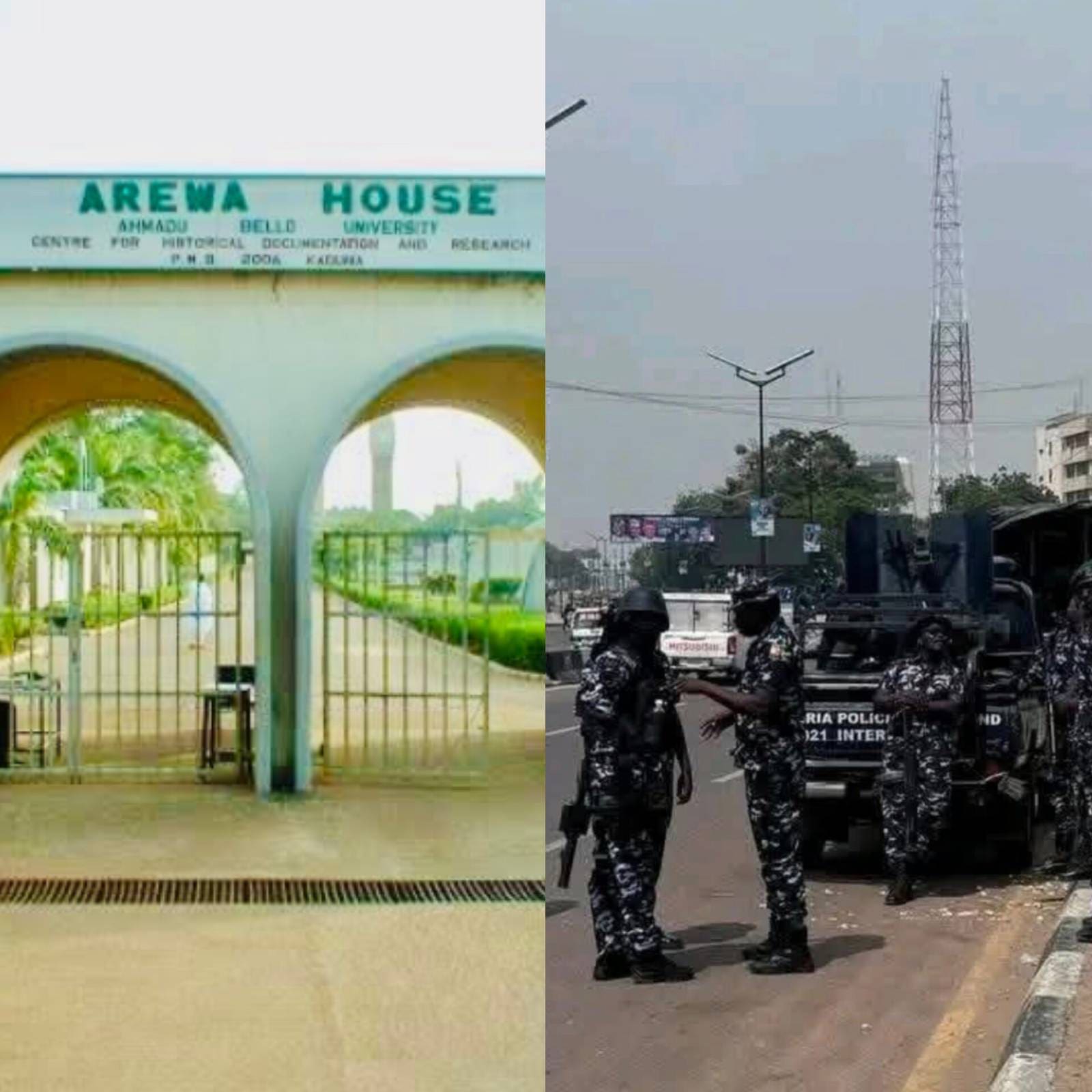
Nigerians have condemned what they describe as an escalating crackdown on freedom of expression under President Bola Tinubu’s administration. Last week, police reportedly blocked the venue of a “Tinubu Must Go” event in Kano State. Previously, a planned book presentation criticising the president’s Renewed Hope Agenda got cancelled in Kaduna. Here is what Nigerians have to say about it.
Last week, members of the “Tinubu Must Go” movement in Kano were reportedly prevented from accessing a privately hired event centre where they had planned to hold a meeting opposing the president’s administration.
A popular lawyer and convener of the movement, Abba Hikima, alleged that the police deployed more than 10 mobile police vehicles around the venue, preventing participants from entering the facility they had paid to use.
Hikima described the police presence as an infringement on the group’s fundamental rights, insisting that its members were gathering peacefully to exchange ideas and discuss the country’s political direction ahead of the 2027 general elections.
The Kano State Commissioner of Police, Ibrahim Adamu Bakori, defended the deployment in a statement, saying it was intended to protect the organisers and residents and prevent a possible breakdown of law and order. He also said notifying the police beforehand would have enabled the command to make adequate security arrangements.
The Kano incident came amid controversy surrounding the cancellation of a planned public presentation of the book Tinubu: From Renewed Hope to Despair: A Critical Examination of President Bola Ahmed Tinubu’s Government.
The presentation, organised by the Centre for Democratic Development Research and Training (CEDDERT), Zaria, was scheduled for Thursday, October 15, 2026, at Arewa House, a research institution managed by Ahmadu Bello University (ABU), Zaria.
However, in a statement issued on October 11, CEDDERT Executive Director Abubakar Siddique Mohammed said the organisation had received a cancellation letter from Arewa House on Saturday, October 10.
The organisers alleged that the cancellation followed pressure over the planned event, which was intended to provide an opportunity for scholars, public intellectuals, policymakers, political actors, journalists and members of the public to examine the policies and performance of Tinubu’s administration since it assumed office in May 2023.
The controversy deepened when CEDDERT said its attempts to secure an alternative venue in Kaduna were unsuccessful, noting that hotels and event centres approached by the organisers declined to host the event, with some reportedly saying they had been warned against accommodating it.
The organisers maintained that the book’s content was already in the public domain and that presenting it to an audience would constitute a legitimate exercise of intellectual freedom and public debate.
However, the ICIR reports that the incidents in Kaduna and Kano have raised fresh concerns about the protection of civil liberties and Nigerians’ right to peacefully criticise the government as preparations for the 2027 general elections are ongoing.
The developments triggered reactions on X, where some Nigerians expressed alarm over what they perceive as growing restrictions on peaceful criticism of the Tinubu administration.
An X user identified as Abaah Uche posits that the police should respect Nigerians’ fundamental rights to freedom of expression and peaceful assembly. “In a democracy, citizens must be free to express their views and organise peaceful gatherings without intimidation or unlawful interference,” he said.
Another user, Wuyi Oyetude, raised concerns about the Tinubu administration’s commitment to democratic principles and respect for fundamental freedoms.
Hafsat Muhammad criticised the police for allegedly targeting unarmed citizens while failing to apprehend bandit leader Bello Turji, who continues to operate in Zamfara State. David Ijeh accused the police of using intimidation to suppress Nigerians who demand a free and fair election, noting that the Tinubu administration is using state institutions to silence dissent.
Ijeh called on the international community, including US President Donald Trump, to intervene over what he described as growing threats to democratic freedoms in Nigeria.
Tony Ezeodu described the situation as increasingly troubling, writing, “This is becoming very disturbing and keeps getting worse by the hour.”
Another user, Nneka, compared the situation to authoritarian rule, while a user identified as Bethel blamed the All Progressives Congress-led administration for the country’s challenges, including hunger, poverty, rising living costs and insecurity, while urging Nigerians to express their dissatisfaction through the ballot.
Nonso called on the United States and the European Union to challenge what the user described as intimidation in Nigeria, arguing that the country belongs to its citizens and not politicians alone.
The comments reflect growing public concern among some Nigerians over the space available for political criticism.
Section 39 of the Nigerian Constitution guarantees freedom of expression, including the freedom to hold opinions and receive and impart ideas and information without interference. Section 40 also protects the right to assemble freely and associate with other people.
The controversy intensified after Amnesty International condemned the cancellation of the planned presentation of “Tinubu: From Renewed Hope to Despair,” describing the decision as an attack on freedom of expression.
According to Amnesty, the authorities of Ahmadu Bello University, Zaria, which oversees Arewa House, cancelled the booking following what the organisation described as political pressure.
The organisation said the book, which examines government policies and their implications for Nigerians, constitutes legitimate intellectual engagement and poses no threat to public peace.
It urged the authorities to end what it described as an emerging pattern of intolerance towards dissenting opinions and called on the university to reverse the cancellation.
Amnesty also stressed that freedom of expression and association must be protected, including when citizens use those rights to question government policies and leadership.
It condemned the police action in Kano, describing it as an unlawful violation of human rights and urged the Nigeria Police Force to stop intimidating citizens from exercising their constitutional rights. It further stressed that supporters of all political parties and candidates had the right to organise peaceful political activities, regardless of whom they supported or opposed.

Nanji is an investigative journalist with the ICIR. She has years of experience in reporting and broadcasting human angle stories, gender inequalities, minority stories, and human rights issues. She has documented sexual war crimes in armed conflict, sex for grades in Nigerian Universities, harmful traditional practices and human trafficking.