
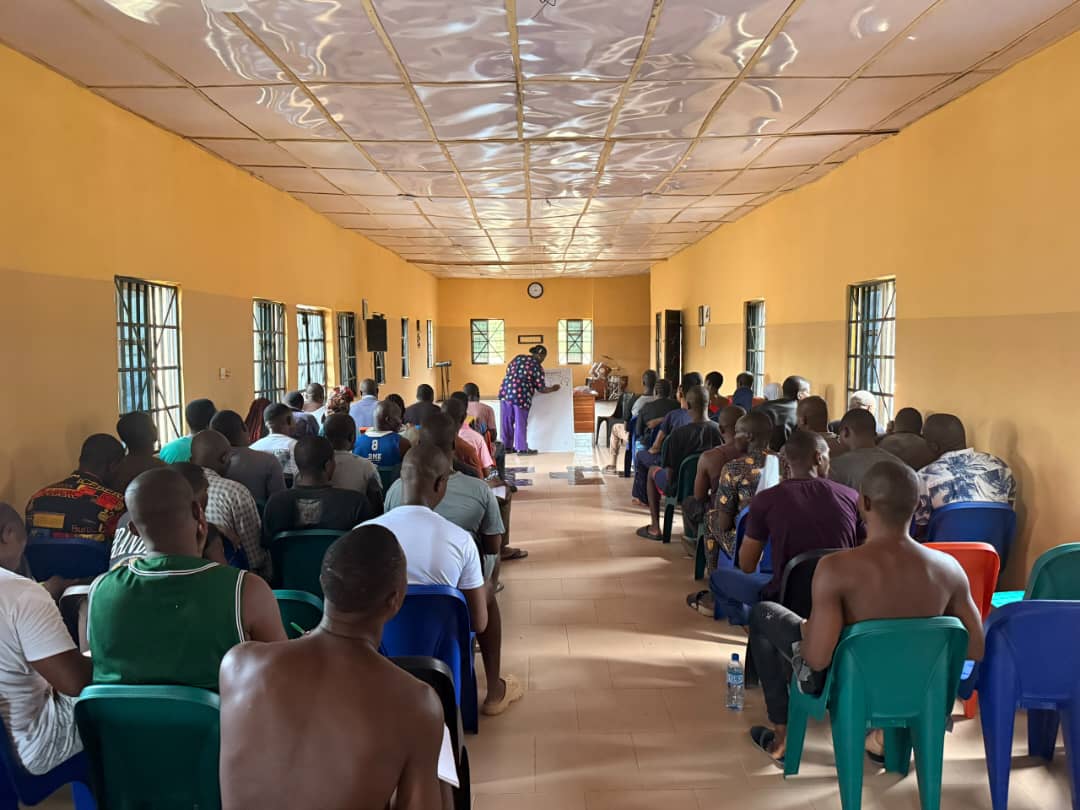
MENTAL health experts have called for increased investment in drug rehabilitation centres, affordable treatment and improved professional services to address substance abuse in Nigeria.
They made the call in separate interviews with the News Agency of Nigeria (NAN), citing inadequate facilities, high treatment costs and poor regulation of rehabilitation services.
Executive Director of Adicare Rehabilitation Home, Veronica Ezeh, a private facility in Lagos, said existing rehabilitation centres were grossly inadequate.
Ezeh, also a psychiatric nurse at the Federal Neuro-Psychiatric Hospital, Yaba, said the number of people abusing drugs was growing faster than available treatment spaces.
She listed government hospitals, National Drug Law Enforcement Agency (NDLEA) facilities, private homes, faith-based organisations, non-governmental organisations (NGOs) and traditional practitioners among providers of rehabilitation services.
However, she expressed concern over varying treatment standards, inadequate personnel, limited resources and the high cost of care.
She said some private facilities were operated by people without adequate knowledge of addiction treatment, resulting in inappropriate patient management.
“Some rehabilitation homes do not understand psychological treatment, medical treatment or proper patient assessment,” she said.
Ezeh added that poor referral systems and inadequate management of medical and psychiatric conditions undermined treatment outcomes.
She urged the Federal Government, particularly the Ministry of Health, to establish more properly equipped centres staffed by qualified professionals.
She also called for stronger regulation, mandatory registration of facilities and regular inspections to prevent abuse and unlawful detention of patients.
“Patients should receive professional care rather than being chained, locked up or deprived of their basic human needs,” she said.
Ezeh advocated partnerships among the government, private organisations and NGOs, alongside subsidies to reduce treatment costs.
Supporting the call for more facilities, Olugbenga Owoeye, Medical Director of the Federal Neuro-Psychiatric Hospital, Yaba, said the hospital had 90 beds dedicated to drug rehabilitation.
Owoeye explained that the facility had 60 beds for male patients and 30 for females, adding that the male unit had recently been renovated through an ECOWAS grant.
He said three consultant psychiatrists and about eight resident doctors provided daily care, while occupational therapy facilities also supported patients’ rehabilitation.
According to him, the facilities include computers, musical instruments, a barber’s salon, fashion-design equipment and a gymnasium to help patients acquire vocational skills.
Owoeye, however, said the available beds were insufficient to meet the needs of Lagos, which has an estimated population of 22 million.
“Government alone cannot do it,” he said, urging NGOs, corporate organisations and other institutions to support rehabilitation services.
He added that vocational training was essential to helping recovering patients become self-reliant and independent after leaving the hospital.
Similarly, Taiwo Obindo, a professor and consultant psychiatrist, described rehabilitation as a specialised and resource-intensive service.
Obindo said existing facilities could not meet the needs of the growing number of people with substance use disorders, particularly young Nigerians.
He said treatment could cost between N300,000 and N400,000 monthly, with many patients requiring at least three months of care, while some needed up to a year.
Obindo, the immediate past president of the Association of Psychiatrists of Nigeria (APN), identified inadequate personnel, rising medication costs and limited facilities as major challenges.
He urged the government to prioritise rehabilitation services.
Obindo called for improved remuneration, incentives for professionals working in rural areas, the integration of mental healthcare into primary healthcare and the implementation of the National Mental Health Act and Policy.
He also urged the National Health Insurance Authority to cover treatment and medication for substance use disorders, while stressing the need for sustained awareness campaigns.
Olumide Adams, a relative of a patient at the Drug Rehabilitation Unit of the Federal Neuro-Psychiatric Hospital, Yaba, recounted how his brother’s condition had improved since admission.
Adams said his brother had spent three months receiving treatment and was gradually regaining his mental stability, describing the experience as difficult but encouraging.
“It was really a tough and unforgettable experience, but we thank God that everything is now under control and my brother is gradually regaining his sanity,” he said.
He, however, appealed to the government to subsidise rehabilitation costs, noting that medication and other required services were expensive.
Similarly, a relative of a patient at Adicare Rehabilitation Home, who pleaded anonymity, expressed concern over the high cost of treatment, attributing it partly to the facility’s private ownership.
The relative urged the government to make private rehabilitation services more affordable for families.(NAN)