


By Alfred Ajayi
ANAMBRA State Government is set to employ about 200 Community Health Extension Workers (CHEWs) and at least 50 midwives to strengthen primary healthcare delivery across the state.
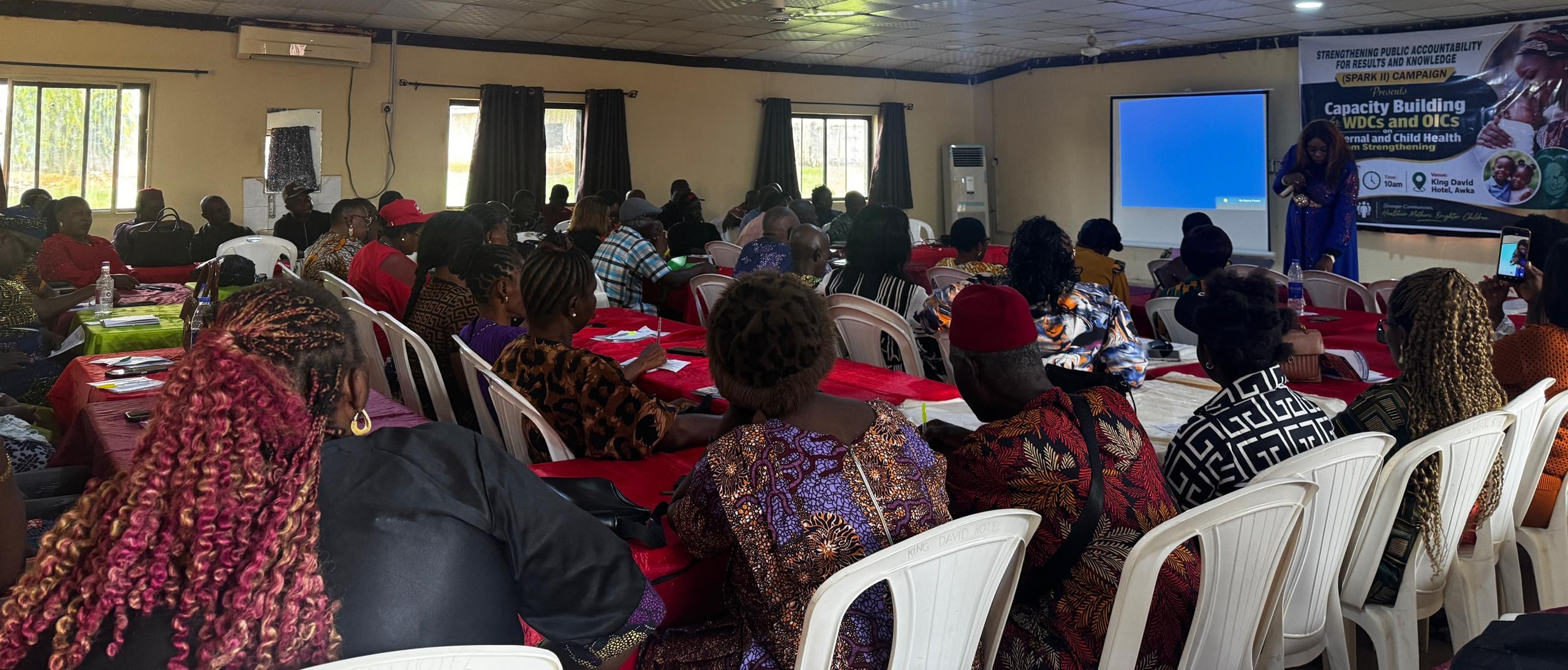
Executive Secretary of the (Anambra) State Primary Healthcare Development Agency (ASPHCDA), Chizoba Ezeasor, a doctor, disclosed this on Wednesday, November 11, during a capacity-building programme on maternal and child health system strengthening for Ward Development Committees (WDCs) and Officers-in-Charge (OICs) of primary healthcare centres.
The workshop was organised by the Justice, Development and Peace Caritas (JDPC), Nnewi, under the Strengthening Public Accountability for Results and Knowledge (SPARK II) project, supported by International Budget Partnership (IBP).
Ezeasor said the recruitment was being planned by the state government to address manpower gaps in primary healthcare facilities, stressing that the exercise would prioritise qualified and committed health professionals who reside in the communities where they would be deployed.
She explained that employing health workers from their respective communities would promote accessibility, strengthen accountability and ensure that personnel remained available to attend to residents’ healthcare needs.
The ASPHCDA boss, however, cautioned against political and personal considerations in the recruitment process, insisting that the government needed competent personnel who would genuinely serve.
She also called for greater accountability among existing health workers, noting that some Officers-in-Charge of primary healthcare facilities were not consistently available at their duty posts.
According to her, the success of the state’s healthcare system should not be measured only by the number of facilities constructed, equipment procured, personnel employed or services provided, but also by the experiences of patients accessing those services.
Ezeasor challenged healthcare providers to ensure that pregnant women received prompt attention, adequate information, privacy, dignity and respectful treatment throughout antenatal care, childbirth and postnatal services.
She acknowledged the state government’s investment in healthcare, including free antenatal care and delivery services in public health facilities, but maintained that making services free was only one aspect of the responsibility.
She said the quality, accessibility, safety and timeliness of services must also be guaranteed.
The Executive Secretary described community feedback as an important instrument for identifying shortcomings in healthcare delivery, understanding patients’ experiences and ensuring that identified problems resulted in corrective action.
She assured the implementing partners that ASPHCDA would collaborate with them to integrate the feedback mechanism into its existing monitoring, supervision and accountability structures.
Giving an overview of the capacity-strengthening exercise, the Executive Director of SIDEC, Ugochi Ehiaruhuike, explained that the project was designed to replace informal and poorly documented complaints about primary healthcare services with a structured community feedback and accountability mechanism.
She said the exercise would equip at least 50 WDC members and 24 PHC OICs with the skills to collect, document, analyse and respond to community experiences, particularly those relating to antenatal care, delivery and postnatal services.
According to her, the initiative seeks to establish a functional feedback channel connecting community members, WDCs, PHC officers, local government health authorities and ASPHCDA.
She identified high drug costs, inadequate sanitation, poor facility maintenance and unsatisfactory patient experiences as some of the service-delivery concerns the mechanism was designed to identify and address.
Ehiaruhuike said standardised feedback forms, documentation guides, response guides and action-tracking tools would enable community representatives to present complaints systematically, while healthcare officers would be expected to review concerns, take appropriate action and report progress.
She added that the project would also encourage WDCs and PHC officers to develop practical business plans based on identified service gaps and available resources.
Earlier in a welcome address, the Director of JDPC Nnewi, Benedict Okoro, a reverend father, said the initiative was designed to improve knowledge and strengthen the capacity of community structures and healthcare providers to deliver better maternal and child healthcare.
He acknowledged that Anambra had recorded progress in reducing maternal mortality but stressed that more efforts were required to protect mothers and children.
The Executive Director, Civil Rights Concern, (CRC), Okay Onyeka, described maternal healthcare as a shared responsibility, expressing concern over preventable maternal and child deaths.
He said the ultimate objective should be to ensure that no woman loses her life while giving birth, urging stakeholders to sustain their commitment to improving healthcare services.
In a goodwill message, the member representing Aguata II Constituency in the Anambra State House of Assembly and Chairman, House Committee on Health, Tony Muobike, described maternal and child healthcare as central to family and community wellbeing.
Muobike said primary healthcare remained the foundation of healthcare delivery. He urged community representatives and health workers to sustain their contributions to improving services.
He noted that maternal and child healthcare extended beyond hospitals and primary healthcare centres, as practices within households could also influence pregnancy outcomes and the safety of childbirth.
The lawmaker, who commended the state government’s investment in free antenatal care and delivery services, said the legislature would continue to work with the executive through oversight to improve healthcare delivery.
He, however, expressed concern over reports of absenteeism among some PHC officers. “Some OICs will open their facilities and go away to their private businesses. Others delegate their duties to volunteers,” he stated.
He called for greater discipline and accountability, assuring that the Assembly would support efforts to address practices undermining the government’s healthcare objectives.
In a presentation on developing PHC and WDC business plans, quarterly feedback collection and response plans, the SPARK II Programme Manager at JDPC Nnewi, Onyekachi Ololo, stressed the importance of collaboration between WDCs and PHC OICs in developing facility business plans, describing it as necessary for effective planning and service improvement.
The manager observed that some WDCs had become inactive despite continuing in their positions, recommending that those unwilling or unable to perform their responsibilities should be replaced with committed members.
The training featured sessions on patient feedback tools, respectful and patient-centred care, documentation of maternal health experiences, data quality, feedback analysis, identification of systemic challenges in primary healthcare delivery as well as practical exercises involving simulated patient interviews and focus group discussions.
The initiative is expected to establish a quarterly feedback and reporting mechanism through which identified concerns will be documented, referred to relevant authorities, addressed and monitored, with unresolved matters escalated to local government health authorities and ASPHCDA.
Ultimately, the organisers said SPARK II seeks to strengthen community participation and institutional accountability while ensuring that patients’ experiences inform decisions and improvements in maternal and child healthcare delivery across the state.