
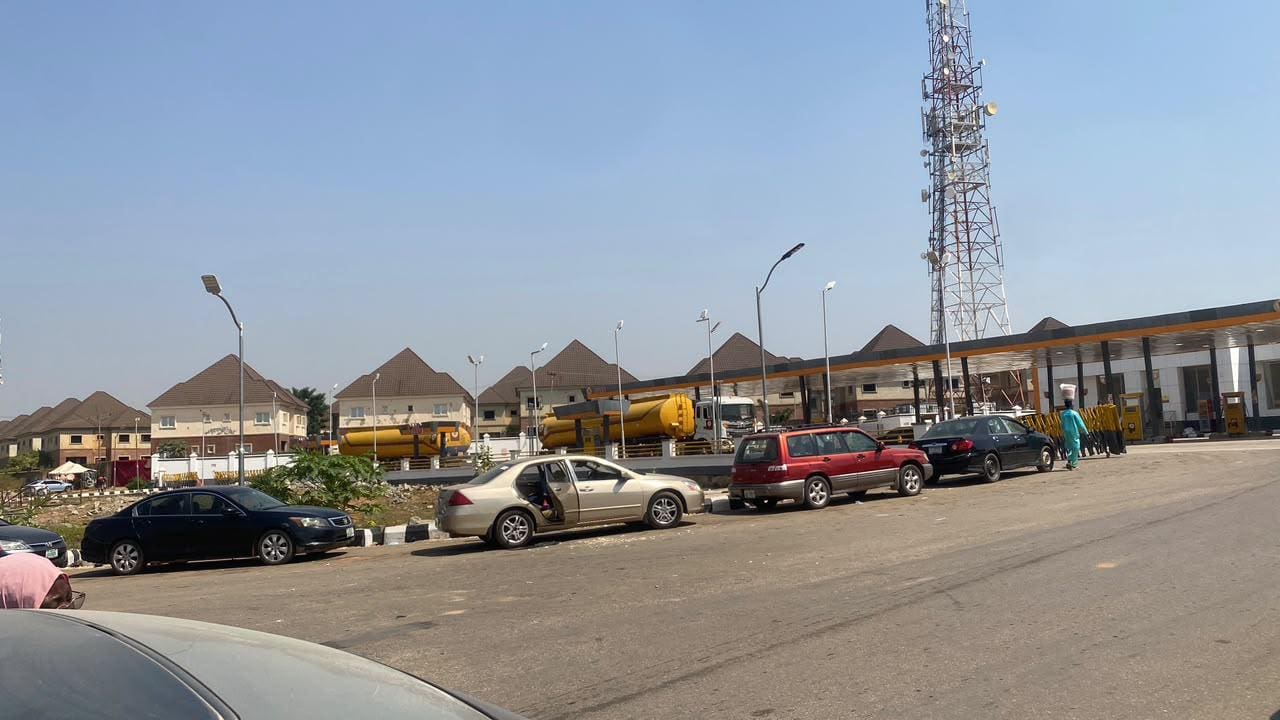
DESPITE spending hundreds of thousands of naira converting their vehicles to run on compressed natural gas (CNG), motorists in Abuja say unreliable supplies and lengthy queues at refuelling stations are undermining the benefits of the cheaper fuel.
It was a sunny Tuesday, with temperatures hovering around 33 degrees Celsius, but the heat was the least of Chris Emeka’s concerns. He had spent more than seven hours waiting in a queue at the NNPC filling station in Aleita, along Airport Road, Abuja, hoping to refuel his vehicle with compressed natural gas (CNG).
Emeka told The ICIR that the long queues had become an additional cost of using CNG, a fuel he had switched to after converting his vehicle to reduce his dependence on petrol, which currently sells for slightly above ₦1,400 per litre.
He explained that although CNG was considerably cheaper than petrol, accessing it was often difficult, forcing him and other motorists to spend several hours at filling stations and, sometimes, wait until the following day before supplies became available.
“On average, if you are able to buy CNG within two hours, you will be celebrating that you bought it on time,” Emeka said, adding, “Unlike petrol, which I can easily buy at any filling station, accessing CNG is difficult. Even when you have the money, you still have to queue.”

Emeka’s experience was not unusual among CNG users interviewed by The ICIR at filling stations along Airport Road. Several motorists said irregular supplies and limited dispensing points made refuelling increasingly difficult.
Olisa Onwuatuegwu, another CNG user, said he arrived at a filling station around 4:30 am on Tuesday, November 17, but was still waiting several hours later. He said some motorists sometimes slept at stations while waiting for gas, with a few spending as long as two days.
The challenges of accessing CNG extend beyond vehicle owners, affecting their families and homes. For instance, Oluwayemisi Adebayo rarely sees her husband, a commercial driver, during the day because he leaves home before 5am daily to queue for CNG. He often works until late in the evening before returning home.
“I hardly see my husband except at night. This is really affecting our intimacy. Even his children may not see him throughout the week because they would have gone to bed before he returns home. By the time he leaves for work in the morning, the children are still asleep,” she said.
According to her, queue for CNG has kept her husband away from home than ever.
CNG to cushion effects of fuel subsidy removal
The ICIR reports that the Presidential Compressed Natural Gas Initiative (Pi-CNG) was introduced in August 2023, following the removal of the petrol subsidy by President Bola Tinubu on May 29, 2023, the day he assumed office.
The decision triggered an immediate increase in petrol prices, with the NNPC raising the pump price from ₦184 to ₦488 per litre in Lagos and from ₦194 to ₦537 in Abuja on May 31, 2023, according to S&P Global.
The National Bureau of Statistics (NBS) reported that the national average retail price of petrol subsequently rose by 129.23 per cent, from ₦238.11 per litre in May to ₦545.83 in June 2023. The sharp increase heightened the financial burden on households and businesses, particularly through higher transportation and operating costs.
The PCNGI was designed to encourage the use of CNG as a cheaper alternative to petrol, support vehicle conversions and expand the infrastructure needed to distribute the fuel.
In March 2026, Tinubu expanded the initiative’s mandate to include electric vehicles and directed the deployment of mobile refuelling units to improve access while permanent infrastructure was being developed.
The initiative has reported 105 operational CNG stations across 24 states and the Federal Capital Territory as of October 15, 2026.
However, motorists interviewed by The ICIR in Abuja said the availability of stations on a national scale did not necessarily translate into reliable access. They complained that some stations along their routes either did not dispense gas or frequently ran out of supply.
Cheap fuel, expensive conversion
The high cost of converting vehicles to run on CNG is another concern for motorists, despite the savings they make on daily fuel expenses.
Emeka said he spent about ₦750,000 to convert his vehicle, with 75-litre iron cylinder.
He added that the investment was worthwhile because of the savings he made on fuel, but the frequent queues had reduced the convenience and satisfaction he expected.
On his part, Onwuatuegwu disclosed that he spent about ₦1.2 million on his conversion, noting that he initially paid ₦700,000 to install one cylinder before spending another ₦500,000 to add a second.
Despite the high conversion cost, he said CNG remained a cheaper option for his daily shuttle service between Lugbe and Abuja’s Central Area.
“With ₦18,000 worth of CNG, I can use my vehicle for at least four days. But if I buy petrol worth ₦18,000, it will not last up to two days,” he said.
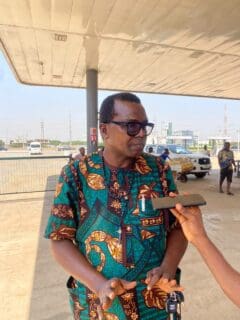
This was the same experience for Kofoworola Adejobi, a trader who uses her vehicle to deliver foodstuff.
Adejobi told The ICIR that CNG had reduced her cost of serving customers. She explained that a delivery that previously cost her about ₦7,000 using petrol now costs approximately ₦2,000 with CNG.
Adejobi said she initially spent ₦450,000 converting her first vehicle, before later paying ₦750,000 to convert the one she currently drives.
She said her vehicle’s tank holds about 17 standard cubic metres (SCM) of gas and that a full tank could take her approximately 170 kilometres, depending on usage.
At the Bovas filling station in Chika, a driver who simply gave his name as Tanko said he had spent hours searching for gas after arriving at about 11 am. He said he had visited other stations but was repeatedly told that supplies were expected.
Despite the frustration, Tanko said he continued using CNG because it remained more economical for his business than petrol.
He said ₦15,000 worth of CNG could help him generate between ₦40,000 and ₦50,000, while spending a similar amount on petrol might barely fetch him ₦20,000.
Tanko, who converted his vehicle in June 2026 at a cost of ₦1.2 million, said he had initially been discouraged by warnings that CNG could damage vehicle engines. However, he said his experience so far had not confirmed those fears.
He explained that the main challenge was getting the fuel whenever he needed it. At private stations, he pays between ₦500 and ₦600 per SCM, compared with about ₦380 at government-linked outlets.
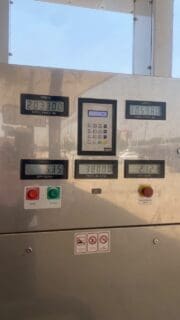
Some of the motorists interviewed said they had missed out on government-supported vehicle conversion opportunities that could have reduced their expenses.
Long queues, limited dispensing stations
CNG users interviewed by The ICIR attributed the long queues largely to the limited number of CNG stations in the nation’s capital.
According to figures presented by the Presidential Initiative on Compressed Natural Gas and Electric Vehicles at a stakeholders’ dialogue in Abuja on November 17, 2026, the Federal Capital Territory had 25 CNG refuelling stations as of November 12.
Speaking at the event, the Executive Chairman of the PICNG, Ismaeel Ahmed, said Nigeria had 116 operational CNG refuelling stations and 415 conversion centres, compared with about seven of each when the programme commenced in 2023. He added that the government planned to expand the infrastructure to 2,500 refuelling stations and 2,000 conversion centres.
The Head of Gas Supply Integration at the PICNG, Tare Mayor Bright, disclosed at the event that the South-West currently leads the number of available stations with 41, followed by the North-Central with 33, South-South with 17, North-West with 15, North-East with four and South-East with three. Of the total, 25 are located in Abuja, he noted.
Differences in CNG prices across Abuja
Meanwhile, The ICIR gathered that CNG prices vary across stations. Some government-linked outlets sell the fuel at about ₦380 per standard cubic metre (SCM), while private operators charge between ₦500 and ₦600, according to motorists interviewed by this organisation.
Although the lower prices make government-linked stations more attractive to motorists, users said the queues at these outlets are often longer.
Eze Sam, a businessman and teacher, said he had to leave a filling station queue to attend to his students before returning to continue waiting. He said only about two stations along his route dispensed gas when he visited.
Another user, Newday Ademola, said his experience with CNG had generally been good, but access remained a major challenge. He said motorists sometimes spent the night at filling stations because they could not get gas during the day.
Adejobi said the number of CNG outlets in the nation’s capital was insufficient to serve the growing number of CNG users and called for more dispensing points.
She added that she spent less time queuing because attendants gave priority to women.
Tricycle operators express concerns
Meanwhile, for commercial tricycle operators, getting CNG could be very challenging despite the affordability.
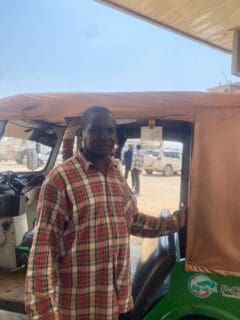
Muhammad Saidu, a tricycle operator who received his CNG-powered vehicle through a government empowerment programme, said he usually spent about ₦3,000 to refill it. Before the supply difficulties became more pronounced, he said he refilled two or three times a day.
However, living around Galadimawa and Kabusa means Saidu has to travel to Airport Road to access CNG because there is no outlet in his area. The journey, combined with the time spent waiting at filling stations, sometimes disrupts his work.
He said CNG remained cheaper than petrol, but the difficulty of accessing the fuel made it difficult for him to plan his daily operations around its availability.
Other tricycle operators interviewed by The ICIR also expressed simlar concerns.
Expert reacts
The National Programme Coordinator at Trade Network Initiative, Chris Kaka, described the shortage of CNG refuelling outlets in Abuja as an untapped business opportunity for private investors. He noted that expanding access requires multiplying stations across strategic locations in the city, adding that authorities can speed up the process by offering sites to investors at discounted rates.
“The deficit is a profitable investment opportunity. They need to multiply the stations across strategic locations in the city. The government can facilitate this through the provision of locations at concessionary rates to investors,” Kaka said.
Responding to motorists’ complaints about the suspension of government support for vehicle conversions, Kaka said halting the assistance amounted to breaking a public pledge. However, he noted that government officials needed to clarify why the support had been suspended, adding that the free conversion programme was never intended to last indefinitely.
“It is simply a breach of social contract, but before I call out the president, it is important to ask for the underlying reason for the stoppage. I must add that the government never promised an indefinite provision of the service to vehicle owners,” he stressed.

Mustapha Usman is an investigative journalist with the International Centre for Investigative Reporting. You can easily reach him via: musman@icirnigeria.com. He tweets @UsmanMustapha_M
Zainab Abdulrasaq ia a reporter and a fact-checker with The ICIR. She believes that accountable citizenship starts with an accountable government, which is why she highlights injustice and everyday struggles through her reporting, one story at a time. She adores reading and can be reached via zabdulrasaq@icirnigeria.org and @blackbookishgirl on Instagram/Medium