
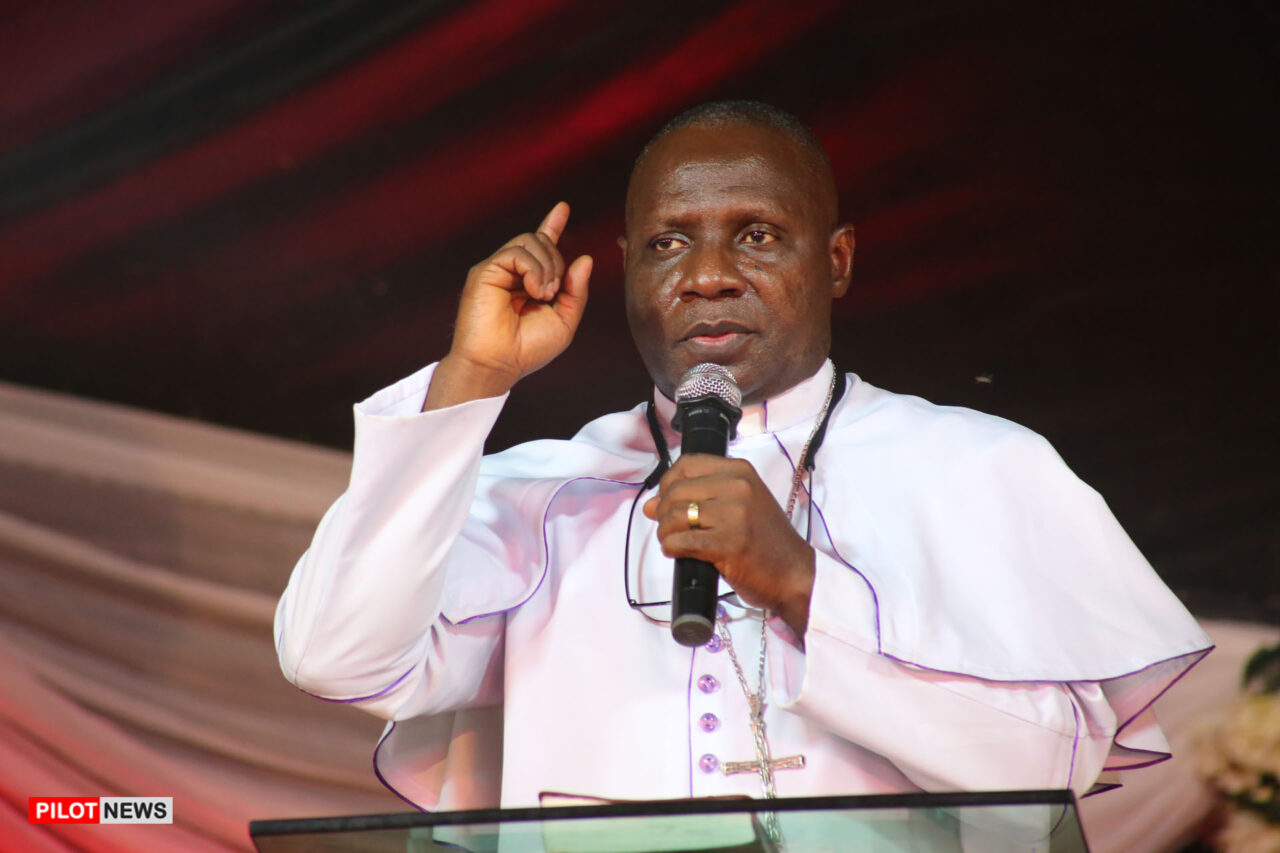
THE Christian Association of Nigeria (CAN) has backed the claims by United States lawmakers alleging a genocide against Christians in Nigeria.
CAN made this known in a statement issued by CAN president, Daniel Okoh, late Wednesday, in reaction to the renewed claims of Christian persecution in Nigeria by prominent figures in the United States, stating that Christian communities, especially in northern Nigeria, have suffered severe assaults, loss of lives, and destruction of places of worship.
“CAN affirms, without hesitation, that many Christian communities in parts of Nigeria, especially in the North, have suffered severe attacks, loss of life, and the destruction of places of worship.
“These realities are painful reminders of the urgent need for government and security agencies to act decisively to protect every citizen, regardless of region,” Okoh said.
Recall that US Senator Ted Cruz recently introduced a bill aimed at protecting “persecuted” Christians in Nigeria.
A member of the US House of Representatives, Riley Moore, urged Secretary of State Marco Rubio to take immediate and decisive diplomatic action against the Nigerian government over what he described as the “systematic persecution and killing of Christians” in the country.
Similarly, US comedian and talk show host Bill Maher alleged that Christians in Nigeria are being systematically targeted and killed by terrorist groups.
Reacting, President Bola Tinubu, on September 30, dismissed allegations of religious genocide in Nigeria as unfounded, stressing that the nation is built on the faith and resilience of its people.
Tinubu affirmed that no religion is under threat in the country, adding that after 65 years of independence, Nigerians have learned to value and embrace their cultural and religious diversity.
Similarly, the lawmaker representing Borno South, Senator Ali Ndume, appealed to the Senate at plenary on Tuesday to open diplomatic discussions with members of the United States Congress to challenge what it describes as “dangerous misrepresentations” portraying Nigeria’s security crisis as a campaign of Christian genocide.
On October 8, Minister of Information Mohammed Idris dismissed the claims of a Christian genocide in Nigeria, describing them as “ignorant, false, and baseless.”
In its latest statement, CAN debunked Tinubu’s claims by saying it has for years carried out sustained advocacy to highlight the persecution of Christians in Nigeria, including writing to the International Criminal Court (ICC) and hosting global Christian bodies like the World Evangelical Alliance and the Lausanne Movement.
“The pain of Christian families torn apart by violence must never be treated as mere statistics,” Okoh said.
The CAN president expressed concern that “these cries for justice and protection are too often met with delay or denial,” while urging the government and security agencies to act promptly and transparently to stop the killings and bring the perpetrators to justice.
“Nigeria’s healing will not come from denial or blame, but from courage: the courage to face our collective failures, to grieve together, and to rebuild trust within our communities. Only then can our nation rise from its wounds and embrace a future of genuine peace,” he stressed.
While acknowledging the efforts of the government and security agencies, he also urged the government to take swift and fair action to safeguard Christian communities under attack.
“We also appeal to all Christian leaders to continue to speak and act with wisdom, unity, and faith, knowing that peace is too fragile to be taken for granted,” he added.

Nanji is an investigative journalist with the ICIR. She has years of experience in reporting and broadcasting human angle stories, gender inequalities, minority stories, and human rights issues. She has documented sexual war crimes in armed conflict, sex for grades in Nigerian Universities, harmful traditional practices and human trafficking.