


By Caleb IJIOMA
THE ancient town of Oyo is known for its rich cultural heritage and blooming agricultural practices. The town, renowned for its rich Yoruba cultural heritage, is now facing a silent struggle. Although industrialisation is not at its peak, the Awe community of Oyo town has had to face a seemingly unending battle for survival, especially as residents accuse Bond Chemical Industries of polluting their water sources.
It was evening when this reporter arrived at the Adesakin Layout of Awe community, Oyo State. The street was relatively quiet, with a mix of modern and old houses. A walk through it revealed the stench in the atmosphere, the pungent smell of chemicals emanating from the waterway.
This community is battling a water crisis, and residents have been forced to get it elsewhere, abandoning the sources that have served them for years, but now seem to be polluted, allegedly by Bond Chemical Industries.
A closer look at this waterway revealed the cracks caused by chemical spillage, with residues evidently seen beside these cracks.
Bond Chemical Industries Ltd produces a variety of products, including medicines. Some of these medicines include Bonadol, Parafen Caplets, and Ibuprofen, amongst others. It also produces water and a variety of drinks.
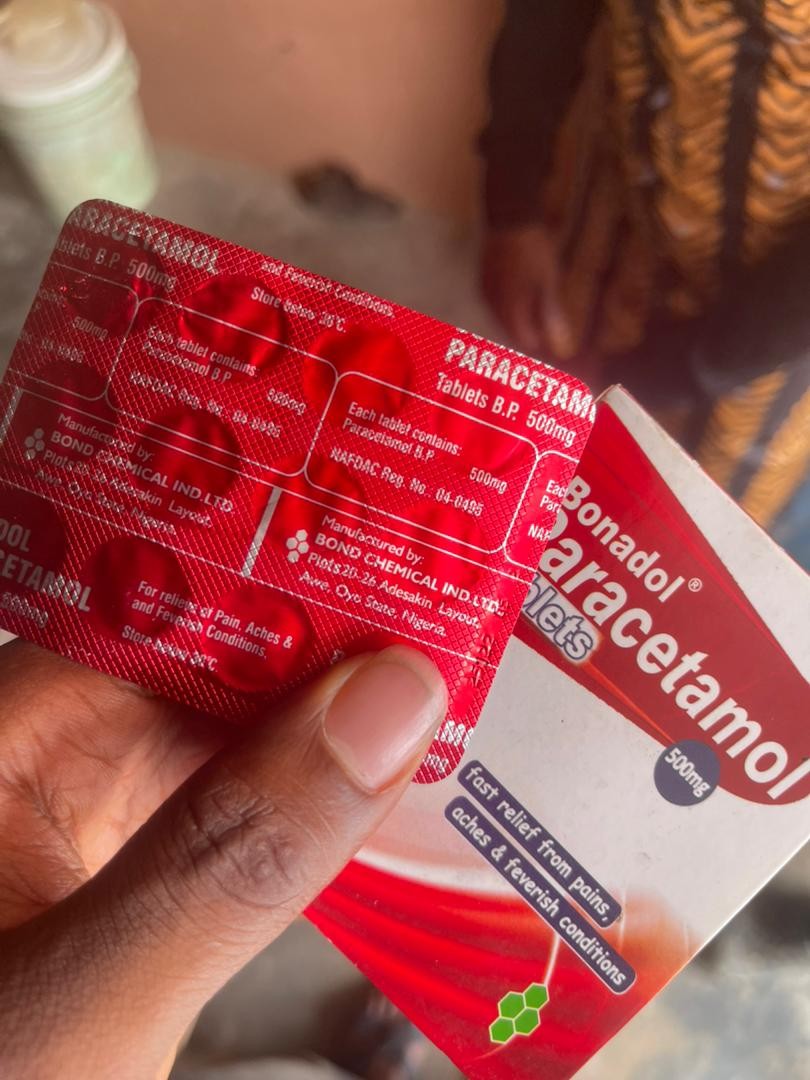
The manufacturing plant of Bond Chemicals Industries is situated within the Adesakin Layout of Awe community.
After walking some meters, The ICIR met a resident who lives in the area. An elderly man, in his 60’s, sitting on a wooden chair, and looking out from an incomplete building, he had a nervous look when this reporter greeted him. “ Ekale, Sir,” this reporter said in the Yoruba dialect, which means Good evening sir. As the conversation continued, his facial expression changed, depicting comfort.
Identified as *David, he sad he has lived in this area for a long time, narrating how Bond Chemicals has been situated in that community for over 10 years, with residents affected by its operation.

“ When they flush out these chemicals, and it passes through the gutters, it smells, and it is not good to inhale,” David said, pointing to the waterways where chemicals pass through.
He explained how residents have been forced to get water elsewhere where Bond Chemicals’ spillage does not affect.
David had to move to the affected area a few months ago, but still goes back to fetch water in his former residence. For a man of his age, he cannot risk using the water from where he currently lives.
“You’ll have to fetch water from the other side for drinking,” he said with a sombre expression.
Residents are forced to go elsewhere for water
The Adesakin Layout of Awe community is a long street, with residential buildings on both sides. On one side is where Bond Chemical Industry is built. Liquid wastes coming from this industry are connected to the waterway. The liquid waste contains chemicals that residents have said contaminate water sources, making it difficult for them to access clean water.
The waterway is the only path through which wastes from Bond Chemical Industries can flow. All houses on this side of the road are affected, and residents have been forced to painstakingly depend on the other side of the area to get clean water, or end up putting their lives at risk.
Research has warned that Arsenic and heavy metals deposited in water from industrial waste usually infiltrate underground water and wells, resulting in physical, muscular, and neurological degenerative processes that cause brain disorders and nervous system diseases in people.
This reporter, who sought to understand the impact this has on families residing in the affected part of the area, posed as an industrial worker in search of a house.
The building he walked into had some parts yet to be completed, and was closer to the waterway through which the chemical waste from Bond Chemical Industries flows.
*Folorunsho, who was carrying his little child, lives in this part of the area with his family. His wife, a trader, sells provisions and other items in a shop attached to the house.
Folorunsho advised the reporter to explore other areas for houses, saying residents are affected by contaminated water from Bond Chemical Industries.
“The traces in the gutter are the bad water I’m referring to from Bond industry down the street. However, the industry is not affected in any way because the waste is coming out of their factory.”
He said visitors from other parts of the country, who sought comfort in the area, barely survived, unlike him, who is now used to the water situation.
“ Those at the back of the street are affected as well, including non indigenes, and NYSC members that lived around the area, managed to cope”
As a result of the contaminated water, Folurunsho has been forced to walk down the street daily in search of clean water so that his family can be safe. He told The ICIR thatbefore now, the water was used to bathe and wash sometimes, but became worse with the company’s resumption.
“Ever since they resumed operation, it has been worse, and now we can’t even use it at all anymore,” he said.
The house Folorunsho lives in depends on a well very close to the building, which also serves many residents in the area. This well has been contaminated with chemicals from the waterway.
My children can’t use this water – Father
Folorunsho said that he cannot risk having his children make use of the water. Children in affected area are prone to contracting several diseases and are at the mercy of Bond Chemical Industries.
He fears that using this water for his children can have severe health implications.
“ I still bathe with the water myself but my kids can’t because I grew up using the water. But I had to fetch water from a clean source for my kids’ usage because they’re still little with soft skin,” he said.
Residents now have to make extra effort to make the water from the well cleaner, but this comes with a cost. One resident who spoke to The ICIR, said her family uses chlorine to make the well water clean. Findings revealed that a drum of chlorine costs about N130,000, with small sizes costing around N6,500.
“ We use chlorine to clean the water once every three months. We pour chlorine inside the well and we don’t use the water for seven days. After, we use the water to wash and cook,” the source said.
Chemical spills breach regulatory provisions
Chemical spills breach environmental laws in Nigeria by violating statutory regulations designed to protect air, land, and water resources, often resulting in significant ecological damage and public health crises.
Ayo Ademuluyi, an environmental and sustainability lawyer stated that chemical spills from Bond Chemicals Ltd contravene section 27 of the National Environmental Standards and Regulations Enforcement Agency (NESREA) Act, which explicitly prohibits the discharge of hazardous substances into the environment.
“Section 27 of the NESREA Act clearly forbids the release of hazardous substances into the environment. Any chemical spill that contaminates land or water sources is a direct violation of this provision,” he said.
He noted that the constitutional rights of residents living in the Awe community were breached, adding that the Supreme Court of Nigeria has recognised that the right to a clean and healthy environment forms part of the fundamental right to life as contained in Section 33 of the 1999 Constitution.
“When pollution from chemical discharge affects the health and livelihoods of residents, it raises serious constitutional concerns because the right to life under section 33 also implies the right to live in a safe and healthy environment,” Ademuluyi explained.
According to him, the NESREA (Establishment) Act 2007 also prohibits the discharge of harmful quantities of hazardous substances into the air, land, or waters of Nigeria, including adjoining shorelines.
He emphasised that this provision is also reflected in section 21(1) of the Federal Environmental Protection Agency (FEPA) Act, which similarly prohibits the release of dangerous substances into Nigeria’s environment.
“These legal provisions collectively impose a duty on companies to ensure that their operations do not contaminate water bodies, soil, or surrounding communities,” he added.
Test reveals water is unsafe for use
To clarify if this well water has been contaminated, The ICIR took water sample from one of the affected wells and conducted a chemical and microbial test.
Findings certified by the Institute of Public Analysts of Nigeria (IPAN) revealed the presence of brown coloration and suspended particles, indicating possible sediment contamination or iron-related discoloration. While the test result of the well water didn’t detect toxic metals, there was a high concentration of ammonia (3.72 mg/L), which suggests possible contamination.

The test concluded that the groundwater sample does not fully meet potable water standards due to poor physical quality and elevated ammonia levels
A lab scientist, who pleads anonymity, says that consumption of this untreated groundwater with suspended particles may expose residents to microbial pathogens, including bacteria, viruses, and protozoa.
He said that with the elevated ammonia, potential health outcomes include gastrointestinal infections, diarrhoea, and other waterborne illnesses, and poses a health risk to Vulnerable groups such as infants, elderly individuals, and immunocompromised persons.
Reinnet Awoh, a public health expert, explained that although the nitrate concentration in the analysed water sample is currently below the recommended guideline limit, the presence of elevated ammonia levels raises concerns about possible chemical changes in the water over time.
According to him, ammonia can undergo natural chemical and biological transformations that may increase the concentration of other nitrogen compounds, such as nitrites and nitrates, which could eventually pose health risks.
He warned that prolonged exposure to contaminated water could lead to serious health complications, including methemoglobinemia, commonly known as “blue baby syndrome.” The condition, which primarily affects infants, reduces the blood’s ability to carry oxygen and can result in potentially life-threatening complications.
Awoh also cautioned that if the water is microbiologically contaminated, it could expose residents to gastrointestinal illnesses.
“Consumption of microbiologically contaminated water can lead to gastrointestinal illnesses, including diarrhoea, vomiting, abdominal pain, and dehydration. Such infections are particularly dangerous for young children, elderly individuals, and people with weakened immune systems,” he said.
Authorities react to claims
The ICIR reached out via email to the National Environmental Standards and Regulations Enforcement Agency (NESREA), the agency responsible for enforcing all environmental laws, guidelines, policies, standards and regulations in Nigeria. NASREA assured that the complaints of chemical spills from Bond Chemicals will be investigated.
Bond Chemicals Ltd was contacted if the company is aware of this issue. The Head of Human Resources said no complaints have been made, He claimed that the company is not aware of this issue affecting residents of the Awe community.
However, messages sent to the National Agency for Food and Drug Administration and Control (NAFDAC) got no feedback as at the time of writing this report.