

IN Jigawa State, northwest Nigeria, economic hardship is forcing many couples to reconsider tradition. Across the conservative northern region, where family planning is often viewed as controversial, this ICIR special report explores why more couples are now choosing to have fewer children despite long-held cultural beliefs.
By Muhammad Abubakar Tahir
Fatima Musa, 30, sat on a wooden stool, clutching her seven-year-old daughter and worrying about their next meal. Her seven other children are away at a public school, and her anxiety over feeding them is fixed on the empty pot before her.
“We don’t have food for today, and we don’t have food for tomorrow,” Musa told this reporter who visited her home in Hadejia, Jigawa State. “I go out every day to look for food for my children,” she said.
Stories like Fatima Musa’s highlight a growing struggle among women raising large families in the state. With household resources stretched thin and husbands grappling with economic hardship, the responsibility of providing for many children has become an overwhelming burden.

“When you give birth, some men cannot even afford to slaughter a ram for the naming ceremony because there is no money. We want to have children, but we have no choice but to stop. Every day is a struggle,” she admitted.
The 30‑year‑old described how the strain of raising a large family without sufficient means has eroded her children’s wellbeing. She explained that they lack proper clothing, have little or no access to education, and are deprived of adequate healthcare. “They are suffering every day,” she said.
Faced with the dual burden of caring for many children while lacking the financial means to meet their basic needs, the mother of eight explained that her husband supported her decision to use a contraceptive implant. The reproductive health device, which is often surrounded by religious and sociocultural controversy in northern Nigeria, offered the couple a way to limit further childbearing and ease the strain on their family.
She had paid ₦5,000 for the service at a small private clinic, despite government family planning services and says that though the side effects were a burden, it was one she could endure as the alternative, another pregnancy, another child to feed, was unthinkable.
Musa’s decision to use contraceptives is not an isolated case. Recent data show that more women across Nigeria are embracing modern family planning methods, a shift that is contributing to lower birth rates. The 2023–24 Nigeria Demographic and Health Survey reports a decline in fertility to an average of 4.8 children per woman, compared to the 2018 survey, which recorded 5.3 children per woman alongside low adoption of modern contraceptives.
Although the country aims to achieve a 27 per cent modern contraceptive prevalence rate by 2030, as of October 2025, Nigeria’s modern contraceptive prevalence rate was only 15 per cent, according to the Federal Ministry of Health and Social Welfare.
In Dingare Kaugama LGA of Jigawa State, this reporter met Zuwaira Ibrahim, 35, looking worried. She said feeding her children has become increasingly difficult, even though her husband is a farmer. Rising food prices and economic hardship, she explained, have made it challenging for the family to meet their daily needs.
She said contraceptives, once viewed as controversial in her community, have seen increased acceptance due to the socio-economic hardship, adding that she and her husband visited a primary healthcare centre for birth control.

In northern Nigeria, where the success of family planning often depends on the support of male spouses, many of the women this reporter spoke with acknowledge that their husbands not only understand the rationale behind contraceptives but also accompany them to clinics to access these services.
Abdullahi Haruna, another resident of Hadejia, exemplifies this shift. After seven years of marriage, he explained that he has only two children and is deliberate about child spacing, a decision he admits is shaped by economic pressure.
The 40-year-old phone vendor said, “If I have too many children, there will be a problem. I cannot train them properly. Life is expensive.”

Hospital witnesses surge in child spacing services
At General Hospital Hadejia, Salma Umar Faruq, a family planning service provider, revealed that the facility receives more than 200 women seeking contraceptive services each month.
The surge, she said, means health workers who once had to conduct extensive outreach campaigns to persuade couples to consider family planning services now wait at the clinics to attend to the growing numbers who turn up. Many of the couples, she said, come from Haejia and neighbouring communities of Yobe and Bauchi states.
She said most of the clients come from rural communities, where services are provided free of charge, while women in urban areas often turn to private clinics or other health facilities for the same services.
Faruq confirmed that poverty and the high cost of living are the primary reasons women are seeking family planning services in the facility. She explained that the situation has become so dire that “Whenever you see a man personally bring his wife for family planning services, you should know that the economic situation is very serious.”
While emphasising that the service helps protect women’s reproductive health and contributes to the overall well-being of mothers and their families, there was a time when men discouraged their wives from using family planning services. Today, however, she said, “the situation has shifted, with husbands increasingly accompanying their wives to health facilities and supporting their choices.”

At the Hadin Primary Healthcare Centre (PHC) in Kaugama Local Government Area of Jigawa State, the officer in charge, Mallam Alhassan Sabo, said acceptance of family planning has improved significantly over the years.
“People are becoming more enlightened than they were in the past. Many of those who previously viewed family planning as being against religion have now gained a better understanding of its benefits,” he said.
“It is not just poverty that motivates women to use family planning. Some women choose it to allow their bodies adequate time to recover between pregnancies and to ensure their children receive proper care and attention,” he explained.
Sabo further highlighted the growing demand for family planning services in the area, adding that, “We are seeing remarkable progress. In April, we recorded a total of 53 clients, but in May, the number increased to 150, even though we had to conduct outreach activities in rural communities. This shows that awareness and acceptance are increasing significantly.”
As of February 2024, Jigawa State’s modern contraceptive prevalence rate (mCPR) stood at just 3.5%, one of the lowest rates in the country, compared to the national average of 15.3% among married women and sexually active unmarried women aged 15–49. Both figures remain far below 2024’s coverage target of 27%.

‘Smaller families, fewer mouths to feed’
Dr Najeeb Umar, a Medical Officer at Barau Dikko Teaching Hospital in Kaduna, argues for a significant shift in how couples in Northern Nigeria perceive family planning.
“In the past, it was not openly discussed. Today, couples visit health facilities almost every day seeking these services,” he said, adding that the change is the result of public awareness campaigns by health workers, evolving cultural and religious attitudes, and economic hardship.
“Its primary purpose is birth spacing, which allows a mother time to recover after childbirth. This improves the health of mothers, children, and the wider community,” he said.
Dr Umar, however, said economic hardship has become the main factor driving couples towards child spacing. “Men are struggling to provide food for their families. The prices of basic commodities continue to rise daily. This has led many people to adopt the principle of ‘smaller families, fewer mouths to feed.”
The medical officer noted that women have also come to terms with the current economic realities. “Children come with significant responsibilities and financial obligations. The present economic situation is not conducive to having many children. As a result, many women have turned to family planning.”
He added that when parents practice birth spacing, they can limit their family size to the number of children they can properly support and raise. “They can provide them with quality education, which helps eliminate illiteracy. The children will grow up to become self-reliant, which in turn helps reduce poverty,” he said.

Family planning must remain voluntary, says NGO
Zainab Ahmad Adam, Program Manager at Lafiya Nigeria, a non-governmental organisation that provides free family planning services, said the organisation conducts monthly outreaches across Jigawa State to provide women with Sayana Press self-injection contraceptives for birth spacing.
“Every month we have a target of reaching at least 3,500 women across the state, but almost every month we exceed our counselling targets,” she said.
Adam said that though economic hardship can shape household decisions, family planning must remain voluntary.
“Family planning should never be presented as something people are forced into because of economic conditions,” she argued. “Every woman and couple has the right to make informed, voluntary decisions about whether and when to have children.”
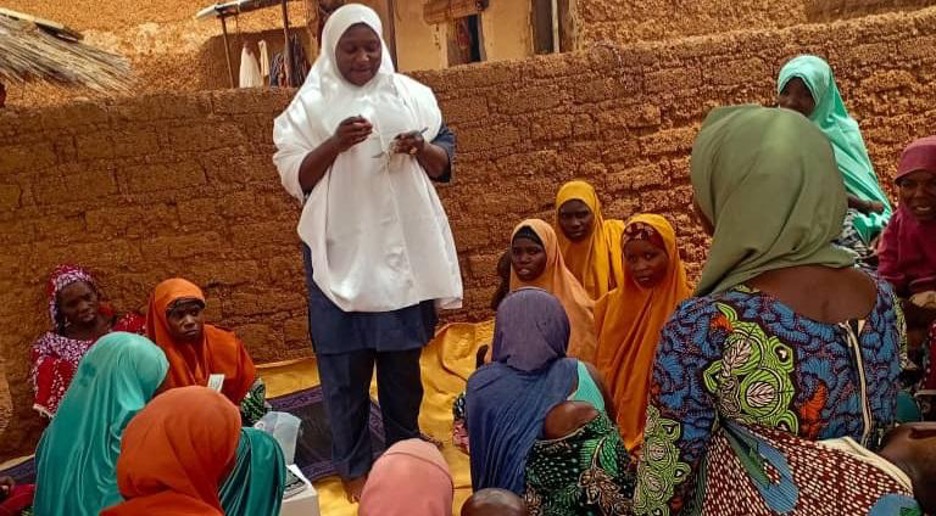
She said economic pressures may increase interest in family planning, but access should always be based on informed choices rather than financial necessity. “When we visit remote communities, women tell us life is hard, so they need to space their births to cope. Some even say their husbands encouraged them to use family planning to ease the burden on the family,” she said.

According to her, Lafiya Nigeria provided family planning services to 153,117 people across all 27 local government areas of Jigawa State between January 2025 and May 2026. She acknowledged strong progress, even in communities that once viewed family planning against their beliefs.
She added that the organisation hopes more Nigerians will embrace family planning in the coming years to improve maternal and child health.

Islam does not prohibit family planning- Scholar
Kano-based Islamic scholar, Sheikh Yusuf Hamisu, notes that family planning is one of the most debated topics in Islam but explains that spacing births to give a mother time to recover, or to ensure proper upbringing and education for children, is considered permissible in Islam.
“What is generally prohibited is preventing childbirth permanently, such as through sterilisation or hysterectomy, except when medical experts determine that a woman’s life would be at risk,” he said.
Sheikh Hamisu explained that “If a woman is likely to die if she becomes pregnant again, then limiting childbirth becomes necessary to preserve her life.” He adding that a stronger justification is the need to safeguard the upbringing and education of the children a person has already brought into the world.
The Islamic scholar said that though family planning remains a subject of differing opinions, many agree that protecting the health of the mother and ensuring the welfare of existing children are valid reasons for birth spacing.
Population growing faster than food supply, says expert
Dr Isah Abdullahi, an Economist at Federal University Kashere in Gombe State, cited the theory of English economist and demographer Thomas Malthus to explain the link between the prevailing situation and child spacing for many couples in northern Nigeria.
He said the Malthusian theory argues that population growth tends to outpace food production, which he said explains how poverty and household economic realities in Northern Nigeria are closely linked to rapid population growth.

“When the population grows faster than the food supply, there will not be enough food for everyone, and poverty becomes more severe,” he said.
He said a large population can be an economic asset only when governments invest in education, healthcare, skills development and employment.
“Countries such as China, India and the United States have made significant progress because they invested in education, human capital and economic opportunities. Germany, despite having a smaller population, has a highly skilled workforce,” he said.
The economist urged families to consider their financial capacity before deciding to have more children. “If a person knows they cannot support a large family, it is better to have fewer children whom they can afford to educate, clothe and raise properly,” he argued, warning that if Northern Nigeria continues to produce children who end up on the streets as almajirai or beggars because their families cannot care for them, the region will continue to struggle with poverty.
At the same time, Abdullahi said many families in the north are influenced by the popular proverb, “The mouth God creates will not be left without food,” a belief, he said, that encourages a high birth rate without consideration for economic consequences.
“Faith in God is important, but people must also plan according to their means. Families should have the number of children they can adequately provide for and give a decent quality of life,” he said.
Good job