
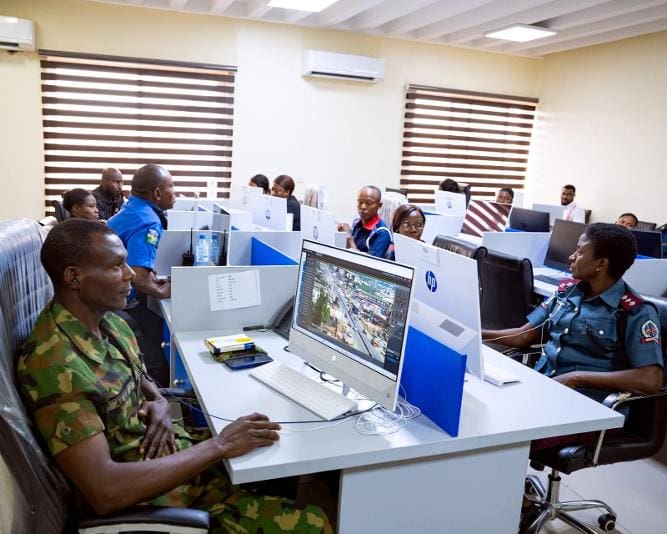

LESS than two years after it was commissioned with fanfare as Nigeria’s most robust fusion centre, the Solomon Arase Command-and-Control Centre in Edo State has gone dark. Its video walls are now blank, its toll-free emergency lines dead, and its inter-agency desks abandoned. But what remains even darker is its cost. Aside from the N100 million earmarked in the state’s approved budget for 2023 for the construction of the centre’s building, N20 million for crime mapping and N10 million for office equipment under the Ministry of Public Safety and Security, this ICIR investigation reveals that no other details are available on expenditures relating to the facility.
By Fidelis Mac-Leva
December 7, 2023, marked a historic day. The venue was Government House, Benin City. Dignitaries were ushered into a dimly lit hall where wall-to-wall screens flickered with live feeds from across the state. It was the climax of the state’s Security Summit, themed “Edo State Security Framework: Repositioning for the Future.”
Then Governor Godwin Obaseki, in his final year in office, unveiled what he called the future of security governance in Edo. He named it after a son of the state, former Inspector-General of Police, Solomon Arase, who died in August 2025.
“Crime is local as well as security, and until we have a decentralised legislative framework to allow the parts to take policing to a certain level and ensure active collaboration between the federal, central security agencies and local agencies, we will not succeed in fighting against criminality,” Obaseki said.
He said his administration was partnering with security agencies, leveraging technology, and evolving a public safety system anchored on citizen participation, but expressed concern about the sustainability of reforms after his tenure. He did not disclose how much it cost to set up the ultra-modern centre.
Minister of Police Affairs, Senator Ibrahim Gaidam, who was represented at the event, declared: “What we are witnessing today is the rebirth of a new security architecture that would inspire international best practices and herald smart policing order, where happenings will be monitored in real time, from the Command-and-Control Centre.”
Months thereafter, the government paraded the centre as proof that data-driven security works, with official briefings claiming crime had dropped by 41.7 per cent in the state capital.
It was a powerful narrative. Edo had just witnessed the high-profile rescue of abducted passengers at Igueben Train Station in January 2023, an operation the government later attributed in part to the intelligence architecture that preceded the formal commissioning of the centre.
For a state battered by years of cult killings in Benin City, kidnappings along the Benin-Auchi and Benin-Ekpoma corridors, and communal clashes in Edo North, the centre was sold as the brain that would finally make Edo safe.
From CCTV to empty housings
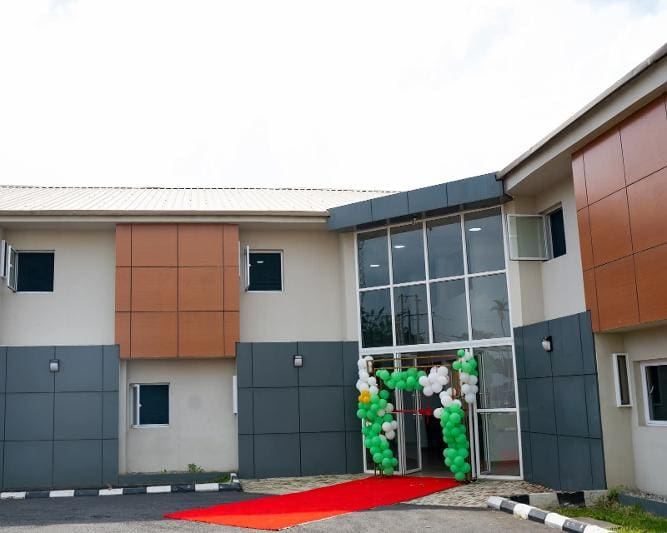
When commissioned, officials said the surveillance layer was integrated with streetlight and junction improvement projects. According to the then Edo State Police Commissioner, Abutu Yaro, the initial rollout of functional IP cameras mounted on streetlight poles and traffic infrastructure covered Ring Road and the central business district, Sapele Road up to First East Circular, Akpakpava Road, Dawson Road and the Iyaro-Urubi market axis, Mission Road, Airport Road to the Airport Gate, Sokponba and Forestry junction improvements, Five Junction to Uselu, Uselu to UNIBEN Main Gate (Ugbowo-Lagos Road), and Ekehuan Road to the Ekehuan Campus. The feed was backhauled to the centre for real-time monitoring by a joint team of police and state operatives.
However, a physical check conducted by ICIR along Ring Road, Sapele Road, Akpakpava, Dawson, Uselu-Ugbowo and Airport Road showed that most camera housings were either empty shells, without visible IR illumination at night, or lacking power from the streetlight poles they were mounted on. On some poles, the mounting brackets remain, but the cameras are gone. On others, the housings are visibly tilted and covered in dust.
Residents, drivers and shop owners interviewed along those corridors said they were unaware of any active government cameras currently recording. Several said they had never seen maintenance crews since early 2024.
The missing cost: A conspicuous silence
Curiously, from commissioning to collapse, no bill of quantities, contract sum, procurement date, or audited project cost has been made public.
Findings show that aside from the N100 million earmarked in the state’s 2023 approved budget for the construction of the building of the command-and-control centre, the N20 million for crime mapping and N10 million for office equipment under the Ministry of Public Safety and Security, no details are available on other expenditures relating to the facility. No published breakdown exists for the city-wide CCTV cameras, fibre optic backhauls, data storage, power backup, software licensing, or multi-year maintenance needed to make such a centre functional, leaving the project’s true cost undisclosed.
For a facility paraded as Nigeria’s most robust fusion centre — complete with video walls, dome cameras, an IP backbone, software licenses, call-centre infrastructure and inter-agency fit-outs — the total public spending remains shrouded in secrecy.
The silence is particularly glaring because the Edo State Public Procurement Law 2012 is explicit. Section 16 mandates that all procuring entities publish procurement proceedings, award notices and contract values in the State Procurement Journal and on the website. Section 30 requires a value-for-money audit. None of that exists for this project.
What the budget shows, and what it hides
Official budget records reviewed by ICIR confirm the centre was not a legacy project inherited from previous administrations.
It appeared first in the 2023 approved state budget under the Ministry of Public Safety and Security (Code 012400100100) with N100 million for the command-and-control centre, N20 million for crime mapping and N10 million for office furniture, bringing the ministry’s total capital allocation to N132 million.
The 2022 approved budget has no corresponding line for the command-and-control centre. Actual expenditure as of September 2022 is recorded as N0.00, confirming it did not exist before 2023. The wider security vote in 2022 was captured as a consolidated N9.2 billion public safety and security envelope in the governor’s budget speech, with no disaggregated breakdown for surveillance, software or hardware.
Budget experts told ICIR that the N100 million covers the control room structure itself — the civil works, video wall frames, consoles, and fit-outs of the facility named after former IGP Solomon Arase.
It does not cover the city-wide CCTV network that Commissioner of Police Abutu Yaro said was installed along major corridors. That network would ordinarily require a separate, much larger capital line for cameras, fibre optic laying, transmission equipment, data centre, cloud storage, power inverters, and multi-year software licensing.
The gap
The cost, procurement method, contractor identity, number of cameras, fibre and backhaul provision, power source and maintenance budget for that camera network — the component visible to citizens on poles — remain undisclosed.
The Edo State Quarterly Budget Performance Reports published on http://edostate.gov.ng report only aggregate capital releases per MDA and do not break down expenditure by project line, making it impossible to track how much of the N100 million was released.
As of September 29, 2026, no contract award notice, bill of quantities, or maintenance agreement for the CCTV component appeared on the Edo State Public Procurement Agency (EDPPA) public procurement portal, nor was it itemised under streetlight or junction improvement capital lines.
In effect, what the government published was the cost of a room. What it has not published is the cost of the surveillance system that justified it — and which today is largely non-functional.
Breach of procurement law
A search of the Edo State Open Contracting Data Standard (OCDS) portal (ocds.edostate.gov.ng) for fiscal years 2022, 2023 and 2024 — the period covering appropriation, inauguration and operation — using the MDA filter ‘Ministry of Public Safety and Security’ and keywords ‘Command and Control Centre,’ ‘Command Centre’ and ‘Crime Mapping’ returned no procurement record, award notice, or contract value for the project.
This absence violates the EDPPA Publication Policy, which requires proactive disclosure of all contracts above the threshold, including contractor name, contract value, procurement method and completion period.
A Benin-based procurement expert who sought identity protection said the failure to publish creates three risks: inflated costing, absence of warranty enforcement, and abandonment.
The peek inside the centre at its peak
A five-minute, 55-second sensitisation video produced by the Obaseki administration and obtained by ICIR provides an insight into the centre at its peak. Captioned: “For any emergency, call 112 or 739 – it’s toll free,” it shows former Commissioner for Public Safety and Security, Kingsley Uwagbale, conducting his counterpart for Digital Economy, Science and Technology, Ogbeide Ifaluyi-Isibor, round the facility.
Uwagbale explained that trained human personnel, not Artificial Intelligence, manned the centre to ensure human judgment in emergencies.
Key features captured include Emergency Communication Capacity with two toll-free emergency numbers — 112 and 739. The commissioner disclosed that the system could handle over 100,000 calls per minute during a crisis. Beyond voice calls, it was equipped with dedicated chat rooms where citizens unable to speak could type messages and receive immediate human response — a feature praised by gender advocates for victims of rape and domestic violence.
The control room was equipped with a large multi-screen video wall displaying real-time feeds from dome cameras. A scrutiny of live timestamps — e.g. 13-02-2024, 03:30 pm — showed coverage of critical locations such as Benin Bypass, Sapele Road/Ikpoba Hill, and Ogida Market. The essence was proactive crime prevention; accidents or security breaches could be spotted even before citizens called.
The facility operated a two-tier structure. Level one was the call-taking centre, where agents trained as emergency responders interrogated and documented incidents — rape, fire, accidents, kidnapping — within five minutes. Level two was the inter-agency coordination floor that hosted representatives of all security and emergency agencies seated together in one hall. They included the Nigerian Army, Air Force, Nigeria Police, Department of State Services, NDLEA, Federal Fire Service, Nigeria Security and Civil Defence Corps, and the Edo State Traffic Management Agency, EDSTMA.
The facility also housed a conference room that served as an Executive Security Council Chamber where the governor could convene heads of security agencies and take real-time decisions while watching live feeds zoomed in on the video wall.
On the impression that coverage was limited to Benin City, the commissioner clarified that surveillance extended across Edo State, with cameras deployed in other senatorial zones.
The station Manager at the time, Precious Idahosa, confirmed it responded to all life-threatening emergencies and appealed to residents to utilise the lines. Efforts to reach her were unsuccessful as she no longer works at the facility.
From fusion centre to ghost facility
Although this reporter was denied access despite a written request to the Ministry of Internal Safety and Security, findings from multiple independent sources reveal a stark reversal inside.
An insider who sought anonymity said: “The control room is unmanned, with equipment covered in dust. The desks are empty. Security personnel have been withdrawn to their respective commands.”
Another source who worked at the centre before it went dark said: “The place needs subscription, it needs diesel, it needs maintenance. Since this government came in, nobody has paid. The police personnel who are supposed to sit there 24 hours no longer come. The roster on the wall is still the 2024 one. It is still locked; nothing was stolen, but it is not functioning.”
The Edo State Police Command declined to speak on the status, but ICIR gathered that the inter-agency synergy celebrated in the video no longer exists.
Emergency numbers, dead
Checks show the toll-free numbers repeatedly advertised as the lifeline — 112 and 739, now referenced as 729 in some official communications — are no longer active.
Calls placed by this reporter on September 13 and 15, 2026 failed to connect. Residents interviewed said calls either do not go through or ring endlessly without response. The much-advertised chat room is also offline.
“The place is there, but it is not working. If you enter now, what you will see is darkness,” a security source within Government House told ICIR.
Government asks businesses to install CCTV cameras
On July 6, 2026, the Edo State Security Squad (ESSS), codenamed Operation Flush Out Kidnappers and Cultists, directed all business owners to install functional CCTV at their premises on or before July 30, 2026, or face clampdown. Spokesman Noah Idemudia said footage would help investigate crimes.
Compliance was poor at expiration, as many business owners complained about high cost. A supermarket operator in Ekenwan, who asked not to be named, said: “We already pay for diesel, POS charges, multiple levies. Now we must add CCTV or be sealed? Government should first fix its own command centre that is not working.”
Market checks of public e-commerce listings show why compliance is low. While older adverts listed 4-camera packages at N100,000 to N160,000 (Jiji.ng, Benin City listings, 2025), current prices have risen sharply due to naira depreciation and data costs.
Installers in Benin City now quote N160,000 to N220,000 for a standard 4-camera installation including DVR and mobile viewing, and N220,000 to N280,000 for 6 cameras (Nairaland installer rate card, 2024-2025; Jumia Nigeria DVR kits). An 8-camera system for supermarkets and hotels costs between N300,000 and N450,000 once a monitor and backup battery are included. Installation-only labour is advertised at N85,000 to N130,000 (Anytin.com, Sylvootech listing).
Operators say the kit is only part of the burden, as reliable surveillance requires inverters, solar or dedicated diesel, and monthly internet to retain footage, pushing true entry cost well above N350,000. For small shops operating on thin margins, that is prohibitive.
The Information Commissioner and Internal Safety Commissioner, Kassim Afegbua and Festus Ebea respectively, said the directive was prompted by a kidnapping at Vegetable Market on June 14, 2026, but said the deadline has been extended following concerns.
Police evade questions
The ICIR could not obtain a comment from the Edo State Police Command on the status of the centre and whether its officers had been withdrawn.
Police PRO Eno Nkereuwem Ikoedem declined to speak and referred this reporter to former Commissioner of Police, Monday Agbonika, now AIG Zone 5. Agbonika declined, saying he had handed over details to his successor.
Current CP Patrick Daapor, when contacted, requested that questions be sent via WhatsApp, which was done. When called again, he said: “I don’t have answers for you now. I know you were inquiring about the Solomon Arase Centre. Give me time to go there and find out what is happening before I talk to you.” Asked about withdrawal of personnel, he said: “My brother, I just came back from Owerri yesterday; give me time to find out.” He had not responded as of press time.

The N500 million reactivation claim
The current administration of Edo State acknowledges the collapse, saying it will require about N500 million to reactivate the centre.
Although no specific details were given in an official document, a source familiar with the assessment said the amount would cover replacement of vandalised and weather-damaged CCTV cameras, renewal of software licenses, settlement of outstanding maintenance fees to technical partners, reconnection of the IP backbone, powering of the facility and retraining of personnel.
When asked why it was not captured in the 2025 budget, Internal Safety Commissioner Festus Ebea said the centre was inherited in bad shape but failed to provide details, saying evaluation was ongoing, after which the state exco will decide.
On his part, Information Commissioner Kassim Afegbua said it was an ongoing project requiring about N500 million to complete, adding that it was left for the governor to decide whether to continue.
“I can’t lay my hand on the figure. We did asset verification, but it wasn’t one of the things because it is actually within the purview of the police,” Afegbua said.
He added: “People don’t understand when the governor said ‘I am going to provide e-security’; they said he meant insecurity. We have one or two drones for Edo North; the police and army are effectively using them to demobilise kidnappers’ den in the forest.”
He said the government’s approach was different: “I don’t think Obaseki bought 20 Hilux for security in his eight years. I am not sure he was giving them money for logistics the way we are doing now… The incumbent purchased about 300 motorcycles and distributed them to security agencies in addition to recruiting 2000 Edo sons and daughters into the Edo State Security Corps.”
Observers question how a centre commissioned as fully operational less than two years ago with capacity to handle 100,000 calls per minute could degenerate to a point where half a billion naira is needed.
ICIR reports that this mirrors a national pattern. The federal government’s $470 million National Public Security Communication System, built with a Chinese loan and commissioned in 2015, also collapsed after commissioning due to lack of maintenance and has remained moribund for over a decade, despite being meant to provide CCTV and emergency response for Abuja and Lagos.

Obaseki govt pushes back
But the former administration has pushed back, insisting it bequeathed a fully functional centre.
Former Information Commissioner Chris Nehikhare said: “We left behind a functional, world-class command and control centre that was the brain of our security architecture. It was instrumental to the rescue of abducted train passengers at Igueben Train Station in 2023 and the tracking of several kidnapping and armed robbery incidents. We had officers from the Army, Police, DSS, Fire Service and EDSTMA working 24 hours; our CCTV cameras were live, and 112 and 739 were active. Edo people knew to call 112, and help will come. For a government to now claim it is dysfunctional only shows they lack understanding of what they inherited. Government is a continuum.”
Former Commissioner for Public Safety and Security, Kingsley Uwagbale, declined to speak directly on the current state but referred ICIR to his book titled: Public Safety in Nigeria: Trends, Challenges & Prognosis – Insights from Lagos and Edo State 2015-2024.
On page 145, he wrote: “The Solomon Arase Command and Control Centre, a state-of-the-art facility operated continuously, serving all security agencies and the fire service.”
CSOs, analysts weigh in
The development has raised questions over continuity, as critics accuse the Okpebholo government of abandoning the facility because it was seen as an opposition legacy.
Benin-based public affairs analyst, Amas Edobor, described it as “a self-inflicted injury on Edo security.”
“I watched the video of that centre when it was commissioned. It was world-class… Today, the screens are dead. The numbers 112 and 729 are dead. If you have an accident now on the Benin Bypass, who do you call? This is what we keep saying: government is a continuum. It was built with Edo taxpayers’ money,” he stated.
Bright Oniovokukor, Executive Director of Indomitable Edo Youth, said: “When that centre was working, it was the best thing that happened to emergency management. One call and the Army, Police, and Fire Service would respond.”
Annie Umoru, Executive Director, Initiative for Gender Equality and Advancement, recalled the relief it brought: “As a gender advocate, we were very happy because for the first time, a woman who is being raped, a girl who is being harassed, could just call 112 toll-free and get help within minutes. They had a live chat room too for those who could not speak… What pains me most is the financial implication. Now you say you need another N500 million to reactivate it. So, we will pay twice for one project because of politics?”
The Coalition of CSOs in Edo State said it will embark on an assessment tour of moribund state assets and publish a report.
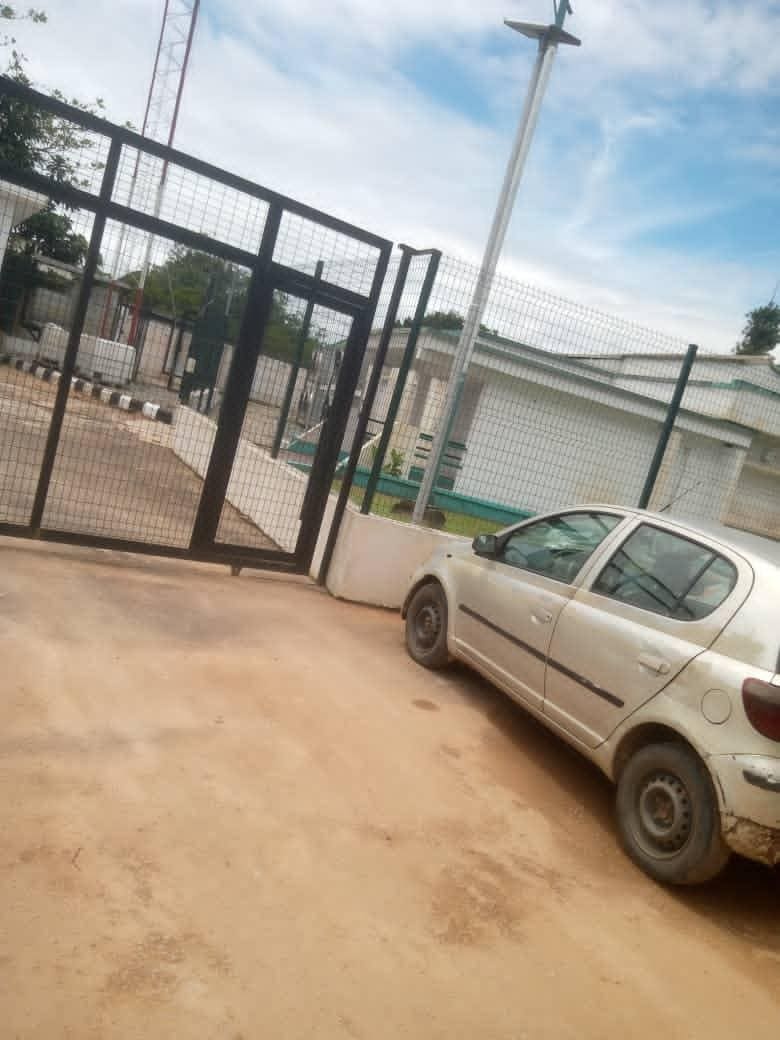
For now, the Solomon Arase command-and-control centre, once paraded as Nigeria’s most robust fusion centre, sits locked within the Government House, its screens dark, its lines dead, and its original cost unknown.