
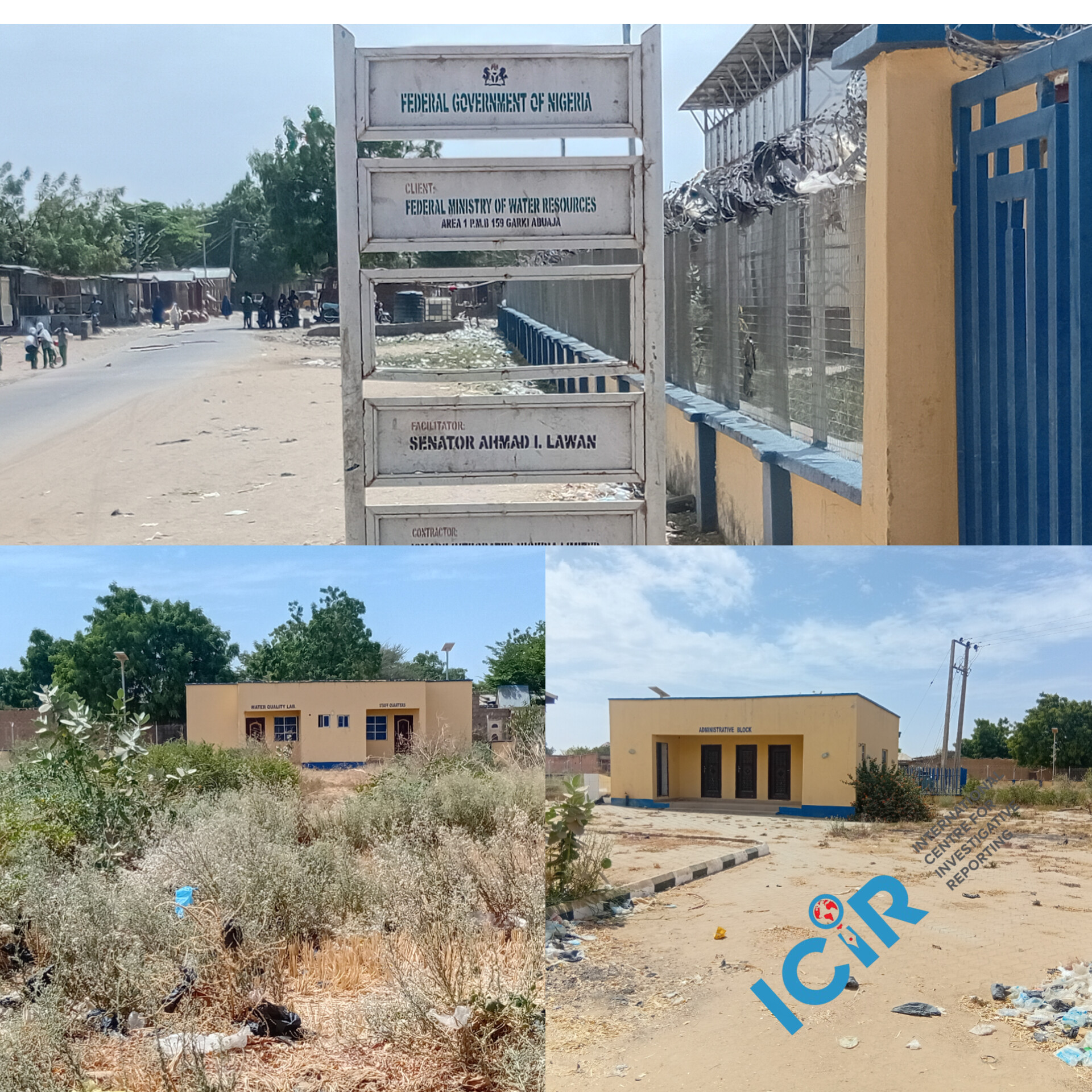
Residents of Bade, Gashua, Jakusko and other communities in Bade Local Government Area of Yobe have been battling a chronic kidney disease suspected to be caused by contaminated water. The ICIR investigation found that a N5.7 billion Gashua water scheme the federal government commissioned in Yobe in May 2025 to serve over 1 million residents remains dormant.
The project facilitated by former Senate President, Senator Amad Lawan, a resident of Gashua, was inaugurated by the Minister of Water Resources and Sanitation, Joseph Utsev, who described it as a strategic solution to long-standing water scarcity and repeated outbreaks of waterborne diseases in the region.
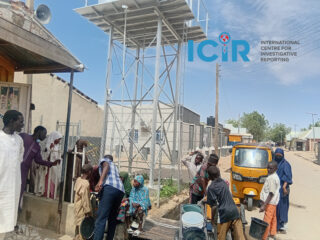
Ironically, findings by The ICIR showed that the water scheme functioned in the presence of the dignitaries that commissioned the project but stopped operating thereafter. The facility which has a water laboratory for water treatment was found firmly locked, with no sign of staff or activity as the surrounding compound has been overtaken by thick bushes and weeds, giving the impression that it had been abandoned for months without maintenance or human presence.
How we were diagnosed of kidney disease-Residents
In January 2024, Abdullahi Zakari, decided to visit the nearest clinic in Gashua, in Bade Local Government Area of Yobe State when he started experiencing general discomfort and frequent vomiting.
“When I went to the clinic, they found out that I was having hypertension. I didn’t even know that I had high blood pressure (HBP). I had never checked my BP in my life. My BP was reading 200, 190 something, 180 something,” Zakari said.
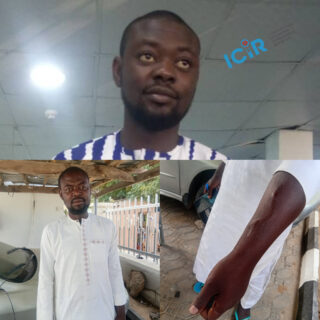
The 33-year-old father of one, said that he continued to take the drugs the doctor prescribed but started having blurry vision, swollen legs and shortness of breath, which prompted him to visit the Aminu Kano Teaching Hospital in Kano State on March 7, 2024, for a general test.
“That’s when I found out that I was having this kidney problem. So, for two years now, every week, I go to the specialist hospital in Damaturu twice for dialysis,” he said.
Zakari, a private worker, said that the state specialist hospital doesn’t charge for the dialysis but he spends at least N60,000 on transportation, accommodation, and feeding weekly for the dialysis.
“Dialysis is free. The only problem is the transport because each day I have to go to Damaturu, I spend not less than N11,000 on transport alone. I have to feed myself there. Every week, I must go twice. If I receive my salary, I just give my wife her daily expenses. Then, the remaining amount, I keep it as transport,” he explained.
Zakari’s case is not isolated as over ten patients diagnosed with chronic kidney disease- who are currently attending dialysis at the Yobe State Specialist Hospital Damaturu- shared similar experience.
Rising cases
An independent medical expert who pleaded to remain anonymous analysed the diagnosis result from Aminu Kano Teaching Hospital in Kano Zakari shared with this reporter.
“These symptoms are classic signs of advanced kidney failure, also called uremia, where waste products accumulate in the blood because the kidneys cannot filter properly. The extremely high blood pressure and neurological sign (asterixis) also indicate advanced kidney disease affecting multiple body systems. This patient has anaemia, common in CKD because kidneys fail to produce erythropoietin, the hormone that makes red blood cells,” the expert explained.
Residents of Gashua, Jakusko and other communities told The ICIR that for decades their family members and friends have died from kidney disease, noting that nearly every family in these communities have lost a loved one, relative, or friend to the disease.
A 40-year-old Habu Bunu, from Nguru, a neighbouring LGA, said that he is the survivor out of the five patients of kidney disease in his community that travel to Damaturu for dialysis, as the other four died one by one throughout 2025.
“Even this week, two patients died. One from Damaturu and another from Matina. It’s a terrible disease,” he said.
Bunu explained that he was first diagnosed with chronic kidney disease on October 15, 2024, and he meets with over 50 patients who come for dialysis on Mondays and Thursdays.
Similarly, Muhammed Nasiru Buba, a resident of Gashua, said he was diagnosed in August 2025 after experiencing severe discomfort, shortness of breathing and swollen face.
“I went to the Federal Medical Centre Nguru for a checkup. The doctor collected my blood and ran an EUC test. She prescribed some drugs and asked me to come back after two weeks for a scan. After everything, the doctor told me my creatinine was up to 330 and recommended dialysis,”
According to Mayo Clinic, a world-renowned nonprofit medical centre known for its integrated care, cutting-edge research, and commitment to patient-cantered healthcare, EUC (Electrolyte, Urea and Creatinine) is a kidney function test, noting that creatinine usually enters the bloodstream and is filtered from the bloodstream at a rate that tends to be constant. The amount of creatinine in blood should be somewhat stable. A rise in the level of creatinine may be a sign that the kidneys aren’t working as they should.
“Serum creatinine is reported as milligrams of creatinine to a decilitre of blood (mg/dL). Or it’s reported as micromoles of creatinine to a litre of blood. The typical range for serum creatinine is for adult men, 0.74 to 1.35 mg/dL (65.4 to 119.3 µmol/L) and for adult women, 0.59 to 1.04 mg/dL (52.2 to 91.9 µmol/L),” the Moyo website reads.
Muhammed Abba Lawal from Jakusko, a neighbouring LGA, said that in June 2024, one side of his face became swollen, and he went to the general hospital Jakusko for checkup.
“The doctor told me that my blood was low and infused six pines of blood on me immediately. When I got better, the doctor gave me a written note to take to the specialist hospital in Damaturu. It was there that the test revealed that I had kidney problem,” Lawal said.
Similarly, 60-year-old Shuaibu Idris from Matina, a neighbouring LGA, narrated that his health deteriorated in August 2025, when he started experiencing consistent headaches, shortness of breathing was told in the clinic that his blood pressure was high.
“We went to the hospital afterwards. That was where I was tested and diagnosed with kidney disease. The doctor referred us to the hospital in Damaturu for dialysis. I was thinking I will get better after one or two dialysis but it’s obvious my journey to the hospital will not end anytime soon,” he said.
In October 2025, Yobe State Government announced that it was extending the free dialysis programme that was first introduced by the previous administration for kidney patients across the state.
The Commissioner for Information, Abdullahi Bego, explained that the initiative was introduced to ease the financial burden on patients and their families while improving access to quality healthcare as part of efforts to tackle the rising cases of kidney-related diseases among residents.
A medical engineer based in Gashua, Muhammad Aji-Gana, who lost three family members to the disease within the interval of three years said it was a traumatic experience.
“I lost three of my siblings and my mother. First, my mom started in 2021. Her condition started with symptoms of rashes from her skin. She was treated with the creams and antibiotics for rashes treatment. After two weeks, the rashes disappeared but a week later, she felt discomfort. We took her to the specialist hospital Gashua. We were told to go for the kidney function test,” he narrated.
Aji-Gana said that after this test was carried out, his mother was found with high levels of creatinine and urea, noting that the two are the biomarkers that clinically show that a patient’s kidney is normal or abnormal.
“She was 61 years old. She spent three days in the hospital. In her four days, she passed away. So, the following year, after her departure, my sister who just gave birth to seven children was taken to hospital and for the first time, her blood pressure was very high. It was around 200. We were directed to go for EUC and LFT. The result showed that the kidney had failed and the liver was almost impaired,” he recalled.
The medical engineer explained that it was during the treatment that she passed away, noting that his second sister was diagnosed in 2023 too.
“She had given birth to a child and the child died immediately. Her BP was rising and we were directed to go for EUC and LFT again. She was diagnosed with high elevated urea and creatinine which led to due cause for dialysis. During the treatment, she passed away too,” he said.
Also, a family member of a 15-year-old boy who pleaded to be anonymous explained that the teenager showed symptoms commonly mistaken for minor illness, including persistent weakness and fatigue, reduced appetite, and swelling of the face.
“We didn’t understand the symptoms. it was when his face started swelling that we went to the hospital, but he died when we had just started treatment,” he explained.
The ICIR reported in 2022 that no less than 150 residents of Gashua, die of kidney disease yearly, meaning that the figures have increased, a data that could not accessed as at the time of filing this report.
This reporter gathered from medical experts during field visits to some of the medical facilities and laboratories in the communities, that the number of cases has seriously increased and more people are dying monthly from their database but declined to share relevant figures until this reporter can provide ethical clearance.
This reporter contacted the Executive Secretary of the Hospital Management Board, Abubakar Yerima, to obtain ethical clearance to interview medical experts at the state specialist hospital and gather data.
“It is the ministry of health that gives ethical clearance for any research. and you must come with a proposal of your research methodology,” Yerima said in a phone conversation.
The reporter also shared questions seeking data on the annual number of CKD cases recorded across state-owned hospitals in Yobe State over the past 10 years, disaggregated by location, age group, and gender.
Like all the medical experts this reporter met at the hospital, Yerima declined to respond to the questions but agreed to facilitate the ethical clearance process by forwarding the request to the State Ministry of Health for approval.
Multiple research projects have been carried out because of the alarming cases of death in these communities.
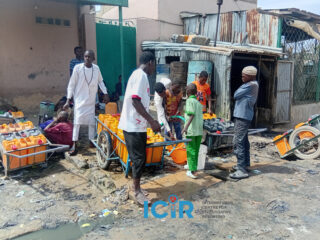
Buba and other sources explained that they drink water from vendors, who buy water from public boreholes, and sachet water popularly called pure water.
One of the research projects analysed by The ICIR is the one carried out by biochemistry graduate of Federal University Gashua, Khalid Rabiu Ahmad, in 2021, which assessed the quality of sachet water widely consumed in the town, amid growing public concern over kidney-related illnesses and the absence of consistent pipe-borne water supply.
Ahmad’s research found that popular sachet water brands sold in Gashua largely meet international safety standards for drinking water, with heavy metals and key physicochemical parameters falling within permissible limits set by the World Health Organization.
According to him, Gashua residents rely heavily on commercially packaged sachet water due to limited municipal water infrastructure.
Similarly, In late December 2025, a preliminary report by Mahmoud Maina, the Lead Researcher and Director, Biomedical Research and Training Centre (BioRTC), Yobe State University, indicated heavy metal presence in samples of water consumed by residents of Gashua town.
He said BioRTC, in collaboration with a 50-man team of scientists from the United States, United Kingdom, Ghana, among others which included nephrologists, geologists, chemists, physicians, geneticists and environmental scientists, collected over 3,000 human and environmental samples, including urine, blood, food items, farm soil, river and borehole water for the research.
FG water project dormant after commissioning
The ICIR found out that the government water facility that was supposed to treat water before distributing in Gashua stopped working some years ago. Although there are government drilled boreholes within the community, in May 2025, the Federal Government commissioned a N5.7 billion Gashua water scheme very close to the old facility to serve over 1 million residents.
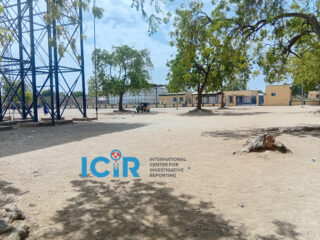
When the ICIR contacted the General Manager of the State Water Board, Baaba Habu for insights, he confirmed that there might be contamination in the sources water the residents drink from.
“There may be contamination because there may be the presence of heavy metals that are responsible for these kidney problems. We are aware of kidney failure in that community. The state is aware,” he said, noting that the water board has been trying to mitigate the problem “through advising the communities to avoid these shallow wells. Because the boreholes we drill are a little bit deeper, but the wells people are using in Gashua are shallow. So, there will be penetration of heavy metals from the surface into the groundwater.”
When The ICIR asked why the N5.7 billion Gashua water scheme was under lock since the board is encouraging residents to drink its treated water, Habu insisted that the facility was not under lock.
“I would disagree with this because we have an area manager there and we are operating the boreholes. We have three well fields. One is in the middle, the other one is this water works, and the other one is around Zango. And they are working. That’s the feeder, that’s the boreholes that feed the town. Apart from the isolated boreholes in the town,” he said.
Result of water lab-test
The ICIR collected water samples from the government water borehole Habu mentioned and samples from the private boreholes the residents buy water from to determine the heavy metals concentration.
The result obtained from Kembiz Scientific and Laboratories Nigeria Ltd, accredited by National Register for Conformity Assessment Practitioners under Standard Organisation of Nigeria (SON) and certified by Institute of Public Analysts of Nigeria (IPAN) revealed that the samples are Physico-chemically not satisfactory.
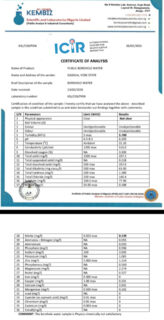
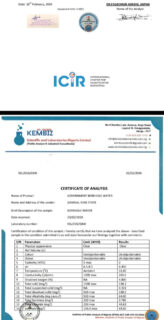
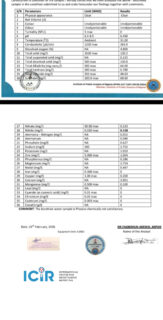
An independent Water Quality Analyst, who pleaded to remain anonymous explained that the result shows that both the government and public borehole water contains elevated levels of nickel and iron above World Health Organization (WHO) safety limits, alongside dangerous nitrite contamination, associated with kidney stress, noting that the water fails WHO drinking-water quality standards.
“You see the WHO standard values represent the maximum safe concentration of substances in drinking water. Sample 1 iron level is over 7 times higher than WHO limit. High iron causes: metallic taste, staining of containers, growth of iron bacteria, gastrointestinal irritation, Long-term exposure stresses kidneys and liver. Nickel exceeds WHO safety limits in both samples. The health implications are kidney damage, allergic reactions, possible carcinogenic risk with chronic exposure. This is a serious toxic metal finding.
“Both samples exceed WHO limit of Nitrite. This alone makes water unsafe for drinking because it reduces oxygen transport in blood, which is dangerous for infants” the expert explained.
The expert noted that the two water samples have heavy metal.
“If the water is not treated, it must have heavy metal because there are metals that are drilled from the soil. So, you don’t know what the component of that soil is,” the expert added.
Residents in limbo
While the N5.7 billion federal government water scheme in Gahua that is supposed to treat and supply safe water to over one million residents remain dormant, residents like Aji-Ghana have expressed fear that they may be the next victims of the chronic kidney disease that have continued to ravage Bade, Jakusko, Guru, and neighbouring LGAs.
“You see, I am a victim of this issue. I fell ill last two weeks, and the doctor told me to go for EUC and LFT when I went to the hospital,” he said, expressing fear that he might also face the same complications his three family members faced.
“Imagine losing family members each year it is very traumatising situation because it was reported that each year not less than 150 people are dying. 150 people are too many. meaning that each and every one of us will pass away through this process,” he added.
Aji-Ghana called on the state and federal governments to take action in solving restoring the water scheme to reduce the spike.
Also, Zakari and other patients currently undergoing dialysis in Damaturu have appealed to the government to establish dialysis centres in Gashua and at the state specialist facilities in neighbouring communities to ease the treatment burden and improve access to care.
“I used to be a farmer but since I was diagnosed with this sickness, I can barely go to the farm. This constant visit to Damaturu is telling on me. Sometimes I get stranded in Damaturu,” Abba said.
Idris explained that, if the dialysis centre is established in Gahua, it will be cheaper for him than travelling twice a week to Damaturu.

Nanji is an investigative journalist with the ICIR. She has years of experience in reporting and broadcasting human angle stories, gender inequalities, minority stories, and human rights issues. She has documented sexual war crimes in armed conflict, sex for grades in Nigerian Universities, harmful traditional practices and human trafficking.