

By Babatunde TITILOLA
FOR years, rural communities across Makurdi, Guma, and Logo local government areas of Benue State have lived under the shadow of armed violence, with farmers caught at the centre of repeated attacks that have killed residents, destroyed villages, and emptied farmlands. This investigation tracks displaced farmers across these villages, from the homes they were forced to flee to the places they now seek safety, revealing a pattern of brutal killings, forced migration, and the slow abandonment of agricultural life in one of Nigeria’s most important food-producing regions.
Read the second part HERE.
‘You won’t come back alive’
It was not said as a threat. It was said quietly, almost as a plea, the kind of statement that carries more exhaustion than fear.
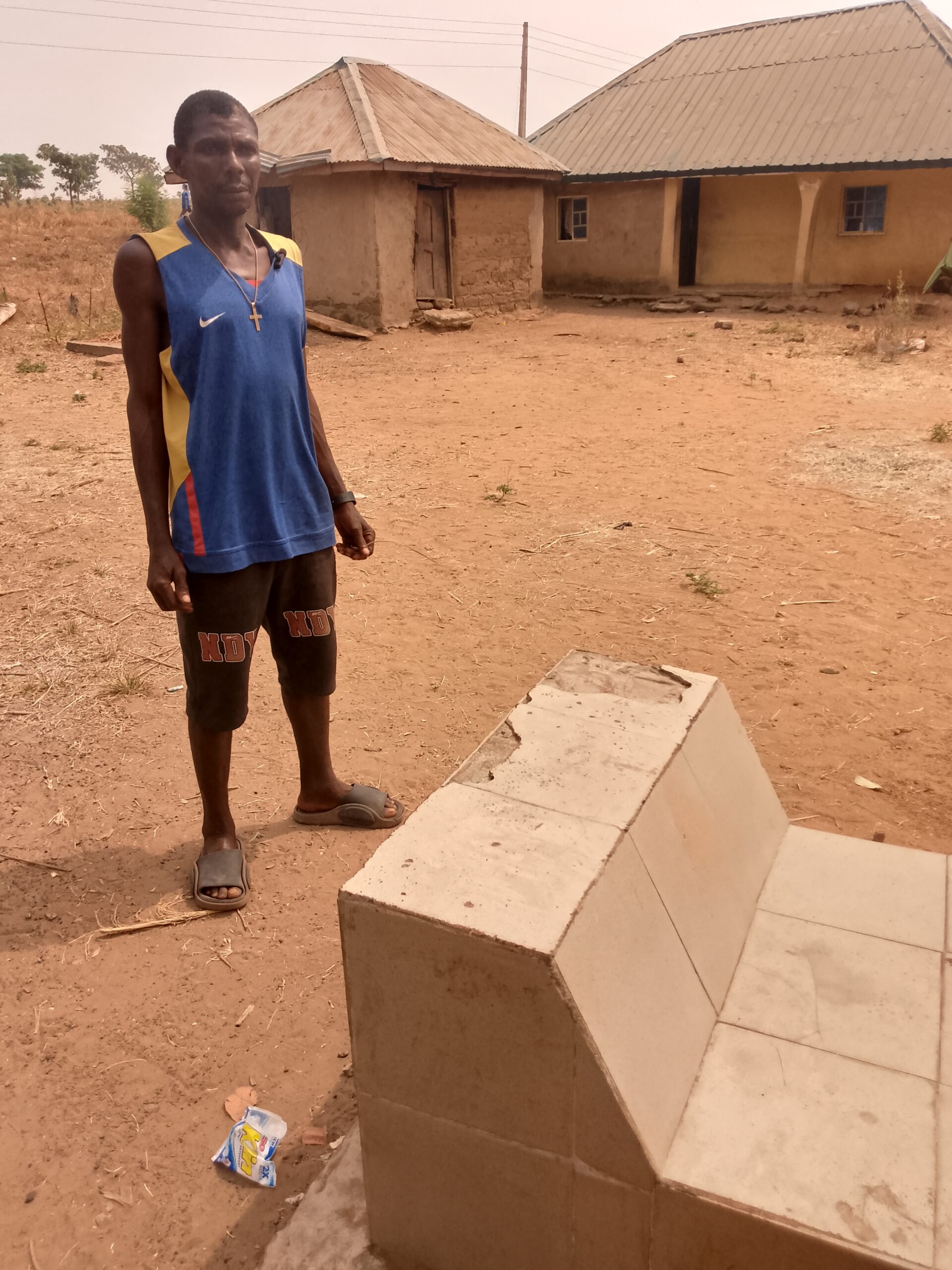
Michael Passenger, a 47-year-old farmer from Che-Ayagwa village in the Guma Local Government Area of Benue State, took a step back when he first saw this reporter approach, unsure who he was or what he represented. Only after he introduced himself did he relax slightly.

Still, when this reporter asked if they could walk to the farmlands, beyond the river that now marks the boundary between the villagers and armed herders, his voice changed. His warning on not coming ‘back alive’ came from six years of loss, displacement, and watching a community slowly disappear.
Two long journeys, one mission
Getting to Makurdi, the capital of Benue State, already felt like a journey into a story that few outside the region understand. From Lagos, this reporter flew to Abuja and then travelled six hours by road, watching the urban skyline fade into long stretches of farmland and quiet settlements.
There is no commercial airport in the state, and perhaps that distance, physical and symbolic, mirrors how removed these communities are from national attention. Yet this is Benue, widely known as Nigeria’s “food basket”, a state whose fertile land once fed millions, now increasingly defined by fear, silence, and forced migration.
The purpose of the investigation was to track farmers who have become victims of insecurity, and to document how years of farmer-herder clashes, kidnappings, and killings are forcing them to abandon their ancestral homes and farmlands.
Across several villages visited by this reporter in the Makurdi, Guma, and Logo LGAS of the state, farmlands now lie empty, not because the soil has failed, but because the people who used to work it no longer dare to return.
Many have sought refuge in neighbouring communities, while others have been spending years in internally displaced persons (IDP) camps, torn between the memory of home and the uncertainty of return.
On-site investigations revealed that what is happening in Benue is not just a security crisis; it is a quiet form of forced displacement. Families are scattered, livelihoods destroyed, and agricultural production is shrinking with every abandoned farming field.
A village under siege
In Che-Ayagwa, fear is now part of daily routine. Michael’s 30-acre farm still exists, just across the river, but it has been inaccessible for years.
“They are living on the other side of the river now,” he said.
The land has changed hands, not through sale or inheritance, but through violence and absence.
After Michael said this reporter would not come back alive if he went beyond the river, he was not only talking about the path across the other side. He was describing the reality of a people who no longer sleep indoors, who keep watch through the night, who measure survival in days rather than seasons, and who farm memories instead of land.
It was soon discovered that his story is not an exception in Benue; it is the pattern.The 47-year-old has lived in Che-Ayagwa his entire life. It is the village where he was born, and where he once cultivated 30 acres of farmland.
According to him, the violence that changed everything began six years ago. “We lost 35 villagers that day,” he said.
The memory remains sharp. On that day, one of the villagers had gone to the riverside and noticed smoke rising from the bush. Alarmed, he ran back to inform the residents. But the warning was not taken seriously. Life continued as normal.
That evening, everyone gathered at the village centre, watching television, unaware that it would be the last normal night for many of them.
Later, after they had returned to their huts, the gunshots began.
“By the time I stepped outside to see what was going on, what I saw were dead bodies,” Michael recalled.
From that night, Che-Ayagwa stopped being just a village. Residents said it became a place under siege, and the river that runs close to the community turned into an invisible border between life and death.
On the other side of the river lie the farmlands, once the community’s economic lifeline. But now, those fields are abandoned.
“Since then, we do not go beyond the river where our farms are,” he said.
The fear is not based on rumours or distant reports. It is renewed constantly. Just the night before the conversation with Michael, another villager had been killed while attempting to sneak into his farm to gather what to eat.
“They even killed one of us yesterday (January 29) when he attempted to go to his farm to gather what he could sell or cook for his family. People are hungry here.”
Sometimes, Michael says, the attackers can be seen from afar, standing across the river, close enough to be visible and to remind the villagers that they are being watched.
“If you go to the river, you will see them sometimes far away, but crossing to the other side is dangerous.”
A weird survival plan
The danger does not stop at the farmlands. The violence often spills into the village itself. According to Michael, there are times when armed herders enter Che-Ayagwa without warning. When that happens, the community has developed its own survival routine.
“When they come, we will quickly tell all the children to run away while we, the old ones, stay with them. If they want to kill us, at least they will not be able to pursue the children.”
He said it is a strategy built on sacrifice. They accept death as a possibility as long as the younger ones have a chance to live.
Michael spoke of other villagers whose lives have been permanently altered. One man lost his first child and saw his second child injured by gunfire. Although the bullet was removed, the damage never fully healed.
“A villager… they slaughtered his first child and shot his second child. Despite removing the bullet, his hand has never remained the same.”
Findings showed that the attacks have reshaped not just movement, but sleep, space, and the meaning of safety itself. Homes are no longer places of rest.
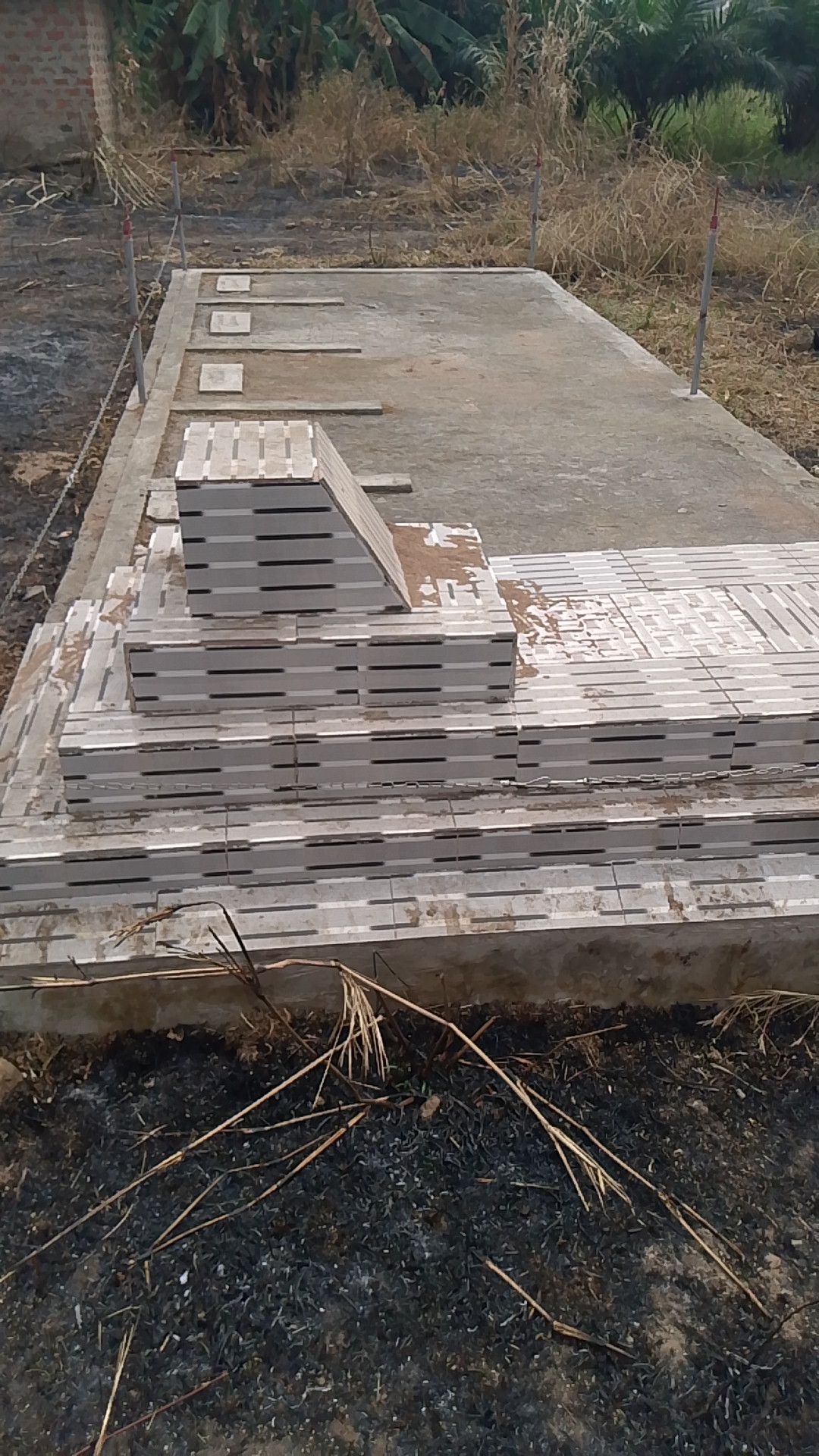
“We do not sleep indoors anymore. We sleep outside just in case they attack,” Michael said, pointing to the space where he sleeps every night, adding that, “We sleep beside graves.”
For Michael and many others like him, abandoning their farms did not happen overnight. It happened slowly, through fear, repeated attacks, and the realisation that returning to the fields could mean not returning at all. The farmlands remain untouched, not because they have abandoned farming, but because farming has become a risk they can no longer afford.
A pattern of reported attacks across Benue
Findings showed that what is happening in Che-Ayagwa is not isolated. Across Benue State and several parts of Nigeria’s Middle Belt, similar stories have been repeatedly documented by national and international media, human rights organisations, and security reports.
Over the past decade, reports showed herder-related violence has evolved from sporadic clashes into a sustained pattern of armed attacks on rural farming communities.
Multiple reports by Nigerian newspapers, have chronicled waves of attacks in Benue, Plateau, Nasarawa, Southern Kaduna, and parts of Taraba. These reports consistently described armed groups invading villages, killing residents, burning homes, and forcing entire communities to flee.
On February 6, armed herders invaded Anwase market in Mbaikyor council ward of Kwande LGA. The assailants razed the market while the market men and women ran for their lives.
The attack came two days after the attack on Abande community in the same ward council where 17 persons were reportedly killed and several others injured.
According to data from different conflict monitoring organisations, thousands of civilians have been killed in farmer-herder-related violence over the last decade, with Benue State ranking among the most affected. In several years, Benue alone recorded hundreds of deaths, dozens of destroyed communities, and tens of thousands of displaced persons.
In 2018, for instance, coordinated attacks in Guma and Logo local government areas of Benue reportedly left more than 70 people dead within a few days, triggering national outrage and mass displacement. Since then, similar incidents have been recorded almost annually, with communities in Agatu, Kwande, Makurdi outskirts, and Gwer West repeatedly appearing in casualty reports.
In April 2025, after a fresh wave of attacks on villages across Guma, Logo, and Ukum local government areas, the state governor, Hyacinth Alia, told the public that 598 people lost their lives while thousands were left without homes as of April 17, 2025.
Despite the promise of the governor, Hycinth Alia, to improve the security in the affected areas, attacks resumed on May 9 in the three local government areas and also in Kwande, leaving at least 20 people dead.
On June 13, 2025, Yelewata community in Guma local government area was thrown into mourning after assailants attacked the residents, leading to the death of over 100 villagers, including farmers.
Designed by bullets, a village of dead bodies
About 20 minutes away from Che-Ayagwa, along the Abagena expressway leading into Makurdi, the capital city, another village tells a similar story.
It was a sunny Thursday afternoon, and Oluga Akerenyi was under the big tree in front of his house. Lying on a mat and receiving the cool breeze that the tree’s leaves could offer, his wives sat on a bench beside him as the family traded in conversations.
Akerenyi has been the village head for years, but he said the attacks began three years ago, marking the start of a cycle of violence that the community has not recovered from.
“We were all taking in fresh air the night they attacked us,” he said.
According to the chief, the assault came suddenly. People ran in different directions, trying to escape, but many were unable to move fast enough.
“Everyone ran, but some were caught either by bullets or machetes. There was blood everywhere,” he said.

He explained that during recent attacks, a substance was released into the air, making it difficult for villagers to breathe and slowing them down as they tried to flee.
“There was a particular chemical they released into the air as people were running. This chemical stopped people from breathing well, so it slowed their movement and allowed the attackers to catch up with them,” he narrated.
Since then, large parts of the village have been abandoned, especially the areas closest to where the attackers are believed to emerge from.
“Because of the attacks, we decided to abandon the huts that are close to where the attackers always come from,” the chief said.
While some residents fled Abagena entirely, others had nowhere else to go. Even those who tried to leave eventually returned, not because the village was safe, but because survival outside it proved impossible.
“We once left the village, but there was nothing for us to live on outside, so some of us came back,” he said.
Like many farmers across Benue, the chief has also lost his livelihood. His farmlands are no longer accessible.
“We cannot go to our farms anymore because they are there. I used to have six acres, but not anymore. Now we are just trying to cultivate whatever we can inside the village.”
The scale of loss in Abagena is visible everywhere. According to Akerenyi, the community has buried hundreds of people since the attacks began.
“There are more than 100 graves in this village,” he said. “For some people, we do not even build proper graves. We just dig the ground, do the necessary rites, and cover it.”
He pointed to a nearby compound along the path leading to his home, describing it as one of many silent reminders of what the village has endured.
“The hut you passed to meet me here was a place where someone was recently killed. They chased the man and caught up with him before they cut him into pieces and beheaded him. They took the head around the village before throwing it away,” he narrated.
Headless father buried beside wife, four children
Akerenyi led this reporter to the compound where he narrated how an entire family was wiped out when the attackers entered their compound at night during one of the invasions.
“They burnt the first compound they entered and killed everyone there. It was a family of six. The father was beheaded, and the wife and four children were shot to death,” he said.
Pointing to the graveyard where the family were buried, he said the villagers buried the husband without his head.

The psychological toll has been just as devastating as the physical losses. According to the chief, displacement has changed the geography of fear.
“We have heard that some Fulani herdsmen have migrated to the other side of the road. Now we are in their middle. They can surround us from both sides at any time,” he said.
Like Che-Ayagwa, this village has not been officially evacuated. Findings revealed that there are no formal relocation plans, no permanent security presence, and no realistic path back to normal life. What remains is a community surviving in fragments, farming within fences, sleeping with fear, counting graves, and living with the constant knowledge that safety is temporary and survival is accidental.
Common patterns
Moving through several villages and informal settlements across Benue State, a pattern was discovered. The footpaths wound between clusters of mud houses, opening into small squares and narrow side lanes, each compound separated by low walls and patches of dry earth.
But across all the spaces, regardless of layout or size, one feature was common. In nearly every compound, beside homes that were still occupied and others already abandoned, there was at least one grave. Some were carefully marked, others barely distinguishable from the surrounding soil, but their presence cut across each village, turning private living spaces into shared sites of mourning and making death a permanent part of every community’s physical landscape.
In one of the villages, residents led the reporter to a recently abandoned compound, its doors left open and household items still scattered across the rooms as if the occupants had only stepped out briefly.
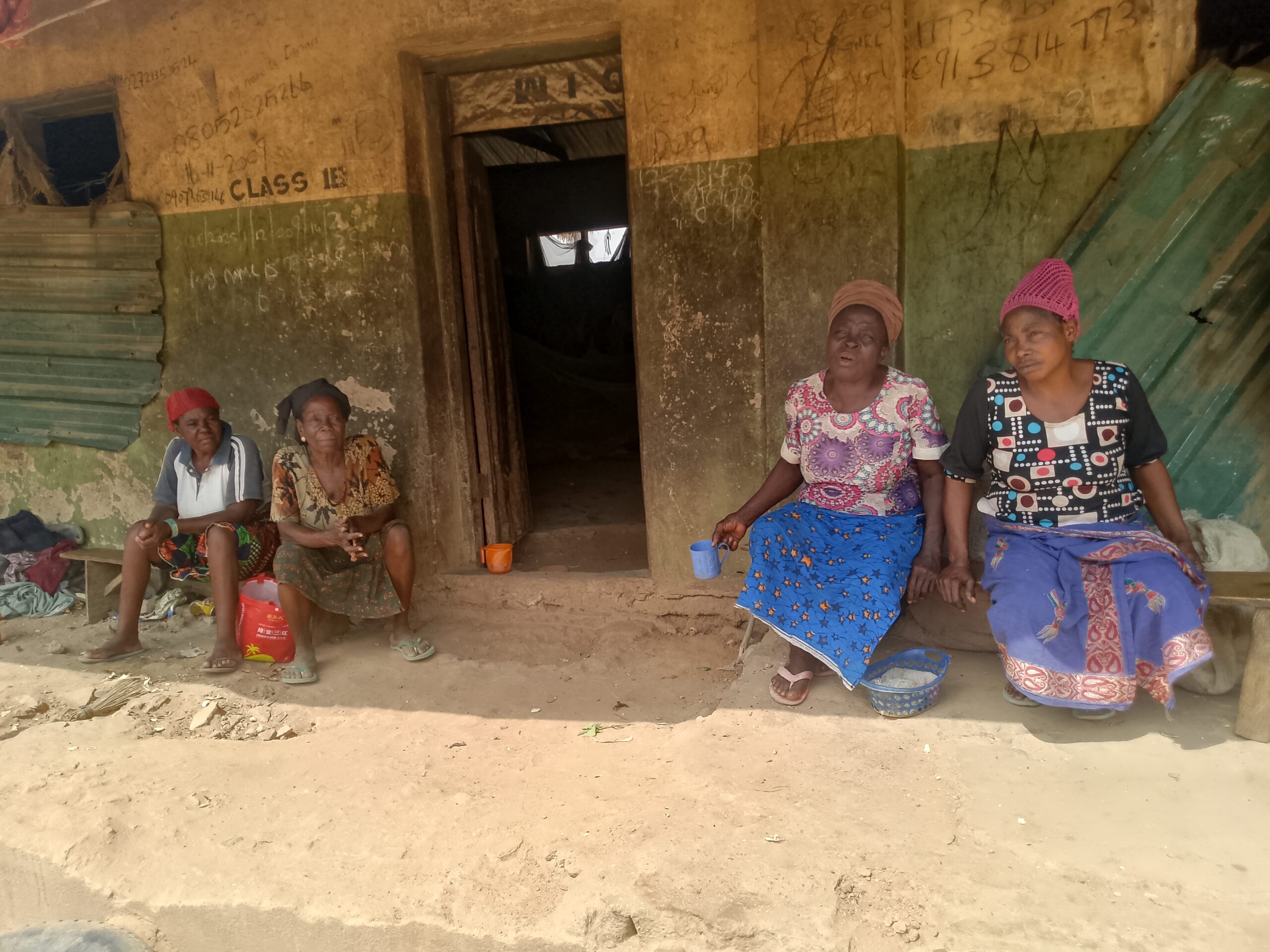
The family, they explained, had fled to one of the IDP camps in the state after losing two relatives who were killed on their farmlands during one of the attacks. Since then, no one has returned to the house. Neighbours said the family could no longer bear the fear of staying in a place filled with memories of loss and fear.
‘Abducted villagers are used as shields’
A rescue worker and state coordinator of the Grassroots Development Monitoring and Advocacy Centre in the North Central region, Yinka Razzaq, said attacks in vulnerable communities are often coordinated to overwhelm any available security forces.
“The attacks often occur at the same time to create distraction for military intervention. One can happen in Kwara and another in Niger within a short period. It diverts strategy and weakens response.”
He said casualties are handled quickly, but abductions complicate rescue efforts.
“The injured are rushed to hospitals. The dead are buried almost immediately. Those abducted remain with the attackers and are sometimes used as shields during military operations, which makes rescue difficult and opens room for ransom negotiations.”
Razzaq described victims as “psychologically distressed and emotionally traumatised,” adding that families struggle to cope months after attacks.
He identified poor road networks, weak infrastructure, and delayed military response as major gaps, calling for improved security presence, better access roads, and grassroots early-warning systems to curb recurring violence.
Cost beyond human lives
According to several reports, the humanitarian consequences are severe. The National Emergency Management Agency (NEMA) and the Benue State Emergency Management Agency have, at different times, confirmed the existence of multiple internally displaced persons (IDP) camps across the state, housing thousands of people who fled rural communities due to armed violence.

Findings revealed that many of these camps have existed for years, effectively becoming permanent settlements.
Human rights groups have also raised concerns about the militarisation of what was once described as communal conflict.
Investigations now point to the use of sophisticated weapons, coordinated movements, and organised armed groups, indicating that the violence has long outgrown simple disputes over grazing routes or farmland.
Across the villages visited in the state, farmers shared that the impact goes beyond loss of life. Agricultural production in affected areas has sharply declined. In a state officially described as Nigeria’s “food basket”, insecurity has turned farmlands into danger zones, crops rot unharvested, planting seasons are missed, and rural economies collapse quietly.
In early January, The United Nations World Food Programme announced that Nigeria is facing one of the worst hunger crises in recent times, as nearly 35 million people are projected to experience acute and severe food insecurity during the 2026 lean season, according to the most recent Cadre Harmonise – the equivalent of the Integrated Food Security Phase Classification (IPC) for West and Central Africa.
According to WFP’s Nigeria Country Director, David Stevenson, renewed violence has devastated fragile rural communities, displacing families, destroying food reserves, and accelerating alarming levels of hunger and insecurity.
“In the past four months alone, 3.5 million people were forced to flee their homes, with 80 per cent of these located in the country’s north.”
A global provider of early warning and analysis on acute food insecurity, the Famine Early Warning Systems Network (FEWS Net), has said worsening conflict across the North West and North Central continues to disrupt agricultural activities, eroding livelihoods, and forcing large numbers of households to flee their communities.
In its Nigeria Food Security Outlook (Oct 2025 – May 2026), FEWS Net noted that, “Escalating conflict across northern Nigeria is driving an increase in needs through July. As the 2026 lean season progresses, conflict and high inflation will continue to impede agricultural activities and other income-earning opportunities.
“Widespread Crisis outcomes are expected across the north, with Emergency outcomes in the most heavily conflict-affected local government areas in the Northeast, where households face severely restricted mobility and poor market access, and humanitarians are unable to deliver food assistance.”
The group projected that by July, 2026, more than 20 million Nigerians would be facing “food consumption gaps which are reflected by high or above-usual acute malnutrition; will marginally able to meet minimum food needs but only by depleting essential livelihood assets or through crisis-coping strategies; or have large food consumption gaps which are reflected in very high acute malnutrition and excess mortality.”
This report was commissioned with support from the Centre for Journalism Innovation and Development (CJID) under a journalism support initiative funded by the Royal Norwegian Embassy and is the first of a two-part series.
Thanks for the updates and very informative.