

Ikechi Agbugba is an Associate Professor of Agricultural Marketing at the Rivers State University. In this interview with the ICIR, he speaks on ways to minimise the impact the recent flooding in Niger and insecurity in Benue are likely to have on food production in the coming harvest season.
The ICIR: To what extent do you think the recent flood incident in Niger state and insecurity in Benue will affect food supply in the next harvest season?
Agbugba: The recent flooding and insecurity in Niger and Benue states, respectively, will have significant negative impacts on the food supply chain in the next harvest season. Undoubtedly, the fusion of these factors could lead to reduced harvests and escalate food prices.
On the one hand, floods can demolish crops, damage farmlands, and displace communities. Sadly, it can inundate farmlands, affect staple crops, such as rice, maize and yam, which are abundantly grown in the region. So, the extent of damage depends on the flood’s duration, depth, and the crops’ growth phase.
Flood can also degrade the topsoil, erode farmland, and contaminate water sources, affecting soil fertility and making it difficult to cultivate crops. More so, floodwaters can force farming communities to abandon their farms and livelihoods, disrupting planting and harvesting cycles.
These factors can result in reduced harvests, creating food shortages and increasing food prices. It can also impact food utilisation, affecting the food nutritional value, food safety, and the ability of communities to access and prepare food properly.
On the other hand, insecurity can disrupt farming activities and restrict farmland access. The impact of the insecurity situation in Benue can be colossal. We must not forget that Benue is referred to as the ‘Food Basket of the Nation’. As the leading producer of several key crops in Nigeria, including yam, rice, maize, cassava, and soybeans, the impact can be felt in many ways, including disruption in farming activities, lean access to cultivate farmlands, and forceful abandonment of farmland by farmers, which could lead to a loss of livelihoods and exacerbate food insecurity.
The ICIR: How can we address the expected shortfall in agricultural produce from these two states in the next harvest season?
Agbuba: First, to mitigate potential shortfalls in agricultural produce, a multi-faceted approach like the Brain Re-Engineering Initiative can help. In my position, it’s not just a policy initiative, but also an entrepreneurial approach, educational strategy, business model, as well as a sustainability framework. The initiative involves addressing perception challenges, fostering ideation and entrepreneurship, integrating technological solutions, promoting sustainability and circular economies, and advancing social equity in public policy. Food chain security is intricately connected and can be enhanced through these strategies.
Second, to address the expected shortfall in Niger state’s agricultural produce, there will be a need to focus on both immediate flood mitigation and long-term resilience building. This will include improving flood management infrastructure, adopting climate-smart agricultural practices, and strengthening farmer support systems. Immediate flood mitigation entails strengthening flood defences by constructing or reinforcing levees, dikes, and flood walls along rivers and flood-prone areas can physically prevent water from inundating farmland.
Third, there is a need to fortify drainage systems by improving drainage networks, including canals and pumping stations, which can help quickly remove excess water from fields.
Fourth, implementing offline flood storage ponds or reservoirs can temporarily hold excess water during heavy rainfall, reducing the impact on agricultural land. And fifth, there will be a need for long-term resilience building, which will include climate-smart agriculture.
Other considerations will be to strengthen support for farmers by establishing a fund to provide low-interest loans. This can help them recover and replant. Also is to train them on risk management, climate-smart agriculture, and post-harvest storage.

Infrastructure upgrades are also needed to improve road networks and bridges which can help ensure access to markets and facilitate the transportation of agricultural inputs and outputs. There should also be a focus on upgrading irrigation infrastructure, to provide more efficient water management, especially in areas prone to drought. By combining these strategies, Niger State can enhance its ability to withstand future flood events and maintain a robust agricultural sector.
To mitigate the expected shortfall in agricultural produce due to insecurity in Benue state, there will be a need to promote bolstering security in farming areas, promoting peaceful coexistence between farmers and herders, investing in modern farming techniques and infrastructure, and ensuring access to resources like fertilisers and credit. In addition, addressing climate change impacts and strengthening food storage and distribution are crucial steps.
Enhanced security measures will entail deploying more security personnel to vulnerable farming areas and establishing community policing initiatives can deter criminal activities and protect farmers. Utilising drones and other surveillance tools can enhance monitoring and early warning systems, helping to identify and prevent potential threats. Strengthening the implementation of laws like the Benue Open Grazing Prohibition Law can help reduce conflict between farmers and herders.
The need to foster a peaceful coexistence has become imperative by establishing designated grazing reserves for herders. This can minimise conflicts over land use and reduce the likelihood of attacks on farms. Also, facilitating dialogue between farmers and herders can help resolve disputes peacefully and promote understanding. The local communities should be empowered to participate in conflict resolution and security efforts which can foster a sense of ownership and responsibility.
Let me explain that modernising agriculture is the focus of the brain re-engineering agenda. It’s created for driving sustainable change in the agriculture sector among the younger generation to foster their entrepreneurial capabilities through new dimensions in agricultural technologies. This agenda proposes that stakeholders of agricultural development provide farmers with the training and support in modern farming techniques, such as using high-yield crop varieties and implementing climate-smart agricultural practices, which can enhance productivity and resilience.
Further is to ensure that farmers have access to quality fertilisers, pesticides, and other essential inputs at affordable prices. This is crucial while investing in irrigation systems, storage facilities, and transportation infrastructure, which can improve productivity and reduce post-harvest losses. Farmers need to be provided access to credit and other financial resources that can enable them to invest in their farms and adopt new technologies.
I’ll add that strengthening food and agricultural systems can lead to improved storage facilities, efficient food distribution networks, diversified production, and promoting local food systems. With these suggestions, the capacity of Benue State to mitigate the impact of insecurity on agricultural production and build a more resilient and sustainable system can be actualised.
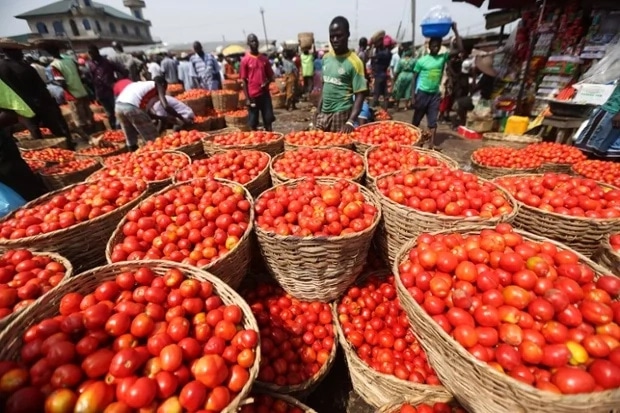
The ICIR: Tomatoes and peppers have been scarce, especially in markets in Lagos state. Are there major issues to this that we don’t know?
Agbugba: A mini research I carried out indicates that the scarcity situation and high prices of tomatoes and peppers in Lagos can be traced to the interplay of factors, including the tomato ebola disease (Tuta absoluta), withdrawal of fuel subsidies, and the rainy season. These issues have led to increased cost of transportation, lower harvests, and ultimately, lofty prices for buyers. Due to these challenges, some farmers are hesitant to invest in tomato and pepper cultivation. Despite the high prices, the demand for tomatoes and peppers remains strong, contributing to the scarcity and price hikes.
Regarding its impacts on consumers and traders, there will be high prices, low patronage and difficulty in restocking. While consumers are struggling to afford tomatoes and peppers, with prices reaching unprecedented levels, the traders are reporting low patronage as consumers cut back on purchases due to the high prices, while some traders are finding it challenging to restock their supplies due to the scarcity and high prices.
As a food and agricultural economist, may I underline that the hidden issues surrounding the scarcity of crops resonate around five factors. First, the crops are not native to Nigeria. Second, the scarcity is also a seasonal issue, with fluctuations in supply and price cycles depending on the time of year and harvest cycles. Third, the scarcity of tomatoes and peppers is not an isolated issue. Other food items like rice, beans, garri, and yam are also experiencing price surges, suggesting a broader food security concern. Fourth, the government has taken steps to address the situation, including deploying experts to tackle the insect infestation and sensitising farmers about weather patterns. Fifth, there is hope for improvement as efforts are underway to develop solutions to the Tuta absoluta infestation and stabilise the tomato market.
Consequently, resilient Nigerians have devised new ways to survive the scarcity of tomato and pepper by now cooking their stews with different ingredients. However, the possible ways of tackling these issues rise and fall on pest control measures, improvement of infrastructure, and government support.
The ICIR: There is relative peace in the south compared to the north. What critical steps can be followed to improve agricultural production in this region?
Agbugba: Yes, there is relative peace in the region and I could categorically speak about this because my primary affiliation and place of work, Rivers State University, is situated in this region. The critical steps that can be taken to improve agricultural production and foster peace include investing in infrastructure, providing access to finance and markets, improving soil health and water management, and promoting sustainable farming practices. Addressing climate change, empowering communities, and fostering social cohesion are also crucial for long-term stability and agricultural development.
Let me also highlight the need to connect smallholder farmers with reliable markets for their produce. Importantly, strategies to adapt to climate change, such as water conservation, drought-resistant crops, and improved irrigation systems should be implemented.
From the angle of government and policy, strengthening policy dialogue and coordination among different stakeholders to ensure effective agricultural development strategies will benefit the stakeholders. I believe strongly that by implementing these steps critically, the region would be in the position to leverage its agricultural potential to achieve both food security and sustainable peace and development.