

By Moshood Oshunfurewa
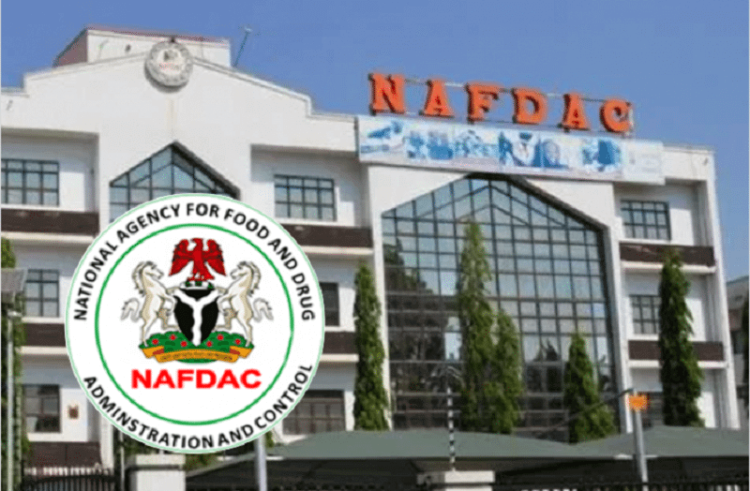
Is NAFDAC Doing Enough Against Fake Drugs? The answer is no. This conclusion is not reached lightly, nor does it dismiss the considerable efforts of the National Agency for Food and Drug Administration and Control (NAFDAC) under Professor Mojisola Christianah Adeyeye. It is, rather, a sober assessment of an existential crisis that continues to claim lives at a rate that should shock the national conscience.
We cannot ignore the personal dimension of this crisis. My sick child, Anjolaoluwa, was diagnosed with malaria and typhoid at Ajegunle General Hospital, Orege, with a prescription filled partly at the hospital and partly at a nearby pharmacy; this is an experience familiar to millions of Nigerian families.
The subsequent health deterioration of my child, the dawning realisation that something in the treatment chain was fundamentally corrupt, represents a betrayal of trust that no regulatory framework should permit. When counterfeit medicines reach the shelves of legitimate pharmacies and patent medicine stores, the entire architecture of public health collapses.
The United Nations Office on Drugs and Crime estimates that up to 500,000 people die annually from counterfeit drugs in sub-Saharan Africa. Within this grim figure, as many as 267,000 deaths each year are attributed to substandard malaria drugs, while approximately 169,000 children die from fake antibiotics used to treat pneumonia.
The financial burden compounds the human toll: between $12 million and $44.7 million is spent annually treating people who have consumed counterfeit or substandard malaria drugs.
The scale of the problem within Nigeria is equally disturbing. The Association of Community Pharmacists of Nigeria has warned that over 50 per cent of medicines in circulation are fake, far above the official estimate of 13 per cent.
The Pharmaceutical Society of Nigeria places import dependence at above 70 per cent, meaning the nation’s medicine supply chain remains dangerously reliant on external sources that are difficult to fully monitor.
The World Health Organisation notes that approximately 1 in 10 medical products in low- and middle-income countries is either substandard or falsified, with Central and West Africa among the most affected regions.
To be fair, NAFDAC has not been idle. Between May and July 2026, the agency conducted nationwide surveillance covering all 36 states and the Federal Capital Territory, visiting 6,233 facilities and removing 7,210 products from circulation. Drugs and herbal products accounted for 2,459 of the items removed, with 2,084 facilities visited in that category alone.
The agency secured 64 convictions for counterfeiting, with sentences ranging from one to seven years’ imprisonment without the option of a fine. Notable convictions included seven years for fake antibiotics, five years for falsified antimalarials, and five years for codeine-containing cough syrups.
In February 2026, authorities seized more than 10 million doses of counterfeit malaria medicines and cosmetics valued at approximately ₦3 billion in Lagos and arrested four suspects.
In July 2026, the Nigeria Customs Service handed over nine containers of seized narcotics and unregistered pharmaceutical products valued at ₦53.39 billion to NAFDAC and the NDLEA. These are substantial seizures by any measure.
But the fundamental question remains: why, despite these enforcement actions, does the counterfeit medicine trade continue to flourish? The answer lies in the structural conditions that create demand for fake drugs in the first place.
Nigeria’s pharmaceutical market is valued at approximately $3.34 billion, with projections of 9.5 per cent annual growth through 2033. The domestic manufacturing sector accounts for about 60 per cent of drug production within the ECOWAS region, but import dependence remains stubbornly high.
When legitimate medicines are scarce or unaffordable, consumers turn to open drug markets—Idumota in Lagos, Bridge Head in Onitsha, Ariaria in Aba- where counterfeiters operate with relative impunity. These markets supply licensed pharmacies, hospitals, and retailers across the country, creating a parallel distribution system that undermines every regulatory effort.
Self-medication compounds the crisis. About 66.7 per cent of Nigerians engage in self-medication, visiting pharmacies or patent medicine stores as a first point of contact for healthcare. The prevalence rate of self-medication has been estimated between 52 per cent and 92 per cent.
Individuals who self-medicate face up to a 95 per cent risk of incorrect dosage or exposure to poor-quality drugs. This behaviour is not merely a matter of individual choice; it is a rational response to a healthcare system that is inaccessible, unaffordable, and often unreliable.
The enforcement paradigm, however necessary, is insufficient. NAFDAC’s seizures and convictions address the symptoms, not the disease. The agency needs powers and partnerships it currently lacks. Intelligence-sharing with Customs must become systematic rather than episodic.
Community-based surveillance networks involving rights groups, pharmacy professionals, community development associations, and market leaders must be established to track sellers and distribution chains at the grassroots level. The agency’s task forces, currently concentrated in select states, must be replicated nationwide.
But enforcement alone will never suffice. Nigeria must confront the economic conditions that make counterfeit medicines a viable market. The exit of major multinational pharmaceutical companies, the surging costs of raw materials, and the unaffordability of essential medicines have created a vacuum that criminal networks are only too willing to fill.
Rebuilding domestic manufacturing capacity, reducing import dependence, and making genuine medicines accessible and affordable are not optional policy preferences; they are prerequisites for meaningful progress.
The lives lost or suffered due to counterfeit drugs are not mere statistics. They are children like Anjolaoluwa. They are parents, workers, students, and citizens whose deaths are entirely preventable. Until the structural conditions that enable this trade are dismantled, NAFDAC’s efforts, however valiant and however necessary, will remain insufficient.
The question is not whether the agency is trying. The question is whether the nation is willing to do what is required.
Moshood Oshunfurewa, a public affairs analyst, writes from Lagos. He can be reached at moshoodho2025@gmail.com | 08035936663