
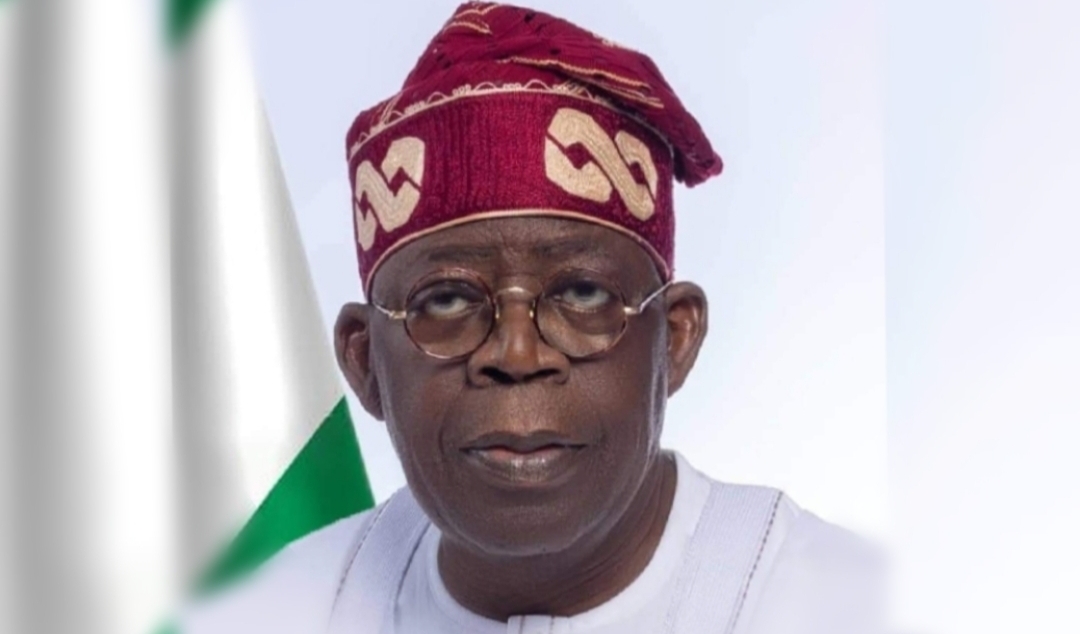

THE Human Rights Foundation has classified Nigeria as a fully authoritarian regime in its latest global assessment, arguing that the country’s electoral process, protection of dissent and institutional checks on executive power have deteriorated to levels inconsistent with democratic governance.
The assessment, published on the foundation’s Tyranny Tracker platform, places Nigeria in the fully authoritarian category after evaluating countries across three pillars namely electoral competition, freedom of dissent, and institutional accountability. Nigeria fell short on all three.
“HRF classifies Nigeria as ruled by a fully authoritarian regime. Nigeria is a federal republic of 36 states with a presidential system of government,” the report read.
According to the report, Nigeria has an estimated population of 242.4 million people, representing about 2.9 per cent of the world’s population, but its democratic institutions have weakened despite more than two decades of uninterrupted civilian rule since 1999.
“Since gaining independence in 1960, Nigeria, Africa’s most populous nation, has grappled with ethno-political cleavages, which led to decades of political turmoil marked by a bloody civil war, a series of military coups, and secessionist and terrorist insurgencies.
“Since transitioning from military rule in 1999, Nigeria has experienced the longest period of elected civilian rule in its history, with seven consecutive elections and a peaceful transfer of power between a ruling and opposition party in 2015,” it added.
The foundation argued that successive administrations had increasingly consolidated authority across the executive, legislature and judiciary, resulting in weakened institutional checks and widespread impunity.
“Successive governments have consolidated control over all branches of government. With no meaningful checks to executive power, and an endemic culture of corruption, clientelism, and impunity, the country remains mired in a degenerating, multidimensional insecurity and maladministration crisis,” it said.
HRF noted that President Bola Tinubu emerged from the 2023 presidential election, which it described as flawed, citing legal disputes, protests, election-related violence, alleged irregularities, voter disenfranchisement and questions surrounding the integrity of the electoral process.
“The Head of State, Bola Tinubu, was declared the winner of the flawed 2023 election. Legal challenges, protests, and calls for annulment, violence that killed more than 100 people, the disenfranchisement of over one million people, and evidence of irregularities and manipulation discredited the integrity of the polls,” it said.
Under its electoral competition index, the report contends that the political playing field is significantly tilted in favour of the ruling party, alleging that opposition parties face obstacles during campaigns, including restrictions on rallies, limited access to public facilities and state-owned media, excessive administrative charges and interference by security agencies.
“The regime hinders opposition parties’ electoral campaign, engages in voting irregularities, enjoys significant and unfair campaign advantages, and undermines independent electoral oversight,” it stated.
The report also cited incidents during the build-up to the 2023 elections involving attacks on opposition supporters by political thugs and vigilante groups in several states, as well as voting irregularities, delayed transmission of election results and concerns over the voter register.
It further criticised appointments to the Independent National Electoral Commission, arguing that successive governments have weakened the commission’s independence through politically controversial appointments and executive influence over its funding.
The foundation alleged that journalists, civil society organisations, opposition politicians and ordinary citizens increasingly face intimidation, arrests, prosecutions and censorship for criticising government policies.
The report referenced the arrest and detention of journalists during the August 2024 nationwide protests, prosecutions under Nigeria’s Cybercrimes Act, actions against labour leaders and activists, and cases involving citizens sanctioned over social media posts critical of government officials.
It also cited the suppression of the #EndBadGovernance protests, alleging excessive use of force by security agencies and mass arrests of demonstrators.
According to the report, authorities have also censored critical speech, including restrictions imposed by the National Broadcasting Commission on broadcasting Eedris Abdulkareem’s protest song Tell Your Papa.
The foundation argued that Nigerian institutions no longer function as effective checks on executive authority.
It criticised the judiciary for dismissing and delaying election petitions and cases challenging executive actions, while also alleging persistent non-compliance with judgments delivered by the ECOWAS Court of Justice.
The report also questioned legislative oversight, citing the National Assembly’s approval of the March 2025 Rivers State emergency rule through a voice vote, which critics argued did not satisfy constitutional requirements.
It further alleged that security officials implicated in human rights violations have largely escaped prosecution, contributing to what it described as a longstanding culture of impunity.
While acknowledging Nigeria’s transition from decades of military rule to civilian government in 1999, the report argues that democratic institutions have steadily weakened through executive dominance, corruption, patronage politics and insecurity.
The ICIR reports that Nigerian government has previously rejected international criticisms of its human rights record and electoral management.

Nanji is an investigative journalist with the ICIR. She has years of experience in reporting and broadcasting human angle stories, gender inequalities, minority stories, and human rights issues. She has documented sexual war crimes in armed conflict, sex for grades in Nigerian Universities, harmful traditional practices and human trafficking.
The situation is even underreported. It is more than authoritarian regime.
That’s just the fact with no iota of doubt about the report.
Nothing but the brutal truth of the current Nigeria 🇳🇬 Democracy under President BOLA AHMED TINUBU Of APC.