
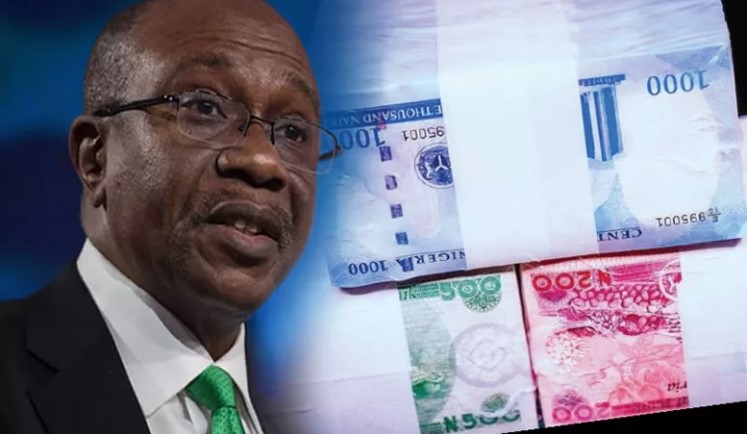
FOUR days after the Central Bank of Nigeria (CBN) gave the nod that old and new N200, N500 and N1,000 notes can circulate simultaneously till December 31, scarcity of the currencies has persisted across the country.
Checks by The ICIR today showed that acceptance of the old notes as legal tender was slowly picking up, just as was supply of the notes through commercial banks.
It would be recalled that on March 3, 2023, the Supreme Court ruled that the CBN should extend the validity of the old notes till December 31, 2023.
It, however, took the CBN 10 days to issue a statement directing the banks to comply with the judgment, as individuals and businesses waited in anxiety for that official directive and people refused to accept the old notes.
Even official statements by some state governors like Nasr el-Rufai of Kaduna and Babajide Sanwo-Olu of Lagos to residents of their states to start accepting the old notes as legal tender following the Supreme Court judgment failed to sway the people.
Observations are that commercial banks have resumed dispensing the old notes, but in agonisingly low amounts where available.
At the United Bank of Africa, Wuse Zone 2 branch, Abuja, each customers received payment across the counters for N5,000 only.

In Lagos, The ICIR saw hordes of customers at many bank branches struggling to gain entrance into the hall to withdraw funds. There were also long queues at automated teller machine (ATM) points.
Along Ogunnusi Road, Ojodu Berger, Lagos State, where different banks have branches, many customers were seen waiting for hours, and could withdraw barely N10,000 each.
One of the security men at a UBA branch on the stretch told our reporter that the branch had closed as early as 2pm because of cash scarcity, and that it was unlikely the branch would have cash to pay to customers on Thursday, March 16.
Another security man at Zenith Bank, on the same road, said the branch could pay cash to customers tomorrow if it received cash inflow from its head office.
A food vendor at the Ojodu-Berger complex, Ojodu, Lagos, Madam Jennifer, told The ICIR that the situation had not improved.
“We are not getting customers now like before the naira problem started, even though we have started to collect the old N500 and N1,000 notes. Our customers are still complaining they don’t have naira,” she said.

A commercial bus driver in Lagos, who gave his name as Godwin Shaapera, also told our reporter that passengers’ patronage had not improved because there was not enough money in the banks to withdraw.
“Some people do come to me requesting they transfer money to my account so I can give them cash. But I don’t have any. We have been on loading queue at this bus stop for many minutes. Business will not pick up until next week,” Shapeera added.
An economist and Executive Director of the Centre for the Promotion of Private Enterprise (CPPE), Muda Yusuf, told The ICIR that the CBN needed to supply more money to the system to stop the current crisis.

Yusuf said, “We need to continue to prevail on the CBN to release the old notes, as directed by the Supreme Court. It took the CBN and the Presidency 10 days to respond to the judgement.They may need to do an audit to know how much they have in their banking vaults as banks are complaining of lack of money for circulation.”

The economy is gradually grinding to a halt because of cash crunch, and the collapse of payment systems across all platforms, which has been affecting funds transfer.
At the Ikeja Computer Village, Lagos, point-of-sale (PoS) operators are still sharply marking up their profit margins beyond the normal charges, citing scarcity of both old and new naira notes.
“The PoS operators here collect N200 on every N1,000 withdrawal as they maintain that naira is still scarce,” a dealer in phone accessories at the Computer Village told The ICIR.
Available data showed that since the onset of the cash crisis, the Nigerian economy has lost an estimated N20 trillion. These losses arose from the deceleration of economic activities, the crippling of trading activities, the stifling of the informal economy, contraction in the agricultural sector and the paralysis of the rural economy.
There are also corresponding job losses in hundreds of thousands.
Harrison EDEH and Alex EHIME

Harrison Edeh is a journalist with the International Centre for Investigative Reporting, always determined to drive advocacy for good governance through holding public officials and businesses accountable.