Home Blog Page 1033

Court grants Bauchi PDP, NNPP leave to inspect election materials

THE Election Petition Tribunal in Bauchi has granted leave to Garba Dahiru of the Peoples Democratic Party (PDP) to access sensitive materials used by the Independent National Electoral Commission (INEC) in the February 25 National Assembly elections in the state.

The tribunal also granted leave to the New Nigeria Peoples Party (NNPP) candidate, Mijinyawa Mohammed, to access election materials deployed by INEC for the Bauchi North Senatorial District election.

Dahiru and Mijinyawa contested and lost the Bauchi South and North senatorial districts elections, respectively.

Dahiru lost the Bauchi South Senatorial District election to Shehu Umar of the All Progressives Congress (APC) as declared by INEC.

A three-member panel, led by Justice Wilfred Kpochi, has now granted the two candidates access to sensitive materials, following an ex-parte application filed by the two candidates, according to the NAN.

Dahiru’s lead counsel Alex Hassan, had earlier filed an application, asking the court to compel INEC to allow his client to access the sensitive materials.

According to Hassan, the documents would aid his petition against the emergence of APC’s Umar as the winner of the election.

Justice Wilfred Kpochi, in his ruling, said that the application had merit and was granted accordingly.

“The petitioners are to take certified copies and conduct manual and physical inspection of all the electoral materials used in the conduct of the Bauchi South Senatorial District election held on the 25th February 2023,” he said.

In the case of the NNPP’s Minjinyawa Mohammed, the presiding judge also cited that the application has merit.

Kpochi, therefore, granted leave to the petitioner and his counsel to approach INEC and take certified copies of the election materials used in the Feb. 25 Bauchi North Senatorial District election.

CSOs protest arrest of NYSC member suspected of exposing police brutality

A COALITION of civil society organisations has demanded the release of Emeh Nnamdi, a member of the National Youth Service Corps (NYSC) who was arrested by the INTERPOL in the Benin Republic.

Nnamdi, an IT consultant to the Anambra State Police Command, was arrested allegedly in connection with an investigation by the Nigeria Police Force Headquarters into allegations of police extortion, torture, extrajudicial executions, and organ harvesting by senior police officers in Anambra State.

It was learnt that Nnamdi revealed details of the police officers’ alleged involvement in human organ trafficking, kidnapping and killing of suspects after extorting them.

Explaining circumstances surrounding Nnamdi’s arrest, the CSOs, in a statement released on Saturday, March 11, said, “Twenty-six-year-old Nnamdi was taken into custody on March 3, 2022, by INTERPOL after two weeks on the run. He is currently detained at the Force Headquarters in Abuja where he faces the possibility of ill-treatment, instead of being protected by the police, for peacefully exercising his right to freedom of expression and exposing human rights violations.

“On February 16, 2023, Gistlover, an independent digital news and entertainment platform, revealed the shocking details about how senior police officers in Zone 13 and Anambra State command were involved in extortion, extrajudicial execution, enforced disappearance, and organ harvesting of detainees in their custody. The story was corroborated by video evidence of former detainees who were forced to confess serious crimes and who disappeared shortly after. Some families of the victims have since confirmed the story.

“Shortly after the revelation, the police announced that it will launch a full-scale investigation into the allegations, but instead of taking the accused police officers into custody they declared Nnamdi, who works with the accused police team, wanted for sundry offences including suspicion that he must have passed the vital information to Gistlover blog.”

Following his arrest, Nnamdi was accused of possessing a firearm, money laundering, defamation of character, fraud, and impersonation.

But the CSOs have described the allegations against him as trumped up and untrue.

The CSOs said Nnamdi’s only crime has been revealing details about “police extortion, torture, extrajudicial executions, and organ harvesting by senior police officers in Anambra State”.

“Whistleblowers are vital for a transparent society by exercising the right to inform and be informed and the right of people to know,” the CSOs said.

The CSOs said whistleblowers play a crucial role in ensuring accountability and transparency and good governance.

“Whistleblowers play a part in the realisation of accountability and good governance. They are essential to awakening informed debate within public opinion, crucial to opening up investigations by journalists, and necessary for questioning decision-makers.

“Whistleblowers are crucial in promoting human rights, the rule of law, social justice and the fight against corruption. Nevertheless, whistleblowers in Nigeria remain in an extremely dangerous situation. Vulnerable, exposed to reprisals and pressure with psychological impacts on both themselves and their families, whistleblowers have persistently faced a wave of intimidation and often risk abusive defamation proceedings.”

The group condemned using cybercrime laws to abuse and harass whistleblowers in the country, noting that no one should be charged for disclosing human rights violations done by the authority.

“It is unfortunate that the laws relating to defamation, as well as the Nigerian Cybercrime Act 2015, continue to be abused and repeatedly used by the authorities in Nigeria to harass, intimidate and persecute whistleblowers, human rights defenders and activists. We believe no one should be charged under any law for disclosing information about human rights violations by the police or the government. Such disclosures are protected under the rights to information and freedom of expression,” the statement added.

Some CSOs in the group include African Centre for Media & Information Literacy (AFRICMIL), Sterling Centre for Law & Development, Access To Justice, The Southern Free Press, Inc, Centre for Human Rights Advocacy & Wholesome Society (CEHRAWS).

Others are; the Rule of Law and Accountability Advocacy Centre RULAAC, Human Rights Social Development and Environmental Foundation (HURSDEF), Confluence of Rights, Workers & Youth Solidarity Network, Rivers Civil Society Organisations, Justice for Peace and Development Initiative, Avocats Sans Frontieres and Nnaemeka Ejiofor & Associates.

Naira Scarcity: Broadcast journalist dies while trekking to office

0

AN Ibadan-based radio presenter popularly known as Baba Bintin has been reported to have slumped and died while trekking to work on Saturday, March 11.

Baba Bintin’s death was announced during a radio programme by the Fresh FM Nigeria on Saturday.

The ICIR gathered that the presenter died on his way to the Fresh FM station where he had a programme with Komolafe Olaiya and Olalomi Amole at Ayefele Music House, Challenge, Ibadan, the Oyo State capital.

A radio presenter at the station, Mayor Isaac Brown, revealed that the late presenter died while trekking from Amuloko to Challenge on Saturday morning with the hope of getting a point-of-sale (POS) agent to get cash.

“I’m finding it very difficult to believe this story that is breaking here,” Brown said on the radio station.

He added, “He (Baba Bintin) left his home like we all did this morning to come into this station to do our daily job and contribute our quota to national development, to the job like we love to do, and I’m being told that the man just slumped this morning and he died while getting ready to come here.”

Until his death, Baba Bintin was a comic presenter on the Oyin Ado programme on Saturdays on the radio station where he usually released information on market opening days in the state and across the country.

The Central Bank of Nigeria (CBN) introduced the new N200, N500 and N1000 notes into circulation on December 15, 2022, and announced that the old notes would cease to be legal tender from January 31, 2023.

The apex bank extended the deadline till February 10 following the pleas and protest of Nigerians.

The ICIR reported that despite the deadline extension, the currency swap has caused multi-dimensional harm to businesses, households and individuals.

Meanwhile, on Friday, March 3, the Supreme Court nullified the Federal Government’s naira redesign policy, saying that the old N100, N500 and N200 notes would remain valid till December 31.

However, since the court ruling, there has been apprehension across the country as residents await either President Muhammadu Buhari or the Central Bank of Nigeria (CBN) to react to the judgment.

The ICIR has done a series of reports (which can be read here) on how the lingering Naira scarcity is affecting Nigerians.

[EXPLAINER] Steps and Timelines for resolving Presidential election disputes in Nigeria

THE Presidential and National Assembly elections were held in Nigeria on February 25, 2023.

The Independent National Electoral Commission (INEC) declared Bola Ahmed Tinubu of the All Progressives Congress (APC) as the winner of the presidential poll, ahead of 17 other candidates that contested the election.

The Chairman of INEC, Mahmood Yakubu, announced the results in the early hours of Wednesday, March 1, 2023.


READ ALSO:


According to the released result from INEC, Tinubu scored a total of 8,794,726 votes to defeat Atiku Abubakar of the Peoples Democratic Party (PDP), who polled a total of 6,984,520 votes, and Peter Obi of the Labour Party (LP), who came third with a total of 6,101,533 votes.

Both PDP and LP candidates rejected the outcome of the election and vowed to challenge it in court.

It should be noted that the Nigerian Supreme Court has never overturned a presidential dispute.

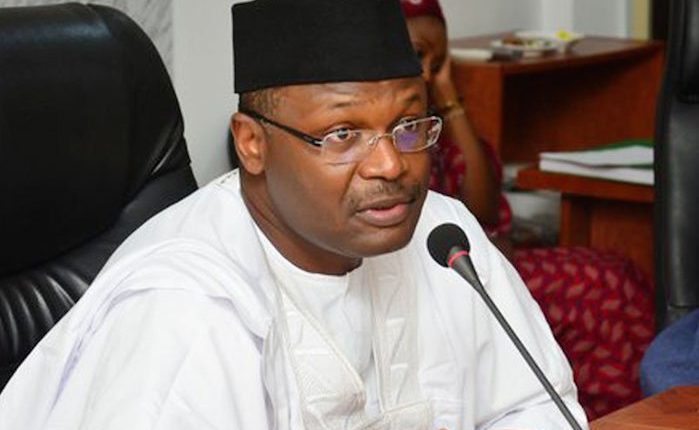
Mahmood Yakubu
INEC Chairman, Mahmood Yakubu

Election Tribunals

Election petitions question the legitimacy of an election or contest the outcome. 

It is a legitimate strategy for arguing that a declared or returned candidate did not win an election.

Election petition tribunals are specialised courts that handle election cases instead of regular courts.

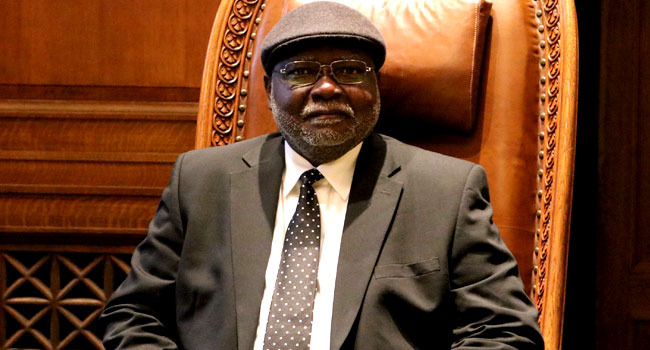
CJN, Kayode Ariwoola

Elections in Nigeria are governed by Section 288 of the Constitution and the Electoral Act 2022.

Setting up Election Tribunal

It is a statutory responsibility of the Court of Appeal to set up the tribunals 30 days before the elections, as stated in Section 130(3)(a) of the Electoral Act 2022.

The register of the tribunals is expected to be opened at least seven days ahead of the elections.

The Court of Appeal acts as the court to handle presidential election issues. In contrast, Tribunals handle National, State Assembly and gubernatorial elections.

Who qualifies to file an election petition?

No matter how passionately a citizen feels about an election, merely being a Nigerian cannot serve as sufficient justification for launching a judicial challenge.

Only a candidate who ran for office or a political party may submit a petition to contest the results.

Grounds for filing an election petition

Section 134 of the Electoral Act states the grounds on which a petition can be filed.

-That a winner of an election has been certified but is ineligible to run

-That the majority of legitimate votes cast in the election were not cast for the victor

-That the Election Act’s rules were broken or that corrupt practices tainted the election

-That the Petitioner or its candidate was unlawfully excluded from the election even when he was lawfully nominated

 -That the person whose election is questioned had submitted to INEC an affidavit containing false information of a fundamental nature in aid of his qualification for the election.

Part 8 of the Electoral Act deals with the procedure governing Election Petitions. 

Timeline for filing election petition at the Tribunal

An election petition must be presented and filed within 21 days of the declaration of the result. 

When a petitioner misses the deadline to file his petition, and it is later ruled to be statute-barred, he forfeits his right to bring the case.

Time for determining election petition

An election petition must be heard and judgment delivered within 180 days from the date of the filing of the petition.

At the Tribunal level (Appeal Court in case of a presidential election) – 180 Days (6 months)

At the Appeal level (Supreme Court in case of presidential election) – 60 days (2 months)

In total- 240 days (8 months)

LEVELS OF APPEAL

The Court of Appeal hears presidential election petitions. Section 133 (2)(a) of the Electoral Act

A court gavel
A court gavel

However, it is pertinent to note that a presidential election petition can reach the Supreme Court.

Number of Judges

In case of a presidential election, 5 Justices of the Appeal Court will determine the petition, while seven Justices will sit to decide the appeal.

Court sends two PDP chieftains to jail over N142m election bribe

A FEDERAL High Court sitting in Bauchi has sentenced two chieftains of the Peoples Democratic Party (PDP), Saleh Hussaini Gamawa and Aminu Umar Gadiya, for offences that bordered on conspiracy and money laundering to the tune of N142 million.

The men committed the offences during the 2015 general elections.

The presiding judge, Justice Hassan Dikko, convicted them on Thursday, March 2, while ruling on the two-count charge brought against the defendants by the Economic and Financial Crimes Commission (EFCC).

According to a statement released on Saturday, March 11 and signed by the EFCC Head of Media and Publicity, Wilson Uwujaren, the defendants were first arraigned on June 4, 2018, and re-arraigned on October 16, 2018, on a two-count charge of receiving over N142 million to influence the outcome of the 2015 presidential elections in Bauchi State.

Count one of the charge read, “That you, Saleh Hussaini Gamawa and Aminu Umar Gadiya, all members of the Finance and Funds Disbursement Committee of the Peoples’ Democratic Party (PDP) 2015 General Elections, and in such capacities sometime in March 2015 in Bauchi State within the jurisdiction of this Honorable Court, did agree amongst yourselves to commit an offence, to wit; Conspiracy to accept cash payment exceeding the threshold provided by law, thereby committed an offence contrary to Section 18(a) and punishable under Section 16(2) (b) of the Money Laundering (Prohibition) Act, 2012( as amended) now No.1, 2012.”

Count two stated that the duo accepted a cash payment of N142 million from the Directorate of Finance, Bauchi State PDP Campaign Organization, exceeding the required threshold of cash payment, thereby committing an offence contrary to the law.

The defendants had pleaded not guilty to the charges, setting the stage for the case to proceed to full trial. 

During the trial, the prosecution presented one witness and tendered documents.

At the close of evidence, the final written addresses were filed, exchanged and adopted on January 17, 2023, with the prosecution asking the court to convict the defendants as charged. 

On the other hand, the defence submitted that the evidence presented against the defendants by the prosecution was not credible and urged the court to discharge and acquit them.

In his judgment, which lasted more than three hours, Justice Dikko reviewed the facts of the case and the submissions of counsel and arrived at the conclusion that the prosecution had proven the cases against the defendants beyond a reasonable doubt on count one and convicted them as charged.

He, however, discharged and acquitted the second defendant on count two.


READ ALSO:


Before sentencing the defendants, Justice Dikko acknowledged their pleas for leniency but insisted that they be punished to serve as a deterrent to others.

He consequently sentenced the two defendants to two years imprisonment at the Bauchi Correction Service, or a fine of N3 million each instead of imprisonment on count one, while the first defendant bagged a further two years imprisonment or a fine of N3 million in place of incarceration on count two.

The sentences are to run concurrently from March 2, 2023.


Police confirm attack on Abuja estate, nine kidnapped

THE Federal Capital Territory (FCT) Police Command has confirmed an attack by gunmen on Grow Homes Estate in the Kubwa neighbourhood in Abuja.

Residents said about 20 armed men stormed the estate on the night of Friday, March 10, ransacked homes and whisked some victims to an unknown destination.

Reports quoted a resident, who pleaded anonymity, as saying the heavily-armed assailants fired shots, which caused panic among the estate’s occupants and other residents in the neighbourhood.

The marauders moved from one apartment to another, pillaging belongings as many as they could carry.

Among the abductees are children and women.

The residents said, “They escaped through the bush, which linked the community to Paze village. The police and the estate security have been searching the bush since morning to see if they can rescue the kidnapped residents.”

Vanguard reported the FCT Police Command spokesperson, Josephine Adeh, a superintendent of police, as confirming the attack.

Adeh said the police in the area were combing the bush for the attackers and the abductees.

 “Upon receipt of the distress call, we immediately deployed our men to the scene. The suspects, however, abruptly suspended their operations and took some victims with them into the bush.

“Operatives of the police and the estate security are still combing the bushes in the area to ensure they are rescued unhurt,” she said.

She appealed for calm among the residents and called on the city’s residents to help the police with information that could help prevent crime and apprehend criminals. 

In December 2022, The ICIR reported how concerns over insecurity in Abuja had heightened since Islamic State West Africa (ISWAP) members blew up the Kuje medium correctional facility on July 5, freeing all 64 suspected terrorists and over 800 other inmates.

Though the fear of insurgent attacks has subsided in the city, armed robbers, car thieves, burglars, ‘one chance operators’ and other criminals have continued to unleash mayhem on residents.


Police dislodge Zamfara bandits’ camp, rescue 14 hostages

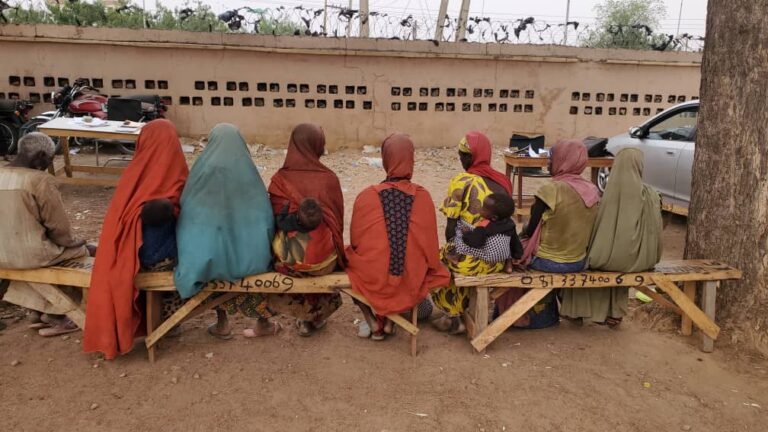
THE police in Zamfara State have dislodged a bandits’ camp and rescued 14 hostages who had spent 68 days in captivity.

A statement released on Saturday, March 11 by the spokesperson of the Zamfara State police command, Mohammed Shehu, said the Police Tactical Operatives, in collaboration with the vigilante on Mop Up Operation, successfully dislodged a bandits’ camp belonging to Dogo, a notorious terrorist.

Shehu said the rescued hostages comprised two male adults, seven females, and five children below two years old.

He noted that the victims were abducted in January 2023.

The statement read, “In the course of debriefing, the victims informed the Police detectives that on 1st January, 2023 at about 2300hrs, a large number of suspected bandits armed with sophisticated weapons stormed Anguwar Mangoro and Gidan Maidawa villages in Gusau LGA and abducted their victims to their camp, where they spent 68 days in captivity.”

The police disclosed that the victims, who were in critical condition, were taken to the police clinic in Gusau for medical treatment, and thereafter reunited with their relations.

The Commissioner of Police in the state, Kolo Yusuf, reiterated his commitment to protecting the lives and property of the citizens.

The ICIR had reported that armed bandits killed a Divisional Police Officer (DPO) and two others during an attack on communities in the Maru Local Government Area of Zamfara State.

Ekiti government vows to prosecute residents rejecting old N500, N1,000 notes

EKITI State Governor Biodun Oyebanji has warned that any resident in the state who fails to accept the old N500 and N1,000 notes for transaction will be arrested and prosecuted.

Oyebanji said the Supreme Court’s ruling on the notes’ validity until December 2023 was sacrosanct.

In a statement signed by his Special Adviser on Media, Mr Yinka Oyebode, the governor said it was a crime for anyone, organization or business to reject the money.

He called on commercial banks in the state to load the old notes in their automated teller machines (ATMs) and also issue them acroos the counter in order to ease the pains imposed on the people by the shortage of the new notes.

Oyebanji said he was overwhelmed by the residents’ complaints over the daily hardship caused by naira scarcity.

He said, “As honourable people, what is expected of us is to abide by the ruling of the apex court and continue to accept the old naira notes as means of transactions, and not to inflict further hardship on one another by rejecting them.

“This is a special appeal to all the banks to make the naira notes available in all their branches and pay points, and to all traders, business owners, service providers, okada riders, drivers, filling stations, gas plants, supermarkets, schools, hospitals, and PoS operators to start accepting the old notes forthwith. 

“To do otherwise would amount to defying the ruling of the highest court in the country and thwarting government efforts at reducing the hardship of the people…In the same vein, government will not hesitate to arrest and prosecute business owners found rejecting the old naira notes.”

The ICIR reported how the CBN introduced the new N200, N500 and N1,000 notes on December 15, 2022, and rendered the old notes illegal tender on February 10.

While Nigerians rushed to their banks to deposit the old notes with the hope that the new notes would be available, it has been a huge challenge for many organisations, homes and individuals to get the cash to sustain them one month after the policy took effect.

In one of its many reports on the hardship the policy has brought to people in the country, The ICIR reported how Nigerians went nude, fought in banks and engaged in other habits that counted as offences when things were normal. 

Similarly, The ICIR reported how President Muhammadu Buhari authorised the currency redesign and how the Supreme Court nullified its implementation.  

On Sunday, March 5, this medium reported how Buhari and the CBN had kept mute on the Supreme Court ruling.

In another report on March 8, The ICIR published how Abuja residents rejected the old notes.

By its threat, Ekiti State has joined Kogi, Kaduna, Kano and some other states that had criminalised rejection of the old notes.

NSCDC impounds 150 drums of Cameroon-bound petrol, arrests two

THE Nigeria Security and Civil Defence Corps (NSCDC) in Akwa Ibom says it has seized 150 smuggled drums of petrol and arrested two suspects.

The suspects were arrested on Thursday, March 9 by the Marine unit of the command on the high seas as they were conveying the products in a wooden boat en route Cameroon.

Disclosing this today in Uyo while briefing newsmen, the NSCDC Commandant in Akwa Ibom, Yusuf Imam, said the unit also seized five engines and one pumping machine used to steal petroleum products.

Imam said the suspects would be charged in court as soon as the investigation was completed.

The commandant said, “The Marine Unit of the NSCDC arrested two suspects and impounded 150 drums of PMS (petrol) conveyed in a large wooden boat on the high seas in Ibeno Local Government Area of Akwa Ibom.

“The arrests and subsequent impounding of the exhibits took place in the early hours of Thursday.

“Acting on credible intelligence, the NSCDC Marine Squad, led by Jamilu Mohammed Adamu, hit the waterways with the corps’ gunboat, chased, and intercepted the boat very close to the Atlantic Ocean while the suspects were attempting to smuggle petrol into Cameroon.”

Imam warned that the corps would not tolerate crime on its waterways and would meet all acts of economic sabotage and vandalism in the state with the full weight of the law.

“It’s not going to be business as usual in my time. I am here to work, and you can expect to see more of this as we will make Akwa Ibom a living hell for vandals, illegal bunkerers and oil thieves,” he said.

He stressed that NSCDC operatives would not relent in the fight against oil theft, which “has robbed the country of enormous revenue.”

Atiku condemns killing of dozens of fishermen by terrorists in Borno

THE presidential candidate of the Peoples Democratic Party (PDP) in the February 25 election, Atiku Abubakar, has condemned the killing of dozens of fishermen in Mukdolo village in Gamboru-Ngala Local Government Area of Borno State on March 10 by suspected terrorists.

Insurgents suspected to be either members of Boko Haram or the Islamic State’s West Africa Province (ISWAP) swooped on the farmers around the Lake Chad region.

In a condolence message on Saturday, March 11, the former Vice President said no amount of grievances would justify the attack. 

Describing the killings as reprehensible, Atiku said he was more pained by the deaths because the victims were innocent citizens seeking their daily bread when their killers descended on them.

“Therefore, while I advise our security agencies to be more vigilant and proactive in intelligence gathering to forestall needless bloodletting, I enjoin those insurgents to sheath their swords and desist from the dastardly act of killing defenceless citizens. 

“On behalf of my family and my team, I commiserate with the families of the victims of this beastly act and pray that the souls of the deceased will rest in peace,” he stated.

The ICIR reported the United Nations’ condemnation of the attack on Friday, March 10.

“The victims were fishermen and farmers. They included both internally displaced people and host community members from the neighbouring Dikwa Local Government Area,” the UN said, adding that the attack was another horrific reminder of the real threats of violence and insecurity that displaced people and others, impacted by more than 13 years of conflict in the region, as the people continued to face those challenges daily.

There have been similar killings in the state by terrorists. 

In 2020, the Boko Haram terrorist group admitted to killing nearly 80 farmers in the state.

Borno State has been the epicentre of attacks by terrorists in Nigeria since 2010.