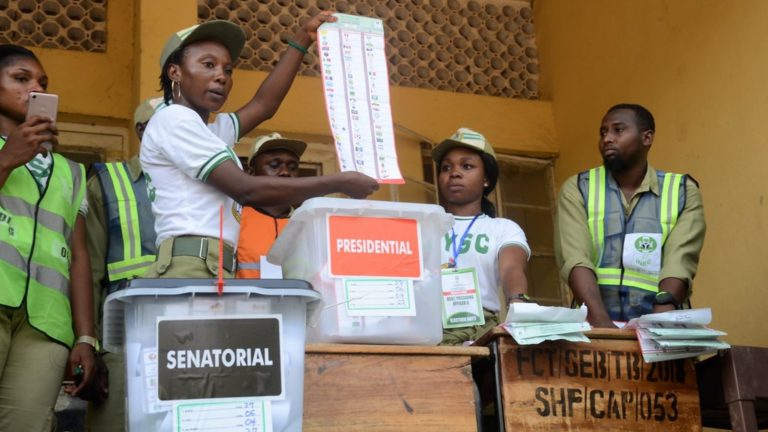
THE Independent National Electoral Commission (INEC) has said it would punish negligent officials whose actions sabotaged the efficiency and transparency of the Saturday, February 25 presidential and National Assembly elections.
Admitting that the elections were flawed, the commission said officials, including ad-hoc or collation personnel, found wanting in the conduct would be punished and prohibited from participating in the March 11 governorship and state House of Assembly elections.
The INEC chairman, Mahmood Yakubu, disclosed this on Saturday, March 4, during a meeting with Resident Electoral Commissioners (RECs) in Abuja.
According to him, the elections raised several issues that require immediate, medium and long-term solutions.
Yakubu asked the resident commissioners to immediately initiate disciplinary action where prima facie evidence of wrongdoing had been established.
He also told the RECs that election logistics must be finalised days before the election, noting that they would be held responsible for any delay or inefficiency caused by poor arrangements.
“This has been our standard practice. Centralising the process as was done in some states resulted in a delayed deployment of personnel and materials, and in late commencement of polls.
“RECs will be held responsible for any tardy arrangement or the failure to deploy electric power generators to collation centres or polling units where such facilities are needed. The Commission has enough facilities in all the states of the Federation. Failure to deploy them is simply inexcusable,” he said.
PRESIDENT Muhammadu Buhari has departed the Umar Musa Yar’Adua International Airport, Katsina, for Doha, Qatar, to attend the Fifth United Nations Conference on the Least Developed Countries (LCDs).
Governor Aminu Masari of Katsina State and some other government officials were at the airport to bid the president farewell.
A statement today by the president’s media aide, Garba Shehu, informed that Buhari was invited to the conference by the Emir of Qatar, Sheikh Tamim bin Hamad Al Thani.
The conference will be attended by world leaders, the private sector, civil society groups, and youth organisations.
According to the statement, the conference, among other things, seeks to share developmental ideas and mobilise actions and solutions to transform the LDCs by finding sustainable solutions to poverty, food insecurity, hunger, and weak or non-existent infrastructure.
The conference will also address inadequate healthcare facilities and climate change in LCDs as they struggle to deliver on the Sustainable Development Goals (SDGs) by 2030.
In the president’s delegation are some ministers and other government officials.
President Buhari is expected to return to his country home, Daura, Katsina State, on March 8 in preparation for voting in the March 11 governorship and House of Assembly elections.
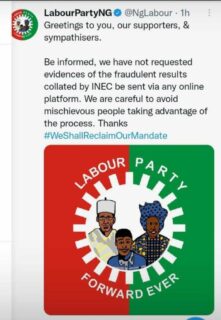
THE Labour Party (LP) has warned its members against uploading vital information on “fraudulent” election results on unrecognised platforms.
The party issued the warning via its official Twitter handle-LabourPartyNG@NgLabour.
“Be informed we have not requested that evidences of fraudulent results collated by INEC be sent via any online platform. We are careful to avoid mischievous people taking advantage of the process. Thanks,” the party tweeted.
Prior to this directive, an online portal had been opened with the picture of the LP presidential candidate, Peter Obi, and his wife, Margaret Obi, requesting for information about “fraudulent” election evidence against the party.
Fake online portal denied by LP
Obi, who came third at the just concluded presidential election, had in a media briefing on March 2 said he would be approaching the court to reclaim his “stolen mandate.”
The Court of Appeal, Abuja Division, has already granted separate ex-parte applications filed by Obi and the presidential candidate of the Peoples Democratic Party (PDP) Atiku Abubakar seeking permission to inspect the electoral materials used in the Saturday, February 25 presidential and National Assembly elections.
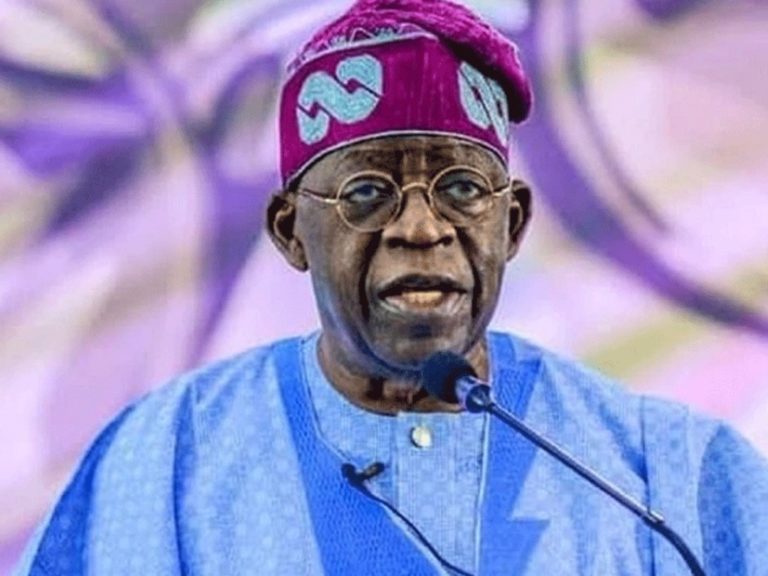
The Independent National Electoral Commission (INEC) officially declared the presidential candidate of the All Progressives Congress (APC), Bola Tinubu, winner of the election on March 1, trailed by Abubakar and Obi respectively.
THE Director-General of the Obi/Datti Presidential Campaign Council (PCC) of the Labour Party in Akwa Ibom State, Captain Augustine Okon, says the party has enough evidence to prove it won the presidential election in the state.
Okon told journalists at a press conference in Uyo on March 3 that the party would recover, through legal means, the mandate he claimed voters gave it at the presidential and National Assembly polls on February 25.
“The Council has collated enough evidence to prove that the Labour Party candidate won the presidential election in the state,” he said.
He expressed dismay on the inability of the Independent National Electoral Commission (INEC) to upload results to its Results Viewing (iREV) portal despite earlier assurances by the chairman of the Commission, Yakubu Mahmood.
He noted that INEC’s resort to manual collation and announcements of the results not only gave room for suspicion, but also indicated a “grand gang up” to suppress the will of the people.
He expressed optimism that the party would recover “its mandate” through legal means, as it had enough evidence to do so.
ABIA SOUTH senatorial district candidate of the Labour Party (LP), Chinedu Onyeizu, has accused the Independent National Electoral Commission (INEC) of irregularities and manipulation of election results in favour of the candidate of the All Progressives Grand Alliance(APGA), Enyinnaya Abaribe.
Speaking on Arise TV on Saturday March 4, Onyeizu maintained that INEC officials connived with Abaribe to declare him winner of the senatorial election.
The LP candidate alleged that election did not take place in more than 108 polling units in the senatorial district.
According to Onyeizu, the INEC returning officer for the district, Georgina Ugwuanyi, initially declared the election inconclusive.
He said, “What I experience on Saturday is a travesty of justice. We have a scenario where the electoral umpire who is known as the returning officer had come on air to declare the election inconclusive because over 108 polling units in my stronghold area did not experience any form of election.
“Earlier in the morning INEC had called all the collation officers and told all of us that the elections are inconclusive. And then five hours after, we see the same lady come back to the zonal collation office to declare Abaribe the winner of the election.
“So what we are still battling with is that we want to know what really happened between the time she had the election inconclusive and five hours later when she returned to say that she was instructed from Abuja to declare Enyinnaya Abaribe winner of the election.”
Onyeizu emphasized that electoral materials were not available in some units, while some others had issues with the unavailability of result sheets.
“Electoral materials didn’t get to some places, while in some places voting happened but there was no result sheet to enter the result of the election,” he said.
He pointed out that there were disparities between the numbers collated in polling units and those announced at the collation centre of the senatorial district.
The LP candidate explained, “In addition to this challenging development, the result sheets that were made available to us that she used to declare senator Abaribe the winner, when you tabulated the results on local government level, it sums up to 38,000 votes, while mine is 43,000.
“The level of irregularities and abuse of office that was demonstrated by Professor Georgina Ugwuanyi, the returning officer, is unprecedented.
“When you collate the result sheet at the polling units level, the numbers are different from the total number of votes cast at polling unit levels from the number collated at the collation centre. As they collated at local government centres, people are incentivized to do the wrong things and manipulate the figures. The numbers collated were different from what was announced.”
He called on the INEC chairman to declare the election inconclusive and organize another election to ensure that Nigerians are not disenfranchised.
“I want to use this medium to tell professor Mahmood to reflect on the decision his institution is making, and he should think about the implications of these decisions, especially in the democracy of Nigeria going forward.
“We call on INEC and the government to come back and conduct supplementary election in the 180 polling units in the senatorial zones where election couldn’t hold. And we are talking about disenfranchising 40,000 registered voters,” he said.
THE Central Bank of Nigeria (CBN) naira redesign policy has done more damage to the economy by paralysing businesses, the Chief Executive Officer of the Centre for the Promotion of Private Enterprises (CPPE), Muda Yusuf, said.
Yusuf, a former Director-General of the Lagos Chamber of Commerce and Industry (LCCI), told The ICIR today that over N2 trillion had been retrieved from the economy since the commencement of the policy in December 15, 2022.
The retrieval, he added, has rendered businesses unable to access cash to run their operations smoothly.
Nigerians have been going through harrowing experiences since the redesigned N200, N500 and N1,000 notes came into circulation on December 15, 2022 and the CBN retired the old notes as legal tender initially on January 31, 2023, but extended to February 10.
President Muhammadu Buhari, on February 16, gave the N200 note an extended circulation life till April 10, while affirming the February 10 expiration date of the old N500 and N1,000 notes.
“Till date, the CBN had mopped up about N2 trillion cash from the economy thereby paralyzing the retail sector, crippling the informal economy, stifling the agricultural value chain, immobilizing the transportation sector, and disrupting the payment system in the economy,” Yusuf said.
Admitting that the CBN had the right to redesign the country’s currency, he, however, argued that the apex bank did not have the right to dispossess the citizens of their cash.
Yusuf noted that the choice of the mode of store of value is a fundamental right of the citizens, adding that the CBN had no right to impose that choice on citizens.
“It is a flagrant violation of the rights of citizens for the CBN to withhold the cash of citizens under the guise of currency redesign.
“The CBN cannot request the citizens to bring their cash for a swap, only to deprive them access to it. A swap presupposes that whatever old notes was received by the banks must be replaced with new ones instantly.
“The entire exercise was a needless disruption of economic growth activities, especially among the most vulnerable segments of the economy,” he said.
Giving further clarification, Yusuf said the CBN claim that the economy had too much cash outside the banking system had no basis in economic theory, neither can it be supported by empirical evidence.
“As at December 2022, the total money supply was N52 trillion and cash component of money supply was N2.6 trillion, which was just five per cent . Similarly, the country’s gross domestic product (GDP) was N202 trillion, which gives a cash-to- GDP ratio of 1.3 per cent.
“These ratios are some of the lowest around the world, which shows that the Nigerian economy is not really a cash-dominant economy,” he said.
Yusuf applauded the March 3 Supreme Court ruling on the validity of the old N200, N500 and N1000 as legal tender till December 31, 2023.
THE Presidential Campaign Council (PCC) of the All Progressives Congress (APC) says the Electoral Act does not mandate the Independent National Electoral Commission (INEC) to transmit the election results electronically.
The Act does not contain any mandatory provision regarding the transmission of results; instead, the decision was at INEC’s discretion, according to the campaign council.
The special adviser on media and communications at the PCC, Dele Alake, said the complaint of the Peoples Democratic Party (PDP) and the Labour Party (LP) had no legal standing.
INEC’s failure to upload poll results in real-time on the Result Viewing (IReV) portal was a major controversy during the collation of presidential election results at the national collation centre in Abuja.
The LP and PDP, two major contenders in the presidential race, accused the electoral body of tainting the election outcome with its alleged failure to transmit the results from polling units.
In responding, the APC campaign council held a press conference in Abuja on Friday, March 3.
At the media briefing, Alake said the provision to transmit results was not mandatory, noting that election outcome had nothing to do with the transmission of election results.
He said, “Section 60, sub-section 2 of the Act deals with the transmission of results and is at the discretion of INEC. The Act does not contain any mandatory provision regarding the transmission of results.
“In any case, the process of transmitting results from polling units, whether real-time, two days later or at any time, cannot change the results that have been announced.”
He also indicated that the claim that INEC did not use the Bimodal Voter Accreditation System (BVAS) was false as “those who voted across Nigeria, including Atiku and Obi, were accredited.”
He described attempts by the parties to seek redress in court as an acceptable development.
“The initial knee-jerk and hothead call for anarchy by their proxies was ill-advised and would not serve any noble cause. It is good to know that reason has prevailed.
“We welcome the decision by the PDP, the LP and also the NNPP candidates to test their claims, as ridiculous as they are, in the court of law as provided for by the Constitution,’’ Alake said.
THE Presidential and National Assembly election was held on February 25, 2023, nationwide.
However, some members of the 9th Assembly will not return to the House after losing their seats in the election.
Here is a compilation of some Senate and House of Representatives members who will not return to the Assembly.
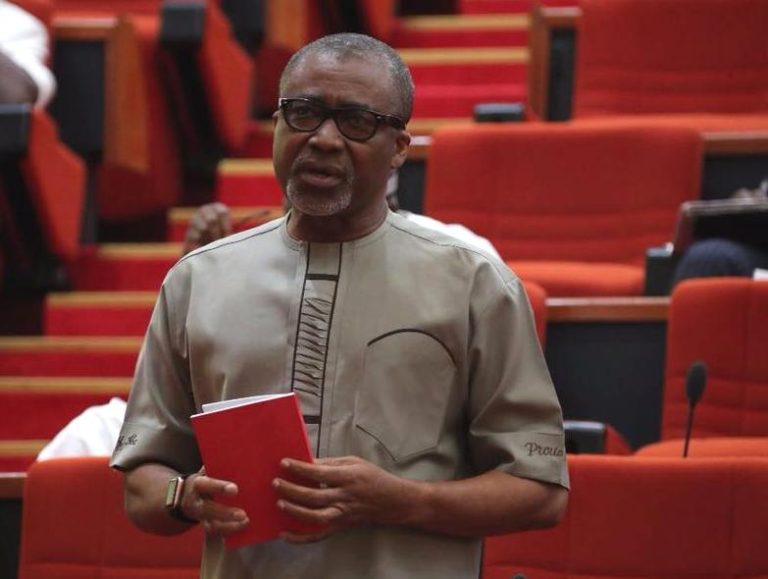
Philip Aduda
The FCT senatorial election has thrown up a lot of interest as the current Minority leader of the Red Chamber, Philip Aduda, lost his bid to return to the House.
Senator Philip Aduda
Aduda, who has been at the House since 2011, lost to Labour Party candidate Ireti Kingibe, who was declared the winner of the election.
Kingigbe scored 202,175 votes to defeat Aduda, who polled 100,544 votes to come second.
Biodun Olujimi
The current Senator representing Ekiti South Senatorial District, Biodun Olujimi, will not return to the Senate after losing her seat to an All Progressives Congress (APC) member Yemi Adaramodu.
Senator Abiodun Olujimi representing Ekiti South Constitituency.
Adaramodu, who is currently in the House of Representatives, scored 63,189 votes to beat Olujimi, who got 36,191 votes.
Senate spokesperson, Ajibola Bashiru
Another prominent member of the 9th Senate that will not be returning is the spokesperson of the Senate, Ajibola Bashiru.
Senator Ajibola Bashiru
Bashir, an APC member, currently represents Osun Central in the National Assembly.
He lost his re-election bid to the candidate of the PDP, Olubiyi Fadeyi, who scored 134,229 votes, while Bashiru polled 117,609 votes.
Ahmed Babba-Kaita
Ahmed Babba-Kaita of the PDP representing Katsina North Senatorial District lost to Nasir Zangon-Daura of the APC.
Zangon-Daura, a current member of the House of Representatives, polled 174,062 to defeat Babba- Kaita who got 163,586.
Minority Leader of the House of Representatives Ndudi Elumelu
Minority Leader of the House of Representatives Ndudi Elumelu.
Ndudi Elumelu, the incumbent member representing Aniocha/Oshimili Federal constituency at the lower chamber, will be missing from the House when members of the 10th National Assembly are sworn in.
House Minority leader, Ndudi Elumelu,
Elumelu pooled 33,456 votes, while the LP candidate got 53,879 votes to emerge the winner, as announced by the INEC Kenneth Ibe.
Babajide Obanikoro
The member representing Eti-Osa House of Representatives, Lagos, Babajide Obanikoro, will not return to the House.
Babajide, the son of the former Minister of Defence, Musiliu Obanikoro, lost his seat to the candidate of the Labour Party, Thaddeus Attah.
Attah won with 24,075 votes to beat Obanikoro of the APC, who had 16, 901 votes, while another contestant Bankole Wellington (Banky W) of the PDP, came second with 18,666 votes.
Taiwo Oluga
Taiwo Oluga of APC, the incumbent member representing the Ayedaade/Irewole/Isokan federal constituency, lost her seat in the just concluded National Assembly election.
She lost to Lanre Omoleye of the PDP.
Omoleye secured 39,124 votes to defeat Oluga, who got 37,832 votes.
The Deputy Minority Whip, Segun Adekoya
The Deputy Minority Whip of the House of Representatives, Segun Adekoya, has not succeeded in his bid to retain his seat.
Adekoya of the PDP represents the Ijebu-North/East/Ogun Waterside Federal Constituency of Ogun State at the National Assembly.
He lost to Adegbesan Joseph of APC.
Adekoya polled 25,450 votes, while the APC candidate got 35,708 votes.
Olusegun Odebunmi
Olusegun Odebunmi, a lawmaker from Ogo oluwa/Surulere federal constituency, Oyo state, also lost his bid to return to the lower chamber.
In the result announced on Sunday by INEC Returning Officer, Odebunmi, chairman of the House Committee on Information and Orientation, lost the election to PDP candidate Ojo Sunday Makanjuola.
Olusegun Odebunmi
Odebunmi is a three-term lawmaker.
It is left to be seen if the just concluded Presidential and National Assembly elections will impact the Governorship and States House of Assembly election slated for March 11, 2023.
Technology nearly derailed the conclusion of the 2023 presidential elections in Nigeria. The Independent National Electoral Commission could not fulfil its promise to transmit election results from the polling units on its result viewing portal (IReV). This led to calls by some political parties for cancellation and fresh elections. The Conversation Africa asked political scientist Abiodun Fatai how Nigeria can improve its election digitisation.
Nigeria has been digitising the voting process for 12 years. How has this worked?
Nigeria started using digital technology in the electoral process in 2011 when the Independent National Electoral Commission introduced the automated fingerprint identification system to stop voters registering more than once.
The permanent voter’s card and smart card reader were introduced in the 2015 general elections. At the polling station, a voter’s identity is verified by matching his or her biometrics to the voter’s card. The voter is then allowed to vote and the votes are counted manually.
In 2022, it introduced the Bimodal Voter Accreditation System, which is an electronic device designed to read permanent voter cards and authenticate voters – using the voters’ fingerprints – to prove that they are eligible to vote at a particular polling unit. This was used in the Ekiti and Osun states’ governorship elections in June 2022 and July 2022. The technology worked to its design in both states and was the basis for an election tribunal sacking the Osun State winner in January 2023.
The commission also introduced the result viewing portal, IReV, to guarantee transparent accreditation and uploading of polling unit results. It said this would enable citizens to view results in real-time on election day. But the results could not be uploaded onto the portal because of technical glitches. This caused some party agents to walk out of the collation centre in Abuja.
Did digital technologies help reduce fraud and promote the credibility of the elections?
It did to a large extent. It has been a long journey since 2011 and we are making improvements. The biometric technology actually worked. It has eliminated multiple voter registrations. If your biometrics are not captured, you can no longer vote. These are improvements. Look at the figures from the states – we did not see the huge figures of voters that were out of proportion to the number of registered voters, as happened in previous elections. The 2007 presidential election was so bad that even the winner, Umaru Musa Yar’Ádua, acknowledged this and set up a panel to reform elections. But the report of the committee, chaired by a former chief justice, Mohammed Uwais, did not see the light of day after Yar’Adua died.
The logistics could still be improved but some of the glitches we saw in the 2023 elections cannot be attributed to technology. They were operational issues. Some of the biometric machines malfunctioned or electoral officials didn’t know how to use them.
More importantly, the goal of technology was to enhance the quality and integrity of the elections and reduce electoral fraud. This was achieved.
What are the limitations to digitisation?
Technology is operated by humans and so whatever is put in place can always be defeated by unscrupulous people. Technology does not operate in a vacuum. It is apparent that Nigeria doesn’t have enough capacity to deploy technology fully.
So, conducting elections in Nigeria by deploying technology is a complex exercise. This was a reason for the commission not being able to transmit results in real time.
Digital elections are not cheap either as technology infrastructure costs a lot. Then there was the issue of inadequate preparation, evident in the late arrival of materials in some voting stations and inadequate training of ad hoc staff in operating the biometric machines. All these must have limiting effects on the elections.
What should Nigeria do to improve digitisation of its elections?
The electoral commission must follow the electoral law strictly, especially on the transmission of results in real time. This will enhance the credibility of our elections. The results must also be machine readable, with a clear image, and must be generated from the polling units.
The commission staff must be well trained in operating the machines for elections. Some of them don’t have the capacity and skills needed to function in a digital environment. This must change.
Nigeria must also upgrade its broadband networks to improve connectivity. Without these two, the country can’t enjoy the benefits of digital elections. There must be forensic screening of staff hired for election duties so that they are not easily compromised. Their integrity and character must be ascertained.
The country also needs more technical experts to work with the electoral commission than has been the case thus far. It is apparent that the commission lacks enough competent hands to deal with emerging technical issues during the election.
Lastly, Nigerian politicians must allow full digitisation of elections. They must embrace and support it.
A LAWSUIT brought by seven states led by the Peoples Democratic Party (PDP) against the federal government in the Supreme Court to contest Bola Tinubu’s election as president on Saturday, February 25, 2023, has been dropped.
According to THISDAY NEWSPAPER, seven states, which include Adamawa, Akwa Ibom, Bayelsa, Delta, Edo, Taraba, and Sokoto states, had asked the Supreme Court to intervene in the recently concluded presidential election, claiming that the declaration of Tinubu did not follow, the provisions of the Electoral Act 2022 and the Independent National Electoral Commission’s guidelines.
The Attorneys-General of the seven states were the plaintiffs, and the Attorney-General of the Federation was the defendant in the suit.
The lawsuit contested INEC’s failure to use the BVAS to upload the election results to the IReV. They also expressed concern about possible civil disobedience and a collapse of Public order.
The Notice of Discontinuance was signed by their lawyer, Michael Ozekhome signed, on Friday.
The ICIRreported that controversy surrounding the just concluded Presidential and National Assembly Election in Nigeria escalated, with some state governments dragging the Federal Government to the Supreme Court over the conduct of the exercise.
The states which are controlled by the opposition PDP want the Supreme Court to rule that the declaration of the candidate of the All Progressives Congress (APC), Bola Tinubu, as the winner of the February 25 presidential election is null and void.
They added that the whole results of the presidential election, as announced by the Chairman of the Independent National Electoral Commission (INEC), Mahmood Yakubu, violate provisions of the Electoral Act.
They further demanded a declaration that the refusal to upload the results of each of the 176,974 Polling Units nationwide, in respect of the Presidential and National Assembly Election, was not in accordance with the provisions of the Electoral Act.