Home Blog Page 177

Six arrested over killing of police officers in Benue

0

THE Nigeria Police Force (NPF) has arrested six suspects following a deadly ambush on its tactical teams in Benue State that claimed the lives of three officers and left seven others missing.

Force Public Relations Officer Benjamin Hundeyin, in a statement on Sunday, September 21, confirmed that the attack occurred on Friday, September 19, at the Agu Centre in the Katsina-Ala and Ukum Local Government Areas.

According to Hundeyin, the Commissioner of Police in the state, Innocent Emenari, is leading a search and rescue operation to locate the missing operatives. He said those arrested were already assisting investigators.

“The arrested suspects are in custody and assisting with useful information. Equally, the IGP has directed the deployment of additional tactical assets to the area and assured that no stone will be left unturned in restoring peace and security in Benue State,the NPF stated.

Local accounts, however, suggest higher casualties. The chairman of Katsina-Ala Local Government, Shaku Justine, told reporters that at least 11 security personnel were feared dead in the incident, with only three bodies recovered as of Sunday.     

He said two patrol vehicles used by the operatives were burnt, while eyewitnesses alleged that the attackers, in their hundreds, overwhelmed the security team.

While security forces continue operations in Katsina-Ala, another incident heightened tensions in Benue State. In the early hours of Monday, September 22, gunmen reportedly assassinated an All Progressives Congress (APC) chieftain, Ejeh Udeh, at his residence in Ugboju, Otukpo Local Government Area.

Eyewitnesses said the attackers, who rode on motorcycles, waited for Udeh to return home before opening fire on him in front of his family. His body has been deposited at the Otukpo General Hospital morgue.

The ICIR reported that insecurity in Benue has grown geometrically over the past years.

In June, the IGP, Kayode Egbetokun, announced the arrest of 26 suspects in connection with the killing of scores of people in Yelwata area of the state.

Egbetokun, while speaking in Abuja on Tuesday, June 24, stated that 28 suspects were initially arrested over the attack, but two were cleared, as they were merely decoys used to apprehend the 26 suspected masterminds behind the killings.

Recall that President Bola Tinubu visited the state after the Yelwata killings and ordered service chiefs and the IGP to arrest those behind the attack.

The ICIR reports that killings in the state have spanned several years, and more than 200 residents reportedly died in the onslaughts in June this year alone.

While some blame cropper-herders’ conflict for the carnage, others label the assailants as foreign terrorists.

The Tor Tiv, James Ayatse, a professor who spoke during Tinubu’s visit, dismissed claims that the killings were the product of clashes between herders and farmers.

Ayatse said they were “a calculated, well-planned, full-scale genocidal invasion and land-grabbing campaign.

He added, “What we are dealing with here in Benue is a calculated, well-planned, full-scale genocidal invasion and land-grabbing campaign by herder terrorists and bandits, which has been going on for decades and is worsening every year.”

NCoS foils attempt to smuggle drugs into Kuje Custodial Centre

0

THE Nigerian Correctional Service (NCoS) has intercepted an attempt to smuggle substances suspected to be psychoactive drugs into the Medium Security Custodial Centre, Kuje, in the Federal Capital Territory (FCT).

According to a statement on Monday by the Command Public Relations Officer (CPRO), Samson Duza, the incident occurred at about 12:45 a.m. on Saturday when a man identified as Njimogu Ikedi tried to visit an inmate while concealing cannabis sativa and other substances in his clothing.

Duza said the items were discovered during a routine search by officers on duty. He added that the Controller of Corrections for the FCT Command, Christopher Jen, ordered the suspect’s immediate arrest and subsequent handover to the National Drug Law Enforcement Agency (NDLEA) for investigation and prosecution.

Jen warned visitors against attempting to smuggle contraband into correctional facilities, stressing that vigilant personnel would continue to foil such schemes. He also called on members of the public to support the Service’s mandate of reforming and rehabilitating offenders to enhance public safety.

This development comes just months after a similar case in July 2024, when a woman was apprehended for attempting to smuggle suspected psychoactive substances into the same facility.

FG revokes 1,263 mining licences over unpaid fees

THE Federal Government has revoked 1,263 mineral licences across the country after their holders allegedly failed to pay the mandatory annual service fees.

The action, approved by Minister of Solid Minerals Development, Dele Alake, on the recommendation of the Mining Cadastral Office (MCO), covers 584 exploration licences, 65 mining leases, 144 quarry licences and 470 small-scale mining leases. 

A statement on Sunday, September 22, by Segun Tomori, the Special Assistant on Media to the minister, said the titles had been deleted from the MCO’s electronic portal, opening the areas to fresh applications from investors.

Alake said the move was part of a drive to clear speculators from the sector and encourage serious investors. 

“The era of obtaining licences and keeping them in drawers for the highest bidder while financially capable and industrious businessmen are complaining of access to good sites is over. The annual service fee is the minimum evidence that you are interested in mining. You don’t have to wait for us to revoke the license because the law allows you to return the license if you change your mind,” the minister said.

He also warned that revocation did not cancel the debts owed, adding that the ministry would forward the list of defaulters to the Economic and Financial Crimes Commission to recover outstanding fees or prosecute offenders.

“This is to encourage due diligence and emphasise the consequences of inundating the license application processes with speculative activities,” he noted.

The statement further added that the Director-General of MCO, Simon Nkom, mentioned in his recommendation that the process began after a notice of intention to revoke licences was published in the Federal Government Gazette on June 19, 2025, giving defaulters 30 days to comply under the Minerals and Mining Act 2007. 

He also disclosed that out of 1,957 initial defaulters, some reconciled their payments before the final decision.

He informed the minister that the gazette was distributed to MCO offices nationwide to sensitise licencees and encourage them to comply within 30 days in compliance with the Minerals and Mining Act 2007 and relevant regulations. 

“He observed that the delay in the final recommendation was due to complaints of several licensees who claimed to have paid to the Federal Government through Remita and had to be reconciled. 

“The latest revocation brings the total mineral titles revoked under the current administration to 3, 794 including,619 mineral titles revoked for defaulting in paying annual service fees and 912 for dormancy last year,” the statement added.

SERAP, Amnesty to Tinubu: withdraw charges against Sowore

0

THE Socio-Economic Rights and Accountability Project (SERAP) and Amnesty International Nigeria have urged President Bola Tinubu to direct the withdrawal of criminal charges against activist Omoyele Sowore, as well as against social media platforms X (formerly Twitter) and Facebook, over posts deemed critical of the president.

They made the call in a joint letter dated September 20, 2025, signed by SERAP’s deputy director, Kolawole Oluwadare, and Amnesty International Nigeria’s director, Isa Sanusi.

“Direct the Attorney General of the Federation and Minister of Justice, Mr Lateef Fagbemi, SAN to immediately withdraw the charges against activist Omoyele Sowore, X [formerly Twitter] and Facebook owners over Mr Sowore’s alleged critical and ‘anti-Tinubu’ posts on the social media platforms.

“The weaponisation of the justice system to crack down on peaceful dissent is entirely inconsistent with the Nigerian Constitution 1999 (as amended) and the country’s international human rights obligations,” the letter read in part.

The organisations called on Tinubu to prevent the State Security Services (SSS) and other security agencies from “misusing judicial processes to silence dissent.”

They also urged the president to instruct the Attorney General of the Federation to present an anti-SLAPP (Strategic Lawsuit Against Public Participation) bill to the National Assembly, aimed at curbing the use of lawsuits to muzzle public criticism.

“Direct Mr Fagbemi to urgently prepare an anti-SLAPP legislation for the National Assembly, to protect Nigerians from the weaponization of the justice system by the DSS and other security and law enforcement agencies and to safeguard the right to freedom of expression,” the letter stated.

They warned that “SLAPP and criminal defamation lawsuits are neither necessary nor proportionate” and have a chilling effect that stifles free expression.

“Freedom of expression is a fundamental human right and full enjoyment of this right is central to achieving individual freedom and to developing democracy. It is not only the cornerstone of democracy, but indispensable to a thriving civil society.”

“Your government has the legal obligations to prevent harassment through legal processes against Nigerians peacefully exercising their human rights, and to protect the legitimacy, independence and impartiality of the hearing of the lawsuit on the Cybercrimes Act pending before the ECOWAS Court.

“Any restrictions on human rights including the right to freedom of expression must meet the conditions of legality, serve as one of the legitimate purposes expressly provided for in the Nigerian Constitution and human rights treaties, and must be necessary, and proportionate to that purpose,” it added.

The ICIR reported on September 16, that the Federal Government filed a five-count criminal charge at the Federal High Court in Abuja against Sowore, accusing him of using social media to defame Tinubu and spread information capable of disturbing public order.

The Nigerian government stated that the posts described the president as a ‘criminal’ and alleged he falsely claimed there was no more corruption in Nigeria.

The government further said the comments were intended to cause a breakdown of law and order and to tarnish the president’s reputation. 

CJN Kekere-Ekun swears in 57 new SANs on September 29

0

THE Chief Justice of Nigeria, Kudirat Kekere-Ekun, will swear in 57 newly appointed Senior Advocates of Nigeria (SANs) on Monday, September 29, at the Supreme Court in Abuja.

The Supreme Court’s Director of Information and Public Relations, Festus Akande, a doctoral holder, announced on Sunday that the ceremony would open the 2025/2026 legal year. 

Kekere-Ekun will also deliver a “State of the Judiciary” address reviewing the Supreme Court’s performance in the 2024/2025 legal year and outlining priorities for the year ahead.

The statement added that key figures in the justice sector, including the Attorney General of the Federation, the Chairman of the Body of Senior Advocates of Nigeria, and the President of the Nigerian Bar Association, are scheduled to make presentations focusing on reforms and challenges facing the administration of justice.

The ICIR reports that the Legal Practitioners’ Privileges Committee (LPPC) had approved the 57 honourees during its 169th plenary session in July 2025.

Of the group, 56 are practising advocates, while one was chosen from the academic community. All have completed the mandatory pre-swearing induction programme.

The LPPC Secretary and Chief Registrar of the Supreme Court, Kabir Eniola said three petitions challenging some applications were filed but dismissed for lacking merit.

The rank of Senior Advocate of Nigeria is the highest distinction in the Nigerian legal profession. 

Those elevated, often called ‘silks’, gain exclusive courtroom privileges such as front-row seating and priority in case listings. They also wear the distinctive silk robes that set them apart from other lawyers. 

Supreme enablers, constitutional outrage

0

By Chidi Anselm Odinkalu

“THE judiciary have a wide scope for making political decisions.”

J.A.G. Griffiths, ‘Constitutional and Administrative Law’ in Peter Archer & Andrew Martin (Eds), More Law Reform Now, 55 (1983)

The judgment of the Supreme Court of Nigeria on 19 January 2006 concerning the state of emergency in Plateau State came down 20 months after the proclamation and 14 months after the emergency had expired. When it eventually was finally issued, the judgment was worse than an anti-climax.

The most important thing about the decision was not the jurisprudence of the court but the timing of when the court chose to hear the case. Nearly two decades later, the same Court is likely to reprise a familiar script, serving as an apex enabler of power amok. The people of Rivers State are paying the price in the currency of constitutional outrage. As always, the facts matter.

By Statutory instrument No. 4 of 2004, issued on May 18, 2004, Olusegun Obasanjo, then president of Nigeria and a retired four-star General, proclaimed a State of Emergency over Plateau State in North-Central Nigeria. Known as the State of Emergency (Plateau State) Proclamation, S.I. No. 4 of 2004 provided that, “the State shall for the duration of the emergency be administered by an Administrator who shall be appointed by me and operate on the basis of such Regulations that may, from time to time, be issued by me.” The duration of the emergency proclamation was six months.

At the time, President Obasanjo was elected on the platform of the Peoples’ Democratic Party (PDP). Beyond the federal level, the same party ruled or controlled 28 out of the 36 states in Nigeria. Joshua Dariye, the governor suspended in Plateau State by the emergency, was also elected on the platform of the party.

Having suspended the elected governor, his deputy and the Plateau State House of Assembly in exercise of powers purportedly exercised under the emergency, Obasanjo appointed Chris Alli, a former Chief of Army Staff, as his chosen Emergency Administrator for Plateau State. The National Assembly quickly voted to afford the president the parliamentary reinforcement required under the constitution.

In the name of Plateau State and its people, the suspended governor, Joshua Dariye, instructed legal proceedings invoking the original jurisdiction of the Supreme Court in respect of disputes between a state and the federal government. Among other things, the case asked the Supreme Court to determine whether the relevant provisions of the Constitution and of the Emergency Powers Act of 1961, empowered the president to suspend elected officials of the state.

The Supreme Court took its merry time before scheduling the case for argument. By the time it took arguments in the last quarter of the following year, the legal issues were still substantial, but the actual emergency had long become spent.

In its judgment, the Court ruled that the proceedings lacked the requisite legal standing because the suspended governor did not have powers to instruct proceedings on behalf of Plateau State and the Emergency Military Administrator had not authorised nor supported the case. It also added that as the emergency was spent, there was no longer any live dispute involved. This was diabolical judicial capitulation. If, as seemed evident, the court was clearly reluctant to get itself embroiled in the controversy, it would have struggled to find a more illogical piece of reasoning on the basis of which to justify casualising the issue as a matter of the institutional comfort for the judiciary.

The most charitable anyone could be about the idea that the fate of the case should hang on the consent of the Military Administrator the legality of whose appointment was in question was that it was cynical jurisprudence. At the time of the judgment, in any case, the question of whether or not the president had the power to suspend elected state officials was not at all academic.

Yet, through an act of commission that was deliberately made to look like routine omission, the Supreme Court enabled the Plateau State emergency proclamation, setting a precedent that ransacked the constitution, but which suited the essentially military temperament of a soldier and war-time General whose tolerance for being second-guessed by anyone was notoriously thin.

Nearly two decades later, On 17 September 2025, Bola Ahmed Tinubu, Nigeria’s incumbent president, issued an announcement lifting the six-month-old state of emergency that he had imposed on Rivers State on March 18. The announcement coincided with the expiration of the period of six months. Reprising the precedent set by President Obasanjo in 2004, President Tinubu, in proclaiming the emergency in Rivers State, also suspended all elected state level officials, including the state governor and members of the Rivers State House of Assembly.

Unlike the situation in 2004, however, the party of the president this time is the All-Progressives Congress (APC) and the elected state officials at the receiving end were in the PDP which had been in opposition since 2015.

At the National Assembly, which the Constitution requires to ratify the emergency proclamation by a qualified (two-thirds) majority, both chambers passed it by a voice-vote. This made it impossible to compute compliance with the constitutional arithmetic for lawful emergency proclamation. Naturally, therefore, the matter was fated to end up in controversy.

President Tinubu acknowledged as much in his announcement of the end of the Rivers State emergency,  confessing awareness of the fact that there were “over 40 cases in the courts in Abuja, Port Harcourt, and Yenagoa, to invalidate the declaration.” With a touch of presidential hubris, he added that, “that is the way it should be in a democratic setting. Some cases are still pending in the courts as of today.”

Most of the courts that have decided did so by way of rulings designed to short-ensure that was no judgment. One of the cases pending in the courts is SC/CV/329/2025 filed on 9 April 2025, a mere three weeks after the emergency proclamation in Rivers State, by 11 States whose governors were elected on the platform of the PDP. Their intervention ensured that the case avoided the delays inherent of navigating the lower rungs of the judicial ladder. There was good reason to believe that the court would give the matter timely consideration.

On 3 March 2023, the Supreme Court decided Suit No. SC/CV/162/2023 instituted by 10 States exactly one month earlier on 3 February to challenge the re-design of the national currency on the eve of the 2023 elections.

The following year, the same court took exactly 45 days to decide on 11 July, the case on local government autonomy filed by the Federal Government against the states on 25 May 2025.

If the hope of the PDP governors in the Rivers State case was to give the apex court a timely opportunity to adjudicate the matter, it was mis-placed. When the Plateau State emergency case was being given the judicial runaround under President Obasanjo two decades earlier, Rivers State was one of the poster boys of the PDP administration.

This time, the state is a political prize for which the incumbent president is willing to mint a currency entirely of his own making. The Supreme Court has enabled him to have his way as he pleases with neither care nor heed for what the constitution requires.

As I write, the Supreme Court is still twiddling its elevated judicial thumbs while evidently divining the magical body language of the presidency. The court has chosen to enable emergency rule of manifestly dubious constitutionality by allowing the clock to run out on the proclamation. Its choice of that course of action has been both wilful and cynical. It is also clearly political.

The administrative feint of the Supreme Court in kicking the Rivers State emergency case into the judicial long grass is a piece of judicial legerdemain whose place in the pantheon of judicial infamy is assured. It is also a piece of catastrophic success for the administration. With Supreme benediction, every elected state official now holds office at the sufferance of the presidency. The true scale of its perverse consequences for constitutional government in Nigeria will become apparent as the 2027 elections approach.

A lawyer and a teacher, Odinkalu can be reached at chidi.odinkalu@tufts.edu

FG probes mysterious flesh-eating disease in Adamawa

THE Federal Government has launched laboratory tests to identify the cause of a mysterious flesh-eating disease that has claimed seven lives in Malabu, Adamawa State.

The Acting National Coordinator of the National Tuberculosis, Buruli Ulcer, and Leprosy Control Programme, Adesigbin Olufemi, revealed this on Sunday.

Olufemi explained that the disease typically starts as a boil, which later ruptures and gradually consumes the flesh, in some cases extending to damage the underlying bones.

He said that while the exact cause remained unknown, Buruli Ulcer was suspected.

“This tropical disease is still under investigation for confirmation,” he said.

The coordinator said that as of September 10, a total of 67 cases had been confirmed, with eight patients receiving surgical care at Modibbo Adama University Teaching Hospital, Yola..

He explained that “Buruli Ulcer is caused by Mycobacterium ulcerans, a bacterium typically found in swampy areas and stagnant riverine ecosystems.

“Up till now, nobody is sure exactly how it is transmitted. Some theories suggest insects like water fleas or mosquitoes may inoculate individuals when they bite,” Olufemi added.

He commended the swift response of the Adamawa State Government, supported by federal agencies and the non-governmental partner, REDAID, which arrived at the scene on September 14.

He explained that patients with mild symptoms were receiving care at local health centres, while severe cases needing surgery were referred to specialised hospitals.

Olufemi stressed the importance of public awareness, noting that some residents initially attributed the disease to witchcraft, which caused delays in accessing proper treatment.

“One of the things that is very important, and that’s what we are doing, is to continue to create awareness,” he said, urging residents to seek medical care early.

He pointed out that Malabu is a remote community about two hours from Yola, with poor road access that hinders rapid medical response.

Olufemi emphasised that ensuring long-term health security goes beyond medical care, requiring access to clean water and better sanitation in rural communities.

“People will not need to go to those rivers to fetch water if they have pipe-borne or borehole water around them. That way, they are less exposed,” he explained.

New H-1B visa fee applies to new applicants only – White House

0

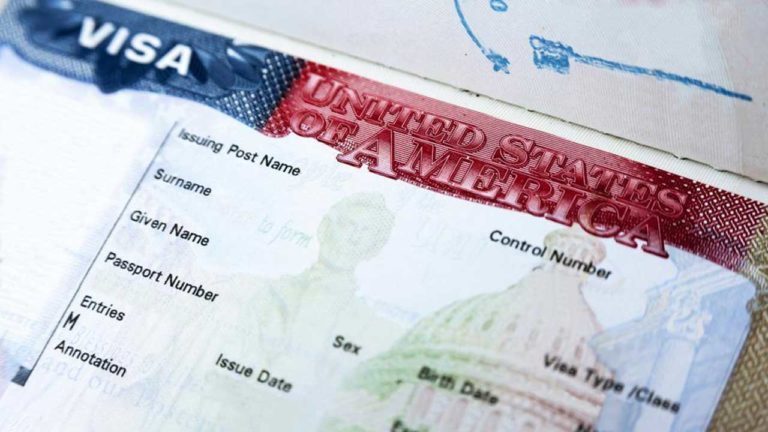
THE White House has said that the new $100,000 fee for H-1B visas in the United States would not apply to existing visa holders re-entering the country.

It also said the fee would be levied per petition.

White House spokesperson Karoline Leavitt said in a post on X on Saturday, September 20.

“This is NOT an annual fee. It’s a one-time fee that applies only to the petition,” Leavitt said.

Leavitt clarified that H-1B visa holders outside the United States would not be required to pay the $100,000 fee to return.

She also explained that H-1B visa holders might continue to travel in and out of the country, noting that the new fee would apply only to the next H-1B lottery round, not to current holders or renewals.

The ICIR reported that Commerce Secretary Howard Lutnick said on Friday that the fee would be charged annually but noted that the specifics were “still being considered.”

However, a White House clarification on Saturday showed that the fee would not be paid annually.

The White House stated that the fee was intended to create a level playing field for American workers, arguing that many were being “replaced with lower-paid foreign labour.”

In a fact sheet released on Saturday, the White House said H-1B visa applications could be exempted from the $100,000 fee on a case-by-case basis “if deemed in the national interest.” 

The document also noted that the proportion of IT workers holding H-1B visas had grown from 32 per cent in 2003 to more than 65 per cent in recent years.

President Donald Trump’s executive order directed the Departments of Labor and Homeland Security to issue joint guidance on verification, enforcement, audits, penalties and to also begin a rulemaking process to “revise prevailing wage levels for the H-1B programme” and to “prioritise highly skilled, well-paid H-1B workers.”

Reports indicate that companies such as Microsoft (MSFT.O), JPMorgan (JPM.N), and Amazon (AMZN.O) reacted to Friday’s announcement by emailing their H-1B visa employees, advising them to remain in the United States.

Nasscom, an Indian IT firm, said on Saturday that the the new fee on H-1B visa applications could disrupt global operations of Indian technology service companies that send skilled professionals to the United States.

The ICIR reported that the White House said Trump’s action was intended to address risks to US national security.

“President Trump is imposing higher costs on companies seeking to use the H-1B programme in order to address the abuse of the programme, stop the undercutting of wages, and protect our national security,” it said.

Ogun Police nab man assaulting wife in viral video

0

THE Ogun State Police Command has arrested a man, Fatai Quadri, after a viral video showed him repeatedly punching his wife, Rukayat, at their home in Illese-Ijebu.

Spokesperson of the Ogun State Police Command, Omolola Odutola, a chief superintendent of police, confirmed the arrest in a statement Saturday evening. 

She said operatives from the Igbeba Divisional Headquarters in Ijebu-Ode moved quickly to apprehend Quadri once the footage surfaced online.

The video showed Rukayat crying out in Yoruba, “Fatai ma pa mi,” meaning “Fatai, please don’t kill me”, as her husband rained blows on her head and neck.

The woman was also heard begging for help and asking that the gate be opened for her. The beating started inside the room and continued into the compound as the husband repeatedly punched her and kicked her.

However, the command’s spokesperson said a preliminary investigation revealed that the assault followed a marital dispute linked to allegations of infidelity. 

He also noted that Quadri had recently transferred ownership of a 10-room apartment, which he and Rukayat built together, to another woman.

The investigation further indicated that the suspect had transferred ownership of a 10-room en-suite apartment, jointly built with his wife, to another woman who provoked the violent attack.

“The victim is presently receiving medical treatment, while the suspect remains in custody and will be charged to court upon conclusion of investigation, “ Odutola said.

The Ogun State Commissioner of Police, Lanre Ogunlowo, condemned the assault and reiterated the command’s zero-tolerance for domestic violence. 

He also urged residents, particularly victims of abuse to report threats or attacks promptly, stressing that “silence only empowers perpetrators, but timely reporting ensures protection and justice.”

Meanwhile, top government officials in the  state have pledged to ensure swift prosecution of the  accused.

The Attorney General and Commissioner for Justice, Oluwasina Ogungbade, described the attack as “very reprehensible.” 

This incident. The ICIR reports, highlights Nigeria’s worrying tide of gender-based violence. 

Data from the National Human Rights Commission (NHRC) show 3,972 domestic violence cases and 1,471 incidents of sexual violence were recorded nationwide in June 2025 alone

In first half of the year, the NHRC documented over 38,000 gender-based violence complaints.

The ICIR further reports that Nigeria’s Violence Against Persons (Prohibition) Act (VAPP), enacted in 2015, criminalises domestic violence, harmful traditional practices, and other forms of abuse, and provides for survivor protection and compensation. 

Shettima leads Nigeria’s delegation to UNGA

0

VICE President Kashim Shettima will represent President Bola Ahmed Tinubu and lead Nigeria’s delegation to the 80th United Nations General Assembly (UNGA) in New York.

A statement on Saturday, September 20, by Stanley Nkwocha, Senior Special Assistant to the President on Media & Communications, said the Vice President would attend the anniversary session of the UN on Monday, September 22, before participating in the general debates running through September 28.

The UN General Assembly is the United Nations’ main legislative and policymaking body, a global forum where all member states debate the world’s most urgent challenges, such as climate change, poverty, inequality, peace, and global health. 

Every September, world leaders gather at the UN headquarters in New York for a High-level Week, featuring speeches and negotiations aimed at building consensus on international issues.

The 80th session opened on September 9, 2025, with Germany’s Annalena Baerbock elected as President of the Assembly. Beginning September 23, heads of state and government leaders will deliver national statements during the General Debate. 

This year’s gathering also coincides with the 10th anniversary of the Sustainable Development Goals (SDGs), a shared global plan to end poverty, protect the planet, and ensure prosperity by 2030. 

Alongside the General Debate, special high-level meetings will address non-communicable diseases and mental health, the 30th anniversary of the Fourth World Conference on Women, and the World Programme of Action for Youth.

Meanwhile, the Nigeria vice president will attend a special Climate Summit for Heads of State and Government hosted by the UN Secretary-General, where Nigeria is expected to unveil its new Nationally Determined Contributions (NDCs) under the Paris Agreement.

He will also join global leaders at a high-level roundtable on Adequate and Affordable Housing hosted by the Kenyan president, and hold several bilateral meetings aimed at expanding economic and development cooperation.

“After attending UNGA, the Vice President will leave for Frankfurt, Germany, where he is slated to meet with officials of the Deutche Bank before returning to Nigeria,” the statement stated.