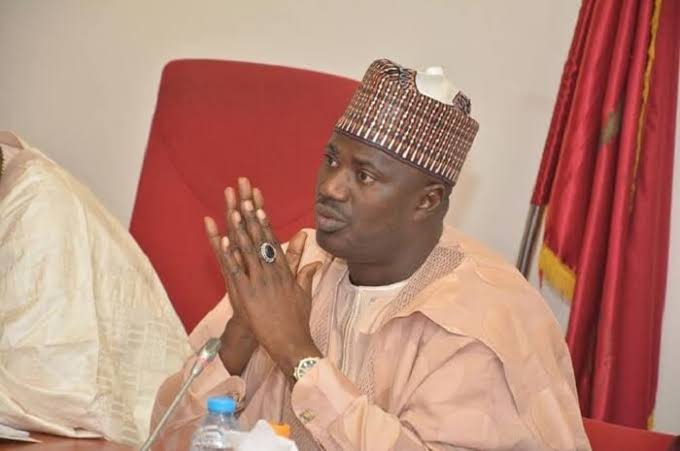
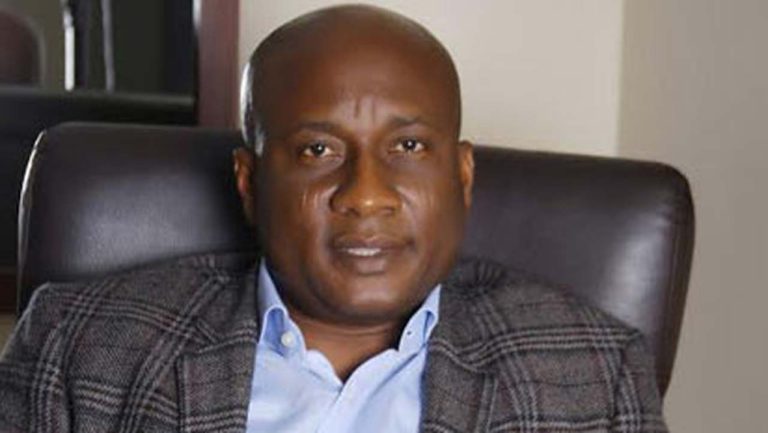
THE Deputy Senate Chief Whip, Bali Abdullahi representing Niger North Senatorial district has explained the reasons behind the Hate Speech Bill he privately sponsored which has generated criticism from many Nigerians.
In a video posted on the official social media handle of the Nigerian Senate, he explained that he proposed the bill during the 8th Senate-Assembly but it couldn’t go for second reading because he noticed that the political atmosphere was charged.
Abdullahi said because of the sensitive nature of the bill, he felt it would not enjoy a fair conversation in the Senate so he put the bill on pending till the end of the 8th Senate Assembly.
Stressing the need for a bill on Hate Speech, Abdullahi said more than 20 countries have bills on hate speech including United Kingdom, Canada, Australia, Japan, Germany, France among others.
According to Abdullahi, hate speech is increasingly becoming a problem and from his studies, the word ‘Hate Speech’ was coined by a United States scholar who looked at the hindrances of victims of hate speech to seek legal redress in a case of such.
“People who have fallen victim of hate speech are left like that without any restitution, without any compensation, without any recourse to seeking justice for them,” he said.
He added that from his readings on all the violence and crisis in Nigeria, he found out that most of them if not all were preceded by hate speech.
He said it is sad that people are shutting down the bill by amplifying death by hanging penalties for people who are found guilty of hate speech.
“The bill is not that when someone says anything that can be termed as hate speech then he should be hanged; it is far from the truth,” he added
The Senator added that in fact, there are statements that must be made and it also requires inviting the suspect and the other party so that they can broker peace and have understanding in a manner that the parties will be able to continue to relate with each other harmoniously.
Abdullahi added that he thinks the misunderstanding of the bill is justified and that it tells him that Nigeria is united in the understanding that death is not good.
He said since violence preceded by hate speech leads to death then it means it is bad and should be stopped.
“The idea of the bill is to have a body that can bring in parties involved in the exchange for dialogue or reconciliation,” he added
He said the bulk of people involved in the act are highly placed people because when they speak, a large majority of the people listen to it and they take action.
He painted a scenario where someone comes to a large gathering and say inciting statements about ethnicity or religion and is mobbed and killed
“The idea of the proposed Independent National Commission is to provide room for proper prosecution of hate speech offenders instead of risking an atmosphere where someone can say something inciting and might lead to a mob attack on the person,” Abdullahi noted.
He appealed to Nigerians, saying that they don’t have to be a victim before they can appreciate the need for the bill but insisted that there are Nigerians who have fallen victim and suffering in silence because of hate speech.
He said the bill is not a perfect document but a proposal before the National Assembly and they have the opportunity to contribute when it gets to a public hearing.
He also called on Nigerians to look at the bill, not from the standpoint of what they do not like about it, but they should look at its overall impact.
A Civil Society Organisation, Resource Centre for Human Rights and Civic Education (CHRICED) said millions of Nigeria citizens are groaning due to bad roads, poorly funded and ill-equipped health centre and dilapidated school buildings.
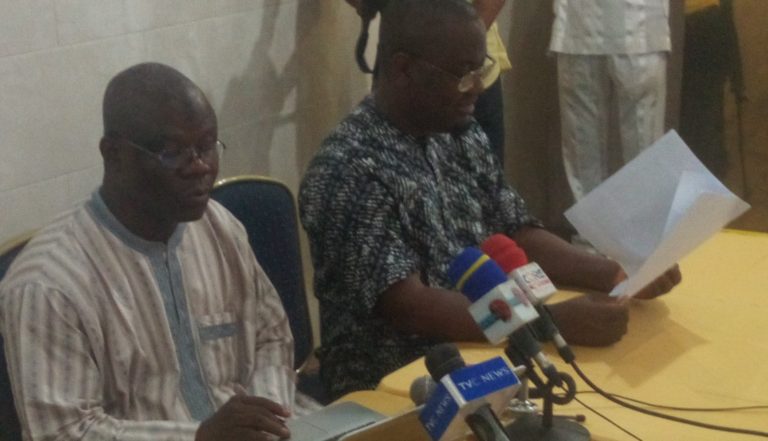
Addressing pressmen on State of the Nation in Abuja on Monday, the Executive Director of the organisation, Ibrahim Zikirullahi, charged the Federal Government to use proceeds of corruption to alleviate sufferings of the poor and the vulnerable Nigerians.
Zikirullahi said apart from the Abacha loot, disbursed through the Conditional Cash Transfers (CCT), other recoveries made by anti-corruption agencies are idly sitting in the National Treasury of the country.
He said CHRICED on several occasions had called for the recovered funds to be used for the execution of high impact intervention projects across the nation.
On the just-concluded Kogi and Bayelsa state elections, Zikirullahi said the elections left behind a trail of sorrow tears and blood and cannot be considered as democratic elections because they fail to meet the minimum standards of free and credible polls as universally accepted.
“Nigerians witnessed how thugs sponsored by Politicians overran the election terrain which caused the deaths of innocent citizens and disrupted the process of the election.”
The Department of State Services (DSS), depriving citizens of their freedoms in defiance of court orders should understand the damage their impunity is doing to the stability and orderly governance of the country, he said.
CHRICED further condemned the emerging culture of abuse and abridgement of citizen’s right and attacks on free press.
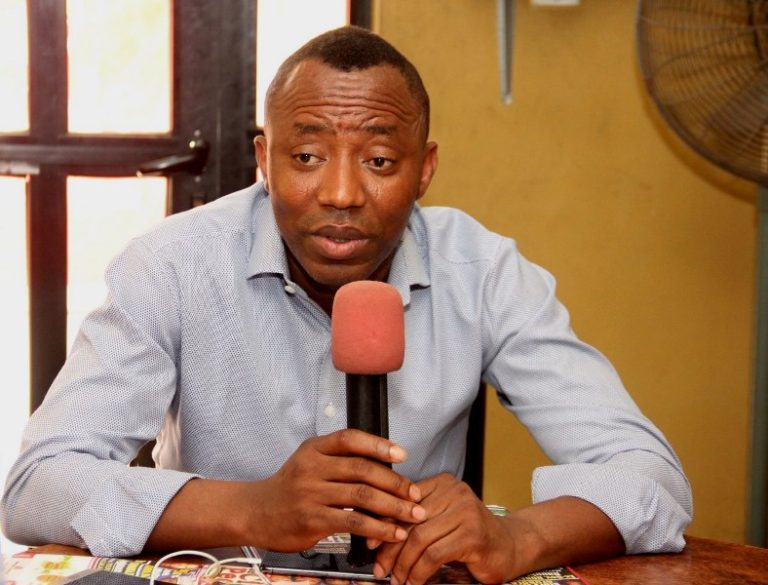
He called for the release of Omoyele Sowore and Dadiyata including Agba Jalingo whom he said is being hounded by the Governor of Cross River, Ben Ayade.
Speaking on the burden of multiple taxations borne by Nigerians, he said: “For us, the idea of taxation without a bold and imaginative effort to create wealth and lift citizens out of poverty is a recipe for economic disaster,” he said.
He added that between 1999 and 2018, over N67 trillion naira has been budgeted by the Federal Government and within that period, the number of out of school children has risen from nine million to ten million in Nigeria.
SAVE the Children, a leading child rights organisation has called for the actual implementation of the Child Rights Act (CRA) in Nigeria in commemoration of the 30th United Nations Convention on the Rights of the Child to mark the world children’s day.
At a digital literacy training for 30 girls from Government Secondary School, Gwagalada, Abuja, Save the Children stressed the need for the implementation of the CRA in Nigeria, noting that Nigerian children are currently witnessing the erosion of their fundamental human rights by both state and non-state actors.
Ammanuel Mamo, Director of Advocacy and Campaign, Save the Children Nigeria said in his speech that the CRA should not just stop at being domesticated only by states.
“In Nigeria for example, there are so many states that have already domesticated the Child Rights Act, which is a very good and important step forward,” Mamo said.
However, it does not end right there. It has to be implemented. “Implementation starts with budgeting for it, clarifying the plan of actions and clarifying accountability towards that,” he added.
Out of the 36 states and the FCT, 11 states are yet to domesticate the CRA. The states include Adamawa, Bauchi, Yobe, Sokoto, Borno, Zamfara, Gombe, Katsina, Kebbi, Jigawa, and Kano.
“We would like to take this opportunity to urge them to immediately domesticate the Act as a very important step forward for the realisation of the Child Rights Act, Mamo said about those states who are yet to domesticate the CRA.
Save the Children disclosed that there are about 1.7 billion children who are affected by violence every year. 5.9 million children are affected by preventable causes like pneumonia each year, while four girls under the age of 15 get married every minute in the world, amounting to 5,760 married under-aged girls in a day.
The organization, therefore, called on the government to define specific actions to take in ensuring that further progress is made towards realising the rights of every child with a focus on the most marginalised and that children should be included in a meaningful way of the decision-making process of the government.
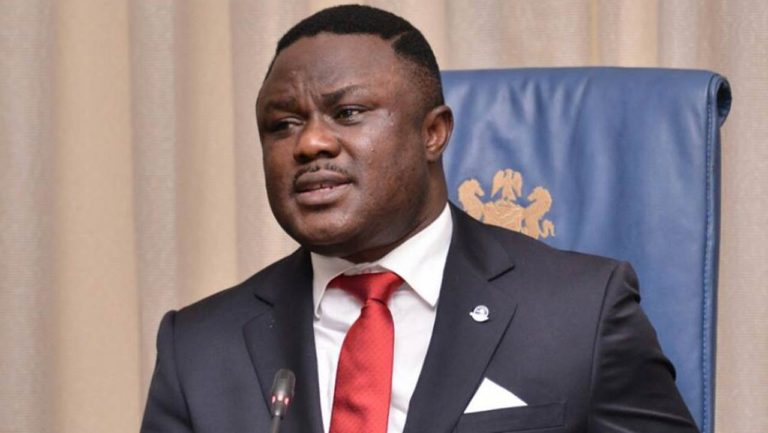
GOVERNOR Ben Ayade of Cross River state has presented an appropriation bill of N1.1 trillion for the 2020 fiscal year despite the obvious dwindling revenue.
The governor who is known for proposing unrealistic budgets in past years, while presenting the 2020 budget proposal disclosed that the budget has a capital expenditure of N911 billion, representing 82.8 percent and a recurrent expenditure of N188 billion, representing 17.2 percent of the aggregate budget. The Governor is of the belief that the budget will be anchored on a spiritual force.
How unrealistic is this budget?
In 2018, the total revenue for the state was N54.4 billion, a paltry 4.2 percent of the entire budget size of N1.3 trillion. The state received N36.95 billion from the federal allocation account and tried to generate just N17.55 billion internally. With this, the state in 2018, had a budget deficit of about 95.8 percent. The narrative is yet to change in 2019.
For 2019, the governor signed what he tagged the budget of qabalistic densification of about N1.043 trillion. However, what the state has raked in as its revenue as of June 2019 is just about N33. 97 billion, with a projection that it may not rake in more than N80 billion as its revenue at the end of the year.
In the past 10 years, from 2009 to 2018, Cross River State has only received N377 billion from the federation account allocation and generated N128.6 billion internally, totaling N505.6 billion. Therefore, if the state borrows to spend N1.1 trillion in 2020, it may not earn this amount of money in revenue in the next 10 years.
What the state audited account said
According to the audit report of the state, in 2017, the recurrent revenue received by the State Government in 2017 amounted to N54.28 billion as against the projected revenue of N95.75 billion showing a shortfall of N41.47 billion representing 43.3 per cent.
On capital expenditure, in 2017, the state government only implemented 6.2 percent of it intended capital expenses. The actual capital expenditure for the 2017 financial year was N38.72 billion as against the estimated Capital Expenditure of N621.47 billion.
In 2018, the state government had projected a recurrent revenue of N113.36 billion, however, it only received N60.3 billion, showing a shortfall of N53.05 billion. For capital expenditure, as against the budgeted N1.1 trillion capital expenditure, the state government was only able to implement N61 billion worth of capital expenses, representing 5.51 percent, lower than the 6.2 percent capital implementation of 2017.
Increasing debt burden
It will not be far from the truth to say that the state resolves to take loan to service its financial obligation so as to meet up on some of its impracticable budget projections. Data from the Debt Management Office (DMO) shows that the total debt stock of the state between 2015 and 2019 has a 45 percent increase.
In 2015, the total debt stock of the state stood at N157 billion, 2016- N163 billion, 2017- N176.87 billion, 2018- N225.5 billion, and as of June 2019, the debt stock is at N227.6 billion.
The concern about the Cross River state to present a higher budget is how the state will get the money to fully implement its budget, knowing its revenues come either from FAAC or from IGR.
As indicated by the federation account allocation and IGR in 2017 and 2018, the combined total revenues for the state in 2020 cannot exceed N100 billion. With this projection, the total revenues of the state will be less than 15 percent of its budget.
Therefore, if the budgets of the states will be implemented fully, nothing less than 90 percent will be borrowed. This budget deficit is very unrealistic.
Women of Borno have seen it all: Torture, killings and prolonged detention of their sons and husbands by soldiers fighting insurgency in northeastern Nigeria since 2009.
Now the women can no longer bear the suffering and injustice that come with military intervention in the crisis and, therefore, have started demanding accountability from the Nigerian government.
Ajibola AMZAT, Editor of The ICIR, reports about the struggle of the Borno women seeking justice for their men, some of whom are believed dead or detained by the Nigerian Army for offences for which they are yet to be charged
WALID returned from school at noon on Wednesday, March 27, greeted his grandmother Hajja Gana Suleiman and other women seated under the mango tree in a fenced building in Gwange, a suburb of Maiduguri in northeastern Nigeria.
He later disappeared into a brick house to remove his school uniform – blue trousers, checked shirt and blue jacket.
“That boy was seven last January,” his grandmother said with a mixed feeling of pride and sorrow that later dissolved into an outburst of tears.
“He was in his mother’s womb when soldiers snatched his father from us”.
Walid’s father, Mustapha Abdul Kareem Saina, was arrested by the army on October 10, 2011, at a mosque in Bollori 2, Maiduguri, where he went to pray.
The soldiers, dressed in combat uniform, came down from military vehicles and surrounded the mosque at dawn. They then ordered every worshipper out, about 30 of them, and separated the young from the old and took the youths away.
Saina was 25 years old at the time.
Mustapha Saina’s grandmother
When his pregnant wife, Nafisat heard that her husband was among those taken away, she rushed to Giwa Barracks, one of the military facilities in Maiduguri where suspected Boko Haram members were detained.
As of April 2018, the detention facility held more than 4,900 people in extremely overcrowded cells, according to Amnesty International. And many of them are people the army suspected of being insurgents or their sympathisers.
Between 2009 and 2016, Boko Haram, the dreaded group that desires to set up a new political order governed by Islamic law in the Northeast, had killed more than 5,000 civilians and uniformed men, and had displaced hundreds of thousands of others, according to UNDP.
The insurgency started a decade ago when the security agents killed their group’s leader, Mohammed Yusuf. The conflict later snowballed into full-scale terrorism to the embarrassment of the military establishment that was caught unprepared.
Nafisat wanted to tell the soldiers who arrested her husband that he was not a member of that murderous group.
But she had uttered only a few desperate words before a soldier landed several slaps on her face and ordered her to go home.
Unshaken, she later returned to the barracks with her mother-in-law, Hajja Gana, to plead for the release of her husband, but the supplication of both women fell on deaf ears.
For a brief moment, the two women saw their breadwinner among other scared stiff detainees, but they could not come near him.
“From where he was held, my son cried to me that I should do everything possible to get him out. I was very sad seeing him in that condition. I swear to Allah, he is not a Boko Haram. My son is not a Boko Haram. Walahi, he is not,” the mother told The ICIR.
Since 2011 to date, Saina’s wife and mother have been waiting almost hopelessly for the day he would regain freedom and reunite with them. It is uncertain he would any time soon or if he is even still alive.
But the two women are yet to inform Walid about the condition of his father, seven years after his birth.
“I have not yet had the courage to tell him what happened to his father. It’s hard for me to tell him,” the old woman said, as tears of frustration rolled down her cheeks.
Overwhelmed by their own misfortune, other women seated on the floor joined her. Each woman taking time to bewail the disappearance of their sons or husbands.
They are members of Jire Dole, a network of survivors and relatives of missing persons, victims of the Boko Haram insurgency.
The group was formed about two years ago to put pressure on the government to account for the whereabouts of their sons and husbands. Women from different families, joined by a common burden of grief, shared their experience with The ICIR. At the last count, the group membership was over 3,000.
Hajja Gana leader of Jire Dole
One of them was Zainab Muhammed, a 53-year-old Kanuri woman. Her son, Ibrahim Muhammed, aged 16, was arrested in 2012 on Baga Road in Maiduguri on the way to the market where he went to buy thread and other sewing materials.
He went with his elder brother; both are apprentice tailors. But it turned out that soldiers were conducting a raid that morning, an operation that had almost become a routine in the city of Maiduguri. Many young men escaped arrest that day, but Ibrahim was unlucky.
When the news of his arrest reached home, his parents dashed out to secure his release before he could be taken into detention. But they were not quick enough.
“It was raining heavily that morning, yet we dashed out, walked long distances in the rain, and we did not feel it. When we reached Sector One in Baga road, soldiers chased us away, threatening to shoot if we didn’t go back. I became ill when I got home, coughing seriously,” Zainab recounted.
For three months, she was homebound and heard no news of her son. When she was told later that those arrested had been taken to Giwa barracks, her hope of seen Ibrahim again dimmed.
But a Good Samaritan showed forth – or so she thought. He was a soldier. He promised to help Ibrahim gain freedom. And to do that, he would have to bribe several guards at Giwa Barracks.
He demanded N300, 000, but the family could only raise N150, 000, borrowed at a high-interest rate. An arrangement was made. Ibrahim would be brought loaded together with corpses of suspected Boko Haram members due for the morgue that day.
At that time, in Maiduguri, it was learnt that a military ambulance (Hiace bus) with registration number N432 used to discharge heaps of corpses every week at the hospital. The ambulance did many trips in a day, a resident who worked with the National Human Rights Commission, NHRC, in Maiduguri told The ICIR.
On April 2, 2013, at least 67 unknown corpses deposited in Borno State Specialist Hospital were waiting to be disposed off by the Borno Environmental Protection Agency, BOSEPA, according to a document obtained by The ICIR.
A request letter to BOSEPA for the burial of unknown corpses
But on the day the soldier promised to bring Zainab’s son along with dead bodies, the soldier was nowhere to be seen. Though corpses of many youths were delivered at the hospital that day, Ibrahim was not among them.
“We waited all day, but he did not show up. The man [the soldier] has a Christian name, but I cannot remember again. His duty station used to be Borno State Specialist Hospital,” she told The ICIR amidst tears.
Double jeopardy
Several members of Jire Dole interviewed by The ICIR confirmed that soldiers at one time or the other visited the community, and persuaded them to pay some money in order to have their children released so that they would not die in detention. Often, they requested money or food or clothes from relatives on behalf of the detainees.
Members of Jire Dole in a meeting
“The soldiers would come to the locality asking whether you have anybody in prison, and if you say “yes”, they would tell us he needs food, cloth and money, and we gave them. But we never saw the person we were sending money or food,” said Aisha Modu, 45, whose husband, Modu Foyo, 56, was arrested in November 2012.
Before his arrest, Foyo was an employee of Magumeri local government council. He also used his private car for an intra-city taxi service. That was how he catered for his large family of 10 children and a wife until his unfortunate encounter with the khaki boys.
During one of his trips, he came across soldiers at a roadblock in Goni Dagari. The soldiers ordered all the passengers including Foyo to disembark and lie down on the floor. Women who witnessed the scene said Foyo presented his identity card as government staff, but no one listened to him. After a brief search, all men in the car were taken to Maiduguri prison from where they were later transferred to Giwa barracks.
For the past seven years, he has remained in detention, and Aisha became saddled with the responsibility of caring for the children: five boys and five girls.
“We consulted marabouts [a Muslim holy man] who asked us to fast and pray. it was the only thing to do in that circumstance,” she said.
Dr. Baba Gana Kolo, a lecturer at the Department of Sociology and Anthropology, University of Maiduguri, once explained why people of Borno easily resign to faith in the face of adversity.
Before the establishment of the Civilian Joint Task Force, people in this city responded to the insurgency with prayer rather than action, he said in an interview with this reporter in 2015.
Borno people believe so much in supplication to the transcendental than to seek a pragmatic solution to problems.
But prayer is yet to bring back Foyo to reunite with his family.
Foyo’s wife and his last son. He was an infant when his father was taken
When Giwa barracks was attacked on March 14, 2014, by Boko Haram, Aisha went to see whether her husband was among those that escaped.
That day, the insurgents in a commando-style attacked Giwa barracks in broad daylight and released hundreds of disheveled-looking detainees from the cells. Some of the detainees joined the Boko Haram and followed them into the forest while others hid in houses nearby until the dust settled so that they could go meet their family at home.
Boko Haram attack on Giwa barracks, Maiduguri in March 2014
“I together with other families of the detainees rushed to Kayamala, a nearby village. We were herded in a house where we prayed. A few minutes after some of us left the house in search of our husbands, it was hit by a bomb. I could have died that day if I stayed a few minutes longer,” she said.
It was later she heard that soldiers were hunting down the escaped detainees and executing them in broad daylight.
According to a sector leader of the youth vigilante group known as Civilian JTF, Abdullahi Dere, not fewer than 207 escaped detainees were recaptured and executed in the reprisal attack by the army. But the majority of the casualties were mere suspects, said eye-witnesses.
“Those who did not follow Boko Haram into the bush were the ones killed by the soldiers, and many of them were not Boko Haram,” said the locals who witnessed the killings.
Several media reports also confirmed that innocent citizens caught in the coordinated military attack lost their lives that day. Amnesty report put the total death at 640 – men and boys.
“Since that day, I never got any information about my husband again. I don’t know whether he died that day or he is still alive,” Aisha said.
She recalled seeing other women who also came hoping to see their son, but only saw a heap of dead bodies instead, and no one was allowed to identify or take away the bodies before they were loaded into the military ambulance and taken away to be buried in a mass grave.
“Many of us went home that day devastated for we did not know whether our husbands and sons were alive or were killed by the soldiers,” she added.
Mass grave of youths in Maiduguri
Fatima crying for her children, and she refuses to be comforted
Fatima Hassan Goni, 55, was probably the most distraught of the women that gathered at Hajja Gana house that Wednesday noon. When other women had stopped crying, she could not be consoled. Therefore, other women simply watched in silence until her paroxysm of weeping subsided.
Her two sons, Ibrahim and Musa were arrested in their home in Gonge 3 on a Sunday morning in September 2013. The incident started when a bomb blast occurred in the neighbourhood. Mrs. Goni was certain soldiers would soon invade the community and arrest any youth insight. She told her two sons to promptly leave the neighbourhood. But the two assured their mother they would be fine since they were not out on the street.
They were wrong.
When soldiers arrived later, the two brothers were forcefully taken out of their home. They were too dumb-struck to resist arrest. Fatima helplessly watched them being dragged into the waiting truck by gun-wielding soldiers. She had recently witnessed the killing of two teenagers by soldiers in the neighbourhood, and did not want to upset the young soldiers, and caused mortal harm to her sons. Minutes later, the vehicle drove away.
‘I ran blindly to Giwa barrack, and pleaded to the officers on duty that my son is a banker, the younger one is a student [Engineering student at Ramat Polytechnic]. Then they asked me to bring a letter of identification from Fidelity Bank by 12 pm. Halima, the assistant bank manager, and other bank officers accompanied me to the barracks with the letter, but we were chased away – all of us.”
Fatima Hassan Goni
Since then, Fatima has not received news of her sons.
His colleague at the bank, Kingsley Emuche, in a phone interview with The ICIR confirmed that Ibrahim was a staff of Fidelity Bank. “One afternoon we just heard that he is being arrested and detained. And that was the last we heard of him,” he said.
It was the uncertainty of the whereabouts of their sons and husbands and the indifference of the army authorities towards their concern that led women of Jire Dole to begin protests against the Nigerian government.
As a pressure group, the women believe they can get the military authorities to account for the detainees in their custody and those that have been killed.
“We need to know what happened, even if our sons are dead,” Hajja Gana said to journalists on March 14 during the fifth year anniversary of the attack of Giwa barracks where many detainees and innocent civilians were killed.
Colonel Cyril Ofurumazi, and other “ heartless” soldiers in Maiduguri
The ICIR interviewed many families in Maiduguri, and they all confirmed that several soldiers were involved in arbitrary arrest and extrajudicial killings of young men in Maiduguri between 2011 and 2105, but the record of a particular army officer was legendary.
His name is Colonel Cyril Ofurumazi, though the locals know him as Yellow. He was the “most heartless and wicked soldiers”, said members of Jire Dole who came for a monthly meeting at the house of Hajia Hamsatu, a leader of Jire Dole.
Often, he would lead his team to communities and indiscriminately arrest young boys and detain them at Giwa barracks, members of Jire Dole told The ICIR.
“I know this Yellow. I don’t know his real name, but he was called Yellow by everyone,” said Hajja Gana.
When the reporter showed her a photograph downloaded from the Facebook page of Colonel Ofurumazi, she confirmed that he was indeed the man who terrorised many communities in Maiduguri.
“Yes, this is Yellow. We know him as a killer…He had killed so many young men in Maiduguri.”
The leader of Jire Dole said Yellow once came to the Baga market, arrested all the youths in sight and none of those boys are seen again.
Col. Cyril Ofurumasi
An intelligent officer in one of the security forces in Maiduguri confirmed the story of the women.
“The number of youths arrested by Yellow and his team alone could not be less than 300. And many of those young boys have disappeared to date. But the jailbreak removed the record so it is difficult to account for their death” the officer told The ICIR in confidence.
“All the ex-prisoners who reported or taken back to Giwa barrack by the Civilian JTF during the Giwa jailbreak were executed by Ofurumazi and his boys,” the intelligence officer said.
The officer further recalled how Ofurumazi in the company of other soldiers stopped him while returning home from an assignment given to him by a top-ranking military officer senior to the colonel.
“Despite identifying myself as a security officer, he ordered that I should lie down and threatened to execute me that night until his boss whom I was allowed to call ordered him to let me go. These soldiers placed no value on human lives,” said the intelligence officer.
A staff of the National Human Rights Commission in Maiduguri in an interview with The ICIR said Ofurumazi’s name usually comes up from the complaints submitted by petitioners at the NHRC office.
But Jumai Mshelia, the North East zonal director, National Human Rights Commission, declined to comment or confirm whether she had received such complaints.
Other soldiers notorious for extrajudicial execution, according to the locals, were a soldier known as Colonel Ebola – nobody seems to know his real name – and Major Fambiya Amuda Fada, who was later killed in Gwoza.
A journalist who has been covering insurgency and the Operation Lafiya Dole in the Northeast since the beginning in 2009 told The ICIR that it took the intervention of Col. Hassan to stop the indiscriminate arrest and detention of youths in Maiduguri.
A member of Jire Dole holding a photograph of her detained husband
“Despite the atrocity perpetrated by soldiers in Maiduguri, many of them are still walking free. None of them to my knowledge has been sanctioned by the military authorities,” said Hajia Hamusatu.
“The exception was an airforce officer who was reported for raping a minor while she went to fetch firewood. Yes, he was dismissed, but there was no remedy for the girl.”
Hide-and-seek with Col. Ofurumazi
When The ICIR called Colonel Ofurumazi via his mobile line (Withheld), he told the reporter that the number called was a wrong line.
The ICIR checked the number again through TruCaller and confirmed that it was registered in his name. Also, the displayed photo on WhatsApp status showed the images of his three children (A girl and two boys) which are also displayed on his Facebook page.
When the reporter called again and tried to inform him how Centre got his number, he dropped the call.
Messages sent to him via SMS and WhatsApp were also ignored.
Giwa barracks as tortured chamber
There are three military barracks in Maiduguri. They are 33 Artillery barracks, 7th Division Maimalari barracks, and 21 Armoured Brigade Giwa barracks. Giwa barracks has the largest military detention facility among them. Prisoners in the facility are mostly confirmed or suspected Boko Haram member or their family members. Amnesty International has reported in 2018 about the deplorable conditions of the detention. Not fewer than five women died in the cells in Giwa barracks between 2015 and 2017, and 32 children died in 2016 and 2017 combined. And most of the women who gave birth while in detention reported doing so in their overcrowded dirty cell with no assistance.
Giwa Barracks
Nigerian Army demurs
The ICIR made several efforts to get the Nigerian Army authorities to respond to allegations raised by members of Jire Dole, but the requests were ignored.
The Centre on March 18 called the mobile line of the acting Director of Public Relations of the Nigerian Army, Colonel Sagir Musa, but he did not answer his call.
A message was later sent to him via SMS and Whatsapp, but he also did not reply. A similar message was sent a week later, and he scheduled a meeting for the following Monday. But he would later cancel the appointment.
“I am in Zamfara for assignment. Until I return,” he wrote back via Whatsapp on April 1.
When he returned to Abuja, the reporter reminded him of the meeting and he replied again via Whatsapp on April 9, saying “ I am out of the continent now. Regards.”
At that point, The ICIR decided to write an official letter to the Nigerian Army Headquarters in Abuja, requesting an interview with any other senior army officer in the directorate of public relations. The letter was dated April 10. Though the letter was acknowledged, there was no response from the headquarters.
After Colonel Musa returned from his trip, nearly a month after the letter was submitted at the Army headquarters, he eventually agreed to a meeting. But he, at the meeting, declined to answer specific questions, despite the fact that the questions were sent in advance.
Instead, he advised the reporter to seek an interview with his junior, Colonel Ado Isa, Deputy Director, Public Relations of Operation Lafiya Dole in Borno State.
“Most of the questions you asked concerning issues that happened in Borno, the person who can speak to those issues is my deputy, Ado Isa.”
When reminded that the cases of violation reported by women of Maiduguri occurred while he was the spokesperson for the Theatre Command, Operation Lafiya Dole in Borno, Col. Musa insisted that he no longer could speak about what happened in the war theatre since someone else has replaced him.
Nonetheless, he promised to get an approval for the reporter to interview the new spokesperson for the theatre, but that promise was not kept. And he stopped responding to messages seeking the update on his promise.
When information was no longer forthcoming from Colonel Musa, The ICIR reached out to Colonel Isa on 18 July exactly at 9:53 am.
But the latter said he has not received instruction from the headquarters to speak to the reporter on the subject matter. He promised to answer all questions the reporter may have and even provide some evidence, but that could only happen after he has been directed by the Army headquarters to speak.
Running battle between the Nigerian Army and Amnesty International, Nigeria
Amnesty International is a global NGO holding government accountable for the abuse of human rights. The organisation’s record on Nigeria is dismal, and for the Nigerian Army, in particular, the record is worse.
AI, for instance, has found that senior military officers, alleged to have committed crimes under international law, have been cleared. And Giwa barracks, the military detention facility where many suspected Boko Haram are held captive, is extremely overcrowded, with poor sanitation and insufficient ventilation, causing frequent death of detainees. And the detainees are denied access to see their visiting family members and lawyers.
“The Nigerian authorities held mass secret trials for Boko Haram suspects; 50 defendants were sentenced to various terms of imprisonment in a trial that took place over four days,” Amnesty International reports.
But the army is very discreet about these violations.
AI country director in Nigeria, Osai Ojigho told The ICIR in a phone interview how the army authorities frustrate her organisation effort to demand accountability about operation Lafiya Dole in northeast Nigeria.
“It is very difficult to get the army to provide any information about the people held in their custody. We don’t have information about those released or going under rehabilitation. Often time when we send requests to the army, it went unacknowledged,” she said.
In December 2018, the army authorities and the AI clashed over a report “Star on Their Shoulders, Blood on Their Hands” which accuses the Nigerian military of committing war crimes while fighting insurgency in the North East.
The military has denied the accuracy of the report and called for the closure of AI in Nigeria but the army is yet to come open about its operation in the region. Since then the relationship between the two organisations has been defined by tension and suspicion.
AI Country Director Osai Ojigho
Army officers confirm extrajudicial killing in an off-record interview with The ICIR
Meanwhile, senior army officers in off-the-record interviews told The ICIR that the military is aware that some soldiers have performed below international best practice required of a professional soldier.
But they quickly added that the erring soldiers have been duly punished.
“Some of these soldiers have been investigated, tried and sanctioned, and those found not guilty have been released,” said an army officer who works in the ministry of defence. But he did not provide the names of soldiers that were sanctioned.
Another officer, a colonel in the Nigerian Army, also hinted about the on-going trial of soldiers involved in unprofessional acts in the Northeast, but he also declined to identify the affected soldiers.
He however exonerated the army authorities from wrongdoings, saying the headquarters does not condone unprofessional practice from the men in the battlefront.
But Amnesty International report has refuted that claim. Ojigho said findings by her organisation has shown that soldiers were involved in “gross human rights violations”.
In response, the army officer said some of the erring soldiers had to resort to indiscriminate killings because of what they suffered while fighting Boko Haram.
“Do you know how many soldiers and their family members were killed during Giwa barracks in one day. In a war situation, the innocent also gets killed,” he said.
When asked why are people suspected of being Boko Haram still kept in custody without trial. He replied: “Some of the suspects have been tried and released. Some are undergoing rehabilitation. It is important we make them go through that process so that they can be properly deradicalised and fit for integration into society. But those of them who have not shown remorse may not be released until we are sure they are no longer a threat to society.”
What sayeth the law during conflicts?
International Humanitarian Law mandates the armed forces taking part in the conflict to protect every individual not or no longer actively involved in the hostilities. IHL is based on a number of treaties, in particular, the Geneva Conventions of 1949, Additional Protocols, and other instruments.
The law forbids violence to life and person, in particular, the murder of all kinds, mutilation, cruel treatment, and torture.
This also includes carrying out of executions without previous judgement pronounced by a regularly constituted court, affording all the judicial guarantees which are recognized as indispensable by civilized peoples.
Acts such as these constitute a war crime, according to the Geneva Conventions and their Additional Protocols to which Nigeria is a signatory.
In addition, Rule 117 of the IHL provides that ” each party to the conflict must take all feasible measures to account for persons reported missing as a result of armed conflict and must provide their family members with any information it has on their fate.”
This rule applies in both international and non-international armed conflicts, and the Nigeria government has committed to abide by this law.
A report by the International Committee of the Red Cross (ICRC) published recently has confirmed the disdain of the Nigerian government for the International Humanitarian Law.
President Muhammadu Buhari speaking at the United Nations General Assembly in New York September 2015. AFP PHOTO/TIMOYHY A. CLARY.
Nigeria has the highest number of missing persons in the world (ICRC)
Since the start of the Boko Haram insurgency in 2009, nearly 22,000 Nigerians have been reported as missing, and the majority of these are minors, according to ICRC.
This is the highest number of missing persons registered with the ICRC in any country.
During his five-day visit to Nigeria in September, ICRC President Peter Maure said, “Every parent’s worst nightmare is not knowing where their child is. This is the tragic reality for thousands of Nigerian parents, leaving them with the anguish of a constant search. People have the right to know the fate of their loved ones, and more needs to be done to prevent families from being separated in the first place.”
Maure insisted that all civilians must be spared in war. But in northeast Nigeria, civilians are the worst casualties of the war against the Boko Haram insurgency.
“Every family in this city suffers, and lost something very important during the fight against Boko Haram,” said Mshelia, the North East zonal director, National Human Rights Commission.
For Borno children like the seven-year-old Walid, it would take a long time for them to count the cost of their loss.
This investigation was supported by the Ford Foundation and the International Centre for Investigative Reporting (ICIR).
This is the second and concluding part of INNOCENT DURU’s investigation into what public varsities in the South West are doing with the funds received for the implementation of TETFund projects in their respective institutions.
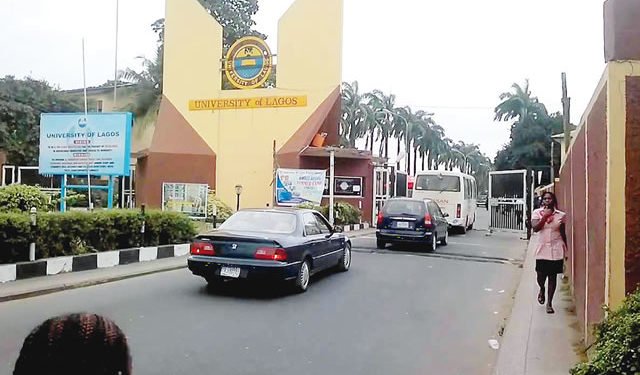
The University of Lagos, popularly known as UNILAG, is one of the federal universities that have benefitted immensely in terms of resources meant for the execution of TETFund projects.
But visits our reporter paid to the institution revealed that the implementation of some of the projects are riddled with question marks.
On Page 54 of a document titled ‘Performance Report on 2015-2018 Budget, TETFUND and NEEDS Assessment, Including 2019 Proposed Budget Implementation’ sent to the Senate Committee on Tertiary Institutions and TETFUND, the institution listed the construction of an 11-storey library complex as one of the ongoing projects. The project is under the institution’s 2012 High Impact TETFUND Special PROJECT Batch II (New Library Building).
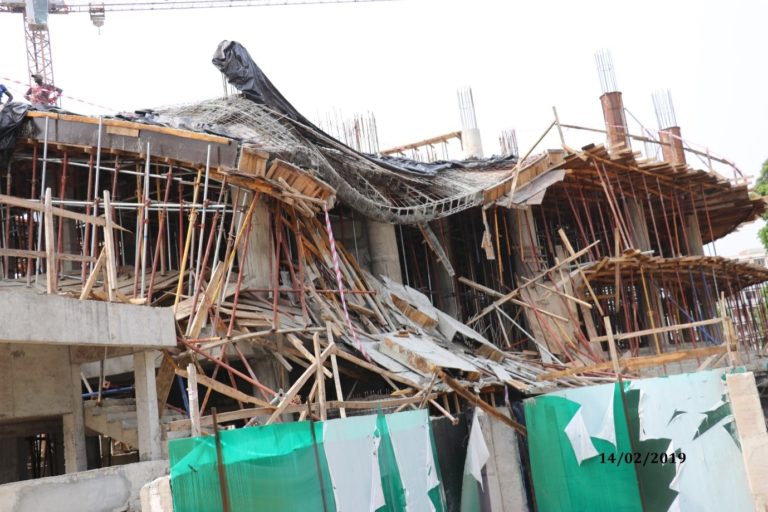
Findings, however, revealed that the institution is building a seven-storey building instead of the 11-storey building in the design at the sum of N1,935,135,087.35. Suspicions concerning the building project was compounded by the controversy generated by its partial collapse recently. The new university library building purportedly being constructed by Dutum Construction Company Limited collapsed sometime in February 2019, provoking hot verbal exchange between the Governing Council and the management of the institution.
The Chairman of the House of Representatives Committee on Public Procurement, Oluwole Oke, said after a visit to the site that the lower chamber decided to investigate it as well as others after a letter written by the Pro-Chancellor of the university, Dr Wale Babalakin, drawing attention to issues of alleged financial infractions and faulty project implementation.
Oke said: “We are here pursuant of the resolution of the House mandating us to investigate the alleged infractions of provisions of public procurement Act 2007 and other financial issues. And we invited the stakeholders.
“Even though the regulators, the NUC and the Federal Ministry of Education, have already taken steps, we felt that the allegations of the Pro-Chancellor were very weighty and we felt we should investigate his claims.”
Consultant to the library building project, Mr Oreoluwa Fadayomi, was reported as saying that he had warned the contractor, Mr Olatunde Runsewe, that the building could collapse if proper steps were not taken, and even refused to approve progress thereby delaying the project.
Fadayomi, Director of Landmark Integrated Technologies Limited, told the House of Representatives Committee on Public Procurement which inspected the site that Runsewe’s Dutum Co Ltd workers lacked the expertise to complete the library project, which he said should have been delivered since November 2018.
He said: “The management of the contractor as it was (as at the time of incident) cannot handle the continuation of the project. Here is a job we should have handed over in November last year and we are still on the first floor.
“And why were we on the first floor? Because I was diligently monitoring and refusing to approve shoddy work, and I was being blacklisted and blackmailed.
‘We changed supervisor over three times because we said no. They would give us methodologies that would not work and we would say no. The management, the staffing have to be overhauled to continue the project.
“If it is the same persons and process, Sir, my firm will withdraw from that project because we cannot continue to supervise at that level. They have to up their game if they have to continue.”In his defence, Runsewe said he was competent to handle the construction as he had handled similar projects – such as the Senate Building of the Covenant University and that of the University of Ibadan.
But UNILAG’s Vice-Chancellor (VC), Prof Young Ogundipe, told the committee that Runsewe did not deliver the UI project on time.
The panel set up by the Governing Council of the university in a 40-page report recommended termination of the contract with the contractor – Dutum Company Limited (DCL).
The panel said it had established the fact that the contract was designed to fail. It said the procedures for the procurement were faulty and that the contractor ought not to have been engaged in the first instance.
“The contract was not executed in line with the executed signed contract. However, the panel believes that the omission to seek permit and approval from the relevant state agency was not in wilful disregard of the law but in the mistaken belief that the university, being a federal institution, did not have to seek approvals or permits for its building projects,” the report reads in part.
The panel also condemned the change in the building’s foundation from pile to cellular raft, adding that the amount of work done so far did not justify the total sum of N444.6 million already released to the contractor.
Students of the institution who spoke with our reporter were miffed that project, which would have enabled them to have a bigger and better place to study, had suffered untold setback.
One of them, who identified herself simply as Elizabeth, said: “We read in our respective faculty libraries. If this particular building had been completed as stated, we would have had a bigger and better place to study.
“They should stop this needless verbal war and do the needful. Our future is what they are toying with here.”
Other projects
Several other projects running into millions of naira also listed under the library contract were said to have been 75 per cent completed while the main project is stalled.
The projects include:
1) Consultant Project: Architect for the construction of the new university main library building put at N33,648,146. The document shows that the institution had spent the sum of N29, 321,955.79 on this to balance N4,326,190.51
2) Consultant Project: Manager for the construction of the new university main library building put at N33, 000, 000.00. The sum of N27,235,408.52 had been spent, according to the document, leaving behind a balance of N5,764,596.48.
3) Consultant Project: Quantity surveyor for the construction of the main university new library building awarded in the sum of N22,354,560.06. The sum of N17,754,056.09 had been spent, remaining a balance of N4,600,503.97.
4) Consultant Project: Electrical engineering for the construction of the new university main library building awarded in the sum of N21,725,000,000. The document shows that the institution has spent the sum of N18,532,662.88, with a balance of N3,192, 337.12.
5) Consultant Project: Structural engineering for the construction of the new university main library building awarded in the sum of N39,600,000 out of which the sum of N31,226,250.28 had been spent and the sum of N8,373,749.72 outstanding.
6) Extra low voltage consultancy services for the construction of the new university main library building awarded in the sum of N17,600,000, out of which N16,418,289.76 had been spent, leaving the sum of N1,181,710.24 as balance.
Apart from the library project, findings showed that Scholars’ Hostel building listed in the document had been completed by the institution but was not being used for the purpose it was built. The building, it was gathered, was meant to encourage and accommodate lecturers from abroad to improve the institution’s standard and rating.
The Nation investigation revealed that the buildings are being occupied by privileged staff of the institution who pay some money annually as rent.
A woman was sighted spreading wet wrappers on the rail in one of the flats, while a number of young boys and girls in sizzling romantic gestures were seen on the balcony of another flat.
A non-academic staff member, who did not want her name in print, said: “I know some of the lecturers that live in the hostel. The purpose of building the hostel has been defeated because it is now being used by privileged lecturers in the university. They pay some money annually, but the amount they pay is not in the public domain.”
The supply and installation of security equipment, whose contract sum was N211,667,950.00, was already completed, but none of the equipment was functional when our correspondent visited.
“Some of the equipment did not function for more than a month before they packed up. It is a complete waste of tax payers’ money,” a security officer, who craved anonymity, said.
The Nation investigation also revealed that the procurement and installation of 10 units of 360 degree executive swivel black leather chair, 10 units of wooden bookshelves with both glass and wooden doors: five tier shelve with locks, 10 units of Vono metal spiral double bunk beds worth how much mattresses for the furnishing of two fire stations already completed had not been done. The project, which cost N10,998,225.00, was recorded to have been 80 per cent completed was still ongoing, even though it was scheduled for completion before the end of April 2019.
A worker in the section said: “Those things have not been provided. The fire station was hurriedly completed to pave the way for Vice President, Yemi Osinbajo, to come for the commissioning, as a date had already been fixed.”
Why original design could not be accomplished — UNILAG
Reacting to our findings on the library project, the management of the University of Lagos, in a reply sent by the spokesperson, Taiwo Oloyede, said the library project was proposed to be a nine-storey building comprising a basement, ground floor and seven suspended floors.
UNILAG’s entrance gate
In a response sent as attached document through WhatsApp message, the institution said: “The number of floors were scaled down to nine (9) from the initial eleven (11) approved by TETFund due to inadequate fund. The estimated cost of an 11-storey building based on the university’s brief to the consultants was far above the allocated sum of ₦2 billion, hence the need to scale down prior to going to tender.
“Furthermore, the high estimates were also a result of the rapidly increasing inflation and escalating foreign currency exchange rate, all of which culminated in the increase in material cost (cement, etcetera), making the ₦2 billion earmarked insufficient for the completion of an 11-storey building of quality.
“Based on the foregoing, the project was scaled down to nine storeys with a basement, ground floor and seven suspended floors, for which the available ₦2 billion fund could procure. Importantly, this scaling down was done before the project went to tender.”
The spokesman’s defence, however, contradicts the information provided by the institution in the document submitted to the Senate committee quoted above.
Explaining why the library project, which was supposed to have been completed in November, 2018, was stalled, the institution said the project was plagued by challenges “such as inclement weather, slow pace of work by the contractor occasioned by inadequate human and equipment resources deployment, among other issues.
“However, it is important to note that the National Assembly had reviewed the situation of this project and proffered a solution to help move the project forward, which is still being reviewed by the university.”
The institution, while admitting that a good number of scanning machines are grounded, put up a defence on why they are not functional.
According to the institution, “most of the scanning machines are still functional, but their use in some locations such as the J. F. Ade-Ajayi Auditorium and Jelili Adebisi Omotola Hall, are restricted to major events only.
“For the ones that are not functional, they were damaged as a result of power surge. This is the case with the scanners at the Senate House of the University. It took some time to procure the damaged parts, as they were not locally available and the suppliers did not provide readily available backup services.”
The institution further said: “Presently, the damaged scanners have been repaired, although their use has been put on hold pending the procurement of UPS and other protective devices to avoid another power surge related damages.
“In addition, the university is in the process of commencing the implementation of a redesigned ground floor lobby of the Senate House to enhance the use of these machines.”
On the Scholar’s Hostel that our investigation revealed was not being used for the purpose it was built, the institution said: “Both scholars from within and outside the university reside in the Scholars Hostel. Occupants from outside the university are visiting researchers on fellowship, joint research, sabbatical and research leaves, and they stay on either short or long-term basis.
Scholars Hostel at UNILAG
“In addition to this, select internal scholars representing all faculties also reside in the hostel.
“With reference to the amount paid to occupy the hostel, it is usually worked out to reflect the quality of the facility and paid from research grants for the external scholars and subsidised for internal scholars.”
Responding to findings that the furniture meant for the fire station was yet to be put in place, the institution said: “Please, note that this assertion is wrong, as the furniture has been provided and the building is now in use.”
FUTA
A copy of the Federal University of Technology, Akure, Ondo State, report to the Chairman of Senate Committee on Tertiary Institutions and a TETFund report, also obtained by The Nation, show that the projects approved for the institution were principally on the provision of materials for the library.
FUTA’s entrance gate
Our correspondent, who visited the three reading rooms in the library, reports that no furniture with TETFUND inscriptions were there. Only old furniture was seen in the three reading rooms. Heaps of furniture with 2015 TETFund projects inscribed on them were found in a corner of the library, but none of them had 2016, 2017 or 2018 inscribed on them.
One of the old FUTA’s reading rooms with old furniture
The same thing applies to textbooks found on the shelves. Some of them had 2015 TETFUND projects printed on them.
ICT/Bindery/Audio Visual and security equipment awarded on July 12, 2017 were also not sighted during the visit.
FUTA management makes clarification
The management of the Federal University of Technology made some clarifications on the findings.
In a response sent through email by the Deputy Director, Corporate Communications and Protocol, Adegbenro Adebanjo, the institution said: “First, please be informed that the TETFund projects being executed are strictly for 2013/2014/2015 intervention.
“The projects were awarded in May 2017. Due to protracted delay in the release of funds, contractors are just delivering their goods.
The deliveries are conspicuously placed on the ground floor and are feasible from both the main entrance and the back entrance of the library. Many of the books are already on the shelves. This could be verified in main the library and the school libraries such as the School of Health Sciences, School of Sciences, School of Management Technology, and so on.”
He added: “For the avoidance of doubt, items carried are for the year the intervention funds are meant for irrespective of the year of execution of the project due to late release of funds. This is the extant practice in all Nigerian universities benefiting from TETFund intervention
“The equipment, furniture and books which are being delivered in 2019 will be marked 2013/2014/2015 because that intervention is meant for those years.”
On why the latest TETFund books found on the shelves were stamped 2015 and none for 2017, Adegbenro said: “Please, note that though the projects were awarded in 2017, they were meant for 2013/2014/2015 and are invariably being delivered in 2019 due to delay in fund release. If it is executed in 2020, it will be marked 2013./2014/2015.
Also responding to our findings that old furniture, instead of new ones with TETFund inscriptions were seen in the three reading rooms, the PRO said: “The furniture and equipment are just being delivered. The ones that had long been delivered had been used to equip newly established School of Health and Health Technology Library at Oba Kekere, Federal University of Technology, Akure.
“The correspondent should understand the working of TETFund as an intervention agent. Their projects will be executed when their funds are released. Please, note that contractors Nos 1 (Tunero Nig. Ltd), 2 (Onicon and Havillah), 3 (Publishers Express and Onward Assets) and 4 (Holadson Educational Books, Yusai Teleview and Jaspers Books) were duly pre-qualified and certified to meet all the laid down conditions in the procurement act. They were officially awarded the contracts in May, 2017.”
The items, he stated, bear the year the intervention funds are meant for “irrespective of the year of execution of the project. This is the extant practice in all Nigerian universities benefiting from the TETFUND intervention.”
Expressing confidence in the calibre of contractors selected by the institution, the spokesman said: “They have gone far in executing their works and they had delivered substantial parts of their contracts. Evidence of their deliveries could be examined through the audit reports and Goods Received Notes. A random pictorial evidence of the above claims are provided in soft copies (see attached).”
He opined that it is a distortion of facts due to lack of adequate information to say that 2013/2014/2015 TETFund projects are nowhere to be found.
He said: “We again extend invitation to The Nation for an on the-spot-assessment of all items that had been delivered, including books, ICT/Security gadget, equipment (books shelves), furniture, office tables, students’ chairs and many more.
“I wish to state that all contracts go through due process and are executed according to the laid down rules governing such projects as specified by the intervention agencies, procurement laws and other laws governing such matters in the federation.”
Concluding, he noted that the “items and the goods delivery notes can be physically examined by your correspondent at your convenience. In FUTA, transparency and due process is adhered to strictly.”
This investigation was supported by the John D. and Catherine T. MacArthur Foundation and the International Centre for Investigative Reporting.
THE Socio-Economic Rights and Accountability Project, SERAP, has written to the African Commission on Human and Peoples’ Rights, ACHPR, urging the African Union’s quasi-judicial body to put pressure on the Nigerian government to release Omoyele Sowore, detained Sahara Reporters publisher.
The letter, dated November 22, was addressed to the Commission’s chairperson, Soyata Maiya, and signed by SERAP deputy director Kolawole Oluwadare.
Diego Garcia-Sayan, UN Special Rapporteur on the independence of judges and lawyers, was copied.
The civil society group asked the Commission to urgently intervene by pressurising the government to “immediately end the intimidation and harassment of detained journalist and activist Omoyele Sowore and Olawale Bakare, their sureties and lawyers, particularly Femi Falana, SAN, simply for defending their clients’ rights.”
It also urged the body to demand that the government’s agencies take measures to protect the sureties and lawyers, immediately release Sowore and Bakare as ordered by the Federal High Court, and investigate allegations of harassment of detained activities, as well as their sureties and lawyers.
“Nigeria’s State Security Service (SSS) has stated that it would not release the activists until it is allowed to vet sureties that have already been verified by the court, implicitly harassing the sureties apparently with the aim of pushing them to disown the detained activists. Similarly, a group of apparently sponsored ‘protesters’ calling themselves ‘Save Nigeria Movement’ asked Femi Falana to ‘stop intimidating security agencies’,” SERAP said.
“The harassment of detained activists for demanding strict compliance with court orders, and then their sureties as well as lawyers who come to their defence, shows a steady slide away from the rule of law and underscores the urgent need for the Commission to insist on the restoration of respect for human rights in Nigeria.
“The harassment is emblematic of a broader pattern of official threats to and harassment of Nigerian civil society. We are concerned that rather than releasing Sowore and Bakare as ordered by the court, the Nigerian authorities are now implicitly intimidating the activists, sureties, and lawyers, particularly Femi Falana.
“Apparently sponsored attacks, harassment and intimidation of sureties and lawyers for doing their independent duties undermine and erode the integrity of the legal profession, access to justice, Nigerians’ confidence in the courts, and make a mockery of the entire justice system.”
The non-profit also condemned a demonstration that held in Abuja on Friday where protesters asked Falana to stop harassing the SSS, describing them as “apparently sponsored”.
“The intimidation and harassment of Sowore and Bakare’s legal team is intended to, and will most likely lead to, other lawyers being unwilling to defend anyone facing politically motivated and high-profile prosecutions,” SERAP said.
“Sureties and lawyers are essential to ensure the effective operation of the justice system, and the rule of law; they need to be protected not harassed and intimidated. Lawyers ought to have the freedom to carry out their legal work and should never have to suffer any intimidation and harassment for discharging their professional duties.”
The group noted that the United Nations Declaration on Human Rights Defenders gives everyone the right to peacefully oppose rights violations, and the UN Basic Principles on the Role of Lawyers likewise requires governments to ensure lawyers are able to perform their professional functions without intimidation and hindrance.
“Nigeria’s State Security Service (SSS) has continued to refuse to release Omoyele Sowore and Olawale Bakare despite court orders,” it added.
“The SSS has stated that it would not release the activists until it is allowed to vet sureties that have already been verified by the court, implicitly harassing and intimidating the sureties and by extension, the detainees and their lawyers, particularly Femi Falana, apparently with the aim of pushing the sureties to disown the detained activists, and Mr Falana to withdraw from the suit. However, under Nigerian law, the SSS does not have any power to vet sureties.”
Senator Mohammed Sani Musa’s Anti-Social Media Bill now making its way through Nigeria’s upper legislative chamber is worse than a throwback to the worst years of Nigeria’s experience of military rule. It is a hubristic act of inter-generational warfare that must be resisted and defeated.
A Senate comprising essentially an analogue generation, whose average age exceeds Nigeria’s life expectancy by about 30%, seeks to liquidate the only means of expression left for a digital generation whose analogue rulers have afflicted with little choice and no hope. A cross-party effort, this bill is evidence of how elite consensus in Nigeria, wherever it happens, is both self-serving and irresponsible.
Rather than start a war that it cannot win, the Senate should be well advised to withdraw this Bill and seek to influence digital content through good leadership and positive example. It can still do so.
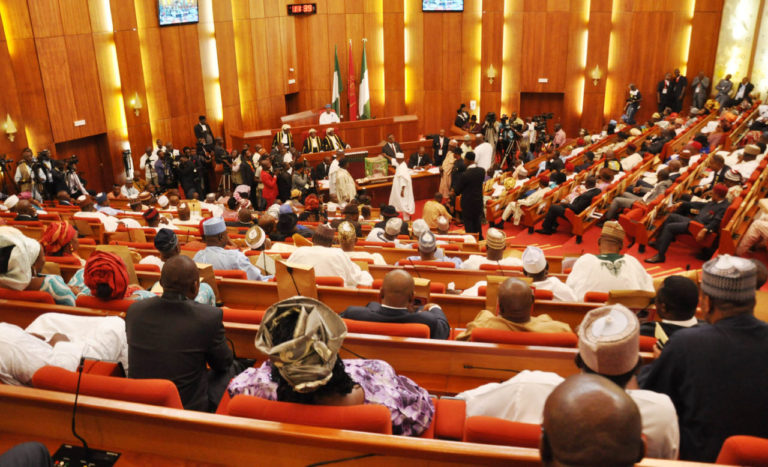
On 20 November 2019, in Nigeria’s upper legislative chamber, the Senate, the “Protection from Internet Falsehoods and Manipulation and Other Related Matters Bill”, successfully navigated second reading. The Senate has now committed the bill to its Committee on Judiciary, Human Rights and Legal Matters.
The sponsor of the Bill is Senator Mohammed Sani Musa, of the ruling All Progressives Congress (APC) representing Niger East in the north-central. In the debate on the Senate floor, Senator Sani Musa received ample support from Elisha Abbo, the woman-battering, young senator of the opposition Peoples’ Democratic Party (PDP) representing Adamawa North in North-east Nigeria, and Abba Moro, also from the PDP representing Benue South in the North-central. In his last major public service role as Interior Minister, Mr. Moro presided over the culpable homicides involving the death of many young Nigerians in a phantom hire for jobs in the Immigration Service in March 2014, for which he proved incapable of empathy or compassion. Also supporting the Bill is Gobir Ibrahim Abdullahi of the APC, representing Sokoto East in North-west Nigeria.
Senator Sani Musa’s Bill is not the only one on the books of the Senate at the moment seeking to eviscerate social media and free expression in Nigeria. His colleague from the neigbouring Niger North Senatorial District, Aliyu Sai Abdullahi, Baraden Borgu, is also single-mindedly pushing “A Bill for an Act to Provide for the Prohibition of Hate Speeches (sic) and for Other Related Matters.” This latter Bill proposes to create an “Independent National Commission for the Prohibition of Hate Speeches (sic)”. In its earlier incarnation, Senator Sabi’s bill also included a provision for death penalty for what he calls “hate speeches” (sic). That will be a subject for another day.
Senator Sani Musa’s anti-social media bill is the latest in various attempts by successive administrations in Nigeria to social media their exclusive mouthpiece or, if they fail, shut it down. Previous attempts in 2014 and 2017 failed.
Senator Sani Musa’s Bill is an awful cut-and-paste job. In every essential respect, the bill is a bad copy of Singapore’s Protection from Online Falsehoods and Manipulation Act No. 18 of 2019, signed into law on June 3, which entered into force on October 2, 2019. It comprises 36 sections, just a little over half of the 62 sections found in its Singaporean ancestor. Characteristic of Nigerian politicians, however, the author of the bill and his distinguished senatorial supporters are not interested in copying Singapore’s experience of decent and effective government. Rather, they want to extinguish in Nigerians any capacity to complain about a pattern of misrule that ensures that we can never dream of the kinds of things that the people of Singapore take for granted.
But this Bill is worse than merely a bad import from Singapore in a season when Nigeria’s borders are closed. In essentially seeking to re-enact the Public Officers (Protection against False Accusation), Decree, Number 4 of 1984, it clearly returns Nigeria to an era that is both forgettable and best forgotten.
Issued by the military in 1984, Decree No. 4 purported to punish any false report about the government, (then as now, headed by Muhammadu Buhari), which brought or was intended to bring officials of the military government into disrepute or ridicule. It substantially drew upon the Public Officers (Protection against False Accusation) Decree No. 11 of 1976, which also purported to punish allegedly false reports linking the then military regime or any of its officers with corruption or malfeasance. Decree No. 11 of 1976 was designed to separate the military regime of Murtala Mohammed/Olusegun Obasanjo from the scandal-ridden last years of its predecessor, the regime of Yakubu Gowon, whom they overthrew in July 1979. In one essential respect, however, Decree No. 4 of 1984 was different from and harsher than Decree No. 11 of 1976 – truth was no defence under Decree No. 4.
This is where Senator Sani Musa’s Bill takes its inspiration from. Contrary to its title, it is far from solely or even substantially about Internet falsehoods and manipulation. The Bill proposes two broad categories of offences. First, there are offences for which truth may be a defence, such as the offence of doing an “act in or outside Nigeria in order to transmit in Nigeria a statement knowing or having reason to believe that it is a false statement of fact.” Against a charge for this offence, for instance, it may be a defence to plead that the statement in question was in fact true or reasonably believed to be true. The number of possible offences for which this defence may be available under the Bill is, however, miniscule.
Second, and very importantly, for most of the offences under Senator Sani Musa’s Bill, just as with Decree No. 4, truth is no defence. Quite clearly, it is impossible to legislate against falsehood by sending truth into exile.
Like Decree No. 4, this Bill creates nebulous crimes in open-ended, subjective language, such as statements “likely to be prejudicial to the security of Nigeria or any part thereof”.
The crime of making a statement “prejudicial to public health, public safety, public tranquility or public finance” can be used, for instance, to jail any citizen for criticising a thieving politician.
The Bill also proposes to criminalise statements that are likely to “influence the outcome of an election to any office”. This provision effectively would prohibit digital campaigns by opposition parties because all campaign statements made digitally are designed to influence election outcomes. It’s a charter for a single-party state and an end to political pluralism.
The clincher is the provision that seeks to punish statements likely to “diminish public confidence in the performance of any duty or function of, or in the exercise of any power by the government.” Under this, anyone who calls out government when it is not performing is liable to be jailed for a felony.
The punishment under this bill could be anything for up to three years or 300,000 Naira. The people most likely to be jailed are tech-savvy young people for whom the digital space is both livelihood and political oxygen.
There are many more notable things about this bill, not the least of which is the lack of federal character in the list of its distinguished advocates. Rightly or wrongly, the fact that its most ardent supporters come from one part of the country feeds an unhealthy narrative that contradicts the claim of its sponsors to being concerned about healing Nigeria’s deepening divisions.
In reality, Senator Sani Musa’s Bill is a criminal mis – normer. It has little to do with Internet falsehoods or manipulation. Rather, it seeks to throttle active citizenship in Nigeria and to punish truth telling to people like these Senators who are in power today.
This Bill is also a threat to entrepreneurship and can be used to shut down most digital start-ups.
If this Bill passes, the last citizen left in Nigeria will not even be afforded the luxury of turning out the lights or whistling in the darkness. This is why Nigeria’s young people must rally together and tell these senators to stuff their sabres of inter-generational warfare.
A co-convenor of Nigeria Mourns, Odinkalu works with the Open Society Foundations and writes in his personal capacity.
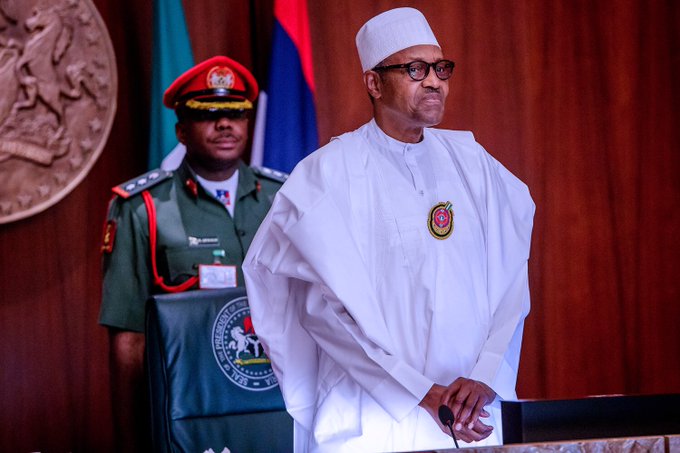
PRESIDENT Muhammadu Buhari has thanked God for giving Nigerian farmers abundant harvests and good rainy seasons in the past four years and said farmers are now among “very well-to-do” Nigerians.
In his goodwill message at the Farmers’ Day celebration held on Saturday in Obie, Rivers State, the president claimed Nigerian farmers have brought the country to food self-sufficiency by saving billions of dollars that would have been spent on food importation yearly.
He added that such funds “are now deployed to other developmental projects, particularly infrastructure.”
“As I have said on occasions in the past, what would we have done as a nation, if God had not been kind to us, giving us good and abundant rainy season and good harvests in the past four seasons?” he asked.
“As at 2015, our economy was in such perilous state, with oil prices crashing internationally, and so many challenges nationally and locally. In fact, our country was in a desperate state.
“We then decided to put the modest resources we had where our mouth was. We focused on agriculture, and God heard our prayers. And we got good returns from our investments.”
Buhari said farming has improved the social and economic status of millions of Nigerians.
“Farmers are now among very well to do Nigerians. They can cater for their families, meet other existential needs, and even embark on various capital projects,” he noted.
“Above all, farmers have led the country to the food self-sufficiency we now enjoy, saving us billions of dollars yearly, which would have been spent on food importation. Such funds are now deployed to other developmental projects, particularly infrastructure.”
The President said through the federal government’s agencies, such as the Central Bank of Nigeria, support has been given to farmers. He lauded farmers for responding positively to initiatives created “to empower and strengthen their hands.”
The Farmers’ Day Celebration is a yearly event organised by the Nigerian Agip Oil Company to promote food security and poverty alleviation in its host states the Niger Delta through the generation of employment and economic diversification.
Its aim is to showcase farming products and services, provide a platform for networking and exchange of ideas, and promote the company’s commitment to rural farming in areas of operation. This year, the event is themed ‘Farm and Fortune’.
THE Chairman and Founder, Air Peace, Allen Onyeama and one other has been charged with bank fraud and money laundering for moving more than $20 million from Nigeria through United States bank accounts in a scheme involving false documents on purchase of aeroplanes.
Onyeama who was recommended by the Nigeria House of Representatives for a National Award for ensuring the evacuation of Nigerians in South Africa following the Xenophobic attacks on Citizens of Nigeria and other African Nationals has been accused of bank fraud by the United States Department of Justice.
In a Press Statement, the US Department of Justice said along with Onyeama, the airline’s Chief of Administration and Finance, Ejiroghene Eghagha, has also been charged with bank fraud and committing aggravated identity theft in connection with the scheme.
According to the statement, United States Attorney of Georgia Northern District, Byung J. Pak said Onyema allegedly leveraged his status as a prominent business leader and airline executive while using falsified documents to commit fraud and that the US will diligently protect the integrity its banking system from being corrupted by criminals, even when they disguise themselves in a cloak of international business.
“Allen Ifechukwu Athan Onyema, 56, of Lagos, Nigeria, and Ejiroghene Eghagha, 37, of Lagos, Nigeria, were indicted on November 19, 2019, on one count of conspiracy to commit bank fraud, three counts of bank fraud, one count of conspiracy to commit credit application fraud, and three counts of credit application fraud. Additionally, Onyema was charged with 27 counts of money laundering and Eghagha was charged with one count of aggravated identity theft,” the statement read
Pak said that in 2010, Onyema began travelling frequently to Atlanta, where he opened several personal and business bank accounts. Between 2010 and 2018, over $44.9 million was allegedly transferred into his Atlanta-based accounts from foreign sources.
He added that Onyema after establishing in years following the founding of Air Peace, he travelled to the United States and purchased multiple aeroplanes for the airline.
He noted that over $3 million of the funds used to purchase the aircraft allegedly came from bank accounts for Foundation for Ethnic Harmony, International Centre for Non-Violence and Peace Development, All-Time Peace Media Communications Limited, and Every Child Limited.
Pak said beginning in approximately May 2016, Onyema, together with Eghagha, allegedly used a series of export letters of credit to cause banks to transfer more than $20 million into Atlanta-based bank accounts controlled by Onyema.
“The letters of credit were purportedly to fund the purchase of five separate Boeing 737 passenger planes by Air Peace. The letters were supported by documents such as purchase agreements, bills of sale, and appraisals proving that Air Peace was purchasing the aircraft from Springfield Aviation Company LLC, a business registered in Georgia,” the statement read.
The US Department of justice, however, added that members of the public are reminded that the indictment only contains charges. The defendants are presumed innocent of the charges and it will be the government’s burden to prove the defendant’s guilt beyond a reasonable doubt at trial.