Home Blog Page 2378

Less than three weeks to go, Okorocha creates four new universities in Imo State

THE Rochas Okorocha-led Imo State Government has given approval for the takeoff of four new state universities, just about three weeks to the end of his two-year-tenure.

They include the University of Science and Technology, Omuna Isiaku; University of Creative Technology, Umuna, and the University of Medical Sciences, Ogboko (Okorocha’s hometown), and the  Imo State University of Agriculture and Environmental Sciences.

These universities, added to the already existing Imo State University (IMSU), Owerri, bring the total number of universities owned by the Imo State Government to five, excluding the other tertiary institutions like the Imo State Polytechnic, the College of Education and Schools of health.

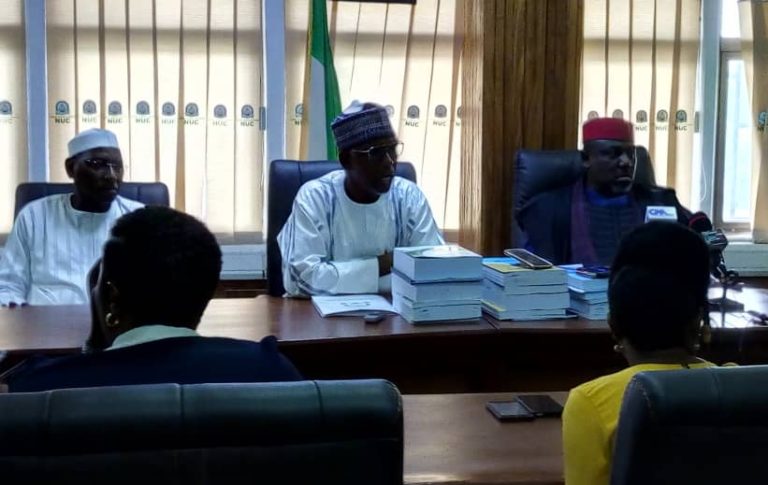
The final approval for the establishment of the new four universities was granted on Tuesday by the National Universities Commission (NUC).

Speaking at the event, the Executive Secretary of the Commission, Abubakar Rasheed, commended the Imo State Government and expressed his readiness to accord the state all the help it would require in developing appropriate curriculum and strategies for the effective and smooth running of the school.

“By the provision of the law establishing the NUC and by the power conferred on me (as the Executive Secretary) and the Imo state House of Assembly having passed the law for the establishment of the universities, I hereby recognise the universities,” Rasheed was quoted as saying.

Okorocha, in his remarks at the event, explained that the establishment of the universities became necessary due to the huge numbers of Imo State citizens seeking for admission into tertiary education institutions every year.

“The challenges of no admission for our children will be reduced with the establishment of the new universities. As a state, we have made adequate provision for sustaining the university through enough funding to run the universities,” he said, adding that the project started five years ago.

However, the development has drawn criticism and condemnation from several quarters. Many described it as an inappropriate move for a government that has barely a month more to spend in the office.

Premium Times, in a report on Wednesday, quoted a top official of the Imo State University (IMSU) as condemning the move to create more universities when the existing one was not being properly funded by the governor.

“The staff have not been paid their promotion arrears since 2004 till date. Their pension remittances to PFAs have not been paid for the past 36 months. Gratuity also has not been paid to our retired staff,” the anonymous was quoted as saying.

“NUC is looking for money now. And you know, the governor is about handing over. By May 29, he ceases to be the governor of this state. So what he is doing now is to frustrate the incoming government.”

Former Deputy Speaker of the House of Representatives, Emeka Ihedioha, of the Peoples Democratic Party (PDP) will be taking his oath of office as the new Imo State Governor on May 29. He defeated Okorocha’s son-in-law and preferred candidate, Uche Nwosu, of the Action Alliance (AA) in a fiercely contested poll earlier in February.

Unions sing discordant tunes

Meanwhile, the Academic Staff Union of Universities (ASUU) has condemned Okorocha’s this latest development, describing it as “plans to erode the basis of meaningful university education in Imo State”.

“ASUU cannot take him (Okorocha) seriously,” said Biodun Ogunyemi, ASUU National Chairman. “We don’t believe that he meant what he was doing because universities are not primary schools.

“You have to ask him what has he done with the Imo State University, why is he doing this in his last month in the office. If he meant well for that state, he was there for eight years. Why should he wait till the last two weeks or so to establish three universities?

“It is never done in any part of the world that you turn the establishment of universities into a constituency project. We see this as over politicisation of education and somebody must tell Governor Okorocha that he’s not helping that state.

“Every reasonable Nigerian should condemn this misadventure by Governor Okorocha. It is a misadventure and a joke of the century.”

However, Chairman of the IMSU chapter of the Senior Staff Association of Nigerian Universities (SSANU), Felix Chukwu, declared his support for Okorocha’s creation of additional universities in the state, provided they are adequately funded.

“We need development but will they be funded adequately? The governor is a wise man so I think I give him my support. But the issue is, will the government adequately fund the universities?” Chukwu asked rather rhetorically.

Imo’s budget for the entire education sector in 2018 was 13.5 billion, an approximation of $37 million.  That is far less than the budget of a single state university in the United States.

For example, the 2018 budget for the State University of New York was over $10 billion.

Imo education budget for all schools, colleges and universities in 2018 is 0.3 per cent of the NY state university.
Thugs allegedly hired by Ngige attack NLC members over NSITF protest

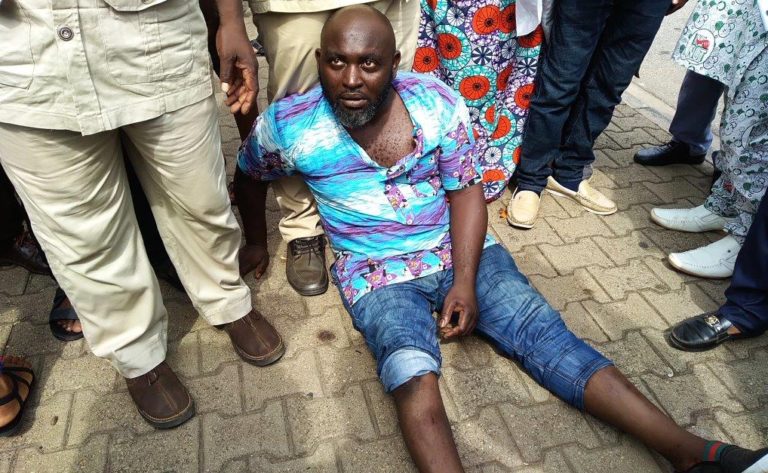
ARMED thugs suspected to have been hired by Chris Ngige, minister of labour and employment, attacked members of the Nigeria Labour Congress (NLC) on Wednesday morning at the Federal Secretariat, Abuja, leaving several injured.

The union members had gathered at the location to protest the delay in inaugurating the board of the National Social Insurance Trust Fund (NSITF).

According to the NLC, Ngige is interested in running the agency as a sole administrator for selfish reasons. The minister has also been accused of ethnic bigotry and recruiting 85 per cent “of his village people in the ministry”.

‘Live bullets used, four hospitalised, others wounded’

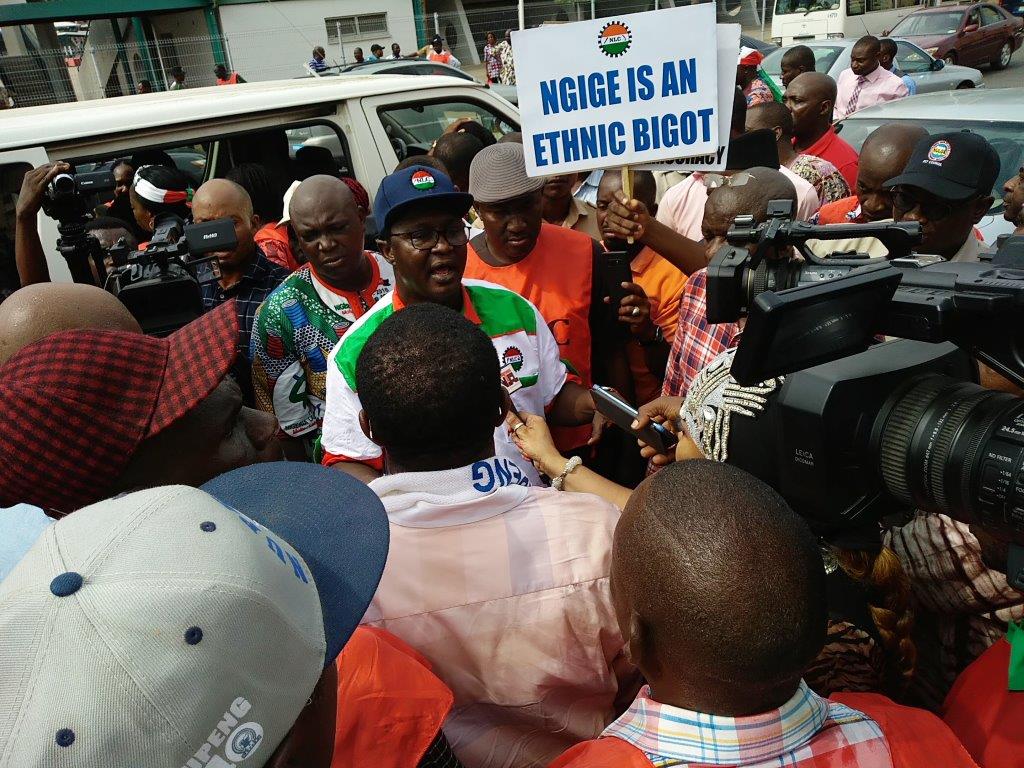
The NLC chairman, Ayuba Wabba, while addressing reporters after the incident, said live bullets were used by the hoodlums who disrupted the demonstration, and that the union’s Central Working Committee has been scheduled to meet on Thursday to decide on a “larger scale of action”, possibly including a strike action.

NLC chairman, Ayuba Wabba, addressing reporters. Credit: Damilola OJETUNDE/The ICIR

“There are workers here that live bullets have been used on them, whereas workers went with their bare hands,” he said. “They were carrying weapons. They were carrying arms. And as I talk to you, we have four people in the hospital apart from those that were injured by bullets. You can see all of them are here.

“And clearly we are going to invite our largest organ by tomorrow. We are going to also decide a larger scale of action. He has no reason to be called minister of labour. He has no reason,” the chairman added, to a chorus of ‘yes!’

“Instead of supporting us, he is against us. And therefore we have nothing to do with him, and under this circumstance, except the president intervenes, workers are certainly going to down tool,” he stressed.

“It has never been so bad, where minister of labour will bring thugs to attack workers and attack our leadership. That has never been heard. And it is on record, everybody has seen [it]. So clearly that is our position, and that is why we are here also in his office to demonstrate that we are not happy.

“And Mr President must act on this immediately, because workers voted for him, workers supported him. Ngige cannot under any circumstances assume the powers of Mr President. That cannot be the case.”

The protest, led by Peter Esan, the NLC’s general secretary, had started at the labour minister’s residence in Asokoro.

When The ICIR contacted Rhoda Iliya, the labour ministry’s deputy press secretary, she said she is not aware that the demonstration was disrupted by thugs.

“I know there was a protest in front of the Federal Secretariat,” she said, “but the issue of thugs, I am not aware of that. I was in the office when I was told there was a protest downstairs and before we could get there they dispersed.”

Frank Kokori, former general secretary of the National Union of Petroleum and Natural Gas Workers Union (NUPENG), had been named by the presidency in October 2017 as chairman-designate of the NSITF board.

But the labour minister struck out his name from those to be inaugurated as board members, alleging that Kokori “was nominated by Ayuba Wabba and his journeymen to continue their vicious stranglehold on the NSITF”.

Buhari, Tonto Dikeh and other stories

By Reuben Abati

“THANK God President Buhari is back in the country. I feel some kind of relief.”
“What is your own? Are you his son? And what is wrong in a man taking some time off work and returning 10 days later.”
“But you will agree with me that private visit to the United Kingdom more or less heated up the polity and generated considerable anxiety. Too many people became lawyers. When some people quote the Constitution like this, you will think that they know it all. And then those ones who call themselves Constitutional lawyers…”

“I think I have told you this before. There is nothing called Constitutional lawyer. There is no such special category. No lawyer has special rights over the Constitution than other lawyers. Every lawyer uses the Constitution. It is the basic law upon which every other law rests. It is like a work tool, like a mason’s square. It is even like you saying there are stethoscope doctors. Every doctor uses the stethoscope. It is like saying someone is a public affairs journalist. I am yet to see a private affairs journalist. If you know one, let me know.”


READ ALSO:

“Yes, I do. I definitely know some journalists who like to poke their noses into people’s affairs, whether public or private. It is about time someone began to give such journalists a bloody nose.”
“It is always so easy to blame the messenger, and preach to the media.”
“Well, someone you know very well, just did that. Femi Adesina has been busy mocking the opposition, saying the online journalists who wrote stories speculating that President Buhari could extend his stay in the UK have been put to shame and the hogwash that they fed the public has been exposed as fake news.”
“He was very specific. He talked about the online media.”

“What is the difference? In fact, you are likely to get more information from the social media these days than from the mainstream media. Is that why Femi should be giving everyone a lecture on press freedom and the need for responsible conduct?”
“He has a point there. And I will advise you not to push the point too hard. Indeed, the kind of things some people write on social media in this country, if you are on the other side, working for either the President or any other high-level government official, you are likely to fight back, except that certain things are just not worth paying attention to.”

“So, are you now recommending censorship?”
“No. I am making a point about the nexus between freedom and responsibility”
“I disagree. The people in government should also be told about that nexus. The President exercises the freedom to go on private visit, and then he comes back, and someone asks him about the security situation in the country and all he can say is that he noticed that the Inspector-General of Police has lost weight, so he must be working hard. Has anyone bothered to brief him about the kidnap of the traditional head of his own village and his Aide de camp’s father in law?”
“I actually thought the President displayed a good sense of humour there.”

“Humour? After how many persons have been killed across the North West within ten days? Who cares whether or not the Inspector-general of Police loses weight or not. We want him to protect Nigerians and get the job done?”

“Try and be nice a little bit. The man has only spent 100 days on the job as Inspector-General of Police, and he has lost weight trying his best.”
“Okay, maybe by the time he spends a year, he will have no weight left at all. Who is that doctor saying people lose weight when they work hard?”

“ I think we should try to encourage people who work for this country. I disagree with you. And you can’t blame the IGP for anything. Nigeria’s security problem is far more complex than something anyone can solve in 100 days. You should know that. By the way, the Katsina State Commissioner of Police has been asked to relocate to Daura. That is based on the Inspector General’s directive.”

“Eye service. Eye service. That is what we do in this country. The last time some persons were kidnapped in my own village, nobody directed the State Commissioner of Police to relocate there. The Inspector General of Police should consider himself lucky he is not from Sri Lanka. When people were killed in Sri Lanka on Easter Sunday and it was established that the police chief and the Defence Minister had failed to act on prior intelligence notice, they were both asked to resign, and the President didn’t crack jokes. Bet with me…”

“I don’t bet. I don’t gamble.”
“You don’t know what you are missing. Let’s bet…you will see that all these our service chiefs and heads of security agencies will soon be given National Honours by the Federal Government. Just bet with me.”
“You can’t punish a person for the failure of the system. I support the present Inspector-General of Police. Are you aware that one police officer has been redeployed from Lagos state to Ebonyi state, Abayomi Shogunle, the ACP in charge of Public Complaints Response Unit for publishing insensitive tweets on his twitter handle, calling some women prostitutes? ”

“And the police told you he was transferred because of tweets? And how is transfer to Ebonyi state being interpreted as a punishment? Did he tweet on the official Twitter account or his own private Twitter account? Please don’t insult the people of Ebonyi State. Any police officer can be sent to any part of the country. What I condemn is eye service.”
“I am talking about freedom of expression and responsibility. Even when you are free to do private things, as a public officer, you must be responsible enough to make sure that your private choices do not violate your professional responsibilities.”

“I really don’t get your drift. You talk from every corner of the mouth. One day, you will say the President is entitled to a private visit, another day, you’d say a police officer cannot crack jokes on a private twitter account. Nobody knows where you stand. If a President can do private things, then a security officer can also do private things.”

“You should be careful and stop comparing apples and oranges. You are too fond of it. And this is the problem with Nigerian democracy. Everyone likes to talk. If you talk like this about some Presidents, you’d see what will happen to you.”

“What will happen to me?”
“In Russia, for example, they passed some bills recently making it an offence for anyone to insult government or criticise President Vladimir Putin. You cross the red line, you either go to jail or pay a fine for spreading fake news, and you cannot just say what you like online.”
“We have rejected red lines in Nigeria. Nobody can gag us. It can’t happen here. The people who spread fake news most are our government officials at all levels. We should gag government, not the people.”

“It is easier said than done. In Burundi, and that is here in Africa, three schoolgirls were recently detained for doodling on the President’s photo. In Uganda last year, Dr Stella Nyanzi, an academic, was charged to court for making comments about the right of President Yoweri Museveni to privacy. She was charged for cyber harassment and offensive publication. In Zimbabwe, it is also an offence to insult the President. Go and ask Terrence Mkhwananzi. What was his offence? He had the temerity to point at President Emmerson Mnangagwa’s portrait in public and accuse him of having a hand in the death of his father. In Rwanda, Tanzania and Indonesia, if you insult the President, you go to jail.”

“I don’t see what are you trying to say. You want fascism in Nigeria? We can’t even make comments again about the affairs of state?”

“Nigeria is probably the only country I know where people will open their mouths and abuse the President. Your President comes back from a private trip, instead of you to welcome him, you are saying the President should stop cracking jokes about the IG losing weight and get down to serious work. While he was away, you were all busy asking whose money he was spending on a private trip. One opposition spokesperson even said President Buhari was wandering all over the UK. Very soon now some of you will come and say President Buhari should relocate to the North West or Sambisa forest to deal with the challenge of national insecurity. Wh-a-t?”

“Yes. I can even say it. Where were you when they told us the President can govern Nigeria from anywhere?”
“I have said my own.”

“Nobody can limit our freedom as Nigerians. You keep citing countries where people cannot talk about the President. In case you have forgotten, in the United States, people abuse President Donald Trump and nothing happens. The only reaction is that Trump also goes on twitter to abuse people.”

“Okay, I have heard you. But just be careful and I hope you know we are now in the season of Ramadan. I will advise you not to go to Kano. You know you like to go about eating here and there.”
“I don’t get it.”

“You mean you haven’t heard that in Kano, the Commander General of the Sharia police has issued a warning that any Muslim caught eating in public during Ramadan will be arrested. You will only be released if you can prove why you must eat in public while others are fasting.”

“And how does that apply to me? I am not a Muslim.”
“Okay, when they arrest you, you can go and prove that you are not a Muslim.”
“Even if I were a Muslim, you don’t force people. There is something called freedom of choice. In any case, I have no plans to visit Kano, except that I hear the Governor is giving out so many women as wives.”

“And the ones in your life, what have you done with them? During this period, just don’t post food anyhow on your Instagram page and keep saying you are a foodie. You may be guilty of encouraging people to eat.”

“I am not aware that people don’t eat at all during Ramadan. What I know is that you are required to fast and do everything in moderation, and to use the Holy Season to help the needy and seek the face of the Almighty and his blessings.”
“Oh, so you know. Fasting is very good for the soul and for the body. In fact I know some Christians who also fast along with Muslims during Ramadan. Some one like you will need to fast, so you can lose some weight and become hardworking.”
“That should be my private affair. I don’t like all this Godfather syndrome in Nigeria. People want to tell you what to eat, what to think, what to wear, what to say. No.”

“Well, I hear some Godfathers are being threatened too. Senator Saraki lost election in Kwara State. Governor Nasir el-Rufai who was in Lagos over the weekend was quoted saying he has retired all the Godfathers in Kaduna state politics and that is why he got a second term. He reportedly added that he can help the people of Lagos State put an end to the reign of Godfathers in Lagos politics.”

“I hope he knows who the Godfathers in Lagos are. He wants to come and do “O to gee” in Lagos. Has he heard of “O to ope”? And I hope someone was quick enough to tell him to return to Kaduna state and concentrate on Kaduna because Lagos politicians don’t seem to be in a hurry to get rid of their own Godfathers.”
“But he has a point. Nobody should be allowed to run Nigerian politics as if it is a private affair.”
“There is politics in everything though. Even in marriages and in every space where you find one or two persons coming together. Have you not been following the Tonto Dike story?”

“Tonto Dike? Who is that?”
“You can’t tell me you don’t know Tonto Dike.”
“Does she know me?”
“She is a Nollywood star. Her story has been trending There is also Regina. And Tiwa Savage. Okay, do you know Bobrisky?”
“Who is that?
“Bobo-to-risky! No wonder you are so uptight always. You don’t know what is going on at all levels. Who in this country has not heard what Tonto Dike said about her baby’s father and estranged husband?”

“I have not heard anything. I don’t do idle street gossip. I don’t talk about other people’s private lives.”
“These things are all over social media.”
“But wait a moment, how did we suddenly move so fast in this conversation to the disgraceful level of gossip?”
“It is not gossip. You should loosen up. Try and know your environment.”
“No. I won’t go there with you. I discuss ideas, not people. And I have been telling you: mind your own business in this country. And you should be selective about what you read online”.

PPRO, Frank Mba shares tips on how to enhance police-civilian relations

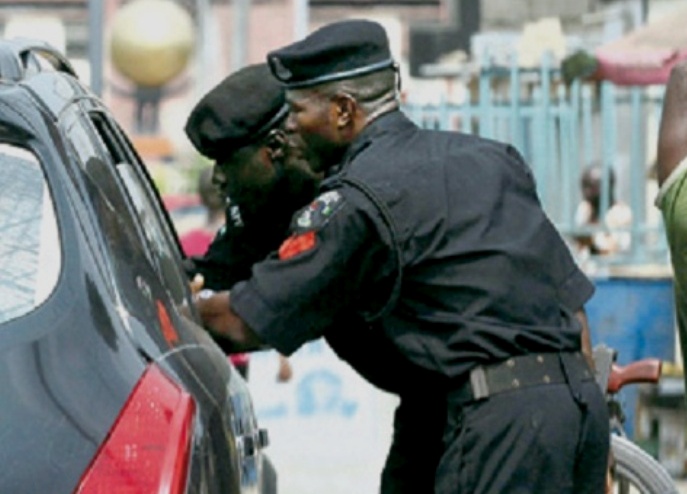
FRANK Mba, the Public Relations Officer of the Nigeria Police Force has shared some tips on how to enhance a police-civilian relationship in the face of rising insecurity across the country.

“Ordinarily, encounters between the citizens and the Police or other law enforcement agents should be reassuring and delightful. In fact, the mere sight of the Police ought to generate in the citizen an instant feeling of relief, safety and security. This, unfortunately, is not the reality in Nigeria today,” Mba wrote on his personal website, frankmbablog.com.


READ ALSO:

Here are the tips as shared by the police spokesman:

When approaching a security checkpoint or when flagged-down by the Police or other security agencies;

  •      Endeavour to slow down your vehicle. It shows that you are not reckless. It also douses suspicion that you are a criminal and may want to speed-off.
  •      Turn down the volume of your car stereo. Courtesy demands this. Besides, you are able to hear each other better. This simple act will also help you to win the confidence of the security operative.
  •      Keep your hands visible to avoid unnecessary suspicion or fear by the officers that you are attempting to bring out a gun or other harmful objects to attack them
  •      Turn on the inner light of your vehicle while approaching the cops (if at night). It readily sends an unspoken message that you have nothing to hide.
  •      Be friendly and cheerful. Commend the officers especially when you see them working under very unfriendly weather conditions such as the rains, the harsh harmattan conditions, excessive heat, cold or sunshine. We know it’s their job, but a little kind word from you will do a lot of good. Remember when you smile at the mirror, the mirror smiles back at you.
  •      Endeavour to be polite even when answering questions put to you by the officers
  •      Don’t dare or challenge an armed security man to a duel. Oftentimes, you hear people say things like ‘shoot me if you can!” Note that this is a recipe for disaster! It is very provocative and an unnecessary call for war. So, please play safe, more so, as you do not know the state of mind of the officer concerned.
  •      Also, don’t go into a physical fight with an armed security officer. He may resort to the use of his weapon (rightly or wrongly) to defend himself.
  •      Avoid unnecessary argument with armed security personnel. There are a thousand and one ways to seek redress where you feel your rights have been infringed upon.
  •      Never try to touch an officer in an unfriendly manner. He may suspect you of trying to disarm him.
  •      If you are a regular traveller or road user, make sure you have the police emergency phone numbers of the route you operate. You never can tell when an emergency situation could arise and you need the Police to come to your aid.
  •      Make sure you have all your relevant car papers and desist from actions or inactions that constitute either a criminal or traffic offence. Such infractions of the law provide veritable grounds for possible charges and other forms of adversarial contact with the Police or other law enforcement agencies, including unnecessary arguments.
  •      Don’t give the impression that you are unhappy to see an officer on his beat or that he is wasting your time. But if you do have an emergency, politely inform the officer. Don’t speed off while still being checked.
  •      Take note of the name tags, Force or Service numbers, personal description, description of weapons or patrol vehicle of the security officer especially where the officers begin to conduct themselves in an unprofessional manner.
  •      Seek an audience with the most senior police officer at the checkpoint if things are not working out smoothly.
  •      Politely insist to be taken to the police station if your complaint is not properly addressed.

This development is coming at a period when the country has witnessed several incidents of confrontations between security agents and members of the public, sometimes resulting in fatalities.

It also comes barely a week after the publishing of a two-part investigation commissioned by The ICIR which revealed how extortion at the many checkpoints mounted by several security agencies including the police, leads to the high cost of food items in Nigeria.

You can read the stories here and here.

Ekiti becomes 31st state to enlist on FG’s free school feeding programme

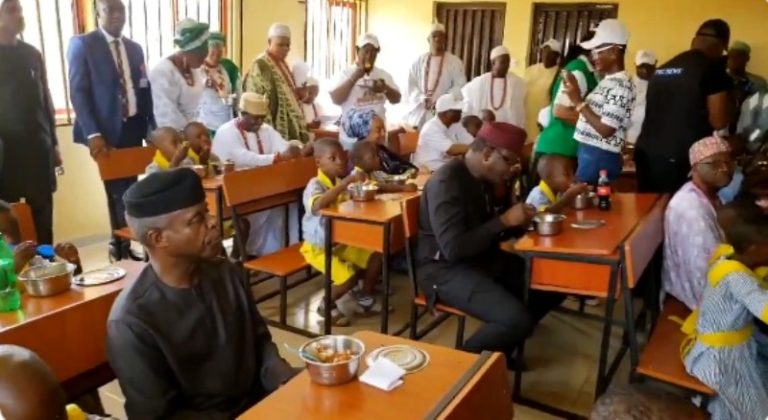
VICE President Yemi Osinbajo was in Ekiti State on Tuesday to flag off the federal government’s Homegrown School Feeding Programme, making it the 31st out of the 36 states in the Federation to be captured in the programme, according to Laolu Akande, Osinbajo’s media aide.

The event took place at St. Michael’s African Primary School, Ado-Ekiti, the state capital where Osinbajo shared a lunch with the pupils of the school alongside the State Governor, Kayode Fayemi.

Osinbajo, while speaking at the brief ceremony, said over 9.3 million primary school pupils are currently benefitting from the free school feeding programme on a daily basis across the federation.

He added that aside from providing nutritious meals to the pupils thereby giving them an incentive to always be in school, the free school feeding programme has also created job opportunities for many Nigerians and reduced poverty.

“The aim of this government is to provide food to our students to make them focused in schools and solve the problem of malnutrition in our children,” Osinbajo said.

“When a child suffers malnutrition in school, the diseases associated with it may cause a serious challenge to our pupils and that is why we are taking care of their health for them to be more regular in schools.

“The federal government has decided to introduce this programme to turn around the agriculture sector by patronising the products of our farmers, who will sell their products in all the schools in their areas.

“9.3 million pupils are benefitting in over 56,506 primary schools across this country. 190,000 farmers are supplying materials, 767 cows are killed weekly and 7.3 million eggs are consumed weekly via this policy.

“Some asked how many jobs will this create? The benefits are unimaginable. But we are sure that we are going to increase the scope of all our social investment programmes, including ‘TraderMoni’ in the next level.”

TraderMoni is another social intervention programme of the federal government which is aimed at empowering petty traders across the country with a soft, non-interest loan of N10,000 repayable within six months and which could grow to N100,000 provided the loanee does not default in repaying the loan.

Responding, Governor Fayemi commended the Buhari administration for its many policies that are directed towards the common man.

The social development programmes of the Buhari administration have so far received positive reviews across the country, though there have been reports of abuses in some states of the federation.

One of such abuses was captured in this investigation that was commissioned by The ICIR, which revealed some fraudulent practices by handlers of the free school feeding programme in Benue, Plateau, and Taraba States in the North Central region of Nigeria.

Fresh controversy as Kano State govt. resumes probe of Emir Sanusi

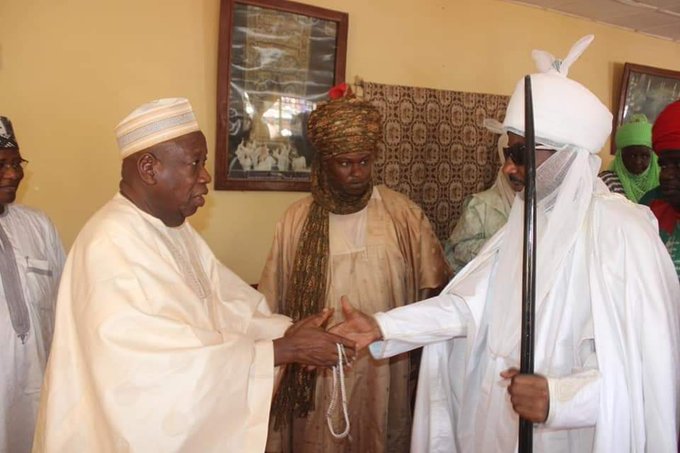
THE recent moves by the Kano State government to resume investigations into alleged financial impropriety by the Kano Emirate is generating controversy as many say the moves are aimed at removing the former governor of the Central Bank of Nigeria (CBN), Muhammad Sanusi, as the Emir of Kano.

The Kano State House of Assembly has resurrected a hitherto rested financial probe of the Kano Emirate, a move which many said is aimed at dethroning Sanusi.

Reports say the Kano State Public Complaints and Anti-corruption Commission wrote to some officials in the Kano Emirate inviting them to appear before it to offer explanations into the Emir’s spending between 2013 to 2019.

Those invited include Mohammad Kwaru, the accountant of the Kano Emirate council; Mannir Sanusi, chief of staff to the Emir; Isa Sanusi, former principal private secretary to the Emir; and Mujittaba Falakin Kano, private secretary to the Emir. They are expected to appear before the commission on Thursday, May 9, by 12 p.m, Premium Times reports.

The letter indicated the commission invited the aforementioned staff for an alleged violation of section 26 of its enabling law in the management of emirate’s funds.

It also stated that the invitation was based on the power conferred to it under “Section 9 and 15 of Kano State Public Complaints and Anti-corruption Commission Law 2008 (as amended).”

Emir of Kano, Muhammad Sanusi.

Similarly, a bill has been introduced in the House of Assembly for the creation of an additional four emirates in Kano State namely, Karaye, Bichi, Rano and Gaya emirates.

Many say this move is a kind of plan ‘B’ for the state government in the event that the move to remove Sanusi fails.

In a report on Tuesday, TheCable quoted an unnamed Kano State government official as saying that “the governor is determined to remove the emir, and if this does not succeed, he will break the emirate into pieces to whittle down Sanusi’s power”.

Sanusi had been quite vocal in issues of girl-child education, gender equality and population control, earning himself criticisms from some of the Northern elites who felt he was unnecessarily attacking the region.

Between April and May 2017, the Kano State Assembly, as well as the state’s Public Complaints and Anti-corruption Commission, began a probe into Sanusi’s spendings as the Emir of Kano; but both institutions denied the investigations were politically motivated.

However, the probe was dropped after Vice President Yemi Osinbajo and the Sultan of Sokoto, Sa’ad Abubakar, reportedly intervened.

Why the investigation was resurrected

The resumed efforts at probing Sanusi, many say, may be connected to the recently held governorship election in Kano State which Governor Ganduje won, albeit very narrowly.

It is believed that Sanusi worked against Ganduje’s re-election, a hypothesis that was supported by the fact that the governor lost the Kano municipal local government area during the election, hence the rumours that both men had fallen out again.

Ganduje’s opponent in the guber election was Abba Kabiru Yusuf, a son-in-law to the former Kano State Governor, Rabiu Kwankwanso.

It was Kankwanso that appointed Sanusi as Emir in 2014; Ganduje was the deputy governor at the time, but he and Kwankwanso have since parted ways.

What Nigerians are saying

On social media, many have criticised the alleged move to oust Sanusi from office, saying that the leaders of the state must not allow politics to be used to ridicule the age-long tradition of the people.

The Kano emirate is bigger than Ganduje and his political ambition and even bigger than Emir Sanusi as an individual. Dividing the Kano emirate is no less a revenge on Emir Sanusi than it is a collective insult on Kano’s history, tradition and heritage,” tweets one @ayshamudi who was also quoting another writer named Ahmad Hussain.

Another Twitter user, Ibrahim Abdullahi Aliyu, wrote: “What Ganduje is doing is degrading the greatness of Kano and Kanawa, we only know one Sarkin Yanka in Kano and it’ll still be same.”

Others, like Shehu Shyman, believes that Sanusi is “too good to be chained in as an Emir”. Shyman described Sanusi as a national asset who is even qualified to be president. This idea was also supported by another user whose name simply read ‘Lanre Lot.

However, there are some who believe that there was nothing wrong in creating other emirates in Kano State. “Kano is big enough to have more than one Emir,” tweeted one @muhee_alee.

Similarly, Badamosi Ayuba, a Twitter user wrote: “Considering the fact that Kano is the largest state in Nigeria, I believe is a good and welcome Development.”

Bashir Ahmad, a Kano citizen and the personal assistant to President Muhammadu Buhari on New Media, asked a question via his Twitter handle on whether the move to break up the Kano emirate was a good one; majority of the persons who responded said it was not and that the move was politically motivated, though there were a handful of people who supported Ganduje.

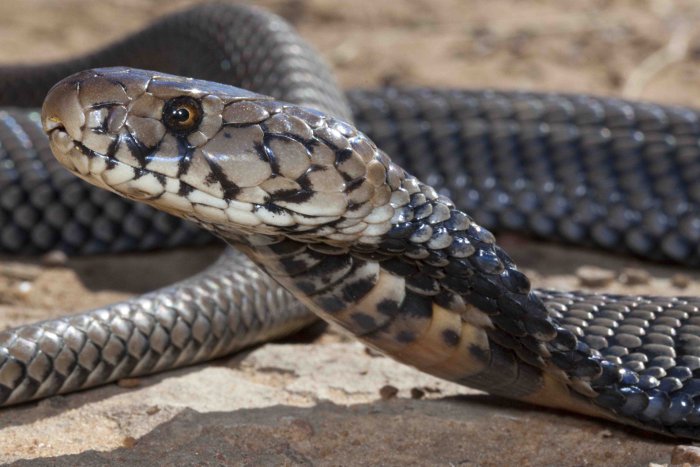
Snakebite: WHO targets 50 percent reduction in deaths and disabilities by 2030

THE World Health Organisation has developed a new strategy to prevent and control snakebite envenoming (or poisoning).

The strategy is targeting to reduce deaths and disabilities due to snakebites by 50 per cent before 2030.

Titled “Snakebite envenoming: a strategy for prevention and control”, the strategy would be launched at a meeting hosted by the Nigerian government and the Republic of Costa Rica on May 23 in Geneva, Switzerland.

According to an executive summary of the strategy, the central objective is to ensure access to safe, effective and affordable treatment such as antivenoms and ancillary medical care. It will also prioritise the supply and distribution of life-saving antivenoms and other commodities needed to treat snakebites. This is because snakebites poisoning requires urgent medical attention to save the lives of the victims.

Snakebites, according to the report, is a neglected tropical disease that affects 1.8 to 2.7 million people each year. It claims about 81,000—138,000 lives while causing 400,000 cases of permanent disability each year. The snakebites poisoning is “responsible for enormous suffering, disability and premature death on every continent”.

The people at high risk of being bitten by snakes are poor rural dwellers, agriculture workers, herders, fishermen, people living in poorly constructed housing. The WHO also noted that young children, aged under five years, suffer high case of fatality.

Snakebite in Nigeria is said to be on the increase in 2019. According to Abdulrazaq Habib of the Nigeria Snakebite Research and Intervention Centre,  in a Dailytrust report, the country has the highest burden of snakebites in Africa. He said, “it kills about 2,000 and maims 3,000 Nigerians every year”.

A report by NAN on March 27 disclosed how deaths from snakebites have become massive due to lack of anti-snake venom (a drug that suppressed snake poisoning) in Nigeria. It had quoted Nandul Durfa, Managing Director that handles the collection and distribution of  Anti-Snake Venom (ASV) in Nigeria. “As at January, we had less than 200 vials left for the whole country. The report we get from the snakebite treatment centres is mind blogging, but there isn’t much we can do,’’ Durfa said.

Though, on April 27,  Nigeria received fresh doses of 4000 ASV.  Commenting on the late collection, Durfa said the shortage of ASV would persist unless the country starts producing the drug locally. Nigeria, he said, was still depending on foreign countries for ASV to neutralise poison from very common snakes like viper, cobra and puff adder.

“The only time we can have enough ASV to meet our rising demand is when we produce it locally,” he said.

WHO, in its new strategy to be launched later this month, said it will work with countries to encourage research on new treatments, diagnostics and health device breakthroughs that can improve treatment outcomes for victims and hasten recovery. As well as to work with countries to strengthen health systems towards achieving the Sustainable Development Goals and its related targets including improving health and well-being and reducing inequity.

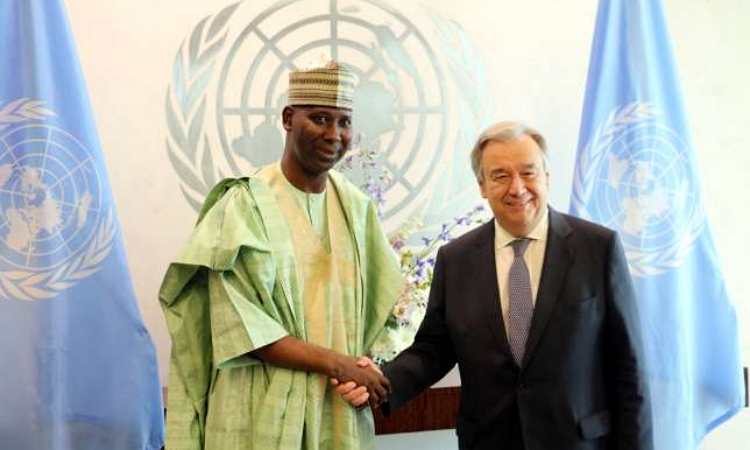
Nigerian professor, Muhammad-Bande, appointed president of UN General Assembly

TIJJANI Muhammad-Bande, a professor and former vice chancellor of Usman Danfodiyo University, Sokoto, has been appointed president of the United Nations General Assembly (UNGA), the main policy-making organ of the international body.

The assembly’s outgoing president, María Fernanda Espinosa Garcés, made this public on Tuesday at a press conference held in Abuja following a meeting with President Muhammadu Buhari. She disclosed that Bande will succeed her in the office as soon as her tenure lapses.

Until his appointment, Bande, who hails from Kebbi State, was the permanent representative of Nigeria at UN.

According to his profile made available by the UN, Bande “has had an outstanding career as a scholar and diplomat”.

“He received a B.Sc (Political Science) from Ahmadu Bello University, Nigeria (1979); MA (Political Science), Boston University, USA (1981); and Ph.D (Political Science), University of Toronto, Canada (1987),” it stated.

Between 2000 and 2004, he served as Director-General of Le Centre Africain de Formation et de Recherche Administratives pour le Dèveloppement (CAFRAD), Africa’s premier intergovernmental centre for governance reform, in Morocco.

He held the position of Director-General at the National Institute for Policy and Strategic Studies in Nigeria from 2010 to 2016.

The profile added: “As Nigeria’s Permanent Representative to the United Nations, he worked with colleagues from all regions of the world to achieve common objectives. He served as the Vice-President of the General Assembly during the 71st session and remains active in several fora, including as Chair of the United Nations Special Committee on Peacekeeping Operations (C34), Member, Advisory Board of the United Nations Counter-Terrorism Centre and Chair of the ECOWAS Group (2018-2019).

“Professor Muhammad-Bande has also been an assessor for the National Merit Award (Nigeria) and for professorial positions in universities. He has won merit awards and honours from institutions and Governments, including the United States and China. Most notably, he is a recipient of Nigeria’s Officer of the Order of the Federal Republic (OFR), one of Nigeria’s highest national honours.”

When he assumes the role, the professor will become the second Nigerian to be president of the UN General Assembly. The first was Joseph Nanven Garba, diplomat and former foreign minister, who was UNGA president between 1989 and 1990.

Abuja drainages brim with refuse, dirty water… but who cares?

ABUJA is the capital city of Nigeria, and it is attracting more people –  and dirt that puts the health of the residents at risk.

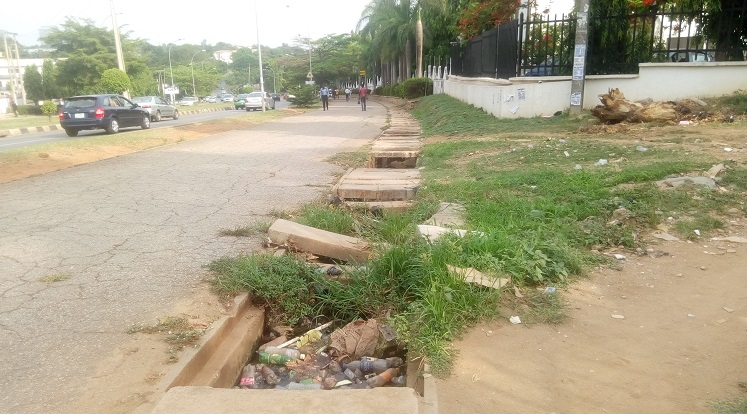
Drainages in different districts are clogged with a mass of wastes, and stinking water that flows sometimes from sewers into the road, oozing unpleasant odour.

Victor Abu lives in Michael Okpara Street, located at Wuse Zone 5, one of the semi-highbrow districts of the Federal Capital City. He has developed a rather awkward habit of spitting at every short interval when walking in the neighbourhood.

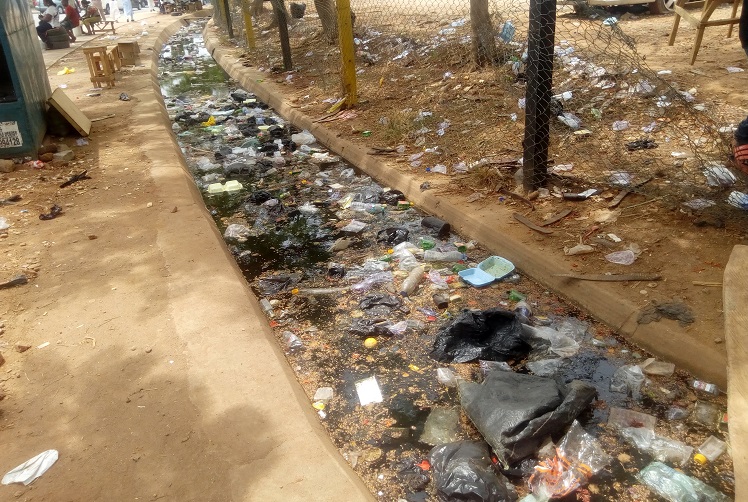
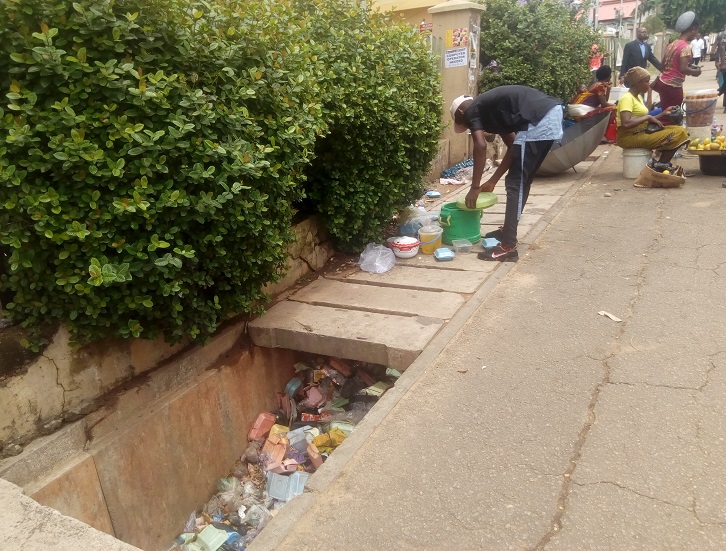
On his street, there is a long concrete drainage, parts of which are filled with slimy polythenes bag, plastic bottles and other waste materials.  The concrete slabs are broken, and dirty water seeps into the road.

Abu said the fetid odour coming out of the drainage nauseates him and makes him spit at regular interval whenever he passes the road.

“I don’t like bad smell, it irritates me,” he said. “Whenever  I perceive an offensive odour, I find it hard to swallow saliva.”

Part of the drainage system along Michael Okpara Street, Wuse Zone 5. Credit: Rebecca Akinremi/ICIR


Apart from Wuse, overflowing drainages can also be found in other highbrow areas of the Abuja city centre such as Asokoro, Maitama, Utako and Garki.

The ICIR observed that drainages in the main districts of the city were poorly maintained, causing a poor sanitary condition that poses danger to people’s health.

The situation is worse in the suburbs of the federal capital because majority of the areas do not have a well-constructed drainage system.

Samson Usman, a cab driver who also lives at Michael Okpara Street, Wuse Zone 5, said once it rains, the roads become almost impassable for humans and automobiles.

“I don’t think it is normal for the gutter to be like this. If rain should fall, you will see water flowing to the road, unclean water containing faeces and urine,” he said.

Usman, however, said that the problem is made worse by the people who dump refuse inside the drainages. “Some people will never care about using a waste bin. They will prefer to throw dirt inside the gutter,” he said.

When The ICIR reporter visited Yakubu Gowon Crescent in the Asokoro District of Abuja, there was open drainage along the street which has become an eyesore to people passing the place. Part of the drainage was blocked and the channel was filled to the brim with stagnant water covered with algae and waste materials.

However, the poor condition of the place did not stop commercial activities around the street. Traders interviewed in the area said they just had to ignore the stench since they were there to make money.

A taxi driver, who gave his name simply as Kenneth, was seen enjoying his meal of snacks and a bottle of Coke while resting on the back of his car which was directly facing the drainage. When asked how comfortable he was eating right amidst the stench, Kenneth said he was used to it.

“You know the kind of hustle we dey hustle now, there is no place you no go fit sit down chop,” he said in pidgin.

Health experts say eating in a dirty environment makes one prone to contracting all kinds of diseases as flies and other germ-carrying organisms are found more in such an unhealthy environment.

“The WHO states that houseflies are carriers of diarrhoeal diseases, skin and eye infections,” said Laz Ude Eze, Executive Director, Pink Oak Cancer Trust, a non-governmental organisation that provides advocacy on cancer awareness.

“The housefly carries disease-causing organisms and can transmit up to 65 different types of disease s including cholera, typhoid, leprosy, tuberculosis, conjunctivitis and dysentery,” he said.

Residents and small business owners along the street also said the clogged gutter usually causes flooding whenever it rains.

“Since I know this area, it has been over two years now, water cannot flow. When it rains too much, there is no road to pass,” Kenneth said.

Efa, a newspaper vendor, had his kiosk almost covered with stagnant water. He told The ICIR that he takes extra care so as not slip into the water— “I have to watch my steps carefully,” he said.

In the popular Area 1 shopping complex in the Garki District of Abuja, the drainages are as clogged as they are in Wuse Market area.


Even the drainage in front of the headquarter building of the National Agency for Food and Drug Administration and Control (NAFDAC) at Wuse Zone 7, was filled with refuse.

When The ICIR visited Berger on April 24, drainages in the area have been turned to refuse dump. The situation was the same at Utako and Wuse Zone 6 areas.

A man serving food on drainage filled with refuse at Sky Memorial, Wuse, Abuja.


Impacts of blocked drainages

The National Secretary of the Nigerian Environmental Society, John Harry, said asides from flooding, dirty water resulting from blocked drainage channels could contaminate even the sources of drinking water.

“Once you block the natural path where water can pass, what it would result to is flooding,” Harry said.

“Stagnant water has the capacity to go down into the soil and even affect groundwater, and if anyone comes to drink the contaminated water, the consequence would be water-borne diseases.”

Laz Eze, a public health analyst, agrees.

“The natural water bodies get more polluted and may lead to an outbreak of waterborne diseases such as cholera, typhoid fever, Hepatitis A or E and worm infections or water-washed diseases like skin and eyes infections,” he said.

Udeze also pointed out that stagnant water in open drainages serves as a breeding ground for mosquitoes which could lead to malaria and Yellow Fever.

According to the latest World Malaria Report released in November 2018, Nigeria accounted for 25 per cent of the 219 million cases of malaria incidents and 19 per cent of malaria deaths, globally in 2017.

The Institute of health metrics and evaluation reports that malaria is the fourth leading cause of death in Nigeria as of 2017.

David Mike Terungwa, Executive Director of Global Initiative for Food Security and Ecosystem Preservation introduced another angle to the menace of blocked and overflowing drainages in the environment.

“Poor drainage is a traffic safety risk,” he said. “Water may accumulate on the road like ponds. A wet surface reduces friction which leads to longer braking distances and put motorist at risk of colliding with other vehicles.”

The National Emergency Management Agency (NEMA) in its National Contingency Plan, listed flooding among some of the trigger events that can lead to washed away roads and collapsed bridges.

Poor environmental sanitation culture

Chukwuma Smart, the President of Climate Transformation and Energy Remediation Society, said drainages are supposed to be cleaned up at least once a month to maintain a sanitised environment.

“We have what is called clean-up exercise in Nigeria which is being done every month. If a community decides to engage in cleaning exercises like two times in a month it is better,” he said.

Smart also included that people should avoid dumping refuse in the drainages thinking “rain will flush it”. He advised Abuja residents to discontinue such an attitude.

Lack of funds hinders proper maintenance – Abuja council

Niyi Olaloye is the Director of the Facility Maintenance and Management (FMM) department under the Abuja Metropolitan Management Council. In an interview with The ICIR, he blamed the poor habit of Abuja residents.

We have drainages that are blocked, and it is because people are abusing the use of the drainages,” he said.

“People defecate inside the drainage. If you should go to the Area 1 shopping complex all the men selling suya there, they don’t have toilets. That is where they defecate.

“And we are doing sensitisation through radio and television, educating them to stop.”

Explaining further, he said: “The reason why we are not doing anything now is because, we are waiting for the budget because the government cannot spend money without the approval of the national assembly.

“We are going to be receiving visitors all over the world, we are preparing for the May 29, we are trying to clean areas that could embarrass the government, pending when the major one will start.”

He said the department has “identified some critical areas that can embarrass the government” or embarrass the city being a federal capital territory, and those place will be clean up as a matter of urgency.

Usman, the Wuse resident, think the best way to stop people from dumping refuse in the drainage is to cover the drainages with concrete slabs. He called on the relevant authorities to do that as soon as possible.


Court grants Adeleke N2 million bail following fresh detention

ADEMOLA Adeleke, the candidate of the Peoples Democratic Party (PDP) in the 2018 Osun gubernatorial election, has been granted bail in the sum of N2 million after he was arraigned before a magistrate court in Abuja on Tuesday.

Adeleke was detained at the Maitama Police Station in Abuja on Monday after he had gone to answer to a summons by the police.

The serving Senator was recently declared the winner of the Osun guber election by the state’s election petitions tribunal, but he is still facing charges of certificate forgery brought against him by the Nigerian Police before the Federal High Court, Abuja.

The court had granted Adeleke permission to travel to the United States of America on Tuesday for medical checkup. The journey was scheduled for Tuesday but Adeleke was invited to the Maitama Police Station for an undisclosed reason and was subsequently detained, according to his media aide.

Police spokesman, Frank Mbah, would later explain that Adeleke “was taken into custody … in connection with ongoing criminal investigations touching on his person”.

However, when Adeleke was arraigned before a magistrate court in the Mpape district in Abuja on Tuesday, the allegations against him still bordered on alleged forgery, which, according to his lawyer, is already ongoing at the federal high court.

Nevertheless, Adeleke pleaded not guilty to the charges against him and was admitted on bail to the tune of N2 million with a surety in like sum who must reside within the jurisdiction of the court.

Recall also that in April this year, an FCT High Court, presided over by Justice Othman Musa, nullified Adeleke’s nomination as the governorship candidate of the PDP for the Osun guber election.

Two members of the All Progressives Congress (APC), Wahab Raheem and Adam Habeeb, had instituted the suit against Adeleke, the PDP and INEC, saying that he did not possess the educational qualification required by the constitution to contest for the office of governor.

Justice Musa agreed with the applicants and held that they were able to prove that Adeleke did not possess the minimum qualification of being educated up to secondary level as stipulated under section 177 of the 1999 Constitution.