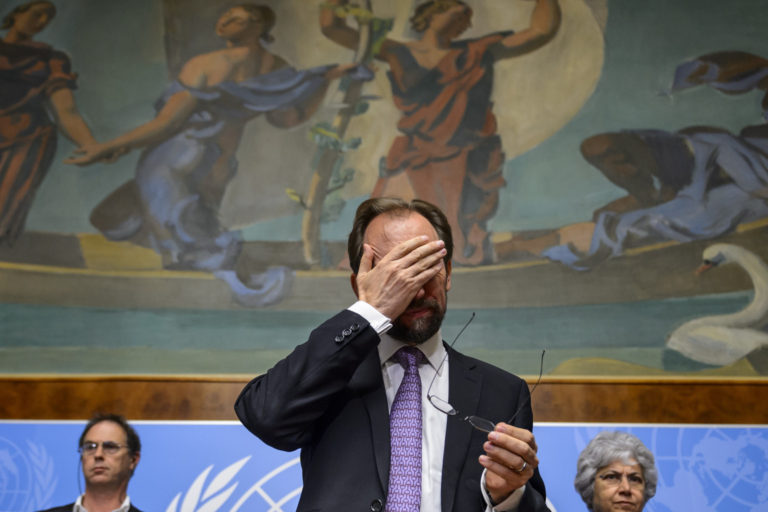
Zeid Ra’ad al-Hussein of Jordan gestures after a press conference on October 16, 2014 in Geneva (Photo credit: FABRICE COFFRINI/AFP/Getty Images)
“After reflection, I have decided not to seek a second four-year term. To do so, in the current geopolitical context, might involve bending a knee in supplication; muting a statement of advocacy; lessening the independence and integrity of my voice — which is your voice.”
This was the message staff of the United Nations High Commission for Human Rights received from their boss, Zeid Ra’ad al-Hussein, in an email marking the end of the year, according to Foreign Policy.
Zeid’s four-year tenure ends in 2018 and, though he is eligible for another term, he’s decided against it. The Jordanian prince’s decision to step down further thrusts the UN into the spotlight, with many fearing the global body is not doing enough to protect human rights.
In September, the BBC reported that the UN leadership in Myanmar had tried to prevent the Rohingya crisis from being discussed with the government, and also discouraged human rights organisations from visiting parts of the country affected by crisis.
The biggest and clearest hint that the UN dances to the tunes of powerful and donor countries came in 2016 when then Secretary-General Ban Ki Moon said he was pressured and threatened with funds withdrawal to remove Saudi Arabia from a blacklist it was on because of its role in the war in Yemen, which has been called the biggest humanitarian crisis right now.
Ban Ki Moon said the decision was “one of the most painful and difficult” he had had to make, adding that the decision was made because millions of children faced real threat if countries decided to stop funding UN programmes.
Additional reports by Damilola Ojetunde and Victoria Nwaziri
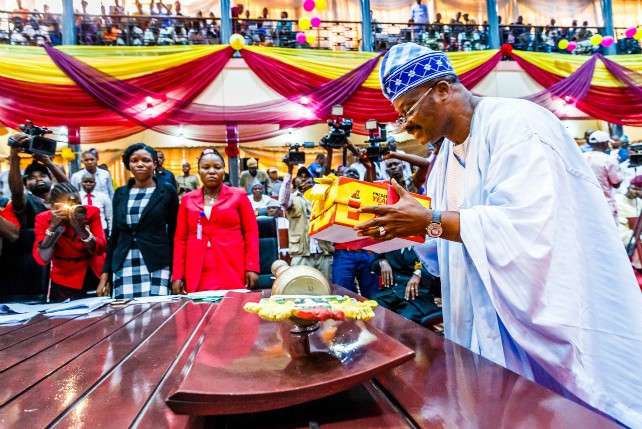
Abiola Ajimobi, Oyo State Governor, presents the 2018 budget at the state house of assembly
Twenty states that have so far presented their 2018 budgets are proposing to spend a total sum of N6.1 trillion.
When the remaining 16 states present theirs, the proposed total expenditure by all the states would definitely be higher than the Federal Government’s N8.6 trillion budget.
The budgets of Cross River and Lagos states account for 38 percent of this N6.1 trillion, as they are the first states in the country’s history to hit a trillion threshold in the annual budget.
The concern in this seeming competition among the states to present higher budget is how they will get the money to fully implement their budgets, knowing their revenues either come from federation account allocation or internally generated revenue (IGR).
As of October, the combined total allocation to all the states from the federation account was N1.4 trillion, higher than the N1.3 trillion of 2016. The average allocation to a state this year is N38 billion while last year’s was N36 billion.
The IGR from all the states by the third quarter of this year was just 546 billion, while they made 801 billion in 2016.
As indicated by the federation account allocation and IGR in 2016 and 2017, the combined total revenues for all the states in 2018 cannot exceed 3 trillion. With this projection, the total revenues by the states will be less than 40 percent of their budgets.
Therefore, if the budgets of the states will be implemented fully, nothing less than 60 percent will be borrowed. This budget deficit is unrealistic..
All the states that have presented their 2018 budgets have a deficit but some states have taken theirs to absurd and unrealistic levels.
The most unrealistic budget is the N1.3 trillion ‘Budget of Kinetic Crystallisations’ presented by Ben Ayade, Governor of Cross River State. But what has changed in the state for such additional N1 trillion, given the state’s 2017 budget was N301 billion?
The total IGR by Cross River was N9 billion, as of the third quarter of 2017, while the state’s IGR in 2016 was N14 billion.
Cross River has received N18 billion from the federation account in 2017 and received N17 billion in 2016. The combined total revenues projection from federation account allocation and IGR for the state in 2018 is less than N50 billion.
In the past 10 years, from 2007 to 2017, Cross River State has only received N411 billion from the federation account allocation. Therefore, if the state borrows to spend N1.3 trillion in 2018, it may not earn this amount of money in revenue in the next 10 years!
Cross Rivers’ proposed budget is higher than Lagos, which made 302 billion from IGR in N2016 and had made N241 billion by the third quarter of 2017.
The states that have the lowest budgets for 2018 also have a huge deficit. Among the 20 states that have presented their budgets, Yobe and Ekiti have the lowest figures but they also have a high deficit.
Yobe’s 2018 budget of ‘Consolidation and Socio-economic Rejuvenation’ is N92 billion but the state’s revenue is less than N50 billion this year. The state has received N32 billion from the federation account in 2017, and it received N31 billion in 2016. Yobe’s IGR by the third quarter of this year is N2 billion and N3 billion in 2016.
Similarly, Ekiti’s 2018 ‘Budget of Accomplishment’ is N98 billion but the state’s revenue is less than N50 billion. The state has been allocated N30 billion this year from the federation account and also N30 billion in 2016. The IGR of Ekiti State by the third quarter of this year had hit N3 billion but was nearly N3 billion in 2016.
Based on their revenues, almost all the states have unrealistic budgets even if they are factoring allocation to local governments into their budgets. The total allocation to the 774 local governments from the federation account for 2017 is N1 trillion, with an average of N1.3 billion per local government.
The budget presentation has become an annual ritual for state governors to announce unrealistic figures. The budgets, although presented with fancy names, are never fully implemented.
From Adamawa’s ‘Budget of Hope and Empowerment’ to Oyo’s ‘Budget of Stabilisation’, the figures are not proportionate to their revenues. Probably, they are all going to borrow substantially to implement their budgets.
The reality is that not more than 15 states in the federation have the means to implement more than N100 billion annual budget but they will rather announce bogus and impressive budgets that are never implemented.
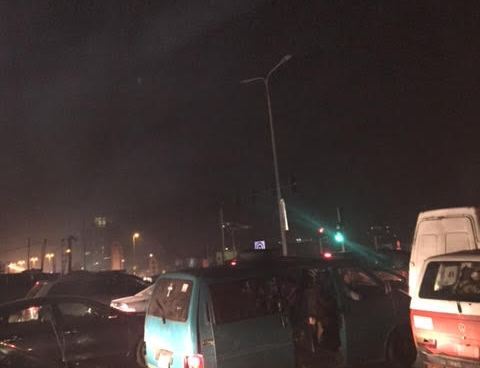
Toyin Street Ikeja, the streetlights are not working
By Anthony Akaeze
Despite huge budgetary provisions for its maintenance and sustenance, the Lagos Light Up Project is plagued by poor service delivery
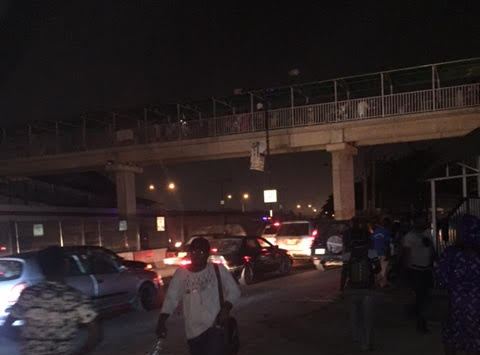
Time was 6.35pm, October 19, 2017, at Ojodu-Berger pedestrian bridge, one of the projects of the Akinwunmi Ambode administration in Lagos State. The pedestrian bridge, when it was commissioned in May, improved the aesthetics of the area as the congestion and chaos common in the vicinity largely reduced, owing to the free movement of humans across the bridge unlike in the past. Added to the beauty of the bridge, and the adjoining lay-bys and bus park that came with it were the new electric poles that, at night, illuminate the area.
The newly-installed lights and electric poles at the bridge were in keeping with the state government’s promise to light up Lagos at night as part of efforts to improve security and commercial activities in the state. The project kicked off in December 2015 and was commissioned in April 2016 by Ambode. It has continued ever since and funds for its sustenance were voted and approved in this year’s budget.
On page 20 of the 2017 Abridged Annual Budget on the state’s website, the Lagos State government, through the ministry of Economic Planning and Budget, gave a breakdown of the 812.998 billion budget wherein under “2017 subvention/overhead cost,” the sum of 4,091,115,420 was voted for streetlight rehabilitation and maintenance. On page 46-47 of the document, under ‘roads and other infrastructure,’ the state government reveals that it proposes “to spend the sum of N141.692bn on road infrastructure” that includes “Marking and Community Traffic Initiatives, Advancement of “Light-Up” Lagos project through provision, rehabilitation, and maintenance of Streetlight facilities.” On page 9 of the same document, the Lagos State House of Assembly states that: “The Commissioner for Finance and the Accountant General shall promptly release the quarterly funds of the State Electricity Board to it for its optimal performance.”
At the time of its flag off, the light up project was hailed by many Lagosians as a good concept and was expected to be a continuation and improvement of previous effort by the past administration headed by Babatunde Fashola, to provide street lights in the state.
To some observers, Fashola administration’s effort in that regard was anything but excellent, and even in terms of coverage, Ambode’s is believed by some to be more expansive. Comparing the two administration’s efforts in street light provision, Adeniji Michaels, the Managing Director, CMSEAL International Ltd, an indigenous engineering and project management and construction firm, said, “there are noticeable difference especially installation of new lighting systems in the unreached areas by former Governor Babatunde Fashola within Lagos State.”
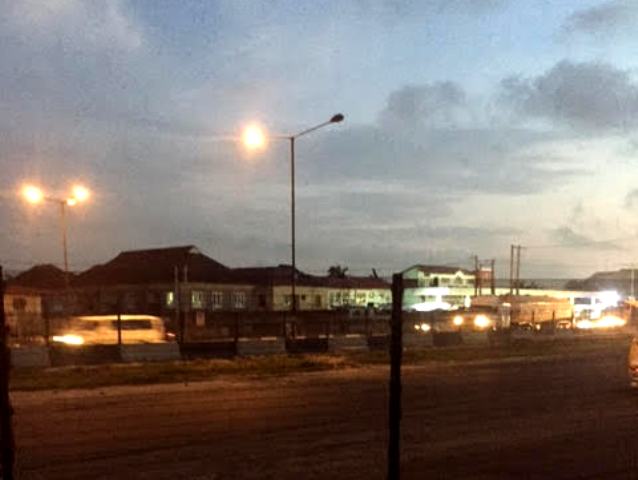
Third roundabout, Lekki, Lagos
But in less than two years, challenges are synonymous with Ambode’s light up project as many of the street lights across the state are not functioning well. For instance, that October 19, between 6:35 pm and 7:04 pm, the lights on the Ojodu-Berger pedestrian bridge malfunctioned three times – coming off and on.
For a project that was launched with fanfare eight months earlier, the malfunctioning witnessed at the Ojodu-Berger pedestrian bridge may come as a surprise to some people but the failures that night was not an isolated case as many familiar with the area since its commissioning know. On December 15, last week, it happened again as the lights suddenly went off at night.
The lights could go off without notice at any time and get restored anytime! The occasional blackout also extends to Ogunnusi Road linking the pedestrian bridge and many other streets across Lagos State, where the lights are supposed to work uninterruptedly from night until morning.
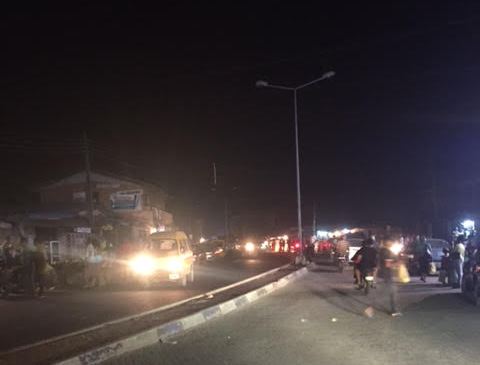
Investigations show that, at night, in many parts of Lagos, electric poles in major roads across the state, at times, fail to glow, and where they work, there’s no guarantee they could function seamlessly till the following morning. In some cases, electric poles within the same area, don’t function at the same time.
On September 28, 2017, at 7.20pm at GTB junction, Ogunnusi Road, a few minutes walk from the Federal Road Safety Commission’s headquarters in Ojodu, when the electric poles in the area ought to be on, they were off. But those installed within the Lagos State Works Corporation’s office and the pedestrian bridge, close by were working.
Heading towards Ogba that night, the reporter discovered that the stretch of road from the GTB junction to Excellence Hotel, Ogba, was dark, save for the light from moving vehicles that illuminated the road. But it was a somewhat different story at Yaya Abatan Street overlooking the Excellence hotel as some, not all of the streetlights, were working.
By 7.30pm, the reporter decided to return to Ogunnusi Road, and even before getting to the junction linking Omole Phase 1, he noticed that the lights were back. But it didn’t extend to the Federal Road Safety Commission or GTB area, instead, it terminated just before the Grammer School bus stop.
Two days later, an assessment of the same route reveals the same situation. By 7:15 pm, Ogunnusi Road from the GTB junction was dark. But the Lagos State Public Works Corporation’s axis was lit. Proceeding to Ogba, the lights were on from Omole Phase 1 beyond the Nigerian Institute of Journalism, NIJ campus. Abatan too, save for the faulty or unlit ones, were lit.
However, as in Abatan, some of the poles, within the area illuminated, had one, instead of two functioning bulbs. As the reporter made his way back to Ojodu-Berger that night, he counted no less than 83 bulbs without light. The fact that some of the electric poles had one, instead of two bulbs functioning, showed they were apparently dead.
On October 3, a drive at night from Agidingbi road to Ojota via Kudirat Abiola Road revealed that some electric polls were not functioning, while a couple others had one, instead of two bulbs working. Some of the poles without light on the night included those by the fence of the Lagos State television overlooking Coca-Cola premises.
Ojodu Berger Express road
On Ojota junction connecting Ikorodu Road and Ogudu, for the many bright lights on the night of October 3, at least five polls had one or two bulbs not working. A motorcycle ride from Ikorodu Road junction to the opposite end of Ogudu linking Third Mainland Bridge showed that 53 electric polls either had one or two bulbs dead or not functioning.
The situation on Third Mainland bridge isn’t different as driving through there to Victoria Island on dawn of September 21 revealed that many poles were without light.
On October 8, by 6. 35 pm, a bus ride from Ojodu Berger to Alaba International market, via Gbagada-Oshodi, a journey that lasted more than one hour, was mostly done in the dark save for lights of speeding vehicles that provided occasional glitter.
Only in Agboju, Mazamaza, First Gate was there streetlight. The rest was darkness. More than 200 electric poles, from the Alausa Expressway to Gbagada interchange had one or two bulbs either dead or not functioning that night.
Returning an hour and half later from Alaba, the streetlights at Agboju, First Gate, Mazamaza, had disappeared and everywhere was dark except at Cele bus stop and Oshodi-Isolo link way connecting the Murtala Mohammed International airport where electric poles illuminated the overhead bridge. Arriving Oshodi overhead bridge by 9.20pm, the reporter found that the lights were back.
Fourteen days later, on October 22, a ride through Toyin Street to Allen Avenue, Aromire Street to Acme and Wempco roads leading to Ogba, at night, revealed a number of dead lights. Another assessment of Oshodi expressway leading to Mile 2 on the night of December 4 was not unlike the one of October 8. Everywhere was dark but for lights of speeding vehicles. From Mile 2 to Costain, it was the same scenario as the expressway connecting Alafia and Orile down to Costain was dark that night.
Victor, who works at Cele bus stop area of Oshodi expressway, told the magazine that the road had been without light for many years. A commercial bus driver who plies the Mile 2 – Lagos Island route, also said that the area has not had light for as long as he could remember. “There’s no electricity in this road at night. It’s only in Mazamaza area that street light is available,” he said, adding however that a test run of street lights was carried out some two months ago on the Mile 2 – Lagos Island road but that nothing has been seen.
Though Costain roundabout had most electric poles working on December 4, a number of the bulbs were not functioning. And while the Costain-Ikorodu expressway was largely lit that same night, a number of electric poles failed to glow.
In some parts of Ebute Metta like Apapa Road, a motorcyclist told the magazine that the lights on the street extinguished about four months ago. Along Kano Road linking Oyingbo, some of the poles are of no consequence as they fail to brighten up the area. At the National Stadium, Surulere area, the lights weren’t on the night the reporter passed through there to Akerele Street leading to Lawanson.
Arriving Lawanson from a street terminating on Itire Road, was like a run on a dark alley as the streetlights weren’t functioning. A ride from there to Ojuelegba overhead bridge revealed the same thing: unlit poles. A motorcyclist told the magazine, in reply to a question, that the lights had been off for over two months. At Ojuelegba, another cyclist said that the electric poles along the road leading to Yaba had not been functioning for some time.
On December 12, an electric pole opposite MKO Abiola Garden, an estate in Alausa close to Lagos State Government House, was not functioning on the night. Ditto some poles at the overhead bridge garden leading to Ketu bus stop. From Ketu to Ikorodu, it was a case of light here, darkness there, in the more than 30 minutes drive to the town. Countless street lights were not functioning.
Ojodu Berger pedestrian bridge
Reaching Ikorodu roundabout, a number of electric poles were either not switched on or were faulty. A ride through Beach Road junction to NBC road junction showed the state of facilities as not a single electric pole was working.
Arriving Maryland at 10.12pm and headed towards Ikeja via Sheraton Hotel, at least six electric poles marred an otherwise glittering night. A walk from Ikeja overhead bridge to Oriyomi Street junction, and as far as the eyes could see, no electric poles were functioning on Oriyomi.
The next day, a drive through Falomo, Awolowo Road, Ikoyi to Victoria Island and Lekki, showed they were not exempt from the street light puzzle. The many otherwise bright lights on the night notwithstanding, a number of electric poles stood out for their lack of light.
But the situation at second to third roundabout area of Lekki was different as many poles on the stretch were not functioning. Returning from Lekki, the reporter found Apogbon and Iponri areas bereft of light. The situation at Iponri was unlike December 4, when it glittered with light and is more in tune with the situation along the Ikeja – Iyana Ipaja – Igando-Iyana-Oba route where the streetlights are consistently inconsistent in areas that they work.
That’s the scenario that many streetlights in Lagos present at night. In terms of performance, there’s no consistency and uniformity. Amos, who runs a cab business in Lagos, told the magazine that “the street lights work in some areas and don’t work in some areas.” The magazine’s investigations show that many electric poles in the state, which include new and previously installed poles by the Fashola administration, don’t function well at night.
Some of the bulbs are dead, some parts are missing, poles are unkempt, while some electric poles don’t function at all. As a result of the poor performance and state of facilities, many areas are poorly lit or not illuminated.
It was also observed that there’s no specific time the lights are switched on. For instance, on October 16, as early as 5.26pm, some electric poles along the Berger- Ojodu expressway were already glowing. On October 8, at 6.15pm, four electric poles, two of which were opposite First Bank at Ogunnusi Road, had been switched on while those of the nearby pedestrian bridge were off. The Ojodu-Berger pedestrian bridge, from the days it was monitored, came up anytime from 6.30 – 7.00pm, while many elsewhere come up just about anytime at night. There’s no guarantee when that could be, or when they could go off. The current situation, for some residents, is at variance with the euphoria that greeted the introduction of the streetlights in the state.
Speaking about the Lagos street light project in April 2016, Ambode said: “The Light Up Lagos initiative is an integral part of our administration’s programmes to put Lagos on the same pedestal and status as similar megalopolis in the world. This initiative is in line with our commitment to build a 24/7 economy that will create employment and wealth for our people. The Light Up Lagos project is also part of our security strategy to make our State competitive, safe and secure.”
He added that significant progress has been recorded since the initiative commenced on 9th December 2015. “There has been an increase in commercial activity in the areas where we have installed street lights. Driving on major highways and streets in Ikeja, Alausa Central Business District, Third Mainland Bridge, Iyana Oworo/Berger axis amongst others have become more pleasurable as a result of the improved illumination,” the governor said.
In a country long plagued by epileptic power supply, and where many residents across the country are more used to dark alleys and roads, an initiative like the light up Lagos is bound to lighten hearts but Lookman Oshodi, project director for Arctic Infrastructure, feels that street light as a concept ought not to call for any special celebration as it should be a part of road infrastructure.
“It is good to have street lights to illuminate urban spaces and promote security resilience, but I do not think it is necessary to develop a project around street lighting. Doing such will continue to strengthen the appellation of our city as “City of Third World Country”. Street lighting is an integral part of road infrastructure delivery in any city; therefore it should not enjoy any special project delivery vehicle.
However, years of inability to provide this crucial road equipment has made the launching of street lighting, a well celebrated project for the city of Lagos. The project is not totally different from any other public infrastructure project. Moreso, these are the roles for the local governments except for trunk A and B roads,” he said.
NBC road, Ikorodu, Lagos
Even then, there are those who feel the Ambode administration’s light up scheme is limited in scope as it doesn’t cover residential districts. Oluwafemi Alimi, who works with an international energy firm based in Lagos, said it would be good to extend the street lights to the residential areas rather than mainly major roads as is presently the case in Lagos.
“Yes, the highways are lit currently. I think the present government has tried in getting the highways lit but when it comes to residential areas, I think there’s a deficiency of streetlight. So, I think the government has to do more, maybe local governments this time around have to assist. They have to ensure street lights work 24 hours even in localities, not just the highways,” Alimi said.
Emmanuel Ayisire, assistant commander general, community policing, Vigilante Group of Nigeria, also thinks the local governments have a role to play. He told the magazine that the United States has millions of streetlights owned by municipalities and regrets that the local governments in Nigeria are not doing much.
While pointing out that the lit up project initiated by Ambode’s administration is a good idea, Ayisire advised that street lights should go beyond just illuminating areas.
“First of all, security in the modern world is close to being defined by light. Light is indispensable to security,” Ayisire said.
“It’s a wonderful idea that the governor came up with the project and I think that has come a long way. It’s encouraging.
“Lighting is integral to crime prevention. It’s not good for security when you have dark areas but in this modern age, street light plays multiple roles.
“In the USA, street lights are developed to achieve certain things: monitor weather, seismic activities, capture plate numbers, conversations and video of people passing by so you can imagine that.
“The western world has set the pace (technologically), we should move a step forward by providing street lights that have the ability to do a few things (like in developed countries).”
Oshodi also gave a similar view. Comparing the street light in Lagos with what obtains in some European countries.
“Sometime around 1824 when oil lanterns were replaced with gas powered streetlight poles in Aberdeen, Scotland, almost all the city’s residents jumped onto the streets in celebration,” Oshodi said.
“In Aberdeen today, street light poles are multi function in characteristics, they accommodate street cameras, WIFI system and box visual advertisement in addition to traditional role of providing light.
“In major global cities nowadays, the poles are housing the emission calibrating equipment while they are being considered as signal navigation tools for emerging driverless vehicles.
“Currently, street lights are not just road electrical infrastructure but are being classified as part of the cities’ intelligence infrastructure.”
Ayisire’s and Oshodi’s advice will in fact help in stemming theft of even the street light equipment which a staff of the Lagos State Electricity Board who asked that his identity be protected, complained about. It was part of his defence on the state of some of the streetlights that are either dead or post below average performance. Although the source declined to answer questions relating to contract and maintenance of the streetlights, he said that part of the problem the electricity board confronts is theft of electric equipment and the uncooperative attitude of some residents who fail to safeguard electric facilities in their domains. His response came as part of the magazine’s effort to unravel how the street light project is funded and operated. Sources told the magazine that most of the streetlights are powered by diesel generators and that the contracts relating to them are supervised by the Lagos State Electricity Board. As the budget document states, the agency responsible for the Lagos streetlight project is the Lagos State Electricity Board. But the general manager, Ibilola Kasunmu refused to respond to the magazine’s questions on the street light project.
The magazine had first reached out to the ministry of energy and mineral resources in October for an interview in regard to the light up Lagos project. There, the reporter was referred to the office of the Lagos State Electricity Board near old secretariat by the PRO of the ministry of energy and mineral resources, Moses Ogunleye. Reaching the office of the electricity company, the reporter was asked to write a letter to the general manager, stating his request. This was done but there was no response from Kasunmu.
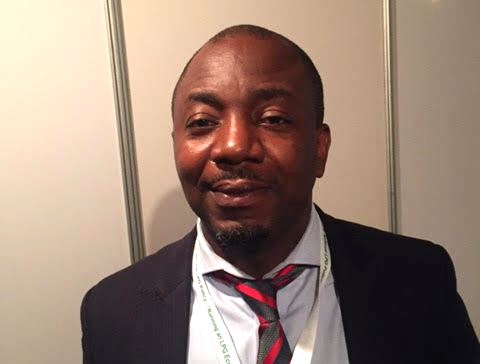
A source in the agency told the magazine that the general manager refused to talk because of fear of the unknown. Umeh, the public affairs officer of Lagos State Electricity Board, on her part, referred the reporter to the ministry of energy and mineral resources, which she said is better positioned to provide answers to contract issues. Ogunleye, on his part, after failing to fix an appointment with Olawale Oluwo, Lagos commissioner for energy and mineral resources, invited the reporter to the 7th Annual LPG Conference and Exhibition holding at the Federal Palace Hotel, Lagos, on December 7, for the purpose of interviewing the commissioner who was billed to attend the event. Oluwo indeed attended but left shortly after making the opening speech without granting an interview. He told the reporter that he needed to leave for another appointment and would not be able to grant the interview at that point.
At the LPG Conference and Exhibition, Oluwo told the gathering that Lagos is already implementing a power sector reform and that the state government is targeting a 3000 megawatts supply for the state. According to information on Lagos State’s website, Lagos, with a population of approximately 24, 821,418 inhabitants accounting for over 60% of Nigeria’s industrial and commercial activities, is responsible for 45% of national electricity consumption. But questions arise as to how contracts for the supply and maintenance of the electric poles and equipment and supply of diesel for the running of the generators that power the streetlights are awarded.
A source who spoke on condition of anonymity told the magazine that poor service delivery by the light up Lagos project led to the sack of Kasunmu’s predecessor, Peter Okonji, by Ambode. Okonji was appointed to the position in July 2015 but did not last long. An entertainment magazine, Encomium, in a March 1, 2016, article, gave reasons why Okonji was replaced by Kasunmu.
“Governor Akinwunmi Ambode of Lagos State has bared his fang on 12 officials of Lagos State Electricity Board for their inability to provide Street Light on Mobolaji Johnson Road, Alausa, Ikeja, for three days during the official visit of President Joachim Gauck of Germany,” the magazine reported.
“The governor was said to have been peeved by the total darkness the whole street was thrown into for these three days of the august visitors.
“He was said to have ordered that the General Manager of the agency, Engr. Peter Okenji (Okonji) be issued a query to explain why there was no light in that street for those three days. The response of the General Manager was not satisfactory to the governor and he, therefore, ordered the General Manager and 11 other senior officers of the agency be redeployed.”
The report further pointed out that: “the redeployment of these officers has no doubt generated mixed feelings amongst civil servants. Some are of the opinion that the contractor which handled the project should have been sanctioned rather than the civil servants”.
According to the source, since Okonji’s sacking, there has been no significant improvement in the provision of streetlight in the state. He said that part of the reason the street light project is bogged by challenges such as erratic power supply and breakdown of facilities is because the process leading to the award of contract for the running and maintenance of the project, had been compromised as contracts relating to the street lights were awarded to cronies and influential politicians in the state.
The light up project was flagged off after some energy experts met and deliberated on modalities for its operation.
Norbert Shialsuk
Norbert Shialsuk, chief operating officer of Sublime Oil and Gas told the magazine that he was part of the committee on the light up project, and that it was meant to fill an existing gap based on prevailing realities. “Regarding the light of Lagos, there was a panel set up, which sat for months last year and they are still sitting and that committee was set up by the ministry of energy comprising of GE, Siemens and other stakeholders in the industry. I was part of the team,” said Shialsuk.
Shedding light on the concept of the light up project, Shialsuk said the initiative was a proposition by the Lagos ministry of energy to provide electricity for Lagosians and fill the shortfall in electricity supply from the national grid.
“You know very well that the power available from the grid is not sufficient to meet the demand in Lagos and so the state government wants to step in to provide solutions that can bridge that gap and provide electricity which will be the alternative from the national grid,” he said.
“The first phase is supposed to deliver more than a thousand megawatts and ultimately they will increase that to three thousand megawatts, using various sources: the plant, LNG, LPG, coal and other efficient power generating solutions.”
“I think the Lagos state government has set a good example. All the streetlights have been powered so far. It has also been able to set up a lot of IPPs (Independent power plants).
“There’s a mainland power in Alausa. There’s also the Island power project in Lagos Island. There’s also Akute power, which powers water treatment plants in Lagos State.
“So Lagos State government has been successful in setting up small-scale power plants across the state and that experience is what the government wants to translate into now meeting the demand of the rest of the state. So I think it’s been a very good proposition and I know that the current governor is determined to see it through.”
Shialsuk further noted that maintenance is key to sustaining such project.
“It’s one thing to put the infrastructure in place, it’s another thing to ensure it’s operated and maintained. Operation and maintenance is key to sustaining any project,” he said.
“I’m not aware the extent of damage or maintenance required for all of these street light but maybe a few need maintenance here and there and there are blackout here and there but of course, with any system around the world, there are always system failures but you have to continue to replace the equipment and continue to ensure the diesel is supplied because currently some of the electric lights are powered by diesel.
“You have to change the light bulbs. If there are any faulty lines, you have to be able to fix them and also ensure that the power is regular.”
He pointed out that “the Island power in Lagos Island gets supply of Compressed Natural Gas (CNG) from Niger Delta, and if there’s shortage of gas along the pipeline, of course, there won’t be power to supply the IPP’s and so there may be one or two breakdowns. They have backup power but they use diesel and of course, that becomes expensive. ”
Shialsuk advised that one of the ways the government can overcome the challenges of maintenance is by engaging the private sector. “Probably there are one or two areas of improvement in terms of operations and maintenance but that can be dealt with by privatizing. So basically, if you are able to have private contractors manage those street lights, then you will be able to ensure that any repairs are met at any point in time,” he said.
With regards to management of the street lights, Oshodi feels the local government can do it.
“One major advice is to build the capacity of local governments to be able to deliver on this crucial public infrastructure. This is ideal for the future of Lagos. I do not see the Lagos State Government giving due attention to this facility on long term because of capacity.”
Even at that, he advocates adherence to best practices by people or agency saddled with the responsibility. “The procurement processes for maintaining the street lights should not be enmeshed on patronage system, rather the professionals who are vast in the mechanism of public infrastructure management should be engaged and encouraged to take up the operations, management, and maintenance of the infrastructure,” said Oshodi, further noting that the focus should be more on the technical capacity of the bidding agencies. “What level of expertise do they have in development, operations, and management of public infrastructure? What model are they proposing to deliver and operate the lighting equipment? Do they have specific experience in a large city or developing country and most importantly, what is their business integrity background? These are some of the key criteria to be considered,” he noted.
Even then, Oshodi feels the light up project, as in Fashola’s time, is energy consuming.
“They are both based on fossil fuel operational model, that is refueling of diesel generators, as situation demands. This model is subject to frequent breakdown and this can be observed in some areas being plunged into darkness when the lights ought to work.” He suggests the adoption of cleaner energy options to power the project and for the government to “speed up the green energy capacity delivery to the city with a view to decommissioning the generators.”
Oluwafemi also wants the state government to begin to look at alternative sources of energy for the street light project. “We’ve seen that they use generators to power them but in terms of energy conservation and efficiency and all that, you would want to use renewable energy that we have in abundance like solar energy. That will help. If we can have more of these street lights powered by solar energy, it will help,” he said, pointing out that there were attempts in the past to adopt solar energy but it flopped. “We know that there had been attempts to install solar energy as sources of the street light but most times we see that they don’t last long probably because of quality. So, I think in the aspect of quality, the government needs to do more and improve on practices in terms of quality assurance when these contracts are signed with individuals. I think that quality aspect needs to be sorted out so that these projects can stand the test of time and last longer. Solar is in abundance in Nigeria.” He advised that a policy framework be initiated by government to adopt solar energy as energy source.
In an article published in African Business magazine in May 2016, Alvaro Sobrinho, the chairman of the Planet Earth Institute noted that “Africa has incredible renewable energy resources, as it can source an additional 10 Terawatts of solar energy, 1,300 GW of wind power, and 15GW of geothermal potential. Private companies have the financial resources and clout to significantly scale up investment in renewable energy.”
Whichever models are adopted, the key is to deliver the goal. According to the Project light up Nigeria, a civil group, “using high-quality street lights will eliminate situations where streetlights after a few months of installation fail to work because of their low quality thereby defeating the objectives of such projects. Project light-up Nigeria therefore recommends that henceforth project owners, in this case the Federal, State and Local Governments, should recommend and insist on brand of streetlight and other lighting material to be used by their contractors as leaving such decisions solely in the hands of contractors will lead to situations where contractors may use all sorts of low quality and cheap lighting materials in a bid to maximize profit. Project light-up Nigeria is of the view that using high-quality materials, even though naturally more expensive is cheaper in the long run.”
This investigation is supported by the John D. and Catherine T. MacArthur Foundation and the International Centre for Investigative Reporting.
An Italian judge has ordered oil majors Royal Dutch Shell and Eni to stand trial over alleged corruption in Nigeria, according to Reuters.
Eni executive, Claudio Descalzi, and his predecessor, Paolo Scaroni, will also face prosecution in the trial that will start on March 5 next year.
The oil companies are being persecuted for their role in the $1.3 billion controversial sale of OPL 245 oil block, an offshore oil block estimated to hold 9 billion barrels of crude.
Both companies are already facing prosecution in Nigeria over the deal, which was approved by Goodluck Jonathan, the former President.
All the parties involved have previously denied any wrongdoing.
About a year and a half to the next general election, and months before the timetable is released by the Independent National Electoral Commission (INEC), politicians and their cronies have begun to warm their ways into the hearts of the electorate, as is their practice. There is no gainsaying the fact that Buhari’s recent two-day state visit to Kano where he was sensationally reported to have told a mammoth crowd that “by what I see today, if elections are contested I will no doubt win it” was geared towards whetting the electorate’s appetite for the impending campaigns.
Atiku Abubbakar’s dramatic defection to the People’s Democratic Party and the intense publicity of his person that came in its wake was undoubtedly aimed at achieving the same effect. Invariably, the two major political parties are telling Nigerians in clear terms that they would again be condemned to the proverbial devil and the deep blue sea as they were in 2015.
Preparatory to the 2015 elections, Muhammadu Buhari, the ruthless dictator with scores of human right abuses to his credit, low leadership profile and dismal creative intelligence on display, was repackaged as the disciplined, incorruptible, and regenerated democrat that would rescue Nigeria from the doldrums. With the 2019 elections at hand, it is Atiku’s turn to be rebranded from Nigeria’s politician with arguably the heaviest weight of financial scandals to the highly cerebral messiah the country has been waiting for.
The Nigerian youth who should be screaming Atikugate to high heavens are the ones championing the Atikulate cause. The recurring singsong is: what does morality matter? Aren’t all politicians the same? Those that are more daring wonder if any court of competent jurisdiction has convicted him of any crime? And one is left to wonder “would our mumu ever do?”
In 21st century Nigeria and in a country of over 170 million Nigerians, some persons still think either character or competence is dispensable for a contender for Nigeria’s grandest political office. We compromised competence the last time, why can’t we compromise character this time, gullible Nigerians wonder. This is the amazingly ridiculous mindset of tons of Nigerian youth. How depressing!
Yet, Atiku Abubbakar was not accused of corruption by a traffic-seeking, nameless blogger but by no less an institution than the United States’ Senate. It was not a careless comment by a five-minute-fame-craving senator but a detailed documented allegation of money laundering and bribery by the United States Senate Permanent Subcommittee on Investigations.
Indeed, the amounts allegedly corruptly cornered by this leading presidential aspirant isn’t some paltry sum but a whopping sum of about $40,000,000, $14,000,000, and yet another $2,000,000.
Worse, during the inquisition into the Halliburton scandal that consumed American congressman, William Jefferson, who already bagged a jail term in the United States of America, the convicted congressman unequivocally named Atiku as an accomplice. If these shocking revelations do not constitute a prima facie evidence of Atiku’s super corrupt proclivities, what else could?
Is it that as intelligent as Atiku is, he does not know that politics is perception? Is it that he is not aware of the legal remedy of salvaging his reputation where he is falsely accused and could not have sued for defamation? Is it that since 2010 when this scandal broke out, all he could do is dismiss these grave allegations with the wave of a hand while steering clear of the United States? Or is it rather that his culpability and sorry state nevertheless, he is very much persuaded that Nigerians are blessed with an exceptionally short memory; and that since our mumurity lives on, he can always get away with anything?
If we are hopeful of making any meaningful progress, and entrenching sustainable development in our polity, we need to begin to think straight as a people. And the change of mindset ought to begin with the youth. If corruption is not taken as one of the fiercest enemies of our national life and tackled headlong, corruption will ultimately destroy us. To tackle corruption, we must build strong institutions; and to build strong institutions, we must elect strong men of repute and good report. And to think there are no such people in Nigeria’s most populous black nation is to be short-sighted.
If Atiku is elected into office as Nigeria’s president, no one needs a soothsayer to know he cannot muster the political will to institutionalize an effective anti-corruption system. As intelligent as he is, he evidently lacks the moral compass to fix the cesspool of institutionalized corruption that has been made to fester right from Nigeria’s birth.
What Nigeria needs now is a breath of fresh air. What we need now is a leader not tied to the self-serving, opportunistic and oppressive ideologies that All Peoples Congress and Peoples Democratic Party have come to be known for. Never again should we allow political principalities to use the media in restricting the choice of president to either the devil or the deep blue sea. It is time we saw through the charade and the disaster any of Buhari or Atiku is bound to become. It is time Nigerian youths began to devote time, energy, intellect and passion towards pushing a third alternative into our national consciousness. Indeed, it is time we let go of our mumurity.
Timothy, a legal practitioner, writes in from Warri, Delta State
Nigeria is among the countries with the highest number of human trafficking victims. Millions of Nigerian young women and girls are at risk of human trafficking, due to gender imbalance, poverty, high rate of unemployment, gender-induced cultural bias, human deprivation and other factors.
Globally, over $32 billion is generated from the exploitation of 27 million victims, of which more than 70% are women and girls. The 2016 Global Slavery Index Report shows that there are over 875,500 Nigerian victims.
On a personal standpoint, the statistic is low, and there is need for government and independent bodies to work towards gathering data on this crime.
NewsMax reveals that every year, over 30,000 victims of human trafficking die as a result of diseases, torture and hunger. Most the female victims die while aborting pregnancy, under the pressures of the trafficker. This also shows that every day, at least 83 victims die, while three to four die every hour. Before the end of this programme, at least eight victims must have died due to human trafficking. Human traffickers or perpetrators often see young people, especially women, girls and children as commodities that can generate 100 times the amount spent recruiting them.
GOVERNMENT HASN’T DONE ENOUGH
Human trafficking remains a great threat to our economic development, advancement and human capital. It saps the very potential of our nation by frustrating the aspiration of our young people. The future of so many young people, especially women, has been frustrated, their dreams shattered, destinies delayed and potentials caged because of the triumph of human trafficking, which often thrives in the shadow and silence of many, and grow due to passive participation of the three arms of government.
While I have always empowered citizens especially young people to be at the forefront of combating human trafficking, it is important for me to say that government has a fundamental role to play in this. First, I commend Nigerian government for the amended 2015 TIP Act and for establishing a federal agency, NAPTIP, to take responsibility for combating human trafficking. But I must not fail to tell government that signing TIP Bill is not enough. You can’t use an empty pocket to fight a crime that is worth over $32 billion. For over four years now, government has been too relaxed in the fight against human trafficking, and only wakes up each time there is outbreak of human trafficking, like the 26 girls who died in Mediterranean sea and the Libya black slavery. It ought not to be so.
Frankly, I have wondered why the Nigerian government hasn’t provided enabling support or encouragement for anti-human trafficking, and why NAPTIP is not well-funded. I am aware that NAPTIP is not well-funded to fund other grassroots anti-trafficking organizations.
I remember few months ago, when I spoke with some business leaders, trying to engage private sectors in our anti-human trafficking project, I was faced with the following questions: Does NAPTIP fund you? What example has the government shown, and what has the President or lawmakers said about human trafficking that will motivate us to support the cause? Have they issued public statements against human trafficking when addressing the nation? How many times have you heard them talk about human trafficking during presidential speech? Is there a national call for action?
In fact, I have observed that it will be hard for private sector to put their money into a cause if they are not sure it is of great importance or a priority to the federal or state government.
Government, at federal, state and local levels, need to take a lead in the fight against human trafficking. The President, legislators and judiciary need to be audacious in their public statements and actions to combating human trafficking.
WHAT GOVERNMENT NEEDS TO DO
Policy: Government should ensure that the Trafficking in Persons (TIP) Act is strictly enforced, without compromise. In addition to TIP Act, there is need for protection policies for victims and most vulnerable population in Nigeria. I recommend a Human Trafficking Prevention policy, which will focus on addressing persistent inequalities women face in status and opportunity; empowering homeless, street children, orphans, and young people who are at risk of trafficking; and addressing demand for sex or the commoditizing of women bodies.
Adequate Funding: Both state and federal government should mobilize financial resources to support action against human trafficking. State governors should know that the fight against human trafficking should not be left in the hands of the federal government and its agency. They should initiate programmes to eradicate and prevent human trafficking.
Call for Action and Private Sector Engagement: Both the federal and state governments should have a national call for action to companies to create measures to address human trafficking, through their corporate social responsibilities, contributing their expertise and knowledge to addressing the causes and effects of human trafficking. The Nigerian government should create avenues or platforms for private-sector engagement in combating human trafficking. Looking at how the private sector, including communication companies and banks, are using technology and innovative approaches to address issues on health, education, employment, and transportation in Nigeria, it becomes obvious that little or nothing has been done by private sector in addressing human trafficking compared to other issues. There is an urgent need for private sector to provide innovative approach, contribute its unique knowledge, expertise and solution to ending human trafficking in Nigeria. Both small and big companies can aid the fight against human trafficking through the use of new technologies, innovation and entrepreneurship. Tech companies can create tools that will help young people to stay safe online, as human traffickers are exploring online platforms to deceive naïve and vulnerable ones in our society. Private sector can participate in combating human trafficking, by reporting suspected human trafficking cases around them. Like I said earlier, soon my organization will develop an Anti-Human Trafficking Reporting Mobile Application, known as TALKAM. I am very optimistic and certain that as soon as the mobile app is developed, it will enable any one, including the private sector, to report suspected human trafficking cases.
Supporting Non-Governmental Organization:. Government and its agencies should give support to NGOs who are at the forefront of combating human trafficking in different communities.
Develop Tracking and Monitoring Mechanism: Anyone taking someone on a trip either within or outside the country, probably to serve as house servant or do any form of work, should get permission from local, state, or federal government agencies. Such persons should sign a ‘No Exploitation Pledge Form’ and provide details of the destination, work and a surety. These will help the appropriate agency or ministry track and monitor them. I developed this strategy while trying to proffer solutions to exploitation of housemaids.
Research institutes: It is important to have research centres in some federal tertiary institutions, so as to aid the fight against human trafficking.
Empower NAPTIP to have a budget to fund grassroots organizations and researches, build child support centres, build more rehabilitation centres, and provide scholarships and support to victims.
Ministry of Women Affairs and Social Development, Ministry of Youth Development, Ministry of Justice, Ministry of Labour, Ministry of Foreign Affairs and Ministry of Education should take part in combating human trafficking, and include in their budget funds to assist grass root organizations in addressing causes and effects of human trafficking.
Develop a standard trafficking in persons training programme that can be implemented at the academy level for all state and local police, and expand training to prosecutors and judges to include the mental health consequences to victims.
Every state in Nigeria should have a shelter where victims of human trafficking, rape, gender-based violence and other forms of human rights abuses are kept, assisted, and empowered. State governments should have offices that address issues of human trafficking.
Conclusion
If both state and federal governments can handle human trafficking like Ebola, then the will soon become history.
Osuigwe is the Executive Director, Devatop Centre for Africa Development, an NGO committed to the eradication of human trafficking and female genital mutilation.
Nigeria appears to have woken up from deep slumber over substance abuse among the youth population of the country. The first indication of this was during a visit to Kano recently when President Muhammadu Buhari publicly instructed law enforcement agents to hound down drug traffickers in the country and bring them to justice. And then the two-day Stakeholders’ meeting in Kano called by the office of the Senate President, Bukola Saraki, to discuss substance abuse in the country. The meeting ended on December 20.
It is quite instructive that the setting of this awakening is the ancient city of Kano where drug/substance abuse has long become an epidemic. Yearly reports of the National Drug Law Enforcement Agency (NDLEA) always put Kano on top of cities with the highest substance abuse prevalence.
In 2015 out of a total number of 8, 826 suspected drug offenders arrested , 2,205 came from Kano alone-the highest in the country. In October during a motion sponsored by Baba Garba in the Nigerian Senate, it was revealed that over three million codeine containing cough syrups are consumed daily in Kano and Jigawa States! And this in addition to other substances commonly abuse among youth in those states and others.
Thirty seven senators supported that motion and the senate resolved to enact legislations that would check substance abuse among youth in the country. The Senate also mandated the Ministry of Health to provide rehabilitation centres or clinics where victims of drug abuse would be rehabilitated where necessary, and urged the National Agency for Food and Drug Administration and Control, NAFDAC, to embark on a vigorous sensitisation campaign on the dangers of drug abuse and steps in achieving a successful rehabilitation for people with the addiction. The just concluded stakeholders meeting in kano was a fallout of that senate resolve.
But before the senate begins the more tedious process of legislating to check substance abuse and addiction, it is pertinent to call its attention to how other lands are dealing with the problem.
I was one of ten Nigerians who recently participated in a special edition of the US Government sponsored International Visitors Leadership Programme on Substance Abuse Prevention and Rehabilitation. We visited major cities across the US which significant substance abuse challenges and interacted with law enforcement agents, health workers, government officials, teachers, non-profit organisations, prison officials and youth serving jail terms on drug-related crimes.
It was a trip that opened our eyes to the dangers of substance abuse and the best practices to contain and check it.
The US had long treated drug and substance abuse as a crime and offenders routinely sent to jail. But the same people come back to jail shortly after completing a jail term. They go back to drugs and commit crimes to finance their addiction. In a society where access to guns is easy, addiction often leads to violent crimes and murders.
But since law enforcement has failed to stop drug and substance addiction and related crimes, the US has had a rethinking about strategies to check the menace.
The first step is a realisation that drug addiction is a mental health challenge and those suffering from it need assistance and not jail sentences. Addiction is like any other disease and sufferers require help to get out of it into recovery.
Law enforcement in the US has moved from targeting drug users to hunting down illicit drug traffickers and cutting off supply routes. Law enforcement agents in the US now send youths suffering from drug addiction disorder to rehabilitation homes instead of sending them to jail. Only those who commit violent crimes, including murder are sent to jail. But even while in jail, they are made to undergo rigorous rehabilitation programmes to ensure they get clean before leaving jail.
But by far the biggest take away from the trip is the synergy between governments – federal, state and counties, and Non-Governmental Organisations in tackling the problem. There are no government-run rehabilitation homes or treatment clinics for those with substance abuse disorder. The governments and their agencies are not directly involved in drug abuse campaigns, treatment and rehabilitation of victims. Instead, there is an unwritten agreement that the NGOs are better suited to deliver these services, and the reasons are obvious.
NGOs work directly with the people and are more trusted than government agencies, especially on an issue as sensitive as drug addiction. They are also more specialised in the services they deliver, and have more standardised recruitment process. Moreover, because they operate with donor funds, they are much more transparent and accountable than government agencies.
So what the federal, state and county administrations do is to appropriate funds yearly for drug/substance abuse prevention, treatment and rehabilitation and channels these funds to credible NGOs already working in these areas. Thus, not only are the services more professionally delivered, but it ensures more value for money. And this model is already yielding positive results for the US as drug related crimes are going down and more people are getting access to addiction rehabilitation centres.
The lesson for Nigeria is for the government to move beyond issuing public statements lamenting prevalence of substance abuse among youth, to evolving policies directed at supporting local NGOs already doing great work in these areas. Instead of saddling the NDLEA with drug abuse campaign and rehabilitation, the agency should be adequately funded to fight the criminals who traffic these illicit drugs that is killing our youth.
Government funding for drug abuse campaign, treatment and rehabilitation should be targeted at supporting NGOs in the country who are already using their own resources to intervene in this problem. There are many NGOs working in the area of drug abuse, prevention and rehabilitation in different states and communities across the country. Government needs to set up machinery to identify NGOs with appropriate structure to support with funding and give targets on deliverables.
In Abuja, Kaduna and Kano alone, there are not less than 10 of such organisations doing incredible work with their own resources. They include Drugs Danger Smart Advocacy Foundation, Life Challenge Intervention Outreach, Community Intervention Network on Drugs, Parents against Drug Abuse, Substance Abuse & Addiction Recovery Centre and Milestone Rehabilitation Foundation, among others.
Tajudeen Suleiman is a journalist with the International Centre for Investigative Reporting (ICIR)
Wilson Uwujaren, EFCC spokesman, says Innocent Chukwuma, Chief Executive Officer of Innoson Motors, hired truckloads of thugs to attack operatives of the commission in his bid to escape arrest on Tuesday.
According to Uwajuren, Chukwuma was arrested at his residence in Enugu on Tuesday morning for refusing to honour a series of invitations extended to him in an ongoing investigation.
“A well-known industrialist, Chief Innocent Chukwuma, popularly known by his company’s name, INNOSON, has been arrested by the EFCC,” Uwajuren stated.
“He was picked up at about 11am at his Savage Crescent, GRA Enugu residence on Tuesday, December 19, 2017.
“His arrest followed his refusal to honour invitation by the commission, having earlier jumped an administrative bail granted him in a case being investigated by the Capital Market and Insurance Fraud Unit of the commission’s Lagos office.
“Chukwuma, rather than honour the invitation by the EFCC, mobilised six truckloads of thugs pretending to be staff of his company to his residence, where they manhandled EFCC operatives.
“It took reinforcement from the Enugu office of the EFCC to arrest the industrialist, who is currently being grilled by a team of investigators.”
Chukwuma is currently facing criminal charges before the Federal High Court, Lagos, having been accused of forging shipping documents which he used to obtain loans amounting to N2.4 billion from Guaranty Trust Bank.
The suit was first filed by the office of the Inspector General of Police on December 21, 2015, but it was later taken over by the Attorney General of the Federation on February 18, 2016.
Earlier in November, FG filed an application urging Ayotunde Faji, the judge handling the case, to issue a warrant of arrest against Chukwuma for allegedly refusing to appear before the court and enter a plea in the charges against him.
But the case was adjourned to November 21 for ruling on the application. It’s not clear whether the judge granted the arrest warrant or not.
Innocent Chukwuma, Chief Executive Officer of Innoson Motors — an indigenous car manufacturing company — has been arrested by law enforcement agents believed to be operatives of the Economic and Financial Crimes Commission (EFCC).
According to a post on the verified Twitter handle of Innoson Motors, Chuwkuma’s arrest was sequel to an ongoing court case between him and Guaranty Trust Bank (GTB).
Armed policemen were said to have stormed Chukwuma’s Enugu residence, shooting live bullets and injuring many people living there.
Pandemonium at Chukwuma’s residence before the “arrest’
Breaking News: Innoson Vs GTB Gets Messier
Like a commandor style, GTB uses EFFC to storm Innoson Enugu Residential Home to bundle him to Lagos like a common criminal without any prior invitation.@officialEFCC@gtbank
Cornel Osigwe, spokesman for Innoson Motors, said his principal was arrested at his residence in Enugu around 9:00 a.m. on Tuesday.
“His arrest is in connection to the ongoing case he has with GTBank. He was never invited by the EFCC; we challenge them to come forward with any evidence showing that he jumped bail,” Osigwe said.
“This is GTBank using federal authorities to persecute an illustrious citizen who has done a lot to improve the economic development of this country.”
Wilson Uwajuren, spokesman of the EFCC, said he had not been briefed on the development, while Meksley Nwagboh, who spoke on behalf of GTBank, said the bank had nothing to do with the arrest.
The Nigerian Supreme Council for Islamic Affairs (NSCIA), the umbrella body of Nigerian Muslims, has threatened to initiate legal actions and embark on massive protests if Firdaus Amosa is not immediately called to bar and compensated.
Amosa, a graduate of law from the University of Ilorin, had been denied access to the venue of her call to bar ceremony after she insisted on wearing the hijab.
The development has since sparked controversy, as many Nigerians take to the social media to express diverse opinions.
According to a statement issued on Tuesday by Salisu Shehu, Deputy Secretary General of the NSCIA, “Amosa has been victimized, humiliated and traumatised by the Nigerian Law School, the Body of Benchers and the Council for Legal Education on account of her faith”.
The NSCIA maintains that Amosa “has not violated any law” by insisting on wearing her hijab during her call to bar.
“She has been denied of rightfully joining her professional colleagues just because of her religion. She has been exposed to ridicule and opprobrium by standing for her religious rights,” the group stated.
“It begs the question that she is not the only Muslim lady among those concerned, as no one will stand for her when she appears before her Creator to defend the correctness and otherwise of her actions. We reiterate that she has not violated any law.
“The NSCIA demands that the Federal Government, through the Ministry of Justice, call the Council for Legal Education and the Nigerian Law School to order so that they will not stoke religious crisis in the country.
“Our Council patiently waits for what the Ministry will do as it puts other options on the table, including litigation and nation-wide protests.”
“Those who think they can ride roughshod on the rights of Muslims just because their co-Christian colonialists did it successfully will have to wake up and realise that Muslims are equal stakeholders in this country.”
The NSCIA further described the development as “the height of Islamophobia displayed by the authorities of the Nigerian Law School, the Body of Benchers and the Council for Legal Education”.
“Basically, the Constitution of the Federal Republic of Nigeria guarantees Nigerians their freedom of religion.
“There is a constitutional basis that holds and upholds the use of hijab as a fundamental and constitutional right of Muslims in this country.
“It beggars belief that the Islamophobic posturing of the Nigerian Christian establishment is legendary even if this dates back to the Christian colonial past and its vestiges.
“The hatred for Muslims and Islam appears to be a virulent cancer that has spread across the body of those who use religion to oppress and deprive others of their religious rights. We have maintained that Nigeria is a multi-religious country and that cannot be controverted.
“In the United States, female Muslim attorneys are granted their use of hijab as a piece of scarf on the head of a person doesn’t harm anyone.
“In Britain, where the Nigerian legal system originates from, the English lawyers and judges since July this year have started to break away from the centuries-old tradition of horse-air wigs that many consider anachronistic, uncomfortable and expensive.
“While the rest of the world is becoming progressive and pluralistic, the Nigerian religious bigots remain dogmatic, vicious and vindictive when issues concerning Islam arise.
“That the United States of America allows even female military personnel to use hijab and male Muslims to grow their beard as part of their religious rights is worthy of note.
“If Muslim female police officers in Britain that so desire use hijab without let or hindrance, what is the problem in Nigeria?
“What is wrong with the Islamophobic Nigerians who assume that Muslims must abandon their religion to co-exist with them in the Nigerian space?
“How does wearing hijab infringe on anybody’s right in Nigeria? Enough is enough of this chronic hatred and bigoted intolerance! Yours is your religion and ours is ours.
“We stand behind Abdulsalam Firdaos Amosa who acted within her constitutional rights and we insist that she must be called to the Bar and adequately compensated for the humiliation she was subjected to. Enough is enough!”