NIGERIA’s inflation eased to 23.71 per cent in April, from 24.23 per cent in March.
The National Bureau of Statistics (NBS) reported this in its monthly Consumer Price Index (CPI) report released on Thursday, May 15.
It shows that inflationary pressure decreased by 0.52 per cent in the review month relative to the figure it reported in March.
On a year-on-year basis, the inflation rate was 9.99 per cent lower than the 33.69 per cent recorded in April 2024.
On a month-on-month basis, the headline inflation dropped to 1.86 per cent in April, from 3.90 per cent in March.
The NBS further reported that the urban inflation rate eased to 24.29 per cent in April 2025 compared to 36.00 per cent in April 2024, while it also dropped on a month-on-month basis to 1.18 per cent in April from 3.96 in March.
Rural inflation also dropped in April to 22.83 per cent on a year-on-year basis compared to 31.64 per cent in April 2024. It also dropped to 3.56 per cent from 3.73 per cent on a month-on-month basis.
A further look at the report shows that food inflation eased to 21.26 per cent compared to 40.53 per cent on a year-on-year basis.
The food inflation rate also dropped to 2.06 per cent relative to 2.18 per cent on a month-on-month basis.
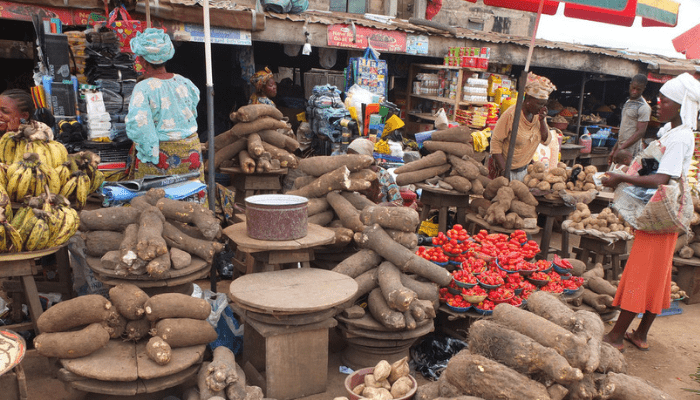
The statistics office attributed the drop to the rate of decrease in the average prices of maize flour, wheat grain, okro dried, yam flour, soya beans, rice, bambara beans, and brown beans.
The latest figure marks a modest decline of 0.52 percentage points, offering a glimmer of hope amid persistent economic challenges and rising cost-of-living pressures across the country.
The ICIR can report that the moderate inflation figure witnessed since January this year followed the rebasing exercise from the NBS.
In January, the statistics office went into a rebasing of the CPI in which the items in its reference basket were reweighted and updated with a comparison period from 2009 to 2024.
The Statistician General and Chief Executive Officer of NBS, Adeyemi Adeniran, had said, “It’s done to absorb the new ministries that the new government just created, upgrade the Consumer Price Index (CPI) basket, and change the methodology of CPI and gross domestic product (GDP).”
THE National Assembly may soon make voting compulsory for eligible Nigerians, as the House of Representatives seeks an amendment to the Electoral Act 2022 to this effect.
The bill on the amendment, which has passed second reading, is jointly sponsored by Speaker Tajudeen Abbas and Daniel Asama Ago, a lawmaker from Nasarawa and a member of the All Progressives Congress (APC)
The ICIR reports that there are, however, exceptions, including the decision not to vote based on one’s religious belief, illness, living outside Nigeria, among others.
According to the bill, the amendment seeks to address voter apathy and boost civic participation.
Speaking during Thursday’s plenary, Ago said the bill intended to redefine voting as a legal obligation rather than a voluntary act.
He referenced the 2023 general elections, where voter turnout was below 30 per cent, warning that such low participation threatened the legitimacy of elected governments.
The ICIRreported that despite over 93 million registered voters and 87 million who collected permanent voter cards (PVCs), only about 25 million Nigerians voted in the 2023 presidential election.
This translates to a turnout rate of approximately 29 per cent, marking the lowest in Nigeria’s recent electoral history. The ICIR also gathered regional disparities, with the South-East recording the lowest turnout at 22.3 per cent and the North-Central the highest at 32.83 per cent.
Deputy Speaker Benjamin Kalu (APC, Bende Federal Constituency, Abia State) expressed strong support for the bill. He cited countries like Australia, where mandatory voting laws have helped raise public involvement in governance and contributed to political stability.
Kalu believes a similar approach in Nigeria would instil a greater sense of civic duty and reinforce democratic accountability.
However, the proposal drew criticism from several lawmakers. Mark Esset (PDP, Eket Federal Constituency, Akwa Ibom State) voiced concern about mandating citizens to vote in the absence of significant reforms to improve the credibility of elections. “If citizens have lost faith in the electoral system, mandating them to vote won’t solve the problem,” he said.
Awaji-Inombek Abiante (PDP, Andoni-Opobo/Nkoro Federal Constituency, Rivers State) also raised issues regarding the feasibility of enforcing such a law. He questioned how it would affect Nigerians living abroad or in conflict-prone areas, and what form the penalties or enforcement mechanisms would take.
Responding to these concerns, Abbas assured the House that the bill included provisions for exemptions based on illness, religious beliefs, or residence outside the country. He said the Independent National Electoral Commission (INEC) would be empowered to develop systems to manage compliance and process exemption requests while respecting individual rights.
The bill has been forwarded to the appropriate committee for further legislative scrutiny. If passed, Nigeria would join a small number of countries around the world that enforce compulsory voting, marking a significant shift in the nation’s approach to democratic participation.
WITH the recent examination error by the Joint Admissions and Matriculation Board (JAMB) in the conduct and release of the 2025 Unified Tertiary Matriculation Examination (UTME), The ICIR looks at some of the major controversies that have rocked the examination body in recent years.
The Board is responsible for conducting entrance examinations into Nigerian tertiary institutions, but despite its significant strides in revenue generation under its current leadership, its reputation has been repeatedly marred by scandals involving corruption and technical failures, which often led to public outcry.
Many Nigerians, including the chieftain of the Peoples Democratic Party (PDP), Sunny Onuesoke, had called on the Federal Government to either scrap or reform JAMB as they said it had become a money-making venture for the government.
The former Delta PDP governorship aspirant said the billions of naira generated by JAMB yearly were at the expense of poor parents and prospective students, most of whom failed to pass above a 200 grade used by most universities as the benchmark for admission.
He also argued that it could hardly be justified that out of 1.9 million candidates who sat for the UTME, only 8,400 candidates scored 300 and above.
JAMB remittances to FG
The ICIR reports that since he assumed office in 2016, the JAMB Registrar, Ishaq Oloyede’s administration has contributed over N50 billion to Nigeria’s treasury.
In January 2025, JAMB said it generated N22.9 billion in 2024, of which it remitted N6 billion as operating surplus to the government.
The Board noted that the N1,500 reduction in the cost of the UTME form fees for candidates, multiplied by the number of beneficiaries, raised the total remittance value to N9 billion.
The Board also remitted N2 billion as its interim surplus for the 2023 operating year to the Federal Government, with the Board’s spokesperson, Fabian Benjamin, promising that more would be remitted when the JAMB’s operations for the year are completed.
In 2021, the JAMB said it remitted N3.51 billion to the Federal Government as its operating surplus. The examination body also said it made an interim remittance of N3.5 billion to the Federal Government’s purse after the conduct of its 2020 UTME.
ASUU chieftain accuses JAMB of exploitation
In response to the 2021 remittance by the exam body, the zonal coordinator of the Academic Staff Union of Universities (ASUU), Laja Odukoya, criticised JAMB’s actions, alleging that the Board was exploiting poor Nigerians.
Odu questioned the source and destination of the funds, expressing concern that the money generated by JAMB was not being redirected to institutions that urgently need infrastructural upgrades to enhance global competitiveness or to alleviate the financial burden on Nigerian students.
Instead, he argued, the funds were funneled back to the government to support what he described as the recklessness and profligacy of public officials.
He lamented that many Nigerians view JAMB’s actions as a sign of efficiency, describing such perceptions as misguided.
2018 ‘Snake swallowed ₦36 million’ incident
In 2018, JAMB became the subject of national discuss when Philomina Chieshe, a JAMB official in Benue State, claimed that a snake had swallowed N36 million from the Board’s vault.
According to her, the money, collected from the sale of scratch cards, mysteriously disappeared after being swallowed by the snake.
“A sales clerk, Philomina Chieshe, told JAMB registrar and his team that she could not account for N36 million she made in previous years before the abolition of scratch cards. In the course of interrogation, Chieshe denied the allegations that she stole the money but confessed that her housemaid connived with another JAMB staff, Joan Asen, to ‘spiritually’ (through a snake) steal the money from the vault in the account office.”
In response, JAMB suspended the staff member while the Economic and Financial Crimes Commission also probed the incident.
Corruption allegations against former registrar Dibu Ojerinde in 2021
In March 2021, former JAMB Registrar Dibu Ojerinde, a professor, was arrested by the Independent Corrupt Practices and Other Related Offences Commission (ICPC) over allegations of misappropriating over N900 million during his tenure as the head of JAMB and the National Examinations Council (NECO).
Ojerinde faced charges of money laundering, using shell companies to divert funds and awarding fraudulent contracts, including a N450 million deal for pencils and erasers that were never supplied.
In January 2023, the Commission rearrested Ojerinde over new evidence uncovered in relation to his trial for diversion of funds while he was a public officer. His re-arrest followed a warrant issued by the Federal High Court, Abuja.
The ICPC said its operatives uncovered two accounts opened in the names of Trillium Learning Centre Ltd and Sapati International Schools Ltd into which funds were diverted using fictitious names of students.
Mmesoma Ejikeme’s forged UTME result saga in 2023
In 2023, Mmesoma Ejikeme, a secondary school student from Anambra State, was celebrated for having the highest result in the 2023 UTME.
Anambra State’s Commissioner for Education, Ngozi Chuma-Udeh, described the feat as a source of joy to every Anambra indigene, adding that the state would subsequently monitor her academic progress.
However, JAMB, in a statement, disputed Mmesoma’s result a few days later, describing it as inflated. While she claimed to have scored 362 in the examinations, the JAMB Head of Public Affairs Fabian Benjamin said her actual score was 249.
Following the Board’s statement, Ejikeme released a video, insisting that the result was printed from JAMB’s portal. But she later admitted to falsifying it.
A panel of inquiry set up by the Anambra State Government also confirmed that the result was manipulated.
The Board placed a three-year ban on Mmesoma after announcing that the UTME result she paraded was forged.
CCB probes alleged abuse of office by JAMB Registrar Oloyede
In February 2024, The ICIR reported that the Code of Conduct Bureau (CCB) investigated claims of corruption and abuse of office, among other infractions, levelled against Oloyede.
The allegations were contained in a petition sent to the Bureau by a former JAMB staff member, Yisa Usman, in July 2023.
Responding to the allegations, the Bureau invited Usman to adopt the petition through a document dated January 9, 2024 and signed by the CCB Director of Investigation, Intelligence and Monitoring, Gwimi S.P.
In his petition, Usman had alleged that Oloyede approved the transfer of funds from the Treasury Single Account (TSA) into private accounts, including those belonging to principal officers in JAMB, such as Head, Public Affairs and Protocol Fabian Benjamin and Director of Finance and Account (DFA) Mufutau Bello.
2025 UTME glitch that affects nearly 400,000 candidate
In the latest controversies that have rocked the examination body, JAMB registrar apologised to parents and candidates for errors that he said led to the failure of nearly 400,000 candidates in the 2025 Unified Tertiary Matriculation Examination (UTME).
During a press conference in Abuja on Wednesday, May 14, Oloyede expressed regret for the trauma and frustration the errors caused affected candidates and their families.
He acknowledged that what should have been a moment of joy for many had turned into disappointments due to ‘one or two errors’ made during the examination process.
He also disclosed that the Board identified 65 centres in Lagos and 92 centres in the Owerri zone (comprising the five states of the South East) where the glitches occurred, affecting 379,997 candidates in total.
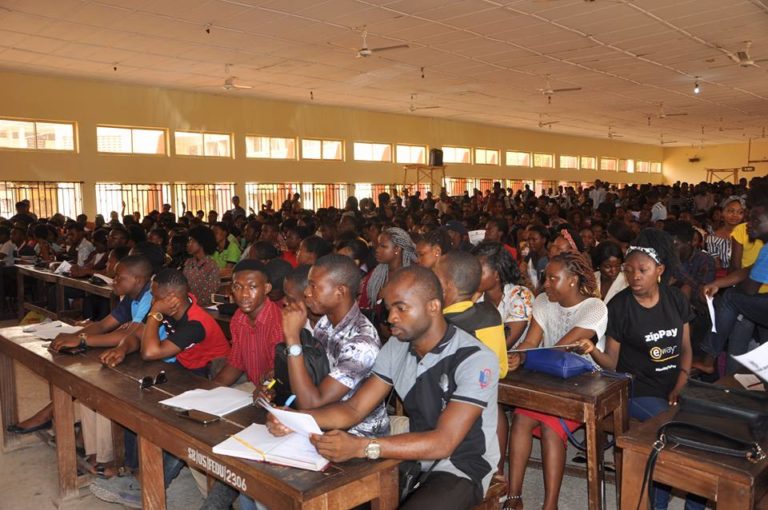
The ICIR reported that the mass failure sparked nationwide protests after it was revealed that 78.5 per cent of candidates scored below 200, a common benchmark for gaining admission into competitive programmes at Nigerian federal universities.
According to JAMB, of the 1,955,069 registered candidates, 1,534,654 scored below 200, while the results of 39,834 candidates were withheld for various reasons.
THE glitch in the 2025 Unified Tertiary Matriculation Examination (UTME), which affected over 379,000 candidates, has raised concerns among Nigerians.
While the Joint Admissions and Matriculation Board (JAMB) acknowledged the challenge and has rescheduled the exam for nearly 400,000 affected candidates, leading Nigerian educators, social media influencers, politicians and other Nigerians said the glitch highlighted deeper systemic rots threatening the nation’s education.
Labour Party (LP) presidential candidate in the 2023 election, Peter Obi, expressed sadness over the crisis.
He described the challenge as a disturbing sign of systemic institutional fragility.
In a statement titled “Let’s Not Make Glitches Become a National Crisis,” Obi acknowledged JAMB’s prompt response to the glitch and public apology tendered by its Registrar, Ishaq Oloyede, a professor.
The former Anambra State governor warned that the recurring nature of such failures in critical sectors posed a serious threat to national stability.
“The emotional and psychological toll on students and their parents, some of whom have reportedly suffered trauma, and in heartbreaking cases, even death, is a reminder of what is truly at stake,” Obi said.
He stressed that credibility in public institutions, particularly those involved in education and youth development, was essential to national progress.
Similarly, Nigerian activist and social media influencer, Very Dark Man (VDM), reacted to the glitch in a video,VDM expressed concerns over the incident.
He said JAMB’s failure to properly conduct UTME had taken emotional and psychological toll on candidates and their families.
He criticised JAMB for what he described as its lack of accountability and transparency in managing its affairs.
Meanwhile, the Vice Chancellor of the University of Illorin, Wahab Egbewole, in a statement commended JAMB for being honest and admitting its failure.
“This approach demonstrated courage, honesty of purpose, integrity, strength of character and on a whole a call to the younger generation to emulate these positive values,” he said.
The ICIR reports that the JAMB registrar was a former vice chancellor of the University of Ilorin.
SUBMISSIONS are now open for the 2025 edition of the African Science Journalism Awards, which celebrate excellence in reporting on science, health, and environmental issues across the continent.
Organised by the Science for Africa Foundation, the awards aim to recognise journalists and editors who produce impactful stories that help bridge the gap between science and the public. The competition is open to entries in print, broadcast, online, and multimedia formats.
Eligible works must have been published or aired between January 1, 2024, and June 30, 2025. Entries are accepted in English, French, or Portuguese, and must focus on science, research, innovation, or health topics relevant to African audiences.
Award categories include Best Science News Story, Best Feature, Best Audio/Visual Report, Emerging Science Journalist Award, and a dedicated category for editors who have demonstrated exceptional editorial support for science journalism.
Winners will receive cash prizes, regional recognition, and access to mentorship and networking opportunities.
“The awards are not just about recognising talent but also about encouraging more robust, evidence-based reporting that can shape Africa’s future,” the organisers said.
The deadline for submissions is July 15, 2025. Full details and entry forms are available on the Science for Africa Foundation’s official website here.
NIGERIAN footballer Taiwo Awoniyi has regained consciousness after an induced coma he underwent on Wednesday, May 14, following a successful operation to treat a severe abdominal injury.
The Nottingham Forest striker, 27, was hospitalised on Monday, May 12, after colliding with a goalpost while attempting to connect with a cross from teammate Anthony Elanga during the closing moments of Sunday’s 2-2 Premier League draw against Leicester City.
The collision, which occurred as Elanga was flagged offside, left Awoniyi with a ruptured intestine, according to Daily Mail.
He was immediately taken to the hospital, where he underwent the first stage of surgery on Monday.
After spending Tuesday in an induced coma to stabilise his condition, Awoniyi had the second part of the operation on Wednesday, which involved closing the wound.
Medical staff woke him from the coma in the early evening, and the Nigerian star is currently with his family members.
The ICIR reported that a statement on Tuesday, by Nottingham Forest, confirmed that Awoniyi had undergone urgent surgery after the severity of the injury was established on Monday, May 12.
“The Club can confirm Taiwo Awoniyi has undergone urgent surgery following an abdominal injury sustained during Sunday’s match against Leicester City.
“Everyone at Nottingham Forest sends their best wishes to Taiwo. The club will provide further updates when appropriate,” it wrote.
The club, in a separate statement on Tuesday, further stressed that Awoniyi was recovering well from the surgery.
The ICIR reports that Nottingham Forest’s owner, Evangelos Marinakis, was seen on the pitch in what appeared to have been confronting manager Nuno Espírito Santo after the 2-2 draw.
The incident stirred controversy among many football lovers and pundits, including Sky Sports’ Gary Neville, who described the situation as ‘scandalous.’
However, Nottingham Forest, in a statement confirming Awoniyi’s recovery, said the owner went to the pitch regarding how the player’s injury was managed.
Aina blames Awoniyi’s incident on late offside call
Reacting to the incident in an interview with Mail, Nottingham Forest defender Ola Aina blamed Awoniyi’s injury on a late offside call, stating that it’s ‘horrible’ seeing him go through such an incident.
“It’s horrible seeing someone you are close with go through something like this, but I pray to God everything goes to plan and goes well and that we will be hearing from him soon. I have sent him messages. We all have,” Aina, who also plays alongside Awoniyi, was quoted to have said.
IN the two years since President Bola Tinubu took office, Nigerian students have faced mounting challenges as the cost of education and upkeep rise amid continued economic hardship.
The surge in tuition fees across both federal and state tertiary institutions over the past two years has triggered widespread protests, pushing numerous students and their families into precarious financial situations.
The ICIR reports that since 2023, universities, polytechnics, and colleges of education have announced significant increases in school and hostel fees. Findings indicate that many students who paid between N20,000 and N40,000 are now paying N100,000 and more in their schools.
The economic landscape shifted dramatically following President Tinubu’s inauguration on May 29, with the removal of fuel subsidies and the floating of the naira. These policies led to a sharp increase in the cost of transportation, food, and other essential commodities, further straining the budgets of students and their families.
Despite the hardships occasioned by the government’s reforms, many universities have hiked school fees, with some students paying over N200,000, including the University of Jos (UNIJOS) and University of Abuja (UNIAbuja), where a student, Cyprian Igwe, was rusticated in May for urging students to meet and discuss the hike.
For many students and parents, affording school fees has become increasingly difficult, with students from low-income backgrounds being especially hard-hit. Some stated that they resorted to part-time jobs, while others seek crowdfunding from relatives.
The ICIR reported that to bridge this hardship, the federal government introduced the Nigerian Education Loan Fund (NELFund), which thousands of students have reportedly benefitted from. However, some are still skeptical of the loan and noted that they would not want to burden themselves with paying back years later.
Mixed feelings trail students loan
While speaking with The ICIR, students of tertiary institutions expressed mixed reactions over the ongoing economic hardships and the impact of student loans in their education.
Some students, like Faruq Abdulganiyu Amo, a 500-level Agriculture student at Usmanu Danfodiyo University, consider the NELFUND as a lifeline.
“The recent hike in school fees has not really affected me, as I’m not the one paying myself. I didn’t make any adjustments in that regard. I applied for the student loan only for the school fee and not upkeep. It really helped.
According to him, many students have benefited from this loan initiative, which has positively impacted a lot of tertiary institutions. It has made a notable difference in my situation and that of many others
“Though I didn’t apply for upkeep, I see how it improves the quality of life for many students,” he said.
Also, Abdullateef Faruq, a 300-level English Education student, described how the fee increase has significantly impacted him, leading to late payments and forcing his family to seek financial assistance from relatives.
“The increase in school fees has impacted me significantly, although it hasn’t pushed me to the point of considering dropping out of school. The main adjustment I’ve had to make is that I often find myself paying late due to delays in gathering the necessary funds caused by the fee hike. Previously, I relied solely on my parents for support, but now we’ve started reaching out to some relatives for additional help,” he explained.
However, he acknowledged that the NELFund student loan he accessed last year played a pivotal role in covering his living expenses and school fees.
The Student’s Loan is an Act of the Parliament that makes it possible for Nigerian students to access zero interest loans to enable them pay for institutional charges and upkeep to any higher institution of their choice within Nigeria.
“This loan has been a valuable resource in many ways, especially for covering my living expenses and paying my school fees. “Although I faced some challenges, particularly with delays in getting my money refunded from the school, once the refund came through, it helped me manage some of my bills,” Faruq said.
Over half a million students registered
Despite the mixed feelings, NELFund’s dashboard data as of April 25, 2025, indicates a strong initial uptake of the programme. Out of 563,225 registered students, 500,341 have successfully applied for loans, representing an 88 per cent application rate.
The dashboard further shows that the total projected loan demand, encompassing funds for both institutional fees and student upkeep, has reached N165,903,458,198.
This projection includes N53,136,818,198 designated for direct payment to educational institutions and N12,766,880,000 allocated for upkeep allowances to support beneficiaries.
However, NELFund said it had only disbursed N54.2 billion. This includes N30,179,797,649.20 paid out for institutional fees and N24,036,160,000 provided as upkeep allowances to eligible students.
The disbursement process has also faced delays, with some students saying it took longer before they got their fund while some said they are still awaiting funds despite successful applications.
Recall a Guardian newspaper reported that at least 51 tertiary institutions were implicated in illegal deductions from institutional fees.
Concerns around repayment
The ICIR also gathered that some students are hesitant to apply for the loan due to uncertainties about their future financial stability and the repayment terms.
The NELFund repayment model involves a 10 per cent deduction from the beneficiary’s salary by their employer, or a 10 per cent monthly profit remittance for self-employed individuals, commencing two years after the completion of NYSC. Beneficiaries without employment after this period are required to notify NELFund via a sworn court affidavit every three months.
A student of Usmanu Danfodiyo University, Mahmud Abdurasheed, while speaking on the economic hardships noted that until 2023 during his early stage at the university, he lived on less than N10,000 monthly allowance and paid around N33,000 for school fee.
He stressed that with the school fee being significantly increased, he had to support the little he got from home with a menial job at school. According to him, this has helped him foot some of the bills but he agreed that it has a detrimental effect on his studies as he barely had enough time to read.
When asked why he has not applied for the student loan, he noted that paying it back might be hard for him immediately after NYSC.
“I did not apply because I am not interested. I also did not believe in the system and even though I apply, how sure am I sure I will be able to repay in due time. So it’s better I keep up with the work and try to live within my means,” he said.
According NELFund, the loan is due for repayment 2 years after the completion of NYSC and in case the beneficiary does not have job two years after NYSC, the beneficiary should notify NELFund by a sworn affidavit every 3 (three) months after two years post NYSC if still unable to gain employment.
NELFund dashboard.
Private school students hope for support
With its impact being significantly recorded among students of universities, students in private institutions feel marginalised as they are yet to be considered for accessing these loans, despite facing the same economic challenges as those in public institutions.
NELFund explained in October 2024 that the exclusion of private institutions was a strategic decision to maximise the reach of limited public funds by targeting the most vulnerable students in public schools with relatively lower tuition fees.
“We’re working with public funds, and the resources are limited. Most of the students who need this support are in public schools, where fees are affordable. It’s about prioritising and helping more people with the available funds,” the Managing Director of NELFund, Akintunde Sawyer, explained.
However, some private institution students objected to the claims, arguing that they are also facing the brunt of Tinubu’s economic policies.
Itoro Udo, a 300-level Mass Communication student at Bingham University, explained that while she can still afford her fees, the soaring cost of food is severely impacting her and her family.
“Things like food have really increased making it hard to eat two meals a day. The price of provisions has also gone up and in a school like mine where you aren’t allowed to cook it makes feeding difficult.
“I think that it would be very helpful to private school students and it would help students with upkeep and little things like dues and transport,” she said.
Nyiri Gyang, a 400-level Political Science student at Bingham University, echoed these sentiments, stating that the school fee hike has made it difficult to cover her dues.
She noted that the current inflation has also had a great deal of impact on her academics, adding that she is unable to ‘feed properly and meet up my deadlines for assignments because I can’t print sometimes.”
She stressed that she often resorted to borrowing from friends to complete printings for her assignments and paying back later when she has some money.
“The NELFund will be a good initiative to aid students like me improve academically,” she said.
The Taraba Tiv People’s Association (TATIPA), Abuja chapter, has raised the alarm over what it described as a systematic campaign of displacement, identity erasure, and institutional marginalisation against Tiv communities in Southern Taraba.
Speaking at a press conference in Abuja on Wednesday, May 14, the group leaders decried the “continued eviction and violent attacks targeting Tiv settlements in Wukari, Ibi, Donga, and Takum Local Government Areas.”
It called on the Federal Government and the international community to intervene in what it termed a “grave humanitarian crisis.”
A member of TATIPA’s Board of Trustees, Orbee Uchiv, who led the group at the briefing, said Tiv people had been displaced from over 280 villages, affecting nearly 300,000 people in the region.
“The Tiv people are not settlers in Taraba State. Our nativity is well-established by historical records and colonial documentation,” Orbee said, adding, “Yet, we are being pushed out of our ancestral lands, and our towns are being renamed as part of a deliberate attempt to erase our identity.”
Names of Tiv communities in Taraba State allegedly renamed include Dan-Anacha to Kwararafa, Peva to Chanchanji, and Ayu to Tsokundi.
The group also condemned the alleged failure of successive administrations in the state to implement the recommendations of various peace committees, despite the protracted nature of the Jukun-Tiv conflict, which re-escalated in April 2019.
According to the group, the Tiv people in the state have been denied traditional recognition and political inclusion for decades. They pointed out that while other ethnic traditional rulers in the state have been elevated to first class status, Tiv traditional institutions have remained stagnant for over 100 years.
“There are over 18 Tiv village heads that were officially recognised as far back as 1923. Yet, not a single one has been upgraded to a district or chiefdom level. Meanwhile, we remain excluded from the Taraba State Council of Chiefs and Emirs,” Orbee stated.
TATIPA also raised concerns over the alleged disenfranchisement of its people in the state, claiming that over 58 polling units in Tiv communities were no longer recognised, forcing many residents to travel long distances to vote during elections.
In addition, the association condemned the recent attacks on Tiv villages, including the May 6 invasion of Deke village and the May 10 ambush at Tse-Bidi near Tor-Musa, which it said resulted in multiple casualties and injuries.
“These are not isolated incidents. They are part of a coordinated pattern of violence aimed at displacing our people and silencing opposition to government policies, such as the proposed military barracks in Ikyaior,” Achibo said.
The group called for the arrest and prosecution of people allegedly involved in the recent violence.
The violence has deeply affected education. Several Tiv children have been forced out of school as their families flee for safety, and the destruction of communities has disrupted schooling across the region. “Today, more than 280 Tiv people have been rendered homeless… stripped not only of their homes and farmlands, but also of their dignity and hope for a stable future,” the group lamented.
It called for a transparent and well-coordinated plan to ensure the safe return of displaced Tiv persons to their ancestral homes.
It demanded upgrading Tiv’s traditional institutions to full chiefdom status and fair representation in the Taraba State Council of Chiefs and Emirs.
Among others, the group also urged relevant Federal Government agencies such as the National Emergency Management Agency and the Ministry of Humanitarian Affairs to provide urgent relief and support to its displaced people.
Efforts by The ICIR to get reactions to the allegations from the Taraba State government proved abortive.
The ICIR contacted Emmanuel Bello, the spokesperson to the Taraba State Governor, Agbu Kefas, for comments on the claims Wednesday evening.
He did not respond to a WhatsApp message sent to his line. He also did not pick up the calls to his phone line on Thursday morning or respond to a text message sent to him about the allegations.
THE Joint Admissions and Matriculation Board (JAMB) has announced the rescheduling of 2025 Unified Tertiary Matriculation Examination (UTME) for candidates affected by technical glitches in the recent UTME exam.
The rescheduled examination will take place on Friday May 16, Saturday May 17, and Sunday May 18, at designated centres across Lagos and the South East.
JAMB Registrar, Ishaq Oloyede, stated during a press briefing in Abuja, on Wednesday, May 14, that the decision was reached after identifying significant errors in the initial exam process.
According to Oloyede, the affected centres include 65 in Lagos and92 in the Owerri zone, comprising five states of the South East.
Oloyede assured that candidates whose timetables clash with other commitments would be accommodated accordingly.
Background
The decision to reschedule the exam followed widespread protests from candidates and parents after the release of the 2025 UTME results.
According to JAMB, 78.5 per cent of candidates scored below 200, a commonly used benchmark for admission into competitive federal university programmes in Nigeria.
Out of the 1,955,069 registered candidates, 1,534,654 scored below 200, while 39,834 results were withheld for reasons ranging from examination malpractice to technical faults.
During the press briefing, Oloyede apologised for the trauma caused, admitting to “one or two errors” during the administration of the exams.
“I apologise for the trauma caused the candidates,” Oloyede was quoted to have said.
“What should have been a moment of joy has changed due to one or two errors,” he added.
He admitted that the mass failure resulted from a systemic error that affected the grading process.
“So, I appeal to the candidates and those affected by the error of our system to accept this explanation as the truth of the matter without embellishment, Please. I apologise and take full responsibility, not just in words,” he was quoted to have said.
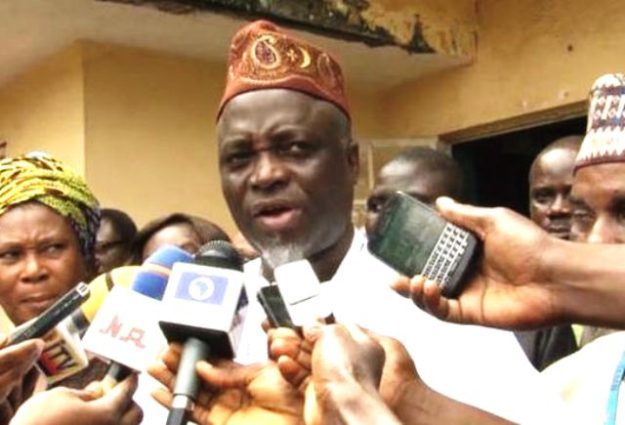
THE Registrar of the Joint Admissions and Matriculation Board (JAMB), Ishaq Oloyede, a professor, on Wednesday, May 14, broke down in tears as he apologised to parents and candidates for errors that he said led to the failure of nearly 400,000 candidates in the 2025 Unified Tertiary Matriculation Examination (UTME).
During a press conference in Abuja, Oloyede expressed regret for the trauma and frustration the errors caused affected candidates and their families.
He acknowledged that what should have been a moment of joy for many had turned into disappointments due to ‘one or two errors’ made during the examination process.
“I apologise for the trauma caused the candidates,” Oloyede was quoted to have said.
“What should have been a moment of joy has changed due to one or two errors,” Oloyede added.
He admitted that the mass failure resulted from a systemic error that affected the grading process.
He also disclosed that the Board had identified 65 centres in Lagos and 92 centres in the Owerri zone (comprising the five states of the South East) where the glitches occurred, affecting 379,997 candidates in total.
“206,610 in 65 centres were affected in Lagos and 92 centres in Owerri zone, comprising 173,387 candidates in the five states of the South East were affected,” he said.
The ICIR reported that the mass failure sparked nationwide protests after it was revealed that 78.5 per cent of candidates scored below 200, a common benchmark for gaining admission into competitive programmes at Nigerian federal universities.
According to JAMB, of the 1,955,069 registered candidates, 1,534,654 scored below 200, while the results of 39,834 candidates were withheld for various reasons.
Recall that, on Monday, May 12, JAMB said it had launched an investigation into numerous complaints regarding the recently released 2025 UTME results.