Home Blog Page 2756

Jibrin: By signing budget, Osinbajo played into national assembly’s hands

0
Abdulmumin Jibrin, suspended member of the house of representatives, says Yemi Osinbajo, Acting President, played into the hands of the national assembly by signing the 2017 budget.
In a statement he released on Monday, tagged ‘2017 Budget Series: In defence of Acting President Prof. Yemi Osinbajo’, Jibrin praised the current head of the executive arm of government for his courage in signing the budget despite the decision of the legislature to introduce new projects into the document submitted to them.

He said it was a risk that appeared like striking a deal with an untrustworthy partner, adding that time would tell if ” this seeming pact is calculated or not”.

The FULL STATEMENT
The Ag President made what, in my opinion, was a harmless remark when he observed that the National Assembly has no powers to introduce new projects in the budget. In the same statement, however, he admitted the powers of NASS to allocate resources as that is its core powers of appropriation. I consider his statement very objective. His tone wasn’t confrontational, neither was his body language. Ag President Osinbajo had a day earlier signed the 2017 budget noting that there were grey areas, especially funds lifted from key projects, to introduce new projects by NASS.

He further stated that he agreed to sign the budget after the assurance of commitment from NASS to restore the lifted funds. That demonstration of faith in NASS was unprecedented, and the most generous concession in budget negotiation by a President since 1999. No any President has ever agreed to sign the budget into law on the basis of extracting commitment from NASS to attend to outstanding issues after the budget is signed into law, the reasons being:

I. Once the budget is signed into law, the President MUST implement it, whether NASS makes the correction or not.

II. There are only two ways to achieve such corrections: supplementary budget or Virement, both of which are as good as going through the entire budget process all over again, and will require the Executive to go the full length of lobbying and massaging the ego of NASS, a process they detest so much.

III. The unpredictable nature of the relationship between the Legislature and the Executive, as the state of such relationship at a particular time determines how friendly and expeditiously NASS attends to requests from the Executive. This is not peculiar to Nigeria. A national daily reported today that Osinbajo’s comment threaten Executive, NASS Virement deal but how could such a harmless statement create an uproar of such magnitude. Already an unhealthy prevailing circumstances is being created that will make the process tough and place few people in NASS to negotiate some selfish interest only beneficial to themselves. That has been the name of the game. The NASS should know that how it handles this historic concession granted it by the Executive under the guide of Ag President Osinbajo will determine the approach of the Executive Arm in future budget negotiation.

So, the only other way to make corrections in the budget, which is not applicable in this situation, is through corrigendum – a power vested in NASS to make minor corrections to the budget. There are instances where corrigendum has been used to commit budget fraud. I will discuss that and give you such instances in subsequent episodes of this series.

Recall that in 2016, President Buhari returned the budget to NASS on two occasions, to ensure that all the grey areas are resolved before he appended his signature. All the grey areas were resolved, and corrections too effected. In fact, this was done with an unusual tact and dutifully, out of understandable reverence, and yes FEAR, of President Buhari. 

In this case of Ag President Osinbajo, perhaps beyond the respect he enjoins, he must strive to also be feared, through resistance to compromising settlements in his relationship with NASS. The reason isn’t far-fetched: all attempts to flatter and hoodwink President Buhari into signing the 2016 budget, by assuring to make corrections later, met an impenetrable brick wall. He saw through the smokescreen, and thus even refused to be blackmailed by threats of possible backlash from NASS if the budget is not signed before corrections are made and also the need to save time.

On one occasion, the President said, “If we have waited for six months, we can as well wait for weeks for NASS to correct the grey areas before I sign.” That has been the pattern with successive presidents. No President was ready to take the risk with NASS but Osinbajo did, as it appeared like striking a deal with an untrustworthy partner. Whether this seeming pact is calculated or not, is left for time and the scrutiny of vigilant and critical Nigerians to determine. What is obvious, however, is: the Ag President has played into the hands of NASS.

What the Ag President has given to NASS is a victory it has never had in the budget process since 1999, understandably to strengthen the relationship between the two frequently hostile arms of government. And so, he deserves a reciprocal gesture and unmistakable friendship from the lawmakers, not attacks and threats. This is my position.

In the next episodes of this series, which we intend to run for three months, we will do a recap of the 2016 budget fraud with new revelations of facts and key actors involved. We will talk about fraud in 2017 budget, how members of the Executive arm collaborate with NASS in this venture, new strategies to beat vigilant eyes, concealment, abnormality, reckless spending, budget revenue frame work, and 2 dollar extra benchmark.

Also to be addressed are N140 billion increment in budget size amidst dwindling revenues (the largest in recent years), poor economics, the “reformed” budget process, public hearing of budget, page by page consideration of details, corrigendum, the lies, facts and half-truths of budgeting, conspiracy of a few members of NASS in the budget process against majority of the 359 Members and 108 Senators and, very importantly, how to stop these infractions. We look forward to beneficial engagements, for a more transparent Nigeria.

Keyamo asks FG for details of Port Harcourt Refinery concession

0

A coalition of non-governmental organisations wants the federal government to release details of the concession plans for the Port-Harcourt refinery as announced by Ibe Kachikwu, Minister of State for Petroleum.

In a letter by Festus Keyamo, a human rights lawyer and counsel to the NGOs, the group urged the Infrastructure Concession Regulatory Commission (ICRC) to show proof that the planned refinery concession is in accordance with laid-down regulations.

On Wednesday, May 31, the Senate passed a resolution that plans to concession the Port-Harcourt refinery to oil giants AGIP and Oando should be put on hold until all allegations of breach of process have been addressed.

The lawmakers also summoned Kachikwu to appear before an ad-hoc committee to explain the process.

However, on June 8, the petroleum minister of state said that there were no irregularities in the concession plans. He also denied that the government was selling off the refinery as was alleged in some quarters.

Kachikwu said government was only partnering with third-party financiers to engage the original builders of the three refineries in Nigeria to fully restore the moribund facilities.

But Keyamo, writing on behalf of his clients pursuant to the Freedom of Information (FOI) Act, pointed out that the Infrastructure Concession Regulatory Commission (Establishment) Act and the National Policy on Public Private Partnership, the Infrastructure Concession Regulatory Commission is the agency responsible for all concession agreements in the country.

“The purpose of this application is to respectfully enquire whether the Infrastructure Concession Regulatory Commission has taken custody of the said concession agreement and whether the concession was carried out in line with the Infrastructure Concession Regulatory Commission (Establishment) Act as well as the National Policy on Public Private Partnership,” the letter read in part.

“We further urge you to kindly make available to us certified copies of all the documents regarding the concession of the Port Harcourt Refinery to Nigerian Agip Oil Company/ENI.”

The FOI Act, signed into law by former President Goodluck Jonathan in 2011, gives everyone the right to request for any information that is in the custody of any public official, agency or institution.

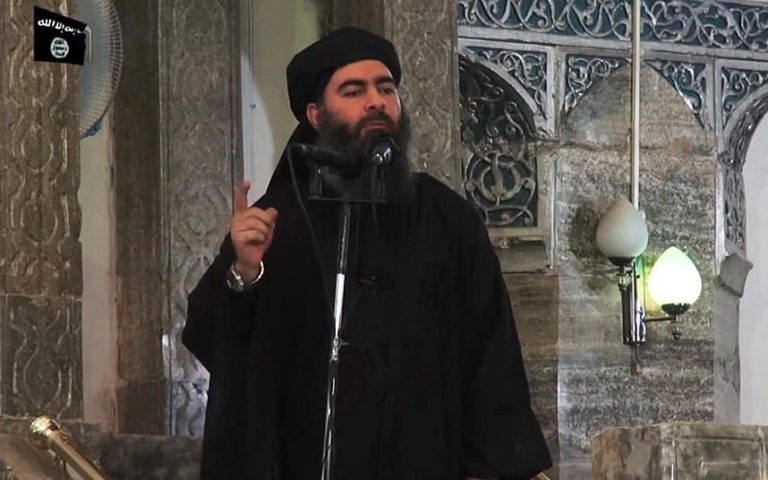
‘A normal family man’… Who is al-Baghdadi, the ISIS leader ‘killed’ by Russia?

“May have been killed” and it was already Friday’s lead story in the international media! Says something about how famous — or notorious — al-Baghdadi is. So what do you know about him?

WE’RE NOT EVEN SURE OF HIS REAL NAME

This is not the first time al-Baghdadi has been reported killed? And just like we’re not entirely sure of his death this time, we’ve never been entirely sure of his name.

The name ‘Abu Bakr al-Baghdadi’ has become so synonymous with terror that so many people think it’s real. But that name is in fact just a pseudonym. His other nom de plumes include Abu Du’a, Al-Shabah (the phantom or ghost), Abu Bakr al-Baghdadi al-Husseini al-Hashimi al-Qurashi, Amir al-Mu’minin, Caliph Ibrahim, Sheikh Baghdadi, Abu Duaa and Dr Ibrahim Awwad Ibrahim Ali al-Badri al-Samarrai. His birth name is widely thought to be Ibrahim Awad Ibrahim al-Badri — although a Washington Times reporter once said his real name is Ibrahim al-Samarrai, while an ex-wife of his once said she met him at when he was Hisham Mohammad.

ONCE SO QUIET THAT HE WAS NEVER NOTICED

Abu Bakr al-Baghdadi 2Al-Baghdadi grew up being shy, unimpressive and nonviolent. Ahmed al-Dabash, the leader of the Islamic Army of Iraq and a contemporary of al-Baghdadi who fought against the allied invasion in 2003, once described him as someone who was hardly noticed in the university.

Al-Baghdadi has a doctorate in Quranic studies from Saddam University in Baghdad, and obtained a BA, MA, and PhD in Islamic Studies from the Islamic University of Baghdad. He also earned a doctorate in Education from the same university.

“I was with Baghdadi at the Islamic University. We studied the same course, but he wasn’t a friend. He was quiet, and retiring. He spent time alone,” al-Dabash told Daily Telegraph.

“I used to know all the leaders [of the insurgency] personally. Zarqawi [former leader of al-Qaeda] was closer than a brother to me … But I didn’t know Baghdadi. He was insignificant. He used to lead prayer in a mosque near my area. No one really noticed him.”

Perhaps it is true, then, that silent people are usually the deadliest.

SO MYTHICAL THAT HE IS UNKNOWN EVEN IN ISIS

al-baghdadiThere are lots of heavyweights in ISIS who cannot recognise al-Baghdadi should they see him — that is the extent to which he is mythical. Sometime in 2015, he was nicknamed in ISIS as “the invisible sheikh”!

Patrick Skinner of Soufan Group, a security consulting firm, once said of al-Baghdadi: “They [the US and Iraqi Governments] know physically who this guy is, but his backstory is just myth.”

“He’s managed this secret persona extremely well, and it’s enhanced his group’s prestige”, said Patrick Johnston of the RAND Corporation. “Young people are really attracted to that.”

ENTHRONED BY DEATH

Al-Baghdadi’s infamous rise as a high-calibre terrorist began in May 2010 when he inherited the reins of the Islamic State of Iraq (ISI), also known as al-Qaeda in Iraq (AQI), from its erstwhile leader Abu Omar al-Baghdadi, who had been killed.  ISI or AQI was the Iraqi division of al-Qaeda

As leader of ISI, al-Baghdadi masterminded large-scale attacks such the 28 August 2011 suicide bombing at the Umm al-Qura Mosque in Baghdad, which killed prominent Sunni lawmaker Khalid al-Fahdawi. Between March and April 2011 alone, he masterminded 23 attacks south of Baghdad.

NORMAL FAMILY MAN, AN IDOL TO HIS ‘CHILDREN’

al-Baghdadi ChildrenAccording to Saja al-Dulaimi, who married al-Baghdadi after the death of her first husband, he was a normal family man and he took such great care of her children that he was their idol.

“He loved the children. He was their idol. He was an excellent person in that respect, but my relationship with him was shallow,” al-Dunami told Swedish newspaper Expressen in March, three months after the Lebanese government exchanged her and her daughter for Lebanese soldiers being held by al-Qaeda affiliate al-Nusra Front in a prisoner swap deal.

She was arrested in Lebanon in December 2014 on charges of belonging to a terrorist group, holding contacts with terrorist organisations, and planning to carry out terrorist acts.

“I was not in love with him. I didn’t love him,” she added. “He was an enigmatic person. You couldn’t have a discussion or hold a normal conversation with him. In the evening, when he came home, we would usually eat dinner together. He just asked about things and told me to fetch things. He gave orders, nothing more.”

THE WORLD’S MOST DANGEROUS TERRORIST…

Saja al-Baghdadi
Saja al-Baghdadi

Just as he managed to be evasive in ISIS, he was at home. When al-Dunami was arrested in Lebanon on account of her links to al-Baghdadi, she was shell-shocked.

“I didn’t notice that he was actively involved in the resistance movement at all. He was a normal family man. How he could become Emir of the most dangerous terrorist organisation in the world is a mystery,” she said.

“It was when I got to Lebanon that I received the shocking news. They showed me pictures of my ex-husband and asked me if I recognised him. It turns out I was married to Abu Bakr al-Baghdadi. It was a shock to find out — seven years later — that I’d been married to the most dangerous man in the world. I smashed a window in anger.”

…AND HE CAN MAKE YOU SUPER RICH

In October 2011, the US officially designated Baghdadi a “terrorist” and offered a $10m (£5.8m or €7.3m) reward for information leading to his capture or death. At current black market rate, that’s N365million. You have some background information already; with some more digging, the money could be yours!

Boko Haram ‘kills 17’ near Maiduguri

0

Seventeen persons have been confirmed killed in multiple suicide attacks that occurred in Kofa, a village close to Maiduguri, Borno State, on Sunday night.

Victor Isuku, spokesman of the police in Borno made this known on Monday, adding that 11 others were injured in the attack.

The attacks were carried out by five female bombers.

“The first suicide bomber detonated the IED near a mosque, killing seven persons,” Isuku said.

“The second detonated in a house, killing five persons, while two other suicide bombers detonated within the same vicinity, killing themselves.

“A total of 17 persons, including the five suicide bombers, died, while 11 persons sustained injuries and were rushed to the University of Maiduguri Teaching Hospital (UMTH).”


However, a statement by Abdulkadir Ibrahim, information officer of the North East office of the National Emergency Management Agency (NEMA), provided a slightly different narrative in his own statement issued on Monday morning.

The statement read: “At about 8.45 pm, two female suicide bombers were intercepted when they tried to gain access into Dalori 2 Internally Displaced People (IDP) camp.

“Two other female suicide bombers also detonated their explosives at the adjoining Dalori kofa village at about 8.10 pm where they killed 16 people.

“A total of four suicide bombers were involved in the incidents. The injured victims have been administered with first aid and transported to hospitals within Maiduguri for treatment.”

Suicide bomb attacks have become rampant in Maiduguri in recent times, in spite of the numerous claims by the military that the Boko Haram terrorist group has been largely decimated.

Only on June 8, 15 people were killed and 24 injured after three male suicide bombers detonated improvised explosive devices at Muna area in Maiduguri.

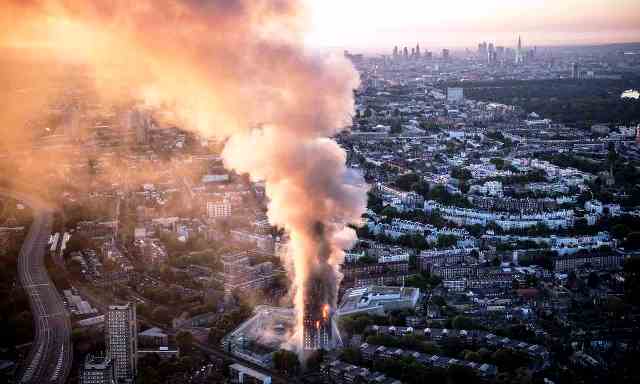
VIDEO: Angry volunteer claims 500 died in Grenfell tower fire


One of the volunteers at the Grenfell tower fire in London has told journalists that the government and police authorities are insincere with the casualty toll of the incident.

According to her, about 500 people died in the fire.

The lady, who said she lived in the neighbourhood, challenged the authorities to produce a comprehensive list of all the people in the building.

She also claimed that the authorities intend to send all the donated food for the victims of the fire incident to Red Cross and Oxfam, urging the people not to allow it.

VIDEO CREDIT: Press TV UK

Watch:

Five attacks in three months — is UK the new home of terror

In less than three months, five deadly terrorist attacks, or at least suspected attacks, have taken place in the United Kingdom — hitherto considered one of the safest countries in Europe.

Most of the incidents have occurred in London, the UK capital being governed, for the first time in history, by a Muslim mayor, Sadiq Khan.

Below are the details of the attacks so far:

WESTMINSTER ATTACK

Armed officers outside Westminster Bridge after the terror attack in which 5 people, including an unarmed policeman was killed

On March 22, 2017, Khalid Masood, a 52-year-old Briton, drove a car into pedestrians on the pavement along the south side of Westminster Bridge, close to the British Parliament.

After the car crashed into a perimeter fence, the attacker ran into the New Palace Yard where he fatally stabbed an unarmed police officer.

He was then shot by an armed police officer and died at the scene. In all, six persons, including Masood, were killed.

THE ’22’ ATTACK IN MANCHESTER

Victims of the Manchester attack. Photo credit: The Sun UK

Exactly two months after the Westminster attack, a suicide bomber detonated a homemade bomb at the exit of Manchester Arena in Manchester, England, following a concert by American singer Ariana Grande.

This particular attack had the figure 22 written all over it. The day was May 22; the attacker, Salman Ramadan Abedi, was a 22-year-old Brit of Libyan descent; and the number of casualties was 22, excluding the bomber.

One hundred and nineteen others were injured in the attack, 23 critically.

LONDON BRIDGE ATTACK

Ploice shot down the London Bridge attackers within 8 minutes of receiving distress call
Police shot down the London Bridge attackers within 8 minutes of receiving distress call. Photo credit: BBC

On Saturday, June 10, a white van ran through pedestrians on London Bridge, in the centre of London, at about 10 pm.

When the vehicle stopped, three men – later identified as Khuram Butt, Rachid Redouane and Youssef Zaghba – got out and embarked on a stabbing spree, attacking people in the nearby Borough Market.

They were however shot dead by the Met Police eight minutes after an emergency call was put through.

Eight people, including the attackers, were killed and at least 48 people injured.

GRENFELL TOWER FIRE???

Photo credit: The guardian
The Grenfell tower fire. Photo credit: The Guardian UK

The Grenfell Tower fire occurred on June 14 2017 at a 24-storeyed building of public housing flats in North Kensington, West London, England.

Official death toll in the fire outbreak was initially put at 30 but the Metropolitan Police has said that 79 people are missing and presumed dead, with five of the dead so far formally identified. The toll is expected to rise in the coming days.

It was not clear yet what caused the fire, though some reports have attributed it to a faulty refrigerator belonging to one of the residents of the tower.

However, authorities said a detailed investigation was underway, adding that nothing – including terrorism – has been ruled out. Could this be a case of terrorism as well? Question!

FINSBURY MOSQUE ATTACK

Another terror attack in London as man drives bus into pedestrians

In the wee hours of Monday, June 19, 2017, a 48-year-old man drove a van into pedestrians near the Finsbury Park Mosque in London.

One man was killed in the incident and eight people were injured. The attacker was arrested by the police but his identity is yet to be made public.

Prime Minister Theresa May said the police were treating the case as “suspected terror attack”.

One killed, eight injured in fresh London terror attack


A man has died and eight people have been injured after a van ploughed into pedestrians near a north London mosque.

According to BBC, the van mounted the pavement and struck a group of people just after midnight near Finsbury Park Mosque in Seven Sisters Road. The Muslim Council of Britain said a van intentionally ran over worshippers.

Prime Minister Theresa May said police were treating it “as a potential terrorist attack”.

She described the attack as a “terrible incident”, adding: “All my thoughts are with those who have been injured, their loved ones and the emergency services on the scene.”

The PM will chair a meeting of the emergency Cobra committee later.

Eyewitness Abdul Rahman told the media he confronted the and attackers and helped subdue him.

“When the guy came out from his van he wanted to escape, run away and he was saying ‘I want to kill Muslims. ‘I want to kill Muslims.’

“I hit him on his stomach… and then me and the other guys… we held him to the ground until he couldn’t move. We stopped him until the police came.”

Counter-terrorism officers are at the scene, the Metropolitan Police said.

Police said there were no reports of anyone suffering from knife injuries after speculation at the scene the driver was armed with a knife.

Sadiq Khan, the Mayor of London has also asked people to “remain calm and vigilant”.

“We don’t yet know the full details, but this was clearly a deliberate attack on innocent Londoners, many of whom were finishing prayers during the holy month of Ramadan,” he said.

“While this appears to be an attack on a particular community, like the terrible attacks in Manchester, Westminster and London Bridge it is also an assault on all our shared values of tolerance, freedom and respect,” the Mayor added.

There have been about three lone-wolf terror attacks in Britain recently.

Six people, including the attacker, were killed and about 50 others injured when a car mowed through pedestrians near the British parliament building in Westminster, London in March.

A few weeks later 22 concert goers were killed as a suicide bomber detonated explosives in a packed hall in Manchester.

And days later, a van ploughed through pedestrians along the London bridge and the attackers came down and attacked members of the public with knives. Eight people were killed in the incident, including the three attackers.

One week after Evans’ arrest, Kaduna nabs six highway kidnappers

0


Barely one week after the Nigeria Police Force arrested Chukwudumeje Onwuamadike, aka Evans, one of the country’s most daring kidnappers, the Kaduna State internal security outfit recorded another breakthrough with the arrest of six notorious kidnappers that operated along the Abuja-Kaduna expressway.

Nasir El-Rufai, Governor of Kaduna State, made the announcement on Sunday evening via his Twitter handle.

He said the kidnappers were arrested on Thursday and Friday by members of the state security outfit in collaboration with the Inspector General of Police Intelligence Response Teams (IRT) and with the support from the Technical Intelligence Unit (TIU).

“The arrest of the kidnappers is sequel to the massive deployment of more police assets and patrol vehicles in the area in the last one week,” el-Rufai said.

“These efforts led to the arrest of the suspects, including the leader of the gang, Adamu Mamman, a 35-year-old of Amana village in Igabi LGA; Ali Rabo, also known as Blakky, of Liman Ibada village in Chikun LGA and Awwalu Ahmed, aka Mota, of Rijana village in Kachia LGA who is the main informant of the gang.”

Others arrested are Shehu Idris Shagari and Umar Antijo, both 27 years old, as well as Babangida Abdullahi “who is the receiver of stolen cattle, phones and laptops”.

The suspects were picked up at various locations in Kaduna State, and they have all confessed to having taken part in several kidnappings along the Kaduna-Abuja highway.

El-Rufai added that the suspects, and the weapons recovered from them, have been handed over to the Criminal Investigating Department (CID) of the Kaduna State police command for further investigation.

Osinbajo: The church must ostracise those who steal

0

Yemi Osinbajo, Acting President, wants churches to start ostracising “those who steal”, whether from the public purse or from private establishments

According to Osinbajo, who was speaking on Sunday at the Aso Villa Chapel, if the church does this, then Nigeria will not have the type of problems confronting it.

“Every time that we come to church, we are told about giving. But we need to talk more about honesty,” Punch quoted him as saying during a special service to commemorate this year’s Fathers’ Day.

“We need to talk far more about honesty. In the same way we talk about giving, we need to talk more about honesty.

“If the church says you are not allowed to steal and we will ostracise you in our midst if you did… If what a man has does not measure up to what he earns, if we found that a man has more money than he should have, if a man is earning a salary of a civil servant or a public servant and he has houses everywhere, we have to hold him to account.

“He must be held to account in the church. He must be told first in the church that ‘we will not allow you here’.

“If the church says ‘we will not accept you here’ or that ‘we will expose you if you are stealing the resources of the country or stealing the resources of a private company or other establishment where you work’, then we would not have the type of problem that we have in this country. If only the church does so. Just the church.”

Opadokun: Obasanjo picked May 29 as Democracy Day to spite Abiola

0


Ayo Opadokun, former General Secretary of National Democratic Coalition (NADECO), says June 12 — rather than May 29 — should be celebrated as Democracy Day.

According to Opadokun, who is also the convener of the Coalition for Democratic Electoral Reforms, Olusegun Obasanjo, former President and number-one beneficiary of late MKO Abiola’s democracy struggles, chose the latter date “perhaps to spite” the acclaimed winner of Nigeria’s freest and fairest election.

Asked by Punch what he thought about call for June 12 to be made Democracy Day, Opadokun said: “Yes, that is my view. I significantly believe in that call.

“The June 12, 1993 presidential election was the first Pan-Nigerian mandate given by Nigerians of all creeds to one single person to rule them for a particular period of time and in that mandate were contained significant points.

“One, Nigeria buried national, devious divide of Christian/Muslim, North/South, majority/minority and the likes. That is one reason that mandate was very significant. That is a date [June 12] to be celebrated.

“Obasanjo decided to choose May 29 [as Democracy Day] perhaps to spite MKO Abiola. Even though he was the greatest beneficiary of Abiola’s martyrdom, for the eight years he was president of Nigeria, he did not make any reference or give any commendation to MKO. That is the kind of man that he is.”

He also had his say on rising agitation for self-determination by some ethnic groups, arguing that there are signs that it’s time for the renegotiation of the concept of Nigeria.

“Nigerians are agitating for resource control; people are talking about restructuring; others are calling for an independent state of Biafra; people are talking about Oodua Republic and so on. When it gets to this kind of situation anywhere in the world, sane people should appreciate that it is time to sit down to renegotiate,” he said.

“I am for restructuring and I am campaigning rigorously for it. I have been a leading advocate for national restructuring. In fact, two critical objectives of NADECO were for the convocation of a national conference so that we can restructure. The second was for the de-annulment of Abiola’s victory. If the current political operators do not see it that way, certain things, certain events, certain forces will compel them to accept the reality. They will be forced to accept the fact that the country cannot take off at all until they restore Nigeria to the federal arrangement upon which we secured the independence of Nigeria.

“Nigeria secured its independence on a federal arrangement. But, having regard to the military organogram where power flows from the top to the bottom, the federal constitution was abrogated. That is the source of our crisis and I am saying, the first thing that we must is to turn to the 1963 constitution. Then, all other things that were agreed upon in the Babangida, Abacha, Obasanjo and Jonathan conferences should be implemented based on the 1963 constitution.

“It is in that conference that they will be able to resolve two critical questions: one, do national ethnic groups want to be part of Nigeria? That question has not been asked. We have not been given the privilege of responding to that question as a people. The colonial master used force of arms to force us into co-existence in what is called Nigeria. And, just five years after they left, the politicians in military uniform took over and since then, they have kept us with the force of arms to co-exist – the co-existence is not voluntary.”


READ ALSO: