Home Blog Page 2768

May 27 Celebrations: Little To Cheer For Nigerian Children


Out of the sum of N7.44 trillion budgeted for 2017, without money for vaccines, only N1.7 billion is earmarked for programmes and activities directly targeting children.

By Chikezie Omeje

As the country joins the rest of the world to mark the International Day for the Protection of Children, better known as Children’s Day, Nigerian children and their parents have little to cheer this year.

The 2017 budget of N7.44 trillion has low provisions to ensure adequate child care and protection in the country.

While the Federal Ministry of Education will spend N205.8 million to purchase three exotic Toyota LC V8 2016 model at the rate of N68.6 million each, it will spend just N7.2 million for all the activities to improve early childhood education of about 30 million children who are five years old and below.

Part of the N7.2 million earmarked for early childhood education will also go to fund capacity building for caregivers across the states of the federation.

Early childhood education as stated in the National Policy on Education covers the pre-primary school (day-care and nursery) until a child reaches the official school age of 6 years to start primary school.

As important as this formative education is in a child’s cognitive and psychosocial development, less than 30 per cent of children within the age range attend nursery or day-care despite the fact that government has a policy that requires every primary school to have pre-primary school.

But the biggest challenge to early childhood education is the overwhelming number of unqualified caregivers which the government is dedicating part of the N7.2 million to train.

According to United Nations Children’s Fund, UNICEF, about 85 per cent of these caregivers do not possess basic qualifications and more than half have no formal education.

In addition to the poor qualification of caregivers, the poor state of the infrastructure, equipment, facilities and learning resources are also glaring problems.

But as much negligence shown in early childhood care and development by government is extended to school age children.

In a country where 10.5 million children are out of school, the highest in the world, the federal government will spend the miserable sum of N10 million on “national drive activities, campaign and advocacy to 36 states of the federation and FCT for increased access to basic education for out of school children.”
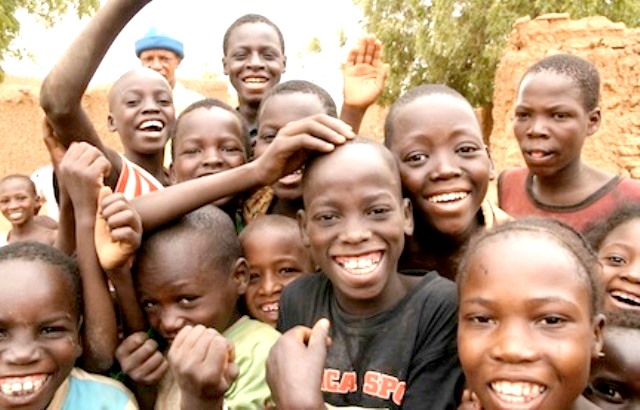
About 10.5 million Nigerian children are out of school. Photo Credit: axisoflogic.com

Also, the federal government will spend additional N10 million on “high-level advocacy and sensitisation of political, religious and community leaders in the South-East and South-South zones on curbing the out of school boy child syndrome in the zones.”

Another N10 million is provided for “advocacy and sensitisation of key policy makers, community and religious leaders on some cultural practices that hinder girl-child access to education, the importance and benefit of girls’ education in all states of the federation.”

The federal government will also spend N5 million for “collaborating with other agencies on checking/regulating the Almajiri education programme in Nigeria to increase enrolment.”

Altogether, the budget for all the activities for improving early childhood care and development for about 30 million children and improving access to education for 10.5 million out of school children is N42.2 million – a sum far less than N205.8 million earmarked for the purchase of the three cars for officials of the education ministry.

The same elsewhere

The federal health budget makes provision of N23 million for infant and young child feeding in a country where 32 per cent of children under the age of five years are stunted.

Ironically, the National Primary Health Care Development Agency will spend a higher amount of N38.8 million on “plant/generator fuel cost”.

Perhaps the only positive note is the provision to buy Ready to Use Therapeutic Food, RUTF, for severely acute malnourished children, but the money is too negligible compared to the severity of the situation.

According to UNICEF and Federal Ministry of Health, 2.5 million children suffer from severe acute malnutrition and all it takes to nurse each affected child to normal is just N50, 000.

This year, the federal government is required to make a provision of N95 billion in the budget to reach out to 1.9 million of these severely acute malnourished children, while the UNICEF will cater for the remaining 600,000 children.

Unfortunately, the federal government provided the paltry sum of N1.2 billion for “contribution and counterpart funding for UNICEF for procurement of RUTF”.
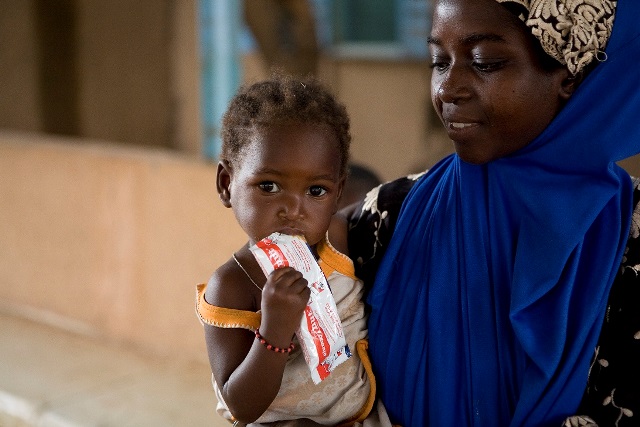
Child eating ready-to-use therapeutic food for treatment for severe acute malnutrition. Photo credit: unicefstories.org

Without treatment, more than 300,000 of these severely malnourished children will die this year alone.

According to UNICEF, WHO, and Federal Ministry of Health, 2,300 children under the age of five die every day in Nigeria and malnutrition accounts for more than a half of these deaths.

Child protection

As in other parts of the world, Children’s Day is celebrated on May 27 in Nigeria to honour children and initiate action to improve their welfare.

The theme of this year’s Nigerian Children’s Day is “Child protection and the Sustainable Development, SDGs: Issues and opportunities.”

One of the targets of SDGs 3 is “By 2030, end preventable deaths of newborns and children under 5 years of age, with all countries aiming to reduce neonatal mortality to at least as low as 12 per 1,000 live births and under-5 mortality to at least as low as 25 per 1,000 live births.”

This target is unlikely to be achieved in Nigeria due to inaction on child-survival interventions by the government just as the country failed to achieve any of the goals in the Millennium Development Goals, MDGs.

One of the targets of MDGs was to reduce the under-five mortality rate by two-thirds between 1990 and 2015.

In 1990, the under-five mortality rate in Nigeria was 213 deaths per 1,000 live births. If Nigeria had achieved the MDG goal, under-five mortality would have been reduced to 71 deaths per 1,000 live births by 2015.

The Nigeria Demographic and Health Survey, NDHS 2013, shows that under-five mortality rate is 128 deaths per 1000 live births. This means that one in every eight Nigerian children still do not survive to celebrate their fifth birthday.

With the current statistics, the target of reducing under-five mortality to at least 25 by 2030 may not be achieved with the little investments in child-survival interventions by government.

Most of the child-survival interventions in the country are led by development partners while the political elite squander the national wealth on themselves.

The Community-based Management of Acute Malnutrition, CMAM, started in 2009 by UNICEF in the North East and North West where malnutrition is alarming, has averted more than 200,000 deaths and reached more than a million children with RUTF.

The cost of inaction by the leaders manifests in a situation where Nigeria accounts for 13% of all global deaths of children under the age of five years, second only to India at 21%.

The excuse

When it comes to child-survival interventions, government complains of the paucity of fund.

In 2015, the new administration of Muhammadu Buhari promised to build 10,000 Primary Health Centres, PHCs, across the country. The government later changed the plan to the revitalisation of 10,000 existing primary health centres. But the same government later announced it would not be able to rehabilitate all the 10,000 PHCs but would use a “phase out approach”.

Two years into the administration of Buhari government, the federal government has budgeted only N3 billion to revitalise and make functional 1,000 PHCs but between last year and this year, N12.4 billion has been budgeted for repairs and rehabilitations in the Presidential Villa.

Last year, over 3 billion was provided as the capital budget for the State House Clinic, which caters for top political leaders and their families.

It is unlikely that the 10,000 PHCs will be rehabilitated and revitalised by the end of the tenure of this administration in 2019, thereby depriving millions of children access to quality health care.

The National Health Facility Survey carried out last year revealed that only 20 per cent of the PHCs in the country are functional.

According to UNICEF, preventable or treatable infectious diseases such as malaria, pneumonia, diarrhoea, measles and HIV/AIDS account for more than 70 per cent of the estimated one million under-five deaths in Nigeria.

UNICEF said the coverage and quality of healthcare services in Nigeria continue to fail children.

As sad as the realisation that essential interventions for children will avert most of the under-five deaths, the Nigerian leaders would often point out the lack of funds for not investing in child-survival interventions.

The National Assembly could not approve as little as N50, 000 for each of the severely acute malnourished children but could comfortably approve for itself N120 billion for its 469 members and their aides.

On this Children’s Day, it appears that there is little to cheer yet.


READ ALSO:


Ecological Funds: Ex-President Jonathan Reacts To El-Rufai’s Claims

0

Former President Goodluck Jonathan has described as untrue remarks by the Governor of Kaduna State that the last administration only made the funds available to states run by the Peoples Democratic Party, PDP, that were in good terms with the President.

El-Rufai had, on Thursday at the National Executive Council, NEC, meeting, said: “What President Goodluck Jonathan did was to take N2 billion each from the Ecological Fund and give to some PDP states.

“Any PDP state that was not his friend, like Kano and Kwara, didn’t get.”

But in a statement issued by Jonathan’s media aide, Ikechukwu Eze, on Friday, the ex-President said Nigerians should disregard El-Rufai’s remarks as they were totally untrue.

He pointed out that it was only the states that met the criteria for accessing the fund that received it, adding that there were States governed by his staunch supporters such as Akwa Ibom and Ekiti who did not receive the fund.

He also noted that states ruled by the Labour Party and the All Progressive Grand Alliance also received the fund.

“It is so easy to expose Mallam Nasir el-Rufai … as Akwa-Ibom, a PDP state governed by the then Chairman of the PDP Governors Forum and a close confidante of the then President, Senator Godswill Akpabio, did not get the monies alluded to by Mallam el-Rufai from the Ecological Fund, as did multiple other PDP states, including Ekiti state, a state governed by a thoroughbred patriot and Jonathan supporter, Ayo Fayose,” Jonathan’s aide stated.

“Also, it is false that non-PDP states did not get monies from the fund… States under non-PDP parties like APGA and Labour party also benefitted.

“The fact remains that the Ecological Fund is a specialised fund with certain constitutional requirements which must be met before a state can access the funds.

“Every state benefited from the fund under President Jonathan who bent over backwards to accommodate states that had difficulty meeting the criteria for accessing the fund.”

Ex-Pesident Jonatha also accused El-Rufai’s of intentionally remaining silent on the over N10 billion specially deployed to fund the Great Green Wall project in some northern states, which was intended to check desert encroachment in the Sahel.

“The states included Zamfara, Jigawa, Kebbi, Sokoto, Katsina, Adamawa, Yobe, Borno and Kano, which belong to el-Rufai’s class of ‘non-friendly’ states that he claimed never benefited from any discretionary fund,” the statement added.

Oil Workers Laud Passage Of PIGB

0


The Nigeria Union of Petroleum and Natural Gas Workers, NUPENG, and the Petroleum and Natural Gas Senior Staff Association of Nigeria, PENGASSAN, have commended the Nigerian Senate for the passage of the Petroleum Industry Governance Bill, PIGB.

General Secretary of NUPENG, Joseph Ogbebor, on Friday, describe the passage of the bill as a welcome development, adding it was long overdue.

Ogbebor noted that the Union has been pushing for the bill to be passed for the last 15 years, stressing that the bill when signed into law will not only increase inflow of foreign investment, but will ensure accountability and transparency.

He however warned that the NUPENG would resist any attempt to sack workers without adequate compensation, following the unbundling of the Nigeria National Petroleum Corporation, NNPC, as prescribed in the new bill.

The union leader advised the federal government to be cautious while implementing the new act in order to ensure that all labour matters were properly addressed.

Similarly, the Acting General-Secretary of PENGASSAN, Lumumba Okugbawa, also described the passage of the bill as a step forward in addressing the many challenges facing the nation’s oil and gas sector.

Okugbawa noted that the PIGB was only part of the entire PIB, adding that it was necessary to pass it to create a law to regulate activities in the industry.

NUPENG and PENGASSAN have always listed non-passage of the PIB as one of the reasons for their numerous industrial actions.

The PIB was split into four parts by the National Assembly to make for easier passage; the PIGB is just one out of the four parts.

Confusion In Court Over Amount Recovered From Judge’s House

0

There was confusion on Friday at the resumption of the trial of suspended Supreme Court Justice, Sylvester Ngwuta, at the federal high court, Abuja, over the actual amount allegedly recovered during a raid on his residence by operatives of the Department of State Services, DSS.

The DSS had told the court that monies recovered at Ngwuta’s residence include N35,358, 000, among other foreign currencies, which they tendered as evidence.

Presiding Judge, John Tsoho then ordered that the monies be kept in the Central Bank of Nigeria, CBN, but not before it was counted at his presence.

However, after the money were counted, the total amount was N35,335,840, which was N22,160 less than the amount initially quoted by the prosecution. The foreign currencies were complete as quoted.

Justice Tsoho asked the lead prosecutor why the figures were different, to which she replied that she was made to understand that the DSS used a counting machine to count the money. She, however, was not able to explain how the difference came about.

When a prosecution witness, John Utazi, who is also an operative of the DSS, was cross-examined, he insisted that there was no difference between the amount of money tendered before the court and the actual amount that was recovered from the accused person’s house.

Utazi told the court that he was not present when the money was counted in the court as ordered by the judge.

An attempt by the defence council to tender the report on the figure of the recount as evidence was rejected by the prosecution council.

Following the confusion, Justice Tsoho adjourned the case to July 3 for continuation of hearing.

Justice Sylvester is among several senior Judges whose residences were raided by men of the DSS in October 2016 on allegation of corruption.

He was later suspended by the National Judicial Council, NJC, pending the determination or otherwise of his innocence.

Double Registration: INEC Says Kogi Governor Flouted Electoral Law

0

The Independent National Electoral Commission, INEC, has officially condemned the Governor of Kogi State, Yahaya Bello, for flouting the electoral act by registering again in the ongoing continuous voter registration exercise, after having originally registered in Abuja.

INEC’s national commissioner and chairman voter education committee,Solomon Soyebi, in a statement described the act as illegal, but added that the commission could not charge the Governor because he enjoys constitutional immunity.

Soyebi also pointed out that it was illegal for the governor to have invited INEC officials to come and register him in his office rather than going to the registration office as is provided for in the law.

“The Governor’s double registration and doing so outside INEC’s designated centres are both illegal,” Soyebi said.

He also denied that INEC authorized its staff to “re-register him (Governor Bello) or any citizen or to do so outside our designated CVR centres”.

The commissioner confirmed that Bello was first registered at Wuse Zone 4,Abuja, on January 30, 2011, but illegally did so again on May 23, during the ongoing continuous voters registration exercise, in his Lokoja, Kogi State, office.

He said the commission “is taking disciplinary action against the INEC staff involved”, but “as for the State Governor, Section 308(1) (a) of the 1999 Constitution (as amended) precludes INEC from prosecuting him while in office.”

“However, INEC wishes to state that it has cancelled his second and illegal registration forthwith because our Electoral Law and the Commission’s guidelines make no exception for anyone to register more than once and outside the designated areas,” Soyebi said.

However, Soyebi in his statement did not address the claims made by Governor Bello’s spokesman, Kingsley Fanwo, saying that his principal made several efforts to get the INEC to transfer his voting centre from Abuja to Lokoja without success.

INEC had said that the ongoing continuous voter registration exercise is intended for citizens who just attained the age of 18 or who for any reason have not registered before.

Those who had registered but their names for some reason do not appear on the voter register, may also register again.

New Report Alleges Reckless Spending By UN Humanitarian Agencies

0

By Chikezie Omeje

An investigation done by the Associated Press, AP, alleging frivolous  expenditures by the World Health Organisation, WHO, has once again put United Nations agencies under close international scrutiny.

According to the report, WHO is spending more money on the travel bug than on fighting AIDS or malaria epidemic around the world.

The report reveals that WHO spends around $200 million a year on travel costs more than what it reserves for battling some of the world’s biggest health crisis.

It notes that WHO last year spent around $71 million on AIDS and hepatitis, $61 million on malaria and $59 million on tuberculosis, although it does allocate a generous $450 million to polio every year.

According to the report, other aid agencies manage to fly staff around  on much tighter budgets — the UN’s children’s agency UNICEF spends $140 million a year and has twice the staff, while Doctors Without Borders forbids business-class travel and spends $43 million a year despite having more than five times as many staffers, the report claims.

The report notes that WHO defended itself by saying “the nature of  WHO’s work often requires WHO staff to travel.”

It is not yet known how much WHO or other UN agencies spend on their  travel in Nigeria. But the UN agencies have been criticised for spending more funds on logistics and welfare of their staff than on  humanitarian assistance in the country, especially in the North East that had been ravaged by six years of Boko Haram insurgency.

Early in January this year, the Governor of Borno State, Kashim  Shetima raised an alarm that UN humanitarian agencies spent more on  their staff than helping the Internally Displaced Persons, IDPs, in  the state.

The governor specifically said UN agencies like the UNICEF were not  doing enough to justify the funds at their disposal and that they had turned the state into their cash cow, spending the funds more on their staff welfare than on the displaced persons they came to help.

A story by www.icirnigeria.org quoted the governor as saying that “But  particularly the UNICEF, considering the huge quantum of funds at  their disposal, they are not really trying.”

However, the UN agencies promptly denied the allegation by the  governor but did not disclose how much they spent on their staff.

The new Director-General of WHO, Tedros Adhanom Ghebreyesus  of Ethiopia who was elected on Tuesday this week has promised to transform the organisation into a more effective, transparent, and  accountable agency.

The new director general who was a former minister of health in Ethiopia is expected to reform the UN health agency to be more financially prudent and proactive in responding to health emergencies  around the world.


Party Decries Lopsidedness In Federal Appointments

0

By Yekeen Nurudeen

One of Nigeria’s opposition parties, United Progressive Party, UPP, has expressed displeasure with what it called lopsidedness in the appointment of Nigerians into critical public offices by President Muhammadu Buhari.

The party lamented that the provision of Federal Character in the Nigerian Constitution has been brazenly breached by the President in all the appointments made so far.

These were contained in a communique issued at the end of its National Executive Committee, NEC meeting held in Abuja on Wednesday signed by the National President, Chekwas Okorie and National Secretary Sadeeq Masalla respectively.

“NEC is not pleased with lopsidedness in the appointment of Nigerians into critical Public Offices by President Muhammadu Buhari. The Federal Character provision in the Nigerian Constitution has been brazenly breached. This attitude of government cannot encourage the growth of nationhood and patriotism,” the communique read.

The party, while x-raying the state of the nation also bemoaned the slow pace of governance under President Buhari noting that Nigerians have been undergoing severe economic difficulties.

“Instead of creating new jobs for the teeming unemployed Nigerians, several jobs that existed have been lost thereby putting more people in the job market and many manufacturing as well as Small and Medium Scale Enterprises, SMEs, are shutting down in large numbers,” it lamented.

It urged the governments at all levels to implement full payment of internal debts including debt owed to workers and pensioners as a means of reflating the economy and increasing productivity.

“Contractors who have earned certificates for jobs done must be paid their legitimate earnings” it added.

The UPP whose National Chairman also contested the 2015 general elections called President Buhari and the National Assembly to implement as a matter of urgent national importance the recommendations of the 2014 National Conference which it noted cost Nigerian tax payers more than N7 billion to hold.

FG To Close Five Foreign Missions

0

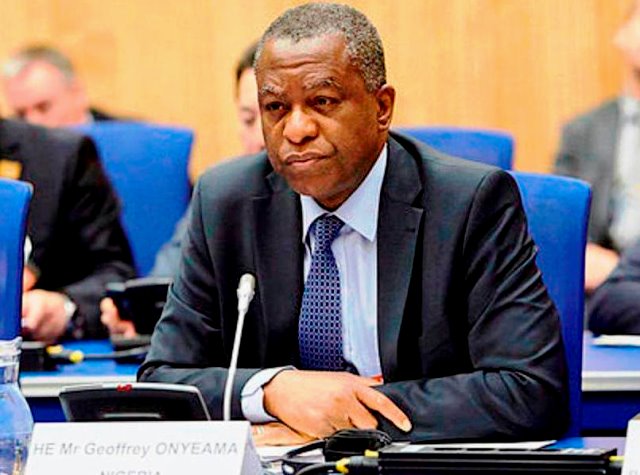
Minister of Foreign Affairs, Geoffrey Onyeama has said that five of Nigeria’s foreign missions and embassies could be closed.

Onyeama made this known while addressing newsmen in Abuja on Thursday, but he did not give details on the affected embassies or missions.

He however said that the process for closure has begun and is subject to final approval by the president, who is at liberty to give his consent or disapproval.

The minister said: “We do not want to indicate the embassies that will be closed yet because we are in the process of submitting the proposals – the cost analysis and also the political analysis we did – to the president.

“When he sees that, he may or may not want to close some, so we have not yet reached the stage of closing some,” adding that closing a foreign mission was “extremely expensive”.

“The expense, costs of closing embassies is so high and prohibitive but in the long run it will more economical,” he explained.

The News Agency of Nigeria, NAN recalled that Onyeama had said in April this year that the closure of some of Nigeria’s foreign missions was inevitable and remains on the agenda of the Muhammadu Buhari administration.

Nigeria currently has 119 foreign missions.

“The government is following up on that and we have sort of prepared the roadmap,” the minister had said.

“We have started the implementation of that and made also recommendations in that context.

“Paradoxically, closing missions is extremely expensive. At first sight it seems obvious that you close it you are saving cost but you will actually find that the cost of closing is almost prohibitive.

“But in the long run it will be cheaper, but in the immediate and short term it is ex-pensive but we have started the process.”

Many of the Ambassadors-designate appointed by President Buhari are yet to be deployed to their various missions, except for the Ambassadors to the United Nations and African Union who have since assumed at their posts.

DSS  Gets Court Leave To Keep Ifeanyi Uba In Custody

0

Few hours after the federal high court Lagos, gave the Department of State Services, DSS, a 48-hour ultimatum to release the detained Chairman of Capital oil and Gas limited, Ifeanyi Ubah, the Abuja division of the same court has empowered the same DSS to detain Ubah for another 14 days.

Justice Yusuf Halilu granted an ex-parte application filed by the DSS through its lawyer, G.O.A. Agbadua, extending Ubah’s detention by another 14 days after the initial order granted on May 10 expired on Wednesday, May 24.

Agbadua told the court investigations into Ubah’s criminal offences were yet to be concluded hence the need for the detention order to be extended.

He said the new motion ex-parte was brought pursuant to section 296(2) of the Administration of Criminal Justice Act, ACJA.

According to him, the investigation into Ubah’s matter “took on a wider dimension”.

Ubah, a former Anambra State governorship candidate, is accused of “economic sabotage”, having allegedly diverted N11 billion worth of petroleum products belonging to the Nigerian National Petroleum Corporation, NNPC, which was stored in his company’s facility in Lagos.

The DSS also said Ubah had incited some workers in the petroleum sector to embark on industrial action in order to deliberately bring the Nation’s economy to its knees.

But Ubah, through his lawyer, Ifeoma Esom, denied the allegations, saying that it was the NNPC that is indebted to Capital oil to the tune of N13 billion.

She further noted that there was a contract agreement between the NNPC and Capital oil before the Petroleum products were stored at the latter’s facility, adding that even if there was a diversion as the DSS claims, it only amounted to a breach of contract and not a criminal offence.

Senate Passes Petroleum Industry Governance Bill

0


The long awaited Petroleum Industry Governance Bill, PIGB, which is hoped to proffer solutions to the myriads of challenges facing the Nigerian oil and gas sector, was on Thursday passed by the Senate.

This followed the adoption and clause by clause scrutiny of the report by the Senate joint committee on gas, petroleum (downstream) and petroleum (upstream), which was presented by Ondo state Senator, Donald Alasoadura.

The PIB seeks to introduce reforms that would engender transparency and accountability, while at the same time making the oil and gas sector more business-oriented and profit-driven.

It also pushes for a more inclusive development away from crude oil to other product lines and by-products and robust engagement between international oil companies, IOCs, and the government in the area of investment and modifications in the Joint Venture Partnerships, JVPs and cash call obligations.

It is understood that the PIB seeks to restructure organisations like the Nigerian National Petroleum Corporation, NNPC, and the Department of Petroleum Resources, DPR, as well as set up new companies like the National Oil Company, NOC, and the National Petroleum Assets Management Commission, NPAMC.

The NOC when created will be an “integrated oil and gas company operating as a fully commercial entity and will run like a private company”, while the NPAMC will be a “single petroleum regulatory commission which will focus mainly on regulating the industry”.

The NPAMC will also be responsible for health and safety regulations in the industry, and will work together with the Ministry of Environment on environmental issues.

Speaking after the pill was passed, Senate President Bukola Saraki, congratulated his colleagues for the ‘feat’, noting that the bill has taken more than 8 years.

“I congratulate the 8th Senate with the passage of this landmark bill which has not been passed for many years,” Saraki said.

“I want to congratulate all those who contributed to this bill, for many years we have not been able to pass and we made a commitment at the beginning of this 8th senate that we will pass this bill.

“Not only Nigerians, our friends in the petroleum sector have been waiting for us to put down a framework that will ensure transparency and accountability and create and an enabling environment for the petroleum sector.

“I hope with this bill, the oil and gas industry will see a new form of investment, we will plug all the loopholes and reduce the corruption and inefficiency,” he added.