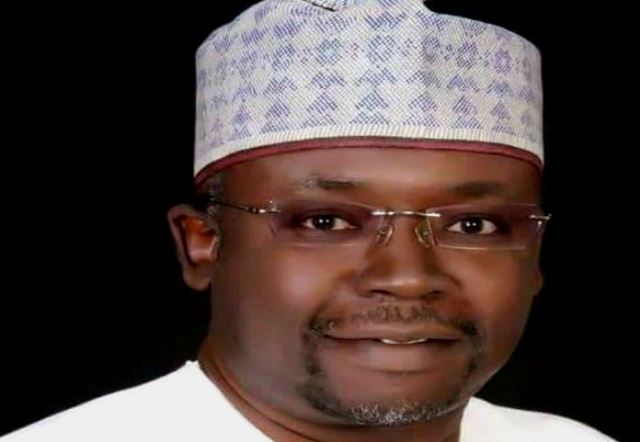
The Kano State Assembly has said it was suspending its investigation into the finances of the Kano Emirate Council following interventions of prominent Nigerians, including Acting President Yemi Osinbajo, the State Governor, Umar Ganduje and the Sultan of Sokoto, Saad Abubakar III.
Speaker of the Assembly, Kabiru Alhassan Rurum, made this known after reading a letter from Governor Ganduje urging the lawmakers to stand down the investigation.
According to Rurum, notable personalities who had waded into the matter also include Senate President Bukola Saraki, Speaker of the House of Representatives Yakubu Dogara, Aminu Dantata, and members of the Nigerian Governors’ Forum.
The letter from Governor Ganduje noted that Emir Sanusi had personally apologised for his mistakes during a reconciliation forum organized by Northern Governors’ forum in Kaduna hence the reason for suspending the investigation.
The State Assembly had set up a seven-man committee to investigate Sanusi following allegations of funds “misappropriation, defamation of character, breach of oath of office/oath of allegiance, abuse of office privileges and protocol, and political and religious interference.”
It would also be recalled that the Kano State Public Complaints and Anti-corruption Commission, which was also investigating the Emirate council, had last week announced it was suspending the probe.
Chairman of the commission, Muhuyi Magaji, said the suspension was to allow the State lawmakers carry on with their own investigation.
“We have suspended the probe because it will be unwise to run the same probe concurrently,” Magaji said.
Turkey has commenced a mass trial for the 221 high-ranking military officers who were alleged to have planned to oust President Recep Tayyip Erdogan in a coup d’etat in July 2016.
Ex-air force commander Akin Ozturk was the first in a long line of accused persons that were marched past a hostile crowd near Ankara.
There have been calls for the death sentences to be handed to the coup plotters, but Turkish law does not allow that.
Meanwhile, in a recent crackdown on Sunday, the Turkish police arrested two teachers, Nuriye Gulmen and Semih Ozakca, who had embarked on hunger strike to protest their dismissal from their jobs.
They are among more than 100,000 public servants sacked after the botched July 2016 military coup.
The pair have been on hunger strike for 75 days, and their lawyer said that, despite the police raid on Sunday, they had both vowed to “never give up”.
“We want our jobs back! We have not surrendered and will not!” Gulmen tweeted.
President Erdogan’s purge of state institutions has meant mass dismissals in the judiciary, police, universities and schools.
The mass trial at a prison complex near Ankara is the most high-profile prosecution of alleged plotters so far.
The number one suspect – the Muslim cleric Fethullah Gulen – remains in the United States and denies involvement.
The charges include murdering 250 civilians during the 15 July coup attempt, after which President Erdogan imposed a state of emergency.
Mehmet Yaman, one of the angry onlookers, told newsmen: “I am here to settle the score with terrorists, I am here to show that I stand by my people, my flag and my religion.
“I am here to show the terrorists that we will stand firm. I want them sentenced to death in a fair trial, I want the traitors of this country to be punished.”
Erdogan founded the Islamist-rooted AK Party in 2001 and on Sunday he was elected AKP leader, further entrenching his dominance of Turkish politics.
There was no rival candidate at the AKP congress.Last month, Turks narrowly approved constitutional changes giving the president far-reaching powers, including the right to lead a political party.
After winning the April referendum, Erdogan said Turkey could now hold a referendum on bringing back the death penalty – a move that would end Turkey’s bid to join the EU.
The House of Representatives has begun the amendment process of eight laws relating to Nigeria’s maritime sector in order to better equip the sector to tackle modern day challenges.
Speaker of the House, Yakubu Dogara, said the amendments, when passed, will address issues that have impeded the maritime industry from becoming a major source of foreign exchange that the country is in dire need of.
He made the remarks during a public hearing organised by the House Committee on Ports, Harbours and Waterways, to get the input of stakeholders on the affected bills.
“These Bills are indeed very important and more so now that we as a country are rethinking our economic master plan with the aim of avoiding a future relapse into the kind of nail biting recession which we have just exited from,” Dogara said.
“The Maritime sector is one such key source of huge revenue especially of the much needed foreign exchange, whose potentials have, unfortunately, been grossly under realized.
“This explains the importance which the present Assembly attaches to Maritime Sector reform Bills, 8 of which this committee is presenting to the public for scrutiny and input today.”
The Speaker added that the bills will reposition Nigeria’s maritime sector “to deliver efficient services in a safe, secure and customer friendly environment, generate employment, as well as develop capable local manpower, which will contribute significantly to the nation’s GDP and provide a formidable alternative to oil and gas in terms of revenue.”
The eight bills under consideration include:
A Bill for an Act to Amend the Coastal and Inland Shipping (Cabotage) Act to restrict the use of foreign vessels in domestic coastal trade, promote the development of indigenous tonnage and establish a Cabotage vessel financing fund, and
iii. A Bill for an Act to Repeal the National Inland Waterways Authority Act, and Re-enact the National Inland Waterways Authority Act; and,
A Bill for an Act to Amend the Nigerian Ports Authority Act, aimed at providing an appropriate institutional framework for the ownership, management, operation, development and control of Ports and Harbours nationwide.
A Bill for an Act to Repeal the Nigerian Ports Authority Act, and to Establish the Nigerian Ports and Harbours Authority.
A Bill for an Act to Amend the National Inland Waterways Authority Act, to specify the tenure of Office of the Secretary and empower the Authority to receive donations and for other related matters, seeking to awaken the consciousness of Nigerians to God’s natural roads and rails provided free to 28 States and the FCT in form of inland waterways.
A Bill for an Act to Amend the Inland Fisheries Act to review upwards, the penalties for persons who contravene the Act in view of the fact that the current stipulated penalties are grossly inadequate and totally incapable of deterring offenders as the penalties are a mere slap on the wrists of offenders.
A Bill for an Act to Amend the National Shipping Policy Act, to include the representative of the Nigerian Shippers Council in the membership of the Authority, subject of course to majority opinion, and
A Bill for an Act to Amend the Council for the Regulation of Freight Forwarding in Nigeria and for Related Matters, to amend some sections of the Council’s Act with a view to empowering it for better performance and improved efficiency.
Governor Ayodele Fayose of Ekiti state has inaugurated an investigative panel to probe the administration of his immediate predecessor and current minister of solid minerals, Kayode Fayemi.
Fayose said he was setting up the investigative committee “in compliance with the resolution of the Ekiti State House of Assembly passed on the 10th of May, 2017.”
The lawmakers, in the resolution, urged the state governor “to look into the financial transactions of Ekiti state under the administration of Dr John Kayode Fayemi.”
The terms of reference of the commission are as follows: “To ascertain how much Ekiti State Government received as statutory allocations during the period under review and how same were disbursed.
“To look into the financial transactions of Ekiti state between 2010 and 2014.
“To ascertain the amount received on behalf of the state from the Universal Basic Education Commission (UBEC).
“To investigate the allegation of fraud/loss of funds, including the diversion and conversion of the State Universal Basic Education Board Fund.
“To ascertain the amount the Ekiti state government took as loans during the period under review and how they were utilised and all other issues relating to the finances of the Ekiti state government within the period under review and;
“To make appropriate recommendations to the Ekiti state government.”
Other members of the panel include: Gbemiga Adaramola – Secretary; Bolawale Awe, Idowu Ayenimo; Omodara O. Vincent; Oladele Blessing; Adesoba Oluremi and S.B.J Bamise.
The Chief justice of Nigeria, CJN, Walter Onnoghen, has urged Nigerians to desist from making disparaging remarks about the nation’s judiciary but rather to approach the National Judicial Council in cases of perceived wrong doing by judicial officers.
Onnoghen, speaking during a thanksgiving service held at the Methodist Church Nigeria, Abuja diocese, noted that judicial officers in the country were being accused of corruption without given the chance of fair hearing.
“The judiciary is under threat,” he said. “Judges and judicial officers, including myself, are being castigated without giving the opportunity to be heard, but God knows our heart.”
He advised Nigerians not to hesitate to petition any judicial officer involved in any form of corruption or unprofessional conduct to the NJC.
Also, in a statement later issued by his senior special assistant on media, Awassan Bassey, the CJN warned individuals, especially politicians to quit “dragging the name of the judiciary in the mud through unsubstantiated allegations in the mass media.”
Onnoghen cited an instance with a former member of the Senate, Uche Ekwunife, who after she was removed by the appeal court as the Senator representing Anambra central senatorial district, went to press claiming that the judiciary “robbed her of her mandate”.
He urged anybody with any grievances against the judiciary to go through the right channel to petition their allegations.
The CJN also thanked God for helping him get to the pinnacle of his career.
“I did not set out to be a judge but today, I am a judge by divine intervention. It’s the Lord’s doing, mine is to follow,” he said.
“My prayer is that God should help me and should not let me down.
Abandoned by the government, poor Nigerians in rural areas develop a homegrown self-help scheme to access quality medical care.
By Tajudeen Suleiman
Ayeni Olawale has only nine years of medical practice. But in his short career as a medical doctor, he has seen the nexus between poverty and death and knows that affordable healthcare can lead to longevity.
When he was employed by the Kwara State Government and posted to Ajase General Hospital, Kwara South council area in 2007, he looked forward to a rewarding practice where he could impact on the well-being of the people. But for over two years that he worked in the hospital, he spent most of his days alone with his tools, without seeing any patient. On his busiest days, he could see up to two patients.
And the patients are usually elderly men and women and nursing mothers. The elderly usually come with the problem of hypertension or diabetes. Often, when they come he’s not able to treat them. They cannot pay for tests or even drugs, some less than N1,000.
“It was a frustrating experience for a doctor, just sitting down and not being able to save a life,” he said, adding that he saw many of the elderly die before his eyes.
Then he was transferred to Erin-Ile, in Oyun local government less than 20 kilometres away where a Community Based Health Insurance Scheme of the state government had taken off. The people pay a yearly individual premium of N500 and they can access medical care free at the hospital throughout the year.
Beneficiaries enjoy free consultation, drugs, medical investigations, blood transfusion, ultra sound and minor surgeries such as CS, appendectomy, circumcision, evacuations and others.
Olawale had never been busier in his career. Every day, he was seeing a minimum of a 100 patients even though there were two doctors in the hospital. His patients included the elderly, women and children. In Erin-Ile, he saw many elderly people who could have passed on still living because they had access to drugs and care.
Dr Ayeni Olawale
“Affordable healthcare is important to keeping the people healthy, when they don’t have to pay out-of-pocket they would want to go to the hospital,” Olawale said.
This is wisdom that is true for many communities in a few states in Nigeria, including Kwara and Anambra States where a Community Based Health Insurance Scheme, CBHIS, has been developed.
For the people of Afon, a rural community in Asa local government area of Kwara State, the CBHIS has been a blessing. In the past, despite having a population of about 25,000 made up of largely aged men and women, the General Hospital in the community hardly gets visitations, except deliveries and accident cases. The people relied on self- medication with herbs to cure their ailments.
But when the Kwara State government brought the CBHIS in 2014, the life of the people changed.
Ibrahim Adelodun, the traditional ruler of the community, told www.icirnigeria.orgthat the scheme was the best thing to have happened to his people.
“Before, people don’t go to the hospital. They stay at home taking herbs until they die. But now more than 85 per cent of our people are beneficiaries of this scheme and the people don’t die anyhow again,” he said in Yoruba, the local language.
One of the beneficiaries is 65 year old Suwebatu Saidu who lives alone, having lost her husband years ago. She makes a living selling vegetables for a farmer, and earns less than N100 (about 25 cents) in a day. She, like many others in the community, could not afford the N500 yearly premium. But a local politician in the area donated N500,000 to pay the premium for all the elderly who couldn’t afford it.
“I used to suffer seriously from cough and hypertension and I was using herbs. But since I joined Hygeia (the health insurance providers), they have been giving me drugs and good treatment and I feel better. Now I don’t take herbs again,” she told the reporter.
Mohammed Alfa, 63, is diabetic and used to wake up to urinate more than eight times during the night and looked very frail. For years he had relied on local herbs said to be good treatment for diabetes without getting better.
65-year-old Mohammed Alfa says the community insurance scheme has greatly improved his health condition
But when he was enrolled into the CBHIS, he experienced a turn-around.
“When I go to the hospital they give me drugs and injections and I feel better. I don’t know what would have happened to me without Hygeia,” he said.
It is not just the elderly that benefit from the scheme; many nursing mothers are also enrolled. One of them, 27 year old Fatima Musa, a mother of three, said she only visited the hospital for delivery since she could not afford ante-natal and the regular checks pregnant women are made to do.
“But with this Hygeia I always go to the hospital for regular examination, especially when I am pregnant. They do all the necessary tests for me free of charge,” she told the reporter.
The services may appear free to the beneficiaries, but it is not. It is a highly subsidized insurance scheme by the Kwara State government and it partners. It is a tripartite arrangement between the state government, Pharm-Access Foundation of the Dutch government and Hygeia, the local implementer of the scheme. A beneficiary pays a yearly premium of as low as N500 (about $1.25 but the Kwara State government and Pharm-Access bear the other costs at a ratio of 20: 80 per cent.
Thus, by just paying N500 every year, an enrolee will be able to access healthcare for the year. It covers maternal and child care, chronic diseases, hypertension and diabetes, minor surgeries such as caesarean section, hernia, circumcision, appendectomy, evacuations and all other primary healthcare activities.
The scheme started in Tsonga, Edu Local Government in 2007. It was a time the General Hospital in the town hardly saw10 patients in a day. But by the end of the first month of the scheme, the hospital recorded over 5,000 visitations. Nearly everyone in the town, from the traditional ruler to the peasant farmer was registered in the scheme.
After the success of the pilot scheme, it was gradually expanded to other local governments of the state. By December 2015, it had covered 11 out of the 16 local government areas, 400 communities with 139,123 people listed as active enrolees. Within the same period, over 3,000 births and more than 600 caesarean sections were carried out under the scheme.
The LGAs now covered are: Edu, Asa, Oyun, Ifelodun, Barutten and Ekiti. Others are Moro, Oke Ero, Kaiama and Isin
Abdulrasak Abdulsalam, Executive Secretary of the Kwara State Community Health Insurance Scheme, said the scheme was limited to rural areas because the state was concerned about how to subsidise healthcare and make it affordable for those living below one dollar per day.
The scheme works through a community based structure. There is a Board of Trustees for each community, usually headed by the traditional ruler. It is the task of the board to mobilise the community for participation and manage the scheme for optimum performance.
But the success of the pilot scheme excited the people and there was a general clamour that it be expanded to cover the whole state. Moreover, the Dutch government, which had been paying 80 per cent of the premium subsidy, also said the state government should take complete ownership of the scheme by increasing its share of the subsidy payment which had already risen to 40 per cent by 2014 to 100 per cent.
Executive Secretary of the Kwara State Community Health Insurance Scheme, Abdulrazak Abdulsalami
Thus, bringing more people into the insurance net would make the scheme more sustainable. A new bill that makes it mandatory for all residents of the state to have health insurance cover was drafted and sent for legislative action last year. The bill has been passed and awaiting the assent of Governor AbdulFatah Ahmed.
Apart from individual premium, the bill stipulates that one per cent of the total revenue of the state would go to a proposed health insurance fund.
“We are practically moving towards universal coverage in Kwara. The best way to achieve total universal coverage is through health insurance scheme. So soon we will not be talking about achieving universal coverage in Kwara but about improving quality of health care,” Abdulsalam stated.
Anambra’s Halted Match
Inside his small office at the Iyi Enu Mission Hospital, Ogidi, Idemili North Local Government of Anambra State, Mbajekwe Reuben, Head of Clinical Services of the hospital, sat wearing a dull face. One of his worries is the community based health insurance scheme for the Ogidi community. Instead of more people joining the scheme to make it sustainable, many on the programme are dropping out.
The scheme started at the hospital with only three participants in January 2015, but by end of February the figure had gone up to 320. After a short period of increased enrolment, by middle of 2016 the figures started going down. People were no longer renewing their premium of N1,000 (about $2.50) per month. Now after one and half years, there are less than one hundred people in the scheme.
“My plan is to review the scheme and see if we can continue with it in a sustainable way,” Reuben told our reporter.
The problem facing the scheme in Anambra State is lack of state involvement and poor education of the people on the benefits of health insurance.
Iyienu Mission Hospital, Ogidi, Anambra State
The scheme depends on the N12, 000 annual premium paid by enrolees without any subsidy from any other source. The hospital is made to bear whatever extra cost is incurred. According to Reuben, if more people are enrolled into the scheme, it would have been sustainable. But the few who enrolled are dropping out because the premium is considered too high.
Again, unlike in Kwara State where the government and the Dutch government subsidise the premium and where structures for promotion of the scheme are well established, the scheme has no government involvement in Anambra State. Because the premium is considered too high for residents of rural communities, those who enrol put pressure on the facilities and drugs for the scheme.
There are several cases of enrolees who visit the hospital to collect drugs even when they are not sick. Reuben said they would insist on getting drugs because “I have paid for it.”
There was the case of a 52 year old woman suffering from diabetes and hypertension who was treated and given drugs for four weeks. Two weeks after, she came back to the hospital demanding for more drugs.
When the nurse on duty told her she had to finish the dosage she had being given before she could collect more, she took offence. “She called the nurse all sort of names.”
But it has not always been like this in Anambra State. A community based health insurance scheme was started in the state in 2003 when Chris Ngige, a medical doctor, was governor. Pilot schemes were established in one urban and nine rural communities as a way of increasing the provision and utilisation of health services. Membership of the CBHI comprised individuals and households in a community with a minimum of 500 persons required to form a group.
Members paid a fixed amount monthly or yearly as premium while the state government paid the matching subsidy. By the end of the first year of the scheme, enrolment had increased from 15 per cent to 48 per cent, according to figures from the state ministry of health.
Unfortunately, the scheme was halted in March 2006, barely two years after take-off, when Ngige was removed as governor. His exit marked the end of government’s involvement and the scheme never went beyond the pilot stage.
According to Azubuike Nweje, Director Medical Services at the state Ministry of Health, the CBHI scheme in Iyi Enu Mission Hospital, Ogidi, is the “only one functioning at the moment.” He however disclosed that the state was planning to launch a state-wide health insurance cover for all residents of the state by June this year.
“Everyone in the state, those in the formal and informal sectors would come under the scheme, and it will take off by June this year. The state has voted money for it and we are sure the NHIS will support the scheme,” Nweje told www.icirnigeria.org in Awka.
Lagos on the March
Lagos is one of the states that had understudied the operation of community based insurance in Kwara State and is poised to start its own initiative before the end of the year. With an internally generated revenue figure hitting above N400 billion in 2016, it has the funds to make its health insurance cover a model for other states.
The director of communication at the Lagos State Ministry of Health, Salako, told www.icirnigeria.orgthat the state was making a final “technical fine-tuning” of the scheme with the hope of taking-off before the end of the year. Salako said the issue of premium and other technical details were being worked out to make the scheme sustainable.
“We are going to start soon, every resident of Lagos will be covered by the scheme, and it will happen before the end of the year. We are only working out the details,” Salako told www.icirnigeria.org.
Last month, the state Commissioner for Health, Jide Idris, told journalists the state would soon establish an agency to manage the health insurance scheme. He also revealed that insurance agents would be hired to promote the scheme in order to make it successful. He said every resident of Lagos would contribute to the health insurance purse, and that both public and private health care providers would be used for the scheme.
National Health Insurance to the rescue
The kind of local health insurance schemes being developed by state governments has been compelled by the failure of the National Health Insurance Scheme to serve majority of Nigerians.
The National Health Insurance Scheme, NHIS, was established under Act 35 of 1999 Constitution by the Federal Government of Nigeria to improve the health of all Nigerians by providing easy access to healthcare for all Nigerians at an affordable cost through various prepayment systems.
NHIS is to provide social health insurance in Nigeria where health care services of contributors are paid from the common pool of funds contributed by the participants of the Scheme.
In order to ensure that every Nigerian has access to good health care services, the NHIS developed various programmes to cover different segments of the society – the formal sector, the informal sector and the vulnerable groups-pregnant women, children under five, prison inmates, retirees and the aged.
Executive Secretary, National Health Insurance Scheme, NHIS, Usman Yusuf
But more than 10 years after it took off, the NHIS has only partially covered the formal sector-largely the federal civil servants who constitute less than 5 per cent of the population.
Civil servants in the states and local governments are left uncovered. The scheme has failed abysmally to provide insurance cover for those in the informal sector and the vulnerable groups.
Many in the formal sector who are beneficiaries of NHIS complain about poor services by some hospitals.
Ijeoma Nwagwugwu, a staff of an agency under the Ministry of Power, told www.icirnigeria.org that her hospital – a private facility – demand payment for some gynaecological services and laboratory tests the NHIS is supposed to cover.
“When you go for some tests, they will look at a paper and say your NHIS does not cover this and that. But some of our colleagues who use other hospitals say they do not pay for such,” she told our reporter.
A senior staff of NHIS who is not authorised to speak to the press told our reporter that this kind of situation is usually due to sharp practices by the hospitals in collusion with the Health Maintenance Oganisations, HMOs, and staff of NHIS.
He said some of the HMOs usually withhold payment to hospitals for services rendered, sometimes several months after the NHIS has released money to them. In such a situation, he said, clients could be denied certain services.
What he said tallies with the disclosure by the Executive Secretary of NHIS, Usman Yusuf, at a forum organised by the Nigerian Health Watch last month.
Yusuf said the problem with NHIS was the HMOs engage in all sort of sharp practices for personal gain, including padding enrolees figure and withholding payment to hospitals. He said 23,000 fake enrolees were recently detected in the scheme, adding that the NHIS was paying one thousand naira per month on each of the ghost enrolee.
This meant that a staggering N23 million was going into some people’s pockets every month.
But Yusuf, who was appointed executive secretary of NHIS August last year, is also embroiled in corruption scandal. The Nigerian Senate is investigating him for alleged squandering of over N860 million.
However, some civil servants applaud the NHIS, saying it has helped them tremendously.
Among them is Hauwa Abdullahi, a level 9 staff of an agency under the Ministry of Science and Technology, who told our reporter that she did a fibroid operation at Garki Hospital and NHIS paid for it.
“I did a fibroid operation which normally costs about N300,000, but I didn’t pay a kobo. I only paid N17,000 for drugs after the operation. I didn’t pay for tests before and after the operation. So the NHIS has helped me. But I know that many of my friends complain about their hospitals not offering some services,” she said.
If the NHIS had succeeded as envisaged, Nigeria would have been on an irreversible match towards universal health coverage. It is this gap that some states are now struggling to fill. Apart from Kwara, which now leads in CBHI, Anambra and Lagos, other state that have begun planning CBHI include Ogun and Delta States.
Officials of NHIS who spoke off-the-record explained that the inability of the scheme to cover all Nigerians was largely due to lack of funds. They said the scheme is supposed to be funded through five per cent deduction from the basic salaries of civil servant and another 5 per cent contribution by their employers- the Ministries, Departments and Agencies, MDAs.
But the scheme currently runs on only 5 per cent contribution from the MDAs, as the Nigerian Labour Congress, NLC, allegedly refused to allow any deductions from workers’ salaries. Moreover, implementation of the National Health Act 2014, which earmarks 0.5 per cent of the Consolidated Revenue to NHIS, is yet to start for inexplicable reasons.
A group which goes by the name “Niger Delta Non-Violence Youth Leaders Assembly”, NDNVYLA, endorsed President Muhammadu Buhari’s choice of Ibe Kachikwu, as the substantive Minister of Petroleum Resources.
The group’s President Kennedy Tonjo-West, in a statement made available to journalists on Sunday in Yenagoa, said the confidence reposed on Kachikwu was an indication that Buhari values competence and performance as the Minister had restored sanity and orderliness to the oil industry within a short time in office.
Tonjo-West noted that Kachikwu having served as the Group Managing Director of the Nigeria National Petroleum Corporation, NNPC, and Minister of State for Petroleum Resources, has ensured that the pump price of Premium Motor Spirit, PMS, commonly referred to as petrol, has remained stable and the product has remained available across the country.
“Having worked directly under Mr. President for nearly two years now, Kachikwu has proven his mettle, tested and trusted enough to be confirmed to carry the vision of Mr. President in the petroleum industry” he stated.
The group also pointed out that Kachikwu has also brought lots of reforms to the NNPC as well as played a lead role in bringing leaders, elders and stakeholders together to resolve the problem of militancy in the Niger Delta.
Tonjo-West urged all stakeholders in the Nigerian oil sector to support the Minister in his efforts to bring lasting peace to the region.
“We appeal to any interest group that intends to frustrate the endorsement of Dr. Ibe Kachikwu as the substantive Minister of Petroleum Resources by President Buhari to have a rethink,” he said.
“These interest groups murmured when the President in his wisdom permitted Dr. Kachikwu to act as the substantive Chairman of the Board of the Nigerian National Petroleum Corporation (NNPC) because the post is for a substantive minister.
“Kachikwu came into the political scene by President Buhari, as a GMD NNPC, he has worked so hard to earn the respect and confidence of Nigerians and the people of the Niger Delta Region.
“His endorsement by Buhari is divine, premised on hard work, performance and can also be counted as one of the palliatives to pacify the people of the region.
“Kachikwu traversed the creeks of Niger Delta to make peace, he paid a huge sacrifice, united the people at the communities and align their perspectives to the vision of the government at the center,” the group stated.
The new Director General of National Emergency Management Agency, NEMA, Mustapha Maihaja has promised that the agency will continue to adhere to its mandate of swiftly responding to humanitarian needs in the country.
This was made known in a statement issued by the agency’s head of media relations, Sani Datti.
Datti quoted the new DG as saying this during an interactive meeting with humanitarian stakeholders in Maiduguri, Borno State, adding that NEMA will improve in its responsibility of coordinating relief activities in events of disaster or humanitarian crises.
“As you are all our aware NEMA has a primary responsibility of responding to emergencies which often occur as result of natural and human induced disasters,” he said.
“It is also charged with the responsibility of coordinating humanitarian crisis in the country.
“North East, Borno State in particular, is worst affected by the serious and devastating crisis of Boko Haram insurgency.”
He promised that the NEMA would continue to provide all the necessary supports for the improvement and rehabilitation of displaced persons in the northeast in line with its responsibility for emergency response.
“We have just gathered information with regard to our short-comings and I intend to sit down with experts to look at them with the view to solve the problems; we will contact international organizations to convince them to see how they could increase their supports as well as advising Federal Government appropriately,” the DG said.
The United Nations’ Deputy Humanitarian Coordinator to Nigeria, Peter Lundberg told the DG that there were 75 partners working in the Northeast including UN organizations, as well as International and Local Non-Governmental Organizations, NGOs.
The Nigerian army has continued to register successes in its counter insurgency operations in the North East, with no less than 18 Boko Haram terrorists killed in the Lake Chad Basin over the weekend.
Deputy Director, Public Relations of the 8 Task Force Division, Timothy Antigha, a Colonel, made this known on Sunday.
Antingha said the troops have continued to hit the few remaining Boko Haram hideouts in the area and what is left of their logistics holding.
“In the last 72 hours, gallant troops operating in Chikun Gudu, Tumbuma Karami and Tumbuma Baba have neutralized 13 Boko Haram terrorists, while many others escaped with gunshot wounds,” the army spokesman stated.
During the operations “troops recovered 3 AK 47 and 1 pump action riffles, assorted riffle magazines and 306 rounds of ammunition, tool box, deep freezer and a Toyota gun truck.”
Also, “2 other Toyota Hilux vehicles, 1 Toyota truck, 2 Motorcycles and 6 bicycles” belonging to the terrorists were destroyed.
Atingha also noted that “troops of 242 Battalion, acting on a tip off, rounded up 10 suspected Boko Haram smugglers, comprising 6 females and 4 males.
They were arrested in Monguno and Nolwodo Malgori with assorted house – hold items, food stuff and 63, 060 Naira cash.
“The suspects are being profiled to determine the extent of their involvement in Boko Haram insurgency,” he said.
Another suicide bomb attack occurred in the University of Maiduguri, UNIMAID, less than 48 hours after three suicide bombers attacked the same institution.
Security operatives say the suicide bomber detonated his explosive outside the perimeter fencing of the school on Saturday morning.
Borno State police commissioner, Damian Chukwu, said the incident happened at about 10 a.m, adding that the attacker hid near the university’s Children Secondary School.
He was said to have detonated the bomb when he sighted a security man coming in his direction.
There was no other casualty in the incident, he said.
The incident, the third in less than two weeks, has increased fears in the school environment with students and staff members expressing worry over the frequency of the attacks.
UNIMAID was first attacked in January this year.
A professor of veterinary medicine and a little child were among the casualties in the attack that occurred at a mosque in the university premises.
Though there had been series of suicide bomb attacks in Borno State by mostly female teenagers recently, some Nigerians wonder whether the upsurge in the attacks has anything to do with the recent threat by the Boko Haram.
It would be recalled that last week, one of the Boko Haram commanders swapped for the 82 abducted Chibok School girls, Shuaibu Moni, appeared in a video which was released on the internet, threatening more attacks, including in the Federal Capital Territory, Abuja.
However military authorities dismissed the video as “cheap propaganda”, assuring Nigerians that there was nothing to worry about.