DANGOTE Petroleum Refinery has again announced a reduction in the ex-depot price of its petrol, from N835 to N825 per litre.
The new pricing, effective from Monday, May 12, comes as a relief amid Nigeria’s ongoing efforts to stabilise fuel supply and reduce dependence on imported petroleum products.
The price reduction, energy analysts said, was connected to the global oil price, with oilprice.com affirming the current Brent crude price at $65.21 per barrel.
They suggested that the reduction could lead to lower pump prices and benefit most consumers who rely on fuel for their economic activities. They also argued that energy costs, which impact food prices, could lessen, leading to a drop in the prices of goods.
“What the Federal Government is losing through the drop in global oil price, with a sharp drop from the budget benchmark of $75/barrel, is a gain to the domestic market which must inadvertently see price drop for Nigerian consumers,” an oil sector governance expert, Oft Henry Ademola Adigun told The ICIR.
Sources confirmed on Monday that the refinery had reduced its price to N825 per litre for its customers, through a rebate of N10 after successful loading of products at the refinery.
The sources said marketers were still paying N835 per litre for products but received a N10 refund after loading and evacuating them from the refinery.
The covert price adjustment has allowed customers and marketers to retail the product at a lower band of N830 to N835, outpricing importing marketers and private depot owners.
The slash in price, some analysts said, was not unconnected with the recent visit by the Chief Executive Officer (CEO) of Dangote Petrochemical Refinery, Aliko Dangote, to the Nigerian National Petroleum Company Limited (NNPCL) to strengthen and promote beneficial partnerships and foster healthy competition.
“We expect further price slashes and healthier competition, especially now the sector has been fully deregulated,” a development economist, Kingsley Obiakor, said.
The NNPCL confirmed the meeting in a statement and noted that the commitment was to ensure healthy competition geared towards national prosperity.
During the visit, Dangote pledged to collaborate with the new NNPCL management to ensure energy security for Nigeria.
He said, “There is no competition between us; we are not here to compete with NNPC Ltd. NNPC is part and parcel of our business, and we are also part of NNPC. This is an era of co-operation between the two organisations.”
THE Nigerian National Petroleum Company Limited (NNPCL) has hinted at its plans to resume the drilling of crude oil in the northern part of Nigeria.
The Group Chief Executive Officer (GCEO) of NNPCL, Bayo Ojulari, reportedly said in an interview with BBC Hausa on Monday, May 12.
The drilling activities are to resume at the Kolmani oil field, located on the border between Bauchi and Gombe States, nearly after two years of inactivity at the site.
According to Ojulari, preparations were underway to relaunch the project, which initially began during the administration of former President Muhammadu Buhari.
“We will continue to work with the government in Kolmani and other areas. Besides the oil drilling work, we will also ensure that we complete the gas pipeline project from Ajaokuta to Kano.
“The projects would allow the previously closed businesses to be reopened so that they could continue to operate and open new ones,” he was quoted to have said.
The ICIR reports that former President Muhammadu Buhari had in November 2022 flagged off the Kolmani Integrated Development Project (KIPRO) situated in the boundary of Bauchi and Gombe states.
In his chat with BBC, however, Ojulari emphasised that NNPCL is now ready to revive the project.
He believes the project if revived, is expected to contribute significantly to the nation’s oil production and offer new economic opportunities for the region.
NNPCL’s plans to resume drilling in the North come at a critical time when the country faces economic challenges.
The ICIR has, in a recent report, spotlighted that Nigeria has not been meeting its crude oil production benchmark, and this has been negatively impacting its revenue from oil and frustration the execution of national projects.
Expressing concern over the revenue being generated from the sale of oil and gas, he said the proceeds would be used to continue the projects.
He stressed that with global oil prices dropping, Nigeria would not receive the anticipated revenue from such initiatives.
The NNPCL boss, during the interview, also hinted at the company’s plan to continue with the Ajaokuta–Kaduna–Kano (AKK) gas pipeline project.
“After completing the projects, companies that were closed will surely reopen and new companies will spring up too.
“We will continue from next month and people will start witnessing the commencement of the project by God’s will,” Ojulari said.
Commenting on the issues between the NNPCL and Dangote Refinery, Ojulari said both companies have resolved to collaborate.
He assured that the pump price of petrol would reduce once new supplies are procured at lower costs, explaining that oil marketers purchased the current stock at high prices, hence the high cost of the product.
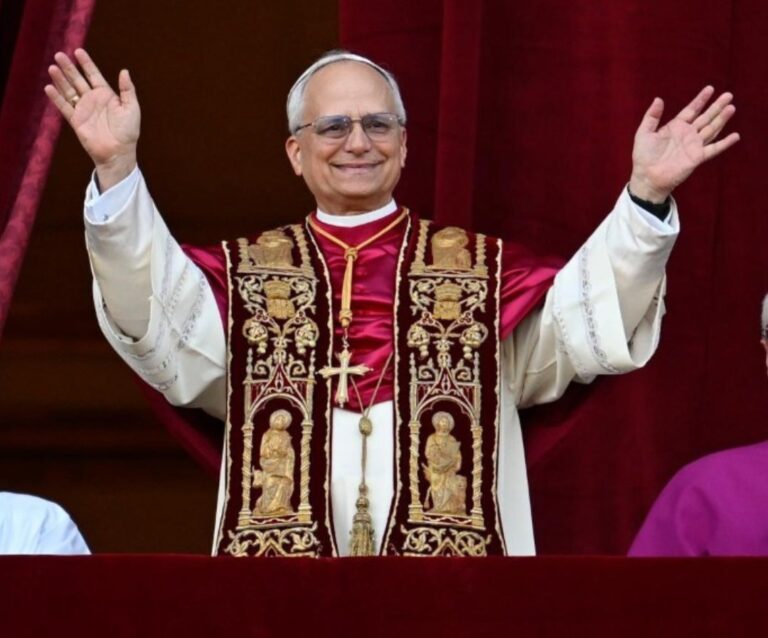
POPE Leo has called for the unconditional release of all journalists currently in detention worldwide, describing their arrests as a violation of press freedom and human dignity.
The Pope made the call during his first media address at St. Peter’s Square on Sunday, as part of activities marking the 2025 World Press Freedom Day.
He expressed deep concern over the growing repression of the media in many countries, including the imprisonment of journalists for doing their jobs.
“Journalists should not be punished for seeking the truth,” the Pope said, adding that “Their detention is a threat to justice and an attack on the collective right to know.”
Pope Leo XIV, who was elected as the new leader of the Catholic Church on Thursday, May 8, urged world leaders to guarantee freedom of expression and ensure that journalists operate without fear of persecution.
He said silencing the media would threaten democracy and peace.
The Pope also prayed for the safety of all journalists, especially those reporting under hostile conditions.
The Pope’s call came at a time when press freedom continues to face serious threats globally. According to the Committee to Protect Journalists (CPJ), at least 320 journalists were detained in 2024, many of them without trial or access to legal representation.
In Nigeria, several cases of journalist harassment and unlawful detention have been reported in recent years, with media rights advocates consistently condemning the use of state security agencies to intimidate or silence media practitioners.
Nigeria ranked 120th on the World Press Freedom Index in 2021 and has been describedas one of the most dangerous and difficult countries for journalists in West Africa.
In 2023, The ICIRtracked 39 journalists who were harassed during the year in the line of duty, though the list was not exhaustive.
The ICIR reported that journalists continue to face threats to their lives in Nigeria despite large-scale corruption, insecurity and injustice pervading the nation. Crimes are alarmingly high, and many citizens have lived in unprecedented hardship since the post-civil-war era. These are some of the enormous tasks the Nigerian media are constitutionally bound to report on.
Most recently, a Nigerian veteran journalist, Lanre Arogundade, was removed from the State Security Services (SSS) watchlist after four decades.
Reacting to the decision, Arogundade challenged the nation’s security agencies to focus on fighting terrorists and other criminals beleaguering the nation.
Meanwhile, Nigerian journalists and press freedom groups have lauded the Vatican for drawing international attention to attacks on the media by governments.
They called on the Nigerian government to address persistent media suppression in the country.
FORMER military administrator of Bayelsa State, Omoniyi Caleb Olubolade, is dead.
Olubolade, who turned 70 on November 30, 2024, died on Sunday, May 11, after collapsing while playing lawn tennis in Apapa, Lagos State.
His death was confirmed in a statement jointly signed by his first daughter, Oluwayemisi Akinadewo, and first son, Dayo Olubolade.
According to his family, he had driven himself to a sports facility to play tennis when he suddenly slumped on the court.
Despite efforts by medical personnel to resuscitate him, he was later pronounced dead at the Obisesan Naval Medical Hospital in Apapa.
The ICIR reports that Olubolade was a former Minister of Special Duties, Police Affairs, and Minister of State for FCT.
Background
Olubolade was a retired Nigerian naval officer and politician. He hailed from Ekiti State.
He served as the Military Administrator of Bayelsa State from 1997 to 1998, where he helped set the foundation for the state’s development.
After retiring from the Navy in 1999, Olubolade transitioned into politics. He was appointed Minister of Special Duties and later Minister of Police Affairs during President Goodluck Jonathan’s administration.
Throughout his career, he was recognised for his leadership, public service, and contributions to national development.
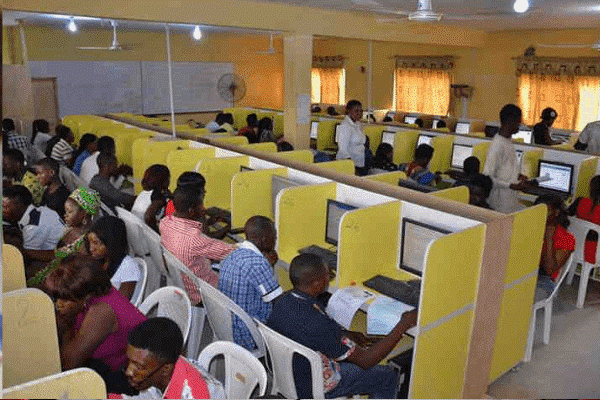
THE Joint Admissions and Matriculation Board (JAMB) said it had launched an investigation into numerous complaints regarding the recently released 2025 Unified Tertiary Matriculation Examination (UTME) results.
The results, announced last Friday, May 9, have sparked reactions, with many candidates and Nigerians expressing dissatisfaction with the conduct of the examination on social media.
They also alleged that there were irregularities in the results released by the examination body.
On May 9, a Nigerian with the account @Timmieexx on X publicly challenged JAMB. She claimed that her brother’s exam result appeared inconsistent and urged the examination body to review it.
“Dear @JAMBHQ, my brother’s JAMB result just came out, and it’s not adding up. This is someone with a consistent record of academic excellence. We can’t accept this result. Too much effort and sleepless nights went into the preparation. This is so unfair. Please REVIEW IT!!!!!” her post read.
@Chukumapius, who identified as a retired teacher, tagged JAMB to express his concern that the result his daughter obtained didn’t reflect her hard work or match the score she achieved last year.
The reactions also followed the earlier development that showed that 78.5 per cent of the candidates who sat for the 2025 UTME scored below 200, a benchmark commonly used for admission into competitive programmes in Nigerian federal universities.
According to JAMB, of the 1,955,069 registered candidates, 1,534,654 scored below 200, while the results of 39,834 candidates were withheld for various reasons.
Reacting to this, JAMB spokesperson, Fabian Benjamin, stated that the board conducted an annual review encompassing three critical stages: registration, examination, and result release.
During the examination phase, he noted that JAMB ensured that every candidate had the opportunity to sit for the test.
He also noted that JAMB had engaged experts, including members from the Computer Professionals Association of Nigeria, chief external examiners from tertiary institutions, the Educational Assessment and Research Network in Africa, measurement experts, and vice chancellors from various universities, to assist in the investigation.
“The review will scrutinise the registration, examination, and result release stages to identify potential technical issues.
“The Board’s annual review encompasses three key stages: registration, examination, and result release. During the examination phase, JAMB ensures that every candidate is afforded the opportunity to sit for the test. Should any technical issues arise, the Board reschedules the examination for affected candidates without hesitation,” Benjamin said.
“We are currently scrutinising these complaints in detail to identify and rectify any potential technical issues,” he stated.
He assured that if the investigation confirmed any technical glitches, JAMB would take immediate corrective measures, which might include the rescheduling of exams for affected candidates.
UNITED States President Donald Trump has announced his intention to sign an executive order aimed at significantly reducing the prices of prescription drugs in the United States.
In a statement on Sunday, May 11, via its TruthSocial handle, Trump said the move would lower drug prices between 30 per cent and 80 per cent, addressing what he described as a long-standing disparity in global medication costs.
Trump criticised the high cost of prescription drugs in the United States compared to other countries, noting that medications produced in the same laboratories and by the same companies are often five to ten times more expensive for Americans.
“For many years, the world has wondered why prescription drugs and pharmaceuticals in the United States States of America were so much higher in price than they were in any other nation, sometimes being five to ten times more expensive than the same drug manufactured in the exact same laboratory or plant, by the same company??? It was always difficult to explain and very embarrassing because, in fact, there was no correct or rightful answer.
“The pharmaceutical/drug companies would say, for years, that it was research and development costs, and that all of these costs were, and would be, for no reason whatsoever, borne by the ‘suckers’ of America, ALONE. Campaign contributions can do wonders, but not with me, and not with the Republican Party. We are going to do the right thing, something that the Democrats have fought for many years,” Trump added.
The executive order, according to Trump, will be signed at the White House at 9:00 A.M. (around 2 PM West Africa Time) on Monday, May 12.
He promised that the price reduction would take effect “almost immediately,” adding that drug prices might rise globally as part of the equalisation process.
“I will be instituting a most-favoured-nation policy whereby the United States will pay the same price as the nation that pays the lowest price anywhere in the world. Our country will finally be treated fairly, and our citizens’ healthcare costs will be reduced by numbers never even thought of before. Additionally, on top of everything else, the United States will save trillions of dollars. Thank you for your attention to this matter. Make America great again!,” he added.
The executive order came after Trump had previously signed an order that rescinded former President Joe Biden’s executive order that lowered the cost of prescription drugs.
In April, the US president also signed another order directing the Department of Health and Human Services (HHS) to reduce drug costs through competition and market mechanisms rather than presidential directives.
The directive followed the Trump administration’s plan to impose tariffs on pharmaceutical imports, which were previously exempt from such levies introduced during the president’s first term.
These tariffs could worsen shortages of certain drugs, especially generic medications, and potentially drive up prices.
THE Academic Staff Union of Universities (ASUU) has elected a professor, Chris Piwuna, as its new national president.
A consultant psychiatrist at the University of Jos Teaching Hospital and Dean of Student Affairs at the University of Jos, Piwuna succeeds Emmanuel Osodeke, another Professor of Soil Science from Michael Okpara University of Agriculture, Umudike, whose tenure began in 2021.
The election took place during ASUU’s 23rd National Delegates Congress, held at the University of Benin, Edo State, on Sunday, May 11.
Piwuna, who previously served as ASUU’s vice president, won the presidency after defeating Adamu Babayo, a professor at Abubakar Tafawa Balewa University, Bauchi.
Confirming the news to The ICIR, Osodeke stressed that the new president had resumed office immediately.
The election was amid unresolved issues between the Nigerian government and ASUU, which has consistently identified poor funding as a major contributor to Nigeria’s educational challenges.
In September 2024, the union noted that the government used “delay tactics” to deal with its members.
The ICIR reported ASUU’s demands to include renegotiating the 2009 Federal Government and ASUU agreement, providing revitalisation funds for public universities, paying all earned academic allowances and withheld salaries, and addressing promotion arrears.
Underfunding public universities has been a recurring issue, sparking prolonged ASUU strikes, including an eight-month industrial action in 2022.
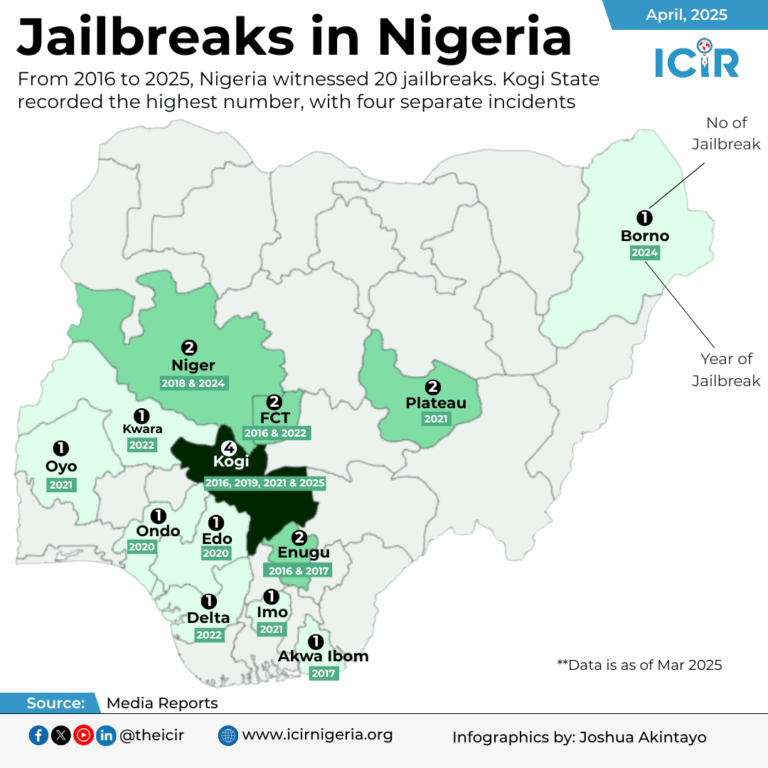
Following the most recent jailbreak in Kogi State, which shows the persistent challenges in Nigeria’s Correctional system, The ICIR documents the timeline of similar incidents in Nigeria from 2016 till date as well as the patterns at which they have unfolded.
The ICIRreported that in the early hours of March 24, 2025, twelve inmates escaped from the Medium Security Custodial Centre in Koton Karfe, Kogi State, marking another incident in Nigeria’s series of prison breaks.
The escapees manipulated padlocks in a section of the facility, leading to their breakout. Tragically, one correctional officer died during the incident. Security experts attribute these recurring incidents to systemic issues within Nigeria’s correctional system.
A report by Premium Times highlights factors such as infrastructural deficits, overcrowding, and prolonged trials as contributing to the frequency of prison breaks in the country. Also, a study published on ResearchGate emphasises the need for improved prison intelligence and dynamic security strategies to manage correctional facilities effectively.
In response to the Kogi jailbreak, the Acting Controller General of Corrections of the Nigeria Correctional Service (NCS), Sylvester Ndidi Nwakuche, ordered a comprehensive investigation into the circumstances surrounding the incident and mandated a security audit across all correctional facilities nationwide.
Timelines of jailbreaks
2016: FCT, Kogi & Enugu
The year witnessed multiple jailbreaks. On June 24, of that year two inmates awaiting trial for murder escaped from the Kuje Medium Correctional Centre in Abuja by scaling the fence. This led to the removal of the officer-in-charge, Musa Tanko.
Just over a month later, on July 29, 13 inmates escaped from Koton-Karfe Correctional Centre in Kogi State during a coordinated breach.
Then on August 9, at least 15 inmates broke out of the Nsukka Correctional Centre in Enugu State.
2017: Enugu & Akwa Ibom
On October 7, two convicted inmates, Lucky Sama and Balogun Idiom Joseph fled through the ceiling of a Catholic Church within the Enugu Maximum Security Prison.
Similarly, on December 27, 36 inmates escaped from Ikot Ekpene Prison in Akwa Ibom State. The escapees attacked kitchen staff, even as four inmates were killed in the process.
2018: Niger
On June 3, gunmen stormed the Minna Medium Security Prison in Niger State, killing a prison official and a motorcyclist. The attack enabled the escape of 210 inmates.
2019: Kogi
On October 28, floodwaters overran part of the Koton Karfe Correctional Centre in Kogi State. The breach allowed 122 inmates to flee, although 25 were later re-arrested.
Infographic showing timeline of jailbreak in Nigeria from 2016-2025
2020: Edo & Ondo
The #EndSARS protests triggered widespread unrest, including in correctional facilities. On October 19, hoodlums attacked Benin and Oko prisons, enabling 1,993 inmates to escape.
Three days later, on October 22, another 58 inmates were freed after protesters broke into the Okitipupa Correctional Centre in Ondo State, bringing down its fence.
2021: Imo, Plateau & Kogi
On April 5, in one of the most brazen attacks, gunmen ambushed the Owerri Correctional Centre in Imo State. 1,844 inmates were set free. The attack was allegedly linked to the Eastern Security Network (ESN), affiliated with the outlawed Indigenous Peoples ofb Biafra (IPOB).
On July 8, four detainees escaped the Jos Custodial Centre in Plateau State. Officials blamed staff negligence.
On September 13, gunmen attacked the Kabba Correctional Centre in Kogi State, killing two security operatives and freeing 240 inmates. About 114 were later recaptured.
On October 22, heavily armed assailants raided the Abolongo Medium Security Custodial Centre in Oyo State, using grenades to breach the gates. 837 inmates escaped, out of which 262 were recaptured.
On November 28, gunmen stormed the Jos Correctional Centre again. 262 inmates escaped, nine were killed and ten re-arrested, while 252 remained at large.
2022: Kwara & FCT
The year began with another breach on January 2, when three inmates escaped from the Mandala Custodial Centre in Ilorin, Kwara State.
On May 13, after a perimeter wall collapsed due to heavy rain, three inmates escaped from the Agbor Prison in Delta State. In July, Nigeria witnessed one of its most high-profile breaches as the Kuje Medium Security Prison in Abuja was attacked by ISWAP terrorists. 879 inmates, including 64 Boko Haram fighters, escaped after explosives and firearms were used. A security officer was killed, and several others were injured.
2024: Niger & Borno
A heavy overnight rainstorm severely had damaged the Medium Security Custodial Centre in Suleja, near Abuja. The downpour destroyed parts of the prison’s infrastructure, including the perimeter fence, leading to the escape of 118 inmates. Authorities swiftly activated recapture protocols, and by the following day, 14 escapees had been re-arrested.
On September 9, 2024 severe flooding caused by the collapse of the Alau Dam led to catastrophic damage in Maiduguri, Borno State, including the breach of the Medium Security Custodial Centre’s walls. This disaster resulted in the escape of 281 inmates. Only seven were reportedy recaptured.
As Nigeria continues to grapple with these challenges, experts advocate for urgent reforms to address the root causes of prison breaks and to strengthen the country’s correctional infrastructure.
THE Nigerian Electricity Regulatory Commission (NERC) has directed nine electricity Distribution Companies (DisCos) to compensate Band A customers residing on 557 streets within their franchise areas for failing to meet the minimum power supply requirements set under the new electricity tariff structure.
Affected DisCos must provide compensation for the inadequate power supply in April across 152 electricity feeders, NERC said.
The regulatory agency made the order in its April 2025 Multi-Year Tariff Order, noting that the compensation should be carried out either through electricity credit or by improving power supply.
The ICIR reports that Band A customers are those getting a minimum of 20 hours of electricity supply daily and pay the highest electricity tariffs.
The order showed that the DisCos affected include Abuja Electricity Distribution Company, Eko Electricity Distribution Company, Port Harcourt Electricity Distribution Company, Kano Electricity Distribution Company, Kaduna Electricity Distribution Company, Ikeja Electric, Ibadan Electricity Distribution Company, and Benin Electricity Distribution Company.
The AEDC is required to compensate consumers on 74 streets served by 20 electricity feeders.
“AEDC shall make appropriate compensation to the affected customers in Band A feeders listed in Appendix 3 for failure to deliver up to 20 hours of average supply, but more than 18 hours of average supply, in line with the provisions of the Order on Migration, while the feeders shall remain as Band A.
“AEDC shall downgrade the Band A feeder listed in Appendix 2 to the commensurate level of supply and make appropriate compensation to the affected customers in line with the provisions of the Order on Migration.”
The ICIR reported on Friday, May 10, that residents in Jabi District of Abuja and parts of Life Camp, Kado District, and areas along Kaduna Road expressed concern over a prolonged power outage affecting the areas.
The NERC’s latest disaggregated data revealed that AEDC planned to downgrade 26 streets across three feeders, a move that may lead to potential revenue losses.
The order indicates that EKEDC has the highest number of affected streets, with compensation to be provided to customers on 155 streets served by 57 feeders.
The ICIR reports that this development comes exactly one year after NERC approved a contentious tariff increase of over 300 per cent for Band A customers, along with a mandate for a minimum daily power supply of 20 hours.
Despite the tariff hike and the significant expansion of the Band A customer base, consumers continue to decry poor service delivery, as many households and businesses grapple with unstable power supply, rising production costs, and shrinking disposable income.
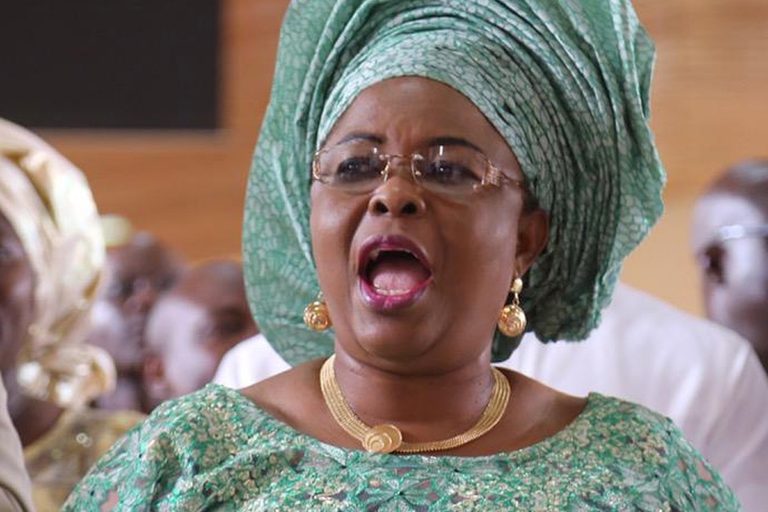
AMID speculations that powerful interests are encouraging former President Goodluck Jonathan to declare interest in the Nigerian presidency come 2027, his wife and former First Lady, Dame Patience, has dismissed any possibility of her family returning to the Aso Rock.
While receiving the Women Icon Leader of the Year 2025 award from Accolade Dynamics Limited at an event in Abuja Saturday night, Patience Jonathan pledged her full support for First Lady Oluremi Tinubu, whose husband is widely believed to be warming up to declare for a re-election.
The former First Lady expressed firm support for rotational presidency, emphasising that the “turn-by-turn” approach is crucial for maintaining national cohesion.
“We are groups. We worked when I was a deputy governor’s wife. We worked when I was a governor’s wife. I know her. I talked with Oluremi. Even when my husband was the vice president, Oluremi stood with her husband and supported us during our first election. They supported us. So, for me, I have a conscience. I cannot abandon my friend, whether you like it or not,” she said.
She stressed that instead of seeking a return to Aso Rock, she would stand firmly behind the First Lady and her husband.
“Because, you see, this is turn by turn. Today is my turn, I will go. Tomorrow, it will be another person’s turn. I stand by my friend. My friend is great. I told her I would campaign with her. I’m not denying her. I’m not running. I’m not going back to the Villa. If you call me, I will not go,” she said.
The former First Lady, attributing her youthful appearance to the peace of staying away from Aso Rock, said, “ Don’t you like how young I look? It is because I have the rest of mind.”
She described the award as a recognition of the collective efforts made toward promoting women’s health and economic empowerment.
She also expressed strong support for the 35 per cent affirmative action for women in governance, while lamenting the National Assembly’s repeated rejection of gender equality bills.
“During Obasanjo’s time, we worked for it, and the executive approved 35 per cent. My husband also maintained it. But when it comes to elective positions, the men dominate and shut us out. May God touch their hearts to understand that we are their mothers, sisters, and friends. We are not trying to take power from them; we are trying to support them.”
The ICIR reported that last week, the president of the Nigeria Rescue Mission Organisation and former president of Buhari Youth Organisation (BYO), Jibril Mustapha, called on Jonathan to contest the 2027 presidential election “to save Nigerians from hunger and other economic hardship.”
He said Jonathan, who lost his re-election to former President Muhammadu Buhari in 2015, should heed the call to contest for the second and final term.
He stressed that as the nation prepares for the 2027 elections, his organisation believed that it was time for all stakeholders to come together and support a candidate who could genuinely represent the interests of all Nigerians.