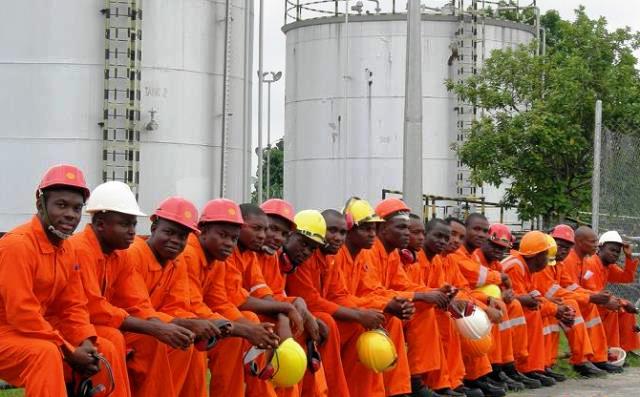
The Nigeria Union of Petroleum and Natural Gas Workers, NUPENG, has shut down operations at all the depots belonging to Total oil company, citing refusal of the company to allow its staff members participate in union activities as well as sacking members who take part in union activities.
In a statement by the South-West Chairman of NUPENG, Tokunbo Korodo, in Lagos State, the union said it has mandated its members to stop all loading activities at all Total depots and terminals nationwide until the company’s management addresses the situation.
Korodo alleged that the management of Total has consistently resisted the unionisation of workers under its contract programme in Lagos, Kaduna and Koko, Delta State blending plants.
The NUPENG zonal chairman further said that the company had moved further to terminate the appointment of workers who had joined the union.
He said: “In view of this, the union has directed all workers in Total downstream to stop work until the management allows workers to unionise and slave labour introduced are cancelled.
“This action should commence immediately.”
When correspondents from the News Agency of Nigeria, NAN, visited Total Blending Plant at Kirikiri, Lagos State, it was observed that workers blocked the entrance of the gate with two trailers.
The workers brandished various placards with inscriptions such as: “Nigerians enslaving Nigerians in Nigeria; “Total and Jomog want to sack us because we joined NUPENG”.
However, Rotimi Benjamin, the Zonal Vice-Chairman of the South West Chapter of NUPENG, told the journalists that the management of Total Plc has summoned the union to a meeting to resolve the issue.
He added that the union would not go back on its industrial action until all the issues had been amicably resolved.
Lucky Irabor, the theatre commander of the counter insurgency operation in the North East, Operation Lafiya Dole, has insisted that the Nigerian military has won the war against insurgency in the North East even though the whereabouts of the Boko Haram Leader, Abubakar Shekau, remains unknown.
Irabor was addressing a press conference at the headquarters of the army operations located in Maiduguri, the Borno State Capital on Wednesday.
He said that the claim that Shekau had relocated to Kala-Balge, a village in Borno North, was a mere rumour that the military is yet to substantiate.
“If I know where Shekau is now, I will grab his balls,” the army commander said.
He however maintained that the war against the insurgency has been won by the military, urging Nigerians to do their best in contributing to “winning the peace”.
“It is now time for all Nigerians to contribute in the battle to win peace in the North East with the Nigerian troops having won the war against insurgency for the nation,” he said.
Irabor said every Nigerian has to ensure that peace is restored and sustained in the North East region.
According to him, the process of winning peace will involve all the stakeholders working together and evolving lasting strategies to address the root causes of the insurgency and ensuring that the a similar situation does not arise in the future.
The army commande also confirmed that soldiers were able to neutralise three suspected female suicide bombers on Wednesday in Madagali Local government area of Adamawa state.
He said the trio tried to run at the troops with their explosives and they had to be gunned down to prevent a major disaster.
Irabor also confirmed the arrest of the Chairman of Mafa local government area whom he said harboured a top Boko Haram commander and his father at his resident in Maiduguri.
He further revealed that the Vice Chairman of Kaga local government area, was also arrested on allegations of involvement in cattle rustling.
The Federal Government has given approval for Aviation Security personnel to start bearing arms in order to better secure passengers and installations across airports in Nigeria.
Minister of State for Aviation, Hadi Sirika, made this known while briefing State House correspondents at the end of the Federal Executive Council, FEC, meeting which held at the Aso Rock Presidential Villa on Wednesday and was chaired by President Muhammadu Buhari.
Sirika said that the aviation ministry would collaborate with the Ministry of Interior and other stakeholders in the training of the Aviation Security personnel on how to handle arms.
He said: “We are very serious about aviation security, just last week the President approved that aviation security should bear arms, so we are trying to make them take the form and shape of TSA of the US with K-9 dogs, handcuffs, the guards, the batons, light weapons, etc.
“The Minister of Interior is helping us in that regard from the directive of Mr President to partner with them and other stakeholders to ensure we keep our airports secure.
“So, very soon you will see them with uniform, doing different functions and securing our airports.
“All these will be unveiled at the next stakeholders meeting,” he added.
Sirika further disclosed that the council has approved the sum of N1.1 billion for the completion of the Kaduna International Airport Terminal building.
He pointed out that the contract for the rehabilitation of the building was initially awarded in 2011 at the cost of about N500 million.
“FEC has approved the completion of Kaduna terminal building. It was awarded in 2011 and commenced in 2012,” he said.
“During the rehabilitation of the terminal building a contractor noticed some structural damages to the building itself and then increased the scope of what to be done to put it to use and that necessitated the variation of the contract sum.
Repentant Boko Haram fighters have called on their former colleagues who are still in the Sambisa forest to surrender their arms to military authorities and embrace peace.
They made this known on Wednesday in Maiduguri when the army authorities presented them to newsmen.
One of them, Joseph David, who is popularly known by his alias, Ibrahim Alhaji, said the fighters should disregard what their leaders told them that they will all be killed if they surrendered.
“I have chosen to lay down my arms to allow peace reign in the country,” he said, adding that “We have been accepted by the Nigerian Government, contrary to what we were told by the sect leaders.”
Another suspect whose name was withheld also appealed to the rest of the sect members to lay down their arms and embrace peace.
He said: “The sect leaders told us not to surrender to the government because we will be killed, but to our surprise, nothing happened to us.
“The Nigerian government has accepted us and is taking good care of us.”
Theatre Commander of Operation Lafiya Dole, Lucky Irabor, told journalists that the insurgents were among ten repented boko haram fighters who recently surrendered to the army authorities.
He said that four of them were from Mamman Nur’s camp, while six were from the Shekau faction.
The army commander added that the repentant sect members would undergo a de-radicalization programme in order to enable them become responsible citizens when they are eventually reintegrated into the society.
“We are doing our part to see that this madness is reduced to the barest minimum,” he said.
Irabor also said that more than 1,400 people had been rescued by the military in the last one week as the new counter-insurgency operation codenamed “Operation Rescue Finale” continues.
Another suicide attack was averted by the Nigerian Army on Wednesday after three female suicide bombers were shot dead in Bakin Dutse, Madagali Local Government Area of Adamawa State.
Officials said the three girls had planned to attack a market in Gulak, headquarters of Madagali LGA before they were intercepted.
Confirming the incident, Badare Akintoye, a Major in the Nigerian Army and the Public Relations Officer of the 28 Task Force Battalion in Mubi, said: “We gunned down three female suicide bombers. Our soldiers are on alert and commercial activities are going on there.”
Also chairman of Madagali Local Government Area, Yusuf Gulak, in a phone interview, provided more details of the incident.
“Our local vigilantes that are now assisting the soldiers saw the three female suicide bombers who were on a mission to strike in the market,” he said.
“On seeing them fast approaching, they asked them to stop but the girls declined instead running faster, so one was instantly gunned down and the bomb on her body exploded. So also the second girl.
“The third girl attempted to run but could not succeed as she was also shot dead.”
The LG boss called for more soldiers to be deployed to the area in order to shore up security.
The incident is coming less than 24 hours after soldiers repelled an early morning attack on Dar village in the same local government area on Tuesday.
Recall that dozens of people were killed in December 2016 following suicide bomb attacks carried out by two female suicide bombers at a local market in Madagali.
The boko haram terrorists have resorted to isolated attacks such as these following consistent clearance operations on them by the Nigerian military.
On Christmas day 2016, the military announced that it has captured Sambisa Forest, the main stronghold of the insurgents in Borno State.
Ilhan Omar has made history by becoming the first Somali-American to be sworn in as a lawmaker in the United States of America.
Analysts say Omar’s swearing is more significant given the fact that she is a woman
Omar, a Somali-born former refugee, was elected to serve in Minnesota’s state house of representatives in tightly contested elections last year.
Her election came just days after US President-elect Donald Trump accused Somali immigrants in Minnesota of spreading extremist Islamic views.
A video posted online showed Omar taking her oath of office on the Koran before making a speech at a ceremony in the capital of the US state of Minnesota.
The former refugee “pledged to be the best she can be” as she serves.
She said: “We are privileged to be people that can live in unity and diversity, and we are privileged to have one another.
“So as much as I pledge to you to be the best that I can be, I hope you will pledge to me to be the best you can be as well.”
Omar was born in 1982 in Somalia the youngest of seven siblings, and grew up in an upper middle class household.
After the start of the Somali civil war in 1991, she and her family left the country and spent four years in a refugee camp in Kenya.
In 1995, Omar and her family emigrated to the United States where they initially settled in Arlington, Virginia before later moving to Minneapolis.
Omar attended Edison High School, and later, the North Dakota State University, where she participated in the Muslim Student Association.
She graduated with a bachelor’s degree in political science and international studies.
As of September 2015, Omar is the Director of Policy and Initiatives of the Women Organizing Women Network, an association that advocates for women from East Africa to take on civic and political leadership roles.
She supports a $15 per hour minimum wage as well as advocates for free tuition for students with a family income below $125,000.
No less than 100 staff members of the Independent National Electoral Commission, INEC, will be suspended following a report indicting them of collecting bribes ahead of the 2015 general elections.
INEC’s spokesman, Nick Dazang, confirmed the development to journalists, saying that the commission had started reviewing the report which was the outcome of an investigation carried out by the Economic and Financial Crimes Commission, EFCC.
He said that in accordance with the regulations guiding INEC, which borrows from Public Service rules, every staff member indicted in the report will be placed on suspension.
Dazang added that it would be left for the accused persons to prove their innocence before the suspension could be lifted.
“The position of this commission is that we will apply the provisions of the INEC conditions of service which are the same as the public service rules as they apply to those who are indicted,” the INEC spokesman said.
“There is a condition of service which INEC has, which draws from the Public Service rules. When a member of Staff is indicted, then the rules apply; which means that he would now be on suspension.
“When he is placed on suspension, he has to prove his innocence. So that’s how it works.”
Dazang said that the report from the EFCC got to the INEC chairman, Mahmood Yakubu, shortly before the Christmas and New Year holidays, but refused to give more details on the content of the report.
“What I know is that 100 staff are being investigated, and I think that before we went on vacation, the commission officially received the indictment report from the EFCC.
“It was based on that that the INEC’s conditions of service will now apply to them.”
However, an INEC national commissioner had told THE PUNCH newspaper in confidence that the indicted persons will have received their suspension letters by the end of January 2017.
Reports also have it that the INEC officials under investigation did not participate in the governorship elections in Edo and Ondo States as well as the legislative rerun election in Rivers state in late 2016.
The PUNCH also quoted an anonymous EFCC source as saying that some of the indicted INEC staff members had gone to court seeking for orders prohibiting the anti-graft agency from investigating them.
The source, however, added that even if the orders were granted, it will not prevent the suspects from being prosecuted.
According to the newspaper, many high profile names were mentioned in the EFCC report, including the former Rivers State Resident Electoral Commissioner, REC, Gesila Khan, who was alleged to have received the sum of N185.5 million ahead of the March 28 and April 11, 2015 elections in the state.
Two houses and two plazas were reportedly recovered from the former REC, while her account was frozen
Also, the EFCC arrested one Fidelia Omoile, the INEC Electoral Officer in Isoko South Local Government Area of Delta State.
The sum of N112.4 million was traced to her account while many sensitive electoral materials were recovered from her residence in Edo and Delta States.
Another INEC administrative officer in Delta State, Oluchi Obi-Brown was also arrested. She allegedly received N111.5 million, while further investigations revealed she had an account in the United States that contained $75,000.
In Akwa Ibom State, a retired INEC official, Edem Effanga, was arrested alongside his accomplice, Immaculata Asuquo, who is the head of Voter Education of INEC in the state.
Effanga was said to have received N241.1 million, which he distributed among other INEC ad-hoc staff members during the 2015 election.
11 INEC officials were also arrested in Gombe state and they admitted to have received about N120 million in bribes prior to the election.
Ahmed Biu and Mohammed Zannah, electoral officers in Akko and Gombe LGAs respectively, admitted to have received the monies from one Yunusa Biri, also a retired INEC official.
The bribe fund was believed to be part of the N23 billion arsenal facilitated by former Minister of Petroleum Resources, Diezani Allison-Madueke.
The former minister has remained at large since after former President Goodluck Jonathan lost the 2015 election to President Muhammadu Buhari.
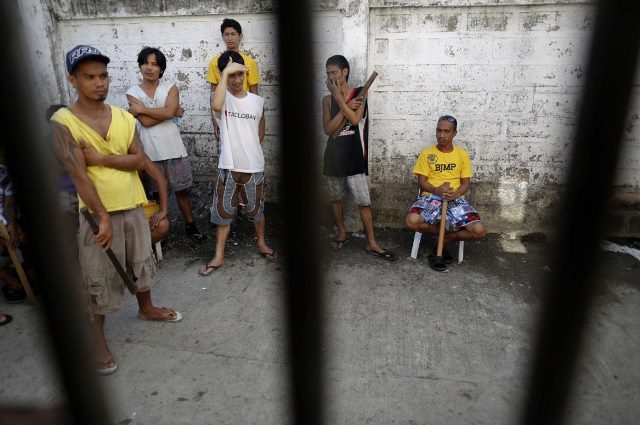
More than 150 inmates escaped from a South Philippines prison after gunmen, suspected to have links with Islamist separatist groups launched an attack on the facility.
Prison authorities say around 100 armed men stormed the jail and engaged in a shoot-out with guards, as prisoners fled in the chaos, leading to the death of one prison guard and six escapees.
The Philippines, a predominantly Catholic country, has battled separatists in the south for decades, amid kidnappings, violence and jailbreaks.
Islamist groups like the Moro Islamic Liberation Front, MILF, and Abu Sayyaf have carried out terror attacks as well as kidnapping tourists for ransom in southern Philippines for decades.
The latest prison break took place at the North Cotabato District Jail near Kidapawan city, on the island of Mindanao.
Prison authorities said the gunmen showed up around 01:00 local time and opened fire on the facility, which held more than 1,500 inmates.
The shoot-out lasted for about two hours, and in the confusion some prisoners fled to the back of the prison and climbed over the walls by stacking their beds.
A prison warden, Peter Bonggat, told newsmen that the prisoners took their chances “because of the volume of fire. They used their bedding, piled them on top of each other to escape.”
He added that he believed the attack was to free a number of Islamist rebels who were in the jail.
Philippine military and police have launched a hunt for the escaped inmates, and so far, at least six have been recaptured.
A Philippine newspaper reported that the recent attack was the third and biggest prison escape in the past decade at North Cotabato District Jail.
More than 40 inmates fled in 2007 when three bomb-makers were rescued by guerrillas, and four years later another group of bomb-makers also escaped.
In August last year, the Muslim extremists group, MILF, which pledged allegiance to the Islamic State, freed eight detainees and 15 other inmates at a jail in Marawi, a city on Mindanao.
The MILF is in the midst of a long-running peace process with the Philippine government, but it has been hampered by the fact that the group has splintered into several factions and offshoot groups, some of which have refused to surrender.
There are indications that the remnant of the Boko Haram sect may be holing up in communities close to Sambisa Forest following the successful execution of Operation Lafia Dole by the Nigerian military.
Camp Zero, the last remaining hideout of the Boko Haram insurgents in Sambisa Forest, was destroyed in December by Nigerian soldiers, forcing many of them to flee.
From the accounts of residents of communities close to the forest, some of the escaping terrorists might have taken over some villages and forced the local people to flee.
Tales recounted to www.icirnigeria.org by some residents of villages in Damboa Local Government Area of Borno State also indicate a deep ideological division among members of the sect.
According to residents who escaped, while some of the insurgents were ready to live in peace among the villagers, insisting only that everybody practice Islam, other members of the sect were ruthless and did not want to see the residents and were ready to kill them all.
Part of Sambisa Forest is under Damboa local government, located in the south western part of the Borno State. Other parts come under Askira/Uba, Konduga and Jere local government areas of Borno State and extend to Bauchi, Gombe, Yobe states and even Kano in its Northern fringes.
Residents of Zindiya, Kulus and Goniri villages who spoke to our reporter at the Bakassi IDP camp in Maiduguri on Friday December 22, a day after Camp Zero fell to the military, gave accounts of the divisions, differences in ideological temperament and in-fighting among members of the sect.
The insurgents, they said, had arrived in their villages over time as they escaped from the onslaught of Nigerian soldiers in the final push to destroy Sambisa Forest.
Umar Alli, 52, from Kulus, who was among 201 displaced persons brought into Bakassi Camp from different communities under Damboa local government, said they could no longer remain in their village because of the in fighting among members of the sect.
He recounted: “Mustapha (name of a member of the sect in the village) and his boys told us not to go anywhere that they will not kill us. He said he and his boys have resolved to pursue their religion strictly and renounce violence. He said we should stay in our houses.”
Umar Alli
However, another group of Boko Haram members, less sociable and more ruthless, entered the villages and chased out the residents, threatening to kill anyone they see.
“We packed our things with our women and children and trekked for several hours to Goniri where they told us we would find soldiers who will take us to Maiduguri. We trekked for six hours before we came to Goniri from our village. It was from there the military brought us to this camp.”
Alli believes members of the sect have since taken over his village and said it was unsafe for anyone of them to return there now.
Mallam Goroma, a resident of Zindiya, also in Damboa, told www.icirnigeria.org that Boko Haram members also came to their village, took it over and ran the place until they fled.
According to him, the insurgents prevented them from going to farm or trading.
“They were fighting among themselves. Some told us they will not harm us but others asked us to leave. They have taken over our community,” he said in Hausa.
Goroma said all residents of Zindiya had left the village and only members of the sect can be found there. He said the military has tried but urged them to flush out the remnants of the sect from all villages under Damboa so that they could return home to farm.
Some of the women who spoke to this website said they trekked several kilometres carrying luggage and their children on their backs before they were found by soldiers who brought them to the camp.
There were no young men or young girls among residents of the villages brought to the camp as those ones had fled the communities long ago to escape Boko Haram conscription.
Those left behind were old men and their wives and their little toddlers who followed them to the camp.
It was reliably gathered from other IDPs interviewed at the camp that despite the successes recorded by the military in the North east, members of Boko Haram might still be alive in several communities across the state, especially in communities close to Sambisa, where they are hiding among the people.
That is why even though all the local government areas have been liberated from Boko Haram, residents have failed to return for fear of attack.
That is also why commercial or private vehicles still cannot ply Maiduguri-Bama and Maiduguri- Damboa roads, without military escort. It is the same with Maiduguri-Gamboru Ngala road.
But, the military, perhaps, already had the information that escaping Boko Haram insurgents might be holing out in communities close to Sambisa, as it has sent out an alert to residents to report any suspicious individuals to the authorities.
Significantly, Lucky Irabor, a Major General and Theatre Commander of Operation Lafia Dole, said while briefing the press on the fall of Camp Zero that “We have won the war, but we need to win the peace!”
At the briefing held on December 28, last year, Irabor urged the people “to remain vigilant and report any suspicious movement of persons and objects to the military or to the nearest security agencies.”
President Muhammadu Buhari had on Christmas Eve announced the fall of Camp Zero, the last stronghold of Boko Haram in Sambisa Forest. He said he was delighted of the news and proud of the gallantry of Nigerian troops.
“I was told by the Chief of Army Staff that the camp fell at 1:35pmon Thursday, December 22, and that the terrorists were on the run and no longer have a place to hide,” the President disclosed.
But if the IDPs are to be believed, Boko Haram is still far from been crushed and the military will do well to look closely at communities around Sambisa to rout out remnants of the sect.
On Tuesday, Boko Haram members believed to be fleeing from Sambisa made unsuccessful attacks on Dar village, Madagali Local Government of , Adamawa state.
Chairman of Madagali Local Government, Yusuf Mohammed, told newsmen that the attack was repelled because of the prompt response of security operatives in the areas.
He praised the gallantry of security personnel and local vigilantes in the area and called for more support to keep the region secure.
Akintoye Badare, an army Major and Spokesman of the 28 Task-Force Battalion, Mubi, confirmed the development adding that there were no casualties on the military side during the operation.
The Nigerian Army has warned its officers and soldiers on duty to desist from posting pictures and videos of their operation on the social media.
General Officer Commanding, GOC, 1 Division Mechanized Army, Adeniyi Oyebade, issued the warning on Tuesday in Kaduna state.
Representing the Chief of Army Staff, Tukur Buratai, at the graduation ceremony of Men of Nigerian Battalion, NIBBAT, 46, Oyebade, a Major General warned soldiers and officers on duty not to upload pictures “with your uniforms while in operation.”
The ceremony was held at the Nigerian Army Peace Keeping Centre, NAPKC, Jaji Kaduna state.
“Specifically, I want to warn you on the use of social media. While you are on operation, you may want to take photo shot of some good moment but you should be very careful while doing that,” Oyebade said.
“Avoid any picture or video that has to do with your colleague or operation. You are barred not to upload such information.
“It is prohibited to upload any picture with your uniforms while in operation because it will become a pragmatic problem for the Nigerian Army.”
The warning came ahead of the soldiers’ deployment to Dafur, Sudan, on peacekeeping mission.
The soldiers, 800 in all, are expected to depart Nigeria for Sudan in a few days’ time.
Oyebade urged them to display courage and bravery in the discharge of their duties in the West African country as any act of cowardice or professional negligence will not be tolerated.
He also advised the senior officers among them to see to the walfare of the soldiers.
“I expect all the officers to exercise firm command and control,” he said.
“You must look after the welfare of your men including their feeding and medical needs.
“You have no reason not to succeed because Nigeria has provided you with all that you need to do the country and your family proud.”
Photos and videos of soldiers taking part in the counter insurgency operation in the North East have flooded the internet in recent times, with some even showing the soldiers engaging the Boko Haram terrorists in fierce gun battle.
In December 2016, a video clip went viral on twitter and facebook, of soldiers complaining bitterly about lack of food and water for troops after the capture of one of Boko Haram’s major stronghold, Alagarno.
The military authorities however, refuted the claims that soldiers were being neglected at the battle fronts, explaining that the video was shot over six months ago by elements who were bent on tarnishing the image of the Nigerian military.