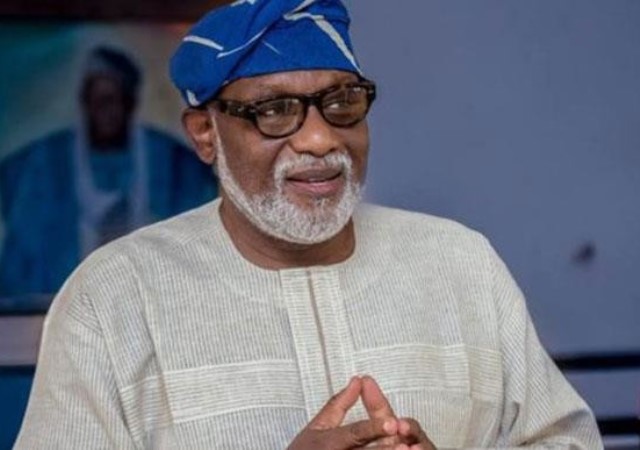
Rotimi Akeredolu, winner of the APC Ondo State governorship primary election
The appeal committee of the All Progressives Congress, APC, in Ondo State, set up to handle petitions arising from the just concluded governorship primary in the state has recommended the annulment of the exercise.
Recall that the primary election had produced Rotimi Akeredolu as the party’s candidate for the November 26 governorship election.
Akeredolu was declared winner of the exercise by the chairman of the election committee and Governor of Jigawa State, Mohammed Abubakar, with a total of 699 votes.
The process appeared peaceful at the time as all the other governorship aspirants congratulated Akeredolu, expressing satisfaction with the exercise.
Olusegun Abraham, Akeredoulu’s main rival, who had been endorsed by APC chieftain, Bola Tinubu, issued a statement two days after the primary, pledging to support the party’s candidate.
He however made a U-turn on September 7 and said the primary election should be cancelled due to irregularities.
Other aspirants, including Olusola Oke and Ajayi Boroffice, also joined in the call that Akeredolu’s victory be annulled.
The Hellen Bendega-led appeal committee said it received a total of six petitions and after thorough consideration decided that there was merit in the call that the election be annulled.
It also recommended that a rerun primary be organised as soon as possible in order to meet up with the deadline as stipulated in the electoral act.
The panel also suggested that the party’s national leadership should revert to the initial delegates’ list, which was given to aspirants in Abuja prior to the election.
The Supreme Court has affirmed the election of Governor Yahaya Bello of Kogi State.
In a unanimous judgment, the apex court dismissed the appeal filed by former governor, Idris Wada and James Faleke, running mate to the Late Abubakar Audu, who was the initial candidate of the All Progressives Congress, APC.
The Supreme Court said it will give reasons for its judgment on September 30, 2016
Recall that the Kogi State election petition tribunal and the court of appeal had also dismissed petitions against the governor for lacking in merit.
The APC had substituted Bello as its governorship candidate following the death of Audu while the election was yet to be concluded.
The party, however, retained Faleke as its deputy governorship candidate but the Lawmaker rejected the position, insisting that he should be the governorship candidate and not Bello.
Former governor, Wada, on the other hand, is positing that since he was the runner up to the late Audu, the Independent National Electoral Commission, INEC, should declare him winner of the election, and consequently, Governor of Kogi State.
CBN Governor, Godwin Emefiele and Minister of Finance, Kemi Adeosun
Experts in the manufacturing sector have expressed support for the Minister of Finance, Kemi Adeosun’s call on the Central Bank of Nigeria, CBN, to lower interest rate so that government can borrow domestically to boost the economy without increasing debt servicing costs.
President of the Manufacturers Association of Nigeria, MAN, Frank Jacobs, said that a cut in interest rate would be “the best thing to happen to the economy” particularly the manufacturing sector.
“It is what we have been agitating for since and if the interest rate is brought down, it will be the best decision in the current economic dispensation,” Jacobs said.The manufacturing industry operators said it would be the best thing to happen to the country’s economy given the present challenges.
Adeosun in an interview had said: “We need lower interest rates, because when we are borrowing and interest rates go up, it increases our cost of debt service and it reduces the amount of money that is available to spend on capital projects.
“The attempt was to manage inflation and the trade-off for the economy right now is: what is a bigger problem? Is it growth or inflation?
“For me it is growth. I would rather seek growth. We can manage inflation. I think for us, at the moment in the Nigerian economy, growth is the most important thing,” she said.
The Finance minister also said that the country had received commitments to its planned $1bn Eurobond from international investors, which it aims to issue before the end of the year, but insisted that pricing would be key.
“We already have quite strong indications and indeed we had some commitments. Even though we weren’t doing a deal, we already have commitments to our bond offer; so, we are very confident that it is just a question of pricing,” Adeosun said.
At a meeting of business leaders in Abuja on Monday, the minister noted that regulators had approved plans to enable the investment of as much as $20bn of pension funds in the development of infrastructure.
According to her, the Securities and Exchange Commission and the National Pension Commission have approved “a new instrument that will allow pension funds to invest in infrastructure bonds.”
“That’s what will drive, for example, our social housing and our roads programme outside the budget,” she added.
Also, the minister of budget and national planning, Udoma Udo-Udoma, hinted that government is also planning an “immediate large injection of funds” through asset sales, advance payments for licence renewals and infrastructure concessions.
The minister also said that government had almost finished preparing a bill for the National Assembly to approve emergency powers for President Muhammadu Buhari to improve the business climate.
Renowned economist, Bismarck Rewane, in a telephone interview with correspondents of the PUNCH Newspaper, also supported the call for a reduction in interest rates.
He said: “There is no other way but to reduce the interest rate.
“During recession, Britain brought down interest rate; and in the US during the recession, what did they do? They brought down interest rate as well. So, we need to bring down the interest rate.”
Another expert, Akpan Ekpo, an academic professor, also described the move as “the only way to fast-track the recovery of the economy.”
“The interest rate must be reduced to close to single digit, if not single digit, in order to stimulate the real sector. Now, it is an average of 25 per cent and that is too high.
“The real sector is dead now; when you are in a recession and the real sector is dead, then the recession will last for long.”
The Monetary Policy Committee of the CBN had at the end of its meeting in July raised the MPR to 14 per cent from 12 per cent.
The committee is currently holding a meeting at the end of which it is expected to announce its next rate decision.
Some economists are predicting that it will keep the key interest rate at 14 per cent, while others say a cut is inevitable.
Speaker of the National Assembly, Yakubu Dogara greeting members at the resumtion of sitting on Tuesday
There is tension in the atmosphere as members of the National Assembly resumes after a two-month recess during which the leadership of the House of Representatives was mired in corruption controversy.
Though plenary was postponed in the house of reps to honour two members who died during the recess – Alex Eze, from Enugu and Adewale Elijah from Lagos, but the move to make speaker Yakubu Dogara step down appeared to have gathered momentum.
A group of legislators in the House of Representatives, known as the Transparency Group, are insisting that speaker, Yakubu Dogara, must step aside.
Mohammed Soba a member of the Transparency Group said that the group, at a meeting on Monday night, had agreed to mobilise members against the Speaker.
Soba said: “We shall insist that the house leadership step aside and submit themselves for investigation. And we cannot allow any matter concerning the so called vote of confidence to be entertained.”
However, supporters of the Speaker are also getting ready to block any move against him.
Dogara’s loyalists are expected to give him a standing ovation at the end of his opening speech on Tuesday.
One of the backers of the speaker reacting to the information that some group of lawmakers will pass a vote of no confidence on the speaker stated: “While they are planning (the vote of no confidence), others are planning to pass vote of confidence in the leadership of the House.
“I want you to know that after the prayer, first thing tomorrow is the Speaker’s speech. In the speech, he will welcome everybody and address all the issues and the allegations.
“Then, his supporters will rise to give him standing ovation, which will be followed by a vote of confidence.
“So, I doubt if those planning vote of no confidence will still go ahead,” he said.
Ousted chairman of the House of Representatives committee on appropriation, Abdulmumin Jibrin, had made several allegations against speaker Dogara bothering on wrongful insertions into the 2016 appropriation Budget.
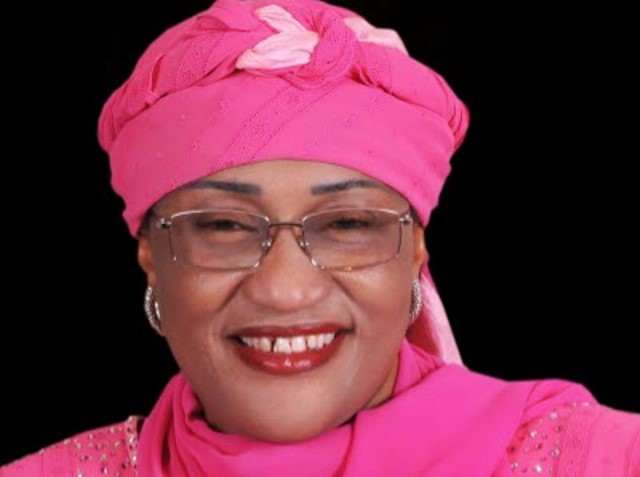
There was panic at an Internally Displaced Persons, IDPs, camp in Fufore local government area of Adamawa State, after the minister for Women Affairs, Aisha Hassan, slumped while on a visit to the camp.
The minister was on a two-day official visit to Adamawa State and had visited the IDP camp to present relief materials to the people there.
Shortly after presenting the items and addressing the displaced persons, she went into a big hall which serves as the store where relief materials were kept to inspect the items as well as have an audience with some of the women when she suddenly slumped.
The minister’s security aides reportedly engaged journalists preventing them from taking pictures of the incident.
One of them ordered newsmen out of the store and reportedly smashed recorders of some reporters.
Immediately the minister came to, her entourage left the IDP camp saying that she needed to rest.
Earlier in her address, the minister said her visit was on the directive of President Muhammadu Buhari who had ordered an investigation into the allegations of sexual abuse and rape in IDP camps in the Northeast.
“President Muhammadu Buhari sent me to you people as he is highly worried about your continued staying in IDPS camps and has given you every assurance that you will soon return to your kith and kin,” she was quoted as saying.
Al-Hassan assured the IDPs that the present government is working hard to ensure that they returned to their ancestral homes soonest.
The women affairs minister had earlier visited the Adamawa state Governor, Mohammed Bindow where she urged the governor to return the Women Development Centre, which is presently occupied by the Appeal Court, to the real owners.
The governor promised to address the issue while also pouring encomiums on President Buhari for his zeal in rebuilding the Northeast and improving the living standard of women in the state.
Boko Haram terrorists on Monday ambushed troops of Operation LAFIYA DOLE escorting commercial vehicles from Damboa to Maiduguri, at Sanda general area, Borno State.
Five civilians lost their lives during the ambush and another died on the way to the hospital, while three soldiers also sustained injuries.
The wounded have been evacuated to Maiduguri.
A statement by Sani Usman, Acting Director, Army Public Relations said a patrol team has been despatched to reinforce the troops, clear the general area and pursue the terrorists.
The statement read: “This unfortunate incident has brought to the fore the need for more vigilance and cooperation amongst all.
“We would like to assure the public that we would not allow this isolated incident to thwart the peace and security commuters enjoy along the route and all other opened routes in the North East,
“Troops are on the heels of the attackers and would not relent till they are apprehended or killed.
Additional security measures have also been placed to avert reoccurrence.”
He also debunked claims that Boko Haram terrorists attacked Chibok village.
“What happened was that, 2 persons were murdered at Kwamjilari village, (which is over 30 kilometres from Chibok, and very close to Sambisa forest), by suspected remnants of Boko Haram terrorists looking for food.
We wish to reiterate that they weren’t killed outside or near a church as being bandied around,
“The people from the said village are all in Internally Displaced Persons (IDPs) camp in Chibok. Those who went back to the village without authorization were moved back to Chibok 2 weeks ago.
Those killed went back on their own contrary to security advise.
“Nevertheless, a patrol team was sent from Chibok went to the village this morning. Adequate measures would be taken to ensure no one go back to the village for now.”
President Muhammadu Buhari has assured the international community that his administration has embarked on several programmes to meet the humanitarian needs of the over two million internally displaced persons,IDPs, in Nigeria.
Femi Adesina, media aide to the President, in a statement on Monday evening said Buhari disclosed this at a high level summit on “Addressing Large Movements of Refugees and Migrants” on the sidelines of the 71st Session of the United Nations General Assembly, UNGA71, in New York, United States.
According to the president, the intervention programmes include: the Presidential Intervention Committee on Rehabilitation of the North-East; the Victims Support Fund; the Safe Schools Initiative and the proposed North-East Development Commission currently undergoing legislative process.
“We are making concerted efforts to meet our citizens’ immediate humanitarian needs by reducing their risk and vulnerability and increasing their resilience through vocational training and skills acquisition programmes, particularly for IDPs in camps,” Adesina quoted president Buhari as saying.
The president informed the summit that Nigeria in collaboration with the United Nations High Commissioner for Refugees, recently hosted a regional conference on displacement of persons within the framework of Regional Protection Dialogue on the Lake Chad Basin in order to find a lasting solution to this regional challenge.
President Buhari added that Nigeria has equally shown concern on issues of global human mobility through various government policies and agencies such as the National Migration Policy; Labour Migration Policy; Trafficking in Persons Prohibition Laws, and Nigeria Immigration and National Drug Law Enforcement Acts.
Buhari also condemned all forms of racism, xenophobia and hate ideology targeted at “undermining the considerable benefits that migration can deliver to global efficiency.”
He said such divisive tendencies only lead to violence and avoidable loss of lives in a world that requires cooperation, adding that “globalization should mean free movement of goods, services and people.”
According to President Buhari, “without deliberate and collective commitment and action, the issue of large movement of refugees and migrants may impede our aspirations toward achieving the Programme of Action of the Cairo Agenda +20 and global determination to leave no one behind in the implementation of the 2030 Sustainable Development Goals (SDGs).”
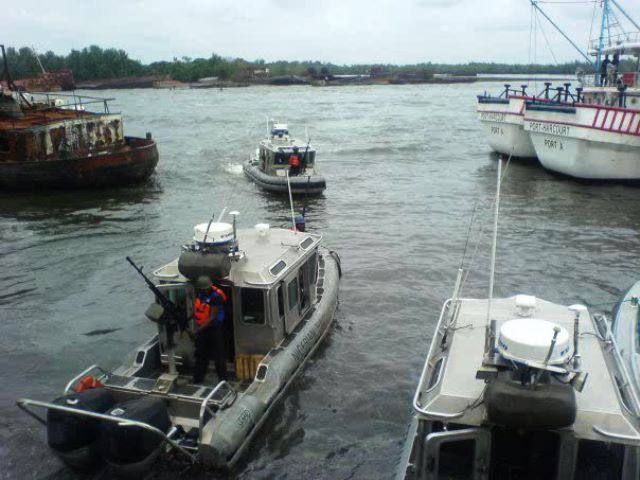
The Nigerian Navy said it successfully repelled attack by suspected sea robbers on a Marine Tanker travelling from Port Harcourt to Lagos on Friday, 16 September.
A press release on Monday by Christian Ezekobe, a Commodore and the Director of Information in the Navy stated that the attack occurred 50 nautical miles off Bayelsa State but the attackers “were heavily engaged and overpowered in a gun duel by naval personnel.”
The statement added that a naval patrol team deployed to Bonny in Rivers State had on September 14, arrested a Marine Vessel named ‘FB PERE IPAMO’ for alleged involvement in illegal bunkering activities.
“At the time of arrest … the vessel was carrying about 500 metric tons of illegally refined Automotive Gas Oil, AGO.”
Ezekobe also stated that on Saturday 17 September, a patrol team deployed by NNS DELTA conducted anti-crude oil theft operations in Warri South Local Government Area of Delta State.
He said the Navy personnel, during the operation, raided and destroyed two illegal refineries at Lakpaje and Ubeje Creeks.
“About 18,000 litres of suspected stolen crude oil and 15,000 litres of suspected illegally refined AGO” were also destroyed.
“The feat achieved by the Nigerian Navy in cracking down the activities of the criminals in the maritime domain is a pointer that there is no hiding place for any criminal. The Service is ever committed to safeguard the maritime environment,” the Navy spokesman said.
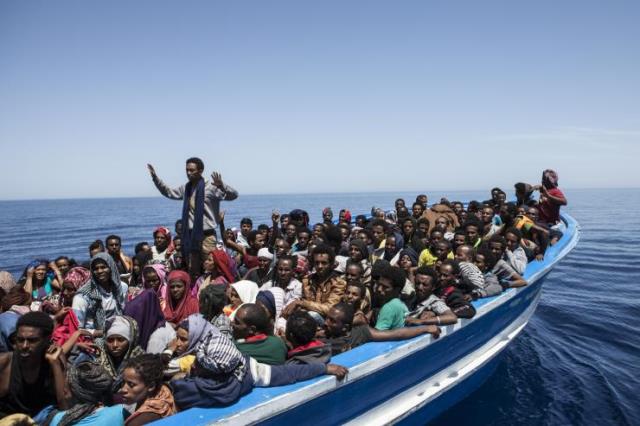
Commonwealth Secretary-General, Patricia Scotland, has said that the Commonwealth supports plans by the United Nations for a global agreement to end the refugee and migration crisis around the world.
The global compact for safe, regular and orderly migration is part of the agenda for sustainable development and achieving full respect for the human rights of migrants by 2030.
This would be a subject of discussion at a roundtable event at the United Nations General Assembly, UNGA.
She stated: “I would like to commend this initiative of Secretary-General Ban-Ki-Moon and the UNGA president, Peter Thomson,
“This high-level plenary meeting is a bold response to forced displacement of populations, which has now become a global crisis that requires our collective effort as the international community.”
A statement by Barnie Choudhury, Director of Media and Public Affairs, said the Commonwealth Secretary General will stress the importance of nations considering how best to use the mechanisms needed to tackle the crisis, such as economic, political, legal, humanitarian aspects.
This year, UN member states will begin the process of intergovernmental negotiations, leading to the adoption of the compact in 2018.
Scotland will say: “The Commonwealth will play an important role to ensure that this global compact leaves no one behind by identifying specific challenges faced by our member states, especially small nations, which represent the majority of our members.”
Migration remains a big challenge for the Commonwealth:
80% of refugees are hosted in the developing world
Pakistan hosts more than 1.7 million refugees, more than any other country in the world
African countries account for 40% of all Internally Displaced Persons (IDPs)
Conflicts in the Democratic Republic of Congo, Sudan and Somalia are crucial factors which lead to the increase in refugees in East Africa, particularly Uganda and Kenya
Of the more than 850,000 asylum seekers worldwide, nearly 200,000 are present in South Africa alone
East Africa, Southern Africa, the Caribbean and South Pacific regions of the Commonwealth are particularly vulnerable to migration based on the effect of climate change
Scotland will be focusing on the challenges of climate change on migration as well as calling on leaders to pay more attention to the needs of young people.
“Our young people represent more than 60% of our total population. We recognise they have an important role in building stable, secure and prosperous societies,” she will say.
“In this regard, we strongly believe that the proposed compact must identify specific needs and vulnerabilities of young people, who constitute one third of the world’s international migrants. We need to engage with them to find durable and innovative solutions.”
She is also expected to make a passionate case to protect women, who make up half the world’s international migrants.
“The Commonwealth member states have made clear political commitments to address collectively the causes of irregular migration, while ensuring full respect for human rights and the humane treatment of migrants,” she will conclude.
The Industrial Training Fund, ITF, has commenced a skills acquisition programmed for more than one thousand persons in Borno State.
About 600 of the participants in the training exercise are Internally Displaced Persons, IDPs, drawn from various camps in Maiduguri, the State capital.
The programme is part of the ongoing skills training by the federal government under the 5th National Industrial Skills Development Programme, NISDP.
Director General of the ITF, Dickson Onuoha, who was present during the flag-off of the training scheme, noted that the programme was aimed at giving the IDPs hope of a fresh beginning, as well as fast-tracking the Nigeria Industrial Revolution Plan.
“We are here today as a clear manifestation of the Federal Government efforts towards helping the IDPs to get integrated back to the society,” Onuoha said.
“The idea is to give them a means of livelihood while they return home.”
“We will not rest until we provide access to the IDPs on various skills and facilities,” he added.
The ITF DG said that participants in the training would also be taught Entrepreneurship Skills.
“This will enable them to be able to organized themselves into cooperatives and then we can now be able to introduce them to the Bank of Industry which will help them to have access to finance.
“That is how the Federal Government has designed the program, so that the ITF will provide the skills component, SMEDAN (Small and Medium Enterprises Development Agency of Nigeria) to provide entrepreneurship skills. While the Bank of Industry help in getting fund,” Onuoha explained.
Governor Kashim Shettima commended the ITF for the initiative, but pleaded for training of additional 000 IDPs.
Shettima, who was represented by the Head of Service, Yakub Bukar, expressed optimism that the many empowerment trainings going on in various IDP camps in the state would result in poverty reduction among the citizens whose life has been devastated by the Boko Haram insurgency.