A few days before he was killed, the then Premier of Northern Nigeria, Sir Ahmadu Bello, (1909-1966), Sardauna of Sokoto incorporated a company called the New Nigeria Development Company. The company, formed in 1946, was designed to be a Conglomerate with interests spanning Agriculture, Mining, Capital Market, Telecommunications and Education. The last we heard about the company was on August 26, 2013 when the Chairman of the Northern State Governors’ Forum at that time, Dr. Babangida Aliyu, the former governor of Niger state advised the company to sell 49% of its equity to members of the public.
Dr. Aliyu explained that the poor performance of the company has necessitated the need for some of its investment such as the Arewa Hotels to be sold to the public. In his words “we should be concerned that after 56 years of operations the NNDC is performing epileptically”.
It is sad that those who have managed the NNDC have not been fair to the legacy of Sir Ahmadu Bello.
On May 27 1967,by virtue of states creation and transitional provision decree 14 of 1967, General Yakubu Gowon created twelve states in the country—six from the old Northern region, three from the old Eastern region and three from the old Western region. By decree 39 of June 24 1967, he created the Interim Assets And Liabilities Agencies, ESIALA, to take over the assets of the old Northern region and the South-Eastern States.
On assuming power in July 1975, General Murtala Muhammed (1938-1976) disbanded the two agencies.
What of the assets of the two agencies especially that of ESIALA with financially endowed institutions like the Eastern Region Marketing Board, once headed by Sir Loius Odumegwu Ojukwu (1909-1966),Eastern Nigeria Finance Corporation, Eastern Nigeria Development Corporation, African Continental Bank and others.
Even till today questions are being asked about what happened to the abandoned properties implementation committee headed by Major David Alachenu Bonaventure Mark, set up by decree No 90 of 1978 following the abrogation of several edicts including that of South Eastern state edict No 10 of May 1970.
There is another story elsewhere.
On Tuesday January19 this year at Cocoa House, Ibadan, the governors of the owner states of Odua Investment Company met in Ibadan, the Oyo state capital. The current Chairman of the Odua Investment Company, Dr. Olusegun Rahman Mimiko, the governor of Ondo state announced that the Odua Investment Company has invited Lagos state to join the company as the sixth shareholder of the conglomerate. At present the company is owned by the governments of Oyo, Osun, Ogun, Ekiti and Ondo states. Twenty four hours after the announcement the governor of Lagos state, Mr. Akinwunmi Ambode accepted the invitation and declared his support for the growth of the company.
The Company recorded a revenue growth of 4.2 billion naira last year as against 4.5 billion in 2013. The spokesman for Dr. Mimiko, Mr. Kayode Akinmade disclosed that the company targets 20billion naira asset base by 2019. He disclosed further that the proposed payment of gross dividend of 167million naira at its annual general meeting was approved and paid to all the owner states.
Odua Investment Company was incorporated in 1976 to take over the business interests of the former Western state following the creation of Oyo, Ogun and Ondo states out of the old Western states by General Murtala Ramat Muhammed on February 3 1976,who was assassinated ten days after. The company held its first meeting on March 3 1976 with Chief Christopher Sunday Olutunde Akande from Arigidi in Akoko Local Government in the present Ondo state as the pioneer managing director. Chief Akande who was the former Secretary to the Military Government of Oyo state later became the President of the Nigeria Society of Engineers between 1974-1975. I covered the first sitting of the company as the state Editor of the Kwara state owned newspaper, THE NIGERIA HERALD. I remember with nostalgia when Colonel David Medayeshe Jemibewon, Lt. Colonel Seidu Balogun and Wing Commander David Ikpeme, then governors of Oyo, Ogun and Ondo respectively addressed the press on that day.
No doubt Odua Investment Company has been a huge success and kudos must be given to those who have kept the flag flying since 1976 till date, including premiers, sole administrators, governors both civilian and military, in spite of their ideological and political differences.
It has not been too rosy for the company though, for most of its subsidiaries are no more. A case in point is the National Bank which was acquired by the Western Region on April 1, 1961 and liquidated in 1992 due to mismanagement and corruption. A long time ago, the National Bank was the envy of all banks in Nigeria with assets in London and in most parts of Nigeria. Acclaim must be given also to the man who established most of the companies and subsidiaries that are now grouped together as Odua Investment Company. I am referring to Chief Jeremiah Oyeniyi Obafemi Awolowo, who ruled the Western Region as Premier from October 1, 1954 to December 15, 1959. Chief Awolowo formed the Action Group on March 21, 1951. The Motto of the party was “Freedom For All, Life More Abundant”. The Action group was formed by Chief Awolowo and seven others at a meeting in his house at Okebola in Ibadan. The seven others were S.O. Shonibare, then manger, UAC (Technical) Ltd, Lagos, later managing Director of the Amalgamated Press of Nigeria Ltd and federal publicity secretary of the AG; Chief Abiodun Akerele, a lawyer; S.T. Oredein, secretary of the British-American Tobacco Company(BATC) Workers Union, later principal organizing secretary of the AG in the Western Region; Olatunji Dosunmu a journalist, later administrative secretary of the AG in the Western Region; J. Ola Adigun, a journalist; Adeniga Akinsanya, manager of the African Press Ltd, Ibadan, and Ayo Akinsanya, a Chemist and druggist.
Sadly, unlike the era of Chief Awolowo, state governments of the old western region cannot pay salaries of workers now not to talk of establishing industries and factories—a bad legacy of the present generation.
The invitation to Lagos to join Odua Investment Company is well understood, for Lagos has been part of western region until October 1, 1954 when the adoption of the Oliver Lyttelton Constitution detached it from western region making it a federal territory. It was the same constitution that detached Southern Cameroons from eastern region. Lagos has always been the centre of commerce from the days of Mr. T.F. Barker who first administered the city between 1956-1957 to Alhaji Muhammadu Ribadu, who became Minister for Lagos affairs between 1957-1960 followed by the Mutawallin Katsina, Alhaji Musa Yar’dua who also served as Minister of Lagos between 1960 and 1966.
Internally Generated Revenue for Lagos has reached N24.5billion monthly although some of us who live in Lagos are over taxed with businesses dying on daily basis and nothing much to show for the over taxation. Lagos state government is getting richer per day through over taxation while the people of the state are getting poorer, an urgent issue which must be addressed. Ogun state is not doing badly too with N6billion naira every month. On May 25 this year the Lagos state government signed a memorandum of understanding to start the construction of the 38 kilometer fourth Mainland Bridge. The bridge, which is expected to cost N844 billion will be constructed under the Build, Own and Transfer concession of 40 years under the Public-Private-Partnership initiative of the Lagos State Government. At present, Lagos is the sixth largest city in the world and has the smallest land mass in Africa. It is projected to be the third biggest conurbation in the world next year. At present, Lagos is West African most resourceful single trading market with a population of about 22million vibrant people. What the Odua governors are presently doing is in the words of Governor Rauf Adesoji Aregbesola of Osun state, the Architect of regional integration, “intercooperation, friendship and interdependence”. Regional integration does not offend the spirit of the constitution and the spirit of federalism. If each of the regions should be allowed to develop on its own it will enhance unity, stability and better understanding.
Regional integration enhances unity even as diverse as we are. And I don’t think it negates the demand for restructuring which has become inevitable. It should be encouraged.
ERIC TENIOLA, A FORMER DIRECTOR AT THE PRESIDENCY, LIVES IN LAGOS.
The US Senate has rejected plans to tighten gun controls, including the restriction of weapons sales to people on terrorism watch lists.
Proposals were brought before the Senate, sponsored by the Democrats, following the death of 49 people in an attack on a gay nightclub in Orlando, Florida on June 12.
However the senators voted along party lines, with the majority Republicans blocking the gun control bill.
The Republicans say the fight should not be about gun control but rather how to tackle Islamic extremism which they believe is the root cause of most gun-related violence in the US, while the Democrats are proposing a gun laws reform to make it more difficult for people on the terrorism watch list to be able to purchase guns.
Republicans and members of the National Rifle Association complained that the bills put forward by the Democrats violated the constitutional right to bear arms. They are concerned that without enough “due process”, law-abiding Americans wrongly named on watch lists would be prevented from buying weapons.
In the US, gun dealers are licensed by the federal government and people can be prevented from buying weapons if they have mental health problems or are guilty of serious crimes, but there is no specific prohibition for those on the terrorism watch list. There are currently about one million people on that list.
However, there are other ways to buy guns in the US that do not require any background checks, for example, at gun shows or from a private vendor online.
Heavily armed men suspected to be Fulani herdsmen invaded Vaase community in Ukum Local Government Area of Benue State in the early hours of today killing many of the residents.
Residents who spoke to www.icirnigeria.org shortly after the attack said over 10 people were killed while not less than 15 were injured.
Residents said suspected herdsmen stormed the villages at about 1:00 am when residents were asleep and started their killing mission.
“I was sleeping when I heard gun shots sporadically, it was in the middle of the night, there was nowhere to run to, I just managed to hide in the bush close to my backyard, and it was only God that saved some of us. But, this morning, when the day broke, we are still picking those who were killed. So far, we have discovered 10, while 15 are injured,” Said Terdoo Adam, a community leader.
Relations of one of the victims, Aondongu Akombu, also narrated how his younger brother, Torbunde was brutally killed by the suspected herders.
“We all went to sleep, and he was the last person left outside. Around 1:30 am, when gun shots were raging on, I hid somewhere with my two kids, I don’t even know where my wife went to. Suddenly, I heard a cry, but I was helpless. This morning we discovered he was the one gunned down, we rushed him to Zaki Biam, but it was too late,” he stated
Resident also said the invaders did not burn any house and did not destroy any property.
Moses Yamu, An Assistant Suprintendent and Police Public Relations Officer, PPRO, Benue Command, confirmed the development but said the command was still waiting for the details.
He promised to get back to www.icirnigeria.org as soon as he got more information.
The Inspector-General of Police, IGP, Solomon Arase is set to retire from public service today, having attained the compulsory retirement age of 60 years and served for 35 years.
Arase, Nigeria’s eighteenth Inspector-General of Police, was appointed in April 2015 after former President Goodluck Jonathan sacked his predecessor Suleiman Abba.
The outgoing IGP who hails from Oredo Local Government Area of Edo State, was born on June 21, 1956 and joined the Nigerian Police in December 1981.
He has degrees in Political science and Law from the Ahmadu Bello University, Zaria and University of Benin respectively. He is also a Fellow of the Nigerian Defence Academy.
Meanwhile speculations have been rife as to who will succeed Arase as the new IGP.
Some analysts, citing the federal character principle, are of the opinion that the new IGP should be from the North Central or from the South East.
The distribution of all the service and security chiefs shows that while the North-East has the Chief of Army Staff and Chief of Air Staff, the North-West has the DG DSS, the South-West has Chief of Defence Staff and the South-South has Chief of Naval Staff and police IG, while the South-East and North-Central have none.
The Senate President, Bukola Saraki and his deputy, Ike Ekweremadu, who have been charged with forgery and criminal conspiracy by the federal government, will now be arraigned on Monday, June 27, 2016.
Sources said the defendants, earlier scheduled to appear in court on Tuesday, June 21, were not served notice of the charges, thereby making it impossible for them to be arraigned as planned.
Trial Judge, Justice Yusuf Halilu also ordered substituted service of the charge on the defendants by pasting it at the notice board of the National Assembly.
This follows an oral application by the prosecuting counsel, David Kaswe, who told the court that it was very difficult to effect personal service of the charge on the defendants.
Former clerk of the national assembly, Salisu Maikasua and his former deputy, Benedict Efeturi were also charged alongside the two senate principal officers.
A court official who pleaded anonymity had explained that the case was assigned to the judge on Thursday but because the Senate does not sit on Fridays and Mondays, the defendants could not be served.
“Had they been served before now, the matter would have come up for arraignment today,” the official said.
The Senate President is also undergoing trial at the Code of Conduct Tribunal for alleged false declaration of asset during his tenure as Governor of Kwara State.
This is the second in the investigative series, FORGOTTEN SOLDIERS, written by Fisayo Soyombo of TheCable with support from the International Centre for Investigative reporting (ICIR)
By Fisayo Soyombo
Joel Hamidu (pseudonym) has no business being alive. The story of his survival is the purest example of the steel and zeal of the average Nigerian soldier — attributes so rarely spoken of, yet remainpartly responsible for Boko Haram’s failure to overrun the north-east as cruelly planned.
Blown away by an Improvised Explosive Device (IED) on August 13, 2015, with parts of his body flung either side of the road and his intestine bursting out of his stomach, Hamidu was given no chance to survive. But as he strolled into the 44 Nigerian Army Reference Hospital, Kaduna, on a rainy morning in the third week of May, to discuss his close shave with death, no one would have imagined the blast had only been eight months old.
Although he had lost a limb and half of another, he managed to extricate himself from a vehicle unaided after arriving the agreed meeting point, and energetically bantered with a few soldiers. Just one look at him and one could tell this was a man simply grateful to be alive.
But he betrayed his regrets, too, occasionally punctuating his narration by questioning the country’s love for its warriors. “Is this the same country we fought for, the one we risked our lives for?” he would wail from time to time.
Blast from the pit of hell
“I remember clearly. It was August 13, 2015,” he begins, recalling his last day on the battlefield.
“We were about to go on patrol but the vehicle was not starting, so I tried to open the bonnet to check the batteries and stuff like that.”
He was still trying to figure out the fault when he heard a bang that hurled his body across the road, sending him into blackout. When he regained consciousness half-an-hour later, he was “surprised” that he was still alive.
Left for dead
That surprise must have been spawned by the extent of the damage. His hands had been mangled, his intestine ripped open and his entire body blood-stained. When he was evacuated to the 7 Division Military Hospital, health workers preferred to attend to other patients, thinking he was already death-bound and any time on him would amount to waste.
“They were like this guy will die any moment from now so attending to him is of no use. I was taken to the rear of the hospital,” he says.
“I was abandoned there… they were just waiting for me to give up so they could quickly throw me into the cemetery. But I refused to die. I went through hell, anyway. There is one thing about life; when you are battling for your life you can go to any extent to survive. I said ‘God I don’t want to die.’
“I know I have been fighting; I have been killing people: he that lives by the gun dies by the gun, but my fight is justifiable. I am trying to risk my own life for other people. When I die, who will be left to save these innocent civilians? I have a wife and three kids; if I should die now, what will be their fate?”
His moment of salvation arrived when some soldiers came to the backyard, wanting to urinate. Already feeble from several hours’ loss of blood, Hamidu mustered all the strength left in him just to shake his leg, thereby drawing the attention of the soldiers.
Angered by the sight of an abandoned dying colleague, the compassionate soldiers lifted him to the emergency ward, from where he was rushed to the x-ray department.
“It was in the x-ray department that I collapsed; there was so much loss of blood already,” he says.
“That was when they brought an ambulance to take me to University of Maiduguri Teaching Hospital (UMTH).
“I got there at about 7.30pm. The incident happened at 7.30am in the morning, so check the number of hours for which I was left unattended to. If God wasn’t on my side, I would have given up the ghost.”
There are officers, and there are officers
Far from the lacklustre reception he had at the 7 Division Medical Services and Hospital, Maiduguri, doctors at UMTH “really tried”. The Nigerian army medical rep at the hospital received him and called the doctors; they, too, responded swiftly. “Eight to 10 doctors” in all, their head told Hamidu he stood no survival chance irrespective of quality of treatment, if he was not determined to fight.
“He was angry that I didn’t receive medical care for 12 hours but I said ‘Oga, forget about that, all I need now is your help; just assist me so that I will not die.
“He asked me: ‘Are you willing to survive? Treatment in a situation like this is about the patient having the will to survive.
“I said oga I am willing. If I could stay alive from 7.30am to 7.30pm, I believe that with your little effort, I will buy more life.”
Not long after he was wheeled into the theatre, Hamidu passed out. He remained in that state for six days. When he regained sanity on August 19, he discovered that his damaged hands had been chopped off. It was a bittersweet feeling: he was grateful to be alive; yet, without his hands, he admitted he looked “like a vampire”.
“So I happened to find out that my two hands were gone,” he says in a heavy tone. “I was sober anyway; I couldn’t believe it… but I really battled for my life.”
Hamidu reserved special praise for his commanding officer (CO), “a very nice man” who gave him “all the support” he needed.
“He promised me some money. He said if the prosthesis was something he could afford, he would get it for me. Even when my wife came, he took care of her, paid her transport to and fro, gave her money,” Hamidu says, managing a weak smile — his first in more than an hour of talking.
“Look, there are officers and there are officers. Some officers are good; not all of them are bad. It was like God used that CO to assist me.
“Some of them know the right thing to do for their soldiers, but there are some bottlenecks who are trying to treat soldiers as though they are animals.”
After three months, he was referred to the 44 Nigerian Army Reference Hospital, Kaduna, for “onward procedure for rehabilitation and provision of prosthesis”. The medical director at 7 Division hospital, where he made a brief procedural stopover, recommended a bionic prosthesis after examining his medical report.
“They said since my two hands were lacerated, I needed bionic prosthetics.”
It is now seven months of fruitless wait for bionic prosthesis.
Politics with prosthesis
Bionic prosthesis: What the Army could not get for Hamidu
“Ever since then, the madam I met, it was like she wanted to bring some agents that will come and make provision for the prosthesis.
“I told the woman that my issue is not about Nigeria levels [sic], but I will appreciate the experts that will come up with the same bionic prosthesis. They said no, I should listen to the man first.
“After the man made his presentation, I asked him two questions. I said ‘Mr. Man, this your prosthesis, is it fashionable or bionic?’ He said it was fashionable.
“I said okay, to be sincere, where do you think I can get the bionic type? He said I could in Scotland and Germany.”
He blames the lack of a bionic prosthesis on Abimbola Olatilewa Amusu, Major General and former medical director of the hospital but now medical corps commander.
“I was trying to let her know that some of the soldiers packed to Lagos for prosthesis were complaining, so I didn’t see why another Nigerian agent should be marketing it to us when those who travelled abroad had already received theirs.” he says.
“I wanted her to assist me; all I need from her is the recommendation, because the army is willing to take you to any level for further treatment.”
‘Bloody’ corruption
“From the decision-makers at the military hospitals to the highest authorities at the army headquarters, there is a web of corruption at the expense of the soldier’s blood and life,” says a soldier, only after he was promised that he won’t be named to avoid being court-martialled or dismissed from the army.
He gives a few examples: “Sometimes, you get recommendation from above that you will be referred to India or to Germany, but while you’re preparing to travel, you get an order that you will instead be treated in Abuja or in Lagos. It is clear someone somewhere has pocketed the money from your trip, or the person will receive a finder’s fee from the local hospital.
“At other times, you may be referred to India for a particular duration but your stay and amount approved will be drastically reduced by another layer of authority.
“For instance, they have written on your paper that you will be away for three months and they have released $45,000. But the immediate authority will suddenly wake up and say, ‘My friend, you are spending only one month there.’
“They will now issue you money for one month, and I don’t need to tell you that the money for the remaining two months is for their own betterment. Whatever happens to you, even if the money you get is inadequate for your treatment, it is not their business. That one that belongs to them must not be reduced.”
One more soldier explains that there are situations where patients are referred out of the country only to be told a surgery is not required. In such cases, the authorities “refuse to repatriate the funds”.
“I went to India but my evacuation was already late, so the Indian doctors said there was no need for surgery,” he says.
““I returned to Nigeria but they ate my money [sic] even though there was no surgery on my hand. The problem is that they always evacuate late when the damage must have been too deep-seated to be reversed.”
Unnamed soldier who missed surgery in India
The injured soldiers are not alone in their claims, with a senior army officer blamed soldiers’ neglect on corruption in the army, and calling for “an overhaul” of the system.
“I know some soldiers were referred to the 44 Hospital in Kaduna, but they were left at the mercy of their parents and family. Some of them go to their families for financial support to treat themselves. You can imagine how terrible it is,” he says making no effort to conceal his anger.
“It has to do with corruption; the Nigerian army is supposed to be responsible for their treatment but they will not give you the required treatment because somebody is somewhere making money out of it.
“So technically, the army will say it is responsible for treatment but when you get there, you won’t get the kind of treatment you deserve so you will be forced to source better treatment elsewhere.
“So many things about the army are bad; it needs total overhauling, all the sectors. For example, there are cases in Kaduna that should be referred to India but they won’t, because someone is taking the money while the person is there dying. It’s only if you have an influential person that your case will be referred abroad, else you will be left lying there.”
A pretty grave allegation
Major General Abimbola Amusu
Yet another soldier, who asked not to be named for fear of victimisation, fingered Amusu former medical director of the 44 Hospital, as the main reason soldiers have lacked the best care either in the country or abroad.
He cites the example of a colleague of his who was evacuated to India bearing an injury on both legs, with one particularly at the risk of amputation.
“They called Major-General Amosun from India that more money was needed for surgery on the other leg, but she told them that there was no money, so both legs should be amputated,” this soldier says of a colleague of his,” he says.
“But the doctor refused to amputate the leg; he said he could not cut the soldier’s leg because the treatment had already started and that if she was not ready to approve the bill, he would take it over himself.
“The soldier was so angry that he called her on phone and cursed her that her own legs too will be amputated someday. Somebody that is bestowed with managing resources meant for soldiers, and she finds it difficult to let soldiers have access to such services, and the person is still in the army and she was even promoted. That means she has some powerful backers.”
‘Haba Da Allah!’: Army exonerates Amusu
Col. SaniKukasheka Usman
According to Sani Usman, spokesman of the Nigerian army, there is no smidgen of chance that the allegations against Amusu are true.
“This is a very grievous allegation,” he says.
“For you to accuse a major-general of making money out of a wounded soldier, you know it is more or less an abomination.
“I cannot imagine that a whole major-general and a medical doctor of reputation and all the rest will decide to pocket a soldier’s money. There are certain things that honestly are far beyond you in your entire life.
“I can understand that possibly there could be problems here and there, but it is not that bad simply because you want to make money. How much is a soldier’s estacode that a whole major-general will sit on it? Haba Da Allah.”
He adds that some injured soldiers cook up inconceivable stories in order to dishonestly enrich themselves off their injuries.
“They connive with those Indian doctors that every three months they should go back, which is not realistic because you have to process the money and get foreign exchange and we have equally experts here that can diagnose and easily manage some of these conditions that they have been treating in India instead of going every three months,” he says.
‘I feel like dying; I can’t even face my children’
Usman wants injured soldiers to exercise more “patience” but for someone like Hamidu, who is too ashamed to return to his family, any extra second wait is very hard to bear.
“Sometimes, I feel like dying. I feel like dying; I feel like dying,” Hamidu moans repeatedly.
“Imagine that the country we sacrificed our lives for is treating us this way. Okay, they are repairing and rebuilding Maiduguri; a lot of money has been pumped into the reconstruction of destroyed structures. But soldiers that maintained the peace there, nobody is making efforts to rehabilitate them, give them a sense of belonging.
“Rather, we’ll just remain on the hospital bed from morning till night for months, for years. As I speak to you now, some people have been in this hospital for more than two years.”
While he blames authorities of the hospital and the army hierarchy for the delay with prosthesis, he believes President Muhammadu Buhari himself a retired officer, is unaware of the sufferings of injured soldiers.
When the president’s wife visited the hospital in January, she personally handed each soldier a sum of N20,000 and promised to relay her discoveries to her husband.
“We have faith in her in that she gave each of us an envelope containing N20,000, by herself,” he says. “That was a signal that she knew that if she gave the money to the authorities, it would not get to us. We are happy because the money relieved us in buying drugs.”
One major concern for Hamidu is his physical separation from his children, whom he is “hiding” from, because of his condition.
“My wife and children are in Lagos but I cannot go back to them until the army has done something about my condition. If my children see me like this, I will look like vampire to them,” he laments.
“They will be wondering what happened to their daddy’s hands. My wife was in the hospital with me for three months, but I can’t allow my children see me this way.
“No matter how you see it, my children are lacking that fatherly love. I left home January 2013 and I saw them last year. But since August 2015 till now, I haven’t travelled home. I don’t know how to travel, because as I am now, unless somebody assists me, I can’t undress, I can’t bathe. Until I am helped by somebody, I can’t do anything for myself.
“The world is far developed for me to still be relying on people. All I need is the bionic prosthesis and I can get on with my life. Here, they will make arrangements with people who will provide fake, yet it would still gulp the same money that the government released for the original.”
It’s a vicious circle
The dissatisfaction of injured soldiers with their conditions of treatment has grave implications for the war against insurgency.
“What is happening to us is affecting those at the war front, because somebody who is on pass comes to visit me and says ‘Oh boy, since August last year, you are still like this? What are they doing?’ And you expect this same man to go back to the bush to make his own sacrifice after seeing how his buddies have been treated?
“It is not possible. When they remember that those of them that have problem with their legs they are still with crutches, those of them that their legs and hands are chopped off, no artificial prosthetics for them. You still want them to go and lose their own blood? Some of them will just run away!”
True to his arguments, hordes of soldiers in the expansive Sambisa forest and other interiorly located villages of Borno state are concerned by their likely fate in the event of fatal injuries.
Between 2009, when the insurgency began, and 2015, when the military began gaining the upper hand, thousands of soldiers either deserted the army or were dismissed for refusing to fight, while some even committed mutiny in 2014 by aiming bullets at a commanding officer in protest of deaths of soldiers due to inferior firepower. Majority of them have long been re-screened and eventually recalled.
“Go to Kaduna and see my colleagues languishing at the 44 hospital,” one soldier, fresh from Sambisa, had told me in Maiduguri days earlier, adding: “How do you want me to fight with one mind when I know that my family’s future will be bleak if I die or suffer a fatal injury?
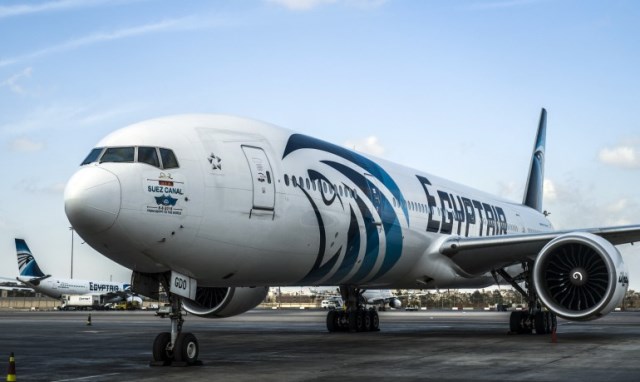
Chairman of EgyptAir, Safwat Musallam has disclosed that advance compensation payments of $25,000 will be offered to families of the 66 people who lost their lives when one of its planes crashed into the Mediterranean last month.
The payments are separate to those expected from insurance companies on behalf of various parties depending on the investigation into the disaster.
“An insurance company will pay an advance of $25,000 after each family prepares its certificate of inheritance,” said Musallam, adding that “Death certificates will be ready before Thursday for Egyptians and foreigners.”
EgyptAir Flight MS804 was on its way from Paris to Cairo on May 19 before it disappeared from radar screens between the Greek island of Crete and the north coast of Egypt.
Passengers on board the plane included 30 Egyptians, 15 French, two Iraqis, two Canadians and one each from Algeria, Belgium, Britain, Chad, Portugal, Saudi Arabia and Sudan.
Seven crew and three security personnel were also on board.
Investigators have said it is too early to determine what caused the plane to crash, although a terror attack has not been ruled out.
Authorities in Cairo have begun examining the plane’s black boxes to ascertain the exact cause of the crash. Representatives from France and the United States are also taking part in the investigations.
The Leadership of the Ondo Forum in the South-South geopolitical zone has urged its members to participate in the Continuous Voter Registration in the state scheduled to commence on Wednesday, June 22, ahead of the November 26, 2016 governorship election.
Samuel Ayadi, President of the Forum in Bayelsa State, gave the directive in Yenagoa, the state capital, while calling his members to take active part in political developments in their home state, Ondo.
According to him, the several reforms by the Independent National Electoral Commission, INEC, have restored public confidence in the power of the ballot box.
He said the group had embarked on a sensitization campaign to encourage members, who were yet to register and those who recently turned 18, to seize the opportunity of the exercise scheduled to hold between June 22 and 26.
Ayadi, however, urged INEC to extend the registration period to enable people outside the state to participate in the exercise.
“Our interest in Ondo state politics is driven by the reforms by INEC which has returned the power of choice to the people, which is why we want to participate in the process to ensure that Ondo people get the right leadership.
“There was a lot of apathy in the past but there is a new dawn and we want to identify with our kinsmen to enthrone the type of leaders that will turn things around.
“With the economic challenges before us we need competent and experienced leadership to turn things around,” Ayadi said.
Osagie Ize-Iyamu, a Pastor, has been declared winner of the Peoples Democratic Party, PDP, governorship primary in Edo state.
The former All Progressives Congress, APC, chieftain polled a total of 584 votes out of the 713 votes cast to defeat the two other aspirants that contested the primary with him, Solomon Edebiri and Mathew Iduoriyekemwen, who scored 38 and 91 votes respectively.
The declaration was done by Governor Dave Umahi of Ebonyi State, who was the chairman of the primary election panel.
The largely peaceful exercise held at the Samuel Ogbemudia stadium in Benin, capital of Edo state, same venue where the APC held its own primaries on Saturday, June 18.
Speakers at the event boasted that the PDP would take over the Edo Government House in September as the aprty was set to win the governorship election.
Godwin Obaseki had emerged the APC standard bearer for the Edo State governorship election scheduled to hold on September 10, this year.
Resident Doctors in federal teaching hospitals across the nation have begun an indefinite strike over 10 months’ unpaid salaries.
Wole Ayegbusi, President of the National Association of Resident Doctors, NARD, in Obafemi Awolowo University Teaching Hospital, Ile Ife, said this in an interaction with journalists on Monday.
“We have started an indefinite strike this morning to drive home our demands,” he said.
“You will be surprised that today, some federal teaching hospitals have not paid December Salaries, which is unfair because it affects our productivity. Also some of our members have been sacked for no just cause and several times we have made efforts to dialogue with the Federal Ministry of Health but maybe due to their selfish reasons or incompetence, we have not been able to actualize that.”
Ayegbusi said the association had to painfully resort to an industrial action as it appeared the only option that the government would pay attention to, adding that NARD had given the federal government several ultimatums to clear the backlog of salary arrears but nothing had been done.
He said the association wants FG to as a matter of urgency pay doctors their salaries so that the strike would not continue to drag.