A civil society group, Coalition Against Corrupt Leaders, CACOL, has kicked against the planned amendment of the Code of Conduct Bureau Act by the National Assembly.
The group is of the view that the proposed amendment is meant to create unnecessary obstacles in the path of the ongoing war against corruption.
The House of Representatives recently adopted a report to amend the Code of Conduct Bureau [CCB] Act which is meant to compel the Bureau to furnish accused persons with details of the charges against them for response before they are made to appear before the Code of Conduct Tribunal (CCT).
Chairman of CACOL, Debo Adeniran, stated that the Senate had tried to do the same thing but had to abandon the idea following public outcry against the move.
He explained that the group is convinced that the ongoing trial of the Senate President, Bukola Saraki for corruption is directly linked to this development.
Adeniran said the public and civil society organizations should reject the amendments, because the move is a way of protecting the interest of political office holders who have embezzled public funds.
He called on the House of Representatives to abandon the adoption of the amendment and concentrate on issues that are more important to the country’s development.
He also urged the legislators to correct the impression on the mind of the people that the legislature is a deeply corrupt institution.
An inmate of the Kirikiri Maximum Security Prison, Lagos, Albert Ajogbor, has earned a Bachelor’s Degree, B.A. (Hons) in Christian Theology of the National Open University, NOUN.
The University, which runs online degrees, also has study centres across the federation.
At a short ceremony held in Kirikiri Prison to formally present the certificate to the inmate, Vice-Chancellor of the University, Abdalla Adamu, who was represented by the Director of Learner Support Services, Nebath Tanglang, expressed delight over Ajogbor’s feat despite the fact that he is incarcerated.
He also announced that the University is offering one hundred percent full scholarship to all prisoners in Nigeria who are undertaking a degree programme in the university.
Professor Adamu said the decision was in fulfillment of the university’s corporate social responsibility as well as to contribute its own quota towards a better prison system in Nigeria.
The Lagos State Controller of Prisons, Timothy Tinuonye, commended the initiative by NOUN, saying it was a boost to the Nigeria Prison Authority’s duty of reformation of the inmates.
He disclosed that there are over 70 inmates studying for various NOUN programmes in the three prisons in the state but the number will rise because of the tuition-free policy.
The Federal Government has officially kicked off the clean-up of oil spills in Ogoni land, Rivers State, South-South Nigeria as recommended by the United Nations Environment Programme, UNEP, report.
President Muhammadu Buhari was billed to launch the clean-up in Port-Harcourt, Rivers State today, but called off the trip for unspecified reasons, although there were speculations that it was due to “scheduling difficulties”.
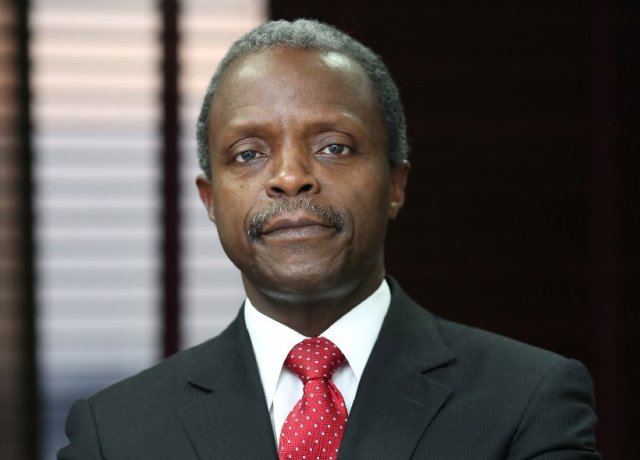
But the ceremony went on as scheduled with Vice President, Yemi Osinbajo, representing Buhari at the event. Osinbanjo described the occasion as historic not just for the people of Ogoni, but also for the entire Niger Delta region.
He said the clean-up programme was a restoration of the environment as well as the people’s health, wealth and livelihood and prayed that it would mark the beginning of real change in the land and in the future of the Ogoni People.
The Minister of Environment, Amina Mohammed, who was on the VP’s entourage, called on the people to support the exercise as Government had kept its own side of the bargain with the official kick-off.
The minister assured that the federal government was not only committed to the implementation of the UNEP report, but would go further by ensuring that the Niger Delta region enjoyed improved security, good governance and economic boost.
UNEP had conducted an independent assessment of the communities affected by oil spills in the Niger-Delta and made recommendations for remediation.
The UNEP report was accepted by many residents of the Ogoni community and government decided to use the report as a starting point in the clean-up process.
According to the UNEP report, there are over 200 oil-impacted locations across Ogoni land and the full environmental restoration of the community will take between 25 and 30 years.
The Minister of transportation, Rotimi Amaechi says the Abuja-Kaduna railway project will be completed and commissioned by President Muhammadu Buhari in July 2016.
The Minister said this on Wednesday, June 1, after he inspected the level of work that has been done on the project so far.
“We are looking at bringing Mr. President to commission in July. In two weeks’ time, they will do the test run of the track without passengers, after that it will take another two weeks to do test run with passengers and it will be free of charge and that will take us to the end of June, which means by first week in July, we believe that the President will come and flag it off for commercial service”, he said.
It would be recalled that the Abuja-Kaduna Rail project was initiated by Former President Goodluck Jonathan, but work on it stopped following the inability of the administration to release funding.
The minister who was joined by top officials of his ministry to test run the first trip on one of the trains from Idu to Kubwa, commended the contractor handling the project and noted that the train service is coming at a time when commuters were in need of an effective means of public transportation.
He also said that plans are underway between the Ministry of Transport and the Nigerian Railway Corporation, NRC, to ensure that affordable fares are charged for using the train.
Amaechi further stated that adequate security measures will be provided in and around the train stations to ensure that only passengers whose identities have been screened and certified will board the trains.
He said over one thousand police personnel will be deployed to man the railway during and after it’s commissioning.
The prevalence of illegal and substandard schools in the Federal Capital Territory, FCT, brought about by gaps in the system, is a ticking time bomb that could explode anytime with devastating consequences
By Ayodeji Adeyemi
The name Splendour Montessori Zion Academy should ordinarily conjure the image of a highbrow school with good facilities.
But the school, situated within the deeper recesses of Kuje Area Council, Abuja is only splendid in name. This primary school, sited in a small two bedroom residential apartment, has a family living inside, throwing up the challenge of space.
Small wonder that the school consists of only three rooms, one of which is a make-shift space carved out of the veranda outside.
For a primary school that has pupils from nursery to Primary 5, it would require a miracle of mega proportions to fit them all in three rooms available for teaching. Consequently, some of the rooms were divided into two with chalk boards, as pupils presumably across different class range were shoehorned into the same room.
How students can learn in such an environment, where different classes are taught in the same room, could, indeed, be the subject of PhD thesis.
Even worse is that the school has only three teachers, throwing up the challenge of how they would split themselves among the various classes. And, even if they managed to achieve that feat, how could the three members of staff, be proficient in all the ten subjects required to be taught in primary schools?
Learning in such an environment would clearly be a herculean task for the pupils who risk having a narrow world view because of the dearth of educational infrastructure in the school.
Needless to say, the school has neither sick bay nor first aid facility, and in the event that a child has an accident or falls sick , there is no first line of treatment in the school. To make matters worse, the pupils also share the same toilet with the family residing in the apartment, a possible window for the transmission of all kinds of diseases.
Added to that is the unpalatable fact that the pupils also risk seeing objects or scenarios that are not suitable for children of their age like misplaced condoms or teenage children frolicking with each other.
Other necessary facilities for the proper functioning of a school such as a library, playground, administrative block, and examination or assembly halls clearly are a luxury that these poor pupils cannot even imagine.
The proprietress of the school, who did not give her name and is one of the three staff members, was insistent that school infrastructure was not a measure of good education.
“Look, I have been an educationist for a long time right from Lagos. What we teach here is good quality education. It is not all about the way the school looks it’s what they teach the pupils,” she said.
Never mind that the school lacked the basic infrastructure needed to teach the pupils.
Just like Splendour Montessori Zion Academy, Uche Summit Montessori School appears to be cut from the same cloth. Both schools have many things in common from the grandiose sounding name to the fact that they are both sited in a residential apartment and both have no sign boards announcing their existence.
Located in Bwari Area Council, Uche Summit Montessori School embodies all that is wrong with substandard schools. Established inside a two bedroom apartment, the school has no fence. .
This, unfortunately, removes the first line of defence for the primary school, making it easy for people with bad intentions such as kidnappers, or even terrorists, to attack it. It goes without saying that there are no security personnel of any ilk in the school.
Inside the apartment that is called Uche Summit Montessori School are several pupils from nursery to primary five sandwiched into small rooms that are sometimes divided into two or three classrooms. The division is usually done with chalk boards.
Pupils inside the room find it difficult to learn as the loud voices of teachers from one part of the room wafts to the other part, serving as a distraction to the pupils. But the teachers in the room could care less as they continue with their monotonous chore, a pointer to the poor educational qualification of the tutors.
A private residence used for a nursery and primary school gwagwalada
Sadly the school is bereft of basic necessity it needs to function properly. Save for chairs, tables and chalk boards, both the interior and the exterior of the apartment have no semblance of a school.
Hence, expecting such a school to have a library, sick bay or other necessities that would make for a normal school would amount to building castles in the air.
But the proprietress of the school does not see anything wrong in the crippling educational setting of her school as she continually canvasses parents to bring their wards to the school. “For a child that is in primary three we charge N20, 000 a term,” she said smugly.
But while Uche Summit Montessori School is at least inside an apartment, Wonder Kids Academy in Gwagwalada Area Council is operated inside what can best be termed a shed.
The school building, made from plywood and roofed with zinc, consist of about three rooms. The rooms which are further divided with plywood have no asbestos ceilings to prevent the heat of the sun.
The classrooms which are small are packed with pupils. Once the sun is at full strength, the classes become hot compelling the pupils to use their uniforms to wipe off sweat. It’s indeed a wonder how pupils attending Wonder Kids Academy could imbibe knowledge in such an inhospitable environment. Needless to note, the school has nothing that makes it worthy of it being called a school, save for chairs, tables and black board.
If Wonder Kids Academy stretches the concept of a school to a breaking point, Zenith Primary School also located in Gwagwalada actually breaks it.
Established in an uncompleted building largely devoid of doors and windows, Zenith Primary School is perhaps an omen of what private participation in primary education may sink to if left unsupervised and unregulated. The school which is not fenced also doubles as the residential apartment of the owners of the school.
Pupils in this school have no exposure to any educational infrastructure whatsoever, as the building is bereft of what should make it a building let alone a school.
Just when one thinks one has seen the worst, then you are confronted with the stark reality that two of the three classrooms that make up the entire school, have no blackboards.
The teachers there have to use the unpainted walls as blackboard, perhaps as a cost cutting measure. If the school could cut cost further, one is inclined to think that it would dispense with the roof, leaving the children at the mercy of the weather.
Though the school building has a roof, the pupils are still at the mercy of the scorching sun as it does not have a ceiling to prevent the heat from reaching them.
When the proprietress of the school was informed that her school was not on the government approved list and asked if she had the guidelines for setting up schools, she had no coherent response to offer.
“So our school is not on the approved list?” she asked rhetorically, with an expression that did not convey surprise.
“My husband is the one that does everything concerning the school and he is not around. He is the one that can really speak,” she said.
Greater Height School, Mpape is definitely an upgrade when contrasted with Zenith and other schools mentioned earlier But that is where the good news ends as there is nothing that conveys greatness in the facilities of the primary school.
Apart from the fact that the school building is devoid of a ceiling, exposing pupils to heat from the sun, the floors of the classes are potholes.
A sneaked shot of a classroom in Greater Height school,Mpape
This, however, is nothing in comparison to the state of the school toilet, a latrine bereft of a wall sheltering it which makes it easy for a snake to skulk inside. One of the female pupils who was pressed, and could not use the crumbling latrine, had to relieve herself on the floor outside where all eyes could see her.
Needless to say, it lacks every other essential infrastructure needed for the smooth and safe running of a school, such as library, sickbay amongst others.
The headmaster of the school, when confronted about the unsafe state of the toilet, blamed it on a bad wind which he claimed destroyed the wall sheltering the latrine. Identifying himself as Joshua, he explained that the school fee was modest. “We have students from primary one to five and we charge N7,000 per term,” he said .
The sad story of education in the FCT is that the area councils and even the metropolis are populated with primary schools such as Zenith and Splendour, Greater Heights and Uche. These types of substandard schools exploits the huge gap between e demand and supply as it relates to quality primary education, while preying on parent’s unwillingness to send their children to public schools which are mostly in a bad state, a far cry from their glory days.
Unfortunately, schools of this ilk are usually established in uncompleted building or residential apartment. Due to the space constraint, these schools are devoid of the minimum basic amenities needed for the normal and safe functioning of a school.
Whereas the guidelines for setting up primary schools by the FCT department of education requires that at inception they should have a minimum of a library, three VIP toilets, computer and health facilities and playground among others, these schools which have functioned for several years do not have such facilities.
Other minimum standard mandated by the education department that this type of schools lack include two hectares of land, three classrooms of 9m by 12m in size, large assembly hall, administrative block, water utility and farmland, among others.
In fact, many of these schools do not even have the school curriculums that should guide what they teach to their pupils. Another common denominator is that the schools are usually understaffed.
Indeed, the owners of these schools are people who do not see education as a social investment which should not be guided by the profit motive alone. Instead, they see it as an avenue to line their pockets, and are too willing to cut corners and cost, not caring what effect their actions might have on their pupil’s destiny.
While these type of schools typically do not charge large fees, usually between N7,000 to N20, 000 per term, they seek to maximize profit by having many pupils, while skimping on infrastructure and paring down essential costs.
This is why such schools, apart from failing to provide good educational infrastructure, employ unqualified teachers who take salaries as low as N10,000 and are expected to teach several subjects.
Some school owners, in an attempt to further feather their nests, even go as far as using their buildings after school hours as entertainment centres, converting them to make –shift beer parlours, football viewing centres, or rendezvous spot for women of easy virtues.
The next morning, the pupils in such schools run the risk of seeing misplaced objects that are not appropriate for kids.
Sadly, these schools are compromising the educational foundation of hundreds of thousands of pupils who could be potential leaders of tomorrow.
Already, they have succeeded in lowering the standard of education to a dangerous threshold, narrowing the mentality of pupils who pass through such environment.
But if these types of private primary schools are laying a faulty education foundation for thousands of pupils, some private secondary schools such as Noel College are further compounding the problem. Located at kwali Area Council, Noel College consists of five rooms, three of which are classrooms.
A sneaked shot of Noel School
Apart from the walls and floor of the classrooms not being plastered and it being devoid of ceilings, the school has no fence making it easy for anyone to wander into the classes without being restrained. In broad daylight, inside the classroom, it is as dark as a photography laboratory.
For a junior secondary school that is expected to teach both science and art subjects, the Noel College is surprisingly bereft of laboratories and workshops for the teaching of Introductory Technology, Science and Home Economics.
But that is not the only thing it lacks as it also does not have a library, a Guidance and Counselling unit, computer facility, let alone a sick bay.
Other minimum standard mandated by the department of education that the school runs afoul of include assembly hall, four hectare land, administrative block, four VIP toilets and water utility.
Sadly, the students in this school will end up not seeing test tubes or performing simple experiments in the laboratory. They would also not know how to use simple technology tools. Still, the absence of extracurricular activities in this type of schools further aids in cramping the little creativity quotient left in this students.
Even though the principal of Noel College refused to speak with the reporter, one of the staff revealed that the school would start admitting intakes into Senior Secondary School, SSS, classes by September.
Not surprising, students nurtured under these type of education background find it difficult to both express themselves articulately and write coherently.
Bimbo Obasuyi, principal partner, TBOJ consultant, an educational service providing firm, observed that these types of student usually have difficulty in understanding instructions. Consequently they find it problematic to carry out simple tasks, let alone complex ones, she notes. They are also usually not confident and are unable to make good independent decisions.
By the time they go through higher institutions many of them are like old fishes wrapped in a piece of paper, with the tertiary training having no effect whatsoever on them.
Little wonder, he said, that many companies complain that Nigerian graduates are not employable due to the bad education foundation laid in their basic and senior school years.
A basic school consists of nursery, primary and junior secondary, while the ones with senior classes 1, 2 and 3 are senior secondary schools.
Unfortunately, these types of schools make up the bulk of basic and senior schools in the FCT. While it is believed that there are over 2,000 private schools in the nation’s capital , the Department of Quality Assurance, DQA, of the Education Secretariat, which has the statutory mandate of inspecting, evaluating and monitoring all schools within the territory, has only 434 schools on the approved list.
This could mean that the bulk of the private schools do not have approval to operate within the territory.
Early this year, the department through a press release claimed it had uncovered about 556 illegal schools operating within the territory, with the intention of shutting them down.
This, however, spurred the House of Representatives to kick against the planned closure, arguingthat it would amount to throwing the baby away with the bath water, displacing about 100,000 pupils and putting thousands of teachers in the unemployment market.
A member of the House of Representatives, Albert Adeogun, PDP, representing Ife Central, East, North South, who raised the matter in the hallowed chambers argued against the closures of such schools, observing that the public schools within the FCT were not sufficient to cater for the educational needs of the increasing population.
Hon Albert Adeogun
“The closure of the schools without placing the children in other schools that can absorb the large population will expose the children to crime and abuse. That may be the consequence of this policy,” he said, adding that the children might become victims of unfortunate circumstances by virtue of the closure of the schools.
“They may never have the opportunity of furthering education which will not augur well for the country,’’ he added.
Although it was widely reported that the House had mandated the Committee on FCT to investigate the closure of the illegal schools, a close source observed that the issue was only mentioned in passing, admitting that no investigation had taken place.
Employing the Freedom of Information Act, this publication petitioned the DQA for the list of illegal schools it said it had discovered, but the department refused to oblige the request under the guise that the request was receiving attention. Instead, it chose to release the list of approved schools consisting of 434 schools.
The DQA, in responding to the request in a letter dated 27/04/2016 wrote that “on the list of illegal private schools, please be informed that this request is receiving attention and we will communicate with you accordingly”. At the time of compiling this report, a month after the request was made, the DQA had still not obliged the application for the list of illegal schools.
Even so, the department does not term all the schools that are not on its approved list illegal. This is because of the schools that have commenced the procedure of getting approval, a process that could stretch between four to eight years or even more.
A school like Tiny Toes Academy located in Lugbe falls into this category. Though the school is not on the approved list, it has been certified to commence academic activities due to its excellent education infrastructure such as air-conditioned classrooms, computer rooms, first aid facilities and playgrounds, amongst others.
Another reason why a school may not be on the approved list is because the approval status, like a driver’s license has a time frame, and would thus become invalid after the expiration period.
Unfortunately, some schools once they have gotten that approval do not bother again to renew such when it has lapsed, which accounts for their names not being on the approved list.
This lacuna has however created a money making avenue for the officials of DQA, particularly those in the zonal offices, to have their palms greased. Officials who go out to inspect these schools, especially the ones that have started the registration process but are finding it difficult to obtain the final approval, are readily presented with money envelops and snacks.
Though the inspectors may not necessarily demand the money, it is however implied, and these schools who want to remain in the officials’ good graces roll out the red carpet for them.
The principal of one of such schools who pleaded anonymity for fear of being scapegoated observed “When the inspectors from the department of quality assurance come to visit us we give them money and snacks,” she said showing this reporter her school’s certification to commence academic activities.
When asked why her school had not obtained the final approval despite having the necessary infrastructure she noted: “the set of buildings we are using were meant to be for residential purpose that’s one of the reasons why we have not gotten approval and maybe the inspectors are waiting for us to bribe them,” she alleged.
The www.icirnigeria.orgalso found out that schools set up by former officials of the education secretariat or by associates of powerful politicians, sometimes do not bother to get the final approval since they have people who would cover for them. A school like Britarch Schools in Lugbe, which consist of basic and senior schools, seems to fall into the latter category.
It was gathered that the highbrow school which is not on the list of approved schools, is owned by associates of a very powerful politician. When this reporter went to speak with one of the head teachers, she dismissed the reporter offhandedly, insisting that the school was on the approved list.
“Let them dare come and close it,” she hissed, a scenario this reporter did not even hint at.
Still, some schools have found ways of beating the system. There are those, for instance, who obtain approval for only a primary school but latter go ahead to establish a secondary school without seeking further permission.
Also, there are others who get approval for a basic school in a particular location, but then go ahead to open one or two branches of the school in several other locations without authorization. Some even stretch this by obtaining approval in a different state and using such to open schools in the FCT.
Ayuba Didaam, director and head of DQA, explains that the approval process for schools is in stages and could take years. “We have a set of guidelines with specifications and when the school meets the criteria, we then recommend it for commencement of academic activities to which the education secretary has to approve, “he said adding “Immediately that is done we continue with our inspections and it is only after about two years that the school can now request for the final accreditation which is the last stage.”
Didaam observed that the final inspection for approval is not done by the department but by an independent team consisting of university professors, experts from National University Commission, NUC, and other professional bodies.
He concluded that “once the school scales through the last stage, the final accreditation comes as a document from DQA approved by honorable minister.”
Though this reporter sought to have another interview with Didaam after the field investigation, the repeated attempt to secure such proved abortive as he had an increasingly busy schedule.
Alaba Olusemore, managing consultant, Nesbet Consult, an educational training firm, warns that the prevalence of substandard private schools amounts to a ticking time bomb waiting to explode. He observed that such schools are grooming an army of half-baked professionals and citizens that could wreck the nation’s future.
He therefore wants the government to take the bull by the horn, paying more attention to the development of the formative years of its citizenry, which he insists consist of basic and senior schools.
“Children who pass through such crippling educational setting cannot be creative. And when you do not have creativity in a system, there will be no invention. This can impede the productivity and development of any nation,” he warns.
Olusemore, however, does not spare the government holding them equally culpable for the prevalence of substandard private schools. He maintained that the government had forfeited its moral rights to enforce standards in private schools since most public schools are falling apart. He noted that government’s insistence on standard for private school, while public schools were in bad shape, amounts to double standards.
“If the government cannot even maintain standards in their own schools, what do they expect from private people who see it as a profit making venture?’ he frowned.
Olusemore has an ally in Bimbo Obasuyi, principal partner, TBOJ consultant, an educational service providing firm. Obasuyi, like Olusemore observed that substandard private schools were churning out bad products with no value to the society.
“Children who pass through such schools will not have the right values which do not bode well for the society, “she said.
Anthony Ogunleye, assistant director and public relation officer, education secretariat, FCT Administration, on his own part blames the mentality of the school owners for the prevalence of substandard schools.
“People have come to see the operation of a private school as a means to make maximum return from little investment. This is why you see a three bedroom building being used as a basic school. One room is the crèche, another the nursery school, while the third room is the primary school,” he observed.
Agreeing with Ogunleye, Didaam explained that the continuous influx of people into the territory had created a gap that is being exploited by the providers of substandard schools. “No matter how much planning is made into the expansion of the public provision of education, before you finish the planning the influx has overtaken the plan,” he said.
So what is the way out? Olusemore wants the government to invest again in public schools, equipping them with the right infrastructure and with well-trained motivated teaching staff. He insisted that in doing this, government would render the business of substandard schools unprofitable as their patrons would opt for the public ones.
“In other climes private schools are meant for the children of the affluent while the rest of the population go to public schools which have been well equipped by their government. We should strive for such a system, “he says.
Still, Olusemore counsels the government to invest in the training of private school owners, imbuing them with the right attitude to education. He also wants the government to create a fund, where private school owners can access loans at friendly rate.
Obasuyi on her own part wants the government to strengthen its inspection of private schools, while also improving the standards of public schools. “The government should create an environment where it is no longer lucrative for half-baked schools to operate,” she says.
There are however those who are nudging the government to partner with religious bodies to create mission basic and senior schools. Proponents of such ideas believe that such schools, subsidized by government to charge affordable fees, would help lure children away from substandard schools.
The FCT which is the purview of this report is however not the only hotbed of substandard and illegal schools. Indeed most state of the federation are plagued by an increasing armada of substandard private schools churning out half-baked students in millions.
If such a situation is not arrested and reversed experts warn that the country might be faced with a bleak future in which the bulk of citizenry are neither innovative nor productive. For a developing nation, that would spell doom.
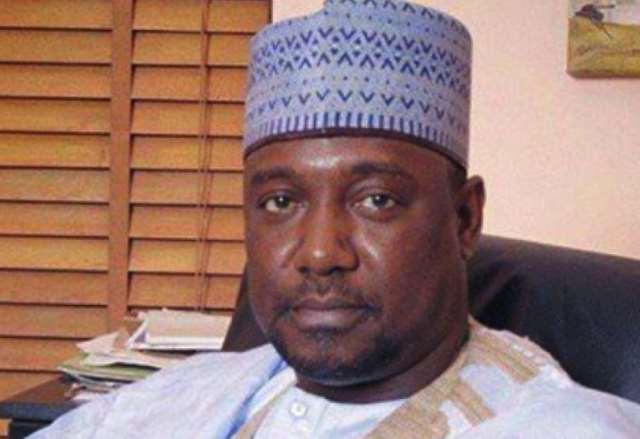
Governor of Niger State Abubakar Bello, has called on residents of Pandogari, Rafi Local Government Area, to exercise restrain over the crisis that erupted in the community.
This call was contained in a statement by the Governor’s Chief Press Secretary, Jibrin Ndace.
Violence had erupted on Sunday, May 29, 2016 when one Methodius Emmanuel, a 24 year old trader in Pandogari was attacked and killed by a mob in the town for allegedly posting a blasphemous statement about Prophet Muhammad on the social media.
Troops of 31 Artillery Brigade of 1 Division, Nigerian Army quickly intervened and restored law and order while a dusk to dawn curfew was imposed in the town.
However the rioters regrouped on Monday, May 30, 2016 morning for another protest, leading to further violence, looting of shops and blocking of the Lagos – Kaduna Road, a major artery connecting the northern and southern parts of the country.
But troops in conjunction with the personnel of Nigeria Police and Nigeria Security and Civil Defence Corps, NSCDC, took control of the situation to forestall escalation of violence and any threat to the peace in the town. Regrettably, one church, one house and a shop were burnt while 25 other shops were looted following the violence. Three other persons including personnel of the NSCDC also lost their lives.
Governor Bello expressed displeasure over the incident and called on all concerned to pursue the path of dialogue, consultation and peaceful resolution of the conflict instead of resorting to violence.
He noted that the state is known for peace and therefore the Pandogari incident was an isolated case of civil unrest which has been professionally handled by the security agencies together with community leaders.
The Governor added that an investigative panel has been set up to establish the cause of the crisis, and assured all citizens of the state of his administration’s determination to ensuring peace and security in the state.
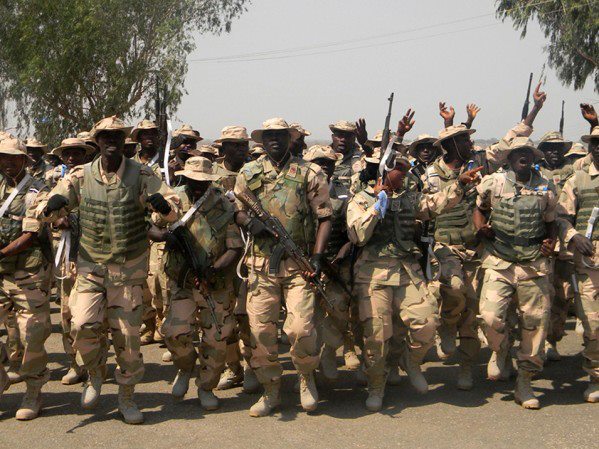
Nigerian troops in the Northeast and the Multinational Joint Task Force have continued to record successes in flushing out remnants of the Boko Haram insurgents from the Sambisa forest and rescuing hostages.
This was made known by the Acting Director, Army Public Relations, Col. Sani Usman in a press release on Wednesday, 1 June, 2016.
He said that on Monday, 30 May, 2016, troops rescued 79 Boko Haram hostages comprising of 12 men, 24 women, 31 children and 12 infants, all of whom are undergoing preliminary investigation and screening to determine their true status before they are moved to the Internally Displaced Persons Camps for rehabilitation.
Col. Usman added that troops of the 28 Task Force Brigade have cleared Bulajani, Mulgwo and Muotu Villages of remnants of Boko Haram elements in efforts to keep the Bitta-Damboa road open and secure to commuters. He said one soldier was wounded during an encounter in Moutu while 5 members of the Boko Haram were killed and a few others escaped with bullet wounds.
In another encounter, men of the 25 Task Force Brigade rescued 157 persons in Gombori Village, comprising 19 men, 47 women and 91 Children, all of whom are now undergoing scrutiny.
The statement added that one 28-year-old Musa Aman, suspected to be a spy for the terrorists was arrested around the Garrison Headquarters in Maiduguri metropolis with preliminary investigations revealing that he hails from Maradhi village in Niger Republic. He has since been handed over to the Joint Interrogation committee after he confessed to be working alongside many other spies in Maiduguri.
In a related development, 77 Boko Haram terrorists have surrendered to troops of the 122 Task Force Battalion and have been moved to Yamteke by a combined team of the 26 Task Force Brigade for preliminary investigation and screening.
Similarly, a deserter soldier, Corporal Musa Titimam, 03NA/53/3098, of 117 Task Force Battalion, who absconded from duty while on Operation Crackdown has been arrested. The soldier was also allegedly involved in a fracas with one Salisu Ngatha, that led to the death of the civilian. He has been moved to the Brigade headquarters for proper investigation and other disciplinary measures.
Col. Sani Usman called on the public especially in Borno State to remain security conscious and to cooperate with the security agencies as the troops are always ready to protect them.
The Nigerian Navy said it has stepped up its operations against all forms of threats in the country’s maritime environment and has intensified its fight against crude oil thieves, pipeline vandals and other criminals operating in the Niger Delta.
The Navy Director of information, Commodore Cor Ezekobe disclosed this in a statement on Wednesday, 1 June, 2016.
According to the statement, three persons have been arrested by Navy operatives in connection with series of maritime crimes. The suspects: Sani a.k.a Dogonyaro, Usman a.k.a smally and Adamu Mani are still undergoing investigation and will be handed over to prosecuting authorities for further action.
“Similarly, operatives of Forward Operation Base (FOB) Badagry have arrested 5 citizens of Benin Republic in connection with economic crimes. The suspects are Philmen Agboku, Penu Daniel, Sule Soka, Dosu Victor and Sodope Olivie. They were arrested on 26 May 2016 along Tongeji-Port Novo axis at about 0500hrs in a wooden cotonou boat conveying about 900 jerricans. The jerricans contained product suspected to be stolen Premium Motor Spirit (PMS). However, the suspects are being interrogated in order to get in depth view of the gang and its sponsors.”
Ezekobe added that on 26 May 2016, a Nigerian Navy Patrol team deployed from NNS DELTA destroyed a large illegal refinery with storage tanks containing stolen crude oil and illegally refined Automotive Gas Oil (AGO) at Ayakurumo Community in Burutu LGA, in Delta State. The team also recovered three pumping machine and a boat carrying 80 drums of illegally refined AGO measuring 300 liters each.
The statement said the Nigerian Navy will continue to do its best to protect the Nation’s territorial waters and oil infrastructure.
The Navy called on citizens to cooperate with security agencies by providing useful information that will help in better policing the environment.
A study by DataPro, an anti-money laundering and terror financing consultancy firm, has picked holes in President Muhammadu Buhari’s war against corruption and urged the president to immediately review strategies to achieve lasting success.
The report, which is a study of one year of the Buhari administration, however, noted that the present war against corruption has achieved some results because of the strong political will of the administration, adding that for the country to achieve lasting success, there must be institutional reforms.
“The War Against Corruption (WAC) in Nigeria must be fought holistically. The present effort seems disjointed and uncoordinated. Good intention is not enough.
The present administration going forward must come up with definite Policies, Programs, Processes and Procedures to fight the menace,” the report says.
It added that for the anti-corruption war to succeed, there must be a clear-cut reform of the legal system and the anti-corruption agencies. It also advocated that citizens and corporate institutions must be made to understand their roles and functions in the fight against corruption.
The report stated further that the Nigerian people must be made to take ownership of the fight against corruption, noting that “it is only then that appreciable impact can be made.”
The report also called for a review of the reward and punishment system so as to dissuade public servants from engaging in corrupt practices.
Statistics published in the report indicate that the Economic and Financial Crimes Commission, EFCC, and the Independent Corrupt Practices Commission, ICPC, are currently prosecuting 50 persons for allegedly stealing N13.97 trillion of public funds. Of these stolen funds, a total of N822.7 billion is being investigated by anti-corruption agencies.
The sum of N10.4 billion has also been recovered by the two agencies from some of those under prosecution. They include Jafaru Isa, Wale Oladipo and Nduka Obaigbuna, the Publisher of Thisday Newspaper who has reportedly returned N350 million out of over N600 million he illegally received from former National security Adviser, Sambo Dasuki.
In the last one year, the report notes, the anti-corruption agencies have also convicted seven persons including Raymond Omatseye, a former Director General of Nigerian Maritime Administration and Safety Agency, NIMASA.
The report however commended the resolve of the Buhari administration to combat corruption in the country and noted that some of the committees set up were steps in the right direction. Report says Buhari Anti-Corruption War Uncoordinated
The Code of Conduct Tribunal, CCT, has adjourned the trial of the Senate President, Bukola Saraki indefinitely.
Saraki is standing trial on allegations of false assets declaration during his tenure as Governor of Kwara State.
He had pleaded not guilty to the charges.
The tribunal Chairman, Danladi Umar had on May 25, deferred the trial till Wednesday, June 1, 2016, for further cross-examination of the principal prosecution witness, Michael Wetkas.
But when trial resumed, the prosecution counsel, Rotimi Jacobs, SAN, sent a letter to the tribunal asking for an adjournment.
In the letter, Jacobs said the witness; Michael Wetkas is also a witness in another criminal case involving former Jigawa State Governor, Sule Lamido in the Federal High Court, Abuja.
He asked for the trial to be adjourned to either June 10 or 11.
Consequently the case was adjourned but no date has been fixed for the trial to continue.