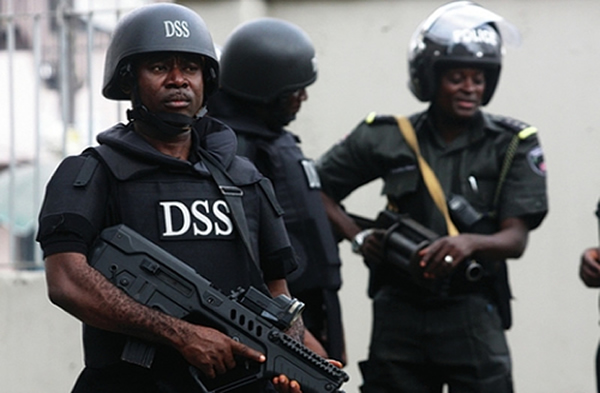
The Presidency on Thursday denied expelling the team of Directorate of State Security, DSS, from security operations at the presidential villa.
The presidency was apparently reacting to reports in the media that DSS operatives had being chased out of the villa by the current administration.
A few weeks ago, it was reported by the media that there were moves to replace the operatives with men of the Nigerian Army Intelligence Corps.
This reportedly led to the rejection of about 253 new operatives of the DSS posted from various command across the nation to the Villa.
However, a statement issued by his special adviser on media and publicity, Femi Adesina, said that President Buhari gave no such order.
He noted that these were simply rumours that should not be taken seriously.
“President Muhammadu Buhari has given no such order. While it is true that a reorganization of security at the Presidential Villa which involves the realignment of personnel from various services is underway, the exercise does not translate to the expulsion of DSS personnel from the premises in any way,” Adesina said.
He noted too that the changes being made were routine adjustments which were not unexpected in any dynamic environment from time to time.
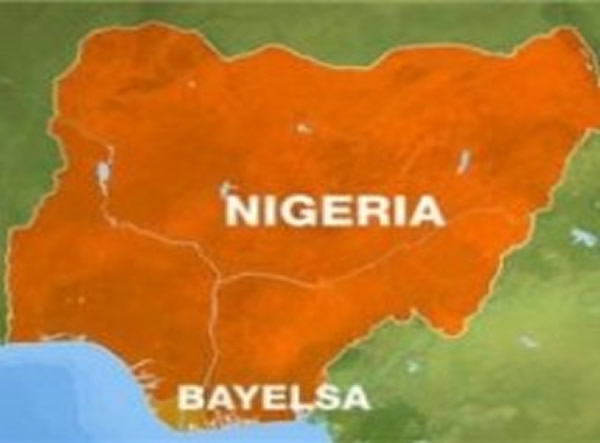
Armed bandits on Wednesday killed two policemen and kidnapped two Lebanese from a construction site in Onuegbum, Ogbia local government area of Bayelsa State.
The abducted Lebanese were identified as Sarki Abi Chmouli and Ibrahim Abi Pherem.
The policemen killed were attached to Pache Construction Company, where the two abducted men worked.
The policemen were reportedly killed in the gun battle that erupted when the gunmen attempted to invade the sand dredging site of the company.
The gunmen who came through the waterways in speedboats left immediately after the attack .
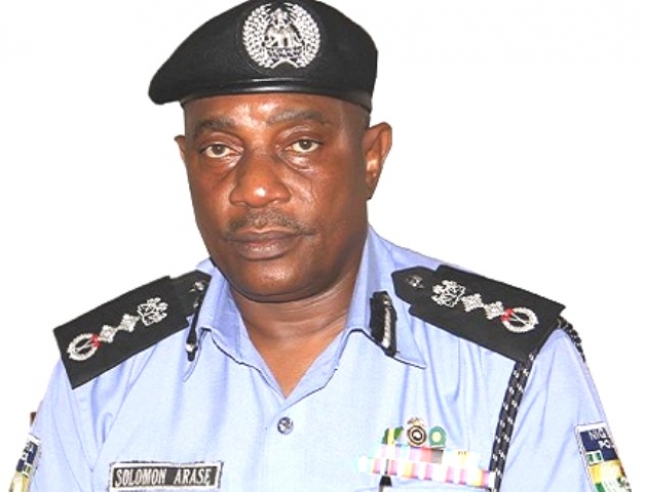
BayelsaState Police spokesman, Astimin Butswat, who confired the killing and abduction said the command had already launched a manhunt for the culprits.
“We want to assure Bayelsans to go about their legitimate duties as the Police are on top of the situation,” Butswat said.
Butswat also said that the corpses of the policemen had been deposited at the morgue located in the Federal Medical Centre.
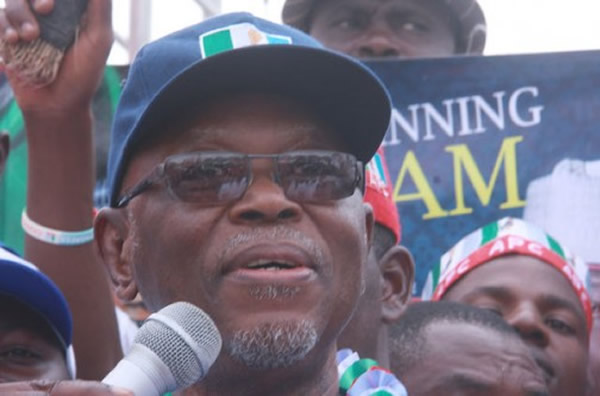
The All Progressives Congress, APC, in Edo State has rose stoutly in the defence of the national chairman of the party, John Odigie-Oyegun, who has been accused of collecting bribes by some aggrieved APC governors.
According to the reports in some national dailies, eight of the APC governors, including the Edo State governor, Adams Oshiomhole, had allegedly held a meeting with Oyegun where he was accused of collecting gifts from Bukola Saraki before the election which saw him emerge as Senate President.
The governors expressed displeasure with the APC leader for pretending to be in support of the party’s candidate for the seat, Ahmed Lawan, who eventually lost out in the power tussle.
The national publicity secretary of the party, Lai Mohammed, has earlier refuted the claims by the governors.
In his reaction, the party’s Edo State publicity secretary, Godwin Erhahon, said after the state chapter investigated the allegations, it found out that there was no truth in the claims.
He added that the party in the state was also not sure that the governors actually made such claims in the first place
“That publication is a figment of the imagination of the author. We in Edo have been able to read the statement of the governor and the national chairman and there was no spelt allegation or call for resignation. In any case, who can bribe the national chairman and what for?”
He said that the emergence of Saraki as Senate President was not expected even at the state level hence the controversy.
“Everybody is also aware that President Mohammadu Buhari told everyone to calm down and ensure that the matter was not allowed to break the party. So, at what level will bribery come in?” Erhahon asked.
He however called on the party at the national level to partner with members at the National Assembly to ensure that the selection of the principal officers does not create more friction
The APC scribe also urged all governors on the party’s platform to support Buhari in his quest to bring sanity into the party and polity.
The Senate on Wednesday summoned the Nigerian National Petroleum Corporation, NNPC in its bid to examine the current state of the nation’s four refineries.
The motion which was introduced by Gbenga Ashafa, Lagos East senatorial district, sought for the Senate to act in respect of the perennial fuel tanker tragedies on Nigerian highways.
Ashafa in his summation noted that within one week, four fuel tanker accidents occurred in two major cities in Nigeria, noting that many lives were lost and properties destroyed.
Ashafa opined that the tragedies would not have occurred if the country had fully functional refineries.
“If our refineries were functional, all the tankers in Nigeria would not have businesses coming to Lagos to lift fuel as refineries in Port-Harcourt, Warri and Kaduna would have taken care of that,” he said.
Senate President Bukola Saraki in his submission assured the nation that the legislators would examine the situation with a view of proffering solution.
It would be recalled that over 70 persons lost their lives at Upper Iweka, Onitsha and Iyana-Ipaja, Lagos in accidents involving fuel tankers.
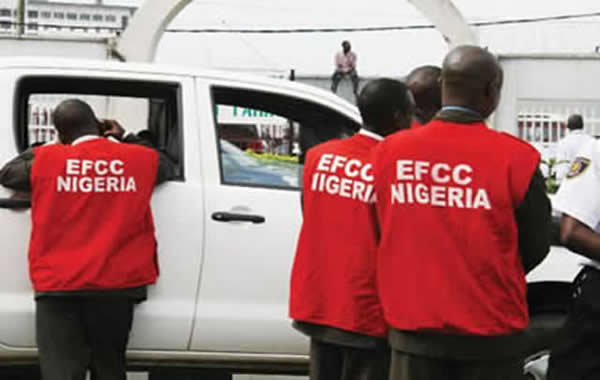
The Economic and Financial Crimes Commission, EFCC, on Tuesday arraigned two persons for allegedly hacking into the database of Enterprise Bank Plc.
The suspects – Ola Lawal and Abass Ajide – were arraigned on a four count charge of conspiracy to defraud, felony, stealing and forgery.
A third suspect identified by EFCC operatives as Olumide Kayode was said to be on the run.
According to the EFCC, the suspects conspired to defraud Enterprise Bank by hacking into the bank’s network with the aid of their laptop, router model and grabber/key logger in order to obtain the password of key operational staff through the Central Processing Unit, CPU.
The defendants, according to the prosecution, attempted to access the network of the bank without the appropriate authorization.
It was also alleged that the defendants wanted to access the CPU to conduct fraudulent transactions and transfer monies into other accounts.
The second defendant, Ajibade, was also alleged to have forged a Certificate of National Diploma purportedly issued by The Polytechnic of Ibadan to one Ajibade Abass Rotimi with matriculation number 029511.
The offences are contrary to Sections 323, 361(1)(e), and 409 and punishable under Sections 285(1) and (363)(1) of the Criminal Laws No. 11, Lagos State of Nigeria, 2011.
When the four-count charge was read, the defendants pleaded not guilty to all of them.
The court did not take any plea from the accused but the presiding judge, Lawal Akapo, subsequently ordered the suspects to be remanded in Kirikiri Maximum Prison, Lagos pending when their application would be formally heard.
He subsequently adjourned the matter till October 26, this year.
The National Drug Law Enforcement Agency, NDLEA, Bayelsa State Command, said on Wednesday that it had arrested 70 suspects for allegedly trafficking in illegal drugs in the state in the first half of 2015.
The agency’s state commander, Josephine Obi, who made this disclosure in Yenagoa said nine of the suspects are female.
Obi complained that the consumption of illegal substances like cannabis in the state was becoming very worrisome, adding that the agency was living up to its task as it had secured 18 convictions in the first quarter of 2015.
“Over 55.6 grammes of cocaine were seized, 4.3 grammes of heroin, 97.233 kilogrammes of Cannabis Sativa and 1.463.2 kilograms of psychotropic substances were recovered from suspects,” Obi said.
She assured the public that there would be no sacred cow in the onslaught against drug couriers in the state.
She also said that the agency was employing a prudent legal framework and sensitization strategies to prosecute the war on drugs.
“NDLEA is working according to the law and we are only arresting suspects. As a way of reducing the circulation of illicit drugs in the state, we are also embarking on counseling of would-be suspects, creating public awareness on dangers of hard drugs, organizing lectures in localities and schools,” she said.
In a bid to halt incidents of corrupt practices in the nation’s airports, the Federal Ministry of Aviation in conjunction with the Independent Corrupt Practices and Other Related Offences Commission, ICPC, has inaugurated a Project Advisory committee to enhance corruption risk assessment in the aviation sector.
The inauguration is a follow up to a memorandum of understanding, MoU signed by the ICPC and the ministry in December, 2014.
At the inauguration of members of the committee, a staff of the ICPC and chairman of the joint committee, Izi Salami, noted that the collaboration had yielded several gains and achievements over recent months.
He listed these gains as enhanced public enlightenment campaigns against corruption at the airports, surveillance and intelligence gathering activities as well as sting operations aimed at arresting perpetrators of corruption.
Salami observed that reports since the authorities’ last sting operation showed that there was now better awareness of the presence of the commission’s agents at the airports and this has led to reduction in acts of impunity.
“There is a need to continue the tempo of the intervention, so that the anti-corruption message will be consolidated”, Salami said.
He noted that the corruption risk assessment is a graft prevention tool that works with the organization’s management to identify vulnerable areas that prone to corruption, proffer recommendations to such and equally develop integrity plans that would strengthen accountability and transparency towards checking corruption and enhancing service delivery.
“It is focused on studying organizational systems and operational environments with a view to addressing identified corruption risks therein. It is pertinent to emphasize that CRA is not criminal investigation, but rather a study of systems with a view to recommend a review so as to reduce corruption. The review document is known as an integrity plan”, he added.
He also appreciated the efforts of the United Nations Development Programme, UNDP, which he said had undertaken to fund the risk assessment project.
He said that it was also worthy of note that UNDP had supported several of the commission’s projects including the training of corruption risk assessors in the UNDP Virtual School in 2012, a pilot risk assessment project in the nation’s seaports in 2013 and an ongoing assessment in MDG-related MDAs of Education, Health and Water Resources.
In a presentation by an ICPC staff member, Azuka Ogugua, it was revealed that the capacity of the aviation sector to play its role in the economic growth and development of the nation had been hampered by endemic corruption, which had led to the current collaboration between ICPC and the aviation ministry.
According to Ogugua, the duties of the Project Advisory Committee include the approval of timelines for the conduct of the CRA, ensuring of full and timely participation of aviation sector agencies, arranging meetings and stakeholder events and providing logistics support to all project activities.
Others, she added, were facilitating access to required documents, vetting the preliminary and final reports as well as general supervision of the consultants through the project coordinator.
Investigations by www.icirnigeria.org revealed that the CRA would be conducted at Murtala Mohammed International Airport, Lagos and the Nnamdi Azikwe International Airport Abuja by a team of certified corruption risk assessors trained by the UNDP, assisted by officials of the airport.
The corruption risk assessment/systems study and review is derived from the mandate in Section 6 (b) of the ICPC Act 2000 which is aimed at examining the practices, systems and procedures of public bodies and where, in the opinion of the commission, such practices, systems or procedures aid or facilitate fraud or corruption.
Wind the critically slurred legislative tape back to the first National Assembly of the Fourth Republic. It began sometime in 1999, you’d recall. That was the period the incautious yet irrepressible Chuba Okadigbo, then a brand new senator of our perpetually blighted Republic, first gave an inkling of what the legislators had in stock for an already battered people. A furniture allowance of N5m each had just been announced by one unfeeling government agency for 109 senators, and something a little less for their 360 equally rapacious partners stationed in the House of Representatives.
“What!” Nigerians screamed in ear-splitting anger. They wondered why newly elected legislators would be asking for that much for their convenience in a country that had been robbed blind and severely wrecked by the retreating military oligarchy.
Typical of him, Okadigbo – Oyi as he was then widely saluted by his admirers and subjects – poured cold water on the issue by declaiming flamboyantly that if anyone cared to know, he was not in Abuja to live like a cockroach. Since that open display of arrogant indiscretion, Nigerian legislators have not looked back in their avowed journey of mindless plunder.
It has since assumed the tale of as you cut off their finger, they find new ways to adorn it with a diamond-studded ring, thus lending strong credence to the widely held view that more than being legislators, these so-called lawmakers are nothing but a terminally dependent class of Nigeria’s prebendal state.
In their heedless quest for material and sensual pleasures, they have only stopped short of demanding from the state the power to keep permanent suites in the poshest hotels across the country for as long as their tenure lasts. And who says they won’t soon get to that point?
So bad it is that even in this era of clamour for a decided “change,” they are not showing any faint sign of taming the odious grab-grab mentality. There is no other name for this kind of behaviour other than pathological greed. Stretching it further to accommodate synonyms in three local languages, the Yoruba would call it iwa wobia; in Igbo they would say it’s something like anyan ukwu, while the Hausa will see it as typical halinazzalumai.
In a few days, these azzalumai of the 8th National Assembly will shamelessly stretch their hands to pocket about N9bn ($45million) – senate president, Bukola Saraki, says the figure is lower, without giving the real figure – courtesy of the Nigerian state, for what they call wardrobe allowance.
Last week, it was reported that the preening new Senate President (the de facto President of the Federal Republic) was still operating from his personal residence because the N27.1bn naira ($135million) castles being built by the government for principal officers of the National Assembly were still under construction. All these in a country with a minimum wage of N18,000 (about $80); a country where more than half the states have not paid workers for months.
Whatever the real figures of the official extravagance, it is one story that leaves a sour taste in the mouth. This shameless affront or iwa wobia by our certified anyan ukwus is coming at a time of intense expectation of total break from the ignoble past, a period when citizens are yearning for new ways of running public office in Nigeria.
In this period of national emergency, of debilitating and fast dwindling national revenue, when an overwhelming population of government workers and their families are crying due to starvation occasioned by non-payment of salaries for several months, you would expect the legislators to say NO, not again; you would expect them to reject with unequivocal bluntness the imposition of any privilege, deserved or not, that seems to depict them as insensate gorgers. And this criminal and silly wardrobe allowance, certainly, is a typical example of that insensitivity.
In 2004, Robert Rotberg, the US professor of governance and foreign affairs, among other qualifications, described the Nigerian leadership as “predatory kleptocrats” and “puffed-up posturers”. We now know the class that largely informed that unflattering but apt description.
If the lawmaking business in Nigeria is truly about the people why, for instance, would a David Mark, a Bukola Saraki, an Ike Ekweremadu, a Yakubu Dogara, a Stella Oduah, a Remi Tinubu or any other legislator collect money from the state to clothe him/herself in these lean times or any other time for that matter?
In the sixteen years of David Mark in the Senate (eight as Senate President) what sort of clothing has he not worn at the expense of the state that he would now again rely on the people’s money to replenish his stock? When will these people ever think of denying themselves some things in the interest of the common good?
Why would a Bukola Saraki, who spent eight years as the governor of a state, been a senator for the past four years, and recently elected Senate President, not feel any scruple collecting money for what they call wardrobe allowance when there are hundreds of thousands of children orphaned by Boko Haram and homeless victims of unending ethnic/religious conflicts sleeping under sub-human conditions in makeshift Internally Displaced Persons (IDP) camps across the country without food to eat, not to talk of clothes on their backs?
Who cares what legislators wear so long as at they make laws that will improve the lives of the people? They could go to the National Assembly naked for all we care! After all, most of them are flabby imposters and we don’t think their nakedness would excite anybody.
Sadly, not a whimper yet of outrage from legislators including, Ben Bruce and the boisterous Dino Melaye, who so far have been most vocal in the ironically feeble crusade to trim the cost of maintaining lawmakers in the National Assembly.
Although it’s heart-warming that the duo has expressed interest in reducing the cost of governance through personal sacrifices, they must focus on the attitude of the Senate in general and its leadership in particular, if they expect to be taken seriously.
Riding around Abuja (from the National Assembly to his residence) in a black, expansive Mercedes Benz in a 15-car convoy that includes a bomb disposal vehicle, a state-of-the-art-ambulance, motorcycle outriders and a retinue of aides and security personnel, Saraki is already carrying on like a latter-day emperor, in blatant contrast to the “change” mantra on which his party, APC, campaigned and was voted in as the “governing” party.
Saraki’s Maitama neighbourhood is daily assailed by the raucous blare of siren from his long and needless convoy. This obscenity, a throwback to the David Mark era, won’t be markedly different from what obtains in the neighbourhood of Saraki’s deputy as well as those of the Speaker and his deputy. Just imagine the cost of keeping these vehicles on the road and maintaining these retinues of aides and, of course, the inconvenience for ordinary citizens!
If this is the “change” the APC talks about, then it means the “change” that brought it to power was a mere slogan. Nigerians were deceived to get their votes. President Muhammadu Buhari, the symbol of the leadership of Nigeria, surely has his work cut out for him. While we believe in the principle of separation of power, President Buhari must defy the so-called godfathers and show leadership because, in the end, he is the President of the Federal Republic.
The last time we heard from him it was that his age might affect his performance. Mr President, you were not voted to represent Nigeria at the under-17 World Cup. You were elected president to lead. Apart from showing good example, all you need to do is put the right people in the right places (a test of that will be when you send your list of ministers to the Senate), empower state institutions to do their work effectively and take bold actions in the interest of the masses.
The style of the present order must not be a carry-over of the abomination of the last 16 years. As a first step, the President should immediately meet with APC legislators in the National Assembly and impress on them the need to reject forthwith the satanic wardrobe allowance.
Security officials in German on Monday released Al-Jazeera reporter, Ahmed Mansour, without leveling any charge against him.
Mansour was briefly detained on Saturday by the German police at Berlin’s Tegel airport after Egypt issued an arrest warrant against him.
Egypt’s military regime specifically requested for the journalist’s arrest, it was learnt.
A spokesman for the state prosecutor in Egypt said there were political and diplomatic concerns that could not be ignored in addition to the legal aspects of the case.
These concerns, he noted, were discussed with the Berlin state justice minister and the appropriate federal authorities.
A lawyer assigned to Mansour, who incidentally has a dual Egyptian and British citizenship, said that while his client was happy about his release, he was nevertheless concerned about his illegal detention by the Germans.
A German government spokesman said on Monday that the authorities acted on an Interpol “red notice” system alarm.
The Interpol however denied the existence of such red notice against Mansour’s name.
Political pundits believe that the controversy may have been based on political expediency.
There are unanswered questions why the reporter was arrested and detained for possible extradition despite the fact that Germany is not under any legal obligation to extradite detained persons to Egypt.
The National Examination Council, NECO, has warned candidates sitting for its examinations against engaging the services of persons who post requests online, asking them to pay and get leaked answers.
NECO’s Abuja Liaison Officer, Mr. Abdul Mustapha, who spoke with the News Agency of Nigeria on Monday in Abuja, said such online postings were fraudulent.
Mustapha noted that such fraudsters only cheat candidates who are gullible.
He assured the public that no one has access to NECO questions and answers.
“They cannot get our answers; they will pretend as if they have seen the answers but it is all lies. Our questions appear in four types – types A to D, but what they present to unsuspecting candidates is just manufactured answers without the type specifications. Again, our questions stop at 50, but theirs continue from 51 to 100; that is another proof that they have not seen our answers.
He said candidates should always endeavor to alert the council of such scammers rather than engage their services.
This year’s NECO/SSCE examination, which started across the country on May 21, will end on July 10.

 out of the villa by the current administration.