
Home Blog Page 3439

The Big Cover Up

0

The Big Cover Up is the first in a four-part investigative series on the mindless looting of pension funds in Nigeria by public officials

A powerful and influential clique of senior public servants is trying to cover up a monumental pensions fraud running into N5 billion. The fraud was unearthed by the Pensions Reform Task Team, PRTT, set up in June 2010 to reform the pension scheme in federal establishments.

Already, the Economic and Financial Crimes Commission, EFCC, has arrested six civil servants including two directors in the office of the Head of Service of the Federation, HOSF in the alleged fraud. They include Shuaibu Sani Teidi, former director of pensions unit office of the HOSF; Phiana U. Chidi, deputy director, finance and accounts, Aliu Bello, personal assistant to Shuaibu, among others. The EFCC has recovered over N35 billion in cash and seized assets from the accused persons who are currently on trial at the Federal High Court, Abuja.

But further digging into the large scale looting of pension funds over the years threatens to consume even more senior serving and retired public servants which has led to attempts to cover it up.

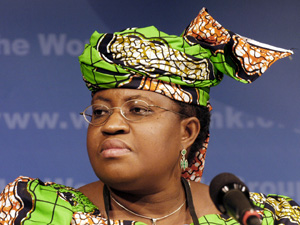
Fingered in the cover up bid are several senior public servants who are believed to be trying to convince Ngozi  Okonjo – Iweala, minister of finance, to disband the pension reform team which unearthed the fraud and has so far saved the nation over N120 billion that would have gone into private pockets.

The Pensions Reform Task Team, PRTT, led by Abdulrasheed Maina, discovered a N5 billion fraud at the pensions unit of the office of the Head of Service, HOSF, and over N1 billion scam at the Police pension Office, PPO, after conducting biometric verification exercises on pensioners.

However, a powerful clique of senior officials of government has rallied opposition against the task team in a bid to cover up the messy scandal in federal pension, with the ultimate aim of disbanding it.

Already, the officials have succeeded in stopping the PPTT’s audit and verification exercise at the Police Pension Office, PPO, where the team discovered that over N1 billion was stolen monthly from police pension fund. Officials of the PPO fraudulently collected N1.56 billion but paid out only N550, 000,000.00 to pensioners.

The task team also discovered a secret account containing N28 billion which it froze.

At the pensions unit of the office of the HOSF, the team discovered that officials had been collecting N5 billion fraudulently every month but paying pensioners only N825 million, creaming off a whooping N4.2 billion. The breakdown of the money collected monthly was N3.3 billion as pensions, N900 million as gratuity to dead people and N800 million arrears.

However, only N825 million of the N3.3 billion was paid to pensioners while the balance went into private pockets. Also, the N900 million collected monthly for gratuity and N800 monthly arrears were largely stolen by fraudulent public officers.

Between the PPO and the pensions unit of the office of the HOSF, the Maina – led team has saved for government over N150 billion since June 2010. The breakdown include about N34billion saved from June 2010 till date from the reduction in payments to pensioners from N5 billion to N1.65 billion; N28 billion found in a secret account at the PPO; some N35 billion discovered in accounts at the Head of Service Pensions unit and about N35 billion recovered by the EFCC in cash and assets from officials of the HOSF pension unit who are facing trial.

The task team was originally appointed in June 2010 by Steve Orosanye, then HOSF on the advice of a technical committee. It had the mandate to restructure the pension office in the HOSF’s office. However, while still carrying out this assignment, it was sent to reorganize the Police Pensions Office on June 8, 2011 by Oladapo Afolabi who had become HOSF. It was to spend three months doing its job.

However, trouble started for the task team in August 2011 just a month into its assignment after it discovered a N28 billion secret account at the Police Pensions Office. It is alleged that some officials of the federal government wanted to tamper with the money but were resisted by members of the team. At least two members of the task team alleged that a senior official of government tried to pressure them to “share” the money. The official allegedly told them to take about N600 million for the team members and hand over about N2 billion. The team members rejected the offer. A heated argument was said to have ensued after which the senior official threatened to deal a death blow to the team.

Subsequently, true to this threat, a flurry of events has occurred that have threatened the existence of the task team.

After spending only one month and reducing the monthly pensions paid to N550, 000,000.00 from N1.56 billion, Afolabi asked the task team to hands off Police pensions and appointed Kolawole Adeyemi, as director of the office.  As correspondence between Afolabi, Maina, Adeyemi, the office of the Accountant General of the Federation and Okonjo – – Iweala shows, a subtle tug of war ensued for the control of the Police pensions office.

Adeyemi resumed at the Police Pensions Office on August 22, 2011 and the next day fired a letter to the banks in which the PPO had funds, intimating them of his assumption of office as the director of the Police Pension Office. In the letter to the banks, he also instructed that all transactions concerning the office’s account s must be approved by him while also directing that all mandate cards be sent to him for confirmation. The banks refused to recognize Adeyemi as a signatory because the procedure was for the sitting signatories to introduce the new signatories in case of a change.

Two weeks later, on September 7, 2011 Afolabi wrote to the banks introducing Adeyemi as the signatory to the Police Pensions Office account. For example, in a letter to the manager of Fidelity Bank, Abuja, dated September 7, 2011, Afolabi introduced Adeyemi as director of the pensions office ”in respect of the Police Pensions Office Account No. 5030024748”. The manager was requested by that letter to make Adeyemi a signatory to the account.

Two days later the Accountant General of the Federation also wrote a letter to the same bank introducing Adeyemi and three others as signatories to the account. The others are Edwin Nwokoye, Toyin Jimoh Ishola and Mike Okolo. Meanwhile Maina and his team stayed put at the Police Pension Office and insisted that they still had control of the office’s accounts.

In the confusion arising from who was in charge, Adeyemi authorised the withdrawal of N119, 979,952.85 from the office’s accounts with First Bank. The mandate claimed that the money was for the payment of supplementary salary.

On September 15, Okonjo – Iweala wrote a letter to Maina asking him to continue with the Police pensions reform. She instructed the PRTT to “continue with the restructuring of the Police Pension Office until it is fully completed”. In the same letter, the minister also directed that Maina, along with Baba Gana Kaigama, John Y. Yusuf and A.A. Magaji would be “sole signatories to all the Police Pension Accounts”.

That same day Okonjo – Iweala wrote the managers of several banks freezing the accounts of the Police pension office and intimating them that Maina, Kaigama, Yusuf and Magaji remain sole signatories to the Police pension accounts with the bank with specific warning that no transaction should be accepted without their endorsement.

Curiously, the minister reversed herself only a week later on September 22 when she wrote the Maina team to hands off the Police pensions office and brought in KPMG, a firm of auditors and tax consultants to audit the place. In the letter the minister said she had been directed by President Goodluck Jonathan to review the structure of public service pension system in Nigeria, including the work of the PRTT.

But Okonjo – Iweala is not known to have taken a similar action in any other pensions unit in the public service. Apart from that she was bringing in KPMG to undertake the same work the PRTT was saddled with but not allowed to finish.

Meanwhile, since September when the minister asked the task team to hands off the PPO there has been confusion about who is in charge. Pensioners and workers at the PPO have not been paid on time. Even more worrisome is the fate of the N28 billion discovered in a secret account.

There are fears that some unscrupulous persons might exploit the muddled up situation and dip their hands in the funds.

The PRTT has faced even stiffer opposition and frustration in carrying out its work in the HOSF’s office. A series of actions have been taken to block the team culminating last week in a meeting in the office of the minister of finance where some senior civil servants advised that the team be disbanded.

A source in the minister’s office told our reporter that the four of them, two from the office of the HOSF and one from the Police pension office and another from the Police affairs ministry complained to the minister that the team was a cog in the wheel of pension administration in Nigeria.

They allegedly accused the task team of impeding work at the Police pension office, giving as example the inability to pay pensioners on time.

If that is true it would be a last attempt to get rid of the task team as the HOSF had actually attempted in the past to disband the team. Twice within two months late last year, Sali had written to the chairman of the task team to wind down its work.  However, nobody has shown up to take over from members of the task team.

A  member of the team who spoke on condition of anonymity because he did not have the power to speak for the team observed that what might be the saving grace for the team is the fact that the Pensions Reform Act 2004 guarantees autonomy from the office of the HOSF.

“If not that the 2004 Act makes the pension unit autonomous, they would have found a way to disband it”, he said.

The team member also said that in a bid to frustrate the team and prevent it from doing its work, it had been starved of funds for months.

He alleged that big wigs in the civil service who benefited from the pension racket of the past which has been dismantled by the task team are the ones who have rallied forces to frustrate the team and disband it.

Those who benefited from the faulty system of the past might really have a reason to fight as the task team has introduced an automated pension management system that makes it virtually impossible for anybody to steal from pension funds.

The new integrated E – Pension Management System, EPMS, has streamlined and automated pension management to the extent that all records of pensioners and workforce related data have been consolidated on a single platform.

It provides online real time access to pensioner details as well as payment history of all benefits, gratuity, and monthly pension from year to year.

The team has already integrated the pension schemes in the PPO, office of the HOSF, State Security Service, SSS, and the Customs, Immigration and Prison Pension Office, CIPPO into the EPMS platform.

The platform is configured so that the EFCC, and the Independent Corrupt Practices and other related offenses Commission, ICPC, can access and monitor activities of the different pensions offices.

If this new platform becomes operational, it will eliminate all possibilities of manipulating the pension administration for personal gain. That may be the crux of the hard times faced by the PRTT.

In October, 2011 the House of Representatives Committee on Pensions tried to wade into the confusion in the pension scheme when it wrote the HOSF and asked him to allow the task team to carry out its reforms to a logical conclusion.

The House suggested that in fact the team be given the task of dealing with pension issues in the Nigerian Ports Authority, NPA, Power Holding Company of Nigeria, PHCN, the Nigerian Railways Corporation, NRC, and other government agencies.

However, a new twist was introduced into the intrigues to disband the task team last week when it was summoned before members of the House committee on pensions.

It was gathered that team had been dragged before the committee for disturbing a virement for the transfer of N77 million from the pensions fund of the office of the HOSF for the training of civil servant abroad.

Maina was questioned on this and other issues including why he was in control of the budget of the pensions unit of the office of the HOSF and why he recommended that the Police Pensions Office get zero allocation in this year’s budget.

Those who dragged the team before the House pensions committee include permanent secretary, establishment and records in the HOSF’s office, permanent secretary, management development office and permanent secretary, career development office.

Apparently, there had been an attempt to take N77 million from pension funds for training of civil servants, which was resisted by the task team. Interestingly, those to be trained include Afolabi who retired months ago. He is scheduled to go for training nearly five times in the year, sometimes twice in a month.

However, after listening to the task team both formally and informally, the House committee on pension backed the task team and adjourned the hearing on the matter.

Maina who originally refused to speak to www.icirnigeria.org eventually agreed to a brief interview last weekend. He observed that he and other members of the task team had faced threats and even official intimidation because they were trying to cleanse a corrupt system.

“Our lives have been threatened. There is nothing we have not seen. Even with our work some of our bosses decide to intimidate us”, he said. (See full chat in Interviews section)

Observing that the task team had been able to save the country over N150 billion that would have been pilfered, he added that if the team is allowed to do its work it would be able to save even more. He expressed surprise at the directive to the team to hands off the Police pension office.

”We knew we were doing the right thing for the system because we had been able to discover the excess funds. We were able to determine that excess funds were being remitted to Police pension office. So when we were asked to stop it was baffling to us”, he stated.

When contacted to speak on the team he set up and how it has fared last week, Orosanye declined to speak, saying that he was under pressure to submit the report of the committee set up by President Jonathan to reform the civil service. He directed the reporter to the head of the task team whom he said “has all the information anybody needs”.

The task team boss equally confirmed that N119 million was illegally withdrawn from the Police pension but refused to mention the perpetrators. He said, however, that the finance minister was investigating the matter.

When asked to react to some of the issues, Tope Ajakaiye, the deputy director, press in the HOSF’s office advised www.icirnigeria.org to write a letter requesting an interview to his boss. However, no reply has come from the letter delivered to that office on January 23, 2012.

Afolabi, in his defense said that he had not effectively resumed as the director in the PPO because of the presence of the task team. He denied ever approving or having anything to do with the withdrawal of N119 million from the Police pension fund asking for documentary proof of the allegation.

He referred to the accusation as “wild allegations” and threatened to take court action if they persisted.

Contrary to that however, documents on the transaction show that Adeyemi signed the instrument with which the money was withdrawn.

A FAILED ROMANCE: Why Public Private Partnerships Do Not Work In Nigeria

1

Why the private sector shuns public infrastructure financing in Nigeria.

The Nigerian government’s efforts at engaging the private sector in the massive infrastructure development necessary to meet its goal of being one of the best 20 economies in the world by 2020 are fast becoming a pipe dream..

With the failure of Public Private Partnership, PPP, arrangements so far undertaken by the government, investors are wary of undertaking the over 20 projects lined up for private investors to help finance.  These projects include a light rail system and the Kuje water works both in Abuja; Sagamu – Benin – Asaba highway; Abuja – Kaduna – Kano road; Lagos – Kaduna – Kaura Namoda – Nguru rail line; the Port Harcourt – Kafancha – Maiduguri rail line and the Kiri Kiri Lighter Terminals 1 and 2. There are also projects in the health and housing sectors slated for private sector financing.

In line with one of the indicative parameters of Vision 20:2020, the blueprint designed by the government to make Nigeria one of the best 20 economies in the world by 2020,  the federal government plans a massive upgrade of infrastructure in several sectors.

Experts have said that Nigeria would need an estimated N32 trillion ($212 billion) to undertake a massive infrastructure development between 2010 and 2013. Since it does not have the capacity to finance this, the federal government is looking towards the private sector to help undertake the infrastructure upgrade.

The Big Cover Up

However, there are fears that investors might not be too keen on partnering with government in providing these infrastructure services because of past experiences with PPPs. Virtually every PPP initiative of the government in the last decade has failed or been bogged down by disagreements, litigations and other problems.

The four major concessions so far granted by the federal government are the Build Operate and Transfer, BOT, concessioning of the Murtala Muhammed Airport Terminal 2, MMA2, to Bi – Courtney Aviation Services Limited; the concessioning of the operations of the 26 seaports in the country; the concessioning of operations of the nations’ airports to Maevis Limited and the concessioning of the Lagos/Ibadan expressway to Bi Courtney Highway Services.

Inadequate knowledge, skills and capacity by participants both in public and the private sectors, poor evaluation, monitoring and due diligence by government, non competitive bidding, poor financial projections and access to funds as well as politicization of concessions are some of the reasons adduced for these failures.

The failure and controversy that have attended the concessioning of the Lagos-Ibadan highway is an exemplar of the Nigerian experience in PPPs. Nigerians had hoped that the government would have learnt some lessons from the failure of previous PPP efforts and use the concessioning of the Lagos/Ibadan expressway as a model for the development of Nigeria’s pitiable roads infrastructure. But more than three years after the concession agreement was signed between the federal ministry of works and Bi Courtney, it has failed to take off.


In fact, the concessioning of the 105 kilometer Lagos/ Ibadan became a huge embarrassment to the government and it was at a loss what to do about the agreement. All hope appeared lost on the project until November, 2011 when Bi Courtney announced that it had teamed up with Group Five and Rand Bank both of South Africa to finance and execute the road project. Even then the deal between Bi Courtney and the two South African companies is unclear. Enquiries at the Rand Bank in South Africa only showed that the bank was appointed a financial advisor to Bi Courtney.

Joandra Griesel of the bank’s media department in an email said “”I can confirm that Rand Merchant Bank, a division of First Rand Bank Limited, has been appointed as Financial Advisor to this project as part of a wider team”. She stated however that the team would not want to speak about details of the deal and directed further enquiries to Bi Courtney.. Group Five did not even reply to e mails sent to it enquiring about it’s deal with Bi Courtney.

In January, 2011, Sanusi Dagash, former past works minister at the opening session of a five-day Public Private Partnership capacity development workshop for staff of federal government ministries, departments and agencies organized by the Infrastructure Concession Regulatory Commission, ICRC, said that putting the cart before the horse in negotiating the Lagos-Ibadan concession granted to Bi-Courtney Limited is the bane of the project.

“If we had done the right thing at that time, perhaps we would have gone far on that project. Over one year after signing the project contract, we are still looking at the drawings, which is something that should have been done, with other elements of PPP transaction, before now”, he observed.

When www.icirnigeria.org spoke to Dagash in mid –  May 2011, over the stalled concession, it was obvious that he was at pains explaining government’s position. The minister observed that a lot of things were taken for granted by both government and the concessioner, adding that there was also evidence that officials of the government did not have enough knowledge about PPP projects.

The minister disclosed that the design of the entire road project had just been approved (in June 2011) and that the concessionaire had been given another 180 days to show evidence of financial readiness to execute the project.

The Lagos/Ibadan road concessioning, it appears, was structured to fail right from the beginning. First, the ministry of works, the grantor, like Dagash said, did not have technical capacity to consummate such an agreement, having had no previous experience in such matters.

Worse still, the ministry did not employ the services of experienced legal/transaction consultants or technical advisers. Thus, the designing of the project was left entirely to Bi Courtney, which drew up an agreement that was entirely skewed in its favour.  The agreement was for Bi Courtney to design, build, operate and transfer ownership of the road. The contract period was for four years meaning that by now it should have been nearing completion.

The N91billion concession agreement gave the company rights over the road and its access points and a 60 metre right of way throughout the length of the expressway. By the agreement, the company had rights over every commercial activity on the road including granting of land rights to commercial petrol stations and outdoor advertising and billboards for a period of 25 years.

Also, curiously, the agreement prevents the Nigerian government from providing any public utility even in public or national security interest unless it seeks Bi Courtney’s consent and “PROVIDED that the concessionaire shall be given a right of first refusal in the provisions of the utilities…”

So, for example,  if the government wants to construct a railway on any part of the Lagos-Ibadan road in the next 25 years it has to offer Bi Courtney  the contract first before anybody even when it does not do that kind of business.

Many people were surprised that Bi Courtney got the concession to build the road considering its problems with the MMA2 concession. Wale Babalakin, chairman of Bi Courtney Aviation Services, is still embroiled in court cases over the MMA2 concession.

But it is also not surprising to others who know how business is done in Nigeria that Bi Courtney got the deal. First, there were not too many private sector investors who showed interest in the concession.

Ministry of works officials who spoke on the matter observed that Nigerian businesses were more used to getting contracts from government which would fund such projects while they just built and invested little or nothing.

In fact, some of these officials confessed that even they too preferred the public procurement system which gave them the opportunity to collect bribes.

Even more instrumental to Bi Courtney’s clinching the concession was the cozy relationship between Babalakin, its chairman and then President Umaru Yar A’dua.  Babalakin was at a point a special adviser at large to Yar A’dua. Some sources told www.icirnigeria.org that it was actually Yar A’dua who put pressure on Babalakin to take on the job. It is alleged that the late Yar A’dua had a strategic political reason for wanting to upgrade the Lagos/Ibadan expressway as quickly as he could. Looking toward 2011 and his second term re – election, Yar A’dua wanted something tangible to campaign with in order to get votes from the South west.

He saw the overhaul of the Lagos/Ibadan expressway as providing that opportunity. He wanted work on the road rushed between 2009 and 2011 when he would seek re – election. This may account for why the whole concessioning deal was rushed through the federal executive council in spite of advice to the contrary by some stakeholders.

In early 2009, just a few months after the board of the ICRC was inaugurated, the agency’s advice was sought on the concession agreement to reconstruct the road.

After scrutinizing the technical drawings and submissions of the concessioner and the agreement, the ICRC did a report in which it advised government not to go ahead with the deal. In the report the commission noted that many things had not been properly done and suggested that “a detailed condition survey needed to be done to ascertain the cost of the project”

In spite of this the ministry of works with  Lawan Hassan as minister took the agreement to the federal executive council, sought and got approval and went ahead to sign the contract. Many things that would have safeguarded government interest in ensuring that the concession succeeded were not done.

For example Article 2.10 of the agreement says that the concessionaire shall provide “a bank guarantee from a reputable bank acceptable to the Grantor … for a sum equivalent to 10 (ten) per cent of the construction cost”. No such commitment was made by Bi Courtney.

And, today, although officials of Bi Courtney deny this, finance had been the major reason why the construction has not started on the road. Naturally, with his court cases, banks in Nigeria have been wary of giving Babalakin or Bi Courtney any loan to execute the project.

Guarantee Trust Bank which granted Roygate Properties a N11.5 billion loan has taken Babalakin to court. So has the consortium of six banks that granted Bi Courtney Aviation Services a N20 billion loan to part finance the MMA 2 project.

Access Bank also went to court asking among other things that Bi Courtney Aviations Services deliver possession of the four (4) Cobus Apron Buses used in transporting passengers to aircraft at MMA 2 to the custody of the court pending the determination of its suit against the company.

It is also on record that Babalakin’s name featured prominently in the list of the big debtors in Nigeria published by the CBN months ago. A source said that having lost hope in securing funding for the project in Nigeria, Babalakin looked outside the country, particularly to South Africa to get a reprieve from banking institutions there. For over two years he came up empty handed. At least until his recently announced deal with Rand Bank.

Officials of Bi Courtney who spoke to www.icirnigeria.org in Lagos insisted that the finance was not the problem with the project and that the company had the resources to fund the project. When www.icirnigeria.org spoke to them last year,Toyin Aloa, then spokesperson and Mike Laleye, head of marketing, respectively said that the major problem was the fact that government had not approved the design of the project.

Asked why the project design was not done before the concession agreement was signed, they explained that what was given to the government initially was a skeleton of the projected work to be done and that only now was a detailed design of everything including the road, bridges and side roads done. The duo also stated that that government had not fulfilled some parts of its own end of the agreement including giving it right of way.

For example, they said that government had to remove all encumbrances on its right of way including petrol stations and other structure and compensate those it previously granted rights on the road before it can start work.

An official of the ministry of works  said that the concessionaire had guaranteed the government that he had the finance required to execute the project and that there was no reason to doubt it. He added then that the government had given Bi Courtney six months moratorium to commence work on the project. However, a source close to Bi Courtney said that the company knew that it could not fund the project from the beginning and that as is common in Nigeria with government contracts that Babalakin had thought that the first step was to secure the concession and look for funding later.

The engagement of the private sector in infrastructural development, however, did not start with Yar A’dua but dates back to the Olusegun Obasanjo administration when it was realized that budgetary allocations would not meet the infrastructure development needs of the country. Vision 20:2020 and Nigeria’s plan to be one of the largest economies in the world, it was realized would be undermined by inadequate infrastructure.

Unfortunately, however, the truth is that no PPP agreement in Nigeria has succeeded. The original contract for Bi – Courtney Aviations Services to build and manage MMA 2 was signed in 2003 followed by a supplementary agreement increasing the construction period from 18 to 33 months.

In February 2007, an addendum agreement was further signed to increase the concession period to 36 years from the original 12 years. Work on MMA 2 was completed in 2007 and in May of that year, shortly before his tenure expired, then President Obasanjo commissioned the airport facility.

About N65 billion is said to have been sunk into the project by the concessionaire, most of the funding coming a consortium of six banks comprising Zenith, Oceanic, GTB, FCMB, Access and First Bank. But the MMA 2 has been embroiled in crisis since it went into operation.

First, the hotel facility expected to be built across the road from the facility has not been completed since. Then the revenues that have come from passenger traffic and other sources have fallen far short of projections. Whereas the terminal is built to handle four million passengers yearly, it has hardly ever gotten more than a million.

Also, the Federal Airports Authority of Nigeria has allowed some domestic airlines to operate local flights from the General Aviation Terminal, GAT, contrary to its agreement with Bi Courtney, thereby undercutting the concessioner’s revenue stream. Bi Courtney has actually secured a judgment from the Federal High Court, Abuja which ordered FAAN not to allow any airline operate domestic flights into or from Lagos from any other terminal but MMA2.

The court also ordered “the plaintiff is entitled to all revenue arising from scheduled domestic flight operations of any airline operating in Lagos State and outside of MMA2 after same became operational accruing to the benefit of the plaintiff”.

FAAN has not obeyed the court order. Neither has it stopped domestic flights from GAT or paid the monies from domestic flight operations accruing to it from flight operations at GAT to Bi Courtney since MMA 2 commenced operations.

Bi Courtney claims that FAAN owes it more than $75 million while FAAN says that the concessioner is the one owing the federal government nearly $10 billion.

In 2004, major port reforms carried out by the Obasanjo regime culminated the concessioning of the operations of the ports. Before then the ports had witnessed inefficiency, high port charges, long turnaround of cargoes and ships, congestion and high level of corruption.

Nearly five years after the concessioning, many users of the ports say not much has changed. While importers still complain of high port charges and poor equipment the terminal operators on their part say that government has not met its obligations one of which is to provide infrastructure. Customs agents have embarked on strikes many times at the ports disrupting activities.

The same confusion has bedeviled the concessioning by the federal government of the management of some of the nation’s airports to Maevis Limited. FAAN, on behalf of the federal government, in October 2007 signed an agreement with Meavis Limited for the acquisition, installation, operation and management of World class integrated Airport Operations Management System, Airport Operation Database, Common Use Terminal Equipment, Computer Based Departure Control System Platform, Common Use Self Service Kiosk, a fully automated Airport Pricing and Billing System at designated Airports.

Labour unions have always resisted Maevis and claimed that the company was milking the government, sometimes organizing protests against its operation. Finally,  the government terminated the contract with Mavis. In a letter to the concessioner signed by M. B. Alabidun FAAN’s general manager/Legal Adviser on behalf of the managing director, Maevis was accused of breaching the agreement.

The company was accused of deducting several categories of money from source contrary to the agreement as well as refusing to deduct VAT and other fees due to government as well as opening and operating an account without authorization from FAAN.

Maevis took that matter to court and in May, 2010 got judgment in its favour when Justice Binta Murtala Nyako of the Federal High Court in Lagos ruled that FAAN had no right to terminate company’s Airport Operations Management Services (AOMS) contract.

Mansur Ahmed, director general of the ICRC, the agency established by government to regulate PPPs in Nigeria, gave a number of reasons why partnerships between the public and private sectors have failed.

According to him, many of the failed concessions were fashioned out without proper understanding of the issues at stake and financial requirements. “The projects were not properly configured and there has not been enough thinking done ahead and enough analysis about what needs to be put in place”, he said. (See full text in Interviews).

This lack of understanding was on the part of both public and private sectors. Other problems he identified included non competitive and non transparent selection of private sector partners, wrong or poor financial analysis and projections as well as improper costing of the projects.

Unfortunately there is little the government can do to get many of these projects back on track and boost investor confidence. The ICRC Act only allows the commission to oversee the concession agreements the federal government enters into, it does not give it enforcement powers to whip erring parties in line.

“The ICRC Act says it will take custody of the contract and ensure that the objectives of the transactions are met. It does not give it any enforcement powers. Our role therefore is to draw the attention of the parties, the ministry and, where possible, the office of the attorney general and the concessionaire to the issues that need to be taken into account”, the DG observed.

In spite on the negative impact these stalled or failed projects have on investor confidence, Ahmed does not think that revoking the concession agreement is a viable option. Revocation should be the last resort, he says, because everyone suffers, including the public and private sectors as well as the ordinary citizens who are denied the infrastructure services.

But from all indications the nation is bound to suffer a bigger repercussion if the federal government fails to find private investors to partner with in developing its infrastructure services. One of the key objectives of Vision 20:2020 is a massive upgrade of infrastructure if Nigeria is to become an economic giant by 2020. The economic plan’s blueprint envisages a $32 billion investment in infrastructure development over the next four years.

With limited resources at its disposal for infrastructure development, the government is at a loss where the money is going to come from if private sector players are not showing much interest.

However, perhaps, there is a silver lining at the end of the tunnel. If Bi Courtney’s deal with Group Five and Rand Bank of South Africa falls through and the Lagos-Ibadan road is constructed soon, maybe it can renew some confidence in the private sector and banking and finance community that PPPs are not a no go area after all.

That is if it can survive a political game that seems to be playing around the project. A source close to Bi Courtney alleged that the governments of the Action Congress of Nigeria, ACN, in the South west might be opposed to the project because Babalakin is believed to be a member of the Peoples Democratic Party, PDP.

This accusation was amplified a few week ago when officials of the Ogun State government seized some of the construction company’s equipment and arrested its workers at the Sagamu interchange. Bi Courtney has petitioned the federal government over the matter.

In a statement by Dipo Kehinde, the new spokesperson of the company,  the company alleged that “a detachment of mobile policemen and some officials from the governor’s office impounded BCHSL’s excavator, which was promptly moved to the state government secretariat, Abeokuta, on a Low-Bed brought from the government secretariat”.