Home Blog Page 454

Nasarawa APC unveils candidates for LG election

0

THE All Progressives Congress (APC) in Nasarawa State has released the names of its candidates for the upcoming local government chairmanship and councillorship election, scheduled for November 2, 2024, across the state’s 13 Local Government Areas.

The chairman of the APC primary election committee, Tanimu Adamson, announced this on Friday while submitting the report of the recent screening exercise to party executives in Lafia, the state capital.

Adamson noted that the candidates emerged through consensus, as agreed by the party in accordance with Article 20 of its constitution.

“The APC in Nasarawa State is a law-abiding party, thus after the recent expiration of the local government councils chairmen tenure, the party called for a general stakeholders meeting to deliberate on the way forward to conduct a peaceful, credible and transparent primary election.

“We deliberated and agreed unanimously that it should be by consensus according to article 20 of the party’s constitution.

“We have therefore outlined credible candidates for the 13 local government areas that would run for the championship positions and councillors who will constitute the legislative arm and improve the image of legislation at the local government level so that there would be true democracy and provision of dividends of democracy”, he said.

Adamson announced the names of the candidates, including Safiyanu Isa (Akwanga LGA), Umar Dan-Akano (Awe LGA), Jonathan Addra (Doma LGA), Abubakar Madaki (Karu LGA), Adamu Aboki (Keana LGA), and Idris Damagani (Keffi LGA).

Other are Bitrus Agbawu (Kokona LGA), Mohammed Haliru (Lafia LGA), Mohammed Ahmed (Nasarawa LGA), Iliya Aliyu (Nasarawa-Eggon LGA), Isa Sani (Obi LGA), Murtala Danmadami (Toto LGA), and Ezekiel Jaga (Wamba LGA).

The committee chairman announced that the candidates had undergone screening and were certified by the party as meeting the requirements according to its constitution.

Adamson added that the committee ensured inclusivity, with females and people living with disabilities among those who emerged as consensus candidates for councillorship positions across the state’s 147 electoral wards.

Receiving the report, the APC chairman in the state, Aliyu Bello, commended the committee members for their dedication in ensuring the party’s growth and fulfilling their mandate within the set timeline.

Bello also announced that the party would promptly submit its list of successful candidates to the Nasarawa State Independent Electoral Commission, to the commission’s deadline.

Additionally, he reaffirmed his trust in the  electoral body to conduct free, fair, and credible local government elections, while encouraging other political parties in the state to participate to participate in the poll.

The ICIR reported that following the July 2024 Supreme Court ruling affirming the autonomy of local government administration, many Nigerian states such as Kwara, Rivers, Ebonyi and Kebbi among others have been conducting local government elections, with some gearing up for the exercise.

The ruling, which restored financial and administrative independence to the nation’s 774 local government areas (LGAs), has compelled state governments to hold elections, marking a departure from the previously pervasive practice of appointing caretaker committees who were mainly the governors’ stooges and tools for squirrelling public funds.

Although The ICIR reports that this practice has been widely criticised for undermining local governance and stalling community development, many Nigerian state governors used the LGAs as tools for political patronage, which negated democratic ideals.

For years, LGAs, which are constitutionally the third tier of government, have been deprived of their autonomy, with state governors often hand-picking local government chairmen and councillors.

This has reportedly led to the stifling of development at the grassroots level, as most of the funding intended for LGAs was controlled and sometimes misappropriated by state executives.

Until the Supreme Court ruling, many LGAs had been headed by caretaker committees in most states across the country.
National grid collapses 3rd time in one week

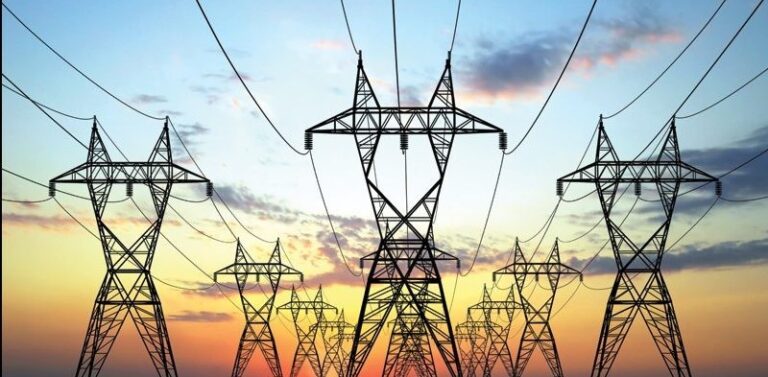
NIGERIANS have been plunged into darkness again as the national power grid collapsed for the third time in just one week.

The outages have heightened frustrations nationwide, with businesses, households, and essential services struggling under the country’s unreliable electricity supply.

The third grid failure occurred early Saturday, October 19, causing widespread blackouts across several states and the Federal Capital Territory (FCT)

Information from the Nigerian System Operator’s portal showed that the grid hit an all-time low of zero Megawatts (MW) at 8:16 am on Saturday.

The data revealed that all 22 generation companies (GenCos) were non-operational at the time of filing this report.

THE ICIR reports that this collapse marks the eighth disruption to the grid in 2024.

Despite the widespread impact of the blackout, the Transmission Company of Nigeria (TCN) has yet to confirm the incident when filing this report, leaving Nigerians and investors in the dark regarding the cause and resolution of the latest crisis.

On February 4, Nigeria experienced its first blackout of 2024 when the national grid collapsed around 11:51 am. The TCN-managed grid’s capacity dropped from 2,407 megawatts to just 31 MW by noon, ultimately shutting down completely by 1 pm.

Court did not order VeryDarkMan to pay N500m fine over defamation

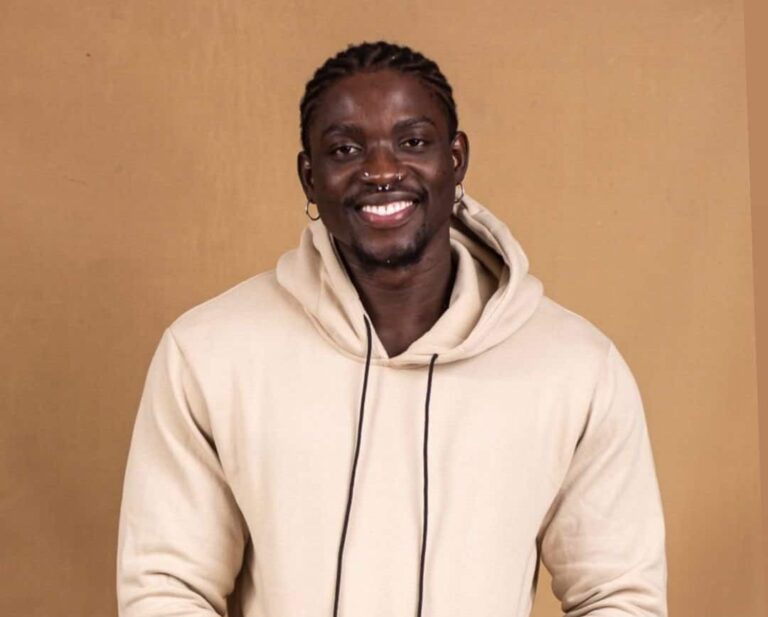
ON October 15, 2024, many Nigerian media platforms reported that the Lagos State High Court has imposed a fine of N500 million on social media influencer, Martins Otse (a.k.a. VeryDarkMan), over defamatory posts and videos about prominent lawyer Femi Falana (SAN) and his son, Folarin Falana, also known as Falz.

The claim, earlier reported but now deleted or removed by many media platforms, still exists on other platforms such as News Central and various social media posts as seen here and here.

VeryDarkMan had posted on his Instagram page a leaked audio clip of Bobrisky, in which the cross-dresser allegedly implicated Falz and his father.

In the audio clip, Bobrisky, whose real name is Idris Okuneye, alleged that while he was imprisoned at the Kirikiri Correctional Centre, Falz and his father contacted him to facilitate a “presidential pardon” for a fee of N10 million.

Falana, during his appearance on Channels TV’s Politics Today, denied ever contacting or knowing Bobrisky. He also refuted the N10 million deal allegation, stating that he had secured pardons for numerous convicts without any charges.

He further indicated that he would not pursue criminal charges against VeryDarkMan based on his principle that free speech should never be criminalized but initiated civil proceedings to restore his and his son’s integrity and reputation. He noted that he had requested an apology and retraction from VeryDarkMan, which the influencer failed to provide.

The senior advocate then proceeded to sue VeryDarkMan via an ex-parte originating application on October 9, 2024. Ex-parte applications are heard by courts without the adverse parties and their lawyers.

Screenshot of the viral news as reported by many media platforms.

In the ex parte application, heard by a judge on October 10, 2024, Falana sought various preemptive orders against VeryDarkMan ahead of the hearing of the substantive suit. He also sought an order to serve VeryDarkMan through substituted means by serving the suit on his lawyer.

CLAIM

Court orders Martins Otse (a.k.a. VeryDarkMan) to pay N500 million over defamatory posts against Falana and his son.

THE FINDINGS

Findings by The FactCheckHub show that the claim is FALSE.

Following Falana’s suit, the Lagos State High Court ordered controversial social media influencer, Martins Otse, popularly called VeryDarkMan, to remove defamatory comments and videos concerning lawyer and human rights activist, Femi Falana (SAN) and his son, Folarin.

Justice M. O. Dawodu delivered the ruling in suit no: ID/8584/GCM/2024 on October 14, 2024. According to him, VeryDarkMan’s publications on his social media accounts on September 24, 2024, linking Bobrisky to Falz and his father were defamatory and injurious to their public image.

However, a review of the certified copy of the court ruling did not reveal anywhere that the court ordered the social media influencer to pay a sum of N500 million as a fine.

Part of the ruling read: “According to the applicants (Falz and Falana), the defendant (VeryDarkMan) knew these statements (Bobrisky’s claims) were false and untrue but proceeded to publish them to injure their reputation.

“Furthermore, the defamatory statements are still trending on the defendant (VeryDarkMan)’s several online platforms and the injury to their reputation continues as long as the publication remains online. The actions of the defendant (VeryDarkMan) have necessitated the applicants (Falz and Falana) to file this ex-parte application for pre-emptive remedies to prevent further acts of mischief that damages may not remedy, should the court find in favour of the applicants.

“The defendant, his agents, and privies are hereby restrained from further releasing, publishing, or circulating any defamatory videos or comments about the applicants and must remove the defamatory video or comments about the applicants published on September 24, 2024, on all his online social media handles/pages pending compliance with the Pre-Action Protocol of this honourable court.”

The FactCheckHub reports that no where in the court ruling was the VeryDarkMan asked to pay a fine of N500 million.

THE VERDICT

The claim that the court ordered Martins Otse (a.k.a. VeryDarkMan) to pay N500 million over defamatory posts against prominent lawyer Femi Falana (SAN) and his son, Folarin Falana, popularly called Falz, is FALSE; court document only shows that VeryDarkMan was ordered to remove the defamatory posts and stop circulating it.

This fact-check is republished from The FactCheckHub

Video does not show Ondo governor caught with ‘side chick’ in London

A viral video purportedly showing the current governor of Ondo State, Lucky Aiyedatiwa, caught in an affair with a woman has surfaced online ahead of the November 16 governorship election in the state.

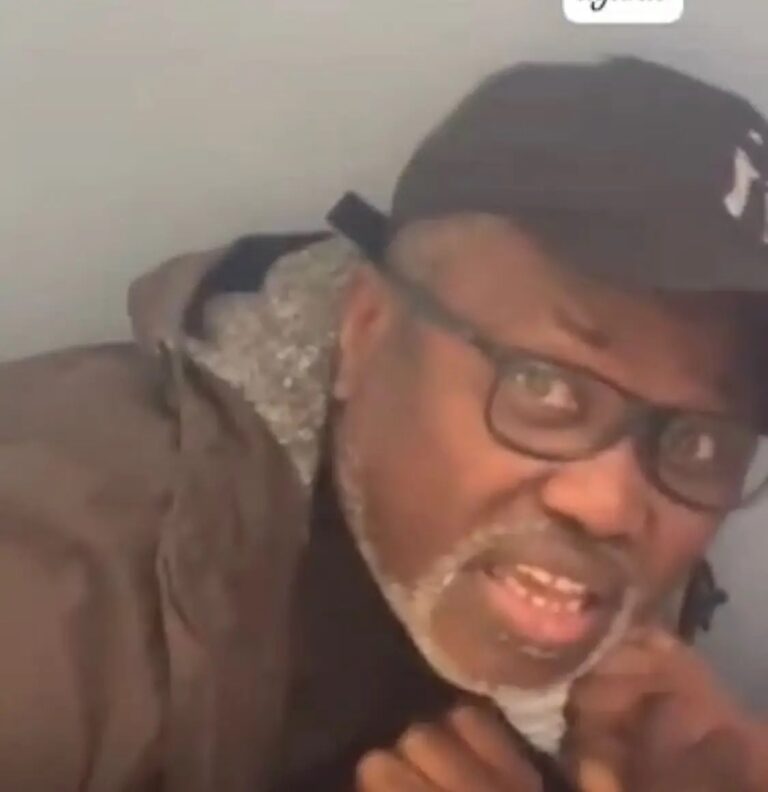
In the video, a woman grabs the man by his collar, calling him derogatory names, while another woman holding a camera threatens to release the footage on social media and show the video to his wife.

An X user, @davetorty, posted the video with a caption that read:

“This is the  Ondo State governor in London,  having a real brawl with a side chic! What a shame!

Men, honour Urselves! The real plan of the strange woman, spiritually and physically is to bring U down! Make thy loins tight! Keep thy prestige!”

The video has garnered over 700,000 views plus more than 2,000 reposts and over 2,500 likes as of October 13, 2024.

Another X user, @whatsappblog9ja, posted the video with a caption thus:

“Viral video of Ondo State sitting governor in London,  having a real brawl with a side chic.”

CLAIM

Video shows Ondo governor, Lucky Aiyedatiwa caught in an affair with a woman.

THE FINDINGS

Findings by The FactCheckHub show that the claim is FALSE.

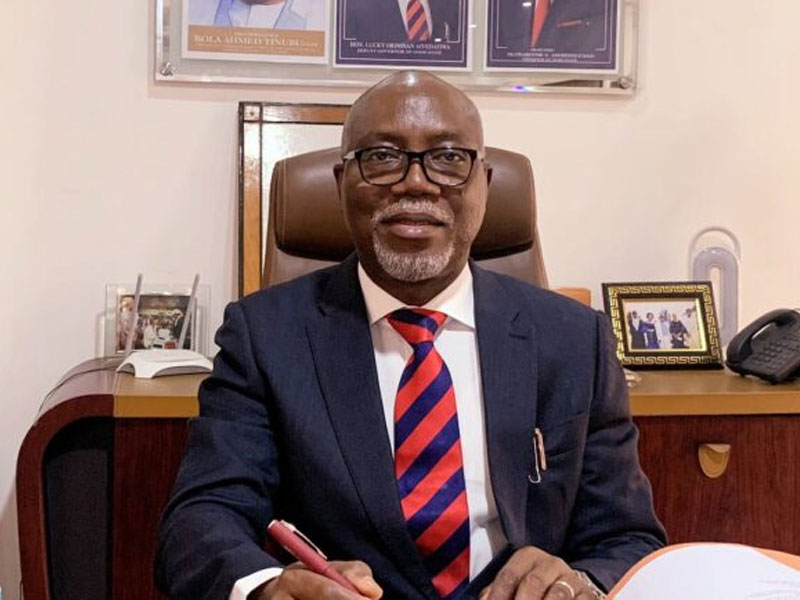
Our fact-checker analysed the video using some keyframes obtained from it. The results show that while the man shares a striking resemblance with Governor Aiyedatiwa, some facial features distinguish them.

Lucky Aiyedatiwa, Ondo State governor.

For instance, the man in the video is gap-toothed, while Aiyedatiwa is not. Their nose shapes also differ. Aiyedatiwa has a wider nose bridge with a more rounded tip, while the man’s nose seems narrower, with a sharper tip.

Meanwhile, the Ondo State government through Allen Sowore, a media aide to the governor had debunked the claim. In a statement , he said the video is a ploy to tarnish Aiyedatiwa’s image ahead of the November 16 governorship election in the state.

Sowore pointed out several differences between the facial and vocal features of the man in the video and those of Governor Lucky Aiyedatiwa.

He clarified that for the benefit of unsuspecting public, it was important to make clear that the man in the video was not the Ondo State governor.

The man in the viral video.

He explained that a closer look at the video showed noticeable differences: Governor Aiyedatiwa no longer wears the type of beard seen on the man in the clip, having changed his appearance over a year ago and the voices of the two men are distinct, with the individual in the video speaking loudly and in a tone different from the governor’s.

He added that Aiyedatiwa has never worked in the United Kingdom, as suggested in the video; and that while the governor has an oval face, the man in the video has a round face.

“The public is encouraged to carefully examine the video and notice these clear distinctions before arriving at the erroneous conclusion that the man in the video is Governor Aiyedatiwa,” he added.

THE VERDICT

The claim that the video shows Ondo governor, Lucky Aiyedatiwa caught in an affair with a woman in London is FALSE; facial evidence, as observed, shows that the man in the video is not Aiyedatiwa.

This fact-check was republished by The FactCheckHub. The original article can be read here.

Experts harp on mental health support for media practitioners

0

MENTAL health experts have urged media employers to provide periodic training and counselling support for their staff, including journalists covering crime, disaster and trauma-related beats.

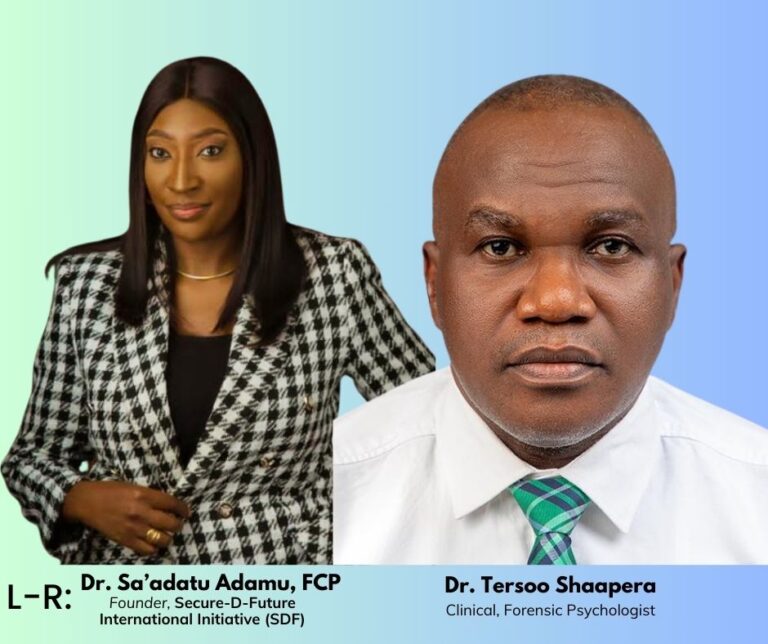
The founder of Secure-D-Future International Initiative (SDF), Sa’adatu Adamu, a doctor, and a technical assistant on the Benue State Government’s Safe Schools project,  Tersoo Shaapera, a doctor, made the appeal during an X space titled: Mental Health for Media Professionals organised by The FactCheckHub on Thursday, October 17, 2024.

They also called on media employees to prioritise self-care, stressing its importance in managing digital overload and preventing burnout, especially among journalists.

They further highlighted the importance of taking regular breaks at work, delegating tasks when necessary, and seeking mental health support.

These strategies are crucial for maintaining workers’ well-being in a profession often marked by high stress and constant information flow, they further explained.

Shaapera, a clinical and forensic psychologist, noted that media professionals frequently face difficulties in holding people to account. Much of their work, he highlighted, revolves around uncovering the truth, which could add to the emotional stress they experience.

“The job of media professionals is always traumatic. There are traumatic issues surrounding the media profession. And when you delve into it, sometimes you realise that the female folks among them are much more vulnerable.

“The fact remains that when it comes to issues of accountability, it is always very difficult for those (journalists) that are out there to hold people accountable, as most of what the media professionals do is to try to uncover the truth,” Shaapera stated.

Flyer of the X space
Flyer of the X space.

Also speaking on how to manage digital overload,  Adamu emphasised the importance of journalists recognising that mental health issues could affect anyone, regardless of their profession or job demands.

She said, “It is important that journalists understand that mental health doesn’t care about your profession, what you’re expected to do, or how far you should do it, and all that. It can affect anybody.”

She further highlighted the risk of burnout and secondary trauma that journalists might face due to pressures associated with their work.

To address the stigma associated with mental health among media workers, she noted that it’s essential that media practitioners feel comfortable in seeking help without fear of discrimination or judgement.

The experts noted that many journalists avoid mental health care due to concerns about being stigmatised or seen as weak. “This reluctance can exacerbate the mental strain they already face, leading to more severe issues such as anxiety, depression, and burnout,” they said.

One of the key solutions they proposed was creating a supportive work environment where practitioners could openly discuss mental health challenges.

They also urged media organisations to implement mental health awareness programmes, offer regular access to counselling, and promote self-care as part of their work culture.

SERAP fires back at SSS over N5.5 billion defamation suit

0

THE Socio-Economic Rights and Accountability Project (SERAP) has responded to the N5.5 billion alleged defamation suit brought against it by the State Security Service (SSS) also known as DSS.

Reacting to the suit, SERAP’s deputy director, Kolawole Oluwadare, in a chat with The ICIR on Friday, October 18, confirmed the receipt of the court papers by his organisation.

He described the accusation against SERAP as baseless and promised to challenge it in court.

“We reject the baseless defamation lawsuit brought against us by the DSS. We’re talking to our lawyers and will be filing our counterclaims against the DSS.

“We’ll see in court to stop this harassment, intimidation, and attack on the rights of Nigerians,” Oludare stated.

The suit, filed at the High Court of the Federal Capital Territory (FCT), has SERAP and Oluwadare as defendants.

In the suit, the secret police are claiming N5.5 billion from SERAP as damages for allegedly making false claims that officials of the agency invaded its Abuja office.

The suit was filed in the names of two of its officials, Sarah John and Gabriel Ogundele.

In the suit, marked CV/4547/2024 and filed on October 17, 2024, by Akinlolu Kehinde, a senior advocate, the agency stated, among others, that the alleged false claim by SERAP negatively affected its reputation and those of the officials involved.

According to the SSS statement of claim, it sent two officials, John and Ogunleye, to visit the SERAP office on September 9 to invite its new leadership to a familiarisation meeting as part of its policy to build rapport with non-governmental organisations (NGOs) in the FCT.

The claimants stated the officials met a lady called Ruth at the SERAP office who offered a phone number and pledged to notify her organisation’s management about the visit. They also claimed that their conversations with Ruth were recorded.

They said it was surprising that SERAP claimed that SSS officers had occupied its office illegally in a post on its X (Twitter) profile, @SERAPNigeria, shortly after the visit.

“On the same day, the defendants also published a statement on SERAP’s website, which was widely reported by several media outfits, falsely alleging that some officers from the DSS, described as a tall, large, dark-skinned woman and a slim, dark-skinned man, invaded their Abuja office and interrogated the staff of the first defendant.

The SSS stated that due to the statements published by the defendants, it was ridiculed and criticised by international agencies such as Amnesty International and prominent Nigerians, such as Femi Falana, a senior advocate.

The claimants further stated that the defendant’s remarks damaged their reputation because they had been subjected to mockery and contempt as a result of SERAP’s claim.

The claimants are asking the court for an order directing the defendants to tender an apology to the claimants via the first defendant’s (SERAP’s) website X (Twitter) handle, two national daily newspapers (Punch and Vanguard), and two national news television stations (Arise Television and Channels Television).

They are also asking for “Interest on the sum of N5 billion at the rate of 10 per cent per annum from the date of judgment until the judgment sum is realised or liquidated and “an order directing the defendants to pay the claimants the sum of N50 million as costs of this action.

The case has been assigned to Yusuf Halilu of Court 13 of the High Court of the FCT but no date has been scheduled for hearing.


READ ALSO:


The ICIR reported that SERAP, on its X handle on Monday, September 9, said operatives of SSS unlawfully occupied its building, demanding to see its directors.

Reacting to the claim, the SSS said the narrative portrayed by SERAP was ‘inaccurate’ and ‘misleading,’ adding that it operated within the framework of the law.

In a statement released on Tuesday, September 10, the SSS explained that its presence at SERAP’s office was part of its routine investigation.

Toll rises to 167 from Jigawa fuel tanker explosion

0

NO fewer than 167 persons have been confirmed dead following the fuel tanker explosion in the Taura Local Government Area of Jigawa State, on Tuesday, October 15.

The state Governor Umar Namadi revealed this during a condolence visit by Kano State Governor Abba Yusuf at the Government House in Dutse on Thursday, October 17.

“As of Thursday evening, 167 lives had been lost in the fire disaster,”  Punch quoted the governor to have said.

According to him, about 67 people are receiving medical treatment at various medical facilities within and outside the state.

The ICIR reported the tragedy occurred at about 11:30 p.m. on Tuesday after a tanker driver lost control near Khadija University and his truck exploded.

The driver was said to have left Kano and was heading to Nguru in Yobe when the accident occurred. 

Police spokesperson in the state, Lawan Adam, said many of the victims had gathered around the tanker to scoop fuel. 

The police had earlier stated that 153 people died from the explosion as of Thursday.

Meanwhile, the Jigawa State governor expressed gratitude to the Kano State Government for its support and assured that the N100 million it donated to the state over the tragedy would be used to support the victims and their families.

On Thursday, October 17, the Nigerian Safety Investigation Bureau, commenced an investigation into the explosion.

A statement from the agency reads in part, “The team will assess the circumstances surrounding the crash and the explosion to identify causal factors and provide safety recommendations aimed at preventing future occurrences.

“We extend our heartfelt condolences to the families affected by this devastating accident. The NSIB is committed to uncovering the cause of the explosion and ensuring that safety lessons are learnt.”


Nigerian Red Cross trains 25 journalists on first aid

0

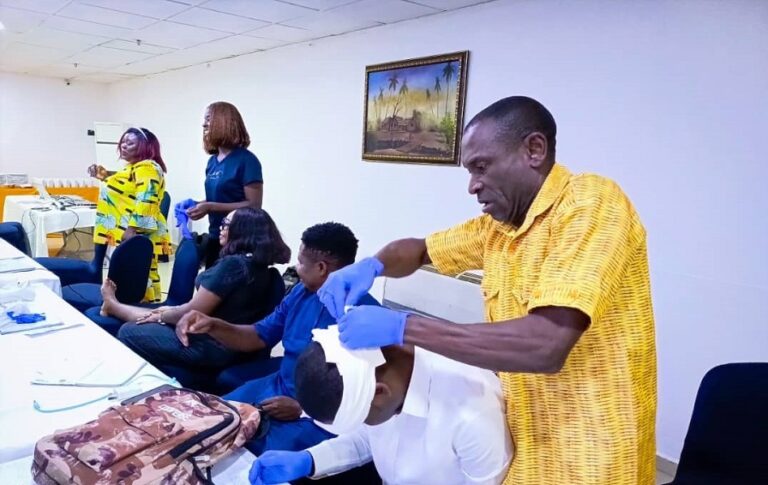
THE Nigerian Red Cross Society (NRCS), with support from the International Committee of the Red Cross (ICRC), recently trained 25 journalists in first aid in Cross River State.                          

The media professionals were trained on how to use life-saving skills for emergencies, especially those they might encounter while doing their jobs.

According to a statement released by Chima Nwankwo on behalf of the Nigerian Red Cross Society, participants at the training received hands-on training in cardiopulmonary resuscitation (CPR), wound management, and more.

Nwankwo said the initiative underscored the critical role of first aid knowledge in ensuring safety within and beyond media environments.

Branch secretary, Nigerian Red Cross Society, Cross River State chapter, Eni Joseph, during the training, emphasised that first aid knowledge was crucial for journalists due to the risks associated with their profession.

He noted that first aid’s primary objective was to save lives and promote swift recovery.

“The idea of training journalists in first aid is actually not new. This is the second time that we have done it. Based on your area of professionalism, you are actually exposed to a certain level of risk in your line of work. So the knowledge of first aid at work could be very useful.

“You can use it to help your colleagues, family, and friends. It is a life-saving skill you actually need to have,Joseph stated.

A first aid trainer, Daniel Edobor, led the training, which included critical skills such as placing casualties in recovery positions, performing CPR, controlling bleeding, managing fractures, treating home injuries, and safely transporting casualties to hospitals.

The organisation added that the 25 journalists who came from various media outlets received ICRC-certified First Aid kits and certificates upon completing the training.

In June 2024, the ICRC also trained over 20 journalists in Kano, Northwest Nigeria.

The public relations officer for the ICRC, Aliyu Dawobe, while addressing participants said the training was designed to improve the journalists’ understanding of basic first aid procedures and how to handle pre-hospital injuries.

According to him, the purpose of the training was to provide media workers with the tools they need to deal with some of the fatalities that might happen during emergencies.

He explained that the Red Cross acknowledged the vital role that journalists play in providing vital information in conflict areas and the dangers journalists encounter while doing their jobs, which could include serious harm or even death.

#EndSARS: Lagos launches judicial inquiry into journalist Pelumi’s death

0

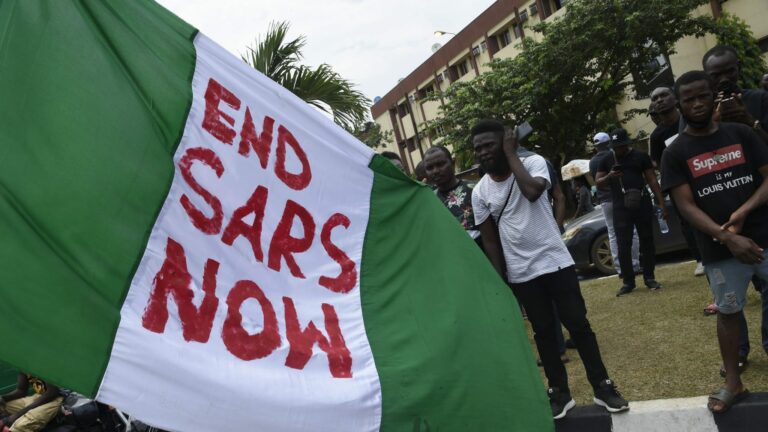
THE Lagos State Government has commenced a judicial inquiry into the death of Pelumi Onifade, a 20-year-old journalist who died during the #EndSARS protests in October 2020.

The inquest, which began on October 17, 2024, aims to uncover the circumstances surrounding Onifade’s death, assign responsibility if necessary, and provide closure to his family, according to a statement by the Media Rights Agenda, on Friday, October 18.

Onifade, a reporter for Gboah TV, was reportedly arrested by policemen attached to a Lagos State taskforce while covering the #EndSARS protests in 2020. His body was later discovered at a mortuary in Ikorodu, Lagos, under mysterious circumstances.

His death, and many others during the protest, sparked outrage and demands for justice from Nigerians and civil society groups.

The ICIR reports that ENDSARS protests targeted scrapping the notorious Special Anti-Robbery Squad (SARS), but ended up making more citizens victims of the police and other security officers’ brutality as many Nigerians were killed during the protest.

Although the Nigerian government denied the killings of protesters, findings of the Lagos State Judicial Panel on #EndSARS indicted the Nigerian Army of the protesters’ massacre at the Lekki Toll Gate.

Following a wrongful death lawsuit filed by Media Rights Agenda (MRA) against the Nigerian Police Force and the Lagos State Government over the killing of the young journalist, a Federal High Court in Lagos ordered a coroner’s inquest to determine the cause of death and identify those responsible.

The presiding judge, Ayokunle Olayinka Faji, in his July 19, 2024 ruling, directed the Attorney-General of Lagos State to initiate a full investigation into Onifade’s death.

At the inquest’s preliminary hearing on October 17, 2024, the District Coroner T.R.A. Oladele, presiding over the case, emphasised the inquest’s goal to ascertain whether Onifade’s death could have been prevented, identify its cause, and determine any negligence or culpability.

Both the representatives of MRA and the Lagos State Attorney-General’s office were present, according to the statement.

The hearing also featured testimony from Bose Onifade, the late journalist’s mother, who recounted the family’s struggle to locate and retrieve her son’s body.

She described how the family initially learned that Onifade’s body had been taken to the Ikorodu mortuary, where her husband, along with church members, identified it but the mortuary attendants refused to release the body.

“According to Mrs. Onifade, they were later told that the body had been moved to Yaba mortuary, but on getting there, they were not given any clear information about its whereabouts. She said the confusion and lack of clarity has exacerbated the family’s distress,” the statement added.

Meanwhile, representing the attorney-general of the state, Oluwaseun Akinde asked that the task force and other relevant authorities be contacted to provide documentation to track the body’s transfer between facilities.

In the statement, the coroner agreed and further directed that official records of the body’s movements be obtained.

He also suggested DNA testing to identify the remains, given the discrepancies in the available records.

The deceased mother, however, revealed that DNA samples had already been collected from her at the Lagos State University Teaching Hospital (LASUTH) and the DNA Test Centre in CMS, Lagos, but that she had not received any feedback from either institution.

“The coroner directed that a comprehensive list of all relevant parties to be included in the inquest proceedings should be compiled and that the list should include not only the taskforce members but also any additional witnesses or officials with knowledge of the circumstances surrounding the death.

She said the objective was to ensure a thorough and impartial investigation by incorporating all pertinent testimonies and evidence,” the statement said.

Akinde was also directed to send a formal request to the appropriate agencies, to provide clarification on the status of Onifade’s body and ask for all relevant records.

On July 10, 2024, The ICIR reported that the ECOWAS Community Court of Justice ruled that the Nigerian government breached the African Charter on Human and Peoples’ Rights in its handling of the 2000 ENDSARS protests.

The court fined the country N2 million, to be paid to three victims whose rights were violated by soldiers and other security operatives at the Lekki Toll Gate, where the largest number of protesters converged.

According to the court, the fine was compensation for the violations of the security of person, prohibition of torture and cruel, inhuman, and degrading treatment, rights to freedom of expression, assembly, and association, the duty to investigate human rights violations, and right to an effective remedy for the complainants.

However, the Nigerian government while defending the case, denied all claims by the applicants, stating that the officers who allegedly shot protesters were searching for escapee Boko Haram members.

Besides, it alleged that the protesters unlawfully assembled at Lekki Toll Gate under the guise of protesting against SARS.

SEC urges capital market operators to review debt issuance instruments

THE Securities and Exchange Commission (SEC), has called on capital market operators (CMOs) in Nigeria to review the disposition towards issuance of debt instruments by both state and local government agencies.

The executive commissioner of operations, Bola Ajomale, made the call at the 2024 International Credit Rating Webinar organised by DataPro Limited, according to a statement the organiser shared with The ICIR on Friday, October 18.

According to the statement titled, ‘time to review proclivity of debt issuance by subnationals,’ Ajomale, represented the director general of SEC, Emomotimi Agama, at the virtual event said, “Irrevocable Standing Payment Orders (ISPOs) from the state government cannot be the only measure of assurance and risk mitigation.

“CRAs (credit rating agencies) must alter their measurement metrics to accommodate rising risk levels and increasing requirements for sustainability for any instrument raised by a State or quasi government body.”

Another looming situation emphasised by the SEC commissioner is the tendency for some state governments to issue private bonds guaranteed by the state government.

“Not only do these not have any proof of secondary market value they need to be assessed for delivery of the stated project objectives,” Ajomale stressed.

He also urged stakeholders to explore ways to leverage the role of credit rating agencies in driving sustainable economic development in Nigeria.

In a welcome address, DataPro’s founder, Abimbola Adeseyoju, said apart from the established role of providing an opinion on the quality of assets and capital, credit rating agencies serve as a complement to risk management procedures.

He maintained that rating agencies should serve the common goal of catalysing the economy, promoting the real sector and creating wealth for a sustainable society.

In a keynote presentation, an international banking entrepreneur, Christian Ruehmer, urged banks to support businesses in the real economy.

Ruehmer believes rating agencies and banks share a common goal in ensuring that businesses succeed.

“Rating Agencies embody the need for robust financial expertise and a deep understanding of a company’s financial standing. At the same time, they provide a product that is trusted and reliable. Banks rely on CRAs to facilitate their work and collaborating with the wider financial sector to offer credible insights into a company’s long-term potential.

“A developing country like Nigeria can only grow if it finds a better way to finance domestic companies. And to do this, banks and investors must become more comfortable assessing these companies and that is when Credit Rating Agencies come in,” he said.

The ICIR had earlier reported the panellists argued that domestic borrowing in local currency limits default risks as against external borrowing and better positions economies like Nigeria to avoid over-reliance on institutions like the International Monetary Fund (IMF).

This year’s webinar is the fourth in the series and was attended by participants drawn from Nigeria, USA, Canada, South Africa, Ghana, Gambia, Namibia, Kenya and Rwanda.