Home Blog Page 540

Dangote seeks lawmakers’ probe of poor-quality fuel in filling stations

0

CHAIRMAN of Dangote Industries Limited, Aliko Dangote, has urged federal lawmakers to probe ‘poor quality’ fuel in circulation at various filling stations and other retail outlets in Nigeria.

Dangote said many vehicle issues could be traced to the “substandard” imported fuel.

He urged the House of Representatives leadership to set up an independent committee to verify the quality of petrol available at filling stations.

He also alleged that some Nigerian National Petroleum Company Limited (NNPCL) officials had opened a blending plant in Malta.

Dangote stated these at the House of Representatives on Monday, July 22.

An oil blending plant has no refining capability but can blend re-refined oil (a used motor oil that has been treated to remove dirt, fuel, and water) with additives to create finished lubricant products.

“Some of the terminals, some of the NNPC people, and some traders have opened a blending plant somewhere off Malta,” Dangote claimed.

“We all know these areas. We know what they are doing.”

Commenting on diesel quality, the billionaire said the diesel produced locally at 650 parts per million (ppm) and 700 ppm is of better quality than imported fuel.

“I want you to set up a committee that will come with every representative headed by your chosen honorable member to come and lead in taking samples from filling stations because I must tell you today that all the test certificates that people are busy floating around, where are the labs? Even if they have the labs, I can tell you they are fake certificates,” he said.

“The real one that you now know that they are right is to take from the filling station and also come and take from our production line. Now, you will be able to tell Nigerians that this is it,’ he added.

On Monday, the House of Representatives Joint Committee on Petroleum Resources (downstream and midstream) launched a probe into claims that local refineries, including the Dangote Petroleum Refinery, produce inferior products.

The committee is also investigating the allegations that the international oil companies (IOCs) in Nigeria are frustrating the survival of the Dangote Refinery.

The Nigerian Midstream and Downstream Petroleum Regulatory Authority (NMDPRA) has been daggers-drawn with Dangote Petrochemical Refinery.

On July 18, the chief executive officer of NMDPRA, Farouk Ahmed, said the Dangote refinery, was producing inferior products compared to the ones imported into the country.

The ICIR reported that the oil regulator also accused Dangote of monopoly, claims which have been denied by the billionaire through laboratory test results by some federal lawmakers.


Minister meets with Dangote, oil regulator in bid to resolve raging feud

0

THE Minister of State Petroleum Resources (oil) Heineken Lokpobiri, has met with the chairman and chief executive officer of Dangote Petroleum Refinery, Aliko Dangote, and the chief executive officer of Nigerian Midstream and Downstream Petroleum Regulatory Authority, Farouk Ahmed, (NMDPRA)

The meeting was held on Monday, July 21, to resolve ongoing issues surrounding the Dangote Refinery, according to a statement by the minister’s special adviser on media and communication, Nneamaka Okafor.

It also focused on finding a sustainable and lasting solution to the challenges facing the Dangote Refinery, with the parties promising to jointly address the issues.

At the meeting, the minister emphasised the importance of cooperation and synergy among all stakeholders to ensure the success and optimal performance of the oil and gas sector, which is pivotal for Nigeria’s economic growth and energy security.

Dangote and the Nigerian petroleum regulator – NMDPRA – have been at daggers-drawn over his refinery’s access to Nigeria’s crude with the regulator recently casting doubt over the quality of his diesel.

The impasse between both parties also led to Dangote’s affirmation that the NNPCL did not own a 20 per cent share in his company because of failure to fulfil certain payment obligations.

The business mogul had admitted regrets, in investing over $20 billion in the refinery.

He has been lamenting how difficult it has been to get the feedstock required to keep his company’s 650,000 capacity running, compelling it to source crude oil supply from Brazil and the United States.

Against this backdrop, the minister said that the meeting marked a significant step towards resolving the challenges and underscored his dedication to fostering a conducive environment for Nigeria’s oil and gas sector.

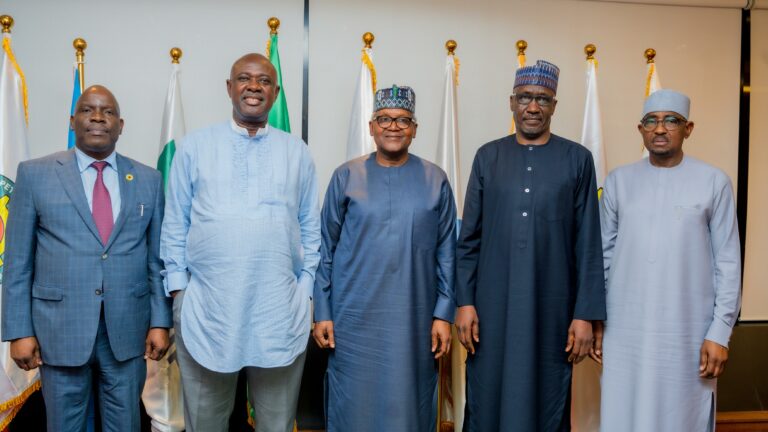
Present at the meeting are the chairman and CEO of Dangote Group, Aliko Dangote,
chief executive of  NMDPRA, Farouk Ahmed, chief executive of Nigerian Upstream Petroleum Regulatory Commission (NUPRC), Gbenga Komolafe, and group chief executive officer of NNPCL, Mele Kyari.

The ICIR reported the visit of the members of the House of Representatives to the Dangote Refinery on Saturday, July 19.

A laboratory test conducted by the lawmakers during the visit, however, showed that Dangote oil was not inferior to those imported as claimed by NMDPRA, prompting the lawmakers to institute an independent inquiry into possible importation of dirty fuels into the country.


Nigerians react to Nigerian government, Dangote’s clash

THE ongoing war between the Dangote Refinery and the Nigerian National Petroleum Corporation (NNPCL) continues to generate reactions from Nigerians as the Chairman of Dangote Group, Aliko Dangote, has challenged the NNPCL to buy out his refinery.

Dangote disclosed this according to a Premium Times report on Sunday, July 21.

The report shows the African richest man saying he is willing to give up ownership of his $19 billion oil refinery to the state-owned energy company NNPCL, following the government’s claim that products refined by the company were of lower quality than those imported by the NNPCL.

“Let them (NNPCL) buy me out and run the refinery the best way they can. They have labelled me a monopolist. That’s an incorrect and unfair allegation, but it’s OK. If they buy me out, at least, their so-called monopolist would be out of the way.

“As you probably know, I am 67 years old, in less than three years, I will be 70. I need very little to live the rest of my life. I can’t take the refinery or any other property or asset to my grave. Everything I do is in the interest of my country,” the report quoted Dangote to have said.

While the refinery can help resolve Nigeria’s fuel and foreign exchange challenges, Dangote stressed that “it does appear some people are uncomfortable that I am in the picture. So I am ready to let go, let the NNPC buy me out, (and) run the refinery. At least the country will have high-quality products and create jobs.”

Since January when the Dangote refinery started diesel and jet A1 production and slashed the pump price of the products, the company’s management has been in a war of words with the regulators.

The Dangote refinery has been lamenting how difficult it has been to get the feedstock required to keep its 650,000 capacity running, compelling it to source crude oil supply from Brazil and the United States.

At various times, it accused the international oil companies and the regulatory authorities of frustrating its efforts to get crude oil supply.

Commenting on the Dangote’s position to throw in the towel, an X user, Okaka Odumodu, tweeted, “You want to hand the refinery to the NNPC which has not been able to get the nation’s refineries to work? It means that the refinery will never work.”

Another X user at @majorlouwe said the NNPC didn’t want any of the nation’s refineries to work, adding that it is a deliberate sabotage that none of the refineries was working.

“We need a revolution to chase out all the corrupt politicians and workers behind NNPC failure not making any of our refinery work,” @ambidehen tweeted, adding that Nigerians needed to rise against those constantly sabotaging things that were supposed to benefit the entire country and share among themselves.

Also, @frankdarl gave a twist, “He wants a way out and that’s the only way out now, let them buy him out. Too much has been invested and the failure of getting anything can be a really big blow.”

Other Nigerians believe that it is a payback time for the wealthiest man in Africa.

“He has been a state-endorsed and backed monopoly for over 25 years. Always backed up by Aso Rock and the CBN @cenbank,” @June12Post commented.

“That monopolist tag really pained Dangote but we have known all along. What is paining him is that the gov’t that he expects to protect him is the one calling him out. But the truth is bitter,” @RolandNGabriel also shared his view.

On Sunday, July 21, The ICIR reported that the Dangote refinery had challenged the Nigerian Midstream and Downstream Petroleum Regulatory Authority (NMDPRA) to conduct tests on its products to determine the credibility of the agency’s claim that its diesel was inferior to those imported.

The Chief Executive Officer (CEO) of NMDPRA, Farouk Ahmed, told journalists that the products from the Dangote refinery were much inferior to the imported quality.

He added that the Dangote Refinery was still in the pre-commissioning stage and had not been licensed yet.

Many industry analysts believe the coming of Dangote Refinery in the Nigeria oil and gas sector was a threat to the government and state-owned oil refinery, NNPCL.

In a recent interview with The ICIR, a former chairman of the Major Oil Marketers Association of Nigeria, Adetunji Oyebanji, while responding to a question about whether he sees the Dangote Refinery emergence as disrupting the market with the NNPCL price-control regime, it was expected that Dangote would try to protect his interests and maximise returns on his refinery.

“The good thing is to know that with the Petroleum Industry Act (PIA), the price has been deregulated. We would sell according to what we buy. On the Nigeria National Petroleum Company Limited-NNPCL, I won’t want to make any speculation, even though commercially, you look at the price they’re selling and you can judge whether it’s a price that makes economic sense,” he added.

Nigeria has been importing refined petroleum products despite producing crude and having four moribund refineries.

Court dismisses Abacha family’s N500m suit against FG over Abuja property

0

A FEDERAL High Court in Abuja has dismissed a suit initiated against the Federal Government by the family of the former Head of State, Sani Abacha.

The suit was filed to prevent the revocation of the late military ruler’s property based in the Maitama District of Abuja.

The Judge,  Peter Lifu, dismissed the lawsuit in a ruling on the nine-year-old dispute in which the Abacha family is requesting N500 million in damages and the return of their father’s house situated on Osara Close, Maitama.

According to the ruling, the lawsuit was dismissed for several reasons, including the fact that the plaintiffs lacked the legal standing to file the lawsuit in the first place and that the complaint was already statute-barred when it was filed in 2015.

The former military ruler’s eldest surviving son, Mohammed Sani Abacha, and his widow, Maryam Abacha, filed the lawsuit on behalf of the late Abacha’s estate managers.

The Federal Capital Territory (FCT) Minister, the Federal Capital Development Authority (FCDA), the President of the Federal Republic of Nigeria, and Salamed Ventures Limited are named as the suit’s first through fourth defendants.

After losing twice at the FCT High Court and once at the Court of Appeal in Abuja due to jurisdictional issues, the family’s lawsuits over the property have now been dismissed for the fourth time.

The family asked the Federal High Court to nullify and set aside the revocation of the certificate of occupancy (C of O) of the property of the late leader.

The family said in its statement of claims that between 2004 and 2005, the FCT under Nasir El-Rufai as the minister ordered it to submit the certificate of occupancy for re-certification.

It claimed that Mohammed Sani Abacha, the second plaintiff, complied with the directive by giving the FCDA the C of O and received an acknowledgement copy for the submission.

According to the family, it was waiting for a new C of O to be provided on February 3, 2006, when Mohammed Abacha got a letter informing him that it had been revoked without any justification.

The fourth defendant, Salamed Ventures Limited, represented by James Ogwu Onoja, a senior advocate, contended that the lawsuit had lost jurisdiction at the time it was commenced since it was not submitted within the legally permitted three-month period.

In his judgment, the judge agreed with Salamed Ventures that the Abacha property was rightfully revoked due to breaches in the right of occupancy, including the erection of structures without first obtaining building plans.

After dismissing the lawsuit, the judge mandated that the Abacha family pay Salamed Ventures N500,000 for legal fees.

The ICIR reported how subsequent governments in Nigeria recovered funds looted by the late Abacha, including the return of about $723 million from Switzerland, and other sums from other countries allegedly running into $5 billion in total.

However, a Federal High Court in Abuja, on July 3, ordered the Nigerian government to disclose how the $5 billion Abacha loot was spent

The court directed the administration of President Bola Tinubu todisclose the exact amount of money stolen by General Sani Abacha from Nigeria, and the total amount of Abacha loot recovered and all agreements signed on same by the governments of former presidents Obasanjo, Yar’Adua, Jonathan and Buhari”.


‘You’re playing with fire,’ Ugandan president warns youth planning protest

0

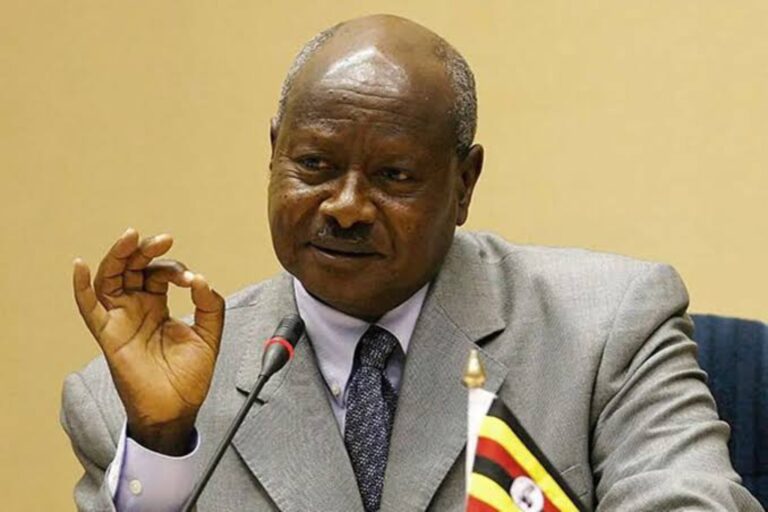
UGANDAN President Yoweri Museveni has warned his country’s youth planning anti-corruption protests that they were “playing with fire.”

Some youths in Uganda have taken to social media to protest against the growing corruption in the country, planning to stage an anti-corruption march to the nation’s parliament on Tuesday, July 23.

In a televised address on NBS TV, Uganda, Museveni warned the protest organisers to avoid the temptation of bringing chaos to the country.

“We are busy producing wealth, and you here want to disturb us. You are playing with fire because we cannot allow you to disturb us,” he said.

The Police had said they would not allow the march to be held when parliament opens.

Meanwhile, speaking with newsmen, one of those planning the protest, Louez Aloikin Opolose, said nothing would stop them.

“We don’t need police permission to carry out a peaceful demonstration. It is our constitutional right,” he said.

Yoweri Museveni has been the president of Uganda since 1986 and is the longest-serving president of the country.

Some African nations have recently been hit by nationwide protests against economic hardship and bad governance

The ICIR reported how Kenyans, for weeks, took to the streets to protest against the Finance Bill, putting pressure on the President, William Ruto, to refrain from signing it into law.

In Nigeria, there are plans by some youths to protest against President Bola Tinubu’s administration over the hardship occasioned by his government’s policies.

Minister alleges victimisation by National Assembly, cabals over refusal to sign ‘dubious $500m’

1

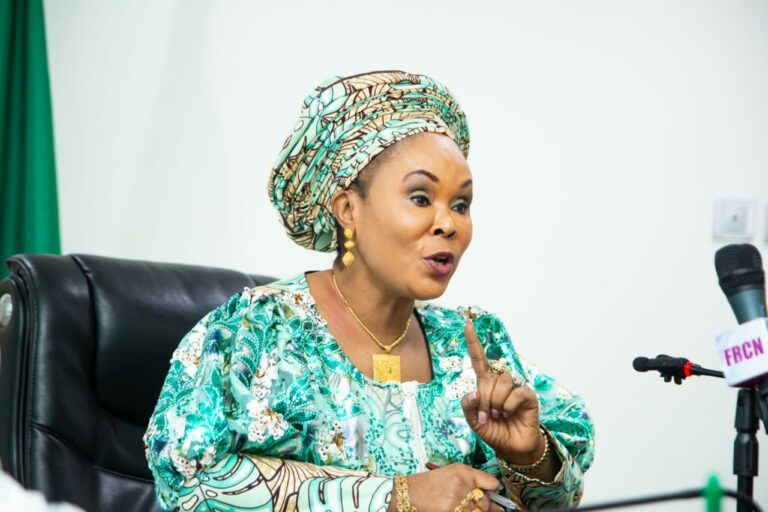
THE embattled Minister of Women Affairs, Uju Kennedy-Ohanenye, has claimed she is being victimized by the National Assembly and some cabals for refusing to sign a $500 million World Bank loan request.

Kennedy-Ohanenye, disclosed this during a phone interview with THISDAY newspaper, noting that there was also another case of $100 million. 

“There is a $500 million loan that was meant to be signed by me, but I refused to sign. There was also a case of $100 million earlier as well. Find out what it was meant for.

“All the loans they collect, including World Bank loans, etc, are you aware that the same World Bank staff in Nigeria takes back 40 per cent and calls it consultation fees?

“These are things you people should look into. You people should focus on where the problem is and let them leave me alone,” she said.

The minister alleged that her life was at risk because she refused to sign the $500 million loan.

The ICIR reports there was a bit of uproar when the minister appeared before the committee to address allegations of a N1.5 billion diversion intended for contract payments by her ministry officials.

The situation became heated when the committee demanded an account of the substantial sum released by the Office of the Accountant General of the Federation for contractor payments. 

Uju, however, confirmed that 30 per cent of the total contract payment was released to the ministry but stated that she couldn’t provide further details because the President’s wife, Oluremi Tinubu, had advised her to mind her own business.

She also blamed the non-payment of the contractors on the fact that the total amount was not released to her ministry.

She mentioned that if she had signed the loan, she would have been entitled to five per cent of the money, but chose not to.

Kennedy-Ohanenye further stated that this refusal was why the National Assembly and others were targeting her. 

According to her, 40 per cent of the loan would be secretly taken by the cabals.

She added: “Now, my life is at stake because I refused to sign the $500 million loan. Let me tell you, if I sign that loan today, I am entitled to five per cent of the money, but I refused to sign it. It is part of why the National Assembly and all of them are after me.

“And that 40 per cent they take is a secret, I found it out. Why should anybody give us a loan and you still direct us how to use the loan, and you take 40 per cent and provide us with a consultant that will take it, and they will take it?

“I told them $100 million is too much to use to teach our women how to save money, we can teach them, let them bring the $100 million and give it to those women and use it to know what to do with their lives. Let me do things that would impact the lives of the people,” she noted.

The minister had also been queried by the House of Representatives for allegedly spending unrelated expenditures, including N45 million for a new year party and N20 million for sanitary pads.

She was also accused of spending N1.5 million on vehicle fuel.

Biden endorses Kamala Harris as Democratic presidential nominee

0

FEW hours after stepping down from the United States (US) presidential race, President Joe Biden has endorsed the Vice President, Kamala Harris, as the Democratic nominee ahead of the November election.

In a follow-up message he shared on his X account, the President said he offered his full support for Harris to be their party party.

“My fellow Democrats, I have decided not to accept the nomination and to focus all my energies on my duties as President for the remainder of my term. My very first decision as the party nominee in 2020 was to pick Kamala Harris as my Vice President. And it’s been the best decision I’ve made.

“Today I want to offer my full support and endorsement for Kamala to be the nominee of our party this year. Democrats — it’s time to come together and beat Trump. Let’s do this,” he wrote.

The ICIR reported on Sunday, July 21, that Biden stepped down from the presidential race, days after testing positive for COVID-19.

He stated that he believed it was in the best interest of both the party and country for him to step down.

The President earlier had temporarily suspended his campaign ahead of the election to be held in November after testing positive for coronavirus.
According to the White House Press Secretary, Karine Jean-Pierre, the President had been vaccinated and had mild symptoms of the disease.

Harris is the first woman and first black and South Asian American to be elected US vice-president.

She was also the first woman to hold presidential powers.

She briefly held presidential powers while Joe Biden underwent a regular health check, being in control for 85 minutes.

Biden steps down from US presidential race

PRESIDENT of the United States (US) and Democratic candidate for the November 2024 election, Joe Biden, has stepped down from the race, days after testing positive for COVID-19.

He made this known in an official statement he released on Sunday, July 21, via his official X account.

Biden stated that he believed it was in the best interest of both the party and the country for him to step down.

“While it has been my intention to seek re-election, I believe it is in the best interest of my party and the country for me to stand down and to focus solely on fulfilling my duties as President for my term,” he stated.

Biden steps down from US presidential race
Statement by Joe Biden

This is coming after he disclosed in an interview that he might reconsider his decision to remain in the race if he got diagnosed with any medical condition.

The ICIR reports that Biden had temporarily suspended his campaign ahead of the election after testing positive for coronavirus. According to the White House Press Secretary, Karine Jean-Pierre, the President had been vaccinated and had mild symptoms of the disease.

Jean-Pierre noted that the President presented with upper respiratory symptoms, including rhinorrhea (runny nose) and a nonproductive cough, with general malaise, adding that he would be returning to Delaware where he would self-isolate and would continue to carry out his duties fully.

The President has also faced increasing pressure from the Democrats to step down from the presidential race after his poor performance at the debate with his opponent, Donald Trump of the Republican party, in June.

Biden’s withdrawal from the race also came exactly a week after an attempted assassination of Trump.

Both Biden and Trump were seeking re-election for the second and final term of four years as President of the US.

Dangote challenges Nigerian gov’t to transparently test its diesel, other products

0

PRESIDENT of Dangote Group, Aliko Dangote, has challenged the Midstream and Downstream Petroleum Regulatory Authority (NMDPRA) to conduct tests on its products to determine the credibility of the agency’s claim that its diesel is inferior to those imported.

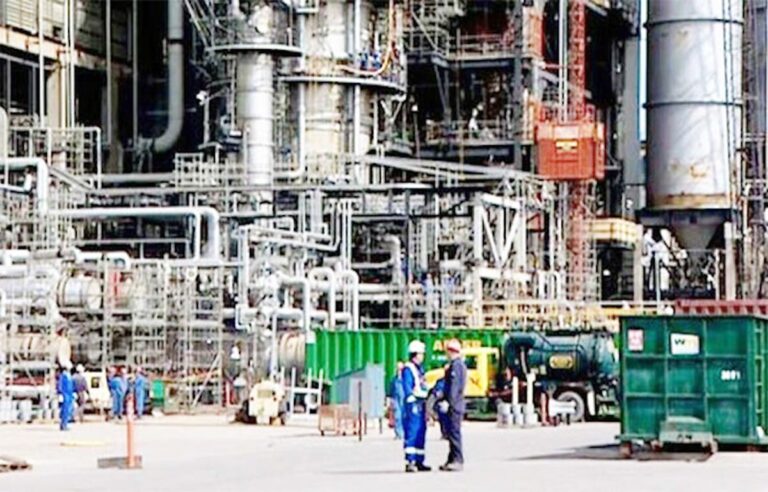
Affirming the quality of his product during a tour of the Dangote Petroleum Refinery and the Dangote Fertiliser Limited complex by the Speaker of the House of Representatives, Tajudeen Abbas, and other House members on Saturday, July 20, Dangote said the NMDPRA’s head of NMDPRA, Farouk Ahmed, made his claim without sufficient knowledge of his refinery.

On July 19, The ICIR reported how Ahmed claimed that the quality of diesel produced by Dangote Refinery was inferior to those imported into the country.

Dangote told his guests that his company offered Nigeria and the rest of the world where his products are exported quality products, adding that they meet international standards.

He restated the superiority of his products over their imported counterparts after the House leadership insisted on testing other diesel products, alongside Dangote’s diesel.

The lawmakers tested the Automotive Gas Oil (diesel) from two different petrol stations alongside Dangote Petroleum Refinery and commended the company for its significant investments and contributions to Nigeria’s development.

The diesel samples were procured from two well-known filling stations near Eleko Junction along the Lekki Epe Expressway, by the House of Representatives members.

Chairman of the House committee on downstream, Ikenga  Imo Ugochinyere, and Chairman of the House committee on midstream, Okojie Odianosen, oversaw the collection of samples from the Mild Hydro Cracking (MHC) unit of the Dangote refinery for testing of all the samples.

Laboratory tests revealed that Dangote’s diesel had a sulphur content of 87.6 ppm (parts per million), whereas the other two samples showed sulphur levels exceeding 1800 ppm and 2000 ppm respectively.

Responding to the tests, Dangote emphasised that the findings debunked Ahmed’s claims that passed his products as inferior.

Dangote openly challenged the regulator to compare the quality of refined products from his refinery with those imported, advocating for an impartial assessment to determine what best serves the interests of Nigerians.

“We produce the best diesel in Nigeria. It’s disheartening that instead of safeguarding the market, the regulator is undermining it. Our doors are open for the regulator to conduct tests on our products anytime; transparency is paramount to us.

“It would be beneficial for the regulator to showcase its laboratory to the world so Nigerians can compare. Our interest is Nigeria first because if Nigeria doesn’t grow, we have limited capacity for growth.

“Right Honourable Speaker and esteemed members, you’ve witnessed the results of the credibility test. I appreciate your wise counsel in procuring samples from the filling stations alongside our refinery’s product. Ours shows a sulphur content of 87.6 ppm, approximately 88, whereas the others exceeded 1,800 ppm. Although the NMDPRA permits local refiners to produce diesel with sulphur content up to 650 ppm until January 2025, as approved by ECOWAS, ours is significantly lower,” he added.

Dangote also said that he aimed to achieve 10 ppm, aligning with the Euro V standard.

“Imported diesel is capped at 50 ppm, but as you’ve seen, those from the stations, imported by major marketers, fall well outside this standard,” he told the House of Representatives members.

In what appears to be an indictment to the regulator, Dangote told the Speaker and his team that high-sulphur content diesel regularly imported into the country often comes with dubious certifications.

He emphasised that the most effective method to verify the quality is to purchase the product directly from filling stations and conduct credibility tests.

According to him, this issue has resulted in health risks and financial losses for Nigerians.

“The best method to verify this is to purchase the product directly from filling stations where end-users obtain it. I believe Farouk Ahmed speaks without sufficient knowledge of our refinery. We have successfully exported diesel and jet fuel to Europe and Asia without any complaints; in fact, we have received repeated orders, indicating satisfaction with our products.”

Supporting Dangote’s assertion, Vice President of Gas and Oil at Dangote Industries Limited, Devakumar Edwin, highlighted recent actions by European countries like Belgium and the Netherlands.

“These countries have expressed concerns about the carcinogenic effects of high-sulphur diesel being dumped into the Nigerian market, prompting them to impose bans on such fuel exports to West Africa.”

Edwin informed the lawmakers that the Dangote Petroleum Refinery, designed to process a wide range of crudes including various African and Middle Eastern crudes, as well as United States Light Tight Oil, conformed to Euro V specifications.

The ICIR reported the accusations by management of Dangote Industries Limited (DIL)  that the International Oil Companies (IOCs) operating in Nigeria consistently frustrated the company’s requests for locally-produced crude as feedstock for its refining process.

The company also informed that the IOCs offered a higher price above the market price to the refinery.

 

South African with Nigerian father faces backlash in race to becoming Miss SA

A 23-year-old South African beauty queen, Chidimma Vannesa Onwe Adetshina, has faced backlash after making it to the top 16 at the ongoing Miss South Africa (Miss SA) pageant.

Born in Soweto to a Nigerian father and South African mother, Adetshina has been targeted by some South Africans who claim she is not South African by birth.

According to a South African Vlogger, some South Africans are unpleased that Adetshina made the top 16 in the pageant, adding that Nigerians in South Africa are known to engage in questionable jobs.

Responding to the trolls, the beauty queen said in various interviews that she is a South African and qualified to compete at the pageant.

“I am a South African citizen and I have met all the requirements to be a part of the Miss SA competition. The fact that my father is Nigerian does not take away from the fact that I am South African. My mother is South African, and I was born and raised in this country,” she said.

Also clearing the air on the issue, the Miss SA organisation, in a statement confirmed that Adetshina met all the requirements to participate in the pageant.

“All documentation provided by the entrants is screened and vetted. Chidimma is a South African citizen and has met all the requirements to be a part of the Miss South Africa competition. Her mother is South African (Zulu), and her father is Nigerian,” they said in the statement.

According to the Miss SA organisation, to be eligible to contest for the pageant, the contestant must be a South African citizen and possess a valid ID or passport. If the contestant holds dual citizenship, documents relating to both must be made available.

Also, as stated in the amended South African Citizenship Act, citizenship can be acquired by birth, descent, or naturalisation.

While most South Africans are against the Miss SA organisation allowing  Adetshina to continue with the competition, in 2001, Vanessa Carreira, born to Portuguese-Angolan parents in South Africa won the Miss South Africa title.