Home Blog Page 545

IMF cites weak economic activities, downgrades Nigeria’s economic growth to 3.1%

THE International Monetary Fund (IMF) has downgraded its forecast for Nigeria’s economic growth in 2024 to 3.1 per cent.

The global lending body cited weaker growth recorded in the first quarter of the year, (Q1) 2024.

The new forecast was contained in the July 2024 World Economic Outlook of the IMF released Tuesday, July 16.

The downgrade represents 0.2 percentage points below the earlier forecast of 3.3 percent.

Also, it followed weaker-than-expected gross domestic product-(GDP) growth recorded by the country in the first- quarter of 2023.

Nigeria has been experiencing weak growth with the latest inflation figure of 33.95 released by the National Bureau of Statistics (NBS), revealing no end in sight.

To worsen the concerns, macroeconomic indicators like the high cost of transportation, insecurity in Nigeria’s food belt, and high energy costs have continued to slow down growth.

Data from the NBS showed that Nigeria’s GDP growth dropped quarter-on-quarter (QoQ) to 2.98 percent in Q1’24 from 3.46 per cent in the fourth quarter of 2023, (Q3’23)

The IMF, however, retained its 3.0 percent forecast for Nigeria’s economic growth in 2025.

As a result of the lower forecast for Nigeria’s economic growth, the IMF also downgraded its forecast for Sub-Saharan economic growth in 2024 to 3.7 percent from the April WEO forecast of 3.8 percent.

Nevertheless, it raised the economic growth forecast for the region in 2025 to 4.1 percent from 4.0.

“The forecast for growth in sub-Saharan Africa is revised downward, mainly as a result of a 0.2 percentage point downward revision to the growth outlook in Nigeria amid weaker than expected activity in the first quarter of this year,” the IMF said.

The ICIR  reported that IMF has upgraded Nigeria’s economic growth to 3.3 per cent in 2024 from 3.0 per cent.

The Bretton Wood Financial Institution earlier gave the upward review in its latest forecast released on July16.

Why July inflation will increase despite rice palliative, import-duty incentives

THERE are huge concerns that macroeconomic fundamentals are revealing that Nigeria’s inflation figures for July will be much higher than what was reported in June.

This is expected to worsen the citizens’ suffering as the 150-day import duty-free incentive and 20 truckloads of rice to each state and Federal Capital Territory are not expected to cushion rising food prices as they are knee-jerk and not a long-lasting solution.

On Monday, July 15, the country’s National Bureau of Statistics (NBS) released the July inflation figures, reporting that headline inflation rose to 34.19 per cent in June from 33.95 per cent in May.

Food inflation, the major driver of the pressure, increased to 40.80 per cent in June from 40.33 per cent in May.

According to the NBS report, the inflation figures increased on a year-on-year and month-on-month basis.

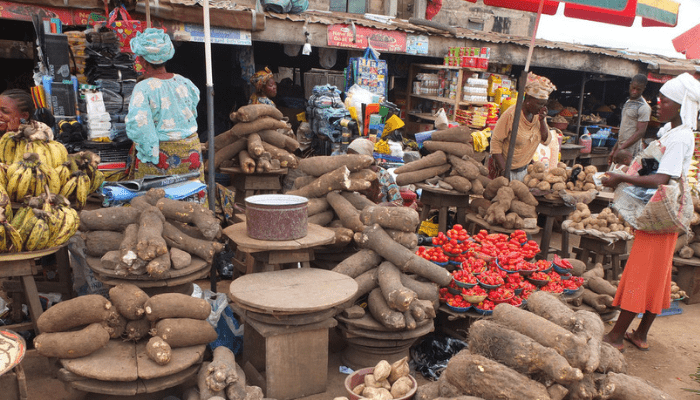
Garri, yam, groundnut oil, palm oil, and millet were items that spiked the rise in food inflation while meat, eggs, and chicken that contain protein were absent from the food items.

At 34.19 per cent, Nigeria’s inflation is now at a 28-year high and has increased for 19 months consecutively..

To cushion the impacts of inflation, the federal government recently announced a few measures.

On July 8, the federal government approved a 150-day duty-free waver for rice, maize, and wheat to address rising food inflation in the country by suspending the tariff on imported food items through both land and sea borders.

A bold step, however, the measure might not deliver a lasting solution to the country’s food insecurity, experts said.

On July 15, the federal government announced the donation of about 20 trucks of rice to each of the 36 states and the FCT to cushion the country’s food crisis.

According to the Minister of Information and Orientation, Mohammed Idris, who disclosed this to journalists at the end of the Federal Executive Council meeting, each truckload contains about 1,200 (25kg) bags of rice, expected to be distributed to vulnerable Nigerians by the state governments.

Economic conditions likely to spike July inflation

Analysts believe that the June inflation was not a typical month, compared to the prior year as Nigerians suffered from high flood and petrol shortages.

Former director-general of Lagos Chamber of Commerce, Muda Yusuf told The ICIR that that the key factors driving inflation were still very much at play.

“Exchange rate is still an issue, insecurity is still an issue, cost of transportation is still an issue, cost of fuel is still there. All those problems are still  there and that’s why inflation keeps rising,” he said.

More determining factors were the public holidays in June, especially the Muslim celebrations which pushed up economic activities and demand for food products.

The full effect of these developments manifests in the July inflation figures which are expected to be higher than the June numbers, the Financial Derivatives Company (FDC)posits in its ‘June Post-Inflation Report’ released on July 15.

“The inflation outlook for July looks gloomy. Despite some signs of cooling in June and the impact of the base effect in July, several factors suggest that inflation may remain high,” the report stated.

One other major development in the FDC lookout for July is the imminent passing of a new minimum wage law.

“From all indications, the effect of a new minimum wage will trigger cost-push inflation,” it added.

While the inflation figures were not a surprise, a renowned economist, Bismarck Rewane, noted that a couple of activities happened in June.

He noted there were fuel supply shortages, public holidays, and June being the end of the planting season with expectations that July-August would be the beginning of harvest season.

Rewane said realistically that people were beginning to resist price increases, explaining that incomes were down and the cost of living crisis was affecting people’s purchasing power.

He said the prices of basic items like garri and yams increased higher more than food with protein, meat, fish, and other livestock in the June inflation figures.

Rewane pointed out that cereals including garri, yams, groundnut oil, palm oil, and millet were the food items that increased the most in the NBS food basket inflation report.

A look at the FDC’s latest commodities update shows that prices of some food items were coming down.

For instance, a 50kg bag of yellow garri has dropped to N45,000 from previously at N47,000; long-grain rice (50kg) to N82,000 from N85,000; and flour (50kg) to N52,000 from N59,000.

On the contrary, a (50kg) bag of Oloyin beans increased to N150,000 from N95,000; a basket of tomatoes to N140,000 from N110,000; a big bag of pepper to N160,000 from N140,000; and a bag of onions to N100,000 from N90,000.

In the last two or three days, the prices of some food items have further dropped while some have increased, Rewane said.

“One, there have been smuggling of commodities across the borders. Two there has been resistance in income; and three the petrol price increase is having a feeling effect on the pricing of commodities.”

“So, people are going back to the basic (garri, flour, etc) and not to the luxury (ostentatious) goods,” he said.

The price of foods containing proteins has become a luxury as most Nigerians eat less chicken, beef, and fish.

“You know what happened to the tomatoes that it went all the way up and now it is beginning to come down because people were switching to carrots and other things,” Rewane said.

Commenting on the 150-day duty-free importation and the 20 truckloads of rice to each state and FCT, he said it could be looked at from two points.

“One is a stabilization space where you have a crisis and the other one is where you have a long-term space where you have now built capacity to increase output and aggregate supply.

“What has happened now in this short-term measure is to import commodities to force down the prices.

The renowned economist, who spoke at a Channels Television on Tuesday, July 16, said Nigeria’s economy was in debt, poverty, and output crisis, ameliorating the immediate pains on the masses requires the temporary infusion of import to bring down the price of goods which would not solve the problem.

Stressing that the major problem is about growth, investment, and output, lamented that the short-term measure of the government doesn’t seem to be getting to the vulnerable people.

“The big problem is who are the people, who are identifying them? Is it going to be scandal-free, judiciously executed in such a way that the impact is felt? He said, questioning further whether the institution’s infrastructure is available to ensure that the bags and trucks of rice get to the people in those states.

“I am not sure that is going to happen and how it will get down to the people in the street, market,” Rewane added.

A development economist, Celestine Okeke, had told The ICIR that the duty-free import suspension was a knee-jerk approach to managing food inflation.

“The management of food inflation requires a multi-thronged approach to supporting farmers with single-digit facilities and securing their farmlands.

“The government must also support farmers with improved yield variety of seedlings for improved productivity. What the government has done is good, but they need to pay more attention to some teething problems,” Okeke said.

AfDB retains top spot in 2024 aid transparency index

PUBLISH What You Fund, the global campaign for aid and development transparency, has named the African Development Bank’s (AfDB) sovereign portfolio the most transparent.

Sovereign Portfolio means any account, trust, or other investment vehicle (except “Fund’ over which the firm has investment management discretion.

The portfolio emerged first out of 50 global development institutions with a top score of 98.8 in its 2024 Aid Transparency Index released on Tuesday, July 16.

The Bank’s sovereign portfolio climbed four places in the ranking in 2022 to top the Index, setting the standard for high-quality data publication.

The AfDB in a statement issued on Tuesday, July 16, said the Aid Transparency Index had tracked the transparency of the largest international aid organisations over the last 12 years.

The 2024 Index assesses six sovereign (public sector) portfolios and six non-sovereign (private sector) portfolios of development finance institutions (DFIs).

AfDB noted that sovereign portfolios of development finance institutions occupy three of the top five positions in the ranking with the African Development Bank coming first, the InterAmerican Development Bank second, and the World Bank International Development Association fourth.

“I am delighted by this recognition from Publish What You Fund. It is a testament once again to the commitment of the Bank’s Board, management, and staff to continuously improve the disclosure of aid flows by providing consistent, high-quality, and easily accessible data,” said Akinwumi Adesina, President of the AfDB.

“This achievement is especially significant given the new, more rigorous assessment standards and transparency requirements for development financial institutions.

The rating of our sovereign portfolio as the most transparent development organisation in the world for the second consecutive time is simply extraordinary.

“I commend Publish What You Fund for its vital and much-needed work in making aid and development efforts more transparent and effective,” Adesina added.

Topping the 2024 Index, the AfDB’s Sovereign Portfolio demonstrated its commitment to publishing very good, high-quality data about its activities, the report noted. It is used as an example of data published about the Zambia – Lusaka Sanitation Programme – Climate Resilient Sustainable Infrastructure Project.

The report commended the Bank for detailed publication of project objectives, impact appraisal documents, environmental studies, and evaluation reports – a total of over 29 documents in both French and English.

“We congratulate the African Development Bank as it continues to lead the Aid Transparency Index with its sovereign portfolio. This is the result of a persistent focus on transparency, meaningful involvement with the Aid Transparency Index process, and pro-active engagement with the IATI community,” said Publish What You Fund’s CEO Gary Forster.

“AfDB has demonstrated that progress can be made swiftly and effectively by adhering to best practices and ensuring the availability of information. The AfDB’s desire to provide useful and timely data doesn’t end with what we measure in the Index, we’re also impressed by their investment in Map Africa – a portal which helps stakeholders locate and learn about individual projects,” said Forster.

This year’s Index focuses on the prominence of development finance institutions as vehicles for international aid.

“The ongoing Multilateral Development Bank (MDB) reform agenda promises to increase resources, allow higher risk investments, streamline business processes and improve coordination between banks. In most cases, the growth of the banks will be from greater borrowing on the capital markets rather than use of aid money,” the report said.

The African Development Bank’s non-sovereign portfolio was assessed for the second time and separately in the 2024 Index. Its non-sovereign portfolio ranked 13th among the 50 global development institutions under comparison.

The ICIR  reported that the AfDB made a case for an overhaul of the global financial architecture that would see African countries’ access to “concessional loans” devoid of the debt crisis.

AfDB’s Adesina also made bold proposals to reform the global financial architecture that would see Africa become a greater voice in multilateral global lending institutions.

Environmental Reporting Award seeks entries

The Pan-African Climate Justice Alliance is accepting entries for the African Climate Change and Environmental Reporting (ACCER) Awards 2024, a biennial initiative that recognises excellence in climate change and environmental journalism in Africa.

Awards will be given in six categories: print media, broadcast media, investigative journalism, opinion commentary, use of data in climate change reporting, and digital activists.

Journalists reporting on climate change and the environment in Africa can enter this contest.

Entries must have been published or aired in English or French. Submissions in other languages must include a translation into English.

The organiser says, “Africa is realising the impact that climate change is having on their lives and their actionable plans to mitigate and adapt to new ways of living is evidential and has been reported across the board in the various media platforms”.

The deadline for the submission of application is August 6, 2024.

Interested applicants can apply here

GWR: Another Nigerian breaks world record with 75-hour videogame marathon

0

GUINNESS World Records has confirmed Nigerian, Oside Oluwole, also known as Khoded, as setting a new Guinness World Record for the “longest videogame marathon playing a soccer game.”

The 24-year-old surpassed the previous record of 50 hours held by Englishman David Whitefoot since 2022, with an astonishing 75 hours. 

The Guinness World Records stated this in a report on its website on Tuesday, July 16.

Unlike all the seven previous record holders who used FIFA or Pro Evolution Soccer, Oluwole played on his iPhone, which was connected to a TV screen.

Oluwole, a qualified biochemist who now works as a car dealer, was reported to have attempted this record to raise money for a local hospital in his hometown of Ijebu Ode.

He was allowed five minutes of rest after every hour of gaming, During these breaks, he could eat, nap, or use the toilet, in accordance with the rules for all ‘longest marathon’ records.

The report also noted that Oside had been an avid fan of the free-to-play soccer sim since first downloading it in 2016, playing over 500 matches during his record attempt.

“I really enjoyed myself playing for 75 hours straight with just some hours of rest. It wasn’t an easy task, but I must say it was all fun. It was such a great moment; the event was very interesting and I’m grateful to God that it was successful,” Oluwole was quoted saying in the report.

GWR further noted that the new record holder was inspired to undertake this challenge by Chef Hilda Baci, whose record-breaking cook-a-thon captivated Nigeria last year.

In June 2023, Hilda Baci succeeded in her longest cooking attempt and was confirmed by the GWR.

Following her success, The ICIR reported how there has been an upsurge in the number of Nigerians pursuing GWR in the past year.

A Nigerian Chess Master, Tunde Onakoya, completed his attempt at the Guinness World Record (GWR) for the longest chess marathon on April 20, playing the game of chess for 60 hours.

The chess master noted that he attempted to break the record in a bid to raise $1m (£805,000) for charity to support chess education for millions of children.

Also, the GWR in April 2024, confirmed Nigerian Clara Chizoba Kronborg, who recently broke the record for the longest interviewing marathon in 55 hours, 24 seconds.

According to GWR, Kronborg’s record attempt took place on a docked yacht in Marbella, Spain. She started on March 8 and ended on March 10, 2024.

Kronborg interviewed 90 people from different fields, including politicians, business owners, content creators, actors, and real estate agents. The interviews focused on how each guest achieved success in their respective fields.

Meanwhile, following the record-breaking soccer videogame Marathon event by Oluwole, Nigerians on social media, particularly on X, have lauded his feat of setting a new record and his remarkable display of perseverance.

Some also claimed that his recent achievement has also become a source of inspiration and pride for many.

National Humanities Center offers residential fellowships

THE National Humanities Center is accepting applications for the 2025-2026 Residential Fellowship Programme.

The fellowship provides scholars with the resources necessary to generate new knowledge and deepen their understanding of all forms of cultural expression, social interaction and human thought.

To apply, applicants must submit a project proposal, a project outline, a resume and a short bibliography.

Proposals should convey the importance of the project for advancing knowledge both within a scholar’s field and for the humanities generally.

The organiser says, “The National Humanities Center, located in North Carolina, will also provide fellows with exceptional library services, breakfasts and lunches in the dining area, and administrative support in organising seminars and study groups”.

Experienced journalists with a PhD are eligible for a fellowship that awards stipends.

The application deadline is October 3, 2024.

Interested applicants can apply here.

Naira depreciates against dollar despite CBN’s $122.67m intervention

THE naira depreciated against the dollar in the just concluded week despite the Central Bank of Nigeria’s (CBN) $122.67 million foreign exchange (FX) sales to authorised dealers.

At the official Nigerian Autonomous Foreign Exchange Market (NAFEM) on Friday, July 12, the naira fell to N1,563.80 to the dollar, compared to N1,509.67 per dollar on Monday, July 8.

In the parallel market, the naira also fell to N1,540 on Friday from N1,523 to the dollar on Monday.

Last week’s performance of the Nigerian currency against the dollar reflects the weakness in the value of the naira in recent times, traceable to FX volatility in the Nigerian currency market.

Although the sale of the $122.67 million to authorised dealers led to a surge in FX turnover in the week, it could not relieve the naira depreciation against the dollar.

In a statement on Friday, July 12 by its Director of Financial Markets, Omolara Duke, the apex bank disclosed that it sold $122.67 million FX to authorised dealers.

According to the CBN, it sold $67.5 million to 27 authorised dealers while purchasing $2.5 million from one authorised dealer on Wednesday, July 10.v

He realed that the bid range for the transactions was between N1,480/$1 and N1,500/$1.

He said on Thursday, July 11, it sold $55.17 million to 19 authorised dealers at a rate of N1,540.0/$1, stating that the payments for these spot sales are due on July 15, 2024.

“All authorised dealers are to ensure that foreign exchange purchases from the Bank are used exclusively for trade-backed transactions, which should be reported within 72 hours,” the apex bank added.

According to the Chief Economist at Vetiva Capital Management Limited, Ibukun Omoyeni, the naira will begin to shed some gains with the coming up of the CBN by-monthly Monetary Policy Committee (MPC) this month.

While on Channels TV on Saturday, July 13, he noted this to be the practice, given the fact that the MPC has its stands against FX pressure.

“The exchange rate factor is that we don’t look at weekly or monthly forecast, we look at quarterly or yearly forecast because a lot of factors can cause the naira to depreciate today in the short term and appreciate today in the medium term,” he said.

Between January and February this year, the naira traded around N1,800 to the dollar.

Omoyeni added, “The fact that we are at N1,500 shows that there are some improvements.”

The ICIR reports that Naira depreciation remains one of the economic headwinds causing food inflation and soaring commodities prices in the country.

In the last year, basic staples like rice, beans, and vegetables have become increasingly unaffordable for the average Nigerian, stretching household budgets to their limits.

The monthly inflation data of the National Bureau of Statistics (NBS) show food index constitutes over 51 per cent of the inflation basket which could be attributed to rising prices in fundamental food commodities, including bread, cereals, oil, and fat.

According to analysts at Cowry Asset Management, 43 food items surveyed reported price increases on a year-on-year and month-on-month basis between April and May 2024.

“An unweighted simple average, which does not account for consumption trends, shows that the average price of food items in the Bureau’s designated basket increased by 137.3% year-on-year and 13.4% month-on-month,” the analysts stated in weekly financial markets review.

People in Need seeks entries to film festival on human rights

THE One World International Human Rights Documentary organised by People in Need, a Czech nonprofit organisation, is inviting applications to its Film Festival.

The event will hold from March 12 to 20, 2025 in Prague.

The organiser says, “There are 10 categories: international competition, best director, Vaclav Havel jury award for a film that makes an exceptional contribution to the defence of human rights, Czech competition, immersive films competition, audience award, student jury award, regional jury award, Abakus Foundation audience award for exceptional discussion, and a kids jury award.

Films produced between 2023 and 2025 are accepted, and films made in languages other than English should include English subtitles.

Filmmakers from all over the world can participate in this festival. The entry fee ranges from free for certain countries to EUR30.

The deadline for the submission of the application is September 1, 2024. The final deadline is November 1, 2024.

Interested applicants can apply here.

Kano Assembly passes bill to establish 2nd class emirates

0

THE Kano State House of Assembly has passed the Kano State Emirates Council Establishment Bill 2024 to establish 2nd class emirates in the state.

The bill scaled third reading in a session presided over by speaker, Ismail Falgore, on Tuesday, July 16.

According to the bill, the Rano Emirate consists of Rano, Bunkure and Kibiya Local Government Areas. Gaya Emirate has Gaya, Albasu and Ajingi LGAs, while the Karaye Emirates comprises Karaye and Rogo LGAs.

The bill states that emirs of the three second-class emirates would report to the emir of Kano, whom they would advise on any issue concerning keeping public order, managing communal disputes, or related issues in their domains.

According to Section 3 of the bill, the governor, acting through the commissioner for local governments, will approve nominations and actions made by first-class and second-class emirs.

The creation of the first-class Kano emirate and second-class emirates is contained in Section Four (1) of the bill. The second-class emirs of Rano, Gaya, and Karaye are listed in subsection two.

Section Seven of the bill empowers the governor of Kano State to designate any qualified person as a second-class emir according to Section Four.

However, not included in the bill was the Bichi emirate, established by former governor Abdullahi Umar Ganduje and abolished by the new Kano emirates council (repealed) law 2024.

The administration of the state’s immediate past governor, Abdullahi Ganduje, currently the national chairman of the All Progressives Congress (APC), abolished the single emirate system in the state and created the Bichi, Karaye, Gaya, and Rano emirates in addition to the Kano emirate.

Incumbent governor Abba Yusuf’s government, which belongs to a rival party, the All Nigeria Peoples Party (ANPP), repealed the Ganduje’s law and scrapped the five emirates and all offices created under them.

The ICIR reported on May 23, that the Kano State House of Assembly dethroned the state’s five emirs, after repealing the Emirate Council Law of 2019 that created the five emirates.

The new law created by the lawmakers revived the single emirate system in the state, vesting constitutional powers to appoint a new emir in the state governor alone.

Consequently, the governor, on Thursday, May 23, announced the reinstatement of Muhammadu Lamido Sanusi as the Emir of Kano.

The governor made the announcement immediately after assenting to the new Emirate Bill.

Sanusi’s reinstatement has led to crises in the state with the deposed emir, Aminu Ado Bayero refusing to quit.

Backed by conflicting courtrulings, the two leaders have maintained their stance on holding on to the throne.

The latest of such rulings was from a Kano State High Court which ordered Bayero to stop parading himself as the Emir of Kano.

The court, in a judgement by Amina Aliyu, on Monday, July 15, also barred four other deposed emirs from posing as the emirs of Bichi, Rano, Karaye, and Gaya.

According to the court’s ruling, they should return the government’s moveable and immovable items in their custody.


Rwanda’s Kagame wins 4th term as president

0

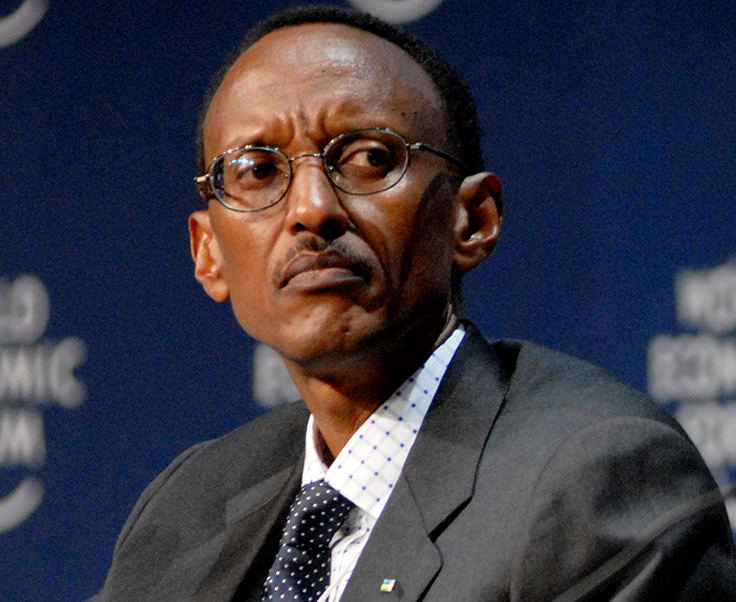
RWANDAN President Paul Kagame has again won the national election, securing a 4th term as President.

He was declared the election winner on Tuesday, July 16, by the President of the country’s Electoral Commission, Chrysologue Karangwa.

Kagame, who represented the Rwandan Patriotic Front (RPF) polled 7,099,810 of the total 9,071,157 votes cast.

His opponents, Frank Habineza of the Democratic Green Party, garnered 38,301 votes, and Phillipe Mpayimana, who contested as an independent candidate won 22,753 votes.

Addressing the nation, Kagame expressed gratitude to Rwandans for granting him the opportunity to rule the country for another five years.

“The results that have been presented indicate a very high score, these are not just figures, even if it was 100 per cent, these are not just numbers. These figures show the trust, and that is what is most important. I am hopeful that together we can solve all problems,” he said.

Kagame has been president of Rwanda since 2000 and a de facto leader of the country since the end of the 1994 genocide. In 2017, he won the election with over 98 per cent of the votes.


READ ALSO:


As a result of the country’s 2015 constitutional amendment which allowed him to seek an additional three terms, he also became eligible to contest in the current election.

Although the election granted eligibility to contest more than once, it reduced the presidential terms from seven years to five years starting in 2024.

The president’s campaign centered around giving Rwandans inclusive development, security, and improving citizens’ livelihoods without leaving anyone behind.