Home Blog Page 547

Nigeria Police to commence enforcement of digitalised vehicle registration

0

THE Nigeria Police Force (NPF) said it would begin to enforce the digitalised Central Motor Registry (e-CMR) by Monday, July 29.

The police disclosed this through the Force Public Relations Officer (FPRO), Olumuyiwa Adejobi, in a statement on Saturday, July 13.

Adejobi said the development was part of the NPF’s efforts to secure lives and property and assist investigations.

“The e-CMR is an advanced, real-time online repository of motor vehicle data, designed to support police investigations, operational activities, and combat vehicle-related crimes, including terrorism, banditry, kidnapping, and armed robbery. The transition to a digitalized system will streamline the documentation and verification processes for vehicle ownership and related transactions.

“Following the directives of the IGP, services such as change of ownership, change of license number, change of engine, and change of chassis/body would become seamless as the e-CMR system would ensure the validation of vehicle genuineness and ownership, enhancing the ability to track and recover stolen vehicles effectively, and preventing the purchase of stolen vehicles by innocent buyers,” he noted.

Adejobi also disclosed that the Inspector-General of Police (IGP), Kayode Egbetokun, had directed that the public should understand the e-CMR and its enforcement processes.

“Members of the public are urged to obtain the digitalized CMR certificate online at cmris.npf.gov.ng. For further inquiries, individuals can contact the CMR Command Centre at FHQ Abuja (08117777666, 09169892000) and FHQ Annex Lagos (08117777555, 09169891000). Technical support is also available at cmrtech@npfcmr.ng,” he further noted.

The e-CMR was introduced by the NPF in April 2023 for seamless management and registration of vehicles. It was also aimed at tracking and addressing criminal activities associated with vehicles.

Its introduction required that vehicle owners provide information about their vehicles remotely using a device with internet access.

Many trapped as two-storey building collapses in Abuja

0

A SECTION of a two-storey residential apartment in the Kubwa area of Abuja collapsed Saturday morning, leaving several people trapped under its debris.

The building, situated next to a popular hotel in Phase 2, Site 2, Sultan Dasuki Way in the satellite town, was originally a hotel before being converted into a hospital.

After the hospital owners vacated the premises, it was, again, converted into a residential apartment.

The ICIR gathered that two people were rushed to a nearby hospital, while a few others managed to escape.

One of the escapees, who pleaded to be anonymous, stated that she woke up around 7 a.m., and upon stepping outside, she heard cracking sounds and immediately ran out.

Security operatives have moved to the scene to avert a breakdown of law and order while assisting medical workers in the rescue mission.

This development comes barely 24 hours after a school building collapsed in the Busa Buji community of Jos, Plateau State on Friday, July 12.

The ICIR reported that at least 17 people died and 154 others were injured as a result of the collapse which occurred when the school children were said to be writing their final term exams.

As of 6 pm on Friday, the state Commissioner for Information, Musa Ashoms stated that 154 people had been rescued from the debris, while 22 others had been confirmed dead.

Injured students and staff were receiving medical treatment at various hospitals across Jos, the state capital, according to the state government.


Ghana is planning its first nuclear energy plant: what’s behind the decision

0

By Seth Kofi DEBORAH, University of Ghana

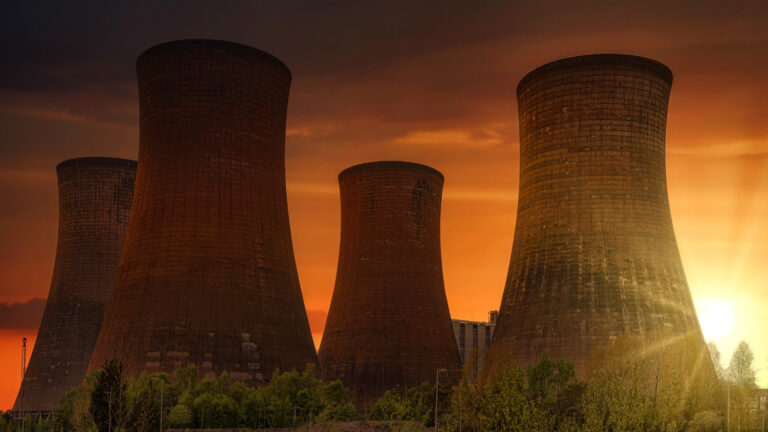
GHANA is considering bids from five companies for the construction of what would be its first nuclear power plant. The companies are: France’s EDF, US-based NuScale Power and Regnum Technology Group; China National Nuclear Corporation; South Korea’s Kepco and its subsidiary Korea Hydro Nuclear Power Corporation; and Russia’s Rosatom. The Conversation Africa’s Godfred Akoto Boafo interviewed Seth Kofi Debrah, director, Nuclear Power Institute, Ghana Atomic Energy Commission, on the pros and cons of adding nuclear power to the country’s power mix, and why Ghana needs to diversify and identify new energy sources.

What makes the nuclear option attractive to Ghana?

The country’s industrialisation ambitions, fuel constraints, limited resources, climate conditions and international commitments to climate change mitigation are among the factors driving Ghana to include nuclear power in the energy mix.

Nuclear power is available all year round, making it reliable. The nuclear power plant is expected to operate as a baseload plant (the production facility used to meet some or all of an area’s continuous energy demand), with a capacity factor of about 92 per cent. A conventional nuclear power plant typically operates for 92 per cent of a calendar year as compared to 54 per cent for natural gas power plants, 24 per cent for solar and 34 per cent for wind power plants.

Demand for electricity is growing across the nation. Currently, 84 per cent of the population have access to electricity but may not be connected to the electrical grid. This means the power is available in their area but they may be unconnected due to personal circumstances.

Electricity demand is expected to grow rapidly on the back of electrification projects planned by successive governments, like the rural electrification project (which aims at supplying electricity to all communities with a population of 500 or greater) and industrialisation initiatives (such as developing the manufacturing, alumina and iron industries).

Another reason for choosing nuclear power is that Ghana sees it as a way of supporting its industrial ambitions in the sub-region.

For example, Ghana aims to become a net exporter of electricity in the region through the West African Power Pool, a specialised agency of the Economic Community of West African States (ECOWAS). It covers 14 of the 15 Ecowas countries and is intended to supply them with reliable energy at a competitive cost.

According to the World Bank, the average electrification rate in west Africa is about 42%, which means that almost half of the region’s population has no access to electricity. Ghana has an 84% electrification rate.

Ghana believes nuclear power can help it achieve its industrial ambitions while fighting climate change.

As a signatory to the Paris Agreement, Ghana has an international obligation to reduce greenhouse gas. Nuclear power does not produce any of the greenhouse gases.

Ghana’s electricity sector is dominated by thermal plants that use natural gas – a fossil fuel. Fossil thermal plants make up 64% of the current energy mix. This is an over-dependence on a single fuel source. Natural gas has competing uses in different sectors, so there are frequent fuel shortages. And the price of natural gas is set by international markets, which leads to price volatility.

Ghana has its own source of natural gas. But these reserves are expected to start declining by 2028.

How dependable is the country’s current energy mix?

Ghana’s current energy mix is made up of 1,584MW installed capacity of hydro, 3,758MW of thermal power plants (mostly powered by natural gas) and 112MW of solar generation. But the dependable capacity (the total amount of electricity that the facility can produce and deliver to the power grid) of renewables is non-existent since the source of their power generation is variable.

The dependable capacity of the energy mix of a country matters a great deal. The energy mix must have strong baseload capacity (the minimum amount of electric power needed to be supplied to the electrical grid at any given time) before renewables are considered, to ensure reliability.

No industralised nation developed its economy based on variable generation of electricity. They needed a reliable backbone that could be depended on at all times. European countries used natural gas, coal, hydro or nuclear as their baseload capacity and added on variable renewables.

If Ghana wants to exploit its natural resources and become an industrial giant, it needs sustainable, reliable and affordable baseload electricity. That can be found in a source like nuclear.

What’s the government’s case for nuclear?

Ghana doesn’t have many other energy options. It has good sources of hydro but most have already been exploited.

Potential small dams are being affected by climate change or variability and illegal mining. And the economic justification for more small hydro plants is in doubt.

Ghana started its nuclear power journey as far back as the early 1960s but the idea was never realised. The nuclear power programme was restarted in 2007 under former president John Agyekum Kufuor. The programme has followed the International Atomic Energy Agency’s three-phase approach. Ghana is now at phase 2: vendor selection and site preparation.

The plant, which is expected to be constructed along the coast of the country, is planned to come online in early 2030.

Given Ghana’s financial constraints, is nuclear power a good idea?

Nuclear power plants have proven to be among the cheapest sources of electricity around the world. Even though nuclear has a huge upfront financial burden, its long lifespan (over 60 years) and low running cost makes it one of the cheapest baseload sources of electricity.

Around the world, advanced countries seek financial support for their nuclear projects. There are various models to finance nuclear power plant procurement, including the option of a public private partnership.

How about nuclear waste and the cost of dealing with it?

Ghana already operates one of the few radioactive waste storage facilities in Africa. This means that when Ghana builds a nuclear power plant it will already have capacity in nuclear waste management.

Radioactive waste management, which deals with nuclear waste, is an issue that needs to be addressed in the early stages of planning a nuclear plant. This is evident in the International Atomic Energy Agency milestone approach which most countries follow to develop a nuclear programme. It shows all the 19 infrastructure issues that need to be addressed throughout the three-phased approach.

It is the only power plant that is responsible in dealing with its waste after its lifetime. In effect, it is the only power plan that plans and pays for its waste management during operation and post operation with dedicated funds for waste management.

The costs of managing nuclear waste and the nuclear power plant’s decommissioning at the end of its operating life are included in the nuclear power plant tariff. This is a safety requirement as enshrined in the International Atomic Energy Agency safety standards. Furthermore, the country of origin has strict regulations about decommissioning which have to be adhered to by nuclear power plant owners.

One of the major concerns by the public is the treatment or storage of the high level spent fuel that is sometimes referred to as “waste”. High level spent fuel is the fuel that has been used up through irradiation. These used fuels usually have over 90% usable fuel that can be re-used through reprocessing.The Conversation

Seth Kofi Debrah, Professor, School of Nuclear and Allied Sciences, University of Ghana

This article is republished from The Conversation under a Creative Commons license. Read the original article.

Suspected measles outbreak kills 10 children in Abuja

0

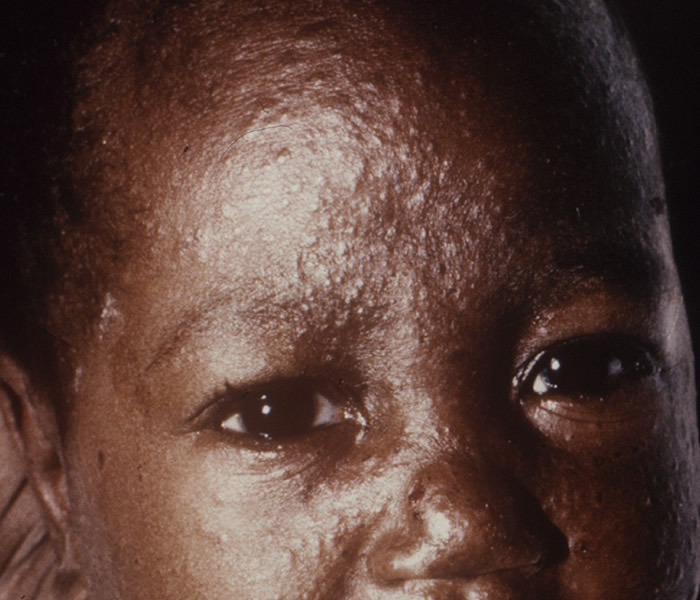
AT least 10 children have been reported dead due to a suspected measles outbreak in the Damangaza area of Lokogoma, Abuja.

According to a report, the head of the Damangaza community, James Budebo, disclosed this on Friday, July 12, during an outreach in the community.

The outreach was organised by a Non-Governmental Organisation (NGO) Vaccine Network for Disease Control (VNDC) and the Damangaza Primary Healthcare Centre.

Emphasising the need for vaccination against measles, Budebo decried vaccine hesitancy, which he said was prevalent in the community.

A health worker in the community PHC, Longtang Shawen, also disclosed that limited healthcare access was worsening the outbreak, and further urged residents to vaccinate their children.

Measles is one of the prevalent diseases in Nigeria.

In April 2024, 19 children died of a suspected measles outbreak in Mubi, Adamawa.

The commissioner for health in the state, Felix Tangwami, said over 200 children were also infected with measles at the time.

Like residents of Damangaza, Tangwami also said parents in Mubi failed to vaccinate and immunise their children against the disease.

Measles is one of the most contagious diseases in the world, and it spreads when infected persons breathe, cough or sneeze. The virus remains active and contagious in the air or on infected surfaces for as long as two hours, according to the United Nations Children’s Fund (UNICEF).


READ ALSO:


In May 2024, UNICEF raised concerns about the global rise in the spread of measles.

“An increase in measles cases is a clear sign of a breakdown in immunisation coverage. As cases of measles continue to surge, we need urgent government action to both strengthen health systems and implement effective public health measures to secure protection for all children from this dangerous but preventable disease,” UNICEF Regional Director for Europe and Central Asia, Regina De Dominicis said.

UNICEF also warned that the current situation portends a similar or worse situation than in 2023 when over 300,000 measles cases were recorded globally.

Tinubu appoints Dantosho as new NPA MD

0

PRESIDENT Bola Tinubu has appointed Abubakar Dantosho as the new managing director of the Nigerian Ports Authority (NPA).

Special Adviser to the President on Media and Publicity, Ajuri Ngelale, disclosed this in a statement on Friday, July 12.

Ngelale also disclosed that the President appointed former senator who represented Ekiti South at the Nigerian Senate, Adedayo Adeyeye, as Chairman of the Board of the NPA.

“Dr. Dantsoho holds a Doctorate degree in Maritime Technology from Liverpool John Moores University, United Kingdom, and a Master’s degree in International Transport from Cardiff University of Wales, United Kingdom. Before his appointment, he had served in various roles in the Nigerian Ports Authority as Assistant General Manager; Technical Assistant to the Managing Director; Port Manager, Onne Port; and Principal Manager, Tariff & Billing.

“Senator Adeyeye, the Board Chairman, is a seasoned lawyer, journalist, and politician. He is a former Minister of State for Works and former Senator representing Ekiti South Senatorial District,” Ngelale noted.

He added that Tinubu expected the new appointees to discharge their duties efficiently toward improving the agency.

The responsibilities of the NPA include the development of port operational infrastructure, day-to-day monitoring of operations and enacting and enforcing port regulations and by-laws.

Some of the issues that hinder efficient operations in Nigerian ports, particularly in Apapa, Lagos, are truck congestion, indiscriminate extortion and other corrupt practices.

In 2022, former NPA managing director Mohammed Bello-Koko said the agency was committed to eliminating systemic corruption at the ports.

The ICIR reported in 2023 that these issues continue to impede operations in Apapa.

The report also revealed that violent toll collectors at the port frequently harass and attack business owners, forcefully collecting illegal taxes from them, thereby frustrating importation and exportation activities carried out at the ports.

Oil Theft: FG approves $21m contract to meter 187 Niger-Delta flow stations

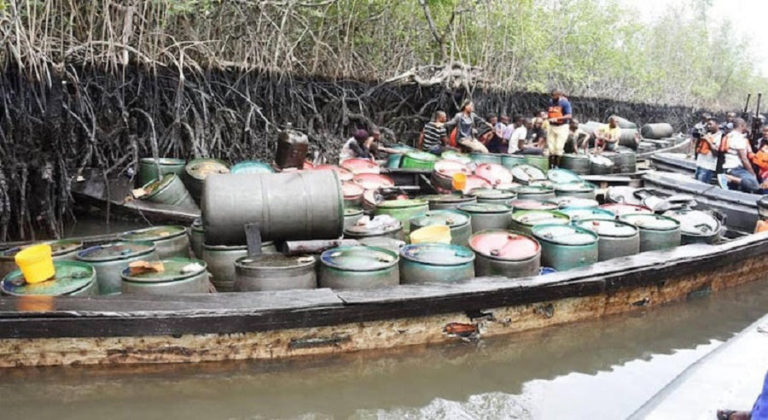
IN a bold move to curb oil theft in Nigeria’s oil-rich Niger Delta, the federal government has approved a $21 million contract for the installation of meters in 187 flow stations.

Flow stations are facilities where fluid, usually natural gas or crude is gathered from a pipeline and processed. The fluids are then transported to another location, typically a refinery or natural gas processing plant.

The minister of Petroleum Resources (Oil), Heineken Lokpobiri who disclosed this to journalists in Abuja on Friday, July 12, said the move is geared towards improving transparency in Nigeria’s oil sector business.

He informed that the intent is to guard Nigeria’s oil resources as they remain the mainstay of the nation’s economy and would provide a database on the movement of Nigeria’s crude and a tracking centre for crude oil export.

The minister also disclosed that another contract has also been approved to allow the government to monitor advanced cargoes to track the movements of Nigeria’s crude oil.

He explained that the contracts that were approved by the FEC have 180 days (six months) completion period.

“One of the key decisions of the Federal Executive Council on Wednesday has to do with the awarding of the contract for metering of our 187 flow stations across the Niger-Delta region of Nigeria by the Nigerian Upstream Petroleum Regulatory Commission (NUPRC).

“As part of the reforms to ensure that we have proper accountability, the Federal Executive Council (FEC) approved the metering of all our production and we have 187 flow stations in the country, littered across the Niger Delta area so that we would be able to properly account for what we produce and what we export. It’s a major, major development that will happen in this country, “he added.

The minister noted that it’s important that Nigerians know some of the key steps that this government is taking to ensure it maximises its oil and gas resources for the development of the country.

“As part of the steps towards ensuring that we account for what we produce and then Nigerians get the maximum value for what we produce, the second memo that was approved by the Council has to do with what we call advance cargo.

Commenting on the importance of tracking the flow stations, he said the technology when installed makes it easier to track the movement of the crude through “advance cargo”.

“For instance, from Forcados terminal crude oil is loaded, I can stay in my office and know when it’s taken off from Nigeria up to the final destination. You will agree with me that most of the time we talk about the issue of oil thefts, major steps have to be taken. But this is the time for us to take very, very major steps so that we know from the beginning what we produce to the point of loading from our terminals up to the point of destination”.

He explained that the main objective of the contracts “is for us to ramp up production and improve the federation revenue.

He noted that reforms put in place by the administration have increased investors’ confidence in the Nigerian environment adding that in the coming months, the government expects major investment decisions that would “amount to tens of billions of dollars”.

The ICIR has earlier reported that the Nigerian National Petroleum Company Limited (NNPCL) has declared an emergency on crude production and oil theft as Nigeria struggles to meet the allotted quota of 1.7 million barrels per day by the Organisation of Oil Exporting Countries (OPEC).

17 dead, 154 injured in Plateau school building collapse

0

AT least , 17 people have died and 154 others injured as a school building collapsed in the Busa Buji community of Jos, Plateau State on Friday, July 12..

The school children were said to be writing exam when the tragedy struck.

It remained unclear if more victims remained in the debris when the state government gave an update on the tragedy Friday evening.

The state government expressed sadness over the incident.

Speaking through the state Commissioner for Information, Musa Ashoms, the government said 120 people were trapped under the rubble.

The school building reportedly gave way around 8.30 am on Friday when the students and teachers were in their classes.

The state government described the incident as an avoidable tragedy, citing the school’s weak structure and unsafe location near a riverbank.

“However, we commend the efforts of NEMA, SEMA, Red Cross and security agencies in rescuing trapped children and transporting them to hospitals.

“The Commissioner of Health has also ordered all major hospitals in Jos to attend to the victims.

“Current situation as of 6 pm, 154 people have been rescued from the debris. Sadly, 22 individuals have been confirmed deceased. Injured students and staff are receiving medical treatment at various hospitals across Jos.” the commissioner stated.

Ashoms noted that hospitals had received orders from the government to prioritise care without waiting for approval or payment.

According to him, approximately 120 people were trapped, with many evacuated.

The government emphasised the importance of adhering to safety standards.

It also ordered schools with similar issues to close down to prevent future reccurrence.

Ashoms stated that the incident underscored the importance of prioritising safety standards to prevent tragedies.

He confirmed that those injured were receiving treatments at hospitals across the state.

The government expresses its condolences to the victims’ families.

The commissioner assured that a thorough investigation into the cause of the collapsed building would be initiated.

Building collapses in Nigeria are recurring issues..

In 2021, a structure under construction collapsed, killing at least 45 people
in the Ikoyi area of Lagos State.

Supreme Court ruling granting LGs financial autonomy has relieved us of burden – Governors

0

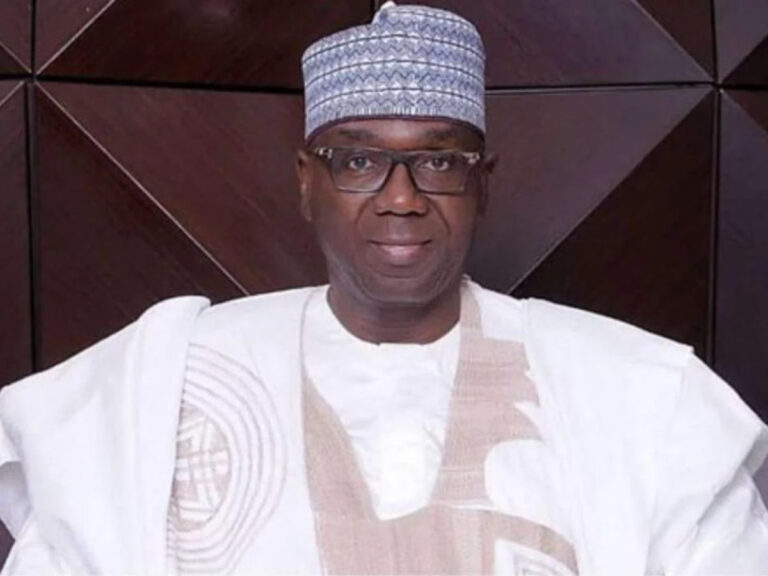
The Chairman of the Nigeria Governors’ Forum (NGF) and Governor of Kwara state, AbdulRazaq AbdulRahman has described the Supreme Court ruling granting Local Government Areas (LGAs) financial autonomy as a welcomed by governors.

The governor stated this while addressing correspondents at the State House on Friday, July 12.

He noted that the ruling had relieved the governors of a burden and they were happy with the devolution of powers to the third tier of government.

“We welcome the ruling of the Supreme Court. Compliance is a given, and our attorney generals have applied for the enrollment order which we’ll study carefully. But by and large, governors are happy with the devolution of power with respect to local government autonomy.

“It relieves the burden on governors. Our people really don’t know how much states expend in bailing out local governments, and that’s the issue there,” the chairman said.

He said that as governor of Kwara State, his government had never tampered with local government funds.

“It’s not going to affect the state. We’ve never tampered with local government funds. So, it’s going to continue. What the local governments have to do is to manage themselves, especially with the incoming minimum wage, to manage their affairs and make sure salaries are paid, traditional rulers get their five per cent and those are the main issues,” he added.

The ICIR reported in May that the Nigeria government filed a suit at the Supreme Court against the 36 state governors over the nation’s local governments’ autonomy, urging the apex court to issue an order, prohibiting state governors from arbitrary and unlawful dissolution of democratically elected local government leaders.

The federal government sought the court to authorise the direct transfer of funds from the federation account to local governments in line with the provisions of the Constitution against the alleged unlawful joint accounts created by governors.

On Thursday, July 11, the Supreme Court granted the 774 Local Governments Areas (LGAs) financial autonomy ruling that it was unconstitutional for the state government to hold on to or manage such allocations and directed the LGAs to commence managing their funds

Besides, the court ruled barred the governors from sacking constitutionally-elected local government chairmen.

The ICIR reports that governors have been blamed for the underdevelopment of local governments in Nigeria.

They have been accused of squirrelling the funds meant for that tier of government and appoint their loyalists to manage them and help them to loot the local government finances.

El-Rufai sues Kaduna lawmaker, Channels TV over alleged N432bn fraud

0

A FORMER governor of Kaduna State, Nasir El-Rufai, has sued a member of the Kaduna State House of Assembly, Henry Marah, and Channels TV for alleged defamatory statements over the probe of N423 billion loan his administration purportedly took when he led the state.

The case was filed Thursday, July 11, at the Federal Capital Territory (FCT) High Court.

In the suit, El-Rufai’s lawyer, A.U. Mustapha (SAN) argued that an interview conducted on June 5 on Channels TVPolitics TodaytitledInvestigation of El-Rufai Administrationwasmalicious, unwarranted, without justification, defamatory and greatly injurious to the reputation of the claimant.”

El-Rufai sued Marah and Channels TV for N3 billion, jointly and individually, claiming that they caused him pain, humiliation and grief by publishing libellous, unjustified, and defamatory information that damaged his reputation and goodwill.

The interview was conducted in response to the ongoing investigation into El-Rufai’s purported N423 billion fund loan during his 2015–2023 tenure.

In the interview, Marah was cited as claiming that El-Rufai borrowed money without following the law and that the money was missing.

The ICIR reported that El-Rufai had sued the Kaduna State House of Assembly for N1 billion, alleging that he was not given a fair hearing by the Ad-Hoc Committee on Investigation of Loans, Financial Transactions, Contractual Liabilities and Other Related Matters, which was established by the Kaduna State House of Assembly on April 16, 2024, and which was tasked with looking into the loans between May 29, 2015, and May 29, 2023.

The Court has not fixed a date for the hearing of the case.

The Assembly accused El-Rufai’s eight-year administration of allegedly siphoning ₦432 billion, leaving the state with huge liabilities.

The former governor filed a fundamental rights suit at the Federal High Court in Kaduna against the Assembly on Wednesday, June 26.

The suit was filed by his lawyer, Abdulhakeem Mustapha, a senior advocate.

El-Rufai in the lawsuit asked the court to declare the Assembly probe report void because he was not given a fair chance to address the accusations the committee made against him and his administration.

He asked the court to assert that by the provisions of Section 36 of the Constitution of the Federal Republic of Nigeria, 1999, the  Report of the Ad-Hoc Committee on Investigation of Loans, Financial Transactions, Contractual Liabilities and Other Related Matters of the Government of Kaduna State from 29 May 2015 to 29 May 2023, as ratified by the Kaduna State House of Assembly, was unconstitutional and therefore null and void for violating his right to fair hearing as guaranteed by the Constitution.

The Kaduna State House of Assembly, the State Attorney General, and the Commissioner of Justice were joined as respondents in the suit.

In March, Kaduna Governor Uba Sani blamed El-Rufai for the state’s debt and his government’s inability to pay salaries, despite helping to secure some of the loans that contributed to the alleged sleaze while representing the state at the Senate.

Media stakeholders celebrate Raheem Adedoyin’s re-election into IPI board

0

MEDIA stakeholders in Nigeria have celebrated Raheem Adedoyin’s re-election into the International Press Institute (IPI) global board.

With this re-election, Adedoyin will represent Nigeria and Africa at the global network of senior editors, media executives, and communication experts headquartered in Vienna, Austria.

At the dinner night in honour of Adedoyin held in Abuja on Thursday, July 11, the stakeholders commended him for championing media freedom in the country and beyond.

“His (Adedoyin) tireless efforts to promote press freedom, foster excellence in reporting and support journalists worldwide are a testament to his unwavering commitment to our noble profession,” said Mojeed Muskilu, IPI President, Nigeria chapter.

Muskilu added that Adedoyin’s contributions to IPI had been instrumental in shaping the global conversation on press freedom and journalism.

In his speech, Nigeria’s Minister of Information, Mohammed Idris, lauded Adedoyin’s efforts in promoting press freedom in Nigeria. However, he urged media practitioners and executives to adhere to “responsible media freedom.”

“All of us have to be free to do our jobs, but freedom comes with responsibility. It is by doing so that we can entrench media framing and ask everybody to respect it,” he said.

Also, Special Adviser to the President on Information and Strategy, Bayo Onanuga, urged journalists to be factual in their reportage and avoid publishing stories for the sake of social media traffic.

 “There are rules and if we (journalists) commit any transgressions, the authorities will come after us,” he said.

Adedoyin, a former Commissioner for Information in Kwara State and Chairperson of the Editorial Board of The Herald Newspapers was re-elected to a three-year term in May 2024 at the World Congress and General Assembly of the IPI in Sarajevo, Bosnia and Herzegovina.

In his speech, Adedoyin reinstated his commitment to press freedom, appreciating media stakeholders and members of the IPI Nigeria chapter for their support.