Home Blog Page 563

Police recruitment: PSC challenges IGP to provide evidence of corruption allegations

0

THE Police Service Commission (PSC) has challenged the Inspector-General of Police (IGP), Kayode Egbetokun, to provide evidence of allegations that the recruitment exercise it recently conducted was marred by corruption.

This was contained in a press release signed by the commission’s head, Press and Public Relations Unit, Ikechukwu Ani, on Friday, June 21.

“The Commission has studied the issues around this successfully concluded recruitment exercise and has come to the conclusion that even after the Supreme Court Judgment, the Police is reluctant to allow the Commission to perform this constitutional assignment.

“The Commission demands that the Police should provide verifiable evidence to prove the allegations peddled against it as it is obvious that it is a case of giving a dog a bad name in order to hang it,” part of the statement read.

Ani also noted that due process was followed during the exercise and demanded that a forensic audit be carried out on the list of successful candidates published by both organisations.

The PSC had released a list of successful candidates recruited into the Nigeria Police Force (NPF), but the NPF rejected it, arguing that the PSC portal was scrutinised and several names released did not apply for the job and, therefore could not have emerged on the list.

The NPF dissociated itself from the list of candidates and called for a review.

However, the PSC’s Joint Union Congress (JUC) dismissed the allegations at a press briefing on Wednesday, June 19. The congress also alleged that elements within the Police Force attempted to smuggle over 1,000 names into the recruitment list.

In the statement on Friday, Ani pointed out that the NPF was acting in contradiction to the Supreme Court ruling which does not permit any other person or body to conduct recruitment for the NPF.

“The Commission however had, in its wisdom, invited relevant stakeholders into a Board for the recruitment exercise to ensure inclusiveness and transparency. This magnanimity has since been misconstrued. It is relevant to state that the judgment and even the Constitution did not give the Police any role in the recruitment of any cadre of Officers into the Police Force,” Ani noted.

He also pointed out that fraudulent recruitments by the Police had contributed to the challenges currently confronting the system.

“It is unfortunate that the Police has attributed its obvious failure to protect lives and properties and safeguard our nation from banditry and terrorism to bad recruitment. This claim is self-indicting and provocative.  Since 2019 when the Police forcefully snatched the exercise from the Commission, they have gone ahead against the provisions of the law to superintendent over the 2020 and 2021 exercises.

“It is the fraudulent Recruits they brought into the system during these exercises that are currently haunting the Nigeria Police Force,” Ani noted.

The statement also alleged that the allegations of fraud were aimed at taking over the recruitment from the Commission.

WHO announces global resurgence of cholera

0

THE World Health Organisation (WHO) has announced an upsurge in cholera cases in various parts of the world.

It said about 195,000 cases of the disease and over 1,900 deaths were recorded in 24 countries since January 2023.

The highest number of cases was recorded in the Eastern Mediterranean Region, followed by the African, American, South-East Asian, and European regions.

According to WHO, there are no reported cases in the Western Region as stated in its bulletin released on Wednesday, June 19.

The WHO defines cholera as an acute diarrheal infection characterised, in its severe form, by extreme watery diarrhoea and potentially fatal dehydration.

The world’s supply of oral cholera vaccines (OCV) had been exhausted by March, said the WHO, adding that it was possible to surpass “the emergency target of five million doses in early June for the first time in 2024.”

However, there is a mismatch between the supply and demand of the vaccine. The WHO said 16 countries requested 92 million doses of OCV since January 2023, about twice the 49 million produced.

The WHO, the United Nations Children’s Fund (UNICEF) and other partners are collaborating to find lasting solutions to the outbreaks.

The ICIR reported in 2023 that Nigeria was one of the 13 African countries battling cholera with several outbreaks of the disease since 2021 when the nation reported 111,062 suspected cases and 3,604 deaths.

On Thursday, June 20, this organisation reported how poor water and sanitation contribute to the outbreaks in Nigeria, according to a statement mailed to The ICIR by the Corporate Accountability and Public Participation Africa (CAPPA).

The Nigeria Centre for Disease Control (NCDC) reported that 1,141 suspected cases have been recorded so far in 2024, with at least 30 deaths resulting from 65 confirmed cases of the outbreaks from January 1 to June 11.

Lagos State currently has the highest casualties from the disease, losing 21 of its residents to the outbreaks as of Thursday, June 20.

Journalist found dead in Abuja days after missing

0

AN Abuja-based journalist, Joel Waksi, was found dead on Wednesday, June 19, five days after he was declared missing.

Waksi, an On-Air Personality (OAP) with Atar Communication, owners of Liberty TV/Radio reportedly left the office around 9 p.m. on Friday, June 14, and was supposed to return to work at the station’s Mpape office by 2 p.m. the following day.

The Group General Manager (GGM), Atar Communication, Balarabe Muhammad, in an interview with Daily Trust, said the police in Mpape Division of the nation’s capital had declared that Waksi’s body was found near the Panteka neighbourhood and had been transferred to the morgue at Kubwa General Hospital.

According to Muhammad, the OAP was stabbed around his neck, and his phone could not be found.

He said his organisation assumed that phone snatchers had attacked him.

Muhammad added that the deceased had escaped a similar attack in which he had been stabbed below the belly two months earlier.

“He was supposed to be on break till Monday, having worked at night. However, due to internal arrangements among colleagues during such public holidays, he was billed to report back to duty the next day afternoon, but he never did,’’ Muhammad stated.

The ICIR made attempts to confirm the details of the incident from the Police, but calls and messages sent to the Spokesperson of the FCT Police Command, Josephine Adeh, were not picked up or replied.

Meanwhile, the FCT Police Command has arrested a suspect over the murder of Chukwu Chukwudi, a Mechanic in Kugbo, Abuja.

This was disclosed by FCT Police police spokesperson, Adeh, in a statement.

She said the incident occurred at the Kugbo Mechanic, Abuja, on Thursday, June 20, when a mechanic and four others currently at large brought in a vehicle for repairs.

“Preliminary investigation revealed that an argument ensued between them and the mechanic upon which one Chukwu Chukwudi was stabbed in the neck with a dagger by one of the suspects.

“Upon receipt of the complaint, police operatives from Karu Division mobilized to the scene where one Tijani Uzairu who accompanied the other suspects was arrested and the victim was rushed to the hospital where the doctor on duty confirmed him dead,” Adeh stated.

According to the statement, the FCT Commissioner of Police, Benneth Igweh, has ordered that a discreet investigation be conducted into the matter.

Insecurity has continued to be a source of worry for residents of the Federal Capital Territory (FCT).

On June 14, The ICIR reported that three people died during a gun duel between the police and armed robbers who attempted to rob a First Bank branch in the Abaji Area of the FCT.

The victims include a police officer and two members of the gang.

Two of the deceased were confirmed dead after being rushed to the hospital, while one of the suspects was set ablaze by an irate mob after the police neutralised him.


Kano government set to demolish Bayero’s palace, says court ruled in its favour

0

THE Kano State Government has said the court ruling which ordered the reinstatement of the recently deposed emir, Ado Bayero, was delivered in its favour.

The state’s Attorney-General and Commissioner of Justice, Haruna Dederi, said during a press briefing on Thursday, June 20, 2024, that the court ruling “unequivocally” reaffirmed the amendment of the Emirates Council Law by the State House of Assembly in May.

He also said plans were underway to demolish the mini palace occupied by Bayero, and the government has directed the Commissioner of Police to remove him from the palace.

“Following this court’s ruling, Kano State Government has directed the State Commissioner of Police to remove the deposed emir of the eight metropolitan local governments from the government property where he is trespassing as the government has already concluded arrangements for the general reconstruction and renovation of the property including the demolishing and reconstruction of the dilapidated wall fence with immediate effect,” he said.

The government maintained this position, despite the restoration of the repealed Emirates Law by the court on Thursday, which, upon its amendment, led to Bayero’s dethronement and Lamido Sanusi’s reinstatement

The ICIR reported that the ruling implied the reinstatement of Bayero and the other four deposed emirs.

The judge, Abdullahi Liman, also nullified Sanusi’s reinstatement stating that the government failed to obey a court order that restrained it from taking action of the new Emirate Council Law.

The emirship tussle in Kano has persisted for about a month since the government abolished the five emirates in the state.

The matter had been pending in court, as both the state High Court and a Federal High Court in the state issued conflicting orders on the matter.

While Bayero refused to relinquish his office and has occupied the mini palace in the Nasarawa area of Kano City, Sanusi has been in charge of the main palace.

On June 3, The ICIR reported that the tussle over the throne left Kano residents and other Nigerians confused as to who would lead the Kano Durbar, a significant and historic festival in the state usually led by the emir.

However, a few days before the festivities, the police banned all durbar activities as part of efforts to sustain peace in the state.

Peter Obi to Tinubu: Nigerians need solutions to challenges, not excuses

0

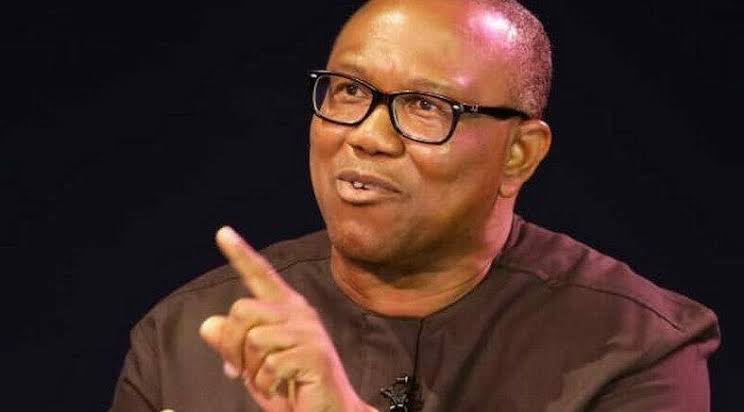
A FORMER presidential candidate of the Labour Party (LP), Peter Obi, has urged President Bola Tinubu’s administration to address several challenges facing Nigerians and stop making excuses.

Obi described Nigeria as the world’s poverty capital, adding that it was depressing to hear the people in authority claim that Nigerians were not the only people on earth suffering from hunger and poverty.

He said rather than making excuses in times of crisis, great leaders offer assurance, direction, and solutions.

Obi said this in a post on his X handle on Friday, June 21.

He suggested that to address the nation’s challenges, Tinubu’s government should have a comprehensive plan of action.

The former governor of Anambra state said apart from being the poverty capital of the world, Nigeria also ranks among the most insecure and hungriest people on earth, has poor education quality and the highest number of out-of-school children.

He also pointed out high infant mortality, corruption, unemployment, the high-income gap between the poor and the rich, the high corruption perception index, infrastructure and healthcare challenges, among others.

“It is disheartening to hear those in charge, who were hired to address our problems, make statements like ‘we are not the only ones struggling with poverty and hunger.

“Instead of merely acknowledging that other countries face similar challenges, we need to hear a thorough plan of action to tackle our unique struggles.

“We need a comprehensive approach to tackle our specific challenges, not generalisations that dismiss our experiences. A true leader provides direction, guidance, solutions, and reassurance in times of crisis,” Obi stated.

According to him, the hallmark of visionary leadership and a trait of nations that are making progress is that they “don’t state the obvious but offer a roadmap for overcoming obstacles.”

“Just like a pilot who doesn’t just announce turbulence, they assure passengers that they will do everything possible to ensure a safe journey,” he added.

He urged those in leadership positions to offer tangible solutions, not mere reminders that other nations face similar challenges.

The ICIR reported that the country has faced more hardship since President Bola Tinubu announced the fuel subsidy removal on May 29, 2023 – the day he assumed office.

The announcement led to an increase in fuel pump prices and an astronomical rise in the cost of transportation and foodstuffs.

In February this year, some Civil Society Organisations (CSOs) took to the streets of Lagos, Edo and Osun states to protest the worsening economic crises in the country. 

There were similar protests in Edo, Osun, Niger and other states.

The ICIR reports that most Nigerians are yet to benefit from several promises of palliatives by the federal government as inflation and prices of essential commodities continue to snowball. 


Nigeria’s public debt stock rose to N121.67trn in Q1 2024 – DMO

NIGERIA’s total public debt portfolio has risen by 24.99 per cent in a space of three months to N121.67 trillion as of March 31, 2024.

The country’s Debt Management Office (DMO) disclosed this in its latest report released on Thursday, June 20.

It declared that the federal government and the 36 states including the Federal Capital Territory (FCT) owe $91.46 billion in dollar terms.

“Central Bank of Nigeria’s (CBN) official exchange rate of $1 to N1,330.26 as of March 31, 2024, was used in converting external debt to naira,” the DMO noted.

External debt rose to N56.02 trillion or $42.12 billion, representing a 46.57 per cent increase compared to N38.22 trillion or $42.495 billion the debt office declared as of December 31, 2023.

Also, domestic debt rose to N65.65 trillion or $49.35 billion, representing an 11.05 per cent increase relative to N59.12 trillion or $65.73 billion as of December 31, 2023.

A cursory look at the data indicates that while the total public debt dropped to $91.46 billion in dollar terms as of March 2024 from $108.23 billion as of December 2023. It, however, increased in naira term to N121.67 trillion as of March 2023 from N97.34 trillion as of December 2023.

The increase in the debt profile in naira terms resulted in the loss in value of the Nigerian currency against the dollar in the three months between December 2023 and March 2024.

In December 2023, the DMO calculated the the public debt profile at the rate of N899.393/$1, but at N1,330.26/$1 as of March 2024.

According to DMO, of the domestic debt, the federal government owes a substantial N61.58 trillion or $46.29 billion while the states and FCT owe a paltry N4.07 trillion.

The debt office failed to disclose what the federal government as well as the states and FCT owe from the external debt portfolio.

The ICIR reports that with the increasing quest of President Bola Tinubu-led administration to secure more loans, the Nigerian government currently owes more than what the DMO had declared.

Recently, the World Bank approved a $2.25 billion loan for Nigeria to bolster its economic stability and support its poor and vulnerable populations.

The Britton Woods Institution disclosed this in a statement on Thursday, June 13, The ICIR reported.

The loan constituted $1.5 billion for the Nigeria Reforms for Economic Stabilisation to Enable Transformation Development Policy Financing Program and $750 million for the Nigeria Accelerating Resource Mobilisation Reforms Programme-for-Results.

Last year, the World Bank raised the alarm that Nigeria had used over 96 percent of its revenue generated in 2022 to service debt and added that the constant fiscal deficit has aggravated the nation’s public debt stock.

FG berates RCC’s failure to complete East-West Road despite N40bn funding

0

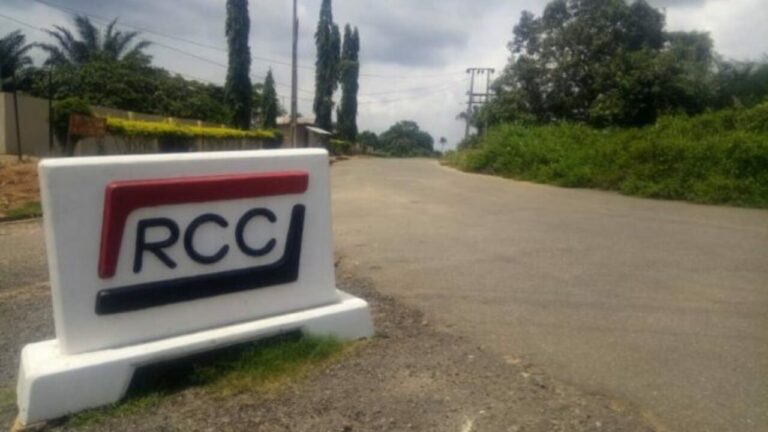
THE Federal Government has criticised Reynolds Construction Company (RCC) for failing to complete even one kilometre (km) out of the 15km East-West Road section from Eleme Junction to Onne Port Junction in Rivers State, despite the over N40 billion mobilisation funds paid to the company.

The Minister of Works, David Umahi, expressed dismay during his inspection tour of ongoing road projects in the south-south zone on Wednesday, June 19.

In a statement posted on the ministry’s website, Umahi said, “We are very sad with the manners and behaviours of this contractor, RCC. The federal government has paid over N40 billion on this project, and not even one kilometre has been completed.”

Lamenting the sufferings of road users, he expressed the intention to source funds to maintain the road for the time being pending when the company remobilises to the site.

“So, we have to see where we can search for funds and get any contractor around here to maintain the road. We need to maintain the road. We need to pity the people. It’s not acceptable what our people are passing through for an excuse from RCC that they are importing machines for the job,” the minister decried.

The east-west road has been a tale of sorrow, tears and deaths for motorists and other road users.

On April 26, 2024, a pregnant woman and four other road users were burnt to death by a tanker explosion, which occurred as a result of a collision of two trailers, whose drivers were jostling for space in the bad spots.

Over 50 trucks and tricycles, among others, were razed in the inferno, the Guardian documented in a report.

Also, on October 13, 2022, four people were killed after a 40-foot tanker lost its balance on the narrow bridge along the road pushing a moving Toyota Sienna car and Toyota Hilux from the only narrow bridge into the Aleto River.

The incident happened barely seven days after eight persons in a commercial bus from trailer park in Onne, heading to Port Harcourt died after their bus skidded off while trying to navigate through the bad spots.

In August 2017, a teenage girl was smashed to death by a heavy-duty vehicle in an attempt to navigate through a bad spot.

Of the 338km in the east-west road covering Warri to Oron through Kaima and Ahoada, the major section said to be causing the grave pains is about 15km.

The ICIR has reported of the inordinate delay in project execution by the RCC.

It documented how the construction of the 9th Mile – Orokam road, a 72km road contract awarded RCC at N38.03 billion in May 2017 with a completion period of 36 months was not completed more than five years later.

The project was intended to improve transportation infrastructure and restore the nation’s road network as part of the implementation of the Federal Government’s Economic Recovery and Growth Plan, like other road projects.

Data on the Govspend platform tracked that between 2018 and June 2022, RCC at different times received over N3.5 billion for the rehabilitation of the road.

At the time, the then Minister of State for Power, Works and Housing, Mustapha Shehuri, directed RCC to immediately provide palliative measures to the rough portions of the road to ease the sufferings of road users.

Police accused of brutalising Kaduna journalist for snapping cattle in officers’ custody on highway

A KADUNA-BASED journalist, Idibia Gabriel, said he has been brutalised by officers of the Nigerian Police Force (NPF) in the state for taking their pictures while transporting a herd of cattle they seized from a forest.

Idibia said he suffered eye injuries as a result of the torture and inhumane treatment meted out to him by the aggrieved officers. The Police have however denied claims of torture and brutalisation. 

In a chat with The ICIR on Thursday, June 20, Idibia said the incident happened on a public road on Tuesday, June 11.

According to him, he was apprehended and whisked to the CID Police Station in the Gabasawa area, in Kaduna, the state capital, on the allegation that he snapped them while they were transporting the cattle to an unknown destination.

The incident occurred around the Valid Oil filling Station, located near the busy Kachia Expressway at Angwan Boro, Kaduna, at about 8:30 in the morning.

X- Ray result of Gabriel Idibia as obtained by The ICIR
Gabriel Idibia X-ray result as obtained by The ICIR

He said he was detained and then freed in the evening after he was brutalised and the images he took were deleted from his phone.

He noted that following the brutal treatment he received while under police detention at the CID, Kaduna branch office, he was discharged with near blindness in one eye.

“I am at the National Eye Centre now. I heard that there was a crisis at the Express where I live in Angwan Boro, Sabo Area. So I rushed outside to see what the cause was. I saw many policemen guiding a large number of cattle from the refinery side and heading towards Sabo.

“So I approached a policeman and asked him what the problem was and he shunned me. I approached another one, and he too shunned me, so I took a shot of the cattle as they were moving to go and clarify with the PRO because most times, if you tell him they will deny that nothing like that happened. As soon as I took the shot, the one coming next to me, seized my phone. I rushed and followed him and showed him my ID card that I am a journalist, and he collected the ID card.

He said he was in the police vehicle for hours with two other persons. According to him, one of the suspects was arrested for a similar offence while the other one was picked up for trying to obstruct the Police vehicle.

“He said I should stand up and write my statement. I wanted to manage to write but I could not see well so they took me outside and asked me to write by force. I wrote according to their instruction, they said I should write that I was trying to obstruct them. I said I didn’t obstruct them, and they said I should write. So I wrote that I obstructed them, they took the statement from me and went to rewrite it and the IPO signed it.

“We sat down from 12 noon till 6 pm before they released me on self-recognition,” Idibia said.

Responding through a chat with The ICIR on Thursday, June 20, the spokesperson of the Kaduna Police Command, Mansir Hassan, confirmed the arrest but insisted that Idibia was not brutalised in any way.

“He was in my office. Nobody brutalised him. He is our friend. Immediately after the incident, he was in my office. So I was surprised when I read that he was brutalised.

“No sign of injury when he came to our office. In fact, we have CCTV cameras in our office, we have everything. There is no way we will allow any of our men to brutalise any journalist,” Hassan stated.

According to the PRO, Idibia was arrested when policemen came out from the forest after rescuing some cattle and he was seen recording them.

“They arrested him and immediately they brought him to the office, they discovered that he was a journalist and released him on self-recognition and immediately he came to my office,” Hassan added.

He, however, promised to take the journalist to the state’s Commissioner of Police when he returns from his trip.

Attacks and harassment of journalists by security operatives have remained a great concern in Nigeria.

The ICIR reported in December 2023 how security agents abused their power and flouted the Nigerian Constitution by harassing 39 journalists in the line of duty, nationwide.

Four reporters with The ICIR were harassed by state actors in the line of duty that year.

Meanwhile, in 2024, the Nigeria Police Force National Cybercrime Centre in Abuja invited and detained The ICIR’s executive director, Dayo Aiyetan, and reporter, Nurudeen Akewushola, over an investigation of sleazes in which its former Inspector-Generals were complicit.

Why Lagos, others face serial cholera outbreaks – CAPPA

0

THE Corporate Accountability and Public Participation Africa (CAPPA) has blamed the recurring cholera outbreaks in Nigeria on the government’s failure to invest in safe water for the citizens. 

In a statement signed by its media and communications officer, Robert Egbe, and mailed to The ICIR on Thursday, June 20, CAPPA noted that the government’s failure to invest in public water and sanitation had resulted in the federal government’s confirmation of cholera outbreaks in more than 25 of the nation’s 36 states, including Lagos.

According to the World Health Organisation (WHO), cholera is an acute diarrheal infection characterised, in its severe form, by extreme watery diarrhoea and potentially fatal dehydration.

A report by The ICIR in 2023 shows that Nigeria is one of the 13 African countries battling cholera with several outbreaks of the disease since 2021 when the country reported 111,062 suspected cases and 3,604 deaths.

The cases were reported largely among children between ages five and 14 across 33 states and the Federal Capital Territory (FCT).

Four states among the 33 affected states namely Bauchi, Jigawa, Kano and Zamfara plus the FCT, accounted for 53 per cent of the cases.

“While the Lagos State Ministry of Health has warned that the current outbreak, associated with the cholera subtype known as Serovars O1, is highly aggressive and contagious, the Nigeria Centre for Disease Control (NCDC) reported that 1,141 suspected cases have been recorded so far in 2024, with at least 30 deaths resulting from 65 confirmed cases of the outbreaks from January 1 to June 11,” the CAPPA’s statement reads.

The ICIR reports that as of today, June 20, cholera has reportedly claimed 21 lives in Lagos State.

CAPPA’s executive director, Akinbode Oluwafemi, said that millions of Nigerians still suffered from an acute lack of access to potable water supply and relied on unsafe water sources for use and drinking, adding that the solution to controlling cholera lied in the effective management of public water and sanitation systems.

“The disease, even though preventable, is particularly vicious in areas where sanitary facilities are insufficient, and the availability of safe water supply is inadequate. As such, the resolution to controlling cholera lies in the effective management of public water and sanitation systems,” he said.

He added that the growing trend of privatising essential utilities like public water supplies was the cholera epidemic in the country.

According to him, the vulnerable population suffer the most and are left helpless against water-borne outbreaks like cholera.

Also, CAPPA’s policy and research officer, Zikora Ibeh, pointed out that although the Lagos State government had acknowledged the severity of the current outbreak and the increased risk in urban slums and crowded areas, the acknowledgement needed to be translated into concrete plans that put the needs of the general public ahead of those of corporate interests, Ibeh stated.

He added that the cholera epidemic in Nigeria was an example of social inequality, noting that Lagos, a progressive city, did not have a sufficient public water supply or sanitary facilities.

Ibeh frowned at underfunding public water infrastructure, inadequate public water workers and depending too much on outside vendors, leaving low-income citizens without access to clean water and at risk of avoidable illnesses.

To guarantee that all Nigerians, regardless of socioeconomic status, have access to clean and safe drinking water, CAPPA encouraged the federal government and state authorities to establish sufficient public water supply infrastructure and put in place a better emergency preparedness for medical personnel.

Court reinstates Bayero, annuls Kano State Emirate Law 2024

0

A FEDERAL High Court in Kano on Thursday, June 20, reinstated deposed Emir Ado Bayero as the Emir of Kano, consequently annullng the state government’s reinstatement of Sanusi Lamido Sanusi as the emir.

The Court abrograted the Kano State Emirate Law 2024, which had dissolved the five Emirates in the state.

It also dismissed the state government’s repeal of the Kano Emirates Council Law, which the state had used to remove Sanusi and install Bayero as emir.

The judge, Abdullahi Muhammad Liman, in his ruling, ordered all parties involved in the case to maintain the status quo.

In April, the Kano State House of Assembly abolished the law which brought Bayero into office and enacted the Kano State Emirate Law 2024. The repealed law had created an additional four emirate councils – Bichi, Rano Karaye and Gaya, under the state’s immediate past governor and current national chairman of the All Progressives Congress (APC), Abdullahi Ganduje.

Ganduje’s party was defeated by the All Nigerian Peoples Party (ANPP) led by his predecessor, former governor Rabiu Kwankwaso. Since the incumbent Governor Abba Yusuf took over power, the state government had vowed to return Sanusi, a former governor of the Central Bank of Nigeria, sacked by former President Goodluck Jonathan.

A kingmaker in the defunct Kano Emirate, Aminu Babba Danagundi, also known as the Sarkin Dawaki Babba, through his attorney, Chikaosolu Ojukwu (SAN) sued the Governor Yusuf-led government to contest the new law’s validity and requested that the court void it.

Sanusi’s reinstatement threw the state into confusion as the dethroned Emir Bayero refused to relinquish his office.

The matter had been pending in court, as both the state High Court and a Federal High Court in the state issued conflicting orders on the matter.

Bayero moved into a mini palace in the Nasarawa neighbourhood of the Kano City, while Sanusi occupied the main palace in the city centre.

The development had led to name-calling between the federal and state governments, with Kwankwanso declaring that the President Bola Tinubu-led federal government was behind the impasse over the state’s emirship.

Meanwhile, the state police command, which had also faced criticism from the state government, said on Thursday that sufficient manpower and resources had been placed around key locations in the state, including the court where the decision would be made to prevent a breakdown in law and order.

The ICIR reported that a Federal High Court in Kano on June 14 ordered the state government to pay N10 million in compensation to Bayero, for breaching his fundamental human rights.

The court headed by Simon Amobeda, gave the directive while delivering the judgment in the case initiated by Bayero seeking the enforcement of his fundamental human rights.

The judge described the order given by the state Governor Abba Yusuf to arrest the deposed emir as illegitimate.         

The ICIR reported on Thursday, June 13, that the Kano State Police Command banned durbar activities in the state as the Muslim faithful celebrate Eid-El-Kabir. 

The state government has yet to respond to the latest ruling by the Federal High Court.