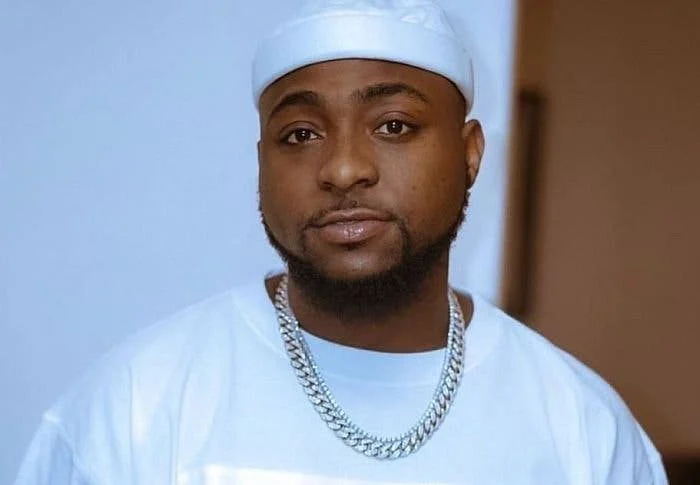
THE Nigeria Securities and Exchange Commission (SEC) has warned potential investors to avoid $Davido’s coin linked to Nigerian popular singer, David Adeleke popularly called Davido.
The SEC said investing in $Davido’s coin was risky because the meme coins lack fundamental value and are purely speculative.
A statement by SEC management on Friday, June 14 said it does not recognise the coin.
The statement reads: “The attention of the Securities and Exchange Commission, Nigeria (“SEC”) has been drawn to a meme coin known as “$Davido” allegedly linked to the popular Nigerian singer, David Adedeji Adeleke popularly known as Davido.
“Generally, meme coins are cryptocurrencies inspired by memes and internet jokes. They are often envisaged as fun, light-hearted cryptocurrencies promoted through a social media community and sometimes through celebrity endorsements.
According to SEC, meme coins are also not intended to serve as a medium of exchange accepted by the public as payment for goods and services, or as a digital representation of capital market products such as shares, debentures, units of collective investment schemes, derivatives contracts, commodities or other kinds of financial instruments or investments.
The commission warned the general public that meme coins lack fundamental value and are purely speculative.
“The general public is further WARNED that investing in meme coins, including $Davido, is highly risky and should be done with a full understanding of the associated risk.
“Capital Market Operators are by this Notice warned not to associate with instruments outside the SEC’s regulatory purview. Such instruments should not be distributed or monitored through any capital market mechanism,” SEC warned further.
The Commission further stressed that it does not recognise $Davido as an investment product or investable asset class under its regulatory purview, as such individuals who patronise it, do so at their peril.
“The Commission will continue to monitor developments within the ecosystem and will not relent in deploying its regulatory powers as and when required,” it stated.
The $Davido token was launched on the Solana blockchain and was created using the popular Platform Pump Fun, which allows crypto users to create a token in a matter of minutes.
Crypto research tool Lookonchain reported that Davido received 7.5 SOL worth $1,275 as startup capital, which he used to create the $Davido token.
Despite the excitement and the rave created online by the launch of the $Davido tokens, the party was short-lived as the meme coin lost over 93 per cent of its value by the next day.
The SEC also called on the members of the public are to note that by virtue of the provisions of Section 38(1) of the Investments and Securities Act (ISA) 2007, only persons registered with the Commission can engage in capital market activities, thus making the actions of these entities listed above unlawful.
THE chairman of the Senate Committee on Media and Publicity, Yemi Adaramodu, has said the National Assembly is putting in place a legislation that will compel all the 36 states in the country to pay to the new minimum wage to be approved soon by the federal government.
Adaramodu stated this during an interview with newsmen in Abuja, on Friday, June 14.
He said the Senate would pass the new minimum wage bill for the President to sign, and ensure strict adherence to its implementation.
“Once it becomes law, we are going to make it watertight, and don’t let us just speculate what is going to be the ingredients that the federal government would be putting into the bill that will be brought by the executive to be submitted to the National Assembly.
“When it comes, whatever is there and whatever is not there, we are going to ensure that it’s going to be watertight; that it’s going to be obeyed by all, he said.
He explained that when the executive bill arrives and is discussed at plenary, there would be various opinions, and the Senate would invite not only legislators but also organised labour to contribute to the law-making process, adding that the lawmakers would collectively decide on sanctions for non-compliance with the law.
When asked how quickly the National Assembly would pass the bill if presented by the President, Adaramodu said it would be passed as quickly as possible.
The Senate spokesperson stated that the bill would undergo thorough scrutiny and receive swift passage if the federal government and organised labour reached a consensus on the minimum wage figure, adding that if brought to the National Assembly by the President immediately after Sallah, it would be addressed with the speed of light and passed promptly for the benefit of Nigerian workers.
The ICIRreports that the federal government proposed N62,000 as the new minimum wage, a N2000 increase from the earlier N60,000.
However, the organised labour demanded a much higher minimum wage, pegging the earlier N615,000 to N250,000.
Meanwhile, the governors under the aegis of the Nigeria Governors Forum (NGF) had rejected the proposed N60,000 minimum wage for Nigerian workers.
The workers had on June 3 embarked on a nationwide strike, shutting down power, schools, airports, train stations, among others, in a bid to compel the federal government to approve an acceptable minimum wage for them.
The organised labour, led by the Nigeria Labour Congress (NLC) and the Trade Union Congress (TUC) reached a resolution with the government on the night of the first day of the strike and suspended the action the following day for a week.
The workers have threatened to resume the strike if the government pays anything less than the N250,000 they demanded.
AN indigenous mining firm in Nasarawa State, Timadix Geomin Consult Limited, has alleged that the state government was unfairly disrupting its operations despite possessing a valid licence.
According to a report, the firm’s managing director, Tim Eldon, disclosed this at a press briefing on Friday, June 14, and sought the federal government’s intervention on the issue.
“Having acquired exploration licences in 2022 and invested heavily in lithium exploration, the resource was discovered early in 2024, and suddenly some state and non-state actors developed an interest in acquiring the concession,” the firm said.
Eldon noted that the firm’s mining operations were shut down by the government and a Chinese company took over without prior information.
He called for the suspension of mining activities by the Chinese company and expressed concern that Indigenous institutions were treated unfairly in favour of foreign institutions.
“I want to say categorically that we at Timadix Geomin Consult have our exploration licence on this matter duly signed by the director-general of the Nigeria Mining Cadastral Office. We view this ugly development as a ploy to deny us our legitimate rights.
“Since we started our operations in this community, we have carried out quite a lot of social responsibility in line with the policy of our establishment. We have no problem with our host community,” Eldon said.
He appealed to the Minister of Solid Mineral Development, Dele Alake, to intervene in the dispute, adding that indigenous mining firms should be protected by the government.
The ICIR contacted Ibrahim Addra, the chief press secretary to the state Governor Abdullahi Sule over the allegations.
Addra told The ICIR that he had contacted the state’s Commissioner for Environment, Yakubu Kwanta, over the issue and there would be a response in the coming week, after the Sallah holidays.
Nasarawa is one of the states with large deposit of lithium in Nigeria.
The federal government commissioned the nation’s largest lithium processing plant in Nasarawa State in May.
During the commissioning, President Bola Tinubu said the plant could produce four thousand metric tonnes of lithium daily, and provide job opportunities for youths in the state.
THE federal government has declared Monday, June 17 and Tuesday, June 18, as public holidays to mark Eid-al-Adha.
A statement by the permanent secretary of the Ministry of Interior, Aishetu Gogo Ndayako on Friday, June 14, said the Minister of Interior, Olubunmi Tunji-Ojo, announced the holiday on behalf of the Federal Government.
She noted that the minister congratulated the Muslim Ummah both at home and in the diaspora as they join other faithful worldwide to celebrate the feast.
The minister called on Muslims in the country to continue to imbibe the spirit of peace, kindness and sacrifice, as exemplified by Prophet Ibrahim and to also use the period to pray for unity, prosperity and stability in Nigeria.
“The minister assured that the administration of President Bola Ahmed Tinubu (GCFR) is committed to safeguarding the lives and property of all Nigerians.
“While wishing the Muslim ummah a happy Eid-ul- Adha celebration, the minister advised all Nigerians to take responsibility in the resolve to hand over a prosperous Nigeria to our children”, the statement added.
A FEDERAL High Court in Kano has ordered the state government to pay N10 million in compensation to the 15th Emir of Kano, Aminu Bayero, for breaching his fundamental human rights.
The court headed by Simon Amobeda, gave the directive while delivering the judgment in the case initiated by Bayero seeking the enforcement of his fundamental human rights.
The judge described the order given by the state Governor Abba Yusuf to arrest the deposed emir as illegitimate.
He said the order had forced the applicant into house arrest.
The respondents in the suit are the Attorney-General of the Federation (AGF) as 1st respondent, Attorney-General of Kano State (2nd), Nigeria Police Force (NPF) (3rd), Inspector-General of Police (IGP) (4th), Commissioner of Police in Kano (5th), State Security Service (SSS) (6th), Nigeria Security and Civil Defense Corps, NSCDC (7th), Nigerian Army (8th), Nigerian Airforce and Nigerian Navy as 9th and 10th respondents respectively.
Amobeda prevented the 2nd, 3rd, 4th, and 5th from arresting, detaining, threatening, intimidating, harassing, or further interfering with the applicant’s fundamental rights.
The judge declared that the governor’s order directing the police to arrest the applicant without any lawful justification was a threat and a breach of the fundamental right to liberty of the applicant guaranteed under Section 35(1) of the Constitution of the Federal Republic of Nigeria, 1999 (as amended).
“That the 2nd respondent and the Government of Kano State shall pay to the applicant the sum of N10,000,000.00 only for the breach and likely breach of the applicant fundamental rights to personal liberty and freedom of movement guaranteed under the Constitution of the Federal Republic of Nigeria, 1999 (as amended).
“The prayer for the cost of filing and prosecuting this suit is refused, the amount having not been specifically pleaded and strictly proved.” Amobeda declared.
Kano has been in turmoil since the House of Assembly amended the law abolishing the existing five emirates and restoring the single emirate system in the state.
By implication, all the five emirs ruling at the time of the amendment were dethroned, and the state government reinstated Lamido Sanusi, deposed by the previous administration, led by the current national chairman of the All Progressives Congress (APC), Abdullahi Ganduje.
Sanusi’s reinstatement threw the state into confusion as the dethroned Emir Bayero refused to relinquish his office.
The matter has been pending in court, as both the state High Court and a Federal High Court in the state have issued conflicting orders on the matter.
The impasse has remained unresolved for nearly four weeks after.
The ICIR reported on Thursday that the Kano State Police Command banned durbar activities in the state as the Muslim faithful celebrate Eid-El-Kabir this weekend.
A statement issued by the state commissioner of police, Usaini Gumel, stated that the ban became necessary to sustain peace in the state.
According to reports, the deposed emir of the Kano emirate, Bayero, had on June 10,invited district heads for the forthcoming durbar, which Muslims often celebrate after every Eid.
The ICIRreports that the durbar festival is usually held twice yearly in Kano and some other ancient towns in Northern Nigeria, to mark the Eid-el-Fitr and Eid-el-Kabir celebrations.
It is a colourful event that often lasts for three or four days, with the festival characterised by processions through the city, led by the emir, a key player in the event.
The emir leads about five processions throughout the festival.
However, the police said on Thursday that such activity would not be allowed in the interest of peace.
The police advised the faithful to conduct their normal Eid prayers at the various designated Eid praying grounds as done in the past.
THE Electricity Company of Ghana (ECG), on Thursday, June 13, said the three-week power outage experienced in the country resulted from Nigeria’s reduction of gas supply to the nation.
A statement issued by the ECG via X said maintenance work by a Nigerian gas supplier firm to its facility caused the power outages in various parts of the country, reducing Ghana’s power generation and forcing load shedding which started on Wednesday, June 12.
“Due to a reduction in gas supply from Nigeria since yesterday, Wednesday, 12th June 2024, some areas across the country have experienced an interruption in power supply.
“The reduction in gas supply was due to maintenance works being undertaken by a gas supplier in Nigeria and is projected to last three weeks,” the statement read in parts.
Meanwhile, the West African Gas Pipeline Company Limited (WAPCo) announced a decrease in gas flows due to a Nigerian producer ceasing operations to repair its facility, which affected gas transportation to Ghana, Togo, and Benin.
The WAPCo, however, assured the public that normalcy would return after the maintenance while they work with other power sector stakeholders to optimise resources and minimise the impact of the interruption on the public.
“The current situation is entirely out of WAPCo’s control. We expect normalcy to return after the maintenance activities,” the statement added.
Over the years, Ghana has been experiencing power shortages, known locally as ‘dumsor,’ meaning on and off in the Akan language, following rapid urbanisation and population growth.
THREE people died during a gun duel between the police and armed robbers who attempted to rob a First Bank branch in the Abaji Area of the Federal Capital Territory (FCT) at about 5.00 p.m. on Thursday, June 13.
The deceased include a police officer and two members of the gang.
Two of the deceased were confirmed dead after being rushed to the hospital following the incident, while the body of one of the suspects was set ablaze by an irate mob after he was neutralised by the police.
Public Relations Officer (PRO) of the FCT Police Command, Josephine Adeh, disclosed this in a statement on Friday, June 14.
“The security forces engaged the armed robbers in an intense gun duel, forcing them to scamper to safety with various degrees of bullet wounds, as the security forces succeeded in apprehending three suspects, namely, Usman (surname yet unknown), who was reported to be the gang leader, Nuhu Musa, 41 ‘m’ of Kogi State; and Muhammed Aminu, 25 ‘m’ of Abaji, with grave degrees of bullet injuries,” she noted.
She explained that police officials were on the trail of fleeing suspects and those apprehended were receiving medical treatment.
A similar incident occurred in March when police officials in Kogi State intercepted a bank robbery.
A security guard and a police official were killed during a shoot-out with the robbers who also carried out their operations at about 5.00 p.m. on a Thursday.
The robbers numbered over a dozen and wielded sophisticated weapons during the operations.
FOR the first time since its creation in 1979, Action Against Hunger is inviting applications for a grant for a new humanitarian project.
Applicants proposing their projects should be creative and daring to feed a collective reflection around the development of multimedia language in the humanitarian field.
They should also aim to increase the visibility of the people we support and the situations they experience, wherever Action Against Hunger intervenes.
THE Court of Appeal has dismissed the contempt proceedings initiated by former Governor of Kogi Stae Yahaya Bello against the Economic and Financial Crimes Commission (EFCC) and its Chairman, Ola Olukoyede.
The unanimous ruling was delivered by a judge of the courtJoseph Oyewole on Thursday, June 13.
The court invalidated the proceedings and rejected the Respondent’s initial challenge due to technical issues.
The Court of Appeal noted that the trial judge failed to include the directives drafted in the orders dated February 9 into its conclusive ruling issued on April 17.
The Appeal Court held that the trial judge failed to extend the Orders of February 9 in its final Judgment of April 17.
He said the second issue presented by the former governor on the temporary order had become an academic exercise.
The Appellate Court had earlier granted an ex-parte motion for a stay of contempt proceedings filed against Olukoyede, by ex-governor Bello.
The Court granted the EFCC’s application to serve the processes in the appeal by substituted means on the former Governor.
The court consequently adjourned the hearing of the motion on notice to May 20.
The appellate court in its ruling on Thursday held that “a court of law cannot preclude the EFCC or any Law Enforcement Agency from investigating and prosecuting crime.
“This is a fundamental jurisdictional point that cannot be shoved aside as it borders on the doctrine of separation of powers. The argument of the Respondent that no ground covers this point cannot stand given the instant circumstance.”
Besides, the Commission also challenged another order of the court restraining it from harassing, arresting or detaining Bello pending the determination of the substantive suit.
The appellate court on Thursday allowed the EFCC’s appeal and overruled Bello’s preliminary objection.
The ICIR reported that the EFCC Chairman had earlier been summoned to appear before the Kogi State High Court in May to show cause why he should not be arrested.
The court ordered Olukoyede to appear before it on May 13.
The EFCC boss was charged with a contempt charge for carrying out “some acts upon which they (the EFCC) have been restrained” by the court on February 9, pending the determination of the substantive originating motion but he had appealed the ruling of the trial court and desired a stay of the proceedings of the court.
The Kogi State High Court based its ruling on the premise that the EFCC Chairman carried out “some acts upon which the EFCC have been restrained” by the Court on February 9, pending the hearing and determination of the substantive originating motion.
The judge of Kogi State High Court I. A. Jamil, in a ruling, had ordered that “the said act was carried out by the respondent (EFCC) in violation of the order, which was valid and subsisting when they carried out the act.“
The ICIR reported that theRegional Director of the EFCC in Benin, Edo State, Effa Okim, has given reasons why the agency is yet to arrest former Kogi State governor, Yahaya Bello, months after declaring him wanted.
He said the EFCC had been unable to arrest Bello due to the protection he is receiving from certain people.
Okim said this on Wednesday, June 12, at the Nigeria Union of Journalists (NUJ) Delta State Council while fielding questions from journalists on why the EFCC had yet to arrest Bello weeks after he was declared wanted.
The EFCC had earlier declared Bello wanted over alleged N80.2 billion fraud.
The anti-corruption agency revealed this on its verified Facebook handle on Thursday, April 18.
By Arinze CHIJIOKE, Shehu OLAYINKA and Sodeeq ATANDA
MANY Nigerians yearn for the opportunity to participate in a peaceful voting process, one where they can exercise their right to vote for leaders of their choice and witness the establishment of a national government that represents their rights, desires and aspirations.
Indeed, a 2023 pre-election survey byAfrobarometer, a pan-African research network, found that 70 per cent of respondents in Nigeria said they want a democracy. But little more than 1 in 4 registered voters in the country exercised their right to vote in last year’s presidential election. This examination of the presence and role of false information before, during and after the contest is the first in a series of stories that raises pointed questions about the election’s legitimacy, as well as the current status and future trajectory of democracy in Africa’s most populous nation.
Peoples Democratic Party (PDP) presidential candidate Atiku Abubakar was reportedly holding a secret meeting with army generals to topple the government, he wrote.
“Why would a presidential candidate have secret meetings with soldiers 14 days before the election?” the post thread read. “Is this meeting part of the wider agenda to disrupt the elections, destabilise the country, set us on fire, incite chaos and violence, provoke a coup d’etat…?”
Several days later, the State Security Service (SSS) interrogated Fani-Kayode for five hours. After a 14-tweet thread asserting that he had done “nothing wrong” in referencing Nigeria’s bloody history and tortuous road to democracy, Fani-Kayode expressed regret and explained that he failed to verify the news source, according to Premium Times.
In 2003, 69% of eligible Nigerians participated in the nationwide elections. Two decades later, despite a pre-election report from Afrobarometer that found a large majority of Nigerians want their country to be a democracy, the number had fallen to 27%. A record low in the country since democracy was restored in 1999, this was the sixth lowest voter turnout rate in the world of more than 1,000 presidential elections since the end of World War II, according to a CCIJ analysis of elections data compiled by the International Institute for Democracy and Electoral Assistance.
It was a temporary retreat.
Fani-Kayode later made other statements the Center for Collaborative Investigative Journalism (CCIJ) found to be misleading. For example, on April 12, 2023, he claimed that Labour Party presidential candidate Peter Obi had been deported to Nigeria by British authorities. (Labour Party Campaign Council spokesperson Diran Onifade said that Obi was detained and questioned in an impersonation crime involving his name. Daily Trust newspaper also debunked the claim that Obi was deported.)
However, this is not the story of one powerful former government official. It’s an investigation into the hard-to-quantify but nonetheless real and negative impact of a multi-front assault on the truth before and after last year’s Nigerian presidential election.
Party spokespeople, journalists and social media influencers helped generate false information that received millions of views during that time, according to an analysis by CCIJ. From implying the presence of an unsubstantiated coup plot to spreading false election results to fomenting ethnic discord, some of these postsremain on the authors’ social media pages more than a year after they were made and at the time of this publication.
The CCIJ reviewed numerous reports of election misinformation from spokespersons, news outlets and social media influencers. Those who spread false information faced minimal consequences from either the social media platforms or the Nigerian government. The Independent National Electoral Commission (INEC) sent a letter dated May 15, 2024, in which it said it was working on answers to a detailed list of questions CCIJ had submitted in April. It had not provided answers by the time of this publication. The social media platforms declined to comment for this article.
At the time of this publication, CCIJ had not found any publicly available records of anyone penalised for spreading false information during the election, despite the existence of laws such as the Cybercrimes Act, 2015 and codes forbidding the publication of false news with the intent of causing fear. Instead, the very laws established to deter the spread of misleading information have been used against some of the journalists, bloggers and other citizens who exposed fake news.
The INEC did not respond to detailed questions from CCIJ about how it grappled with electoral misinformation. In a more than 500-page report, published in February 2024, it wrote that its “proactive and regular dissemination about its policies and activities through the mainstream media, social media platforms and online newspaper (inecnews.com) countered fake narratives as much as possible.”
Others held different views.
The CCIJ conducted an online survey of Nigerian citizens that it distributed through some of the newsrooms in its network. It sought in part to gauge participants’ awareness of false information online and INEC’s efforts to combat it during last year’s campaign season. Close to two-thirds of the 104 respondents said they were unaware of INEC’s efforts, while only seven people said they were aware. None of the 36 who explicitly answered the question said INEC’s actions to counter misinformation were effective.
Civil society activist Armsfree Ajanaku said in an interview with CCIJ that false and misleading information widely shared on social media may have contributed to the low turnout in the election.
In 2003, 69 per cent of eligible Nigerians participated in the nationwide elections. Two decades later, despite a pre-election report from Afrobarometer that found a large majority of Nigerians want their country to be a democracy, the rate of eligible voter participation had fallen to 27 per cent.
A record low in the country since democracy was restored in 1999, this was the sixth-lowest voter turnout rate when compared to more than 1,000 presidential elections worldwide since the end of World War II, according to a CCIJ analysis of elections data compiled by the International Institute for Democracy and Electoral Assistance.
A former executive director at the Centre for Democracy and Development and current senior associate at the Center for Strategic and International Studies (CSIS), Idayat Hassan, said the spread of false information during the 2023 election increased polarisation and social unrest while undermining the election’s legitimacy and the country’s fragile unity.
In 2023, Nigeria recorded a voter turnout of just under 27%, the lowest level since democracy was restored in 1999 and the sixth lowest in presidential elections worldwide since 1945.
“Political actors, influencers and news websites often have strategic interests and can use disinformation as a tool to achieve political or financial gains,” she said. “In some cases, they may underestimate the broader consequences of their actions, but in others, the spread of disinformation is a calculated move to influence public opinion or disrupt the political process.”
Spokespeople compound confusion
The 2023 election was not the first time the Nigerian public encountered false information. In 2018, The Guardian published an investigation detailing the contentious role that the now-defunct data analytic firm, Cambridge Analytica, played in the 2015 Nigerian presidential election.
False twitter claim by PDP spokesperson Dino Melaye dismissed by INEC Press Secretary Rotimi Oyekanmi.
An editor at Abuja-based FactCheckHub, the fact-checking arm of the International Centre for Investigative Reporting (ICIR), Opeyemi Kehinde, said in an interview with CCIJ that the amount of false information rose in the 2023 general election compared with previous contests.
Former senator and PDP spokesperson Dino Melaye also posted false information to his 3.4 million followers on X . On March 6, 2023, he shared what appeared to be a screenshot of a news article suggesting that INEC Chairman Mahmood Yakubu declared that his life was “at risk.” The photo shared by Melaye did not contain any website attribution and online searches failed to yield any credible reports corroborating the claim attributed to the INEC chairman. Rotimi Oyekanmi, chief press secretary and media adviser to Yakubu, also dismissed the false claim.
Melaye’s claim that CCIJ investigated generated more than 1 million views. Some readers not only reshared the post, but also agreed with the fake information.
“So, the obsolete INEC chairman didn’t think of his life before his actions on the 25th of February?” an X user wrote, referring to the date of the presidential election. “Let him face his troubles squarely as they come.”
Aviation minister and a Senior Advocate of Nigeria (SAN), Festus Keyamo, stirred trouble on February 9, 2023. He shared a series of pictures with 1 million followers that he suggested were from APC presidential candidate Bola Tinubu’s campaign event in Sokoto state ahead of the election.
But a Google reverse image search conducted by CCIJ found that one of the pictures was originally taken in 2021, during the Lollapalooza music festival in Chicago. The others were real photos taken during the campaign rally in Sokoto, northwest Nigeria.
“It is going to be propaganda against propaganda, word for word, we will meet them everywhere because Asiwaju [another name for Tinubu] has a mandate he will defend, and we are prepared to defend that mandate,” he declared in March 2023, the month after the election.
These two images show the tweet of Festus Keyamo and the original image from the Lollapalooza music festival in Chicago used in his false claim. Photo of Lollapalooza by Colin Hinkle.
News outlets add to the misinformation mix
On August 14, 2022, the website Reportera compounded the false information flow, writing about PDP presidential candidate Abubakar’s troubles in an article headlined(archived here), “How Atiku stole $16bn power fund under Obasanjo’s watch.”
Four months later, the website published another report headlined (archived here), “Atiku Abubakar: The ‘Corrupt’ Customs Officer”.
Both stories were published without sufficient proof.
Reportera declined repeated requests for comment from CCIJ.
Igbo Times Magazine falsely reported on February 26, 2023, that a Russian hacker had gained access to the INEC portal and leaked the official results, which showed Peter Obi winning. The figures in the article of 95 million votes between APC, PDP, and Labour Party exceeded by more than three times the total number of votes shared by INEC of nearly 25 million votes cast out of more than 93 million registered voters in Nigeria.
Igbo Times acknowledged it had published inaccurate reports during the election, but insisted that it had removed them after being made aware of it.
Hillary Kelechi, who was listed as the administrative contact on Talkvendors.com, acknowledged developing blissnaijaa.blogspot.com and Gist Digest. Kelechi said he sold the websites but did not remember the identity of the buyers. He blocked and unblocked CCIJ, and did not respond to additional questions about his link to the websites.
Republican News author Ike A. Offor, who also has done editing work, did not answer messages sent to his X and Facebook accounts. Prose Nigeria, WiseReporters and Podium Reporters also did not answer repeated requests for comment.
Idayat of CSIS said that there was a “proliferation of blogs funded or operated by political parties and their activists.” Some of the sites, like Podium Reporters, even produced partisan “fact-checks” that favoured their candidate, further muddying the information waters, she said.
“These are made more believable by the fact that conventional media has been sharing video content and advertisements from candidates and parties that violate the Broadcast Code of Nigeria and the Peace Accord, signed by all the chairs of the 18 Nigerian political parties and their candidates, which prohibits the use of fake news, hate speech and promotes issue-based politics,” Idayat said.
Coordinated, individual social media efforts
Social media influencers shared dubious content, too.
Using a cocktail of online tools, CCIJ identified five campaigns that appeared to be coordinated by X influencers @drpenking, @redcap_blondie, @firstladyship, @AreaFada1, @omoelerinjare and @VictorIsrael_. These six accounts had a combined total of close to 1 million X followers at the time of the election.
Along with multiple accounts on X and Facebook, these influencers declared false results for Obi in respect of Plateau and Anambra states where Obi actually won, asserting that he received more than over 1 million votes in each state.
An INEC collation officer said that there were 1.1 million votes cast in Plateau state and fewer than 1 million votes cast in Anambra State. Obi polled a total of close to 600,000 votes in Anambra and more than 450,000 votes in Plateau state, the officer said.
The CCIJ’s effort to speak to these accounts’ owners proved unsuccessful. Only @drpenking and @redcap_blondie’s accounts were open to receiving messages. Requests for interviews and multiple messages sent to @drpenking were ignored and then blocked, while @redcap_blondie alleged that INEC manipulated the election results.
Nigerian musician Charles Oputa, popularly known as Charly Boy, used altered and modified videos and images to back Obi in multiple falseposts that generated millions of views on his X account between September 2022 and May 2023, CCIJ found.
He declined repeated requests for comment, but University of Lagos Journalism and Mass Communication Associate Professor Ifeoma Theresa Amobi argued that influencers played an impactful role in voter turnout.
“I think the messages from websites and influencers played a part in voter turnout,” she said. “I feel like Nigeria has lost confidence in the voting system in the country. Some of those who follow influencers will tend to agree and align with them if they say this system is fraudulent and there is no point in voting.”
These six social media influencers, who shared dubious content during the 2023 Nigerian election, had a combined reach of nearly 1 million followers.
Non-implementation of existing laws
The flood of false information from these sources appears to violate Nigerian law regulating the spread of fake news.
Subsection 59 of the Criminal Code explicitly forbids the publication of false information with the purpose of alarming the public. It further states that ignorance of the statement’s falsity is not a defence unless reasonable measures were taken to verify its accuracy before publication.
Besides Fani-Kayode’s interrogation by the State Security Service, none of the purveyors of false information in the build-up to the 2023 general election reviewed by CCIJ have been publicly disciplined for violating the law .
Kehinde the editor of FactCheckHub said that the lack of prosecution emboldened the actors. “These misinformation actors keep increasing by the day because they’ve not been held accountable, not because there’s no legislation in place to checkmate their activities,” he said.
Meanwhile, more than two dozen journalists in Nigeria have faced prosecution in recent years on charges stemming from the Cybercrimes Act, according to data from the Committee to Protect Journalists cited in an article published by Al-Jazeera in April 2024.
The Cybercrimes Amendment Act of 2024, an amended version of the 2015 legislation, was signed into law in February 2024. In May 2024, Foundation for Investigative Journalism (FIJ) reporter Daniel Ojukwu was arrested by police and held without charge for over a week for alleged violations of the Cybercrimes Act. [Editor’s Note: Ojukwu is a colleague of story co-author Sodeeq Atanda.]
The National Information Technology Development Agency (NITDA) Code of Practice also addresses false information. Developed with input from social media platforms, the code outlines measures to combat harmful online information. It requires online platforms to deactivate accounts spreading misinformation and remove unlawful content within 48 hours of being notified by the government.
Platforms like X have failed to comply with these provisions, only rarely taking down posts, according to Hadiza Umar, head of corporate affairs at NITDA. “We have written to them but they have ignored us,” she said.
Umar explained that the agency lacks the authority to sanction, stating that it only reviews and escalates complaints about fake news, particularly when it threatens national security. “We are developing a platform where complaints can be submitted to,” she said .
Civil society activist Ajanaku said that social media platform owners don’t take decisive actions even when accounts are reported to them because they struggle to ensure that people do not abuse the right to free speech by spreading disinformation.
“Disinformation plays into the business model of these platforms because it is driven by engagement and so, if a particular claim goes out there, regardless of whether it is false or not, it gains traction and that is revenue,” he said.
X, Facebook and Instagram all did not answer requests for comment.
INEC’s actions, expert skepticism
In contrast with the social media platforms’ lax involvement, INEC touted in its February 2024 report the measures it took to counter false information. These included placing advertisements in major national newspapers, making announcements on radio stations and holding meetings in November 2021 with media executives, online publishers and line editors in Lagos.
The report said that the commission’s social media posts in late February and mid-March generated nearly 54 million impressions on X and reached more than 1.8 million people on Facebook and Instagram.
“While the challenges of fake news, misinformation and disinformation remain, much of what would have adversely impacted the narratives around the election were mitigated by the Commission’s proactive engagement with the media underscored by its transparency, accessibility, and sincerity,” it wrote.
The CCIJ submitted a detailed list of questions in a public records request to INEC about its actions and the basis for its assertions. The agency acknowledged receiving the questions, but had not provided answers at the time of this publication.
The CCIJ also conducted a survey through its partner newsrooms of Nigerians about election misinformation that included a question about whether respondents were aware of INEC’s advertisements and whether they were effective. Many said they were not aware of INEC’s efforts.
Idayat of CSIS acknowledged the commission’s attempts to provide accurate information and counter false claims, but added that the “sheer volume and speed at which disinformation spread” made it difficult to keep pace.
“Combating disinformation requires a multi-faceted approach involving legal, technological and educational strategies to protect the integrity of elections and democracy in Nigeria,” Idayat said, advocating for a stronger legal framework with more rapid response time and stiffer penalties that can deter such behaviour.
Ordinary citizens who use social media may be a key part of that multi-pronged approach.
The CCIJ looked at a portion of the replies to 16 false claims party spokespersons, journalists and influencers posted on X. In every case, more than half of the replies criticized the false information. This included Fani-Koyode’s tweet about the fictitious coup plot. More than 80% of the 221 replies to that tweet were negative, according to CCIJ’s analysis.
“APC is in power, and so in charge of the Nigerian army,” businessman Somto Onuchukwu tweeted in response to Fani-Kayode and Abubakar, stamping the words “FAKE NEWS” in red letters over a picture of Fani-Kayode’s tweet. “Instead of accepting defeat, they’re busy looking for meetings that never happened.”
This story was produced with the support of MuckRock and the Filecoin Foundation for the Decentralized Web.