Home Blog Page 570

Falana hails Kaduna governor over ‘historic’ release of 110 convicts, other detainees

PROMINENT legal expert and senior advocate, Femi Falana, has commended Kaduna State Governor Uba Sani for releasing 110 convicts and other detainees from Correctional Centre in the state. 

Falana described this ‘historic’ release as one of the most significant initiatives to commemorate the 2024 Democracy Day.

The senior lawyer noted that the release of the convicts and detainees demonstrated a commitment to justice and rehabilitation, aligning with the principles of democracy and human rights.

He emphasised the importance of such actions in promoting social justice and reducing overcrowded correctional facilities.

“I am particularly delighted to note that the governor has paid the fines of N10,000 imposed on some of the convicts who have been languishing in custody for years due to impecuniosity.

“I appreciate the significance of the release of the convicts and detainees because I was detained in several detention facilities, including correctional centres under the defunct military junta.

“Whenever I was released from incarceration, I was always sure that I would go back.  Indeed,  I went back many times. Apart from regular detention, I was charged with various criminal offences, including treasonable felony but I was never convicted,” the fiery lawyer stated.

According to Falana, he was not arrested or detained for committing any criminal offence whatsoever but for joining other patriots to fight against military rule in Nigeria.

He added that Sani and former senator who represented Kaduna Central, Shehu Sani, were subjected to intimidation and harassment on account of their involvement in the struggle for the restoration of democracy in the country.

Falana said since democracy was restored 25 years ago, he had never been detained by any security agency.

He urged that to ensure that other citizens are not arrested and detained without a legal basis, the human rights community has ensure that illegal arrest and detention are prohibited in Nigeria.

Falana stated that the Administration of Criminal Justice Act, which has been adopted in all states of the Federation, has codified the basic rights of citizens, including criminal suspects.

He said that he was happy that the chief magistrates in Kaduna State conducted monthly visits to all police stations in their districts in accordance with the Administration of Criminal Justice Law of Kaduna State.

“Permit me to call on judges and leaders of the Nigerian Bar Association (NBA) to pay regular visits to all correctional centres in the country in accordance with section 21 of the Correctional Service Act.

“I am confident that if the visiting officers perform their duties, the congestion of the nation’s correctional centres will be seriously reduced,” Falana stated.

He urged the Kaduna State government to contribute to renovating the Kaduna Correctional Centre.

According to him, the facility in Kaduna state built in 1915 by the British colonial regime has not received the adequate attention of the federal government.

He congratulated the state governor and lauded him for setting aside a special fund for immediate rehabilitation of the freed convicts and other detainees.
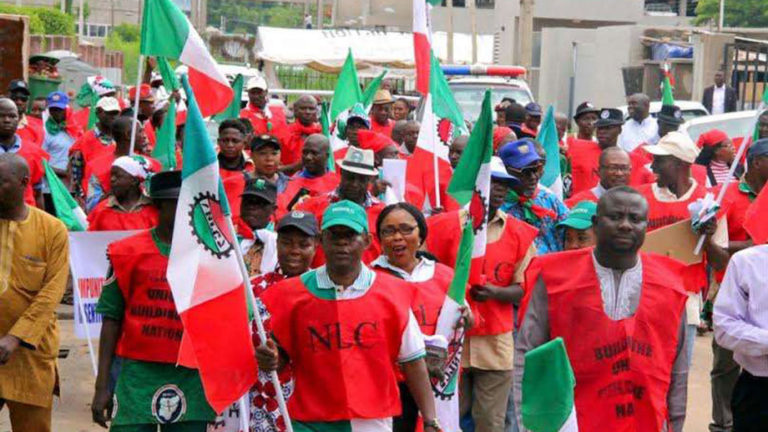
Accept sustainable minimum wage, FG urges labour

0

MINISTER of Information and National Orientation, Mohammed Idris, has urged organised labour in Nigeria to accept a sustainable minimum wage proposed by the federal government. 

Idris said this while speaking at the opening of the 2024 Synod of the Charismatic Bishops Conference of Nigeria in Abuja on Wednesday, June 12.

He urged the labour unions, comprising the Nigeria Labour Congress (NLC), the Trade Union Congress (TUC) and affiliated institutions, to consider the possibility of mass retrenchment of workers which might  result from the minimum wage currently being advocated.

“As I have repeatedly said, the federal government is not opposed to the increase of wages for Nigerian workers but we keep on advocating for a realistic and sustainable wage system for the workers – a wage system that will not undermine the economy, lead to mass retrenchment of workers and jeopardise the welfare of about 200 million Nigerians.

“We want the labour unions to understand that the relief that Nigerians are expecting, and that they fully deserve, will not come only in the form of an increase in wages. It will also come as efforts to reduce the cost of living and to ensure that more money stays in the pockets of Nigerians,” he was quoted as saying.

Emphasising the influence of clerics on the population, the minister urged religious leaders to support the government and communicate efforts being made to the people.

“As a government, we need your support, your advice, and your feedback. Very importantly, we need you to be aware of the efforts being made and the challenges being faced so that you can help us communicate these to your congregations and the general public,” he said.

Labour unions in Nigeria have demanded an increase in workers’ minimum wage across the country, citing economic hardships.

While organised labour initially demanded N615,000, the Nigerian government offered N46,000 at first before increasing it to N60,000 which the workers rejected.

After both parties failed to reach a consensus during negotiations, labour declared an indefinite strike on Monday, June 3, during which the nation’s power grid was cut off and the country was thrown into darkness.

Schools, airports, train stations, among others were also shut down.

The strike was suspended on the second day after a meeting between both parties.

The government later increased its offer to N62,000.

However, there has been no official agreement as this offer has again been rejected by the workers who are now demanding N250,000.

Nigeria generated N2.42bn as taxes in Q1 2024 amid companies’ exit concerns

DATA from the National Bureau of Statistics (NBS) has shown that Nigeria generated a total of N2.42 billion from Value Added Taxes (VAT) and Company Income Taxes (CIT) charged on the consumption of productions and organisations in the first three months of 2024. 

This development comes amid concerns of several companies exiting the country due to Bola Tinubu’s administration policies on foreign exchange unification which have affected several companies’ negative balance sheets.

Currently, most companies struggle to have access to stable foreign exchange due to the volatile dollar rate which affects stable pricing for the production and the manufacturing sector.

Both VAT and CIT are imposed levies by the government which contributes to the country’s internal revenue, among other other levies.

While the country generated N1.43 trillion from VAT in the first quarter of 2024, N984.61 billion was generated from CIT. 

The VAT, levied on consumed goods, was reported to have grown by 19.21 percent on a quarter-on-quarter basis from N1.20 trillion in the fourth quarter of 2023. This increase is coming despite the economic hardship facing the country. 

This means that the more the price of goods goes up, the more revenue is generated by the government despite the dwindling economy falling to 2.98 per cent in terms of Gross Domestic Product. To better put this, the federal government has made more revenue from consuming goods and products as the inflation rate increases consistently, nearing 34 per cent as of April 2024.

Local VAT payments recorded were N663.18 billion, foreign VAT payments were N435.73 billion, while import VAT contributed N332.01 billion in first-quarter 2024. Major taxes were pulled from the Manufacturing, Information and Communication, Mining, and quarrying sectors, representing 27.6 per cent of the taxes collected. 

On the other hand, the impact of the economic hardship would stiffen investment for organisations. The ICIR reported that economies are beginning to exit the country, one year under the current administration. 

The CIT, taxes levied on organisations, indicated a drop of 12.87 per cent on a quarter-on-quarter basis from N1.13 trillion in the fourth quarter 2023. 

NBS report said, “ Local payments received were N386.49 billion, while Foreign CIT Payment contributed N598.13 billion in first-quarter 2024. 

“On a quarter-on-quarter basis, Activities of households as employers, undifferentiated goods- and services-producing activities of households for own use recorded the highest growth rate with 330.42 per cent, followed by Administrative and support service activities with 33.18 percent. On the other hand, activities of Manufacturing had the lowest growth rate with –70.24 per cent, followed by Electricity, gas, steam and air conditioning supply with –69.14 per cent.”

Recall that in 2023, Nigeria pulled a total of N8.54 trillion from both taxes. The amount is about 60 per cent higher than the  N5.34 trillion generated in the preceding year, 2022.

Tinubu’s tax policy

At the assumption of Bola Tinubu as president of Nigeria, in May 2023, the president said as part of his inaugural speech that industrial policy will utilize the full range of fiscal measures to promote domestic manufacturing and lessen import dependency.

He said, “I have a message for our investors, local and foreign: our government shall review all their complaints about multiple taxation and various anti-investment inhibitions.”

The ICIR further spoke to experts who said that Nigeria’s tax administration had faced many issues arising from multiple taxation, poor administration, tax touting, non-payment of tax refunds, and other complex natures of the tax laws.

However, recent developments within the administration have seen the introduction of new charges on electricity, banking, and other commodities. The Presidential Fiscal Policy and Tax Reforms Committee recently said it proposed a reduction of the multiple taxes paid to various levels of government to a single digit of eight taxes.

The ICIR went further to check VAT and CIT between the second quarter of 2023 and the first quarter of 2024. Our findings showed that revenue generated from VAT have consistently increased within one year. 

Quaters VAT CIT
Q1 2023 N709.5 billion N469.01 billion
Q2 2023 N781.3 billion N1.6 trillion
Q3 2023 N948.1 billion N1.8 trillion
Q4 2023 N1.2 trillion N1.1 trillion
Q1 2024 N1.43 trillion N984.61 billion

Table showing the taxes generated in Nigeria

Meanwhile, company taxes increased in the second and third quarters of 2023 but fell in fourth-quarter of 2023 and first-quarter of 2024. 

June 12: CAPPA warns against clampdown on protesters, urges government to embrace true democracy

0

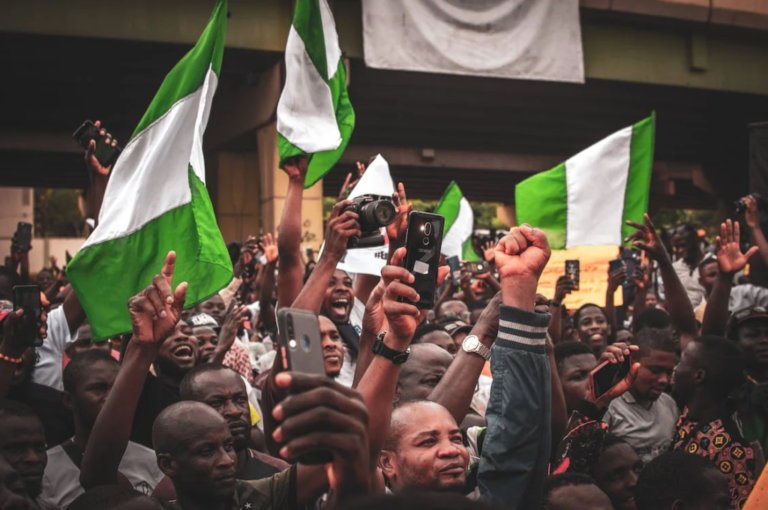
CORPORATE Accountability and Public Participation Africa (CAPPA) has cautioned the Nigerian Police Force (NPF) and the State Security Services (SSS) against suppressing Nigerians participating in peaceful rallies.

A statement by the non-governmental organisation, on Wednesday, June 12, was at the heel of alleged threat by the SSS and the police to prevent the planned protests by well-meaning Nigerians, labour unions, and a coalition of civil society organisations (CSOs) to mark Democracy Day.

The CAPPA further reminded authorities and security forces of their duty to protect citizens’ rights to peaceful assembly and freedom of expression, calling for a re-evaluation and strengthening of Nigeria’s democracy to achieve sustainable national development.

On Tuesday, June 11, the SSS warned Nigerians against protesting on Democracy Day.

The Service, in a statement via its X handle, said the protests were designed with sinister objectives to coincide with the Democracy Day celebration, noting that it was an attempt to incite ‘mass disaffection.’

Meanwhile, The ICIR reports that Section 40 of the 1999 Constitution of the Federal Republic of Nigeria (as amended), allows every person to assemble freely and associate with other persons.

“Every person shall be entitled to assemble freely and associate with other persons, and he may form or belong to any political party, trade union or any other association for the protection of his interests,” Section 40 reads.

Also, CAPPA highlighted that despite 25 years of uninterrupted democracy in Nigeria, the persistent neglect of democratic principles had continually restricted citizens’ participation in decision-making processes and hindered significant progress.

It noted that the diversity of opinions and active participation of citizens in political processes enrich democracy and promote nation-building.

“Yet the suppression of press freedoms, arbitrary arrests and detention of journalists, and vocal citizens and critics have become increasingly reccurring instances in the country and disappointing indices that undermine the people’s power to have an equal voice in their government.

“Indeed, we have come a long way as a people on a journey, and this day, as always, holds major significance in our history. It is a timely reminder of the resilience and bravery we embody even in the face of challenges that threaten to swallow us.

“And it is for this reason that we must continue to uphold the sanctity of our nationhood and jealously defend it from the perils that threaten its wholesomeness,” CAPPA’s Executive Director, Akinbode Oluwafemi, was quoted in the statement.

The CAPPA also urged the government to conduct a sincere assessment of Nigeria’s current status and its commitment to embracing genuine democracy.

It argued that the foundations of democracy in Nigeria were feeble, marked by declining popular involvement in governance and unmet assurances of free and fair elections for most citizens. 

The organisation said it had observed that the ‘declining’ unfulfilled promises had continued to fuel a rising tide of disillusionment and apathy among the population.

“Moreso, the Nigerian state continues to operate with little or no regard for the principles of separation of powers, thereby compromising the ability of the different arms of government to self-regulate or even exert the necessary measure of checks and balances that helps to prevent the abuse of power and protect the rights and liberties of the people.

“The result is a weak legislature, a captured judiciary, and a lawless executive revelling in impunity. Sadly, it is the Nigerian citizens who are the ultimate losers,’’ CAPPA stated.

Democracy Day: Nigeria not truly democratic says Peter Obi

0

The Labour Party (LP) presidential candidate in the 2023 election, Peter Obi, has said that Nigeria was yet to be a truly democratic nation.

Obi asked that the country be returned to a truly democratic path.

The former Governor of Anambra state stated this in a series of tweets on X on Wednesday, June 12, to mark Nigeria’s Democracy Day.

According to Obi, Nigeria can achieve true democracy by jointly voting for true democracy as it did on June 12, 1993.

He added that the result of not being a true democracy had led to leadership failure that had bred rampant systemic corruption, high levels of insecurity, growing poverty rates, and ‘unparalleled’ levels of hardship and hunger.

He also pleaded with Nigerians to defend the nation’s democracy and protect it from being truncated.

He said the nation should mark its 25 years of uninterrupted democracy by aspiring to be a truly democratic country.

“An unexamined life is not worth living, so it is now time to re-examine what we have been doing over this quarter of a century. Democracy, as we know, is the government of the people, by the people, and for the people.

“While we may say that in 1999, we started in earnest in the right direction, today, we have deteriorated into what can be classified as classical state capture. Instead of benefiting all, it has become a deprivation to all.

“The consequences of not being a true democracy have led to leadership failures that have resulted in uncontrolled systemic corruption, high levels of insecurity, lack of freedom of speech, increasing poverty rates, and unprecedented levels of hunger and hardship, which remain unsolved and are growing geometrically,” Obi stated.

Obi who came third in the last general election said democracy should be a place where people are properly oriented, the rights of citizens respected and laws obeyed.

He said for any democracy to succeed, the leaders must remain answerable to the people, especially to the poor.

He added that to illustrate further that Nigeria was not truly democratic, it had been ranked as follows:

“In the measurement of democracy, we have a democracy index score of 4.23, which ranks us low on the Global Democracy Index. In the Corruption Perception Index, we are ranked 145th among the 180 countries measured, showing a high level of corruption in Nigeria. In the Rule of Law Measurement, we are ranked 120th out of 142 countries measured in the World Justice Project (WJP) Rule of Law Index, indicating that Nigeria suffers from gross disobedience to the rule of law.

“The 2024 World Press Freedom Index by Reporters Without Borders (RSF) describes Nigeria as one of West Africa’s most dangerous and difficult countries for journalists. Nigeria ranks 112th out of 180 countries where journalists are regularly monitored, attacked, and arbitrarily arrested. We are ranked 109th out of 125 countries measured on the Global Hunger Index.”

Obi encouraged all Nigerians to respect and defend government institutions and obey the nation’s laws.

He also expressed hope for building a new Nigeria founded on the pillars of true democracy.

The ICIR reports that since 2019, Nigeria has been celebrating its Democracy Day on June 12, changing from May 29 when it returned from military dictatorship to democracy in 1999.

June 12 was preferred by former President Muhammadu Buhari, who led the nation between 2015 and 2023, the day the election considered the most credible, free and fair in the country was conducted.

The poll produced the acclaimed winner Moshood Abiola.

An estimated 14 million Nigerians showed up at polling units, defying poor weather to elect Abiola in an election they hoped would put an end to military putsches and dictatorship.

Although data from the poll showed that Abiola won the election, he was never formally declared the winner.

Abiola was also never sworn in by the military government under the administration of Ibrahim Babangida, an Army General, who annulled the poll.

While struggling to reclaim his mandate, Abiola was imprisoned by the then Head of State, Sani Abacha, another Army General who took over from Babangida. Abiola died while still in detention, in 1998.

Buhari conferred Abiola with a posthumous award of the Grand Commander of the Federal Republic (GCFR), the highest national honour exclusively reserved for presidents and former presidents.

The Nigerian government always declares a public holiday on Democracy Day.

June 12: Tinubu promises to submit new minimum wage bill to NASS soon

0

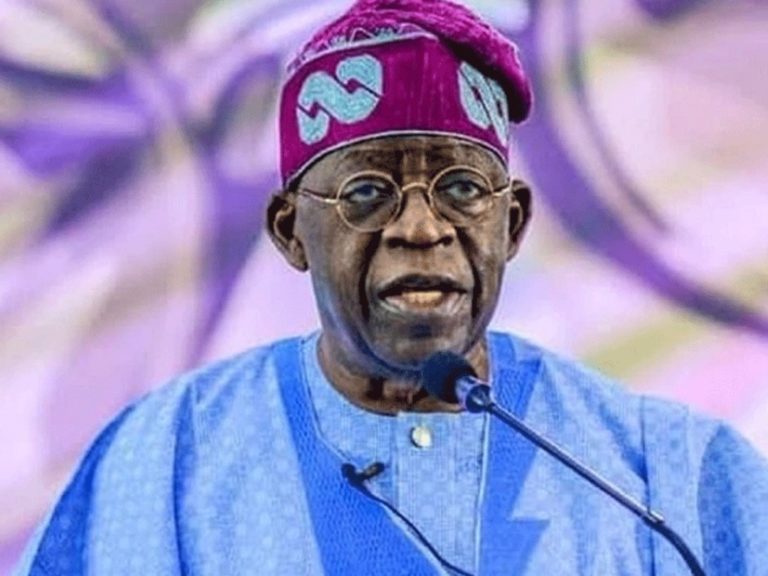
PRESIDENT Bola Tinubu has assured Nigerians that he will submit a new minimum wage bill to the National Assembly soon. 

He gave the assurance during his address commemorating the June 12 Democracy Day celebrations on Wednesday morning.

In his speech, Tinubu acknowledged the hardships faced by most Nigerians, stating that the bill would make the agreed terms part of the nation’s law for the next five years or less.

He stated that the bill would formalise the agreements from the ongoing minimum wage negotiations by organised labour, the private sector, and the state and federal governments, which have been on for several weeks.

The President’s promise came amid growing demands from workers and Nigerians for an increased minimum wage to address inflation and the rising cost of living. 

Although the government’s proposal of N62,000 represents about a 100 per cent increase from the current minimum wage of N30,000, organised labour has demanded a much higher figure, pegging its earlier N615,000 to N250,000.

The development was on the heels of governors’ opposition to the N60,000 minimum wage initially proposed by the federal government. 

Meanwhile, Tinubu highlighted that during the new minimum wage discussions, his administration didn’t clamp down on workers which he described as a tool of dictatorial government.

“In this spirit, we have negotiated in good faith and with open arms with organised labour on a new national minimum wage. We shall soon send an executive bill to the National Assembly to enshrine what has been agreed upon as part of our law for the next five years or less.

“In the face of labour’s call for a national strike, we did not seek to oppress or crack down on the workers as a dictatorial government would have done. We chose the path of cooperation over conflict.

“No one was arrested or threatened. Instead, the labour leadership was invited to break bread and negotiate toward a good-faith resolution. Reasoned discussion and principled compromise are hallmarks of democracy. These themes shall continue to animate my policies and interaction with the constituent parts of our political economy,” he said.

Speaking on hardship in the country, the President acknowledged the economic challenges the nation faces, and noted that they justified the necessity of the reforms his administration instituted.

According to him, Nigeria’s economy has been in desperate need of reform for decades.

He further noted that the economy had been unbalanced, arguing that it was built on the flawed foundation of over-reliance on oil revenues.

“The reforms we have initiated are intended to create a stronger, better foundation for future growth. There is no doubt the reforms have occasioned hardship.

“Yet, they are necessary repairs required to fix the economy over the long run so that everyone has access to economic opportunity, fair pay and compensation for his endeavour and labour.

“As we continue to reform the economy, I shall always listen to the people and will never turn my back on you.”

The ICIR reported that organised labour, consisting of Nigeria Labour Congress (NLC) and Trade Union Congress (TUC) had rejected the federal government’s N60,000 offer as minimum wage.

The rejection resulted from the failure of the federal government to agree with the union’s N615, 000 demand.

The workers embarked on a strike on Monday, June 3, and relaxed the action the following day, after the parties agreed on some terms.

IPC condemns police surveillance on its premises ahead of June 12 Democracy Day

0

THE International Press Centre (IPC) has expressed concern over the surveillance of its premises by officers of the Nigeria Police Force.

IPC decried this action as intimidation tactics against its staff, labelling it an unwarranted siege. 

The Centre, in a statement on Tuesday, June 11, signed by its Press Freedom Officer Melody Akinjiyan, reported that two plainclothes police officers approached an IPC staff member to carry out surveillance following a press conference on June 6, 2024, regarding an alleged planned June 12th anniversary activities.

The officers were said to have approached the staff at the entrance of the organisation’s office in Dideolu Estate, Ogba, Lagos, on Tuesday, June 11, around 1:40 pm.

According to the statement, the officers, who refused to state their names, admitted that their superiors sanctioned the investigation into a potential nationwide protest at IPC, a claim promptly refuted.

The Centre said the incident followed a previous visit on Friday 7, by two men identifying themselves as officials of the Lagos Neighbourhood Watch, who inquired about an alleged protest following the same press conference. 

IPC also clarified that it was not planning or organising any protests, whether on June 12 or any other day.

“The International Press Centre is a media resource institution that works in the civic and civil society space to expand the frontiers of media freedom, the safety of journalists, media independence, access to the media by marginalised groups and communities, the right to freedom of expression; and build journalistic and media capacities to enhance democracy and development,” the statement added.

“Also, as the name suggests, IPC has facilities for hosting events including meetings, roundtables, receptions, awards and press conferences by organisations and individuals who hire such facilities for usage. 

“In this regard, the facilities have been used by diverse interest groups and individuals since IPC’s establishment 25 years ago,” the statement added.

The Centre, therefore, demanded an immediate halt to the siege on its premises, noting that it undermines the civic space and constitutes another attack on press freedom and the right to free speech in Nigeria.

The ICIR reports that in recent times, journalists and media practitioners have been abducted or arrested by the police based on the Cybercrimes Act, which has been amended after the Economic Community of West African States (ECOWAS) Court ruled against it.


June 12: SSS warns Nigerians to shun planned protest

0

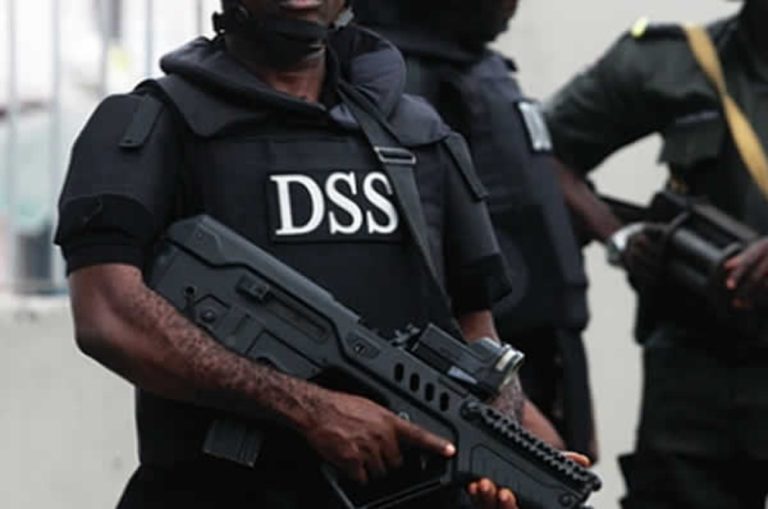
THE State Security Service (SSS) has warned Nigerians against protesting on June 12 – the Democracy Day.

The Service, in a statement via its X handle, on Tuesday, June 11, said the protests were designed with sinister objectives to coincide with the Democracy Day celebration, noting that it was an attempt to incite ‘mass disaffection.’

The ICIR reports that Section 40 of the 1999 Constitution of the Federal Republic of Nigeria (as amended), allows every person to assemble freely and associate with other persons.

“Every person shall be entitled to assemble freely and associate with other persons, and he may form or belong to any political party, trade union or any other association for the protection of his interests,” Section 40 reads.

The DSS, however, noted that while citizens may have the rights of assembly and expression, such freedoms should not be used to undermine public safety and national security.

Part of the statement read: “The determination by some non-state actors to incite mass disaffection through demonstrations that may turn violent will not be tolerated. However, it is instructive to note that violent demonstrations are at variance with the peaceful disposition of the Federal Government to amicably address all contentions including the minimum wage. 

“Citizens are, therefore, called upon to resist any persuasions to be lawless or cause disorder and anarchy in the nation. Displeased persons are rather encouraged to appropriately channel their grievances through the right channels and procedures.

“Consequently, the DSS reaffirms its unequivocal position to protect the country from inimical acts being orchestrated by disgruntled groups to cause a breakdown of law and order. It will also sustain collaboration with all relevant stakeholders, including sister security agencies, to maintain the peace as well as protect lives and property across the nation. Law-abiding citizens are enjoined to go about their businesses without fear.”

Until 2019, Nigeria celebrated Democracy Day on May 29.

Former President Muhammadu Buhari directed that the celebration be marked on June 12 in honour of Moshood Abiola, acclaimed winner of the 1993 presidential election, held on the same date.

June 12 has always been significant to Nigerians, many of whom refer to the 1993 election as the most peaceful and credible poll ever held in the country.

An estimated 14 million Nigerians showed up at polling units, defying poor weather to elect Abiola in an election they hoped would put an end to military putsches and dictatorship.

Although data from the poll showed that Abiola won the election, he was never formally declared the winner.

Abiola was also never sworn in by the military government under the administration of Ibrahim Babangida, an Army General.

While struggling to reclaim his mandate, Abiola was imprisoned by the then Head of State, Sani Abacha, another Army General who took over from Babangida. Abiola died while still in detention, in 1998.

Buhari conferred Abiola with a posthumous award of the Grand Commander of the Federal Republic (GCFR), the highest national honour exclusively reserved for presidents and former presidents

Dangote refinery kick-off raises concerns over NNPC’s price-control regime

THE Dangote Petrochemical Refinery’s scheduled resumption date for the sale of premium motor spirit (PMS) to marketers is raising further questions about the price control regime of the Nigerian National Petrol Company (NNPCL) despite deregulation of the petroleum downstream sector.

The NNPCL has been enforcing a price-control regime that does not allow major marketers to enforce a market-driven price even when prices go up at the international market.

The management of the refinery has officially shifted the date to start production of premium motor spirit (PMS), otherwise known as petrol or fuel, and the sales of the product to oil marketers to July next month against the earlier announced date, however, there are concerns about where Nigeria is headed on petrol price-pegging and product supply across the country.

The chairman of Dangote Group, Aliko Dangote, confirmed the postponement of the production and sales to newsmen on Monday, June 10.

He said, “We had a bit of delay, but PMS will start coming out by 10 to 15 July. But then we want to keep it in the tank to ensure it settles. So by the third week of July, we’ll be able to come out to take it into the market.”

This decision has again raised questions over price control enforcement by the NNPCL which is not a healthy development in a deregulated market.

Over the decades, the country’s owned NNPCL has been the sole importer of petroleum products and one of the empires fixing the price of petrol.

However with the onboarding of the Dangote refinery to sell petrol products to oil marketers, there are concerns about whether the regulator will fix petrol prices for Dangote refinery as it should be in a regulated market or liberalize it as naturally required in a deregulated environment.

Analysts have argued that it is not clear whether Nigeria wants to practice regulated and deregulated markets at the same time.

Some of them said it is also not certain whether there will be a subsidy scheme for the Dangote refinery, or whether the company will sell at whatever price it deems fit, which is the case in a price-deregulated market.

“Dangote is a businessman and would not sell below the market. You saw the Customs Comptroller-General confirmed that smuggling is back. How can smuggling not be back when we continue to sell below the market price? Are we waiting for the system to collapse on our heads before we do the right thing? I am tired because we have said these things severally. We are already in a mess, let us not pretend about it. “Former Chairman of the Major Oil Marketers Association of Nigeria, Adetunji Oyebanji told The ICIR.

Already, the Petroleum marketers have started registering with the Dangote refinery to load fuel. In a price-control regime, there are concerns about what the price the marketers who buy from Dangote would sell when NNPCL controls a larger chunk of the market.

These are the real issues with the onboarding of the Dangote refinery, the former chairman of the Society of Petroleum Engineers (Nigeria Council), Joe Nwakwue, told The ICIR.

He said as marketers position to load petrol from the Dangote refinery, it is not clear yet what the regulator will do to ensure that at whatever price sold to marketers, it will not send the wrong signal into the market.

“It may not necessarily be the prices that we have today in the market. I sense that they are going to come out at a price higher than what we are buying currently. That is something that has to be handled and managed carefully,” Nwakwue urged.

He pointed out that with diesel, it was easy for the Dangote refinery to fix the price as the market was already there, fully deregulated.

When the Dangote refinery started supplying diesel to the marketers, the price was about the same as the market price, it later dropped its price and that drove down the market price of diesel.

But with petrol that is still price regulated to some degree, the expert said it would be a different ball game.

“So, we have to see the attitude of the regulator to the onboarding of the PMS from the Dangote refinery.

“I will say that needs to be handled very carefully because it would kind of signal to the market where we are headed. Whether we are headed to a price-deregulated market or we are still stuck in a price-regulated environment.”

The ICIR reports that with the Dangote refinery onboarding of petrol sales to marketers, Nigeria will now have a dual supply channel, a move away from NNPCL’s monopoly to a market that has an alternative.

The onboarding of the Dangote refinery in lifting petrol products to the oil marketers also raises concern about filling the supply gap to avoid the recurring situation of petrol scarcity, putting the NNPCL on its toes to start considering the objectives of cutting down on fuel imports and exit in the long run.

“On the supply side, it is a good thing as we are getting one more participant in the market and that provides some supply reliability.

“The other issue around supply is that Dangote refinery is going to supply at a price that works for the company,” Nwakwue said.

With its 650,000 capacity nameplate, the Dangote refinery has enough capacity to supply local demands and still has enough for export.

“I imagine that there has to be a trade-off at some point. The NNPC should wind down the volume it has been importing and allow Dangote to fill the gap.

“It makes business sense; it will help in our exit from importation because we need to think about exit importation as an objective,” he said.

Experts have argued that the NNPCL should not exit the importation scheme until another producer or refinery comes on stream.

‘I imagine again that the NNPC refineries are coming on stream. So, how we wind down importation and onboard the products from Dangote, the products from the PortHarcourt, Warri, and Kaduna refineries is something somebody has to sit down and schedule.

“It requires some planning and careful thoughts because there are price implications to ensure that the market does not have a hiccup and that consumers do not have shortfalls or shortages at any point in time.”

Guinness sells stake amid concerns of delisting from Nigeria’s stock market

0

GUINNESS Nigeria Plc has sold over 50 per cent of its stake to Tolaram Group amid fears that the company would delist from the Nigerian stock market as it had battled poor financial performances in the last year.

The company disclosed this in a corporate disclosure to the investing public on Tuesday, June 11.

It said Guinness Nigeria would be taken over by Tolaram subject to approvals by relevant authorities.

“Following completion of this transaction, Guinness Nigeria will remain listed on the Nigerian Exchange Ltd. and, subject to regulatory approvals, Tolaram intends to launch a mandatory takeover offer in compliance with local law requirements,” the company stated.

The ICIR reported in October 2023 that Guinness Nigeria halted the sales and distribution of its projects Johnnie Walker, Singleton, Baileys and other imported brands, citing currency problems.

As of June 2023, the company reported a massive loss in foreign exchange by 20,601 per cent to N45.95 billion compared to N221.98 million in June 2022.

In its recently released financial reports for the months ended March 31, 2024, Guinness Nigeria posted a loss after tax of N61.7 billion compared to the N5.9 billion profit in the same period the previous year.

It also posted N83 billion in foreign exchange losses and a pre-tax loss of N60.5 billion that impacted the company’s financial health as the financial strain wiped out its retained earnings and pushed the company into negative equity of N4.7 billion.

Although Diageo Plc, the UK-based majority owner of Guinness Nigeria, had last year said there were no changes to its shareholding in Guinness Nigeria and that it remained a key shareholder, however, under the terms of an agreement signed on Tuesday, June 11, Tolaram will acquire Diageo’s 58.02 percent shareholding in Guinness Nigeria.

Tolaram will enter into long-term license and royalty agreements for the continued production of the Guinness brand and its locally manufactured Diageo ready-to-drink and mainstream spirits brands.

The transaction is expected to be completed during the 2025 fiscal year, subject to obtaining the requisite regulatory approvals in Nigeria.

The ICIR reports that Guinness Nigeria is currently valued at N110 billion, and with the company’s share price at N50.5, the acquisition of Diageo’s 58.02 per cent stake will cost Tolaram at least N64 billion.

Commenting, the Board Chairperson of Guinness Nigeria, Omobola Johnson, said, “This partnership brings together Tolaram’s deep expertise in manufacturing and distribution, and Diageo’s exceptional capabilities in brand building and innovation.”

Managing Director of Tolaram Africa, Haresh Aswani, said, “This strategic move will expand our significant footprint in the Nigerian market and presents an opportunity to leverage our combined strengths to foster innovation and deliver immense value to our customers and shareholders across the nation.”

Shareholders who spoke with The ICIR, however, expressed displeasure over the takeover of Guinness Nigeria, lamenting that it is the minority shareholders that would bear the brunt.

“It is very unfortunate. We are sinking in the same course every time and each time it happens, the minority shareholders are at a disadvantage.” the national president of New Dimension Shareholders, Patrick Ajudua, said.