Home Blog Page 580

Nigeria’s presidential tax committee proposes 8 taxes, other changes

THE Presidential Fiscal Policy and Tax Reforms Committee said it proposed a reduction of the multiple taxes paid to various levels of government to a single digit of eight taxes.

The tax reduction is part of the committee’s reform proposal to help lower the tax burdens placed on individuals, households, and businesses.

The committee’s chairman, Taiwo Oyedele, discussed some of the changes at a public consultation workshop with journalists, analysts, and media experts on Thursday, May 30, in Lagos on the proposed changes to the National Fiscal Policy.

He said the committee was at the stage of concluding its policy formulation framework and submission of its proposals to the National Assembly and other regulatory authorities.

On July 6, 2023, President Bola Tinubu set up the presidential fiscal and tax committee and appointed Oyedele as chairman.

The committee was inaugurated on August 8, 2023, with the mandate to reform and harmonise the country’s fiscal policy and tax system.

Image illustrating taxation.

During his presentation, Oyedele noted that since 2020, following the COVID-19 pandemic, Nigeria has been faced with unpleasant macroeconomic challenges as exemplified by the current domestic socio-economic reality.

These realities include slow economic growth, high inflation and unemployment, widespread poverty, low revenue, high public debt, declining investments, an increasing rate of emigration, and worsening standards of living.

He pointed out that one of the critical challenges facing the tax system in Nigeria was the high level of non-compliance due to low tax morale.

He described tax morale as the willingness to comply with taxes and the belief that tax evasion is wrong.

According to Oyedele, only 17 per cent of individuals and households believe evasion is wrong and punishable, stressing that the people do not trust the government and its tax officials and are dissatisfied with social services.

He also said only 31 per cent of small and large firms considered evasion as wrong and punishable and were worried about the multiple taxes, taxing agencies and the high frequency of tax audits.

In dealing with this issue, Oyedele said his committee proposed suspending multiple taxes, which place burdens on the poor and small businesses, and compensate with windfalls revenue of certain agencies.

The issues, he noted, were proposed in a draft National Fiscal Policy framework, which the committee submitted to the National Assembly.

Reduction of taxes to single-digit

Currently, the federal government has about 17 approved taxes and levies, states about 21, and local government about 17.

The committee said it proposed that the taxes be pruned to eight.

The proposed tax items are income tax, value-added tax, property tax, customs duties, excise tax, stamp duties, special levy, and harmonised levy. There is an additional social security contribution, which the committee said should not be regarded as a tax.

The key objective is to do away with nuisance taxes with very low revenue yield, high cost of collection, and ultimate burden on the poor and small businesses and focuses on high revenue-yielding taxes, that are broad-based and relatively easy to collect.

It is also to merge taxes and levies that are imposed on the same or substantially similar tax base, keep the total number of taxes across all levels of government to a single digit, and institutionalise the tax harmonisation reform to ensure sustainability.

Exemption on withholding tax

The committee also proposed an exemption of manufacturers and farmers from paying withholding tax to reduce tax burden on businesses.

According to the Federal Inland Revenue Service (FIRS), a withholding tax is an advance payment of income tax which may be used to offset or reduce tax liabilities.

The committee proposed that the focus was to exempt small businesses, manufacturers and producers, such as farmers, from withholding tax obligations, lower rates for businesses with low margins, reflect emerging issues and adopt global best practices.

The chairman noted that withholding tax is the most difficult to comply with in Nigeria due to its complexity.

“We have created an exemption for manufacturers- so if you are a manufacturer, don’t worry about withholding tax. If you provide input to manufacturers like farmers, don’t worry about withholding tax,”  Oyedele said.

Customs exchange rate at N800/$

The committee proposed pegging the Customs duties exchange rate at N800/$.

Oyedele expressed worries that frequent changes in the Customs duties rate did not favour any form of long-term planning and were detrimental to business operations.

He added that a fixed exchange rate for customs duties should last the rest of the year.

The ICIR reported at v how the government changed the exchange rate for the Customs duty at different times, especially since the beginning of this year.

Changes to tax legislation

One of the key reforms is the committee’s proposal that the Federal Inland Revenue Service (FIRS) be given a new name as the Nigeria Revenue Service, adding that states internal revenue services be branded in that line by adding the state’s name to their name.

VAT exemption and zero-rated

The committee proposed that basic consumptions such as health, education, transportation, and accommodation, which constitute 90 per cent of the spending of 80 per cent of the Nigerian population, be placed on zero-rated instead of being exempted from value-added tax (VAT).

Oyedele explained that exemption means that all the VAT a product paid to produce a commodity would not be paid back by the government which the producer invariably adds to the cost of the product unknown to consumers.

On the other hand, zero-rated means that for all the VAT a producer pays to produce a commodity, the government will pay it back to the producer, as such the VAT will not be added to the cost of the product.

With this proposal, government VAT revenue could drop by about 64 per cent, Oyedele said. “We know that realistically, nobody can approve that,” as VAT has been one of the highest-yielding revenue for the government.

He also pointed out, “Remember that 85 per cent of it goes to states. So, how do you think that state will approve of this brilliant idea?”

So for this idea to work, Oyedele explained that the committee proposed that VAT be adjusted upward.

“This was the thing that was misreported,” he added which he said some media platforms did not put into proper context.
 

Sit-at-home: We’ll be fierce in our response, Military vows after IPOB killed 5 soldiers

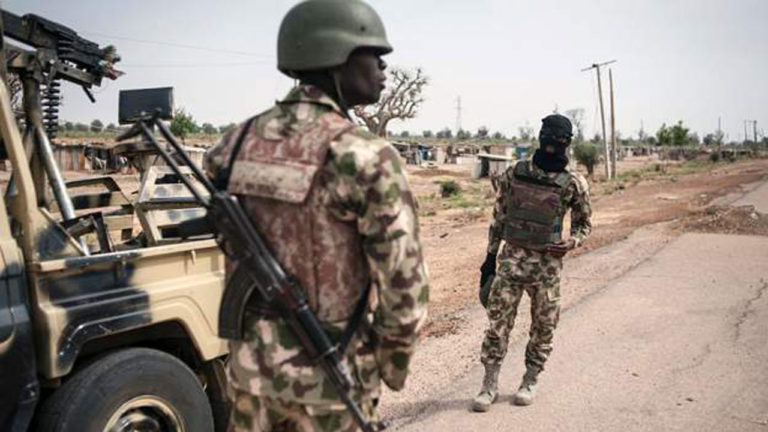
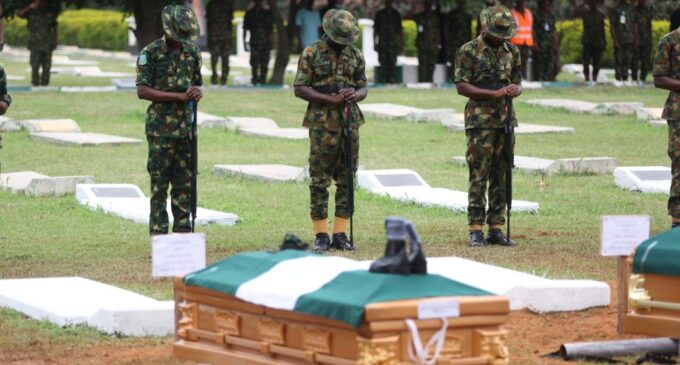
THE military has vowed to ‘fiercely’ retaliate against the attacks on its troops by members of the proscribed Indigenous People of Biafra (IPOB) in Abia State while enforcing a sit-at-home order.

In a statement on Friday, May 31, the Director, Defence Media Operations, Edward Buba, confirmed that the attack, which occurred on Thursday, May 30, led to the killing of five personnel.

According to Buba, who issued the statement on behalf of the Defence Headquarters, the deceased soldiers were personnel of the military attached to “Operation Udo Ka” who were on guard at Obikabia Junction Checkpoint in Aba metropolis.

The Defence Headquarters vowed that it was imperative that it “retaliate against this dastardly act against troops. The military would be fierce in its response. We would bring overwhelming military pressure on the group to ensure their total defeat”.

The military challenged the people of the South-East to dissociate from the group and identify anyone affiliating with them, stressing that otherwise, winning the war against the group would be difficult.

“Overall, it must be reiterated that the lifeline of the terrorist is the people and this situation is no exemption. Winning the war without the support of the people is close to impossible. The IPOB capitalised on this to perpetrate attacks on the troops. The situation leaves more to be desired,” the statement said.

The ICIR reported that no fewer than four soldiers were killed and one other seriously injured on Thursday, May 30,  when gunmen attacked a military checkpoint in Obikabia Junction in Aba, the Abia State capital.

According to the report, about 15 hoodlums launched an attack on the soldiers at about 8:00 a.m. while allegedly enforcing a sit-at-home order declared by IPOB across the South-East states.

The group had in April and early May said there would be a sit-at-home in the South-East geo-political zone on May 30. 

While describing the attack as a ‘dastardly act’ against the troops of the Nigerian Army, Buba said “The troops deployed to enforce peace in  the area and protect the citizens were massively attacked by the terrorist.”

According to the Defence Headquarters, the ‘terrorists’, who were in three tinted Prado Toyota SUVs and others from built-up areas surrounding the checkpoint, sprang a surprise attack on the checkpoint, leading to the death of the personnel. 

“The Armed Forces mourn the death of these troops as each and every soldier lost in battle is a terrible loss. Meanwhile, investigations are ongoing concerning the attack,” said the military.

On Wednesday, May 22, IPOB warned the West African Examination Council and the authorities of Nnamdi Azikiwe University, Awka to shift their respective examinations scheduled for Thursday while insisting that the day was to celebrate its fallen heroes during the civil war between 1967 and 1970.

The pro-Biafran group, in a statement signed by its spokesman, Emma Powerful, said the remembrance of Biafra day remained imperative, and no government or security agency had the authority to harass any innocent person during the event.

The group noted that the warning became necessary because the movement of persons and vehicles would not be allowed on that day, except for those on essential or emergency services such as health workers, ambulances, fire service, filling stations and hospitals.

The ICIR reports that the Nigerian Army recently lost 17 of its men in Otuama, Delta State, to communal clashes.


READ ALSO:


The deaths are in addition to losses the Army and the entire Armed Forces had suffered in different parts of the country due to insecurity that has bedevilled the nation for over a decade.

The South-East, notorious for IPOB and other criminal activities, has seen a lull in insecurity under the President Bola Tinubu-led government.

It is one of Nigeria’s six geo-political zones hounded by armed non-state actors.

Police dismiss claim that Ado Bayero will lead general Juma’at prayer in Kano

0

THE Kano State Police Command has dismissed circulating rumour that the deposed Emir of Kano, Ado Bayero, will lead the Juma’at prayer at the Kofar Kudu Central Mosque, in Kano, the state capital, today, Friday, May 31.

In a statement released by the command spokesperson, Haruna Kiyawa, this morning, the police refuted the claim, labelling it as false.

The claim, which began to spread across social media at dawn, caused a stir among residents and raised questions over who the authentic emir is.

According to a report, both emirs issued separate statements inviting residents to join the Juma’at prayers to be held in their separate palaces.

The police agreed with the emirs holding Juma’at in their separate palaces, and the police said other state security agencies would join them to provide adequate security at the palaces where both emirs would lead their prayers.

The statement quoted the commissioner of police, Mohammed Usaini Gumel, that Bayero will observe Jumma’at prayer in the mosque where he currently resides at the Nasarawa palace.

He said all necessary security arrangements had been made for Bayero to observe his Juma’at prayers in the mini palace mosque.

“The CP also assured that the police and all other state security agencies will provide adequate security at the palace where Emir Muhammadu Sanusi II is expected to observe his Jumma’at prayers.

“Members of the public are therefore advised to ignore the false reports and misinformation circulating on social media and to go about their activities without fear of molestation or intimidation assuring that the police will continue to provide the necessary security for ensuring that residents observe their Friday congressional prayers peacefully and without threats to their lives and property,” the statement added.

The ICIR reports that Bayero was deposed along with four other emirs in the state on Thursday, May 23, when the state legislators abolished the existing five emirates and revived the single emirate system in the state.

Following the dethronement, Kano State Governor Abba Yusuf reinstated Sanusi, who was dethroned under the previous administration led by Abdullahi Ganduje.

The reinstatement occurred despite a court order restricting the governor from reinstating the former emir.

However, Bayero refused to relinquish his position and returned to the city on Saturday, May 25, in the company of security officials.

Various contradictory court orders have been issued by both state and federal high courts on the legitimacy of both emirs, leaving many people confused about the position of the law.

The contradictory court orders have been condemned by the Nigerian Bar Association (NBA), which described them as shameful and damaging to the legal profession.

Chief Justice of Nigeria (CJN) Olukayode Ariwoola summoned the Chief Judge of the Federal High Court and the Chief Judge of Kano State High Court over conflicting interim injunctions regarding the emirate.

District heads and members of the Islamic sect, Tijjaniyya Shura Council, have pledged their support to Sanusi as Bayero also enjoys his wide support across the state.

To avoid chaos, the state governor, Abba Yusuf, has banned any form of protest in the state.

Trump found guilty of all 34 charges in hush money case

FORMER United States (U.S.) President Donald Trump has been found guilty of all 34 counts of falsifying business records by a New York jury.

He was convicted on all charges in his hush-money case on Thursday, May 31, making history as the first former U.S. president to be convicted of a crime.

The trial began on April 15 and resulted in his conviction. He was found guilty of falsifying business records to pay back his attorney, Michael Cohen, for a $130,000 payment made to porn star Stormy Daniels the night before the 2016 election, after her claim to have had sex with him, which could have been disastrous for his campaign at the time.


Read also:

Trump pleads not guilty, arrested on criminal charges

Court refuses live coverage of Trump’s historic arraignment

Donald Trump indicted for hush money payment to porn star


Prosecutors charged Trump with participating in a criminal conspiracy to discredit the outcome of the 2016 presidential election and with an illegal attempt to stifle criticism, which included hiding a payment of hush money to an adult film star.

While addressing reporters, Trump said the verdict was a ‘disgrace’ and ‘rigged,’ noting that the ‘real verdict’ would come from voters in the November 5 presidential election.

“This was a disgrace. This was a rigged trial by a conflicted judge who was corrupt,” he said.

The judge in charge of the case, Juan Merchan has set a sentencing hearing for July 11 right before the Republican National Convention in Milwaukee, where Trump is due to receive the party’s formal nomination to face Democratic President Joe Biden in the election.

The sentencing however does not bar Trump from continuing his White House run.

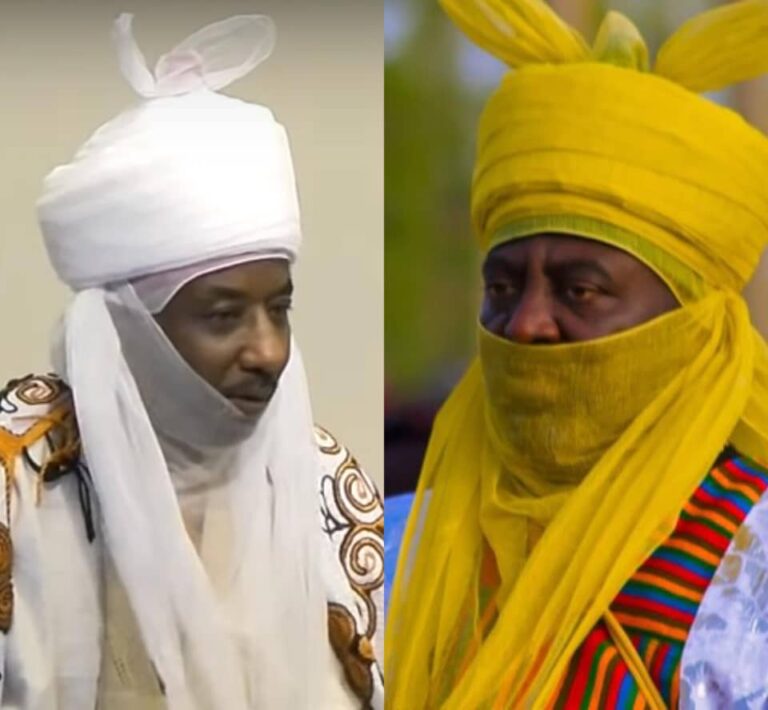
Kano emirship tussle: Sanusi, Bayero plan to lead Jumm’at separately

0

REINSTATED Emir of Kano, Lamido Sanusi, and his recently deposed counterpart, Ado Bayero, are set to hold Jumm’at separately in their different mosques on Friday, May 31.

According to a report, both emirs issued separate statements inviting residents to join the Jumm’at prayers to be held in their separate palaces.

The emirs have held separate courts since last week when Bayero was deposed and Sanusi reinstated.

Bayero was deposed along with four other emirs in the state on Thursday, May 23, when the state legislators abolished the existing five emirates and revived the single emirate system in the state.

Following the dethronement, Kano State Governor Abba Yusuf reinstated Sanusi, who was dethroned under the previous administration led by Abdullahi Ganduje.

The reinstatement occurred despite a court order restricting the governor from reinstating the former emir.

However, Bayero refused to relinquish his position and returned to the city on Saturday, May 25, in the company of security officials.

Various contradictory court orders have been issued by both state and federal high courts on the legitimacy of both emirs, leaving many people confused about the position of the law.

The contradictory court orders have been condemned by the Nigerian Bar Association (NBA), which described them as shameful and damaging to the legal profession.

Chief Justice of Nigeria (CJN) Olukayode Ariwoola summoned the Chief Judge of the Federal High Court and the Chief Judge of Kano State High Court over conflicting interim injunctions regarding the emirate.

District heads and members of the Islamic sect, Tijjaniyya Shura Council, have pledged their support to Sanusi as Bayero also enjoys his wide support across the state.

To avoid chaos, the state governor, Abba Yusuf, has banned any form of protest in the state.

The ICIR reports that it remains unclear who will ultimately win the tussle for the Kano emir between Sanusi and Bayero as the battle for the throne rages on.

Nigeria ranks low on public participation in budget process, transparency – report

A survey by the International Budget Partnership (IBP) on the public budget process has shown that Nigeria scored 19 out of 100 in meaningful public participation. 

Also, on budget transparency, the country ranked 92 out of 125 countries surveyed, consequently scoring 31 out of 100. 

The Open Budget Survey (OBS) by IBP says it uses a comparative instrument to assess public access to central government budget information, formal opportunities for the public to participate in the national budget process, and the role of budget oversight institutions, such as legislatures and national audit offices, in the budget process. 

The data showed that in the last six years, Nigeria has not met the benchmark score of 61 on budget transparency. Other African countries like Sierra Leone, Liberia, Ghana, and Gambia were ranked above Nigeria. 

However, while Nigeria ranked low on budget participation and transparency, the country scored 61 out of 100 in budget oversight.

According to the survey, the legislature and audit institutions in Nigeria provide adequate oversight during the budget processes.

Index Nigeria’s score Benchmark
Transparency 31 61
Public Participation 19 61
Legislative Oversight 56 61
Audit Oversight 72 61

Table showing Nigeria’s average score in OBS 2023

The IBP recommended that Nigeria expand mechanisms during budget implementation to engage any civil society organisation or member of the public who wishes to participate and actively engage with vulnerable and underrepresented communities, directly or through civil society organisations representing them.

It also said that the National Assembly must allow the public or civil society organisations to testify during its hearings on the budget proposal and audit. 

On transparency, IBP said Nigeria should publish the in-year reports, mid-year review and audit report online promptly and improve the comprehensiveness of the citizens’ budget.

Global Outlook

With 125 countries surveyed, the global score for transparency across the countries was 45 out of 100. Also, the public participation score was 15 with a legislative and audit oversight score of 45 and 62. 

This means the surveyed counties, generally, ranked below the average benchmark on transparency and public participation in budget processes. 

When examined by countries ranking, South Korea, New Zealand, the United Kingdom and the Dominican Republic had the highest score in public budget participation. On budget transparency, Georgia, New Zealand, Sweden and South Africa had the highest scores.

Year Transparency Public Participation Legislative Oversight Audit Oversight
2019 45 14 49 63
2021 46 14 47 63
2023 45 15 46 62

Table showing the global average score changes from OBS 2019 to OBS 2023

The report noted that since 2008, global transparency scores have increased by more than 20 per cent, and in this latest round, there was a one-point increase in the average transparency score for the same 120 countries assessed in both OBS 2021 and OBS 2023. 

The ICIR reported several misappropriations contained in the 2020 Auditor General’s report published in January.

Also, several reports on The ICIR Open Contracting Reporting Project detail the mismanagement of public funds in executing projects.

3 months after ICIR funded-report, work commences on abandoned Pai road in Abuja

0

By Adeyemi ADEKUNLE

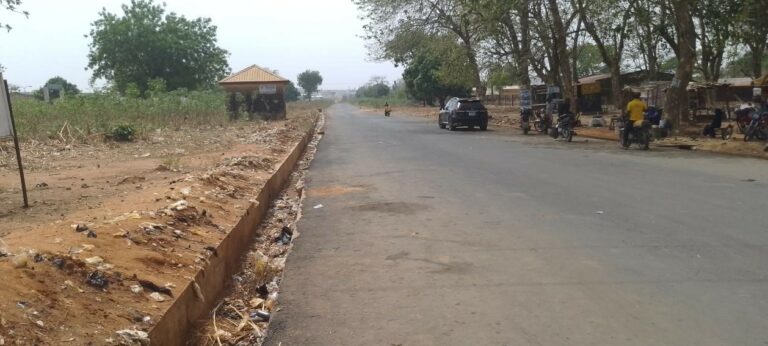
THREE months after a report commissioned by the ICIR under the Macarthur Foundation-funded Open Contracting Reporting Project (OCRP), a road project which was awarded to connect the Pai community to other communities like Leleye Bassa, and Leleye Gwari to Damakusa, Kwali area council of Abuja, Nigeria’s capital and was abandoned by the Contractor has commenced.

Read the investigation here.

Entrance to Pai Community where construction began. Photo: Adeyemi Adekunle

The Investigation which was published on December last year shows how the affected communities waited for decades, hoping that Pai Road and the adjoining communities would finally receive the attention they deserved by getting a befitting road to boost their arable economy.

However, it wasn’t until 2023, amid Nigeria’s general election preparations, that their hopes seemed to materialise. The road construction awarded to KIS-MATE INTEGRATED RESOURCES LTD, a Jos-based company, was left unattended to after being graded, an action that dashed the hope of the people. Leaving them to face  numerous challenges such as access to healthcare services, transportation issues related to the movement of farm produce, flooding, and even death.

The report highlighted the severity of the situation and the need for urgent action to alleviate the suffering of the affected communities. The findings of the report underscored the importance of improving infrastructure and services in these areas.

 Signpost of The Road Construction at the Entrance to Pai Community
Signpost of The Road Construction at the Entrance to Pai Community

The road project was facilitated by former Federal Capital Territory (FCT) Senator, Philip Aduda and Budgeted for 2020, which raised eyebrows due to its handling by the Upper Niger River Basin Development Authority and its award to Kis-Mate Integrated Resources Limited.

The purpose of this project was to construct roads and drainages, with a budget allocation of ₦400 million but financial records reveal a disbursement of only ₦72,089,802.33 in December 2022.

 Part of the road project yet untouched
Part of the road project yet untouched

As of the time of the return visit to the communities, there is no financial record to show if the contractor had been fully paid before returning to the site of the road project.

However, after returning to site the contractor received  ₦73.2 million in may bringing the amount paid based on publicly available records to  amount ₦145.3 million.

To get the views of Sarkin Pai, Abubakar Sanni Pai, regarding the contractor’s return to the road project site, this reporter paid a visit to his palace. However, upon arrival, he was informed by the palace officials that the monarch was out of town and therefore unavailable for comment at that time.

On a visit to other parts of the community, it was observed that the residents were pleased with the commencement of the road project.  A civil servant and farmer in the community for 11 years, Kareem Danladi, said he believes the road project will make things easier for them by allowing them to transport their farm produce to the market without the difficulties caused by bad roads.

A petty trader at Dagiri, Mary Omaha, expressed her frustration at the delayed progress of road construction in the area, ”I cannot understand why the contractor had just returned to the site; over a year after the road was graded, people had spent a significant portion of their income on medical treatments by accessing the road”.

In a bid to get the reaction on why the contractor decided to move back to site a mail was sent to the contracting agency, Upper Niger River Basin Development Authority, since no medium to reach out to the contractor as at the time of publishing this report no words have been received from the contracting agency.

This reporter revisited Jos, Plateau State, for the second time to gather crucial information about Kis-mate integrated resources limited. The first time was during the investigation, although very little about the company was found.

The screenshot of recent payment made to Kis-Mate Integrated Resources Ltd

On May 10, 2024, a substantial sum of ₦73,233,977.79 was allocated to Kis-Mate Integrated Resources for the development of Pai and neighboring communities in Kwali Area Council. This brought the total amount released for the project to ₦145,323,708.12.

Subsequently, on May 15, 2024, this reporter made a sixth visit to Pai and adjoining communities to assess the progress following the fund release. To the dismay of this reporter, no tangible improvements were observed at the project site aside what has been done in March 2024. There was a conspicuous absence of any signs of work or machinery, raising concerns about the utilisation of the newly released funds.

Sit-at-home: gunmen kill soldiers in Abia, burn patrol vehicle

NO fewer than four soldiers were killed on Thursday, May 30,  when gunmen attacked a military checkpoint in Obikabia Junction in Aba, Abia state, according to a Premium Times report.

The report said about 15 hoodlums launched an attack on the soldiers at about 8:00 a.m. while allegedly enforcing a sit-at-home order declared by the proscribed Indigenous People of Biafra (IPOB) across the South-East states.

The ICIR reports that the group had in April and early May said there would be a sit-at-home in the South-East geo-political zone on May 30.  

On Wednesday, May 22, the IPOB warned the West African Examination Council and the authorities of Nnamdi Azikiwe University, Awka to shift their respective examinations scheduled for Thursday while insisting that the day was to celebrate its fallen heroes during the civil war between 1967 and 1970.

The pro-Biafran group, in a statement signed by its spokesman, Emma Powerful, said the remembrance of Biafra day remained imperative, and no government or security agency had the authority to harass any innocent person during the event.

The group noted that the warning became necessary because the movement of persons and vehicles would not be allowed on that day, except for those on essential or emergency services such as health workers, ambulances, fire service, filling stations and hospitals.

While enforcing the sit-at-home, a witness who identified himself simply as Marvelous told Premium Times that some masked assailants stormed the junction and opened fire on the soldiers.

Marvelous added that four soldiers were killed during the attack while one other was seriously injured.

“Four of the soldiers were killed. The other soldier sustained a serious gunshot injury. I am not sure he will survive it,” Marvelous said in Pidgin English language.

“The gunmen came in a black Highlander (SUV). Even some civilians sustained gunshot injuries,” he added.

In another viral video seen by The ICIR, some armed men set a military vehicle on fire, and gunshots could be heard. 

In several other videos posted, The ICIR observed that many streets, shops and roads were deserted in the region.

Meanwhile, the Nigerian Army hasn’t officially commented on the reported attacks on its personnel by the gunmen. 

Likewise, when The ICIR called the Director of Defence Information at the Defence Headquarters, Tukur Gusau, his line was unreachable, and SMS messages sent to him were not replied to as of the time of filing this report.

The ICIR reports that the Nigerian Army recently lost 17 of its men in Otuama, Delta State, to communal clashes.

The deaths are in addition to losses the Army had suffered in different parts of the country due to insecurity that has bedevilled the nation for over a decade.

The South-East, notorious for IPOB and other criminal activities, has seen a lull in insecurity under the President Bola Tinubu-led government.

It is one of Nigeria’s six geo-political zones hounded by armed non-state actors.


Amnesty International condemns police detention of ICIR staff members

0

HUMAN rights organisation, Amnesty International, has condemned the detention of the Executive Director at The International Centre for Investigative Reporting (The ICIR), Dayo Aiyetan, and one of the organisation’s reporters, Nurudeen Akewushola, by the Nigeria Police Force (NPF).

This was contained in a statement by the organisation via its official X handle on Thursday, May 30.

The statement is in reaction to a nine-hour detention of both ICIR staff members on Tuesday, May 28, by officials of the Nigeria Police Force National Cybercrime Centre (NPF-NCCC).

“Amnesty International condemns the harassment and intimidation of the Executive Director of The International Centre for Investigative (ICIR), Dayo Aiyetan, @dayoaiyetan and reporter Nurudeen Akewushola. They were held by the Nigeria Police Force National Cybercrime Centre.

“In a brazen violation of due process for hours, lawyers and family could not reach them. The Nigerian authorities must end this pattern of punishing journalists who are dedicated to ending pervasive culture of impunity that allows corrupt practices to go unpunished,” the statement noted.

Aiyetan and Akewushola had honoured an invitation by the Centre on Tuesday and could not be reached until they were released nine hours later.

The ICIR in a statement released Tuesday night had raised concerns over the continued detention, noting that Aiyetan and Akewushola accompanied by the company’s lawyers had been unreachable since 12 pm when they arrived at the centre in Abuja.

The organisation said it gathered that there was likely a sinister move by the police to keep both Aiyetan and Akewushola till the following day or beyond.

In its invitation, the Police claimed it was probing a case of cyberstalking and defamation of character.

The invitation was in connection to an investigative report published by The ICIR titled, “Two former IGPs, senior Police officers accused of bribery in shady land sale of designated Police Barracks.”

Summary of investigation that exposed two former IGPs, other police chiefs

The report revealed that two former Inspectors-General of Police, Ibrahim Idris and Solomon Arase, currently the chairman of the Police Service Commission (PSC), were accused of receiving N200 million each and a house allocation as incentives for awarding an estate development contract to Corpran International Limited for land originally meant to be used as police barracks.

A former staff member of Corpran International Limited Kalu O. Kalu and a lawyer Francis Mgboh accused both former IGPs of unlawfully approving the contract for the development of the land, which belongs to the Police, without adequate scrutiny, after receiving the bribe.

The allegations currently form a part of ongoing litigation at the Federal High Court in Abuja, and documents obtained by The ICIR, including court affidavits, showed that many other top police officials were also bribed to facilitate the approval of the contract.

Arase, abusing the office he currently occupies, had released a statement through the PSC spokesperson Ikechukwu Ani on Friday, May 17, 2024, saying he had sued three ICIR staff members, including the reporter Akewushola, Executive Director of The ICIR, Dayo Aiyetan, and The ICIR Editor, Victoria Bamas, over the report.

Presidential tax reform committee proposes N800/$ as Customs duty rate

THE presidential committee on fiscal policy and tax reforms said it had asked the federal government to adopt an exchange rate of N800 per dollar for Customs import duty.

The chairman of the committee, Taiwo Oyedele, stated this on Thursday, May 30, while engaging journalists on the activities of the tax panel in Lagos.

While presenting some recommendations of the committee, the tax expert expressed concern over the import duty rate which constantly changes due to the volatility of the foreign exchange (FX) market.

Oyedele said this did not allow for adequate planning by businesses with Nigeria being largely an import-dependent country.

“When we did the budget, we said naira to the dollar would be N800, now it is 1,000 something. People need to plan,” he said.

”So now, we’re saying dear government, can you please sign an order that says for the purpose of paying import duty, we shall use N800… for the rest of the year till December? So, we have proposed N800,” he disclosed.

The ICIR has severally reported the incessant spike in the import duty rate by the Nigerian Customs Service (NCS).

This development, some economy watchers say is a major trigger to Nigeria’s rising inflation currently at 33.69 per cent.

On May 27, the Customs adjusted the FX rate for tariffs and duties to N1,480 per dollar.

Customs typically adopt FX rates recommended by the Central Bank of Nigeria (CBN) for import duties based on trading activities in the official FX market.

A board member of the Nigeria Customs Service (NCS), Muda Yusuf, and the Director-General of the Centre for the Promotion of Private Enterprise (CPPE), said the Customs should set the Customs import duty rate at N1000/$ to cushion the effect of the high cost of imported goods on Nigerians amid rising inflation.

“We should have a fixed rate for our Customs import duty. It should be a fixed rate of a maximum of N1,000 and let it remain like that for the next six months or a year,” he suggested.