
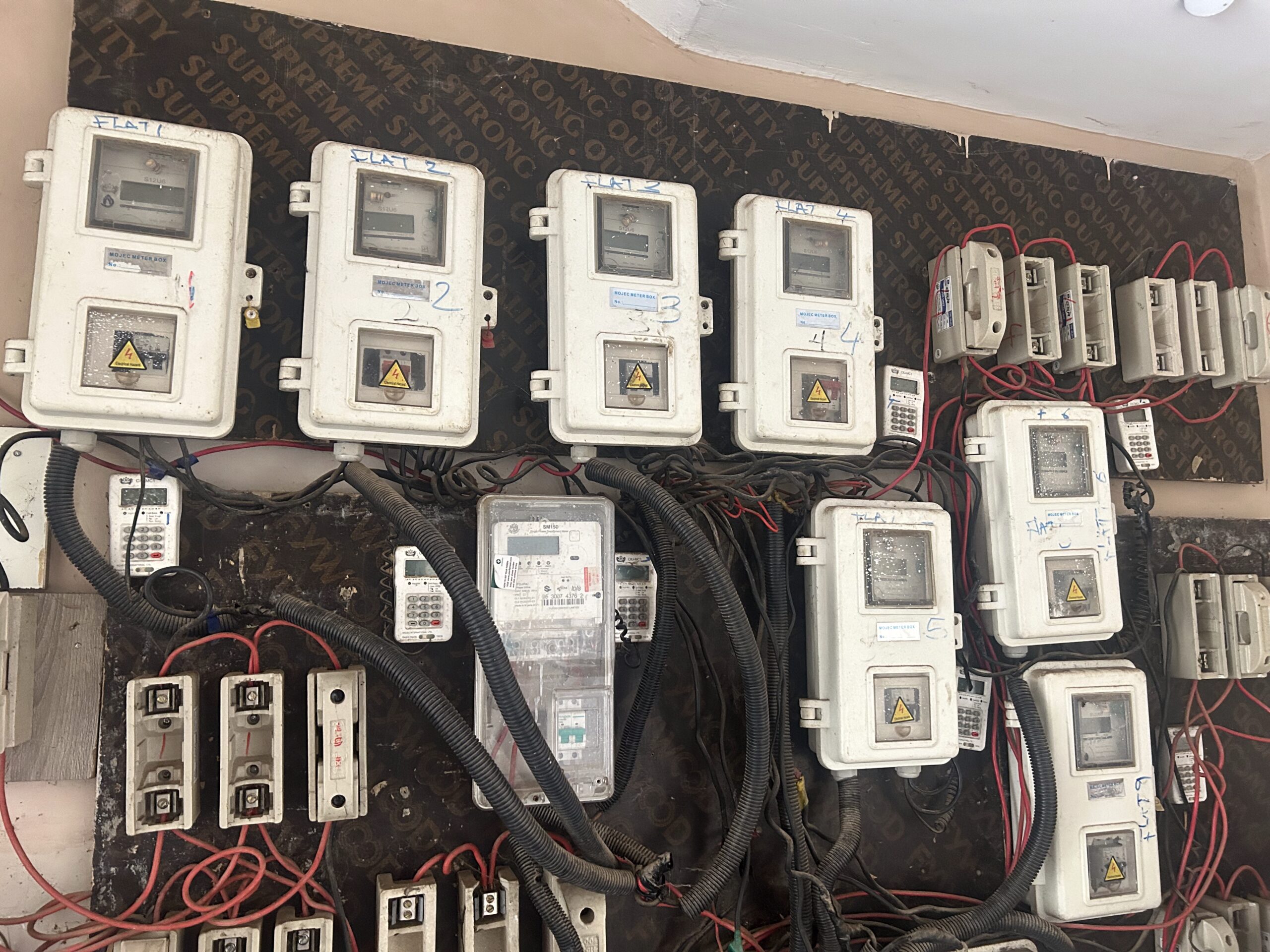
The Electricity Act 2023 unbundled Nigeria’s power sector and empowered states to invest in generation and set up holding companies. In Anambra, First Power Electricity Limited has failed to meet basic consumer needs. Many still face estimated billing; businesses and communities bear high costs, and consumer satisfaction remains low despite reform promises. In this report, the ICIR spotlighted customer concerns as the electricity market gradually evolves.
On Wednesday, June 28, 2025, Onyinye Ezechima, a hairdresser in Onitsha, was plaiting a regular customer’s hair when First Power Electricity Company Limited, a subsidiary of the Enugu Electricity Distribution Company (EEDC), flashed its lights.
Ezechima heaved a sigh. “The month is coming to an end; they just brought the light so that they can exploit us with estimated billing again,” she said, and recounted that despite the Nigeria Electricity Regulatory Commission’s (NERC) capping order, the bills were always estimated and had eaten into the profits of her business.

On average, Ezechima, who also does hair washing and drying, clippers, nails and makeup, uses electric equipment that consumes an average of 280 kWh/month.
“My business is adversely affected by paying for fuel to do some of my braiding,” she said, adding that First Power Distribution Company, which serves Anambra, provides electricity towards the end of the month to justify their billing.
Her shop, located along Old Market Road in Onitsha North, uses the EEDC Band B feeder, but she is currently unmetered and on estimated billing at a Band B rate of N209.5/kWh=N58,660/month if she gets 16- 20 hrs. However, findings show that EEDC provides electricity sparingly, either at night when businesses are closed or towards the end of the month.
Conversely, the NERC cap for (C2) commercial unmetered is N7,880/month, but Ezechima’s monthly estimated bill averages N42,000-N55,000, far more than the stipulated NERC capping order.
The hairdresser’s story is not unique among small-scale businesses across Anambra State. From residents to hoteliers, vulcanizers and welders, allegations of exploitative estimated billing have become a huge concern.
In Nnewi, for instance, findings revealed that most businesses struggle with arbitrary billing and are switching to alternative power sources such as solar and generators.
“If my generator breaks down, my business will struggle because we don’t have constant power and the bills always stretch my earnings. They’re arbitrary and don’t reflect the amount consumed,” Ozoegene Nwali, a vulcaniser in Nnewi, told our reporter.
Findings also showed that many hoteliers in the Onitsha, Nnewi, Ekwulobia axis are currently in court with First Power over estimated billing, claiming that the power company violated the NERC’s capping order.
A senior management official of De Viva Hotels in Akwa told the ICIR that they have had a series of issues with the EEDC over estimated billing. “As I speak to you, we have taken the matter to court to seek justice. We cannot afford to pay N6 million monthly. This is eating deep into our cost of doing business,” the hotel official, who asked not to be identified, said.
#VIDEO: Paying for darkness. Paying for fuel. Paying with lost income.
Across Anambra, residents and small business owners say they are being billed for electricity they barely receive.
From hairdressers and vulcanisers to hotels and entire communities, the impact of estimated… pic.twitter.com/IgRnLxUZvu
— The ICIR (@TheICIR) September 24, 2026
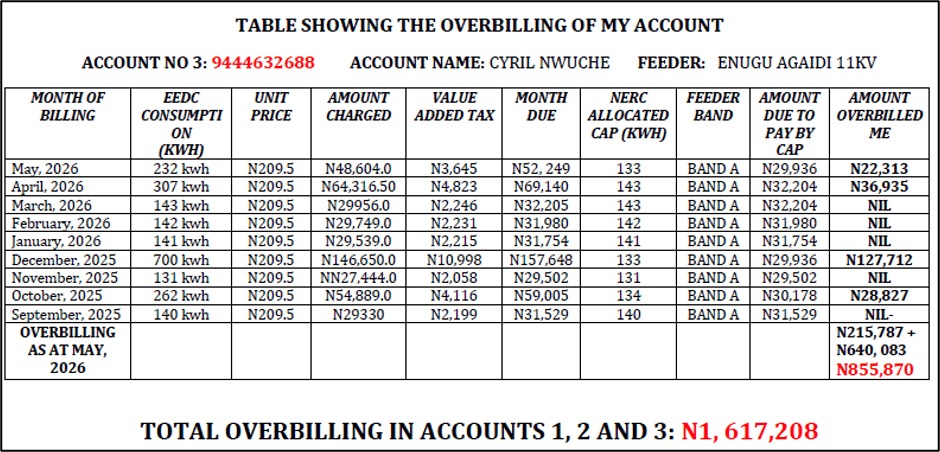
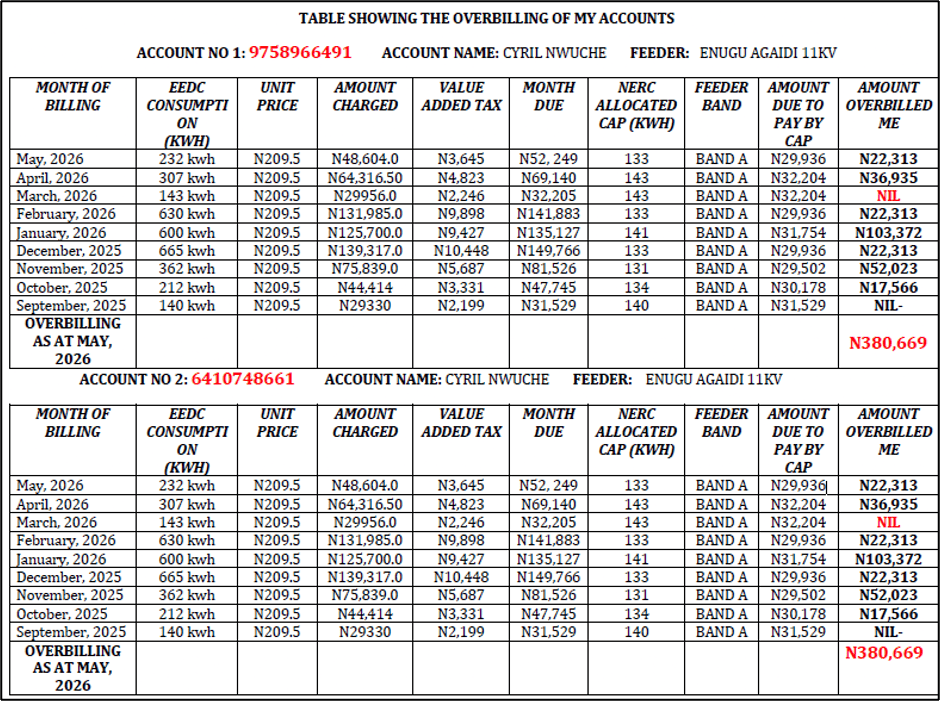
What does the NERC capping order say
The Order No. NERC/197/2020 on Capping of Estimated Bills is NERC’s rule to stop “crazy billing” for Nigerians without meters.
NERC introduced the order on capping of estimated bills to protect unmetered electricity consumers from overbilling. The capping methodology sets monthly energy caps for each distribution feeder, aligning estimated bills for unmetered customers with the actual consumption of metered customers in the same area. This ensures that consumers are not charged beyond a reasonable amount, even when meters are unavailable.
NERC issued the order to protect unmetered customers from arbitrary billing, create parity with metered customers on the same feeder, and force DisCos to provide and install meters faster. Notably, the capping order is meant to freeze estimated bills at a fair cap until meters are installed.
In 2025, the ICIR reported that NERC had placed over N628 million in fines on eight electricity distribution companies (DisCos) for failing to comply with monthly energy caps for unmetered customers between July and September 2024.
The regulatory commission said the affected DisCos include Abuja, Eko, Enugu, Ikeja, Jos, Kaduna, Kano, and Yola and were required to issue credit adjustments to affected customers by May 15, 2025.
It stated that it acted under section 34(1)(d) of the Electricity Act 2023, which underscores its unwavering commitment to regulatory compliance and consumer protection within the Nigerian electricity supply industry.
“A review of Discos’ billing of unmetered customers for July-September 2024 revealed non-compliance with the monthly energy caps issued by the Commission. The non-compliant DisCos have been sanctioned to pay fines amounting to N628,031,583.94, which is equivalent to 5% of the naira value of the gross overbilling for the period under review,” the Commission stated.
NERC also mandated the DisCos to issue commensurate credit adjustments to all customers affected by the overbilling by 15th May 2025 – the end of the April 2025 billing cycle.
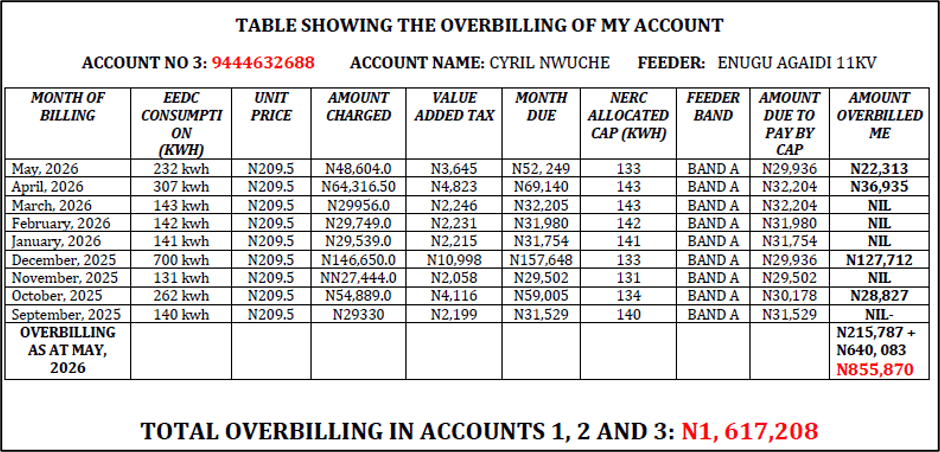
Furthermore, in an earlier report, the Director-General of Anambra Electricity Consumer Rights Initiative, Okechukwu Ferdinand Cyril-Nwuche, told the ICIR that power consumers were not only battling irregular power supply but were forced to make ‘extra payment’ of power costs beyond what the NERC capping order stipulated.
“Before I started my advocacy work, I had a firsthand experience of the Enugu Electricity Distribution Company’s official disconnecting my power and still bringing electricity bills despite my lights being disconnected. I had to raise the issue with the relevant authorities,” he said.
Continuing, he said, “In my advocacy, I have informed power consumers on how to calculate and know what cost they should pay once they’re on estimated billing, looking at the feeder that supplies each transformer, and from the NERC download of the monthly energy cap, and what each DisCo is expected to charge.”
He said research after engagement with NERC showed that many DisCos failed to obey NERC’s ‘capping methodology’ despite sanctions and fines for violations.
Despite sanctions, estimated billing continues
Checks by the ICIR revealed that EEDC has been sanctioned multiple times by the electricity regulator, NERC; however, the overbilling continues.
In the third quarter of 2024, EEDC was among the eight DisCos fined N638 million for overbilling customers through estimated billing.
The Order directed EEDC, among the eight DisCos, to issue commensurate credit adjustments to all overbilled unmetered customers by May 15, 2025.
In September 2025, NERC’s supplementary order sanctioned EEDC for overcharging customers from January to September 2023. The company was fined N310 million.
Earlier, on July 9, 2024, NERC directed EEDC to refund N11.7billion for a 2023 overbilling. According to the commission, EEDC overbilled 1,011,492 customers from January to September 2023.
Notably, within the same period, NERC ordered EEDC to refund N11.8 billion to South-East customers via account credits in the February 2024 billing cycle.
Community threatens exit from national grid
During our investigation in Uga, a town in Aguata Local Government Area of Anambra State, our reporter observed residents complaining about arbitrary charges and poor power supply.
Findings from community leaders and village representatives showed that power supply was not regular. In many cases, electricity was restored at night, when small-scale businesses could not make use of it.
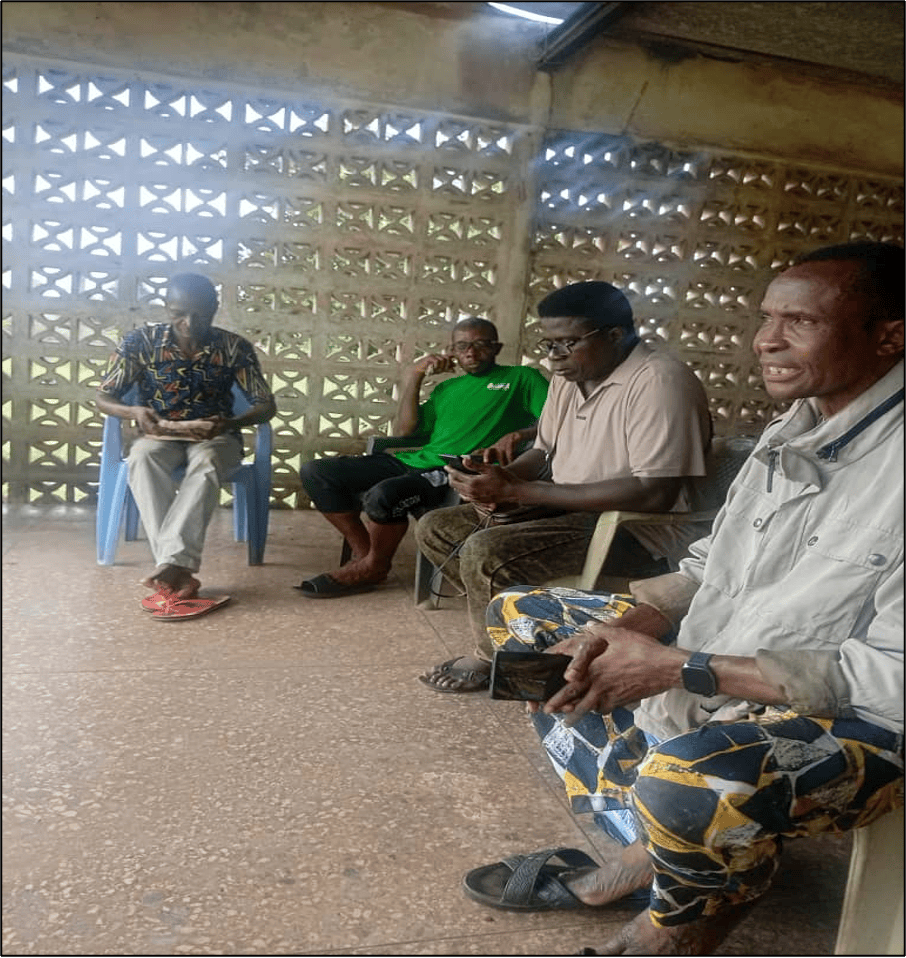
“We have been having big challenges from the Agulu feeder that comes from Nibo town to Uga town. Our load allocation is 1.7 megawatts, from my findings. Before the supply passes Ekwuolobia and reaches our town, it trips from the feeder. This is what we have been passing through. At this moment I am speaking to you, we don’t have light. Everyone is tired of the situation as it’s frustrating,” an electricity volunteer from the community, John Paul Ifediba, told the ICIR.
He explained that the town gets electricity mostly between 1 and 4 am, when vulcanisers and other small-scale businesses could not use the electricity.
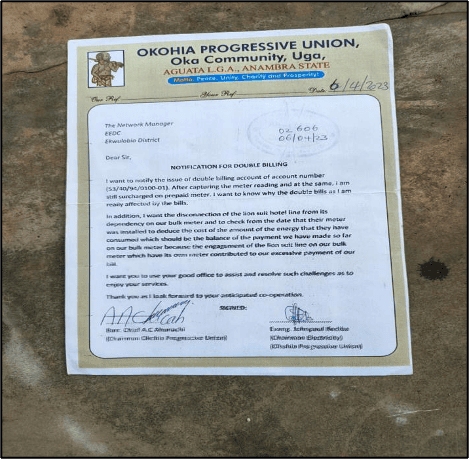

During an interactive session with the town representative, the ICIR noticed the frustration of various village representatives, with one of them saying, “Our Uga town cannot be paying for darkness. We may opt to disconnect from the national grid.”
Onyeka Ezenwa, a councillor of Uga Ward 1, expressed his frustration at the interactive session. “If the Presidential Villa has sorted out an alternative source of power through solar, what it means is that there’s no hope for communities and rural economy like ours. The national grid cannot give us power despite the unbundling of the power sector,” he said.
Consumer seeks legal action over arbitrary charges
An electricity consumer and rights activist, Osita Obi, who resides in Awka, took EEDC to court over alleged poor power supply and outages in Anambra. He told our reporter that he will keep advocating for efficient service from power service providers.

“I will organise more protests because the energy we are talking about is still not there, and we must keep pushing through protests. I must keep organising more protests until the extortion of the citizens stops and service provision improves,” he said.
He urged residents and electricity consumers not to be docile but to demand efficient service from service providers.
However, EEDC sued Obi in 2019 over his alleged involvement in protests against electricity distribution services in the state. The company demanded N100 million in damages.
But on June 19, 2026, Justice Bala Khalifa-Mohammed Usman of the Federal High Court in Awka ruled that the case could not be sustained due to the applicant’s failure to prosecute it diligently.
Iyiowa residents lament paying for darkness
An electricity consumer, Chike Ezenwa, in Iyiowa Odekpe, in Onitsha, told the ICIR that there is always poor response to transformer issues and power circuit cuts.
He further said that electricity supply to Band A customers is six hours, as against NERC’s 20-hour band classification.
“The problem we have with power supply in Ogbaru 11kva line is negligence of duty when there is a break in the light. For instance, in cases of fallen poles or thunder-related destruction of electricity infrastructure, you hardly see the EEDC intervene until individuals start raising voices; the recent one took them about 11 days before restoring the light,” he said.
Ezenwa said many times, “We lack power supply as if we are not humans; there is nothing to write home about anyway, but no one to complain to.”
“They added us to Band A with a high tariff and told us they would give us light 20 hours a day, but we hardly receive light 6-8 hours a day…We pleaded with the EEDC to return us to the previous line instead of Band A, as they couldn’t fulfil their promise by giving us 20-22 hours daily,” he said.
“Plight of average electricity consumer in Anambra”
Journalist Chinyere Omiko cited poor awareness of NERC laws and capping by residents as a factor driving the arbitrary billing. Omiko stressed the need for the distribution company to increase sensitisation and collaboration with power consumers in the state.
“For the past three years, I have gone out to the field on my own to meet with concerned consumers who happened to be victims of this anomaly. I got to understand that many EEDC consumers were not aware of the NERC capping Order for calculating their estimated billing,” she said.

Aside from poor awareness, the journalist said she found that several EEDC consumers in Anambra State had been intimidated and victimised.
“At the end of every month, the fear of EEDC disconnecting them without prior notice and without any recourse to electricity law was the bane of their challenges. With the unbundling of the sector, First Power came in as a subsidiary of the EEDC, but things got worse,” she added.
She said at a NERC forum meeting for electricity consumers in Awka in August 2025, NERC officials from Abuja had instructed EEDC staff to ensure that all consumer complaints were properly addressed. “Here and there, about 100 cases were addressed,” she said, adding that, “A Church brought a complaint to me about a prepaid meter; the EEDC placed them on two months’ estimated billing before giving them the meters. However, there were discrepancies in the estimated billing because the arbitrary charges did not follow NERC capping. I raised the issue at the NERC forum, and the NERC officials handled it perfectly.”
Reiterating the effectiveness of the NERC forum in Awka, the journalist said consumers from Uga along the Iyiowa Odekpe near Onitsha in Anambra confirmed they all got their meters because of NERC’s interventions.
She noted, however, that many residents are still clamouring for prepaid meters, and First Power is still grappling with the metering gap and concerns of discrepancies in its estimated billing.
First Power’s efforts in solving the issues of estimated billing
Recently, First Power management announced it was upgrading its digital platform app to address its estimated billing challenges with consumers.
The app is expected to give electricity consumers the power to calculate their estimated billing according to the capping.
Checks by the ICIR revealed that awareness is still low, as many consumers who spoke to this reporter said they’re not aware of the app.
Omiko, the journalist, also emphasised the need to raise awareness of the app so that consumers can calculate their electricity consumption.
What consumers want
Further checks by this reporter revealed that the key problem of the average electricity consumer in Anambra State is the pile-up of estimated bills.
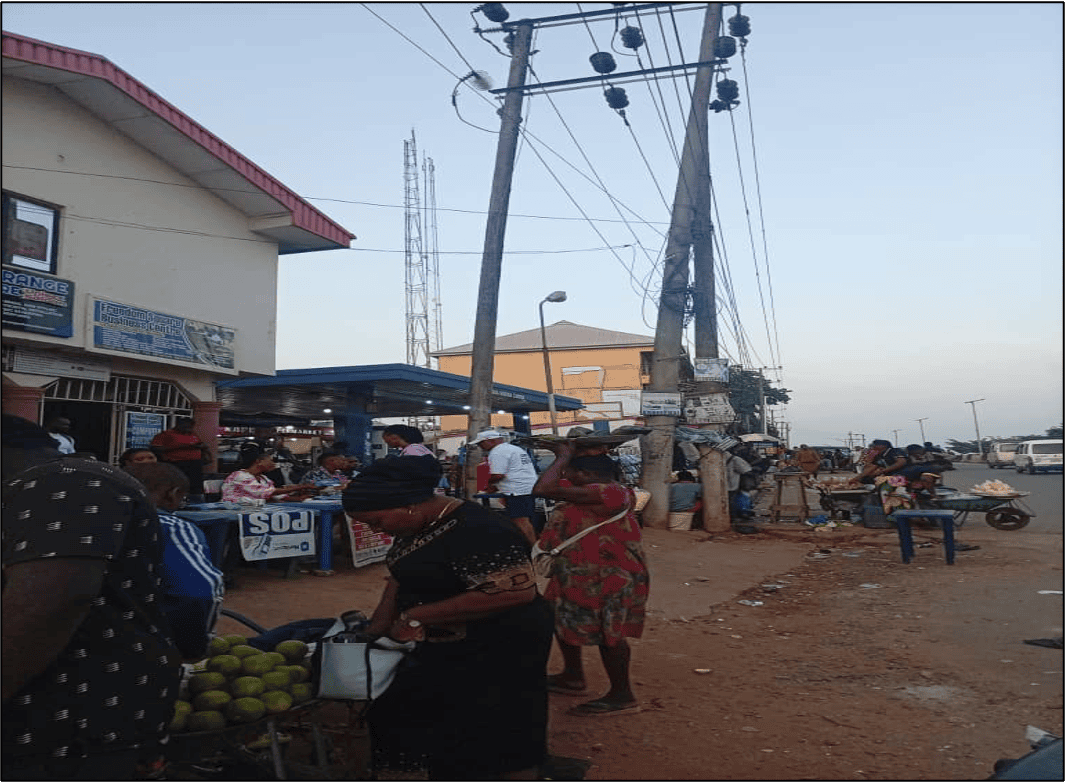
“I met a customer with a discrepancy in estimated billing. They didn’t follow the NERC capping Order for more than five years and have accrued to about N1.8 million-a residential consumer,” Omiko further said.
Many consumers told this reporter that they want First Power to solve the issue of estimated billing as soon as possible. They also queried why complaints through various stakeholders’ engagement are not promptly addressed.
The ICIR reached out to the Managing Director of First Power, Okechukwu Okafor, but did not get a response.
Speaking on concerns and key problems confronting the power sector value chains, the Head of Communications at NERC, Hafsat Mustafa, told the ICIR that the unbundling of the electricity sector has given states huge responsibility for growing the sector by attracting investments and taking part in regulatory responsibilities.
“The electricity sector has been unbundled, and we expect states to take more responsible roles in growing the electricity sector. We are aware that there are shortfalls and gaps in this unbundling; that’s why continuous stakeholder engagement is key in solving these challenges for consumer satisfaction,” Mustafa said.

Harrison Edeh is a journalist with the International Centre for Investigative Reporting, always determined to drive advocacy for good governance through holding public officials and businesses accountable.