

BETWEEN December 1, 2024, and January 28, 2025, the Zion City community in Degema Local Government Area (LGA) of Rivers State experienced an unprecedented disaster that stemmed from a crude oil and gas spill. Unchecked for weeks, the spill triggered a blaze that ripped through the village. The inferno lasted for 28 days and consumed everything on its path, turning a blossoming community into a pile of ashes.
Following the refusal of the Nigerian National Petroleum Company Limited – the owner of the oil well responsible for the tragedy – to remediate the crisis six months after the fire, and the company’s persistent contempt for the National Assembly’s directives on the crisis, The ICIR visited the LGA in June.
Pools of burnt oil sludge litter swathes of land in Zion City, as hundreds of charred trees stand hopelessly within the surroundings. The fire reduced cassava and other farms located several metres away from the oil well, to ash, with stalks of crops left blackened and brittle.

No grass has grown on several hectares of land in the community. The acrid smell of the ecosystem swallowed by the inferno, the pile of ash, oyster valves, crab carapaces, blackened coil of burnt snakes, and viscous residue of crude oil on the ground are glaring proof of the magnitude of the blaze.
While no life was lost to the disaster, residents have since been displaced and lost their livelihoods. Crude oil continues to float on the creeks, spreading into waters across several settlements.
The pollution worsens access to safe water and threatens residents’ health. Many people in the area complain of having difficulty breathing after inhaling much gas from the well, in what was a re-enactment of the general crisis facing Nigeria’s oil-rich Niger-Delta region.
Dozens of reports by The ICIR show how the Niger Delta region, which contributes a chunk of the Nigerian economy, has been ravaged by environmental crisis due to the activities of local and international oil and gas companies, including the NNPCL. Despite the fact that these actions conflict with the Petroleum Industry Act and other relevant laws in the sector, the unwholesome practices have persisted.
OML 18, Well-8 disaster
In the middle of Zion City’s creek lies OML 18, Well 8, which caused the disaster. The oil well hissed scarily as it did from its wellbore while the spillage lasted before exploding into fireballs. Concerns remain heightened among residents that there could be another round of spills because the oil well continues with the same noise that heralded the first tragedy.

Many residents, including MacDonald Beresibo, who escaped the explosion, reported seeing plumes of smoke and thunderous firestorms several kilometres away in neighbouring communities, namely Bukuma, Okpurata, Christ Liberty, Daily Bread, and Ambiama, while the inferno lasted.
“A community once occupied by hundreds of fishermen and farmers has been wiped off. You can see that most of the places are deserted. Everywhere is in ruins, and there is no hope of the community returning to its previous state, except that the NNPCL does full remediation work,” Beresibo added.
Another resident, the chairman of the Zion City Development Committee, Fredrick Amagboruju, described how the community had thrived for decades. He had his childhood life in Zion City with his siblings and parents. His father, Fred James Amagboruju, a retired school administrator and former councillor, founded the village in the 1970s. Zion City is one of the communities under Bukuma (Agum), the headquarters of Degema Local Government.
Fredrick said his father planted the economic trees lost to the fire to conserve the environment and serve as a source of revenue when felled for domestic and industrial uses.

Recounting his childhood days in the community, he said, “My early childhood in Zion City was one of fun and adventure. We formally relocated to the community under the leadership of my dad in 1977. Construction of houses for accommodation commenced. On the 20th January, 1978, my dad died and was buried in Zion City. I continued my schooling in Bukuma. The children of many church members who relocated with us trekked a distance of three to four miles daily to Bukuma for our education. It was fun moving as a group to and from school.”
He added, “Living in Zion City was one of the best moments of my life. Life was so peaceful, varieties of food, unparalleled recreational activities, bountiful farm produce, bush meats in abundance, robust commercial activities with neighbouring communities, etc.”
He noted further that the crude spill was massive. “As of December 24, it was everywhere. The waterways of Bukuma and other communities, including Iwofe and Agbonima Wharf, were littered with crude, and the waterways were all contaminated, he stated.
Several videos and pictures of the spill he made available to The ICIR show how the Zion City creek, homes and surrounding bushes were drenched with gas and crude oil for days before the conflagration.
“Look behind me, massive farmland destroyed, people’s houses consumed, family lives in crisis. People don’t live here anymore. That is the mess NNPCL has caused. This is something that ought not to have happened,” he said.

How the spill happened
On December 1, 2024, Zion City residents noticed gas and oil leakages from OML 18, Well 8, operated by the NNPC Eighteen Operating Limited (NEOL) near its creek and alerted the authorities.
The authorities include the NNPCL, the National Oil Spill Detection and Response Agency (NOSDRA), and the National Upstream Petroleum Regulatory Commission (NUPRC).
One of the documents obtained by The ICIR showed that Zion City, through its chairman of the development committee, in a letter dated December 26, 2024, and addressed to the Zonal Director, NOSDRA, in Port Harcourt, called on the organisation to urgently work with relevant institutions to avert what the community described as a ‘disaster’.
“I, the undersigned, for myself and the above-named community hereby URGENTLY call for your attention and that of other relevant agencies of government for a stoppage of this dangerous spillage and leakage,” part of the letter reads.
The oil well, originally drilled and owned by Shell Petroleum Development Company (SPDC) in the late 1960s, was acquired by a local firm, Eroton Exploration and Production Company, before the NNPCL eventually took over the asset. NNPC Eighteen Operating Limited (NEOL) replaced Eroton as the operator of OML 18 in 2023.

Despite the prompt alarm, residents say the concerned institutions, especially the NNPCL, failed to show up and stop the spill, which continued to flow into the community and pollute all waters in the neighbourhood for a month.
On December 21, 2024, “a violent spill of volcanic proportions burst out forcefully from the wellhead, and saturated several parts of the village,” the community development committee chairman said.
The spill led to a huge fire explosion on January 12, 2025, while the NNPCL’s (henceforth referred to as NEOL) contractors were working to stop the leakage. The fire immediately spread to adjoining bushes. It was eventually quelled one month later, on February 12.

NOSDRA blames disaster on NEOL
NOSDRA variously accused NEOL of negligence, irresponsibility and failing to curb the spill. It also dismissed several claims by NEOL, including that the Bukuma community denied its officials access to the well during the spillage.
Through its Establishment Act (2006), NOSDRA is the lead agency on all matters related to oil spills in Nigeria.
In a document detailing its response to NEOL’s letter on the Well 8 gas and crude spill, referenced NEOL/2.05/MD.HS/25.077, and dated February 11, 2025, NOSDRA said it “observed delays and ineffective response on the operator’s part in managing the incident. This concern prompted the agency to point out the observed compliance concerns to NEOL and gave specific directives with timelines to address them.”
The Agency said NEOL failed to carry out an immediate repair of the wellhead to prevent escalation of the initial gas leak and oil spill, as was directed on December 6, 2024, after the Joint Investigation Visit (JIV) to the area.

It also faulted NEOL’s claim that crude oil theft was responsible for the spill.
Rubbishing NEOL’s position that the Bukuma community stopped its officials from accessing the well, NOSDRA said, “NEOL’s claim that the Bukuma community denied it access for repair is not tenable, as this claim was not reported to the agency at the time. Furthermore, the communities could not have denied access to an incident that ravaged their farmlands and water bodies.”
It added, “And even if the claim of denial of access by communities was true, the failure by NEOL to address the impasse at the time and fulfil its obligations suggests a lack of robust engagement with the communities and regulators.
“The agency insists that NEOL’s failure to respond promptly to control and secure Well 8, as well as ineffective surveillance measures, if any, led to the escalation of the incident.”
The agency asserted that NEOL failed to provide a detailed plan for clean-up, remediation, and post-spill impact assessment as directed.

Besides, the agency claimed it appointed two of its officials to support NEOL to block the spill, but NEOL failed to contact them.
“The agency directed for immediate provision of alternative sources of potable water for the communities. This directive is yet to be fulfilled. The boreholes are yet to be dug as stated by NEOL.”
Despite NOSDRA’s threat to compel NEOL to comply with all relevant environmental and oil spill response obligations, the firm has left the communities in ruins.
As of the time The ICIR visited the communities in June, no cleanup had been done by NEOL, despite pledging to do so in its letter to NOSDRA.
Joint Investigation Report
The ICIR obtained the Joint Investigation Report for the oil and gas spillage on the well. The report, done on the NNPCL’s letterhead, has spill incident number 2024/NEOL/BUKC/024, and contains allegations that the communities denied.
Part of the allegations include, “Illegal connection was seen on the 2 Arms of the wellhead as at the time of JIV,” “Third party tampering with valve setting flange,” “Well head tampering,” “Third party interference and crude oil theft,” and ‘sabotage.’
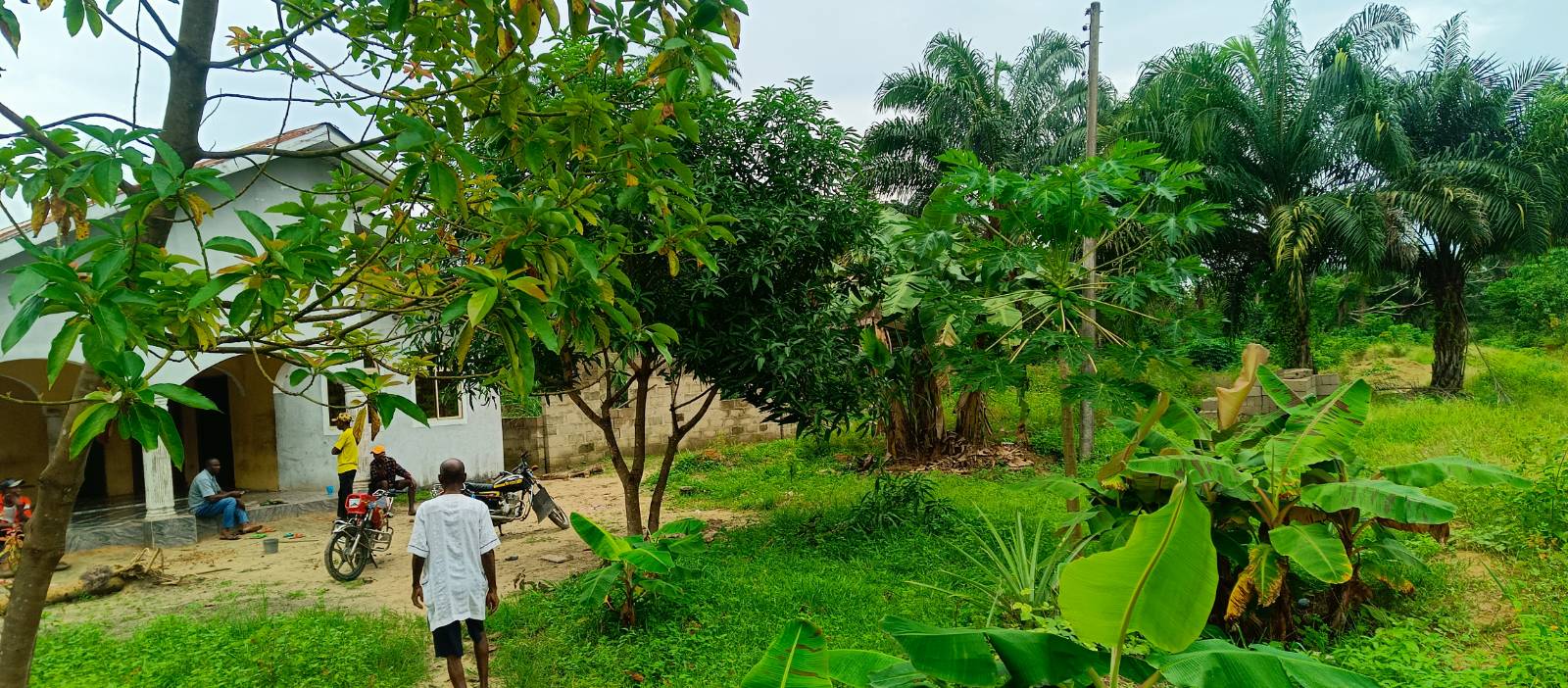
Though the report claimed no properties were found within the area that oil and gas covered, The ICIR saw several makeshift houses razed by the fire. The spill was also seen on rooftops and buildings in Zion City.
What appears as the biggest falsehood in the report is the claim that no crops or economic trees were affected by the blaze. Dozens of of economic trees and several farms were razed by the inferno.
The report said the spill did not affect fish, nets and ponds. This is also untrue. Six months after the fire, the communities have been unable to fish. It is also worth noting that aquatic life, including fish, oyster, crab and periwinkle, has become very scarce in the area.
The report captured the total area impacted by the fire as 17,100 square metres.
According to the report, the host community, NUPRC, NOSDRA, the River State Ministry of Environment, and NEOL agreed with the findings.

Three wells managed by NEOL experienced oil spill, fire in 2024
In addition to the OML 18, Well 8 in Zion City, two other wells managed by NEOL spilt oil and caught fire in 2024.
Another document obtained by this organisation, with reference number NUPRC/HQ/HSE.1/0.3C00014/25/8, and dated February 10, 2025, detailed the number of oil wells managed by NEOL that have experienced spills and blazes in the past years.
The document, from NUPRC, was addressed to the Chairman, House of Representatives Committee on Environment.
It is titled, “Interim Report on the NNPC Eighteen Operating Limited (NEOL) OML 18 Buguma Well 8, Alakiri Well 9T and Akaso Well 4 Oil Spill and Fire Incident in River State.”
“The purpose of this memorandum is to brief the Honourable Chairman on the status of wellhead fires and oil spill incidents at the above three (3) wells operated by NEOL,” the document said.
Alakiri Well 9T: NEOL reported a spill incident from this well, which resulted in a wellhead fire on February 23, 2024. Fire was still raging on the well as of the time NUPRC prepared the document. “The fire was initially extinguished on 22nd December, 2024; however, it reignited again at 5:20 am on 24th December, 2024,” part of the document read.
Akaso Well 4: Akaso Well 4 wellhead reportedly occurred on August 2, 2024. The fire was successfully quenched on January 1, 2025.

NNPCL persistent contempt for the National Assembly
Meanwhile, the NNPCL has repeatedly shunned the House of Representatives’ public hearing on the fire at Zion City.
The House Committee on Environment convened a hearing for February 18 in Abuja. Leaders from the Bukuma communities and other invited stakeholders were in attendance. The NNPCL was absent. The hearing was adjourned to March 5 to enable the organisation to appear. The firm was again absent on the adjourned date.
The hearing was moved to March 26. All parties were present, except the NNPCL.
The House consequently ordered the NNPCL to provide essential support, including palliative care, to the communities, pending the outcome of the hearing. The Bukuma leaders said the NNPCL ignored the directives.
An address presented by the Bukuma communities during one of the House of Representatives hearings on the crisis in Abuja called for an urgent post-impact assessment, clean-up, remediation, full restoration, compensation, and social rehabilitation of the communities. It also detailed the depth of the devastation caused by the calamity.

The spokesperson of the Bukuma community, Igbarima Alex Fubara, a doctoral holder, presented the address. He highlighted key concerns and immediate threats to the people, including environmental degradation, loss of livelihood, public health crisis and social and economic disruptions.
Among others, the community demanded comprehensive environmental cleanup, environmental remediation and restoration, social rehabilitation programme, adequate compensation, preventive measures, facility audit, and community participation in the remediation efforts.
The ICIR reports that NNPCL’s refusal to honour the National Assembly’s invitations adds to the company’s smeared image before Nigerians and the global community. Among others, the NNPCL was recently accused of failing to account for N210 trillion in its audited accounts from 2017 – 2023. However, it blamed several accusations of sleaze and other infractions against it on saboteurs.
More infractions by OML 18, Well 8 operators
Document obtained by The ICIR shows that Eroton, which previously managed OML 18, with 11 oil and gas fields, did not get approval for Environmental Impact Assessment (EIA) of its facilities.
The Federal Ministry of Environment said in the document that the spillage and explosion were an infringement on the EIA Act Cap E12 LFN 2004.
Meanwhile, The ICIR notes a development capable of compromising standards and engendering conflict of interest in a letter by the NUPRC to NEOL, dated December 19, 2024. The letter is titled “2025 HSE Audit/Facilities Inspection and Oil Spill Contingency Plan (OSCP) Activation Exercise – Notification.
The letter said in line with Regulations 23, 29, 30 & 34 of the Minerals Oil (Safety) Regulations (MOSR) 1997 and the provisions of Part VIII. Section 85.2 of the Environmental Guidelines and Standards for the Petroleum Industry in Nigeria (EGASPIN) 2018, NEOL was scheduled for the year 2025 exercise between April 14 and 18.
While the NUPRC designated five officials to conduct the audit in Abuja, Eket, Port Harcourt and Yenagoa, it said, “Please note that your company is responsible for providing adequate logistics (transportation and accommodation) for the nominated NUPRC representatives.

Leaders of Bukuma communities, others react
The king of Bukuma, Steven Jeremiah Tobis, said the NNPCL and other relevant agencies failed to respond to the spill despite being notified on time.
He said NOEL left the facilities for years and didn’t care about them.
“So, the gas took off, and along the line, it turned into heavy fire. The fire consumed many houses. Up till now, the people are homeless in my communities, especially Zion City. Many houses were burnt. The flames were so intense that they covered all 18 communities in the neighbourhood.
“The smokes caused a lot of havoc. The sound of the fire was so loud that it affected other communities like Bukuma and some other LGAs in my area. The spillage was so much. It covered the three local governments of Asaga, Akuku-Toru, and Degema. But we are the most impacted people.“
He said some of the victims were dying, having been left without food or a home.

At the Okpuruta village, the Community Development Chairman, Godukoye Natebou, said life had been good for the residents until the spill contaminated the water in the area and polluted the air.
“Since the spill occurred, life has been difficult for us. Fishing is no longer possible. We had to leave the environment and look for ways to survive elsewhere. You can see the place is scanty with people because there is no fish and business. The place has been deserted; nobody wants to stay there.”
Another resident, Alali Aworiabo, said the community had always been lively with many people fishing and farming. “Since the disaster occurred, most of the people who do business and farm in the community have run away,” he stated.
A Zion City resident, MacDonald Beresibo, said crude oil drenched trees and homes before the fire erupted. “The crude covered hectares of land away from the oil well, and it was like rain on our trees and buildings. The crude was everywhere, and there was nobody on the ground to stop it,” he stated.
He said 17 communities were affected by the crisis. They are Bukuma ancient town, Okpurata, Daily Bread, Christ Liberty, Zion City, Anongolo, Tobinsco Ama, Oida Rueben, Otana, Ukele, Etubo, Ambiama, Isangboh, Obida, Olokulo, and Lulu.
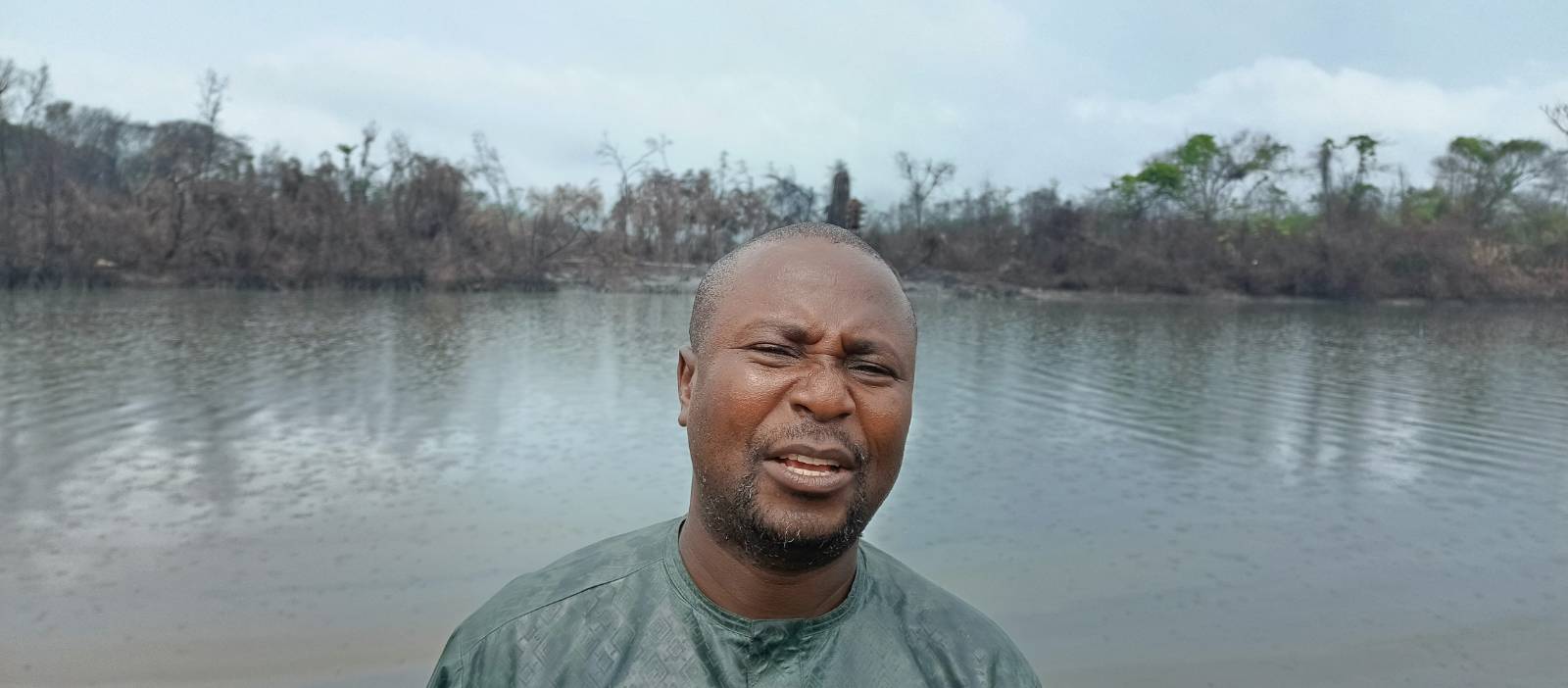
The ICIR met Simon Alex at Christ Liberty. He said his community had flourished until the spill.
He said all sources of water had been polluted since the spill occurred. He demanded compensation from the NNPCL for the impacts of the crude spill on the communities.
Alex ruled out possible sabotage by residents of the communities. “We are a peace-loving people. We can’t tamper with oil facilities,” he posited.
He revealed there were no schools and health facilities in all 17 communities, except Bukuma. All schoolchildren and people who need medical attention are transported to Bukuma from their respective communities.
Another resident, Boma Francis, also shared the same thoughts. The spillage severely affected Francis’ fishing business, and he has since found it difficult to cater to his family’s needs.
“The farm can no longer produce the way it used to. If you go to our well where we drink water, you will see the sign of the crude oil. We cannot drink our water. We are suffering here. My wife and children have left this place because of the condition of the community. Look at the mangrove, everything has been destroyed.
“Because of the situation of this place, nobody lives here again except a few of us who are managing here.”

Businesses in distant communities, including Iwofe, where one of the jetties is located, are not spared in the crisis.
Shedrach Anania, a speedboat operator at Iwofe, said before the spillage, there used to be a lot of people travelling on the creeks.
“There were many people in the communities, and businesses were doing fine. When the spillage and fire occurred, everything went down. There was no longer a population. Everybody was crying. As it is now, everything is very bad. Businesses are no longer moving. Before now, I used to make between N60,000 and N70,000 daily, now I cannot boast of N15,000.”
A resident and fisherman who has lived in Zion City for over a decade, Awajikawuuk Lot, lamented that he had been rendered jobless and his family was finding life very difficult as their source of livelihood had been taken away.
Dozens of Lot’s fishing nets lay on a rope in the village. “You can see our nets, on the rooftops, you see, everywhere dirty because of the crude oil. The thing has polluted the whole environment.”

Meme Ephraim, a septuagenarian, risks losing fishing, the job he has done all his life. He said the fire was the biggest disaster he had ever seen.
“All our things were damaged in the fire because we had to run out of the community. You can see my eyes, the gas has damaged them.”
Similarly, Mercy Endurance grew in the community and worked as both a crop farmer and a fisherwoman. She decried the impact of the spill on her children and her health. “I had not been a sick person since my mother gave birth to me, but the spill has since been affecting my chest.”
Endurance said she lost N3 million worth of goods to the blaze.
Another woman, Glory Goodnews, born and bred in Zion City, narrated how crude pervaded the whole community and turned everything dark. Besides, the crude destroyed the goods kept in homes in the village and on farms, she said.
“I had many farms in this community. Everything is now gone,” she said, sobbing. According to her, at least one thousand people lived in the community before the fire outbreak.

The ICIR also met one of the leaders of the Daily Bread community, Kofi Raymond. He said there had been nowhere to get drinking water, and the fishing business, through which the majority of residents fed, had stopped.
“The condition of children and other people in our community has been terrible. No light, no water, and the crops are affected. We’re living in great poverty now, and till this moment, there has been no assistance for us to return to our former state.”
The woman leader of the Bukuma communities, Tuomora Amagboruju, a doctoral holder and an indigene of Zion City, explained how the NOSDRA Zonal Office in Port Harcourt joined NNPCL to ignore calls to stop the spill when it started.
“I consider what happened here as a total negligence from NNPCL. The location of the oil well is so porous. It’s right by the sea. Anybody can go there. If they say it’s sabotage, as they are claiming. You see my house, you see where the oil well is. Should my family or community go and man an oil well in the middle of the night for NNPCL?
“Is that what they are trying to say? There was no surveillance, and it’s not that the surveillance issue hadn’t been raised in times past. They were just nonchalant. They didn’t care. They would say, after all, it’s a community where the people are not well known. So if anything goes wrong, nobody probably will even know. The government will probably not care.
“With what I’ve seen on the internet recently, a company that could drill trillions from its employer, the Federal Government, and they think nothing will happen, they also believe that this is a small community, nothing will happen.”

She said the communities had suffered neglect for decades and did not expect their challenges would be compounded by the spill and fire that consumed Zion City.
“Our homes are condemned. The fire razed down the houses. There’s hardly anybody here again. We came in here today from Port Harcourt because we have a burial here today. We come here and leave the same day. We can’t sleep in our houses because environmental experts said we shouldn’t sleep here because the environment is carcinogenic.”
She said there seemed to be no option left for the communities other than a protest.
“We have appealed to these people. The National Assembly has appealed to the conscience of these people. NOSDRA is still talking to them. Who are these people? They can steal money, but they can’t do their job. Why do they go to the office? To steal. You need to have seen the amount of crude that was wasted from this well. It will shock you that Nigeria lost billions from this spill. These people have been nonchalant.”
She called on President Bola Tinubu to prevail on the NNPCL to respond to the crisis.
According to her, the NNPCL had only supported the community with twenty 50KG bags of rice, three 100KG bags of beans, three 100 KG bags of garri, 20 cartons of indomie, sanitary towels, baby diapers, vegetable oil, six cartons of Lazeez, mosquito nets, and fabrics.
She said she made 30 plots of cassava farm yearly in Zion City, which she harvested between December and January. She said she had lost everything to the blaze.
Reps committee, NNPCL fails to react
The ICIR contacted the House of Representatives Committee on Environment whose directives the NNPCL failed to implement.
The committee chairman, Julius Pondi, and his deputy, Terseer Ugbor, did not respond to calls to their telephone numbers when contacted on Thursday, August 14.
They also did not respond to WhatsApp messages sent to their lines.
On July 21, The ICIR contacted NOSDRA to know if anything had changed in its observations against the NNPCL. This organisation also contacted the NNPCL through a letter same day to get its reaction to the report.
None of the organisations responded to the letters two weeks before this report was published.

Marcus bears the light, and he beams it everywhere. He's a good governance and decent society advocate. He's The ICIR Reporter of the Year 2022 and has been the organisation's News Editor since September 2023. Contact him via email @ mfatunmole@icirnigeria.org