
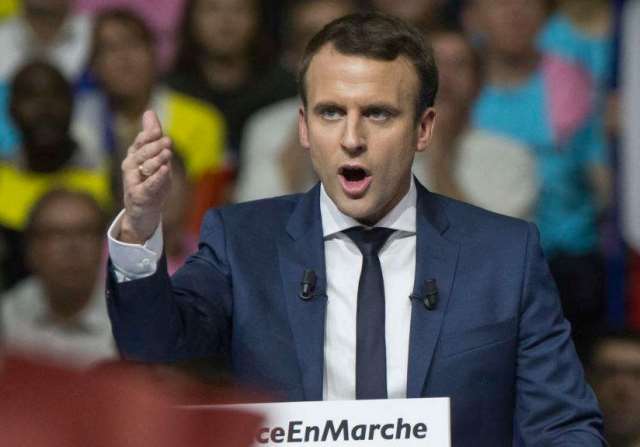
TEACHERS, train drivers, pharmacists, hospital staff and other workers embarked on strike in France on Thursday, September 18, while teenagers blocked access to their high schools, joining nationwide demonstrations against planned budget cuts.
Workers and other protesters are demanding the suspension of the former government’s fiscal policies, increased investment in public services, higher taxes on the wealthy, and the reversal of a widely opposed reform that raised the retirement age.
“The workers we represent are angry,” the country’s main unions declared in a joint statement, denouncing the former government’s fiscal policies as ‘brutal’ and ‘unfair’.
One in three primary school teachers joined the strike, while in Paris nearly half walked off their job, according to the FSU-SNUipp union.
President Emmanuel Macron and his newly appointed Prime Minister, Sebastien Lecornu, face mounting pressure from parliament over the anticipated budget cuts, as well as from investors worried about the deficit in the eurozone’s second-largest economy.
The ICIR reported last week that protesters took to the streets across France blocking roads, setting fire to rubbish bins, and clashing with police in a campaign to “Block Everything” in anger against Macron and proposed budget cuts.
The protests came days after François Bayrou was forced out by parliament over his proposal for a €44 billion budget cut, raising uncertainty over Macron’s future and the stability of the eurozone’s second-largest economy.
In Paris on Thursday, several metro lines were scheduled to remain closed for most of the day, operating only during the morning and evening rush hours, while students gathered to block entrances to certain schools.
According to Reuters, a placard held by a student outside the Lycée Maurice Ravel high school in Paris where teachers and workers’ representatives had also gathered read: “Block your high school against austerity.”
Speaking at a rally outside the high school, bus driver and CGT union representative, Fred, said, “Workers are being treated with such contempt by this government and by President Emmanuel Macron that things simply cannot go on like this.”
A source from the Interior Ministry estimated that up to 800,000 people could join the strikes and demonstrations.
France’s budget deficit last year was nearly twice the EU’s three per cent limit. While Prime Minister Lecornu is eager to bring it down, his dependence on other parties to pass legislation means he will struggle to secure parliamentary backing for the 2026 budget.
The new prime minister has not yet clarified how he will handle Bayrou’s plan but has indicated an openness to compromise.
Officials said regional train services were severely disrupted by the strike, while most high-speed TGV lines continued to operate. Meanwhile, protesters gathered near the southeastern city of Toulon to slow traffic on a highway.
The farmers’ union Confédération Paysanne also urged members to mobilise. Pharmacists, upset over policy changes affecting their sector, joined in as well, with the USPO pharmacists’ union reporting that 98 per cent of pharmacies surveyed planned to shut down for the day.
Meanwhile, Interior Minister Bruno Retailleau told reporters in the morning that police had already cleared several blockades, including those outside bus depots in the Paris area.
He cautioned that up to 8,000 agitators were expected to attempt to “cause disorder” and confront security forces.
Roughly 80,000 police and gendarmes will be stationed across the country throughout the day, supported by riot squads, drones, and armored vehicles.
Police reported that more than 20 people had already been arrested at different locations.

Nanji is an investigative journalist with the ICIR. She has years of experience in reporting and broadcasting human angle stories, gender inequalities, minority stories, and human rights issues. She has documented sexual war crimes in armed conflict, sex for grades in Nigerian Universities, harmful traditional practices and human trafficking.