
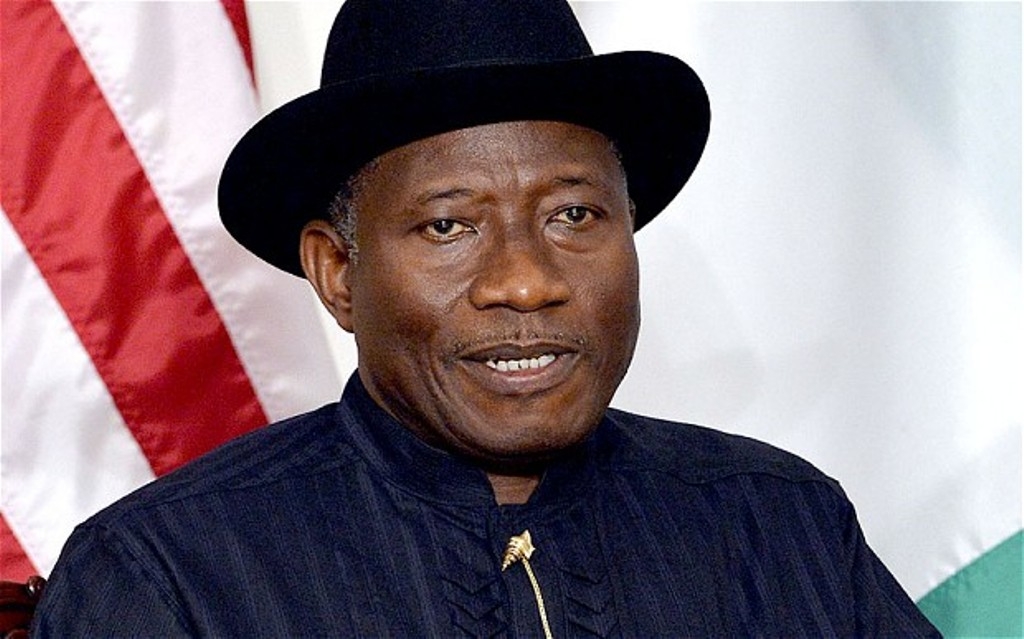
Following his safe return to Nigeria, former President Goodluck Jonathan addressed journalists on the coup in Guinea Bissau. He expressed shock at how the ousted President Umaro Sissoco Embalo told international media that he was arrested and detained by the country’s military in what eventually ended up as another coup for the embattled West African nation.
Journalists: You were in Guinea Bissau monitoring these elections…
Jonathan: Since I left office, I’ve always been scared talking to the media. But in this particular case, I decided to speak to the media. First and foremost, to thank Nigerians for the show of empathy and encouragement. While we were in the Bissau, the information we got was that the whole country (Nigeria) was agitated—young and old, irrespective of religious or political divides. I sincerely appreciate Nigerians, and I want them to hear directly from my mouth.
Secondly, I want to thank my President, President Tinubu, and the Ivorian President, President Ouattara. Both presidents were to send aircraft to lift us, but somehow, Côte d’Ivoire were closer to Guinea-Bissau, and because of relationships between Francophone countries, they were able to facilitate their system to get landing permits before Nigeria could do that. The Ivorian aircraft was already on the way to pick us up.
So, when we learned about the Nigerian aircraft, we asked them not to bother. That is why you saw the picture of Ivorian aircraft. We are thankful to President Ouattara and President Tinubu, and we are grateful to the Nigerian people.
“It was not a coup — maybe a ceremonial coup.”
Jonathan: What happened in Guinea Bissau I wouldn’t call it a coup. It was not a coup. Maybe some people would describe it differently. I would just say, for want of a better word, that maybe it was a ceremonial coup—because of two things.
It was the president, President Embaló, who announced the coup before a military man later came up to address the world that they were in charge. Meanwhile, Embaló had already announced it, which is strange. Not only announcing the coup, but he was also using his phone while the coup took place, addressing media organisations across the world that he had been arrested. I am a Nigerian, close to 70 years, and I know how they keep heads of state when a coup takes place.
Recently, I was a mediator in Mali, and within that period, there was a military coup. Military don’t take over government and the sitting president that they overthrew would be allowed to address press conferences and announce that he had been arrested. What does this happen? Who is fooling who?
Basically, what happened in Guinea-Bissau is quite disturbing to me, who believes in democracy. In fact, I feel more pained than the day I called Buhari to congratulate him when I lost the election as a sitting president.
Because I’ve been quite particular about Guinea-Bissau. As the sitting president then, Guinea-Bissau was in crisis. It started around 2012. By 2011, we had to go physically. We worked with them. We made sure that by 2014 (or 2013) elections were conducted.
In fact, it was so bad the day that I learned that a military man went to the office of the prime minister and slapped the prime minister in the office. It was that bad. And what is happening is that we are going back to those dark days of Guinea-Bissau, where the military can do whatever they think they can do. It’s certainly not acceptable…
“Elections were peaceful. The results must be announced.”
Jonathan: Elections were peaceful. Counting of results at the polling units was peaceful. The conduct of electoral officials, security agents, and voters—it was a good election. One expected the results to be announced.
While they were collating results, the nine regions’ results were ready, and they were being tallied in the capital. When they were almost done, we were all waiting for the result to be announced. Then Embaló announced that there was a coup and said they had taken over and arrested him. But from all indications, nobody arrested him.
My conviction is that and my charge to ECOWAS and the AU is that they must announce that result. They have the results because their officials were at all the regions. They cannot change the results. They should tally them and announce. They cannot force the military out, but they must let the world know who won that election. Let the world know who won the election. They owe the world that responsibility.
Similar things happened in Côte d’Ivoire when I was chair of the Authority of Heads of State and Government of ECOWAS. When in 2010 we had election in Cote d’Ivoire, Gbagbo was the sitting president. In the first round, Gbagbo got 40 something per cent of the votes (38 per cent) and Ouattara got 30 something per cent (32 per cent). And in their law, you must get 50 per cent plus one to win, so they went for a second round.
All the candidates that lost supported Ouattara, and he won. Gbagbo said he was not going. But all the observers and the international community said Ouattara won. I stood my ground as chair, and he was sworn in.
So, the leadership of ECOWAS should be courageous. The leadership of AU and ECOWAS should be courageous. They must announce who won that election. I’m not saying they should mobilise soldiers. No—we do not need to shed blood. But we must know the truth. They have the results.
ECOWAS suspension of Guinea-Bissau
Journalists: There was an update that ECOWAS leaders have suspended Guinea-Bissau from decision-making bodies. What comments do you have about that?
Jonathan: That’s traditional. ECOWAS started when a number of West African countries had military leaders. But later on, when leaders saw that nation’s economies needed to be better, ECOWAS is an economic community, the emphasis is on the economy. But for you to develop your economy, you should be politically stable. So, protocols were changed. And we agreed that in ECOWAS, we must not go back to military rule. We must not go back to military dictatorship.
We must embrace democracy. And since the change of protocols, if in any country, military takes over, that country is suspended. It’s normally internationalised.
Jonathan’s position on countries leaving ECOWAS
Journalists: As we speak, several countries are no longer participating fully in ECOWAS. Should the region be worried?
Jonathan: Don’t worry yourself. Even if five countries remain in ECOWAS, so be it. But ECOWAS must not bother.
Even if five countries are committed to remain in ECOWAS and develop ECOWAS, the only thing is that they must modify the protocols or use some other protocols to make sure that ECOWAS do things that will endear them to the citizens. Things that young people will benefit from; things that will benefit business class. Things that will benefit students.
Let ECOWAS be attractive to citizens of the community. Not just talking about political issues. When ECOWAS continues to do those things, these countries will come back to join ECOWAS. The military, it will not be forever. You carry gun today, took over government, with time, society will be tired of you and they will ask you to go.
On President Embaló
Journalists: You sounded pained. For someone who chaired ECOWAS talking about president, how do some of you who also chaired the body feel?
Jonathan: That is the most painful thing. President Embaló was just yesterday the chair of the Authority of Heads of State and Government of ECOWAS. One would expect him as the president of Guinea Bissau to do his best. He is an ex-military man. So, he has a military constituency. He was a very senior military man before retiring. He has his own friends, boys and so on. He should be the person that can prevent any coup.
In Guinea-Bissau, I don’t expect a coup that would remove him from office… I don’t expect him to be, as the president of Guinea-Bissau, a retired senior military man, and a coup would be organised against him.
Advice to the political class and military in Guinea-Bissau
Journalists: What would you advise President Embaló and the political class?
Jonathan: Well, I know what the political class will do. I don’t even need to advise. Because the political class will want those results to be announced. The political class will want the results of the election to be announced. Nobody should take the business of the country for a ride.
For the military, I plead with them not to take Guinea-Bissau back to the dark days of 2011 to 2014.
Call for Fernando Dias’ release
Journalists: The main opposition leader, Fernando Dias, is still in custody. What is your message?
Jonathan: They have to release the man. He has not committed any offence. They just have to release him. The international community must talk to the military to release him. He has not even declared himself president to say, oh, we are taking over the government, and you have declared yourself to this tribunal. The man has not committed any offence. There is no reason to restrict the man at all.
The interview was culled from video interview published by Symfoni

Mustapha Usman is an investigative journalist with the International Centre for Investigative Reporting. You can easily reach him via: musman@icirnigeria.com. He tweets @UsmanMustapha_M