
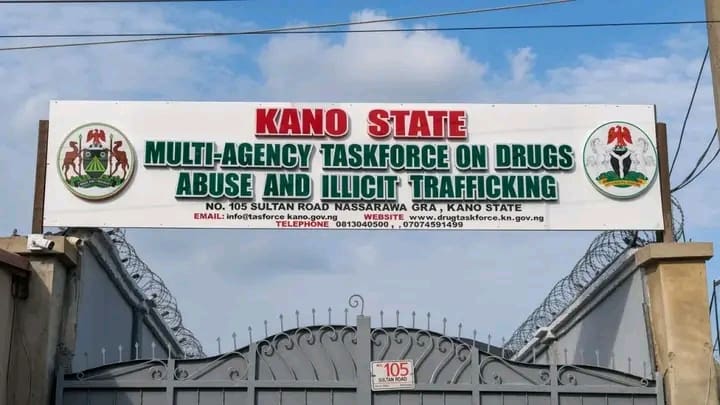

THE Kano State Government has set a target of removing 10,000 drug users from the streets and rehabilitating them within a year to curb substance abuse and stem the tide of violent crime in the state.
The Chairman of the Kano State Multi-Joint Task Force on Drug Abuse and Illicit Trafficking, Muhuyi Rimin-Gado, disclosed this on Saturday, August 29, while outlining the government’s intervention strategy for drug users, convicted offenders, and vulnerable youths.
According to him, the initiative shifts focus away from traditional punitive measures by blending medical detoxification, mental rehabilitation, vocational training, and financial empowerment to help former users reintegrate into society.
“Our goal is to take away 10,000 people from the streets within one year. This is a different approach from only taking them to prison. We are thinking about rehabilitation,” Rimin-Gado said.
He explained that beneficiaries would first undergo medical detoxification before progressing to structured rehabilitation programmes designed to equip them with practical skills that could make them economically productive.
“After what we call detoxification, we will take them to rehabilitation and give them guidance. All this will expose them to the necessary knowledge they need to address drug abuse, including training,” Rimin-Gado said.
He explained further that the government planned to train beneficiaries in practical trades such as tailoring, shoemaking, and garment production, with provisions to expand into additional technical crafts over time.
“We are going to employ a mechanism where we will give training, including different kinds of craftsmanship that they would engage in,” Rimin-Gado said.
He noted that the intervention directly addresses the link between substance dependency, youth unemployment, and armed violence, and not because of hatred for them.
Rimin-Gado said the government had opened talks with correctional services and key stakeholders to ensure individuals leaving correctional centres receive vocational training and support.
He added that treatment protocols would vary based on the severity of addiction. While individuals caught carrying multiple illicit substances might face prosecution, lesser cases may be released into the care of their parents or guardians following intervention.
Rimin-Gado said the initiative would also boost local commerce by connecting skilled graduates with markets across Kano, simultaneously tackling drug dependency and strengthening the state economy.
“It’s a very ambitious project, but at least the government is very determined, and with the national agencies on board, we are going to succeed,” Rimin-Gado said.
The ICIR reports that data from the United Nations Office on Drugs and Crime (UNODC) indicates that approximately 14.4 per cent of Nigerians aged 15 to 64, representing over 14.3 million people, use psychoactive substances non-medically, and more than three million of these individuals suffer from severe drug use disorders.
Kano state sits at the epicentre of this crisis in northern Nigeria. Reports from the National Drug Law Enforcement Agency (NDLEA) show that the North-West geopolitical zone accounts for nearly three million drug users, with Kano recording the highest prevalence rate in the region at 16 per cent.
This places the estimated number of drug users in Kano State alone at over one million people.
Zainab Abdulrasaq ia a reporter and a fact-checker with The ICIR. She believes that accountable citizenship starts with an accountable government, which is why she highlights injustice and everyday struggles through her reporting, one story at a time. She adores reading and can be reached via zabdulrasaq@icirnigeria.org and @blackbookishgirl on Instagram/Medium