


AS Nigeria moves closer to the 2027 election cycle, politicians from the ruling All Progressives Congress (APC) are under fire for inflammatory statements directed at opposition supporters and voters.
In the space of weeks, an APC commissioner in Borno State threatened to cut off the fingers of people who oppose the party, a council chairman in the Federal Capital Territory (FCT) told residents to either support the APC or leave his area, and a serving senator from Osun State called for the killing of members of a rival political party.
The comments have raised fresh concerns about the language used by political actors ahead of elections and whether threats that could intimidate voters are being treated as campaign rhetoric rather than potential electoral offences.
‘We are ready to cut off his fingers’
On August 31, 2026, Sainna Buba, Borno State Commissioner for Youth and Sports Development, came under criticism after making threatening remarks at the inauguration of a campaign organised by the Tinubu City Boy Movement, a political support group backing President Bola Tinubu and his administration.
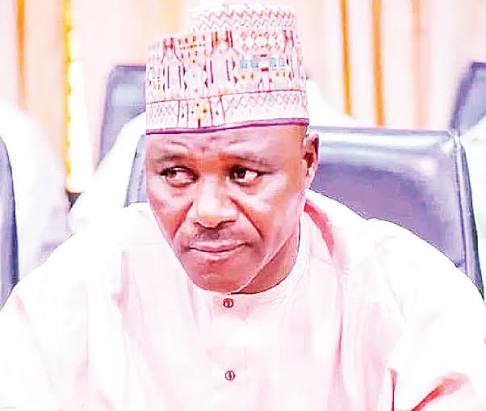
Buba warned political opponents against challenging the APC, saying, “Whoever shows us a finger, we are ready to cut off his fingers.”
He reportedly added that anyone who dared to “show us a finger” again would have the finger broken.
The commissioner also appeared to link access to government benefits to political support, saying those who followed the government would “enjoy the honey”, while those who refused would be “flogged”.
Reacting to this, Amnesty International called for an immediate and thorough investigation into the remark, describing it as “reckless and irresponsible.”
‘Vote APC or leave’
In a video circulated in August, Shekwolo told residents of Kuje Area Council that they either had to support the APC or leave the area.
“I have said in my area council, it’s either you’re doing APC or leave the area council,” he said.

He also warned residents that he would not accept them coming on election day to challenge him, adding: “It is either you are with us, or you are not here.”
The statement drew condemnation from the National Human Rights Commission (NHRC), which described the remark as intimidating and a direct assault on the constitution and democratic principles.
The commission called for Shekwolo’s arrest and prosecution and asked the police, Department of State Services (DSS) and the Independent National Electoral Commission (INEC) to investigate the statement and take measures to protect residents from harassment, profiling and disenfranchisement ahead of the 2027 elections.
Senator’s ‘kill’ comment
Earlier in August, Senator Francis Fadahunsi, representing Osun East Senatorial District, also triggered outrage after a video showed him telling APC supporters to “kill” members of the opposition Accord Party in Ilesa ahead of the August 15 governorship election.
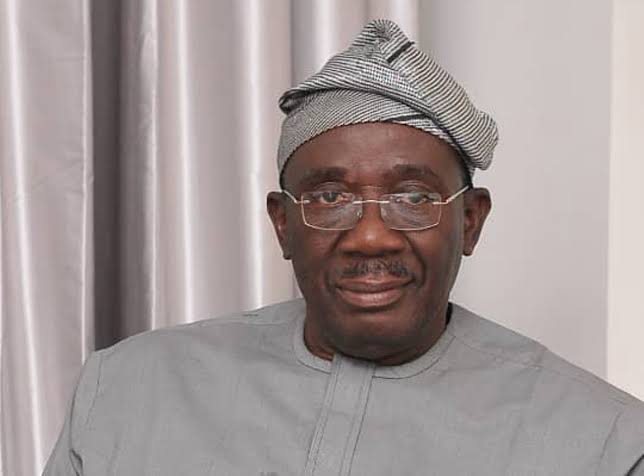
Speaking during a protest at the palace of the Owa Obokun of Ijesaland, Fadahunsi was heard saying that if APC supporters saw members of the Accord Party before the election, “it is killing”.
The comments came amid heightened political tension in Ilesa and shortly after a shooting in the area in which three people were killed.
Fadahunsi later sought to explain the statement, saying he did not mean physical killing. His media office said he was urging voters to “kill” the Accord Party with their votes rather than through violence.
The police subsequently invited Fadahunsi over what they described as threatening, inciting and intimidating comments. A magistrate in Abuja later directed the police to investigate a criminal complaint filed against the senator.
What does the law say?
These incendiary comments come at a time when Nigeria has a specific legal framework against threats and violence during election campaigns.
The Electoral Act 2026, which repealed the Electoral Act 2022, came into force in February 2026. The new law retained and strengthened provisions regulating the conduct of political campaigns.
Section 97(1) of the Electoral Act 2026 provides that a political party, candidate, aspirant, person or group of persons must not “directly or indirectly threaten any person with the use of force or violence during any political campaign” to compel that person or another person to support or refrain from supporting a political party or candidate.
It added that such a person, candidate or aspirant found guilty under the provision can face a maximum fine of N5 million or 12 months’ imprisonment, while any political party convicted of the offence faces a N10 million fine for a first offence and N2 million for subsequent offences.
The law also addresses inflammatory campaign language. Section 96(2) prohibits abusive, intemperate, slanderous or base language, including insinuations or innuendoes designed or likely to provoke violent reactions or emotions during political campaigns.
This means that where a statement amounts to a threat of force or violence intended to influence political support, the Electoral Act provides a specific offence.
Similarly, Section 40 of the Nigeria 1999 Constitution, as amended, guarantees every person the right to freely associate with others, including the right to form or belong to a political party.
It states, “Every person shall be entitled to assemble freely and associate with other persons, and in particular he may form or belong to any political party, trade union or any other association for the protection of his interests.”
Not the first time
The recent comments also echo a controversy that erupted during the 2023 election campaign.
In December 2022, Alhassan Ado Doguwa, then Majority Leader of the House of Representatives and an APC lawmaker representing Tudun Wada/Doguwa Federal Constituency of Kano State, was caught on video telling constituents that they had to vote for the APC or they would be “dealt with” on election day.
“To God who made me, on election day, you must vote for APC, or we’ll deal with you,” Doguwa said in the video.
The statement generated public outrage and eventually led to legal action.
A voter, Oseyili Anenih, filed a direct criminal complaint against Doguwa, arguing that the statement could create fear among voters and amounted to a violation of Section 93(1) of the Electoral Act 2022.
That provision prohibited political parties, candidates, aspirants and other persons from directly or indirectly threatening anyone with force or violence during a political campaign to compel them to support or refrain from supporting a political party or candidate.
Doguwa rejected the interpretation of his words as a threat. He described them as “political semantics” and campaign rhetoric intended to motivate supporters.
He argued that telling people to vote for the APC or be “dealt with” was not intended as intimidation, but was part of what he described as the political “shenanigans” and “brouhaha” of campaigning in Kano.
Police probe three politicians
Meanwhile, the Nigeria Police Force said it has opened investigations into alleged inciting comments by Borno Commissioner for Youth and Sports Development Sainna Buba, Kuje Area Council Chairman Danjuma Shekwolo and Osun East Senator Francis Fadahunsi.
Police spokesperson Ani Iniedu said on September 1 that the statements, particularly those relating to elections, could constitute criminal offences.
He said Fadahunsi had already been questioned over alleged threats against members of the Accord Party.
Iniedu said investigations into the three cases were ongoing and warned political actors against making statements capable of inciting members of the public.

Mustapha Usman is an investigative journalist with the International Centre for Investigative Reporting. You can easily reach him via: musman@icirnigeria.com. He tweets @UsmanMustapha_M