
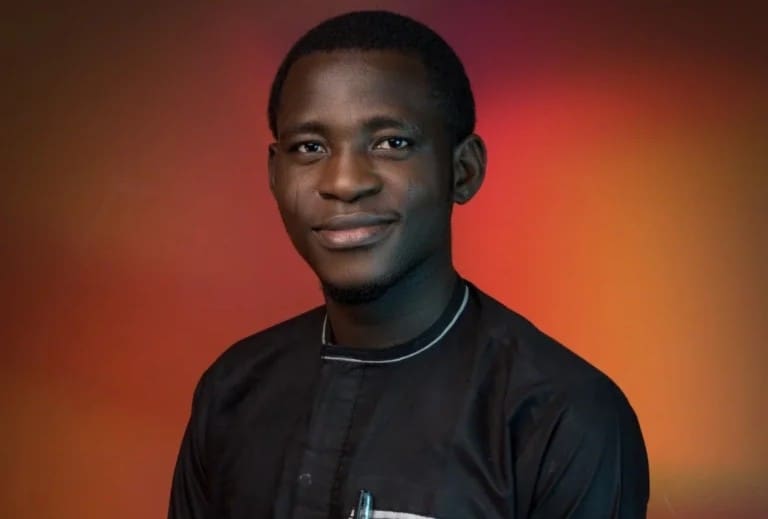
NIGERIAN-BORN groundwater researcher Ayobami Oni has received the Blue Integrated Partnerships Extra Mile Award for his contributions to water and environmental research during a 2026 summer programme in US territories in the Caribbean.
PUNCH reported that the company announced the award on Friday, recognising Oni for his commitment, research contributions and performance during the programme.
Oni was recognised for his work during the Blue Integrated Partnerships Summer Institute, which examined rainfall patterns, watershed conditions and surface-water changes across Puerto Rico, (US owned territories), the United States and British Virgin Islands.
The research examined precipitation trends from 2000 to 2025 across the three island territories, using long-term rainfall records, geographic information systems (GIS) and spatial analysis to identify seasonal and annual variations.
According to the report, the statement revealed that Oni also contributed to a study of the Río Grande de Loíza watershed in Puerto Rico.
The research used satellite-derived indicators to assess surface-water conditions, including signals associated with turbidity, suspended sediments and changes in chlorophyll levels.
The report said he was recognised for going above and beyond expectations and delivering exceptional contributions to research carried out during the 2026 Blue Integrated Partnerships Summer Institute.
Oni recently completed a Master of Science degree in Agricultural and Biological Engineering at Purdue University in the United States. He previously studied Agricultural Engineering at the Federal University of Technology, Akure, Ondo State.
His postgraduate research focused on developing a three-dimensional device to monitor groundwater movement by estimating the speed and direction of underground water flow.
The device uses heat as a tracer, in which a heater generates a thermal signal, while temperature sensors detect how groundwater carries the heat as it moves past the equipment.
Researchers then analyse the resulting temperature differences to estimate the velocity and direction of the flow.
The project combined computational fluid dynamics, sensor technology, electronic systems, laboratory experiments and field testing.
Using ANSYS Fluent software, Oni modelled groundwater movement and heat transfer through porous materials.
The device’s development also involved sensor calibration, circuit-board design and data acquisition.
Testing progressed from controlled laboratory conditions to groundwater wells, allowing the research to examine the technology’s potential for measuring underground water movement and identify factors that could affect the accuracy of its readings.
Understanding the speed and direction of groundwater flow can help researchers investigate contamination by determining how pollutants may travel underground and potentially affect nearby wells and other water sources.
Oni’s research interests included hydrologic modelling, flood behaviour, environmental sensing and geospatial analysis. He has also explored the use of machine learning and remote sensing to investigate groundwater pollution.
These approaches could help address water-management challenges in Nigeria, where many communities depend on groundwater and face concerns about water quality, flooding and changing rainfall patterns.
According to the report, environmental sensors, GIS, satellite remote sensing, hydrologic modelling and artificial intelligence could improve how water-related problems are monitored, predicted and managed.
It added that artificial intelligence could help researchers analyse large volumes of environmental data while complementing established engineering principles and physical models of water systems.
However, Oni said technologies developed to address water-management challenges must be affordable, maintainable and practical for the communities and institutions expected to use them.

Nanji is an investigative journalist with the ICIR. She has years of experience in reporting and broadcasting human angle stories, gender inequalities, minority stories, and human rights issues. She has documented sexual war crimes in armed conflict, sex for grades in Nigerian Universities, harmful traditional practices and human trafficking.